
Colin Channer
Author of Got to be Real: Four Original Love Stories
About the Author
Works by Colin Channer
Iron Balloons: Hit Fiction from Jamaica's Calabash Writer's Workshop (2006) — Editor; Contributor — 34 copies, 1 review
So Much Things to Say: 100 Poets from the First Ten Years of the Calabash International Literary Festival (2010) — Editor; Contributor — 26 copies, 1 review
Girl with the Golden 1 copy
Associated Works
Tagged
Common Knowledge
- Canonical name
- Channer, Colin
- Birthdate
- 1963-10-13
- Gender
- male
- Education
- Hunter College (BA Media Communications)
- Nationality
- Jamaica
- Places of residence
- Kingston, Jamaica
New York, New York, USA
Wellesley, Massachusetts, USA
Members
Reviews
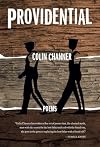
Providential, Colin Channer’s collection of poems, was a struggle at first.
The poems in this collection are well-crafted and show Channer’s deep commitment to his heritage and to the people who occupy it both past and present. The first time I read through this collection, I could not find my bearings in the world of Jamaican constables in a colonial era. The problem was not the dialect, nor was it the subject. Channer does such an excellent job of “speaking” his characters and show more allowing them to tell their story that all cultural and linguistic issues are erased. What eluded me was where he was going with it. How did these vignettes of people, events, and situations propel me—the reader— toward a larger meaning?
I read through the collection twice, and the second time, I took pause: I thumbed through the book and noticed that the chapters were divided by drawings of military chevron insignias and that these went up in rank as the book progressed. I thought, “What if the insignias had gone down in rank?” I re-read the last poem. Like the collection, it is also entitled Providential and is set in modern day Rhode Island. At summer’s end, Channer is reflecting on his world and casting nets backward into his personal and ancestral past. I decided to read the book again, taking a cue from this last poem: I read the poems in reverse order. I discovered an author who, through his own talent and thoughtful reflection, unraveled and distilled his self, his family, and his heritage down to the essential, raw components through poems that are as beautiful as they are powerful.
Bravo, Mr. Channer. show less
The poems in this collection are well-crafted and show Channer’s deep commitment to his heritage and to the people who occupy it both past and present. The first time I read through this collection, I could not find my bearings in the world of Jamaican constables in a colonial era. The problem was not the dialect, nor was it the subject. Channer does such an excellent job of “speaking” his characters and show more allowing them to tell their story that all cultural and linguistic issues are erased. What eluded me was where he was going with it. How did these vignettes of people, events, and situations propel me—the reader— toward a larger meaning?
I read through the collection twice, and the second time, I took pause: I thumbed through the book and noticed that the chapters were divided by drawings of military chevron insignias and that these went up in rank as the book progressed. I thought, “What if the insignias had gone down in rank?” I re-read the last poem. Like the collection, it is also entitled Providential and is set in modern day Rhode Island. At summer’s end, Channer is reflecting on his world and casting nets backward into his personal and ancestral past. I decided to read the book again, taking a cue from this last poem: I read the poems in reverse order. I discovered an author who, through his own talent and thoughtful reflection, unraveled and distilled his self, his family, and his heritage down to the essential, raw components through poems that are as beautiful as they are powerful.
Bravo, Mr. Channer. show less
 This review was written for LibraryThing Early Reviewers.
Colin Channer is Jamaican by birth, and this rings out clearly from Providential, his debut collection of poetry. The themes of most of the poems draw on the beautiful and often violent history of Jamaica, and his father—a flawed man, a drunk, unfaithful, and a policeman, dishing out criminal brutality as much as dealing with it.
Standouts from the collection include “Funeral”, “Balls”, “Kik-Kik, Pak-Pak”, and “Advantage”: “She holding her head and bawling/just bawling show more and plaiting back her hair/which was an aggravated frazzle/patches ripped out from the root/But what hold me, what move me/was what was running down her legs/a mix of blood and substance/pink, see-through, and red.” However, it’s the last two, “Knowing We’ll Be Most Wrong” and the title work, “Providential”, deeply personal meditations on love, memory and loss, that bring the small book to a voluminous conclusion. In “Knowing We’ll Be Most Wrong”, Channer looks back on his memories of his father from the point of view of himself a father: “We begin to fail the second we invest in the speck/that makes the children. We do right/knowing we’ll be mostly wrong”, while the five cantos of “Providential” take an overarching view of his own history in light of the larger remembrance of Jamaica (“Jamaica, where I came from/is mostly a coral island/a rough-made sediment bed./Still, it feels volcanic/eruptive in the way of newish nations/build on old foundations of violence/geographies where genocide and massacre/hang like smoke from coal fires/mosquito nets. There but not there.”) and the indelible awareness and longing its left in his soul.
Providential is a moving, rewarding collection of poetry and deserves equal reading with the author’s fictional works. show less
Standouts from the collection include “Funeral”, “Balls”, “Kik-Kik, Pak-Pak”, and “Advantage”: “She holding her head and bawling/just bawling show more and plaiting back her hair/which was an aggravated frazzle/patches ripped out from the root/But what hold me, what move me/was what was running down her legs/a mix of blood and substance/pink, see-through, and red.” However, it’s the last two, “Knowing We’ll Be Most Wrong” and the title work, “Providential”, deeply personal meditations on love, memory and loss, that bring the small book to a voluminous conclusion. In “Knowing We’ll Be Most Wrong”, Channer looks back on his memories of his father from the point of view of himself a father: “We begin to fail the second we invest in the speck/that makes the children. We do right/knowing we’ll be mostly wrong”, while the five cantos of “Providential” take an overarching view of his own history in light of the larger remembrance of Jamaica (“Jamaica, where I came from/is mostly a coral island/a rough-made sediment bed./Still, it feels volcanic/eruptive in the way of newish nations/build on old foundations of violence/geographies where genocide and massacre/hang like smoke from coal fires/mosquito nets. There but not there.”) and the indelible awareness and longing its left in his soul.
Providential is a moving, rewarding collection of poetry and deserves equal reading with the author’s fictional works. show less
This review was written for LibraryThing Early Reviewers.[This reviewer had an early reader's copy from the publisher]
Providential is a collection of poetry that draws strongly from the fact that Colin Channer's father was a policeman in a turbulent Jamaica and while it is Channer's first published collection of poetry it is not his first published work. He claims John Updike, Bob Marley and Gabriel Garcia Marquez among his influences, and it shows in Providential, with language as spare as Updike, as unflinching as Garcia-Marquez, and as defiant show more as Marley.
There are three distinct parts to Providential and the further along one reads the more intimate it gets. It's almost as if Channer went for a slow reveal to soften the blow or perhaps prepare the reader for what is to come.
In Part One, it seemed that Channer was purposefully keeping the reader at a distance, being vague, keeping secrets, challenging the reader to figure it out. If so, don't let that description stop you from reading Providential. In Part Two, the reader is let in slowly, revelation by revelation, with a heartbreaking and poignant forward movement through the past. Here the poems ring terribly true, like "First Kill" in which a Jamaican cop talks about killing the likable man who was sleeping with his wife, or "Balls" which takes one to the scene of a boy, his head blown wide, left dead in the dirt while life moves on unremarkably around him. It is that juxtaposition of the common and the obscene that dares the reader to look hard or flinch and look away. In Part Three, Channer does not falter or step back from the direction he's headed. The poem "Knowing We'll Be Mostly Wrong" may well be the best poem in this collection, although, there are so many worth reading again and again, it's difficult for me to say that.
Channer stands in the center between his father and his son in this collection, and this is a love song. It's not that flighty, excited bloom of first love but the steady, difficult and courageous love that has been to hell and back and knows it's faults and it's strengths. It's a love song to a damaged father and to a hopeful son who holds in his hands the scales which will one day weigh the poet just as the poet weighed his father. show less
Providential is a collection of poetry that draws strongly from the fact that Colin Channer's father was a policeman in a turbulent Jamaica and while it is Channer's first published collection of poetry it is not his first published work. He claims John Updike, Bob Marley and Gabriel Garcia Marquez among his influences, and it shows in Providential, with language as spare as Updike, as unflinching as Garcia-Marquez, and as defiant show more as Marley.
There are three distinct parts to Providential and the further along one reads the more intimate it gets. It's almost as if Channer went for a slow reveal to soften the blow or perhaps prepare the reader for what is to come.
In Part One, it seemed that Channer was purposefully keeping the reader at a distance, being vague, keeping secrets, challenging the reader to figure it out. If so, don't let that description stop you from reading Providential. In Part Two, the reader is let in slowly, revelation by revelation, with a heartbreaking and poignant forward movement through the past. Here the poems ring terribly true, like "First Kill" in which a Jamaican cop talks about killing the likable man who was sleeping with his wife, or "Balls" which takes one to the scene of a boy, his head blown wide, left dead in the dirt while life moves on unremarkably around him. It is that juxtaposition of the common and the obscene that dares the reader to look hard or flinch and look away. In Part Three, Channer does not falter or step back from the direction he's headed. The poem "Knowing We'll Be Mostly Wrong" may well be the best poem in this collection, although, there are so many worth reading again and again, it's difficult for me to say that.
Channer stands in the center between his father and his son in this collection, and this is a love song. It's not that flighty, excited bloom of first love but the steady, difficult and courageous love that has been to hell and back and knows it's faults and it's strengths. It's a love song to a damaged father and to a hopeful son who holds in his hands the scales which will one day weigh the poet just as the poet weighed his father. show less
This review was written for LibraryThing Early Reviewers.This is a beautiful book, filled with many emotional moments and vivid imagery. Some of the language was difficult. I kept wanting to touch the words and have the meaning pop up like in an ebook. Footnotes or a glossary or even an afterward or forward could have helped with the jargon. A lovely book to look at and hold and also to read, learning the poet's story, so different from my own, but brought close with this collection.
This review was written for LibraryThing Early Reviewers.Lists
Awards


You May Also Like


Associated Authors
Statistics
- Works
- 11
- Also by
- 1
- Members
- 523
- Popularity
- #47,533
- Rating
- 3.5
- Reviews
- 18
- ISBNs
- 35
- Favorited
- 2
