On This Page
Description
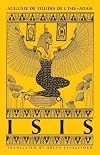
Here, presented in English in a long-belated translation by Brian Stableford, is Isis, the first novel of the acclaimed author of Contes cruels, Villiers de l'Isle-Adam. Deserving to be reckoned as one of the foundation-stones of Decadent prose fiction, redolent with echoes of Byron and Poe, reconfigured in the Baudelairean manner, and flamboyant with Gautieresque elements, this book is a tour de force of extravagant implication and esthetic dexterity: a work of peculiar genius.In its show more vaulting ambitions, its quirky mannerisms, its philosophical posturing and its lush descriptions, Isis is certainly a tale given to excess, but that excess is the essence of the endeavor, the wand of its enchantment. show lessTags
Recommendations





































Member Recommendations

Member Reviews
The proto-decadent short novel Isis was the first published prose composition of Auguste de Villiers de l'Isle Adam, and has only recently been translated to English by Brian Stableford. Although the author's dedication claims that the title "is the collective formula of a series of philosophical novels" projected to be written, none further followed, and "Isis" clearly alludes to the principal character Marchesa Tullia Fabriana.
It is noteworthy the extent to which this nineteenth-century work (set in the late eighteenth) anticipates and rehearses the tropes of the eventual modern superhero formula. Tullia is preternaturally learned, mystically initiated, and a superlative swordswoman. She has a trusty assistant/protege (recruited from show more orphaned destitution) and a secretly splendid headquarters. She routinely journeys out at the dead of night to aid the afflicted and heal the sick, under the anonymizing cover of a mask and specially-designed armor.
Unlike later crime-fighting capes tales, this book seems mostly unconcerned with plot, or at least fails to advance one very far. Short as it is, it indulges in some fine architectural description, anatomies of altered states of consciousness, and philosophical digressions. The style is reasonably abstruse, and its matter should be welcomed by those readers willing to tackle and appreciate classics of occult fiction such as Zanoni and Seraphita.
In the traditional Rosicrucian grade system, Tullia seems to be a rather accomplished Exempt Adept, perhaps a Babe of the Abyss. Her advancement to the grade of Master of the Temple in these terms would then be bound up with her encounter of the main viewpoint character Count Strally, a promising young man of parts who seems ready to accept her guidance. show less
It is noteworthy the extent to which this nineteenth-century work (set in the late eighteenth) anticipates and rehearses the tropes of the eventual modern superhero formula. Tullia is preternaturally learned, mystically initiated, and a superlative swordswoman. She has a trusty assistant/protege (recruited from show more orphaned destitution) and a secretly splendid headquarters. She routinely journeys out at the dead of night to aid the afflicted and heal the sick, under the anonymizing cover of a mask and specially-designed armor.
Unlike later crime-fighting capes tales, this book seems mostly unconcerned with plot, or at least fails to advance one very far. Short as it is, it indulges in some fine architectural description, anatomies of altered states of consciousness, and philosophical digressions. The style is reasonably abstruse, and its matter should be welcomed by those readers willing to tackle and appreciate classics of occult fiction such as Zanoni and Seraphita.
In the traditional Rosicrucian grade system, Tullia seems to be a rather accomplished Exempt Adept, perhaps a Babe of the Abyss. Her advancement to the grade of Master of the Temple in these terms would then be bound up with her encounter of the main viewpoint character Count Strally, a promising young man of parts who seems ready to accept her guidance. show less
ISIS
Nos encontramos en Florencia y en
1788. El joven principe alemán Wilhelm
de Strally-d'Anthas, recién llegado a la
ciudad, es presentado por el viejo
diplomático Forsiani a la marquesa Tulia
Fabriana, mujer extraordinaria y enigmática,
dotada de poderes sobrenaturales,
misteriosa reencarnación de Isis y
Cleopatra, frecuentadora de la noche y
sobre todo, obsesionada por un designio
desconocido.
Philippe-Auguste, conde de Villiers
de l'Isle-Adam (1838-1889), el célebre
autor de Contes cruels (1883), planeó,
hacia 1859, dar el título de Isis a una
ambiciosa serie de novelas filosóficas de
las que sólo conocemos este volumen
inicial subtitulado
Nos encontramos en Florencia y en
1788. El joven principe alemán Wilhelm
de Strally-d'Anthas, recién llegado a la
ciudad, es presentado por el viejo
diplomático Forsiani a la marquesa Tulia
Fabriana, mujer extraordinaria y enigmática,
dotada de poderes sobrenaturales,
misteriosa reencarnación de Isis y
Cleopatra, frecuentadora de la noche y
sobre todo, obsesionada por un designio
desconocido.
Philippe-Auguste, conde de Villiers
de l'Isle-Adam (1838-1889), el célebre
autor de Contes cruels (1883), planeó,
hacia 1859, dar el título de Isis a una
ambiciosa serie de novelas filosóficas de
las que sólo conocemos este volumen
inicial subtitulado
Apr 23, 2024Spanish
Ratings
Members
- Recently Added By
Lists

Best Fantasy Originally Published in a Language Other Than English
84 works; 25 members

Favorite Books in Translation
320 works; 133 members
Author Information

131+ Works 1,271 Members
Some Editions
Work Relationships
Common Knowledge
- Original title
- Isis
- Original publication date
- 1862
Classifications
Statistics
- Members
- 34
- Popularity
- 838,164
- Reviews
- 2
- Rating
- (4.50)
- Languages
- English, French, Spanish
- Media
- Paper, Ebook
- ISBNs
- 6
- ASINs
- 1