On This Page
Description
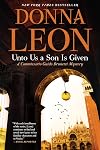
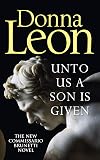
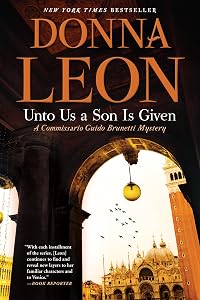
"Your situation is always ambiguous, isn't it, Guido?", his father-in-law, Count Orazio Falier, observes of Donna Leon's soulful detective, Guido Brunetti, at the beginning of her superb 28th Brunetti novel, Unto Us a Son is Given. "The world we live in makes that necessary," Brunetti presciently replies. Count Falier was urging his Venetian son-in-law to investigate, and preferably intervene in, the seemingly innocent plan of the Count's best friend, the elderly Gonzalo Rodriguez de Tejada, show more to adopt a much younger man as his son. Under arcane Italian inheritance laws this man would then be heir to Gonzalo's entire fortune, a prospect Gonzalo's friends find appalling. For his part, Brunetti wonders why the old man, a close family friend, can't be allowed his pleasure in peace. And yet, what seems innocent on the Venetian surface can cause tsunamis beneath. Gonzalo unexpectedly, and literally, drops dead on the street, and his good friend Berta Dodson, just arrived in Venice for the memorial service, is strangled in her hotel room—having earlier sent Gonzalo an email saying "We are the only ones who know you cannot do this," referring to the adoption. Now with an urgent case to solve, Brunetti reluctantly untangles the long-hidden mystery in Gonzalo's life that ultimately led to murder—a resolution that brings him way more pain than satisfaction. Once again, Donna Leon brilliantly plumbs the twists and turns of the human condition, reuniting us with some of crime fiction's most memorable and enduring characters.. show less
Tags
Recommendations














































Member Reviews
I read this book at the behest of my mother, who thought it was amazing. I haven’t read any of the other books in the series, and obviously book 28 is not the ideal place to start, so I gave this book an extra star (for me, it deserved two stars) because I know I am at least part of the problem here.
But, okay. This isn’t actually a mystery. A lonely older gay man dies halfway through, but he isn’t murdered, and a murder does actually take place two-thirds of the way through the book, but it’s immediately obvious who did it and why.
So when you deduct the mystery from a mystery novel, what’s left? The characters, for one. Guido Brunetti, the detective, gets 90% of the page time, and the thing is, I didn’t like him. He’s show more self-centered, judgmental as hell, and distant from the people around him. I spent most of the time wondering why he didn’t, you know, lift a finger to help out at home (his wife, who is a university professor, does all the shopping, cooking, and cleaning, and a majority of the parenting; he sits around reading), or care more about the people in his life, or reach out to anyone. Then, when he has solved the “mystery,” he decides a lifelong friend was a terrible person for, essentially, being lonely; Brunetti feels zero guilt for having contributed heavily to that loneliness. I can’t like a dude who doesn’t try and still feels qualified to judge everyone around him.
And that just leaves the setting, Venice. It’s an interesting city, and the look at ordinary-ish Italian life is also interesting, but I was constantly aware, reading this, that the author isn’t Italian. (She’s American.) So I couldn’t really enjoy the tourism factor, either.
Basically, this book is well-written and very readable, but there’s no there there, at least not for me. I think what I can take away from this is what I already knew: my mother and I have very different taste in books. show less
But, okay. This isn’t actually a mystery. A lonely older gay man dies halfway through, but he isn’t murdered, and a murder does actually take place two-thirds of the way through the book, but it’s immediately obvious who did it and why.
So when you deduct the mystery from a mystery novel, what’s left? The characters, for one. Guido Brunetti, the detective, gets 90% of the page time, and the thing is, I didn’t like him. He’s show more self-centered, judgmental as hell, and distant from the people around him. I spent most of the time wondering why he didn’t, you know, lift a finger to help out at home (his wife, who is a university professor, does all the shopping, cooking, and cleaning, and a majority of the parenting; he sits around reading), or care more about the people in his life, or reach out to anyone. Then, when he has solved the “mystery,” he decides a lifelong friend was a terrible person for, essentially, being lonely; Brunetti feels zero guilt for having contributed heavily to that loneliness. I can’t like a dude who doesn’t try and still feels qualified to judge everyone around him.
And that just leaves the setting, Venice. It’s an interesting city, and the look at ordinary-ish Italian life is also interesting, but I was constantly aware, reading this, that the author isn’t Italian. (She’s American.) So I couldn’t really enjoy the tourism factor, either.
Basically, this book is well-written and very readable, but there’s no there there, at least not for me. I think what I can take away from this is what I already knew: my mother and I have very different taste in books. show less
Venetian Commissario di Polizia Guido Brunetti is not your run-of-the-mill detective. He neither smokes nor drinks excessively, and is polite to his family, colleagues, and acquaintances. In Donna Leon’s “Unto Us a Son is Given,” Guido’s father-in-law, the wealthy and aristocratic Conte Orazio Falier, asks Brunetti to look into the private affairs of Falier’s close friend, Gonzalo Rodriguez de Tejeda. Much to il Conte’s chagrin, Gonzalo, who is eighty-five and openly gay, has decided to adopt a man more than forty years his junior. The octogenarian insists that he is motivated by nothing more than loneliness and a desire for love. Furthermore, he argues, is it really anyone else’s business what he does with his substantial show more wealth?
Another matter is one that Guido’s boss, Vice-Questore Patta, wants cleared up. Patta’s downstairs neighbor has an obnoxious eight-year old son who is extremely rude to Signora Patta, going so far as to call her despicable names, kick her groceries down the stairs, and even bang his schoolbag into her. Can Guido enlist the help of the brilliant Signorina Elletra Zorzi, an incomparable computer genius and formidable researcher, to find out more about the boy and his parents? The father, who is well-connected, refutes Signora Patta’s claims that his child is a menace and must be disciplined.
As fans of this series undoubtedly know, Brunetti is not a workaholic. He often sleeps late; eats delicious lunches and dinners prepared by his devoted wife, Paola; relies on Signorina Elletra to do most of his digging (she is arguably one of the most capable detectives in the book); and spends much of his leisure time reading and chatting with Paola. Guido is easygoing and an intellectual who relishes the ancient Greek and Roman classics. He is also compassionate, highly educated, a student of human nature, and savvy in his dealings with witnesses and suspects. Moreover, he usually manages to sidestep the machinations of his inept and duplicitous superiors.
This is a deliberately-paced novel in which the author demonstrates the consequences of greed, lust, anger, and selfishness. Another of Leon’s themes is the contrast between close-knit and loving relationships and those that are destructive and abusive. There are a few twists along the way, but the thin plot generates little suspense, and the conclusion is unsurprising. As always, Leon vividly describes the sights and sounds of Venice, alludes to the city’s social mores, and reminds us of the vast gulf between the affluent citizenry and those who barely get by. “Unto Us the Son is Given” is a light snack that is sometimes tasty, but ultimately leaves us wishing for more substantial fare. show less
Another matter is one that Guido’s boss, Vice-Questore Patta, wants cleared up. Patta’s downstairs neighbor has an obnoxious eight-year old son who is extremely rude to Signora Patta, going so far as to call her despicable names, kick her groceries down the stairs, and even bang his schoolbag into her. Can Guido enlist the help of the brilliant Signorina Elletra Zorzi, an incomparable computer genius and formidable researcher, to find out more about the boy and his parents? The father, who is well-connected, refutes Signora Patta’s claims that his child is a menace and must be disciplined.
As fans of this series undoubtedly know, Brunetti is not a workaholic. He often sleeps late; eats delicious lunches and dinners prepared by his devoted wife, Paola; relies on Signorina Elletra to do most of his digging (she is arguably one of the most capable detectives in the book); and spends much of his leisure time reading and chatting with Paola. Guido is easygoing and an intellectual who relishes the ancient Greek and Roman classics. He is also compassionate, highly educated, a student of human nature, and savvy in his dealings with witnesses and suspects. Moreover, he usually manages to sidestep the machinations of his inept and duplicitous superiors.
This is a deliberately-paced novel in which the author demonstrates the consequences of greed, lust, anger, and selfishness. Another of Leon’s themes is the contrast between close-knit and loving relationships and those that are destructive and abusive. There are a few twists along the way, but the thin plot generates little suspense, and the conclusion is unsurprising. As always, Leon vividly describes the sights and sounds of Venice, alludes to the city’s social mores, and reminds us of the vast gulf between the affluent citizenry and those who barely get by. “Unto Us the Son is Given” is a light snack that is sometimes tasty, but ultimately leaves us wishing for more substantial fare. show less
An elderly family friend of his father-in-law and therefore of Commissario Guido Brunetti, contemplates adopting an adult man. His father-in-law asks Brunetti to intervene or at least talk some sense into the very wealthy,eighty-five year old Gonzalo. This adopted son would be the sole beneficiary of a more than substantial inheritance. But he is not the only one who looks upon this scheme with disguised,or not,horror. When Gozalo,while visiting his estranged family in Spain, unexpectedly dies from a brain haemorrhage waters start to stir in Venice. And old friend comes to Venice so she can organise a memorial service but just hours after her arrival she is found strangled in her hotel room. It is Brunetti's task to unravel any show more connection between Gonzalo and this victim and to find a murderer....
A Donna Leon novel hardly starts with murder and mayhem on page one,and it is not different here. And sometimes this slowly building up of both the story and the tension works and sometimes it doesn't and it is not to everyone's liking (this is by the way the 28th in the Commissario Guido Brunetti series,quite a feat...),but here it all comes together perfectly. It captures and keeps the attention and the curiosity of the reader well. The characters are well developed and it feels very (Venetian) Italian(food,way of life...)
And then there is Venice,not exactly heaven on earth and not exactly inhabited by angels ,but still fascinating and intriguing enough to play a discreet leading role in this series. Yes,both Brunetti and Venice are back on track... show less
A Donna Leon novel hardly starts with murder and mayhem on page one,and it is not different here. And sometimes this slowly building up of both the story and the tension works and sometimes it doesn't and it is not to everyone's liking (this is by the way the 28th in the Commissario Guido Brunetti series,quite a feat...),but here it all comes together perfectly. It captures and keeps the attention and the curiosity of the reader well. The characters are well developed and it feels very (Venetian) Italian(food,way of life...)
And then there is Venice,not exactly heaven on earth and not exactly inhabited by angels ,but still fascinating and intriguing enough to play a discreet leading role in this series. Yes,both Brunetti and Venice are back on track... show less
Compulsively readable with an unassuming, graceful prose...
The exotic Venetian settings and Commissario Guido Brunetti’s old-school investigative methods are very charming, but it is the character-driven narrative that makes Donna Leon’s Brunetti series highly addictive. In this 28th Brunetti novel, Brunetti is urged by his father-in-law Count Falier to investigate the seemingly innocent plan of his best friend Gonzalo Rodríguez de Tejada’s adoption of an adult male as his son. Despite his reluctance to intervene in personal affairs of the elderly Gonzalo, Brunetti agrees to look into the matter, but Gonzalo dies soon after. The investigation becomes a homicide affair after one of Gonzalo’s close lady friends is found strangled show more in her hotel room. The victim has arrived in the city for Gonzalo’s memorial service. It’s up to Commissario Brunetti to solve the mystery now. Tagging along Brunetti, readers marvel at the antiquity and majesty of the city and experience Brunetti’s musings: they get to read another classic and see the city like a native Venetian while the former solves the murder in his usual style—by concentrating on the people behind the crime rather than on the crime. The case changes with every new book, but Leon’s sleuth is the same guy as ever; he still reads, appreciates good food and wine, deals sensitively with victims of crimes, is happily married and have great kids, thousands of things still bother him as always, and he is very much a humane cop. There are a few misleading diversions, but that wouldn’t stop readers from enjoying Leon’s latest slow burning mystery. show less
The exotic Venetian settings and Commissario Guido Brunetti’s old-school investigative methods are very charming, but it is the character-driven narrative that makes Donna Leon’s Brunetti series highly addictive. In this 28th Brunetti novel, Brunetti is urged by his father-in-law Count Falier to investigate the seemingly innocent plan of his best friend Gonzalo Rodríguez de Tejada’s adoption of an adult male as his son. Despite his reluctance to intervene in personal affairs of the elderly Gonzalo, Brunetti agrees to look into the matter, but Gonzalo dies soon after. The investigation becomes a homicide affair after one of Gonzalo’s close lady friends is found strangled show more in her hotel room. The victim has arrived in the city for Gonzalo’s memorial service. It’s up to Commissario Brunetti to solve the mystery now. Tagging along Brunetti, readers marvel at the antiquity and majesty of the city and experience Brunetti’s musings: they get to read another classic and see the city like a native Venetian while the former solves the murder in his usual style—by concentrating on the people behind the crime rather than on the crime. The case changes with every new book, but Leon’s sleuth is the same guy as ever; he still reads, appreciates good food and wine, deals sensitively with victims of crimes, is happily married and have great kids, thousands of things still bother him as always, and he is very much a humane cop. There are a few misleading diversions, but that wouldn’t stop readers from enjoying Leon’s latest slow burning mystery. show less
Guido Brunetti, commissario of the Venice police, has just received a rather unusual request from his father-in-law, Conte Orazio Falier. It seems that il Conte’s oldest friend, Gonzalo Rodriguez de Tejada, is in failing health and he wants to adopt his much younger gay lover as a son before he passes. At stake is the nobleman’s considerable inheritance and Falier wants Brunetti’s help to prevent his friend from making a terrible mistake in judgment. After initially refusing, Guido does get involved in the affair but it is not until two people have died—one under sudden and unusual circumstances—that he is able to resolve the case.
So goes the basic plot of Unto Us a Son Is Given, the latest installment in Donna Leon’s show more long-running series of Italian police procedurals. For devoted readers of these novels, the pleasure of each new story is that it allows for a deeper dive into the everyday lives of characters who have become beloved fictional fixtures. (Indeed, the main reason why this series has reached its twenty-eighth volume is that the main protagonists are so compelling.) In the case of this novel, that is an especially good thing because the mystery itself is really quite thin and not particularly engaging. Further, a second storyline involving Guido’s attempt to help his boss deal with some unruly neighbors is mercifully forgotten almost as soon as it is introduced.
What is left, though, is more than enough to make this a satisfying reading experience. I loved the sense of place that the author was able to create throughout the novel. She has a great talent for making it feel as if we are walking the streets, dining in the restaurants, or moving through the canals of one of the world’s truly remarkable cities. I also enjoyed the frequent glimpses into the hearts and minds of Brunetti and his wife Paola, who is an independent and fully developed character in her own right. This is a novel in which relationships, rather than the whodunit aspects, are placed front and center and I think that was a good decision. show less
So goes the basic plot of Unto Us a Son Is Given, the latest installment in Donna Leon’s show more long-running series of Italian police procedurals. For devoted readers of these novels, the pleasure of each new story is that it allows for a deeper dive into the everyday lives of characters who have become beloved fictional fixtures. (Indeed, the main reason why this series has reached its twenty-eighth volume is that the main protagonists are so compelling.) In the case of this novel, that is an especially good thing because the mystery itself is really quite thin and not particularly engaging. Further, a second storyline involving Guido’s attempt to help his boss deal with some unruly neighbors is mercifully forgotten almost as soon as it is introduced.
What is left, though, is more than enough to make this a satisfying reading experience. I loved the sense of place that the author was able to create throughout the novel. She has a great talent for making it feel as if we are walking the streets, dining in the restaurants, or moving through the canals of one of the world’s truly remarkable cities. I also enjoyed the frequent glimpses into the hearts and minds of Brunetti and his wife Paola, who is an independent and fully developed character in her own right. This is a novel in which relationships, rather than the whodunit aspects, are placed front and center and I think that was a good decision. show less
Commissario Guido Brunetti’s father-in-law, Count Orazio Falier, is worried about the behaviour of an old family friend, who has decided to adopt a much younger man as his son in order to leave his fortune to that person. When the Count asks Guido to look into this matter, he is at first reluctant to do so, but eventually feels that he should at least determine whether the family friend is being unduly influenced or manipulated. Fortunately, after an uncomfortable conversation, Guido decides that the situation is not his business and he moves on to other things. But when the old man dies, and then a friend of the old man is murdered, he begins to wonder if he made the wrong decision…. A hint of Ms. Leon’s writing style comes when show more Guido is irritated at Spring weather, then hears the chirping of birds: “Joy leaped at him: it was springtime again, the birds were back.” Spring-time feels that way, doesn’t it, and what a lovely way of putting it. As always with this series, reading such prose is a delight, as the author delves into philosophical questions even while describing the difficulties and beauties of life in Venice and, in this case, the extremely arcane realm of Italian inheritance law. At the same time, some of the long-standing relationships in the series deepen, in particular between Guido and his boss, Vice-Questore Patta, which is very satisfying. Very highly recommended! show less
Compulsively readable with an unassuming, graceful prose...
The exotic Venetian settings and Commissario Guido Brunetti’s old-school investigative methods are very charming, but it is the character-driven narrative that makes Donna Leon’s Brunetti series highly addictive. In this 28th Brunetti novel, Brunetti is urged by his father-in-law Count Falier to investigate the seemingly innocent plan of his best friend Gonzalo Rodríguez de Tejada’s adoption of an adult male as his son. Despite his reluctance to intervene in personal affairs of the elderly Gonzalo, Brunetti agrees to look into the matter, but Gonzalo dies soon after. The investigation becomes a homicide affair after one of Gonzalo’s close lady friends is found strangled show more in her hotel room. The victim has arrived in the city for Gonzalo’s memorial service. It’s up to Commissario Brunetti to solve the mystery now. Tagging along Brunetti, readers marvel at the antiquity and majesty of the city and experience Brunetti’s musings: they get to read another classic and see the city like a native Venetian while the former solves the murder in his usual style—by concentrating on the people behind the crime rather than on the crime. The case changes with every new book, but Leon’s sleuth is the same guy as ever; he still reads, appreciates good food and wine, deals sensitively with victims of crimes, is happily married and have great kids, thousands of things still bother him as always, and he is very much a humane cop. There are a few misleading diversions, but that wouldn’t stop readers from enjoying Leon’s latest slow burning mystery. show less
The exotic Venetian settings and Commissario Guido Brunetti’s old-school investigative methods are very charming, but it is the character-driven narrative that makes Donna Leon’s Brunetti series highly addictive. In this 28th Brunetti novel, Brunetti is urged by his father-in-law Count Falier to investigate the seemingly innocent plan of his best friend Gonzalo Rodríguez de Tejada’s adoption of an adult male as his son. Despite his reluctance to intervene in personal affairs of the elderly Gonzalo, Brunetti agrees to look into the matter, but Gonzalo dies soon after. The investigation becomes a homicide affair after one of Gonzalo’s close lady friends is found strangled show more in her hotel room. The victim has arrived in the city for Gonzalo’s memorial service. It’s up to Commissario Brunetti to solve the mystery now. Tagging along Brunetti, readers marvel at the antiquity and majesty of the city and experience Brunetti’s musings: they get to read another classic and see the city like a native Venetian while the former solves the murder in his usual style—by concentrating on the people behind the crime rather than on the crime. The case changes with every new book, but Leon’s sleuth is the same guy as ever; he still reads, appreciates good food and wine, deals sensitively with victims of crimes, is happily married and have great kids, thousands of things still bother him as always, and he is very much a humane cop. There are a few misleading diversions, but that wouldn’t stop readers from enjoying Leon’s latest slow burning mystery. show less
Members
- Recently Added By
Lists

Chronological 2019
12 works; 1 member

Books Read in 2021
5,361 works; 114 members

Books Read in 2022
5,226 works; 112 members
Author Information

61+ Works 46,250 Members
Donna Leon was born on September 29, 1942 in Montclair, New Jersey. She taught English literature in England, Switzerland, Iran, China, Italy and Saudi Arabia. She is the author of a Commissario Guido Brunetti Mystery series. Friends in High Places, a novel from the series, won the Crime Writers Association Macallan Silver Dagger for Fiction in show more 2000. German Television has produced 16 Commissario Brunetti mysteries for broadcast. She was a crime reviewer for the Sunday Times. She has written the libretto for a comic opera and has set up her own opera company, Il Complesso Barocco. Her titles Jewels of Pardise, The Golden Egg, By Its Cover, Falling in Love and The Waters of Eternal Youth made The New York Times Bestseller List. (Bowker Author Biography) show less
Awards and Honors
Series

Common Knowledge
- Canonical title
- Unto Us a Son is Given
- Original title
- Unto us a son is given
- Original publication date
- 2019
- People/Characters
- Guido Brunetti; Paola Brunetti; Conte Orazio Falier; Gonzalo Rodriguez de Tejada; Alberta Dodson; Attilio Circetti
- Important places
- Venice, Veneto, Italy
- Epigraph
- The good we wish for, often proves our bane.
I pray'd for children, and I gain'd a son
And such a son, as all men hail'd me happy.
But who'd be now a father in my stead?
The blessing drew a scorpio... (show all)n's tail behind.
Handel, Samson, Act I, Scene 3 - Dedication
- For Maxim Emelyanychev
- First words
- 'You know I don't like to meddle in things,' Conte Falier told Brunetti.
- Last words
- (Click to show. Warning: May contain spoilers.)He heard a noise, and when he looked, he saw Bassi at the door, bringing back the man Brunetti was about to charge with murder.
- Blurbers
- Le Guin, Ursula K.; Stasio, Marilyn
- Original language
- English
Classifications
Statistics
- Members
- 678
- Popularity
- 42,524
- Reviews
- 38
- Rating
- (3.90)
- Languages
- 8 — Catalan, Dutch, English, Finnish, French, German, Polish, Spanish
- Media
- Paper, Audiobook, Ebook
- ISBNs
- 36
- ASINs
- 8