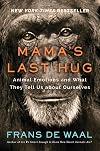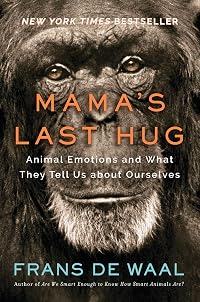
Mama's Last Hug: Animal Emotions and What They Tell Us about Ourselves
by Frans de Waal
On This Page
Description
A whirlwind tour of new ideas and findings about animal emotions, based on De Waal's renowned studies of the social and emotional lives of chimpanzees, bonobos, and other primates. De Waal discusses facial expressions, animal sentience and consciousness, Mama's life and death, the emotional side of human politics, and the illusion of free will. He distinguishes between emotions and feelings, all the while emphasizing the continuity between our species and other species. And he makes the show more radical proposal that emotions are like organs: we don't have a single organ that other animals don't have, and the same is true for our emotions -- Adapted from publisher's description. show lessTags
Recommendations











Member Reviews
Ethology, the scientific study of animal behavior, can yield insights into similar human behaviors because of the absence of the use of words by animals for verbalizing thoughts or emotions. Thus there is no obfuscation stemming from self-serving explanations or interpretations, lies, manipulation, euphemisms, lack of self-awareness, ideological biases, or any other misleading verbal descriptions that may cloud the picture. Unfortunately, many people believe that animal’s lack of a language understandable to humans implies a lack of consciousness and especially, a lack of emotions. Primatologist Frans De Waal reviews evidence showing these are unreasonable assumptions.
De Waal allows that our inability to translate animal sounds show more precisely means that we cannot always be certain of which emotions are being expressed by other species. But there are plenty of clues, including the ability to measure the hormonal output associated with emotions, such as oxytocin with affection, and adrenaline with aggression.
Scientists are also developing better experiments to assess animal “feelings.” The studies reported by de Waal that I enjoyed the most involved testing a sense of fairness and justice in primates, specifically in capuchin monkeys. Two monkeys were placed next to each other in separate areas divided by mesh, so they could see what was going on with each other. When both got cucumbers as rewards for completing a task, the monkeys seemed content, not acting out in any way. But if one got the preferable reward of grapes, the other rebelled, refusing to do the task and even throwing the cucumber chunks back at the investigators.
(You can watch a video of this experiment on youtube which appears as part of a Ted Talk by de Waal.)
Because of the important role of emotions in cognition, and the plethora of data about animals that would be hard to interpret without acknowledging emotions, de Waal writes “it’s time for us to squarely face the degree to which all animals are driven by them.” Indeed, he maintains, emotions play an adaptive role in evolution for all species in that they induce animals to bond with and protect family units; cooperate to find food and safety; and fight predators.
One of the behaviors de Waal considers is altruism, long considered a puzzle by scientists. He avers:
“I don’t know of a single woman scientist who has got carried away by the puzzle of altruism. Women would find it hard to leave out maternal nurturance and the constant worry and attention that it entails.”
Both scientists and philosophers are finally coming around to the conclusion that human morality is an outgrowth not of particular religious teachings, but of offspring care tendencies. These instincts are boosted by neurological and hormonal adaptations. They are so highly correlated that deficiencies in certain hormones are found in those who eschew affection and nurturing activities. In humans, when we see maternal behavior, we have no qualms in ascribing emtional engagement to both mother and child. With animals, however, we are more reluctant to do so. De Waal calls this intense aversion to antropomorphizing animals “anthropodenial,” which is not only wrong, but misleading about our place in the world, in de Waal’s view.
De Waal notes that whereas altruism seems aberrant and inexplicable to many scientists, selfishness does not, and is seen as the “default” for all species. Yet he cites evidence that selfishness does not in fact drive everything either humans or animals do. Experiments show that providing rewards for helping others actually diminishes the incentives for subjects to offer assistance. Individuals in both animal and human groups, it turns out, want to help others in distress, not only within but also across species, and don’t need or want external prodding to do it.
Besides selfishness, even more negatively-regarded behaviors are also shared among animals, such as the drive for power and dominance. Humans, however, like to style it as a sense of responsibility, or at “worst,” a desire for prestige. As de Waal points out, alluding to the innate hierarchical nature of human beings and its role as a motivating force is anathema to humans, who want to think of themselves as equitable and charitable and not so crass as to crave power and dominance.
De Waal argues, “the rejection of similarity between humans and other animals [is] a greater problem than the assumption of it.” Why do we do it? De Waal suggests it stems from “a desire to set humans apart and deny our animality.” Moreover, a deliberate separation in our minds has the self-serving function of allowing us to justify our mistreatment of animals - for example, in the ways in which we raise, transport, and slaughter them for eating.
De Waal isn’t making a case for eschewing meat. Rather, he advocates a respect for all forms of life that is more easily achieved by an awareness of the sentience of animals. He notes that scientists even used to assume human infants were sub-human organisms incapable of feeling pain. He reminds us:
“Only in the 1980s did medical procedures change, when it was revealed that babies have a full-blown pain response with grimacing and crying. Today we read about these experiments with disbelief.”
Although he doesn’t mention slavery, it is difficult not to consider the fact that whites have historically insisted to themselves as well as anyone needing convincing, that blacks were not as fully human as whites, which justified their mistreatment. Whites even went to war to defend the right to treat blacks as less than human.
So is there a line to be drawn between living beings? Or should we endeavor to accept, as de Waal advocates, that all life forms have much in common, and both their lives and ours would be immeasurably enhanced by that recognition? Whether we are considering other races or other species, it would behoove us to look for similarities as a basis for compassion and connection, rather than trying to establish our own superiority over whomever we can.
Discussion: De Waal joins a long line of scientists of animal behavior who have been trying for decades to convince people that animals are not so different from humans. They form relationships with family and friends, have loves, hates, senses of humor and senses of loss, and deserve respect from humans. Religious people point to the verse in the Bible reading “Then God said, “Let Us make man in Our image, according to Our likeness; let them have dominion over the fish of the sea, over the birds of the air, and over the cattle, over all the earth and over every creeping thing that creeps on the earth.” (Genesis 1:26, New King James Version). There is nothing in there however that says “dominion” means we cannot respect other creatures with whom we share the Earth, or even that we cannot recognize that they too have emotions.
Evaluation: This entertaining examination of animal behaviors reveals the evolutionary advantage of emotions, and the folly of not recognizing their ubiquity among other species. It is well worth reading. show less
De Waal allows that our inability to translate animal sounds show more precisely means that we cannot always be certain of which emotions are being expressed by other species. But there are plenty of clues, including the ability to measure the hormonal output associated with emotions, such as oxytocin with affection, and adrenaline with aggression.
Scientists are also developing better experiments to assess animal “feelings.” The studies reported by de Waal that I enjoyed the most involved testing a sense of fairness and justice in primates, specifically in capuchin monkeys. Two monkeys were placed next to each other in separate areas divided by mesh, so they could see what was going on with each other. When both got cucumbers as rewards for completing a task, the monkeys seemed content, not acting out in any way. But if one got the preferable reward of grapes, the other rebelled, refusing to do the task and even throwing the cucumber chunks back at the investigators.
(You can watch a video of this experiment on youtube which appears as part of a Ted Talk by de Waal.)
Because of the important role of emotions in cognition, and the plethora of data about animals that would be hard to interpret without acknowledging emotions, de Waal writes “it’s time for us to squarely face the degree to which all animals are driven by them.” Indeed, he maintains, emotions play an adaptive role in evolution for all species in that they induce animals to bond with and protect family units; cooperate to find food and safety; and fight predators.
One of the behaviors de Waal considers is altruism, long considered a puzzle by scientists. He avers:
“I don’t know of a single woman scientist who has got carried away by the puzzle of altruism. Women would find it hard to leave out maternal nurturance and the constant worry and attention that it entails.”
Both scientists and philosophers are finally coming around to the conclusion that human morality is an outgrowth not of particular religious teachings, but of offspring care tendencies. These instincts are boosted by neurological and hormonal adaptations. They are so highly correlated that deficiencies in certain hormones are found in those who eschew affection and nurturing activities. In humans, when we see maternal behavior, we have no qualms in ascribing emtional engagement to both mother and child. With animals, however, we are more reluctant to do so. De Waal calls this intense aversion to antropomorphizing animals “anthropodenial,” which is not only wrong, but misleading about our place in the world, in de Waal’s view.
De Waal notes that whereas altruism seems aberrant and inexplicable to many scientists, selfishness does not, and is seen as the “default” for all species. Yet he cites evidence that selfishness does not in fact drive everything either humans or animals do. Experiments show that providing rewards for helping others actually diminishes the incentives for subjects to offer assistance. Individuals in both animal and human groups, it turns out, want to help others in distress, not only within but also across species, and don’t need or want external prodding to do it.
Besides selfishness, even more negatively-regarded behaviors are also shared among animals, such as the drive for power and dominance. Humans, however, like to style it as a sense of responsibility, or at “worst,” a desire for prestige. As de Waal points out, alluding to the innate hierarchical nature of human beings and its role as a motivating force is anathema to humans, who want to think of themselves as equitable and charitable and not so crass as to crave power and dominance.
De Waal argues, “the rejection of similarity between humans and other animals [is] a greater problem than the assumption of it.” Why do we do it? De Waal suggests it stems from “a desire to set humans apart and deny our animality.” Moreover, a deliberate separation in our minds has the self-serving function of allowing us to justify our mistreatment of animals - for example, in the ways in which we raise, transport, and slaughter them for eating.
De Waal isn’t making a case for eschewing meat. Rather, he advocates a respect for all forms of life that is more easily achieved by an awareness of the sentience of animals. He notes that scientists even used to assume human infants were sub-human organisms incapable of feeling pain. He reminds us:
“Only in the 1980s did medical procedures change, when it was revealed that babies have a full-blown pain response with grimacing and crying. Today we read about these experiments with disbelief.”
Although he doesn’t mention slavery, it is difficult not to consider the fact that whites have historically insisted to themselves as well as anyone needing convincing, that blacks were not as fully human as whites, which justified their mistreatment. Whites even went to war to defend the right to treat blacks as less than human.
So is there a line to be drawn between living beings? Or should we endeavor to accept, as de Waal advocates, that all life forms have much in common, and both their lives and ours would be immeasurably enhanced by that recognition? Whether we are considering other races or other species, it would behoove us to look for similarities as a basis for compassion and connection, rather than trying to establish our own superiority over whomever we can.
Discussion: De Waal joins a long line of scientists of animal behavior who have been trying for decades to convince people that animals are not so different from humans. They form relationships with family and friends, have loves, hates, senses of humor and senses of loss, and deserve respect from humans. Religious people point to the verse in the Bible reading “Then God said, “Let Us make man in Our image, according to Our likeness; let them have dominion over the fish of the sea, over the birds of the air, and over the cattle, over all the earth and over every creeping thing that creeps on the earth.” (Genesis 1:26, New King James Version). There is nothing in there however that says “dominion” means we cannot respect other creatures with whom we share the Earth, or even that we cannot recognize that they too have emotions.
Evaluation: This entertaining examination of animal behaviors reveals the evolutionary advantage of emotions, and the folly of not recognizing their ubiquity among other species. It is well worth reading. show less
After his last book on the cognitive capabilities of animals (Are We Smart Enough to Know How Smart Animals Are?), de Waal here gives his attention to the emotional lives of animals. If you are familiar with de Waal at all, you won’t be surprised that he believes that the emotional lives of animals, especially but not only the primates that he has focused his research on, are much closer to our own than we have traditionally thought.
In general, de Waal wants to close the gap between ourselves and other animals, in our thinking about cognition, emotion, ethics, even politics. His Chimpanzee Politics is one of the most interesting books I’ve read, and this one continues the theme. De Waal asks us to suspend what he calls show more “anthropodenial” — the long-held popular belief that human beings are on the plus side of a great discontinuity in the animal world, that our complex social lives, our abilities with language, and our technological capabilities, and maybe our religious lives, simply place us in a wholly different category from the rest of the animal world. We are hardly, in that view, animals at all.
A key to de Waal’s thinking, and the change of perspective he asks us to take, is a challenge he sets when thinking about the lives of chimpanzees, gorillas, dogs, elephants, even crows: If the behavior and biological structures are the same, why believe the experiences are not the same?
When chimpanzees see one of their own in pain, they react in ways similar to how we react — they comfort, they try to help if they can, they appear to exhibit empathy. When “Mama”, the dying chimp in the title of the book, sees her old human friend and shows her joy and affection at probably a last meeting, she seems very “human.”
The nervous system and brain structures of chimpanzees are very similar to our own. Yet, traditionally, we have said there is nothing behind the behavior, or that what looks so “human-like” is really a matter of mechanistic stimulus/response, with no actual felt emotion. De Waal’s response is to ask why we are unwilling to attribute such emotional experiences to animals — what is it, besides our attitude of denial, that sustains the gap we place between us and them?
Of course, we do not have first hand access to the emotional lives of any creatures other than ourselves. And animals can’t give us verbal accounts of their emotional lives. But to maintain that, lacking those things, we can’t really know that animals experience true emotions is to stretch a skeptical attitude against what evidence is in fact at hand — the behaviors and the biology behind them.
De Waal does discuss, but not at great length, why we might be motivated to such skepticism. To conclude that the animals we raise for food, often in deplorable conditions, and the animals we force into extinction through hunting, fishing and through our own habitat expansion, feel, think, and live in ways not so different than we do would make it hard to go on in the ways we’ve grown comfortable with.
De Waal hits on many, many theoretical themes — the nature of emotions themselves, the nature of empathy in particular, the illusions of mind/body distinctions, and in the background of everything he is talking about here, what drives and characterizes evolution.
For example, the flip side of anthropodenial is human exceptionalism. The supposed gap between humans and other animals is the result not only of what animals are thought incapable of, but of the exceptional, unique things that only humans are thought capable of. Humans, in that view, transcend the animal world, for example, through rationality and at least the capacity for truly ethical behavior.
De Waal takes a swipe at both of those supposed aspects of exceptionality with his arguments against traditional “homo economicus” — the individualistically rational decision maker behind much of classical economic theory. Both apes and humans seem actually to defy the logic of individualistic rationality. Studies of apes show a continuity with humans with respect to accounting for others (both intra and inter species) in decision-making. Decisions that seem irrational from an individualistically rational model make sense in the context of the ape’s or human’s social life. In experiments testing whether or not apes, or human children, will forgo selfish advantage for the sake of sharing with others, both regularly choose sharing with others.
Experiments like those motivate de Waal to see evolution itself somewhat differently than we are used to seeing it. Evolution becomes less a competition between individuals to achieve individual reproductive success than a competition between a species and its environment to survive and reproduce as a species. Thus de Waal emphasizes cooperation between members of the species, in which the somewhat time-worn problem of altruism becomes much less of a problem than in the old Hobbesian model of a competition of all against all.
I think that de Waal is on the right side of history in his thinking about the relative places of animals and humans. The books we may have read not so long ago (even those like Desmond Morris’s The Naked Ape, which superficially seems a precursor to de Waal’s thinking) seem antiquated. The tide seems to turn, and those ethical questions about our traditional treatment of animals loom not all that far ahead. show less
In general, de Waal wants to close the gap between ourselves and other animals, in our thinking about cognition, emotion, ethics, even politics. His Chimpanzee Politics is one of the most interesting books I’ve read, and this one continues the theme. De Waal asks us to suspend what he calls show more “anthropodenial” — the long-held popular belief that human beings are on the plus side of a great discontinuity in the animal world, that our complex social lives, our abilities with language, and our technological capabilities, and maybe our religious lives, simply place us in a wholly different category from the rest of the animal world. We are hardly, in that view, animals at all.
A key to de Waal’s thinking, and the change of perspective he asks us to take, is a challenge he sets when thinking about the lives of chimpanzees, gorillas, dogs, elephants, even crows: If the behavior and biological structures are the same, why believe the experiences are not the same?
When chimpanzees see one of their own in pain, they react in ways similar to how we react — they comfort, they try to help if they can, they appear to exhibit empathy. When “Mama”, the dying chimp in the title of the book, sees her old human friend and shows her joy and affection at probably a last meeting, she seems very “human.”
The nervous system and brain structures of chimpanzees are very similar to our own. Yet, traditionally, we have said there is nothing behind the behavior, or that what looks so “human-like” is really a matter of mechanistic stimulus/response, with no actual felt emotion. De Waal’s response is to ask why we are unwilling to attribute such emotional experiences to animals — what is it, besides our attitude of denial, that sustains the gap we place between us and them?
Of course, we do not have first hand access to the emotional lives of any creatures other than ourselves. And animals can’t give us verbal accounts of their emotional lives. But to maintain that, lacking those things, we can’t really know that animals experience true emotions is to stretch a skeptical attitude against what evidence is in fact at hand — the behaviors and the biology behind them.
De Waal does discuss, but not at great length, why we might be motivated to such skepticism. To conclude that the animals we raise for food, often in deplorable conditions, and the animals we force into extinction through hunting, fishing and through our own habitat expansion, feel, think, and live in ways not so different than we do would make it hard to go on in the ways we’ve grown comfortable with.
De Waal hits on many, many theoretical themes — the nature of emotions themselves, the nature of empathy in particular, the illusions of mind/body distinctions, and in the background of everything he is talking about here, what drives and characterizes evolution.
For example, the flip side of anthropodenial is human exceptionalism. The supposed gap between humans and other animals is the result not only of what animals are thought incapable of, but of the exceptional, unique things that only humans are thought capable of. Humans, in that view, transcend the animal world, for example, through rationality and at least the capacity for truly ethical behavior.
De Waal takes a swipe at both of those supposed aspects of exceptionality with his arguments against traditional “homo economicus” — the individualistically rational decision maker behind much of classical economic theory. Both apes and humans seem actually to defy the logic of individualistic rationality. Studies of apes show a continuity with humans with respect to accounting for others (both intra and inter species) in decision-making. Decisions that seem irrational from an individualistically rational model make sense in the context of the ape’s or human’s social life. In experiments testing whether or not apes, or human children, will forgo selfish advantage for the sake of sharing with others, both regularly choose sharing with others.
Experiments like those motivate de Waal to see evolution itself somewhat differently than we are used to seeing it. Evolution becomes less a competition between individuals to achieve individual reproductive success than a competition between a species and its environment to survive and reproduce as a species. Thus de Waal emphasizes cooperation between members of the species, in which the somewhat time-worn problem of altruism becomes much less of a problem than in the old Hobbesian model of a competition of all against all.
I think that de Waal is on the right side of history in his thinking about the relative places of animals and humans. The books we may have read not so long ago (even those like Desmond Morris’s The Naked Ape, which superficially seems a precursor to de Waal’s thinking) seem antiquated. The tide seems to turn, and those ethical questions about our traditional treatment of animals loom not all that far ahead. show less
Fascinating and pleasantly meandering and persuasive book about animal emotions that takes on human exceptionalism and behaviorism. This book did require some effort on my part to absorb and occasionally to stay engaged -- it's not a light breezy read, at least wasn't for me. But I found the effort well worth it, especially for the spectacular Chapter 7 on Sentience: What Animals Feel. As a long-term vegetarian, it's a chapter I want to share with everyone (but I bet even non-vegetarians will find it well debated, well thought out, and well supported). I especially love when when de Waal hints that maybe he (and the rest of us) are wrong and there is the possibility that plants and bivalves could, indeed, be considered sentient. ("At show more the same time, it will serve us well to recall the long history of science in underestimating animals. At this point, there is no guarantee that we aren’t doing the same with plants.") I also am glad that he addresses in this chapter why he feels it ethically okay for him to do his non-invasive research with chimps and monkeys, and why properly treated animals in zoos may be okay.
Two small quibbles: the illustrations of animals throughout the book didn't add much for me, and the captions tended to repeat what had already been said. I would have preferred actual photographs...
And this book worked much better for me when I read it on the page versus listening to the audiobook. Maybe it was the narrator, or maybe the writing is too compact (or the ideas too large?) to process when hearing, for me, anyway.... show less
Two small quibbles: the illustrations of animals throughout the book didn't add much for me, and the captions tended to repeat what had already been said. I would have preferred actual photographs...
And this book worked much better for me when I read it on the page versus listening to the audiobook. Maybe it was the narrator, or maybe the writing is too compact (or the ideas too large?) to process when hearing, for me, anyway.... show less
Quite a fascinating book. I thought as I started that it would be a bit superficial...just a series of stories about how animals seemed to experience a range of feelings and how they communicated. But it is, at a much deeper level, an investigation into our own human-ness and the fact that we are on a continuum with the apes as far as emotions are concerned. ......In fact the links go much further back in the animal kingdom. De Waals even briefly flirts with the idea of something like emotions in plants.
He draws a very clear distinction between feelings which are internalised and which presumably drive the emotions. We can't directly get to another's feelings. We can, perhaps, describe out own but we cannot get at an animal's feelings. show more Emotions, (according to de Waal) are another issue and are on display (generally) for all to see if they take the trouble. anger, fear, envy, empathy, sense of fairness, humour...they are all there. Apes even have virtually the same musculature as humans and wrinkle the same muscles in the forehead when angry.
On the whole he is pretty convincing ..even when much of the labelling comes down to: they act like this under these circumstances and humans would be experiencing this emotion so it's reasonable to assume that the apes are also experiencing the same sort of emotion.
A few good points made: Rawls theory of justice does not deal with envy. De Waal is floored by this because the animal world pretty much runs on envy. (Seems to be a major flaw with Rawls). Pinker, in his book "the better angels of our nature" accepts that the natural state of man is in a state of perpetual war and civilisation and cultural progress are the solution to all our problems. But de Waal suggests that primate societies did not necessarily live in this state of perpetual violence...looking to the bonobo societies and to the Ardipithecus ramidus (an apparently rather gentle 4.4 million year old hominoid) as counter examples of gentle existence.
The smile evolved from an expression of fear and submission whilst the laugh evolved from a play indicator and both expression s have been growing closer in our species. Stand-alone emotional states are rare...so labelling expressions as angry or sad is problematic.
Apes lose interest when they have figured something out ....so might underachieve in tasks...which goes to show that performance and intelligence are not the same thing.
Emotions help us navigate a complex world that we don't fully comprehend. They are our body's way of ensuring that we do what is best for us......minds are useless by themselves: they need bodies to engage with the world.
We don't hear much about selfish genes anymore...Science has confirmed that cooperation is our species first inclination ...at least with members of the in-crowd.
Empathy can be used for good or evil: being an effective torturer requires knowing what hurts most.
More and more {de Waal} believes that all the emotions that we are familiar with can be found one way or another in all mammals....the variation is in the details. (Part of the problem is out language labelling of emotions).
The behaviour of dogs after transgression is best regarded as typical reaction of a hierarchical species in the presence of a potentially annoyed dominant...rather than guilt.
When de Waal looks at a marching army he sees the herd instinct at work rather than aggressive instincts.
An elephant's 4 kg brain has three times as many neutrons as our own...so what proof is there that we are more conscious than elephants?
Behind the debate about animal consciousness lurks an issue that most scientists would rather avoid: what humanity does to animals. 73% of hunter gather cultures worldwide derive more than half their subsistence from anima foods.
Scientific skepticism about pain applies not just to animals but to any organism that fails to talk. But animals never report any feelings. Feelings are clearly less accessible to science than emotions but one day we might be able to measure the private experience of other species but for the moment we have to content ourselves with what is visible on the outside.
In all, quite a powerful and profound book. I give it five stars. show less
He draws a very clear distinction between feelings which are internalised and which presumably drive the emotions. We can't directly get to another's feelings. We can, perhaps, describe out own but we cannot get at an animal's feelings. show more Emotions, (according to de Waal) are another issue and are on display (generally) for all to see if they take the trouble. anger, fear, envy, empathy, sense of fairness, humour...they are all there. Apes even have virtually the same musculature as humans and wrinkle the same muscles in the forehead when angry.
On the whole he is pretty convincing ..even when much of the labelling comes down to: they act like this under these circumstances and humans would be experiencing this emotion so it's reasonable to assume that the apes are also experiencing the same sort of emotion.
A few good points made: Rawls theory of justice does not deal with envy. De Waal is floored by this because the animal world pretty much runs on envy. (Seems to be a major flaw with Rawls). Pinker, in his book "the better angels of our nature" accepts that the natural state of man is in a state of perpetual war and civilisation and cultural progress are the solution to all our problems. But de Waal suggests that primate societies did not necessarily live in this state of perpetual violence...looking to the bonobo societies and to the Ardipithecus ramidus (an apparently rather gentle 4.4 million year old hominoid) as counter examples of gentle existence.
The smile evolved from an expression of fear and submission whilst the laugh evolved from a play indicator and both expression s have been growing closer in our species. Stand-alone emotional states are rare...so labelling expressions as angry or sad is problematic.
Apes lose interest when they have figured something out ....so might underachieve in tasks...which goes to show that performance and intelligence are not the same thing.
Emotions help us navigate a complex world that we don't fully comprehend. They are our body's way of ensuring that we do what is best for us......minds are useless by themselves: they need bodies to engage with the world.
We don't hear much about selfish genes anymore...Science has confirmed that cooperation is our species first inclination ...at least with members of the in-crowd.
Empathy can be used for good or evil: being an effective torturer requires knowing what hurts most.
More and more {de Waal} believes that all the emotions that we are familiar with can be found one way or another in all mammals....the variation is in the details. (Part of the problem is out language labelling of emotions).
The behaviour of dogs after transgression is best regarded as typical reaction of a hierarchical species in the presence of a potentially annoyed dominant...rather than guilt.
When de Waal looks at a marching army he sees the herd instinct at work rather than aggressive instincts.
An elephant's 4 kg brain has three times as many neutrons as our own...so what proof is there that we are more conscious than elephants?
Behind the debate about animal consciousness lurks an issue that most scientists would rather avoid: what humanity does to animals. 73% of hunter gather cultures worldwide derive more than half their subsistence from anima foods.
Scientific skepticism about pain applies not just to animals but to any organism that fails to talk. But animals never report any feelings. Feelings are clearly less accessible to science than emotions but one day we might be able to measure the private experience of other species but for the moment we have to content ourselves with what is visible on the outside.
In all, quite a powerful and profound book. I give it five stars. show less
This is the third de Waal book I've read, following "Are We Smart Enough to Know How Smart Animals Are?". Though de Waal says in an afterword he intended the latter to be about cognition and this one to be about emotion, there is a large overlap, even in the examples, studies and anecdotes used. Of the two, "Are We Smart Enough" is the superior book; the emotional inner life of animals is - as he admits repeatedly - less testable, and is dependent on the former cognitive ability of animals, which is testable. As a companion piece to "Are We Smart Enough" this is like a dessert to the main dish, sweet but less substantial.
Wonderfully written book about animal emotions. The main focus is on apes, but lots about other animals as well. He has a good way of labeling some things as not quite facts but as well-supported scientific conjectures.
Animal emotions. Human emotions. Can they, in any way share commanalties? The author makes a convincing and illuminating arguement, that yes they can, and they can also tell us much about ourselves. He shares the relationship between various chimp behaviors, the emotions they have and how they are shown in various situations. While most of the book cover this group, their are also sections on birds, horses and even comparisons of human behavior, notably Trump and Spicer, that directly correlates to the animal world.
My favorite parts were the Bonobos, who he calls the hippies of the chimp world. They would rather make love, not war. Plus, a rarity in that it is a female who has the most power. Also enjoyed the bits of humor scattered show more throughout, such as when the author notes, that chimps are very familiar with each other's derrieres. Parts are sad, such as Mama's passing, but it is also informative and enjoyable. Our human makeup, emotionally, so closely tied to many other animals should make us kinder to those animals who share our environment, or so I hope. Understanding should bring kindness and empathy, which by the way are other emotions we share.
Good book, wonderful delivery and I enjoyed the narrator L. J. Ganser. show less
My favorite parts were the Bonobos, who he calls the hippies of the chimp world. They would rather make love, not war. Plus, a rarity in that it is a female who has the most power. Also enjoyed the bits of humor scattered show more throughout, such as when the author notes, that chimps are very familiar with each other's derrieres. Parts are sad, such as Mama's passing, but it is also informative and enjoyable. Our human makeup, emotionally, so closely tied to many other animals should make us kinder to those animals who share our environment, or so I hope. Understanding should bring kindness and empathy, which by the way are other emotions we share.
Good book, wonderful delivery and I enjoyed the narrator L. J. Ganser. show less
Members
- Recently Added By
Lists

2020 Notable Books for Adults
26 works; 5 members

Science: Zoology
107 works; 1 member

Books Read in 2019
4,052 works; 110 members

Books Read in 2020
4,379 works; 124 members

Read-alike - Hollow Kingdom by Kira Buxton
16 works; 1 member

Favorite Animal Non-Fiction
293 works; 144 members
Author Information

33+ Works 6,066 Members
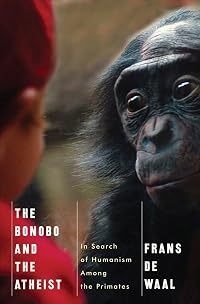
Frans De Waal has been named one of Time magazine's 100 Most Influential People. The author of The Bonobo and the Atheist, among many other works, he is the C. H. Candler Professor in Emory University's Psychology Department and director of the Living Links Center at the Yerkes National Primate Research Center. He lives in Atlanta, Georgia.
Some Editions
Awards and Honors
Awards
Distinctions
Notable Lists
Common Knowledge
- Canonical title
- Mama's Last Hug: Animal Emotions and What They Tell Us about Ourselves
- Original title
- Mama's last hug : animal emotions and what they tell us about ourselves
- Original publication date
- 2019-03-12
- People/Characters
- Mama [Chimpanzee matriarch]; Jan van Hooff; Sarah Brosnan; Charles Darwin [Charles Robert: 1809-1882]; Paul Ekman; Jane Goodall (show all 13); Kuif [Chimpanzee]; Konrad Lorenz; Luit [Chimpanzee]; Nikkie [Chimpanzee]; Jaak Panksepp; Adam Smith; Yeroen [Chimpanzee]
- Important places
- Burger Zoo, Arnhem, the Netherlands
- Dedication
- For Catherine,
who lights my fire - First words
- Watching behavior comes naturally to me, so much so that I may be overdoing it. (Prologue)
One month before Mama turned fifty-nine and two months before Jan van Hooff's eightieth birthday, these two elderly hominids had an emotional reunion. - Last words
- (Click to show. Warning: May contain spoilers.)Instead of tiptoeing around them [emotions], it’s time for us to squarely face the degree to which all animals are driven by them.
- Publisher's editor
- Glusman, John
- Blurbers
- Harari, Yuval Noah; Safina, Carl; Grandin, Temple; Sapolsky, Robert; Morris, Desmond
- Original language*
- Engels
*Some information comes from Common Knowledge in other languages. Click "Edit" for more information.
Classifications
Statistics
- Members
- 543
- Popularity
- 54,791
- Reviews
- 17
- Rating
- (4.13)
- Languages
- 10 — Dutch, English, French, German, Italian, Polish, Portuguese, Spanish, Swedish, Turkish
- Media
- Paper, Audiobook, Ebook
- ISBNs
- 24
- ASINs
- 6