The Sweet Flypaper of Life
by Roy DeCarava (Photographer), Langston Hughes (Author)
On This Page
Description
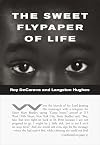
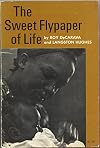
"The people in these photographs had no walls up. They just accepted me and permitted me to take their photographs without any self-consciousness." --Roy DeCarava The Sweet Flypaper of Life is a "poem" about ordinary people, about teenagers around a jukebox, about children at an open fire hydrant, about riding the subway alone at night, about picket lines and artist work spaces. This renowned, life-affirming collaboration between artist Roy DeCarava and writer Langston Hughes honors in show more words and pictures what the authors saw, knew, and felt deeply about life in their city. Hughes's heart-warming description of Harlem in the late 1940s and early 1950s is seen through the eyes of one grandmother, Sister Mary Bradley. As she guides the reader through the lives of those around her, we imagine the babies born, families in struggle, children yet flourishing. We experience the sights and sounds of Harlem as seen through her learned and worldly eyes, expressed here through Hughes's poetic prose. As she states, "I done got my feet caught in the sweet flypaper of life and I'll be dogged if I want to get loose." DeCarava's photographs lay open a world of sense and feeling that begins with his perception and vision. The ruminations go beyond the limit of simple observation and contend with deeper meanings to reveal these individuals as subjects worthy of art. While Hughes states "We've had so many books about how bad life is, maybe it's time to have one showing how good it is," the photographs bring us back to this lively dialogue and a complex reality, to a resolution that stands with the optimism of the photographic medium and the certainty of DeCarava's artistic moment. In 1952 DeCarava became the first African American photographer to win a John Simon Guggenheim Memorial Fellowship. The one-year grant enabled DeCarava to focus full time on the photography he had been creating since the mid-1940s and to complete a project that would eventually result in The Sweet Flypaper of Life, a moving, photo-poetic work in the urban setting of Harlem. DeCarava compiled a set of images from which Hughes chose 141 and adeptly supplied a fictive narration, reflecting on life in that city-within-a-city. First published in 1955, the book, widely considered a classic of photographic visual literature, was reprinted by public demand several times. This fourth printing, the Heritage Edition, is the first authorized English-language edition since 1983 and includes an afterword by Sherry Turner DeCarava tracing the history and ongoing importance of this book. show lessTags
Recommendations
















Member Reviews
I really enjoyed this book in which Langston Hughes weaves a story of African Americans living in Harlem featuring the photographs of Roy DeCarava. I stumbled across it as I was reclassifying some books in the library. Because the photographs dominate the book rather than the text, it reads quickly.
Ratings
Members
- Recently Added By
Lists

Top Five Books of 2018
802 works; 265 members

Art-inspired fiction
45 works; 2 members

Schomburg Centennial Reading List
100 works; 4 members
Author Information


Langston Hughes, February 1, 1902 - May 22, 1967 Langston Hughes, one of the foremost black writers to emerge from the Harlem Renaissance, was born on February 1, 1902, in Joplin, Mo. Hughes briefly attended Columbia University before working numerous jobs including busboy, cook, and steward. While working as a busboy, he showed his poems to show more American poet Vachel Lindsay, who helped launch his career. He soon obtained a scholarship to Lincoln University and had several works published. Hughes is noted for his depictions of the black experience. In addition to the black dialect, he incorporated the rhythms of jazz and the blues into his poetry. While many recognized his talent, many blacks disapproved of his unflattering portrayal of black life. His numerous published volumes include, "The Weary Blues," "Fine Clothes to the Jew," and "Montage of a Dream Deferred." Hughes earned several awards during his lifetime including: a Guggenheim fellowship, an American Academy of Arts and Letters Grant, and a Spingarn Medal from the NAACP. Langston Hughes died of heart failure on May 22, 1967. (Bowker Author Biography) show less

Langston Hughes has a Legacy Library. Legacy libraries are the personal libraries of famous readers, entered by LibraryThing members from the Legacy Libraries group.
Some Editions
Awards and Honors
Distinctions
Common Knowledge
- Original publication date
- 1955
- Important places
- Harlem, New York, New York, USA
- First words
- When the bicycle of the Lord bearing His messenger with a telegram for Sister Mary Bradley saying "Come home" arrived at 113 West 134th Street, New York City, Sister Bradley said, "Boy, take that wire right on back to St. Pet... (show all)er because I am not prepared to go.
- Last words
- (Click to show. Warning: May contain spoilers.)Here I am.
- Canonical LCC
- F128.9.N3 D4 2018
Classifications
- Genre
- Poetry
- DDC/MDS
- 305.896 — Society, government, & culture Social sciences, sociology & anthropology Social group - Age, Gender, Ethnicity Ethnic and national groups Other ethnic and national groups Africans and people of African descent; Blacks of African origin
- LCC
- F128.9 .N3 .D4 — Local History of the United States, Canada and Latin America United States local history New York
- BISAC
Statistics
- Members
- 207
- Popularity
- 157,817
- Reviews
- 2
- Rating
- (4.44)
- Languages
- English, German
- Media
- Paper
- ISBNs
- 5
- ASINs
- 11