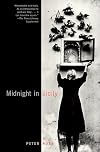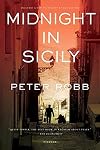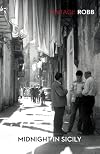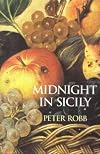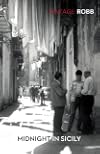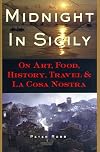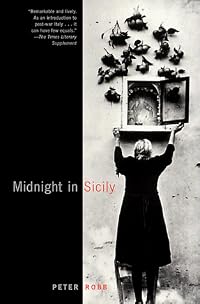
Midnight In Sicily
by Peter Robb
On This Page
Description
A New York Times Book Review Notable Book of the YearA New York Public Library Best Book of the Year
From the author of M and A Death in Brazil comes Midnight in Sicily.
South of mainland Italy lies the island of Sicily, home to an ancient culture that—with its stark landscapes, glorious coastlines, and extraordinary treasure troves of art and archeology—has seduced travelers for centuries. But at the heart of the island's rare beauty is a network of violence and corruption that reaches show more into every corner of Sicilian life: Cosa Nostra, the Mafia. Peter Robb lived in southern Italy for over fourteen years and recounts its sensuous pleasures, its literature, politics, art, and crimes.
. show less
Tags
Recommendations










Member Reviews
The one book about Sicily I read, during a short trip, is “Midnight in Sicily” (1996), written by Peter Robb. Although the book is advertised by its sub-title, on arts, food, history, travel & Cosa Nostra, the latter is by far the dominant subject. Robb describes, sometimes in sickening detail, how the Mafia turned itself from a group of family- and village-based criminal bands who made their money from cigarette smuggling and protection rings, loosely governed by a overarching Cupola to ensure that different gangs didn’t interfere with each other’s operation, into an efficient crime-machine intricately interwoven with Italian politics at all levels – and I mean, literally, at all levels: the book is kind of linked to the show more trial of seven-time prime minister Guilio Andreotti. At the same time Robb plausibly sketches the mechanism that undid the Mafia: not so much the efforts of a few determinded anti-mafia fighters, however noble and courageous their cause, but more so the rise and rise of Riina Toti, who took control of the Cupola, and systematically began to murder everybody in the organisation who could possibly challenge him, to the effect that quite a few, not sure about their lives inside the Mafia anymore, decided to get out, and break the Omerta, the code of silence, in an last attempt to survive.
Mr Robb’s book does divert, and has entertaining parts on, for instance, the history of the fork, and the origin of pasta. Mr Robb also meets interesting people, like a woman photographer turned politician, fiercely anti-Mafia. But every time, he ultimately comes back to his prime subject, the Mafia, and every time, he spells out other gruesome details – sometimes, perhaps, too much. But it doesn’t diminish the intensity of the book, and the message it puts forward, that Italy was on the brink of becoming ungovernable. Great book for anybody interested not just in Sicily, but also in the post-war history of Italy. show less
Mr Robb’s book does divert, and has entertaining parts on, for instance, the history of the fork, and the origin of pasta. Mr Robb also meets interesting people, like a woman photographer turned politician, fiercely anti-Mafia. But every time, he ultimately comes back to his prime subject, the Mafia, and every time, he spells out other gruesome details – sometimes, perhaps, too much. But it doesn’t diminish the intensity of the book, and the message it puts forward, that Italy was on the brink of becoming ungovernable. Great book for anybody interested not just in Sicily, but also in the post-war history of Italy. show less
This could be the best book I have read on Sicily and Naples. Robb lived for 14 years in Naples and Sicily. The books wanders wondrously through time, however, Robb writes so seamlessly you do not seem to notice. His passions are food and art and he tells history through these passions. The book's primary focus is on the mafia and how it has come to poison Italian society, with corruption going all the way to the top. He recounts how the Aliies after their occupation of Sicily during WWII turned to the Mafia to restablish local political control, out of fear that the Communists would fill the political vacuum caused by the demise of fascism. Lucky Luciano was released from prison to be our diplomatic go-between. No wonder they have show more problems. show less
This book tells the story of modern Sicily from its liberation in WW2 to the mid 1990s. Prior to this period, the Mafia, or Cosa Nostra, had existed as another layer of society between the people and the government and controlled the daily lives of the masses. But since the war, the Mafia has also become enmeshed in and corrupted the politics of both Sicily and Italy. Having personally seen, heard, read and experienced Sicily and its rich past, this book fills in the modern picture through the author's personal journey and retelling the stories of some of the key players on all sides of the law - from the politicians, magistrates and police, through the artists, writers, photographers and bystanders, to the mafiosi themselves.
There are show more some parts that dwell on Naples where the author also spent some years. But this is done to compare and contrast the Sicilian experience to the similar one, at least to the outside observer, of Naples. Shared history, it seems, is not always shared equally.
It is a tragedy that such a beautiful land has such a savage underbelly that controls almost all aspects of life. One can only hope that the lives of the investigating magistrates Giovanni Falcone and Paolo Borsellino blown up by the Mafia, as well as the many others wishing to be freed from this yoke, will not be in vain. But there remains the suggestion that the Mafia still has some control over government in more recent times.
The theme of the book, and by implication life in Sicily, is echoed in the last line of this edition (2007): Everything has to change so everything can stay the same.
I highly recommend this book to those wishing to understand Sicily, its rich history and modern reality. show less
There are show more some parts that dwell on Naples where the author also spent some years. But this is done to compare and contrast the Sicilian experience to the similar one, at least to the outside observer, of Naples. Shared history, it seems, is not always shared equally.
It is a tragedy that such a beautiful land has such a savage underbelly that controls almost all aspects of life. One can only hope that the lives of the investigating magistrates Giovanni Falcone and Paolo Borsellino blown up by the Mafia, as well as the many others wishing to be freed from this yoke, will not be in vain. But there remains the suggestion that the Mafia still has some control over government in more recent times.
The theme of the book, and by implication life in Sicily, is echoed in the last line of this edition (2007): Everything has to change so everything can stay the same.
I highly recommend this book to those wishing to understand Sicily, its rich history and modern reality. show less
I read this while traveling through Sicily. It was a wonderful way to understand what I was experiencing. The descriptions of the catacombs in Palermo were exacting, but better yet was touring the "anti-mafia" museum in Corleone and seeing the pictures of the people he described throughout the renditions of the mafia wars. The significance of the book is understated.
Amazing book, takes you backward and forward in time, weaves together politics, immediacy, the past, food and smells, visuals, places in Sicily and Naples. It's literature. Of an unusual kind. Has a lot of pace. I'm intrigued by the writer's handling of time, worth analysing. I tried a bit, but found it too much work. Perhaps it's best to surrender to it.
For some reason I thought this was an armchair travel book, heavy on descriptions of indulgent meals and gorgeous Sicilian scenery. It's actually a book about the Mafia, which would be fine but not what I was wanting. Also, the narrative jumps around a lot, so it's hard to tell what happened when or what influenced what other thing.
grippingly intelligent on the scandal of Italy (and rather interesting about food, too)
Members
- Recently Added By
Lists

Non-Fiction Worth Reading
1,015 works; 261 members

Mustich's 1000 Books to Read Before You Die: A Life Changing List
1,001 works; 18 members
Author Information

8+ Works 1,788 Members
Peter Robb has divided his time among Brazil, southern Italy, and Australia during the past quarter century
Awards and Honors
Common Knowledge
- Canonical title
- Midnight In Sicily
- Original publication date
- 1996
- People/Characters
- The Mafia; Giulio Andreotti; Guiseppe di Lampedusa; Salvatore Riina
- Important places
- Sicily, Italy; Palermo, Italy; Corleone, Sicily, Italy
- Epigraph
- History isn't
the devastating bulldozer they say it is.
It leaves underpasses, crypts, holes
and hiding places.There are survivors.
History's also benevolent:destroys
as much as it can: overdoing it, sure,
w... (show all)ould be better, but history's short
of news, doesn't carry out all its vendettas.
History scrapes the bottom
like a drag net
with a few rips and more than one fish escapes.
Sometimes you meet the ectoplasm
of an escapee and he doesn't seem particularly happy.
He doesn't know he's outside, nobody told him.
The others, in the bag, think
they're freer than him.
Eugenio Montale, "Satura"
When it's night time in Italy
it's Wednesday over here.
When it's midnight in Sicily...
The Everly Brothers, "Night time in Italy" - Dedication
- I.M. Wanda Jamrozik
- First words
- I woke with a start about an hour after midnight.
- Blurbers
- Farrell, Joseph; Glazebrook, Philip; Moorhead, Caroline
Classifications
Statistics
- Members
- 638
- Popularity
- 45,041
- Reviews
- 9
- Rating
- (4.07)
- Languages
- 7 — Danish, Dutch, English, French, Norwegian (Bokmål), Polish, Spanish
- Media
- Paper, Ebook
- ISBNs
- 23
- ASINs
- 8