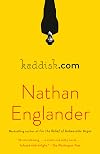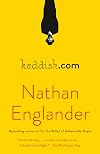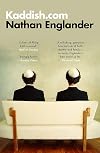
kaddish.com: A novel
by Nathan Englander
On This Page
Description
"The Pulitzer finalist delivers his best work yet--a brilliant, streamlined comic novel, reminiscent of early Philip Roth and of his own most masterful stories, about a son's failure to say Kaddish for his father. Larry is an atheist in a family of orthodox Memphis Jews. When his father dies, it is his responsibility as the surviving son to recite the Kaddish, the Jewish prayer for the dead, every day for eleven months. To the horror and dismay of his mother and sisters, Larry refuses--thus show more imperiling the fate of his father's soul. To appease them, and in penance for failing to mourn his father correctly, he hatches an ingenious if cynical plan, hiring a stranger through a website called Kaddish.com to recite the daily prayer and shepherd his father's soul safely to rest. This is Nathan Englander's freshest and funniest work to date--a satire that touches, lightly and with unforgettable humor, on the conflict between religious and secular worlds, and the hypocrisies that run through both. A novel about atonement; about spiritual redemption; and about the soul-sickening temptations of the internet, which, like God, is everywhere"-- "The Pulitzer finalist delivers his best work yet--a brilliant, streamlined comic novel, reminiscent of early Philip Roth and of his own most masterful stories, about a son's failure to say Kaddish for his father"-- show lessTags
Recommendations





























Member Reviews
When Larry's Orthodox father dies, he finds himself in the uncomfortable position of being responsible for saying the Kaddish. He resents this obligation, is offended by its spiritual necessity and rebels against his family's blind devotion to a silly religious protocol. He intends to perform it in a half-hearted and imperfect way. However, his sister goes berserk, accuses him of lying and has a huge and public fight with him. She says that if he will not do this one thing for his father that is demanded of him, then he will have to find someone who will.
After a disappointing revenge wank in his sister's home, Larry finds a website which offers to have the ritual performed by a school of religious students in Israel. He immediately has show more a feeling of relief and satisfaction that his father will, despite it all, be getting the service he deserves. This simple transaction brings on a religious transformation in Larry of epic proportions. He returns to his faith, becomes a rabbi, marries, and even returns to teach at the Jewish school where he taught.
However, after many years of piety, his failure to perform the Kaddish for his father weighs on him. Moreover, he worries that some child in Israel is now the true son of his father. He has essentially sold his birthright and he is obsessed with recovering it. This leads him on a madcap mission to the Holy Land to find the person running a transactional prayer business on the other side of the world.
This book is darkly funny and strangely touching. The protagonist is silly and loveable and his journey of faith is sometimes poignant and sometimes hilarious. This was a great read and a light hearted look at Orthodox Judaism that is rarely portrayed in media. show less
After a disappointing revenge wank in his sister's home, Larry finds a website which offers to have the ritual performed by a school of religious students in Israel. He immediately has show more a feeling of relief and satisfaction that his father will, despite it all, be getting the service he deserves. This simple transaction brings on a religious transformation in Larry of epic proportions. He returns to his faith, becomes a rabbi, marries, and even returns to teach at the Jewish school where he taught.
However, after many years of piety, his failure to perform the Kaddish for his father weighs on him. Moreover, he worries that some child in Israel is now the true son of his father. He has essentially sold his birthright and he is obsessed with recovering it. This leads him on a madcap mission to the Holy Land to find the person running a transactional prayer business on the other side of the world.
This book is darkly funny and strangely touching. The protagonist is silly and loveable and his journey of faith is sometimes poignant and sometimes hilarious. This was a great read and a light hearted look at Orthodox Judaism that is rarely portrayed in media. show less
People compare Nathan Englander to Philip Roth and it's a fair comparison only in that they are both Jewish and they both have a talent for writing scenes that include masturbation.
But Roth lived at a time when he felt his goals included defining for his readers what it meant to be a secular American Jew--with the emphasis on "American." His characters are Jewish, yes, but in a mostly secular way, where the obligation and identity are sublimated, and where their greater goal as characters is to be as mainstream-American as possible. Roth lived through a time when redlining was still an open secret, and when people went out of their way to not hire Jews, or allow them in their clubs; his novels worked, on one level, to unmask the show more absurdity that Jewish Americans were different from any other Americans.
Englander is a couple of generations younger than Roth. The goal of his Jewish characters feels different. They are thinking about the downside of being as secular and as assimilated as possible. Englander makes his characters think more deeply about their faith than Roth does. They think about the weight of obligation they have to remain Jews, and to carry forward faith traditions intact from one generation to the next.
In kaddish.com the protagonist, Larry, seems at first as if he has wandered out of a Roth novel. He has left his traditions behind. He is an atheist and a sensualist. When his father dies he refuses to take on the obligation that would fall on him traditionally, were he observant, of reciting the Kaddish. The refusal catapults him into a very different direction for his life than what he'd planned.
Most of the novel is an exploration of what it might be like for an American Jew to turn away from mainstream American life and to return to an Orthodox way of life. And it is like nothing Roth ever wrote, because from about page 45 on it immerses the reader in the rhythms of Orthodox-Jewish traditions, where the characters are people of deep faith, who believe, for instance, that their prayers have consequences in the afterlife, and who observe traditions with, well, religious intensity.
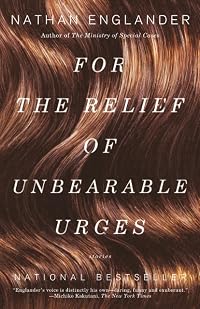
There is a thread of the surreal here that reminds me of Englander's first story collection, [b:For the Relief of Unbearable Urges|29788|For the Relief of Unbearable Urges|Nathan Englander|https://images.gr-assets.com/books/1388236876s/29788.jpg|80586], and there is also a touch of the comic, but on the whole I experienced the novel as a serious reflection on what it means to be an observant Jew in the modern world. show less
But Roth lived at a time when he felt his goals included defining for his readers what it meant to be a secular American Jew--with the emphasis on "American." His characters are Jewish, yes, but in a mostly secular way, where the obligation and identity are sublimated, and where their greater goal as characters is to be as mainstream-American as possible. Roth lived through a time when redlining was still an open secret, and when people went out of their way to not hire Jews, or allow them in their clubs; his novels worked, on one level, to unmask the show more absurdity that Jewish Americans were different from any other Americans.
Englander is a couple of generations younger than Roth. The goal of his Jewish characters feels different. They are thinking about the downside of being as secular and as assimilated as possible. Englander makes his characters think more deeply about their faith than Roth does. They think about the weight of obligation they have to remain Jews, and to carry forward faith traditions intact from one generation to the next.
In kaddish.com the protagonist, Larry, seems at first as if he has wandered out of a Roth novel. He has left his traditions behind. He is an atheist and a sensualist. When his father dies he refuses to take on the obligation that would fall on him traditionally, were he observant, of reciting the Kaddish. The refusal catapults him into a very different direction for his life than what he'd planned.
Most of the novel is an exploration of what it might be like for an American Jew to turn away from mainstream American life and to return to an Orthodox way of life. And it is like nothing Roth ever wrote, because from about page 45 on it immerses the reader in the rhythms of Orthodox-Jewish traditions, where the characters are people of deep faith, who believe, for instance, that their prayers have consequences in the afterlife, and who observe traditions with, well, religious intensity.
There is a thread of the surreal here that reminds me of Englander's first story collection, [b:For the Relief of Unbearable Urges|29788|For the Relief of Unbearable Urges|Nathan Englander|https://images.gr-assets.com/books/1388236876s/29788.jpg|80586], and there is also a touch of the comic, but on the whole I experienced the novel as a serious reflection on what it means to be an observant Jew in the modern world. show less
The only acceptable mental illness is complete adherence to religion.
Larry starts out the book being a rational being who tries logically to discuss the reason he won't give up a year of his life performing rituals for his dead father in order to placate god into making his afterlife more pleasant. However, in a few years, he gives up logic and reality, becomes Shuli an orthodox rabbi and completely accepts all the superstition he had so logically rejected earlier. The characters are all intelligent and likable, they all just have agreed to live in an alternate reality. And I think we're supposed to find such delusion uplifting. I am certainly not the intended audience for this type of insanity.
Larry starts out the book being a rational being who tries logically to discuss the reason he won't give up a year of his life performing rituals for his dead father in order to placate god into making his afterlife more pleasant. However, in a few years, he gives up logic and reality, becomes Shuli an orthodox rabbi and completely accepts all the superstition he had so logically rejected earlier. The characters are all intelligent and likable, they all just have agreed to live in an alternate reality. And I think we're supposed to find such delusion uplifting. I am certainly not the intended audience for this type of insanity.
Nathan Englander is an exceptional writer, and I have read and loved his short story collections. This is my first crack at a novel, and in future I think I will stick the the stories.
Kaddish.com starts out great. Our "hero" whom we first meet as "Larry" is a lapsed ultraorthodox Jew. By the measure of those in the fundamentalist sect that makes him an infidel. The book begins at shiva for Larry's beloved father. The shiva, in his sister's home, is torture for Larry who has become a branding consultant with a Clinton Hill co-op and a notable weed and internet porn habit. (I ask this as a nice Jewish girl, what is it with Jewish male writers and graphic and seriously disturbing masturbation scenes? Englander often gets compared to Philip show more Roth, and I believe it is because readers get exactly the same wildly uncomfortable feeling reading their respective creepy self-gratification scenes. Until very recently I thought Jonathan Franzen was Jewish, something I assumed largely because of the obligatory off-putting wank scenes in all of his books.) The shiva portion of the book reads like a perfect short story. It is really very good. And then suddenly it is several years later and Larry has returned to his Jewish name, Shuli, and is working in a Yeshiva.
In the second part of the book Larry/Shuli has acquired a wife and children and has renounced internet access. (Sadly for the reader he still thinks a lot about the porn he did watch.) In this life, where he appears content, he has a crisis brought on by guilt for something he did in his Larry days, and hijinks ensue as he tries to put things right. With some modification this second part of the book, particularly the part about Shuli's relationship to a Yeshiva boy who is a bit of a renegade, might also work as a short story. As it stands, it is like there are two largely unrelated stories and we are supposed to see it as a novel. We have no idea how Larry becomes Shuli (and given the conversion and reversion it would help to understand how Shuli became Larry in the first place), why he has chosen to return to this life, how he acquired this ever patient wife (the reader can decide if she is a saint or an enabler), why he suddenly feels the need to repent. It is a bizarre time warp and it does not work at all. Englander is asking some pretty profound questions in this comic novel but it all gets lost under the weight of the "why is this happening and why should I care" questions, and the many references to glass dildoes. So much potential and such a mess.
One more issue -- this is replete with AP level Jewish stuff, and Englander provides no context or explanations. I am a Reform Jew and a lot of what goes on here is not anything I learned coming up. Luckily, I have a fascination with fundamentalist cults in general, and an extra bit of interest in those that spring from my own faith, so I know this stuff, but I suspect there is a lot here that would be foreign most Jews and even more baffling so to non-Jews. I can imagine a lot of people stumbling over the tefillin and tzitzits and phylacteries and Kiddush cups, but more important over the central theme -- why is Kaddish such a big deal? This is always a question -- should writers provide information about the lives and practices of their characters so the reader can understand the story, or is it up the reader to do the work? For me, I think a little information is a great thing, enough that the reader has a basic grasp of what is happening and enough that she knows where to start to do her own research to learn more if she so chooses.
This was a 2.5 for me. Really it is eminently skippable. show less
Kaddish.com starts out great. Our "hero" whom we first meet as "Larry" is a lapsed ultraorthodox Jew. By the measure of those in the fundamentalist sect that makes him an infidel. The book begins at shiva for Larry's beloved father. The shiva, in his sister's home, is torture for Larry who has become a branding consultant with a Clinton Hill co-op and a notable weed and internet porn habit. (I ask this as a nice Jewish girl, what is it with Jewish male writers and graphic and seriously disturbing masturbation scenes? Englander often gets compared to Philip show more Roth, and I believe it is because readers get exactly the same wildly uncomfortable feeling reading their respective creepy self-gratification scenes. Until very recently I thought Jonathan Franzen was Jewish, something I assumed largely because of the obligatory off-putting wank scenes in all of his books.) The shiva portion of the book reads like a perfect short story. It is really very good. And then suddenly it is several years later and Larry has returned to his Jewish name, Shuli, and is working in a Yeshiva.
In the second part of the book Larry/Shuli has acquired a wife and children and has renounced internet access. (Sadly for the reader he still thinks a lot about the porn he did watch.) In this life, where he appears content, he has a crisis brought on by guilt for something he did in his Larry days, and hijinks ensue as he tries to put things right. With some modification this second part of the book, particularly the part about Shuli's relationship to a Yeshiva boy who is a bit of a renegade, might also work as a short story. As it stands, it is like there are two largely unrelated stories and we are supposed to see it as a novel. We have no idea how Larry becomes Shuli (and given the conversion and reversion it would help to understand how Shuli became Larry in the first place), why he has chosen to return to this life, how he acquired this ever patient wife (the reader can decide if she is a saint or an enabler), why he suddenly feels the need to repent. It is a bizarre time warp and it does not work at all. Englander is asking some pretty profound questions in this comic novel but it all gets lost under the weight of the "why is this happening and why should I care" questions, and the many references to glass dildoes. So much potential and such a mess.
One more issue -- this is replete with AP level Jewish stuff, and Englander provides no context or explanations. I am a Reform Jew and a lot of what goes on here is not anything I learned coming up. Luckily, I have a fascination with fundamentalist cults in general, and an extra bit of interest in those that spring from my own faith, so I know this stuff, but I suspect there is a lot here that would be foreign most Jews and even more baffling so to non-Jews. I can imagine a lot of people stumbling over the tefillin and tzitzits and phylacteries and Kiddush cups, but more important over the central theme -- why is Kaddish such a big deal? This is always a question -- should writers provide information about the lives and practices of their characters so the reader can understand the story, or is it up the reader to do the work? For me, I think a little information is a great thing, enough that the reader has a basic grasp of what is happening and enough that she knows where to start to do her own research to learn more if she so chooses.
This was a 2.5 for me. Really it is eminently skippable. show less
Larry is having a difficult time sitting Shiva in his sister's Memphis home for their father. He grieves the loss of his father. And feels uncomfortable that the Shiva callers are looking at him judgmentally because he left the fold of orthodoxy. When his sister and her rabbi tell him he must say kaddish (the prayer for the dead) every day for a year, he refuses. But he suggests a religiously acceptable alternative plan.
And so begins a seriously humorous adventure into one man's efforts to make amends through repentance, spirituality, love and oh yeah, some technology.
I really couldn't stand the whining in the first chapter and was going to stop reading and move on. So glad I continued because it improved dramatically.
Kaddish.com is show more a smart, thoughtful, introspective, kind and loving book. show less
And so begins a seriously humorous adventure into one man's efforts to make amends through repentance, spirituality, love and oh yeah, some technology.
I really couldn't stand the whining in the first chapter and was going to stop reading and move on. So glad I continued because it improved dramatically.
Kaddish.com is show more a smart, thoughtful, introspective, kind and loving book. show less
Englander is one of my favorite writers. I have read all of his previous short story collections and novels. Although he does write about Jewish characters, there is a universality to his stories. It also allows the non-Jew to have a glimpse into the Jewish world . In this case it is the world of orthodox judaism. It is 1999 and Larry is in the home of his sister Dina in Memphis. His religious father has died and Larry has renounced his connection to his orthodox upbringing. It is the week of mourning(shiva) in the Jewish tradition. He is in conflict with the religious bubble that his sister lives in. The book centers around the obligation of the Jewish male to say the prayer for the dead for 11 months 8 times a day at three daily show more religious services. Instead of doing this, he engages a website Kaddish.com that will do the praying for him. This is considered acceptable. Of course I found the idea for the book very creative. Once this premise was established, Englander flips it by going 20 years into the future with Larry recovering his faith and becoming a orthodox rabbi (now using the name Shuli)i who teaches in Brooklyn. He has a wife and 2 kids and lives a good religious life. The rest of the book deals with a crisis of faith as he deals with what he did 20 years before. I found the book to be a great commentary about the good and bad of organized religion. The certainty which the Orthodox Jewish community believes as it relates to all of the rituals and roles that they demand is what has turned me off to religion. The question comes up in the book and gives the reader time to contemplate religious belief and the importance of the rituals that are part of it. The book creates a bit of a mystery as Shuli finds out the truth about Kaddish. com. Englander is an excellent writer and this book which is 200 pages is a good introduction to him. Worth the time. show less
This was a beautiful book! I loved it. It's a cross between a Jewish fable and a mystery. The story begins with Larry, a secular Jew from a very religious family from Brooklyn experiencing the death of his father. Urged by his sister Dina to be responsible for saying Kaddish (the Aramaic prayer Jews recite to memorialize the dead), Larry opts out by paying a proxy (kosher by religious Jewish law) to do so. What follows is an imaginative story that runs from the profane to the holy and honors filial piety and the Holy City of Jerusalem.
Be forewarned that, if you read this book, it contains many untranslated phrases in Hebrew and Yiddish. I knew many of them, but took the time to look others up. This helped me to not only understand the show more story but to learn new concepts in my own religion.
I adore the writing of Nathan Englander and look forward to read whatever he writes next. show less
Be forewarned that, if you read this book, it contains many untranslated phrases in Hebrew and Yiddish. I knew many of them, but took the time to look others up. This helped me to not only understand the show more story but to learn new concepts in my own religion.
I adore the writing of Nathan Englander and look forward to read whatever he writes next. show less
Members
- Recently Added By
Lists

Jewish Books
367 works; 24 members

Books Read in 2019
4,052 works; 108 members
Author Information

20+ Works 3,883 Members
Some Editions
Awards and Honors
Awards
Common Knowledge
- People/Characters
- Larry; Dina; Rabbi Rye; Duvy Huffman
- Important places
- Tennessee, USA
- Important events
- Shiva for Larry’s father
- Quotations
- This period of your life—it feels like it’s forever, but if you’re lucky, life is long and each of these forevers will one day seem fleeting. (Larry’s father)
It was like a JDate for the dead. (kaddish.com)
My mother said that my father said that it was really important to him that it keep getting used every - Original language
- English
Classifications
Statistics
- Members
- 241
- Popularity
- 134,632
- Reviews
- 14
- Rating
- (3.28)
- Languages
- Dutch, English, German, Italian
- Media
- Paper, Audiobook, Ebook
- ISBNs
- 15
- ASINs
- 2