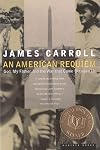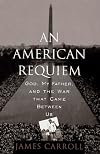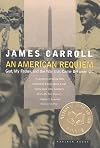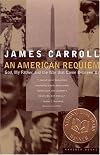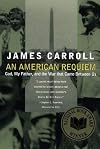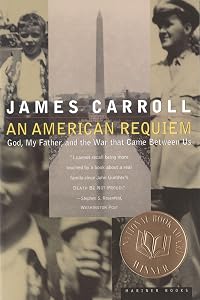
An American Requiem: God, My Father, and the War That Came Between Us
by James Carroll
On This Page
Description
An American Requiem is the story of one man's coming of age. But more than that, it is a coming to terms with the conflicts that disrupted many families, inflicting personal wounds that were also social, political, and religious. Carroll grew up in a Catholic family that seemed blessed. His father had abandoned his own dream of becoming a priest to rise through the ranks of Hoover's FBI and then become one of the most powerful men in the Pentagon, the founder of the Defense Intelligence show more Agency. Young Jim lived the privileged life of a general's son, dating the daughter of a vice president and meeting the pope, all in the shadow of nuclear war, waiting for the red telephone to ring in his parents' house. He worshiped his father until Martin Luther King, Jr., the civil rights movement, turmoil in the Catholic Church, and then Vietnam combined to outweigh the bond between father and son. These were issues on which they would never agree. Only after Carroll left the priesthood to become a writer and husband with children of his own did he come to understand fully the struggles his father had faced. In this work of nonfiction, the best-selling novelist draws on the skills he honed with nine much-admired novels to tell the story he was, literally, born to tell. An American Requiem is a benediction on his father's lief, his family's struggles, and the legacies of an entire generation.. show less
Tags
Recommendations







Member Reviews
A very moving and very personal memoir both of his own life and inner struggles with faith and his complicated relationship with his equally complicated father. Joe Carroll has studied to be a priest and then left to marry, raise a family, join the FBI and finally end up in military intelligence during the Cold War including the Cuban Missile Crisis and Vietnam War. It is the war that finally causes the upheaval and break with his son James and it was both a probe into the historical record of it but also his own very personal connections to the anti-war movement. There were times when the shift between these two tales was jarring but it settled in and I really enjoyed his insights into a time I still don't really know as much about as show more I should. It is that cross-over of history and current events time period for me but the echos for today mean I really should learn more. I esp. found his attempts to reconcile with his failing father very heart breaking and the final days moving. A very good and personal memoir in my small run of reading memoirs. show less
James Carroll is a former priest, son of an air force general, and brother both to a draft resister and an FBI agent whose assignment was to track down draft resisters. James left the priesthood, saddened and sickened by the war in Vietnam and perhaps subconsciously by his father's role in it. This book is, in part, his reconciliation with God and his father - maybe because, in some measure, they were one and the same.
His father was certainly James' idol. He put himself through law school while working in the Chicago stockyards, became an FBI agent because there were no law firm jobs early in the war, and brought himself to the attention of J. Edgar Hoover by suggesting a novel way of involving the FBI in a manhunt for an escaped show more prisoner who had never committed a federal crime - charging him with failure to notify his draft board of a change of address. That led to Hoover's recommendation that he head a new Office of Special Investigations of the Air Force . This office had tremendous power - it was not subject to the regular chain of command, which made the brass nervous - but they discovered his usefulness when he used his FBI skills and connections to discover that a letter libeling some of the Air Force generals was a Navy hoax. The Navy was trying to smear the Air Force so the new service would not be given control over nuclear weapons.
The fifties were a time of great fear. Even Pope Pius XII, insisting on neutrality during WW II, delivered several pronouncements justifying war with the Communists (Fascists were OK because they believed in God; Communists were not, because they didn't). In a fabulous casuistry he even promoted the view that killing millions during a nuclear exchange was acceptable under the doctrine of "unintended but predictable consequences," i.e., the deaths would be not objectionable because they were unintended. Thus the Cold War and MAD (Mutually Assured destruction) were legitimized.
Carroll's father once said that if he ever had to leave, the young James was to get everyone into the car and drive as far away from Washington as possible. He told his son world War III was inevitable. Man had never created a weapon he did not eventually use. As head of the Defense Intelligence Agency, he was the one who recognized the significance of the missiles in Cuba. The . generals' wives took turns parking at the end of the runway where the choppers were parked. As long as those helicopters remained there, they knew the brass had not been evacuated to Thunder Mountain, and they could remain at home. The fatalism of his parents was one reason he decided to become a priest: to emphasize the spiritual, which was all that now mattered.
The split between James and his father became more pronounced over Martin Luther King, Jr. Carroll has since learned from David Garrow's book, [b:The FBI and Martin Luther King:
From Selma to Memphis|1758443|The FBI and Martin Luther King, Jr. From "Solo" to Memphis (Yale Nota Bene)|David J. Garrow|http://ecx.images-amazon.com/images/I/41oj1PgWFCL._SL75_.jpg|267560] that the FBI under a racist Hoover had evidence that Stanley Levinson, a King confidant, had ties to Moscow and honestly believed he might be a Soviet agent. Joseph could not reveal any of that to his son - not that it might have made any difference by that point. The tenor of the anti-King campaign changed after King won the Nobel Prize and Hoover determined to bring him down. Illegal wiretaps revealed King's enthusiasm for extramarital affairs, and soon he became "that degenerate." Joseph told his son his support (and that of the Vatican by now) of King was simply naive and ill-informed. No child can accept that kind of explanation.
In a very interesting section, Carroll traces United States involvement in Vietnam to the machination of Cardinal Spellman, who was impressed by the mystic Diem, then an exile in the U.S. Diem was placed in charge of the government in an attempt to Catholicize the country. The writings of Tom Dooley, later revealed to be a CIA shill, were a further attempt to portray Vietnam as a predominantly Catholic country - it was 90% Buddhist. Even McNamara referred to Vietnam in speeches as a Catholic nation. Diem was vicious in his discrimination against the Buddhists. "Diem was a Vietminh's dream, driving more and more of the populace into its arms. Americans expected him to be a democrat, but he was a true medieval Catholic of the kind that even the Vatican knew only in nostalgia. Diem believed that he ruled by the will of God."
But General Carroll was a pariah in his profession as much as his son was at home. Here was an Air Force general who had never flown a plane, had not served in WW II, who had not had to rise through the ranks. So he had an extra motivation for not rocking the boat. It was this civilian background, and nonparticipation in the Pentagon internecine battles, that influenced Kennedy to appoint him as head of the Defense Intelligence Agency. Kennedy wanted an independent source of information after the Air Force brass had lied to him about the nature of the missile gap (there was one, but it was in our favor). James learned later that the DIA had questioned many of the data supplied by the Pentagon about how the war was going, but it was ignored.
General Carroll eventually broke with Defense Secretary Melvin Laird over a policy issue and retired from the Air Force. Unfortunately, father and son never reconciled. The general died in 1991, sick with Alzheimer's disease and "an almost entirely broken man."
This is one of the best, most honest and revealing memoirs I have read.
Carroll's novel [b:Memorial Bridge|1350234|Memorial Bridge|James Carroll|http://photo.goodreads.com/books/1182920428s/1350234.jpg|1339911] apparently deals with the same era and topics. show less
His father was certainly James' idol. He put himself through law school while working in the Chicago stockyards, became an FBI agent because there were no law firm jobs early in the war, and brought himself to the attention of J. Edgar Hoover by suggesting a novel way of involving the FBI in a manhunt for an escaped show more prisoner who had never committed a federal crime - charging him with failure to notify his draft board of a change of address. That led to Hoover's recommendation that he head a new Office of Special Investigations of the Air Force . This office had tremendous power - it was not subject to the regular chain of command, which made the brass nervous - but they discovered his usefulness when he used his FBI skills and connections to discover that a letter libeling some of the Air Force generals was a Navy hoax. The Navy was trying to smear the Air Force so the new service would not be given control over nuclear weapons.
The fifties were a time of great fear. Even Pope Pius XII, insisting on neutrality during WW II, delivered several pronouncements justifying war with the Communists (Fascists were OK because they believed in God; Communists were not, because they didn't). In a fabulous casuistry he even promoted the view that killing millions during a nuclear exchange was acceptable under the doctrine of "unintended but predictable consequences," i.e., the deaths would be not objectionable because they were unintended. Thus the Cold War and MAD (Mutually Assured destruction) were legitimized.
Carroll's father once said that if he ever had to leave, the young James was to get everyone into the car and drive as far away from Washington as possible. He told his son world War III was inevitable. Man had never created a weapon he did not eventually use. As head of the Defense Intelligence Agency, he was the one who recognized the significance of the missiles in Cuba. The . generals' wives took turns parking at the end of the runway where the choppers were parked. As long as those helicopters remained there, they knew the brass had not been evacuated to Thunder Mountain, and they could remain at home. The fatalism of his parents was one reason he decided to become a priest: to emphasize the spiritual, which was all that now mattered.
The split between James and his father became more pronounced over Martin Luther King, Jr. Carroll has since learned from David Garrow's book, [b:The FBI and Martin Luther King:
From Selma to Memphis|1758443|The FBI and Martin Luther King, Jr. From "Solo" to Memphis (Yale Nota Bene)|David J. Garrow|http://ecx.images-amazon.com/images/I/41oj1PgWFCL._SL75_.jpg|267560] that the FBI under a racist Hoover had evidence that Stanley Levinson, a King confidant, had ties to Moscow and honestly believed he might be a Soviet agent. Joseph could not reveal any of that to his son - not that it might have made any difference by that point. The tenor of the anti-King campaign changed after King won the Nobel Prize and Hoover determined to bring him down. Illegal wiretaps revealed King's enthusiasm for extramarital affairs, and soon he became "that degenerate." Joseph told his son his support (and that of the Vatican by now) of King was simply naive and ill-informed. No child can accept that kind of explanation.
In a very interesting section, Carroll traces United States involvement in Vietnam to the machination of Cardinal Spellman, who was impressed by the mystic Diem, then an exile in the U.S. Diem was placed in charge of the government in an attempt to Catholicize the country. The writings of Tom Dooley, later revealed to be a CIA shill, were a further attempt to portray Vietnam as a predominantly Catholic country - it was 90% Buddhist. Even McNamara referred to Vietnam in speeches as a Catholic nation. Diem was vicious in his discrimination against the Buddhists. "Diem was a Vietminh's dream, driving more and more of the populace into its arms. Americans expected him to be a democrat, but he was a true medieval Catholic of the kind that even the Vatican knew only in nostalgia. Diem believed that he ruled by the will of God."
But General Carroll was a pariah in his profession as much as his son was at home. Here was an Air Force general who had never flown a plane, had not served in WW II, who had not had to rise through the ranks. So he had an extra motivation for not rocking the boat. It was this civilian background, and nonparticipation in the Pentagon internecine battles, that influenced Kennedy to appoint him as head of the Defense Intelligence Agency. Kennedy wanted an independent source of information after the Air Force brass had lied to him about the nature of the missile gap (there was one, but it was in our favor). James learned later that the DIA had questioned many of the data supplied by the Pentagon about how the war was going, but it was ignored.
General Carroll eventually broke with Defense Secretary Melvin Laird over a policy issue and retired from the Air Force. Unfortunately, father and son never reconciled. The general died in 1991, sick with Alzheimer's disease and "an almost entirely broken man."
This is one of the best, most honest and revealing memoirs I have read.
Carroll's novel [b:Memorial Bridge|1350234|Memorial Bridge|James Carroll|http://photo.goodreads.com/books/1182920428s/1350234.jpg|1339911] apparently deals with the same era and topics. show less
I enjoyed this book immensely! The author is a few years older than me, but we share the same memories of our teenage years: the Kennedys, MLK, desegregation, and Vietnam. I felt the same anguish as I move from unquestioned belief in my country's military to the sad realization that we were on the wrong path. Carroll describes these feelings superbly, as he recounts his time studying for, and entering the priesthood and his subsequent return to a lay life. Oddly enough, I was studying at Boston University during the tie he was assigned as chaplain, but as I was a part-time evening student, our paths never crossed. I wish they had!
Father a general — He a priest — Vietnam War — Brother - Polio, terms with his father
An American Requiem is the story of one man's coming of age. But more than that, it is a coming to terms with the conflicts that disrupted many families, inflicting personal wounds that were also social, political, and religious.
An American Requiem is the story of one man's coming of age. But more than that, it is a coming to terms with the conflicts that disrupted many families, inflicting personal wounds that were also social, political, and religious.
He's a fine writer; a moving account of James Carroll's adventures as a priest opposing the Vietnam war, while his father, as a government official, was making decisions about war strategy for the defense department. The family scenes are vivid; and I learned much about what it was like to be a priest-in-training during those turbulent times.
4254 An American Requiem God, My Father, and the War that Came Between Us, by James Carroll (read 5 Jan 2007) (National Book Award nonfiction prize for 1996) This is a 1996 book by an ex-priest which I have previously avoided reading since I did not want to read what I presumed would be a book disrespectful of the author's previous calling. I was wrong. While he does say some things not Faith-affirming, most of what he says is respectful of the priesthood. His father was in the FBI and became in 1947 an Air Force general. The author was ordained in 1969 and became very anti-Vietnam War, much to his father's dismay. He left the priesthood with Vatican permission in 1975 and married in 1977. This book is a very moving book, and one aches show more for the author and his very Catholic parents. I found it poignant, and timely, since what he says about Vietnam is most pertinent to Iraq and what we are doing there. A most exceptional and absorbing book. show less
This is the memoir of a former American priest whose father was one of the generals responsible for the war in Vietnam.
Becoming a priest, initially, to satisfy his father's and mother's expectations, he became the sort of priest that was so opposite to what they had expected, involved in the anti-war movement and part of the general freeing up of that period of the church.
This is a story about a spoiled kid who accepted what he was told, fulfilled his family expectations and gradually started to wake up politically, and in doing so, lost his father.
Becoming a priest, initially, to satisfy his father's and mother's expectations, he became the sort of priest that was so opposite to what they had expected, involved in the anti-war movement and part of the general freeing up of that period of the church.
This is a story about a spoiled kid who accepted what he was told, fulfilled his family expectations and gradually started to wake up politically, and in doing so, lost his father.
Members
- Recently Added By
Lists

Recommend the 20 best books you've read in the last five years
2,168 works; 606 members
Author Information

40+ Works 4,330 Members
James Carroll is the author of nine novels & the memoir "An American Requiem," which won the National Book Award. His essays on culture & politics appear weekly in the "Boston Globe." He wrote "Constantine's Sword" while on fellowships at Harvard University. Before becoming a writer, Carroll was a Catholic priest. He lives in Boston, show more Massachusetts. (Bowker Author Biography) show less
Awards and Honors
Awards
Common Knowledge
- Original publication date
- 1996
- People/Characters
- Joe Carroll; James Carroll
- Dedication
- For Lexa, Lizzy and Pat
- Blurbers
- Rosenfeld, Stephen S.; Goodwin, Doris Kearns; McCullough, David; Ellsberg, Daniel
Classifications
Statistics
- Members
- 435
- Popularity
- 70,630
- Reviews
- 9
- Rating
- (4.12)
- Languages
- English
- Media
- Paper, Ebook
- ISBNs
- 5
- UPCs
- 2
- ASINs
- 4