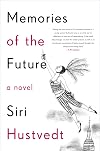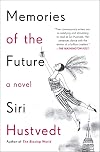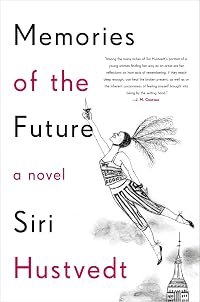
Memories of the Future
by Siri Hustvedt
On This Page
Description
"From international bestseller and Booker Prize-nominee Siri Hustvedt comes a provocative novel about time, desire, memory and the imagination, Then tells the indelible story of a young Midwestern woman's fixation with her mysterious neighbor over the course of a threadbare year in 1970s New York" --Tags
Recommendations

























Member Reviews
"a portrait of the artist as a young woman"
Siri Hustvedt has made us used to very thoughtful, beautifully composed novels and essays, and this surely once again is one like these. In essence, she describes the experiences of a 23-year-old girl S.H. moving to New York from the Midwest (Minnesota) to write a novel. The autobiographical slant is immediately clear, although Hustvedt in interviews has clarified that not everything is based on her own experiences, but a large part is. Inevitably, here we are confronted with the second layer of the novel: a writer who, at the age of 63, looks back on her 'pioneering time', and thus also focusses on the insidious workings of memory, on the inexorable work of time and on how narratives actively show more contribute to a person's life. Sounds familiar, and indeed, Hustvedt is far from the first to indulge in such a quest for lost time. Fortunately, she seasons her story with some suspense elements, such as the strange, constantly murmuring neighbor, the witch circle of which this neighbor is a part, and a terrifyingly described experience of sexual assault. By constantly harking back to a diary from that time, the book takes the form of a frame story. This is reinforced by the fact that Hustvedt also includes fragments from the first novel her main character was working on at the time, a kind of coming-of-age story about a young man with a Sherlock Holmes obsession. Naturally, there is a fascinating interaction between that diary, the real experiences from then (1979) and from now (2017), and those first writings, resulting in a wonderful whole of self-reflexive dialogue with past and present. I don't think this is her best book, but the thorough, thoughtful way in which Hustvedt writes continues to charm me. show less
Siri Hustvedt has made us used to very thoughtful, beautifully composed novels and essays, and this surely once again is one like these. In essence, she describes the experiences of a 23-year-old girl S.H. moving to New York from the Midwest (Minnesota) to write a novel. The autobiographical slant is immediately clear, although Hustvedt in interviews has clarified that not everything is based on her own experiences, but a large part is. Inevitably, here we are confronted with the second layer of the novel: a writer who, at the age of 63, looks back on her 'pioneering time', and thus also focusses on the insidious workings of memory, on the inexorable work of time and on how narratives actively show more contribute to a person's life. Sounds familiar, and indeed, Hustvedt is far from the first to indulge in such a quest for lost time. Fortunately, she seasons her story with some suspense elements, such as the strange, constantly murmuring neighbor, the witch circle of which this neighbor is a part, and a terrifyingly described experience of sexual assault. By constantly harking back to a diary from that time, the book takes the form of a frame story. This is reinforced by the fact that Hustvedt also includes fragments from the first novel her main character was working on at the time, a kind of coming-of-age story about a young man with a Sherlock Holmes obsession. Naturally, there is a fascinating interaction between that diary, the real experiences from then (1979) and from now (2017), and those first writings, resulting in a wonderful whole of self-reflexive dialogue with past and present. I don't think this is her best book, but the thorough, thoughtful way in which Hustvedt writes continues to charm me. show less
The comic, erotic, distressing, or character-building experiences of the gauche young intellectual, alone in the big city for the first time, pretending unsuccessfully not to be a self-portrait - we've all read dozens of first novels like that. But it's unusual to come across it as the theme for a mature novel by an experienced writer. Hustvedt's hook for this book, which follows her narrator "S.H." through a year out between college and postgraduate work in 1978-79, is the narrator's rediscovery of a forgotten diary from forty years ago as she's clearing out some of her mother's stuff. The book turns into a kind of conversation, moderated by the analytical "old woman" S.H. of the present day, between her remaining memories of that show more time, her experiences as she recorded them in the diary, and the way she reworked them fictionally in a couple of (unfinished) novels she was trying to write.
So there's a lot about the nature of memory, the way we unknowingly discard large amounts of information and retrospectively rewrite other experiences to suit the patterns we expect to find, and the way incidents move up and down in the scale of importance in unpredictable ways. It soon becomes clear that neither the diary nor the narrator's memory is entirely trustworthy, but as well as upsetting our preconceptions about whether it's possible to construct an authoritative version of past events, Hustvedt also has a lot of fun playing with our assumptions about how much her fictional S.H. (decoded for us variously as "Standard Hero", "Sherlock Holmes", etc.) can be identified with the author, throwing in a baffling mixture of real and fictional biographical details cunningly designed to prevent us from settling on either side of the fence.
Thrown into the mixture is the narrator's encounter with the papers of the then-forgotten dadaist, Baroness Elsa von Freytag-Loringhoven (1874-1927; she's now become famous as the probable real author of the celebrated conceptual artwork Fountain previously claimed by Marcel Duchamp). The bad Baroness's ribald anger gives S.H. a kind of virtual outlet for her frustration at the dismissive way she herself is often treated by a world that doesn't really expect blonde young women to have an opinion about Wittgenstein.
And of course this is also a very engaging novel about what it's like to be a young woman setting out with high expectations into the exciting world of New York in 1978. Making friends, partying, running out of money, going hungry, getting into trouble and out of it, making up stories about strangers and then discovering that the truth is both stranger than you imagined and more banal, deciding whether to put up with casual sexism or fight back against it, and all the rest of the weird world of being 23. show less
So there's a lot about the nature of memory, the way we unknowingly discard large amounts of information and retrospectively rewrite other experiences to suit the patterns we expect to find, and the way incidents move up and down in the scale of importance in unpredictable ways. It soon becomes clear that neither the diary nor the narrator's memory is entirely trustworthy, but as well as upsetting our preconceptions about whether it's possible to construct an authoritative version of past events, Hustvedt also has a lot of fun playing with our assumptions about how much her fictional S.H. (decoded for us variously as "Standard Hero", "Sherlock Holmes", etc.) can be identified with the author, throwing in a baffling mixture of real and fictional biographical details cunningly designed to prevent us from settling on either side of the fence.
Thrown into the mixture is the narrator's encounter with the papers of the then-forgotten dadaist, Baroness Elsa von Freytag-Loringhoven (1874-1927; she's now become famous as the probable real author of the celebrated conceptual artwork Fountain previously claimed by Marcel Duchamp). The bad Baroness's ribald anger gives S.H. a kind of virtual outlet for her frustration at the dismissive way she herself is often treated by a world that doesn't really expect blonde young women to have an opinion about Wittgenstein.
And of course this is also a very engaging novel about what it's like to be a young woman setting out with high expectations into the exciting world of New York in 1978. Making friends, partying, running out of money, going hungry, getting into trouble and out of it, making up stories about strangers and then discovering that the truth is both stranger than you imagined and more banal, deciding whether to put up with casual sexism or fight back against it, and all the rest of the weird world of being 23. show less
34. Memories of the Future by Siri Hustvedt
reader: Katherine Fenton
published: 2019
format: 12:38 audible audiobook (318 pages in hardcover)
acquired: June 4
listened: Jun 4-22
rating: 4
locations: New York City
about the author born 1955 in Northfield, MN
My Litsy post 5-days ago:
Wish I could capture this. Playful and clever like Ali Smith, but more philosophy, Hustvedt is just really enjoyable to spend time with. Here she talks to her 23 yr old self alone in New York City in 1978, beautiful, intelligent, awash in poetry and philosophy, disregarded for her gender, writing a failed novel, flashing a switchblade. Somewhere I saw this described as a rage against the patriarchy. It‘s also fun. Really happy I finally read her.
Now it's even worse. show more I wish I could capture just that, above. Instead I'm drifting into thinking about an author's self-awareness - awareness of what they are doing with their writing, and what they are not doing and can't do, and how they manage and acknowledge this. It's not new. Shakespeare shows it in his plays. But I've personally begun to see I really want this in my authors and Hustvedt here gives us a joyful contemporary master course on this, working on many layers.
This is the story of a failed novel - Hustvedt's first real attempt. The sort of preface here is that as Hustvedt was going through her mother's stuff, her mother's increased dementia requiring a move and downsizing, when she discovered a long lost and deeply missed journal from roughly the school year of 1978 and 1979. Hustvedt was 23 in 1978. She had just moved to New York City after growing up in a small-town in Minnesota. She was hungry to write and learn and experience New York City and she had a year before starting post-graduate classes in Columbia. Her novel, sitting in this journal, began as a play on Sherlock Holmes, and this author embracing the initials, SH, that they shared.
As she goes through this journal, she wonders about her younger self, she struggles to reacquaint herself with her, to remember who she was. She talks to her, criticizes her, berates her. The nostalgia of this lost vibrant world of a crime-ridden, hopping, AIDS-free, hyper-sexual New York City combined with this fascinated young woman, oozing with youthful intelligence, wafting down contemporary philosophy super charges and charms the background. Mind you there's a foreground too - her philosophical but also silly novel running away from her, and her ranting crying neighbor who she can hear through the paper thin walls of her tiny flat. The sleuth uses a stethoscope, a real medical one from her MD father, to improve her spying. She mixes with all types, some dangerous. When a friend calls her cold and beastly, she embraces the characterization as a personal goal. Later in the book she will have a moment where she tells us she felt "cold and beastly" and it was "wonderful" (the switchblade was out).
Hustvedt's first major success as an author was her novel, [What I Loved], which came in 2003 - 25 years after the failed novel in this journal. This is the underlying and unspoken tragedy in this book. Hustvedt, a very talented writer, was beaten down, and she blames the patriarchy, the men who disregarded her, who found her beautiful and wanted to impress or control her, but who also presumed she could not offer any serious contribution to intellectual life. She includes maybe the best fainting scene I've ever read as she rants and tears apart of Columbia professor. (Could it possibly have been true? Seems too perfect...and this is a novel, and it does play on the unreliability of memory.)
I certainly won't tell anyone this is a great novel, or tell anyone they must read this and will love it. It's actually a strange thing that still works. But, this is a terrific author doing terrific stuff and gives us window view into something that was really special, or at least I found it so. It's within that context I would recommend it.
2020
https://www.librarything.com/topic/318836#7207494 show less
reader: Katherine Fenton
published: 2019
format: 12:38 audible audiobook (318 pages in hardcover)
acquired: June 4
listened: Jun 4-22
rating: 4
locations: New York City
about the author born 1955 in Northfield, MN
My Litsy post 5-days ago:
Wish I could capture this. Playful and clever like Ali Smith, but more philosophy, Hustvedt is just really enjoyable to spend time with. Here she talks to her 23 yr old self alone in New York City in 1978, beautiful, intelligent, awash in poetry and philosophy, disregarded for her gender, writing a failed novel, flashing a switchblade. Somewhere I saw this described as a rage against the patriarchy. It‘s also fun. Really happy I finally read her.
Now it's even worse. show more I wish I could capture just that, above. Instead I'm drifting into thinking about an author's self-awareness - awareness of what they are doing with their writing, and what they are not doing and can't do, and how they manage and acknowledge this. It's not new. Shakespeare shows it in his plays. But I've personally begun to see I really want this in my authors and Hustvedt here gives us a joyful contemporary master course on this, working on many layers.
This is the story of a failed novel - Hustvedt's first real attempt. The sort of preface here is that as Hustvedt was going through her mother's stuff, her mother's increased dementia requiring a move and downsizing, when she discovered a long lost and deeply missed journal from roughly the school year of 1978 and 1979. Hustvedt was 23 in 1978. She had just moved to New York City after growing up in a small-town in Minnesota. She was hungry to write and learn and experience New York City and she had a year before starting post-graduate classes in Columbia. Her novel, sitting in this journal, began as a play on Sherlock Holmes, and this author embracing the initials, SH, that they shared.
As she goes through this journal, she wonders about her younger self, she struggles to reacquaint herself with her, to remember who she was. She talks to her, criticizes her, berates her. The nostalgia of this lost vibrant world of a crime-ridden, hopping, AIDS-free, hyper-sexual New York City combined with this fascinated young woman, oozing with youthful intelligence, wafting down contemporary philosophy super charges and charms the background. Mind you there's a foreground too - her philosophical but also silly novel running away from her, and her ranting crying neighbor who she can hear through the paper thin walls of her tiny flat. The sleuth uses a stethoscope, a real medical one from her MD father, to improve her spying. She mixes with all types, some dangerous. When a friend calls her cold and beastly, she embraces the characterization as a personal goal. Later in the book she will have a moment where she tells us she felt "cold and beastly" and it was "wonderful" (the switchblade was out).
Hustvedt's first major success as an author was her novel, [What I Loved], which came in 2003 - 25 years after the failed novel in this journal. This is the underlying and unspoken tragedy in this book. Hustvedt, a very talented writer, was beaten down, and she blames the patriarchy, the men who disregarded her, who found her beautiful and wanted to impress or control her, but who also presumed she could not offer any serious contribution to intellectual life. She includes maybe the best fainting scene I've ever read as she rants and tears apart of Columbia professor. (Could it possibly have been true? Seems too perfect...and this is a novel, and it does play on the unreliability of memory.)
I certainly won't tell anyone this is a great novel, or tell anyone they must read this and will love it. It's actually a strange thing that still works. But, this is a terrific author doing terrific stuff and gives us window view into something that was really special, or at least I found it so. It's within that context I would recommend it.
2020
https://www.librarything.com/topic/318836#7207494 show less
A Christmas present I couldn't resist reading immediately. Siri Hustvedt is one of my favourite writers, and her novels don't come along very often.
Appropriately for a book so largely about memory, this one often blurs the lines between fact and fiction - the heroine S.H. shares many biographical similarities with Hustvedt but there are some obvious differences, notably the physicist husband. This gives Hustvedt the space to talk about very personal subject matter while adopting a fictional cloak to protect those around her.
The foreground story of a young woman finding her feet in New York takes some time to rise above the humdrum, but it becomes compulsive halfway through when S.H. is rescued from a sexual assault by the neighbour show more whose strange utterances she has been eavesdropping on and her friends, who turn out to be modern day witches.
As always Hustvedt is full of interesting ideas and observations. The older woman's narrative is interspersed with diary entries and excerpts from an attempted first novel, which attempts to subvert the Holmes-Watson relationship. There is also plenty of comedy.
All in all this is a stimulating and entertaining read, which stands comparison with Hustvedt's best work. Highly recommended. show less
Appropriately for a book so largely about memory, this one often blurs the lines between fact and fiction - the heroine S.H. shares many biographical similarities with Hustvedt but there are some obvious differences, notably the physicist husband. This gives Hustvedt the space to talk about very personal subject matter while adopting a fictional cloak to protect those around her.
The foreground story of a young woman finding her feet in New York takes some time to rise above the humdrum, but it becomes compulsive halfway through when S.H. is rescued from a sexual assault by the neighbour show more whose strange utterances she has been eavesdropping on and her friends, who turn out to be modern day witches.
As always Hustvedt is full of interesting ideas and observations. The older woman's narrative is interspersed with diary entries and excerpts from an attempted first novel, which attempts to subvert the Holmes-Watson relationship. There is also plenty of comedy.
All in all this is a stimulating and entertaining read, which stands comparison with Hustvedt's best work. Highly recommended. show less
I'm not sure I am going to do this novel justice after only a single reading. It feels like a far longer book, and it has to be said, wavers on being a clever book, over an interesting/intriguing, delightful read; it is the latter, which happens also to be very clever, be it that at least one of its multiple skeins interested me less.
This is a novel about life, about the fallibility of memory, about story, writing, creativity, memoir, semi-autobiography, psychology, philosophy, friendship and more. Layers and layers of patterns. Stories within stories. It will receive at least a second reading.
This is a novel about life, about the fallibility of memory, about story, writing, creativity, memoir, semi-autobiography, psychology, philosophy, friendship and more. Layers and layers of patterns. Stories within stories. It will receive at least a second reading.
I really love Hustvedt's writing. It is challenging, perceptive, and artistic. Sometimes I would fault her for using a few too many literary and philosophical references because it sometimes alienates from the story, but I love it anyway.
This book explores a year in the life of S.H., a young woman writer who moves from Minnesota to New York to take a year off before starting her degree at Columbia. She is distracted by her neighbor who she can hear through the walls. She meets a group of friends. She is almost raped. Her year is remembered by her older self who also reads a journal that S.H. wrote in that year (I think it was 1979). The book she was working on writing is also presented in large chunks.
I really liked this, but I still show more think [The Blazing World] is her best book. I felt a little too removed from this character to really connect to this book. show less
This book explores a year in the life of S.H., a young woman writer who moves from Minnesota to New York to take a year off before starting her degree at Columbia. She is distracted by her neighbor who she can hear through the walls. She meets a group of friends. She is almost raped. Her year is remembered by her older self who also reads a journal that S.H. wrote in that year (I think it was 1979). The book she was working on writing is also presented in large chunks.
I really liked this, but I still show more think [The Blazing World] is her best book. I felt a little too removed from this character to really connect to this book. show less
Weird and sort of a slow burn at first, but by the end, it was really gripping. Probably not for everybody -- perspective/voice changes, postmoderny stuff. Learned some neat (angrifying) stuff about Duchamp's appropriation of the work of others.
Members
- Recently Added By
Published Reviews
ThingScore 75
Memories of the Future is a portrait of the artist, certainly, and of New York in the 1970s, which Hustvedt joyously depicts as hot, dirty and cacophonous. But it’s also far more than that. As layered as a millefeuille, as dense and knotted as tapestry, it feels, by the time you reach the final pages, less like a novel and more like an intellectual reckoning; an act of investigation into show more how, as a woman, it is possible to live well in the world, and enter effectively into the conversation about it. show less
added by thorold
Lists

Female Protagonist
1,056 works; 57 members

Top Five Books of 2019
387 works; 111 members

Writers as Characters in Fiction
120 works; 19 members

Llibres que he llegit el 2019
42 works; 1 member

Books Read in 2019
4,052 works; 110 members
Author Information

36+ Works 9,705 Members
Siri Hustvedt is the author of seven novels, four collections of essays, and two works of nonfiction. She has a PhD from Columbia University in English literature and is a lecturer in psychiatry at Weill Cornell Medical College. She is the recipient of numerous awards, including the International Gabbaron Prize for Thought and Humanities (2012). show more Her novel The Blazing World was nominated for the Booker Prize and won the Los Angeles Times Book Prize for Fiction (2014). In 2019, she received an American Academy of Arts and Letters Award for Literature; the European Essay Prize for "The Delusions of Certainty," a work on the mind-body problem; and the Princess of Asturias Award for Literature. Her work has been translated into more than thirty languages. She lives in Brooklyn, New York. show less
Some Editions
Awards and Honors
Series
Belongs to Publisher Series
Otavan kirjasto (275)
Common Knowledge
- Canonical title*
- Muistoja tulevaisuudesta
- Original title
- Memories of the Future
- Original publication date
- 2019-03
- People/Characters
- Lucy Bright
- Important places
- New York, New York, USA
- Original language
- English
*Some information comes from Common Knowledge in other languages. Click "Edit" for more information.
Classifications
Statistics
- Members
- 376
- Popularity
- 83,414
- Reviews
- 12
- Rating
- (3.58)
- Languages
- 10 — Catalan, Dutch, English, Finnish, French, German, Italian, Portuguese, Spanish, Swedish
- Media
- Paper, Audiobook, Ebook
- ISBNs
- 34
- ASINs
- 9