Queenie
by Candice Carty-Williams
On This Page
Description
Queenie Jenkins is a 25-year-old Jamaican British woman living in London, straddling two cultures and slotting neatly into neither. She works at a national newspaper, where she's constantly forced to compare herself to her white middle class peers. After a messy break up from her long-term white boyfriend, Queenie seeks comfort in all the wrong places . . . including several hazardous men who do a good job of occupying brain space and a bad job of affirming self-worth. As Queenie careens show more from one questionable decision to another, she finds herself wondering, 'What are you doing? Why are you doing it? Who do you want to be?' -- all of the questions today's woman must face in a world trying to answer them for her. show lessTags
Recommendations


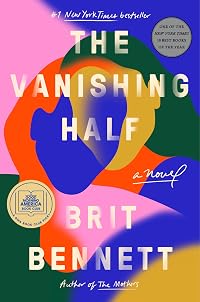
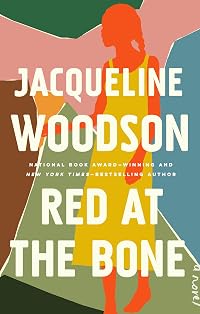
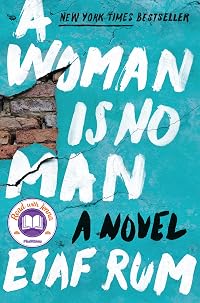


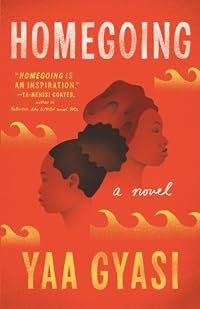
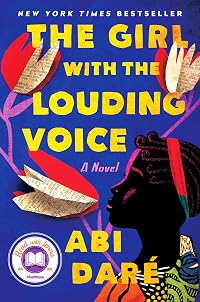
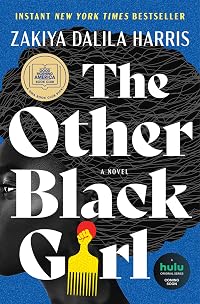


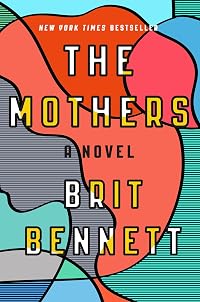

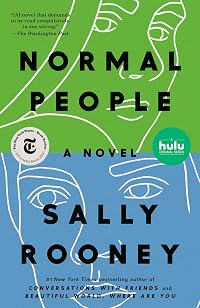
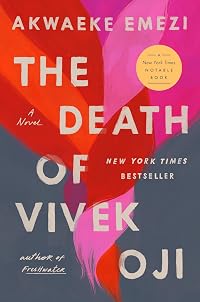
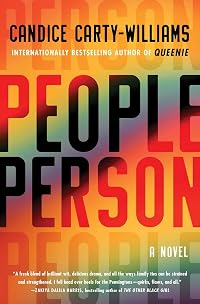
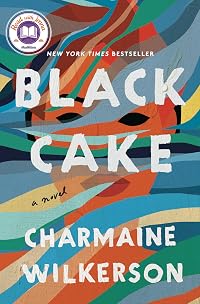

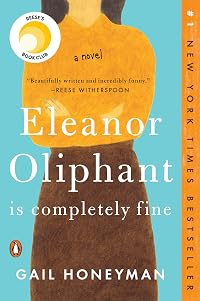



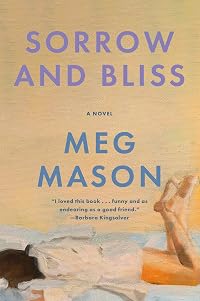
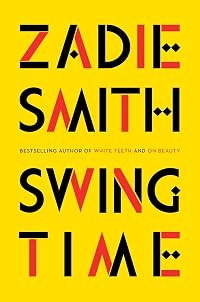




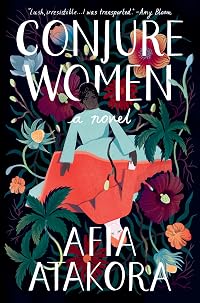
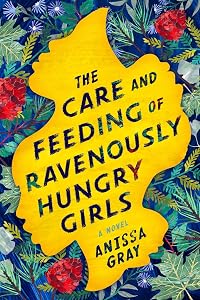
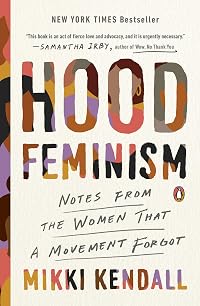
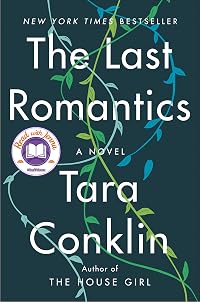


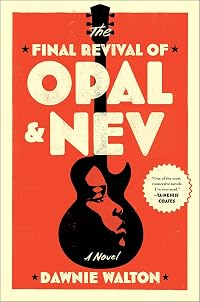
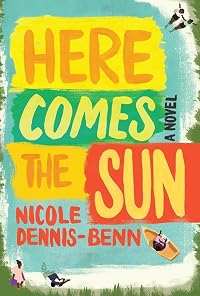



Member Recommendations

lottpoet Another complicated mother-daughter relationship where there is still a reserve of love; young women finding their way in the world
Member Reviews
In much of the canon of contemporary literature, the plight of the literary sad woman has been reserved for willowy white women, touting elegies of her beautiful brokenness (think Plath, Didion, Rhys) while sitting at bars, drunkenly crying amongst unsympathetic strangers and looking gorgeously sad, mourning the loss of a previous version of herself. As a younger woman, I identified with this woman and her authors who gave words to the pain I sometimes felt. Now, I find this narrative reductive, solipsistic, and, most importantly, exclusionary of the suffering of literally anyone else but especially of BIPOC. Candice Carty-Williams' Queenie expands the cult of the literary sad woman to offer us a character whose suffering cannot be show more detached from not just the abhorrent racism and abuses she faces every day, but also the systemic oppression that she sees and experiences in the world around her (and when she tries to stand against it, or even draw attention to it, she is silenced by those around her who have more power). This, combined with boyfriend troubles and her straddling of two cultures, neither of which seem to embrace her wholly, sends her into a nasty spiral of depression and anxiety, leading her to make a series of ill-suited decisions. Queenie rebrands the literary sad woman into something much more real, raw, and relatable.
Carty-Williams captures Queenie's voice in an exacting, free indirect discourse prose, affording the reader insight into both her decision-making process and her spiraling thoughts, while simultaneously making Queenie jump off the page into my consciousness. Queenie is one of those characters I feel like is just my friend now, and I'll take her with me throughout my life.
What made Queenie a truly special book in my eyes was the relationships she had with her family and her best friends. Queenie is in her twenties, navigating a modern world that isn't exactly made for her, and part of that territory is figuring out how to maintain meaningful relationships amidst a rapidly changing life. Carty-Williams portrays this endeavor with a gut-clenching clarity and recognition, especially when it comes to friends who behave hurtfully in a way that really makes no sense. However, Queenie's real and lasting relationships are what propels her through the slump of depression when she is truly in the weeds of it. This book emphasizes the vitality of family and friends so heavily that it makes you stop and shudder to imagine how different Queenie's story would have been without them.
Queenie deals with so many themes of life, love, friendship, and loneliness in such an accessible way that I truly believe it is among the best at capturing what it is to be a young woman in this world. Queenie won my heart! 4.5 stars. show less
Carty-Williams captures Queenie's voice in an exacting, free indirect discourse prose, affording the reader insight into both her decision-making process and her spiraling thoughts, while simultaneously making Queenie jump off the page into my consciousness. Queenie is one of those characters I feel like is just my friend now, and I'll take her with me throughout my life.
What made Queenie a truly special book in my eyes was the relationships she had with her family and her best friends. Queenie is in her twenties, navigating a modern world that isn't exactly made for her, and part of that territory is figuring out how to maintain meaningful relationships amidst a rapidly changing life. Carty-Williams portrays this endeavor with a gut-clenching clarity and recognition, especially when it comes to friends who behave hurtfully in a way that really makes no sense. However, Queenie's real and lasting relationships are what propels her through the slump of depression when she is truly in the weeds of it. This book emphasizes the vitality of family and friends so heavily that it makes you stop and shudder to imagine how different Queenie's story would have been without them.
Queenie deals with so many themes of life, love, friendship, and loneliness in such an accessible way that I truly believe it is among the best at capturing what it is to be a young woman in this world. Queenie won my heart! 4.5 stars. show less
A special thank you to NetGalley, BookishFirst, Gallery/Scout Press, and Simon & Schuster Canada for an ARC in exchange for an honest review.
Meet Queenie Jenkins—a 25-year-old Jamaican British woman who is straddling two heritages and trying find her place. She has just been dumped by her long-time white boyfriend and is on notice at work where she is constantly comparing herself to her white middle class peers.
Needless to say, Queenie is not in a good frame of mind and she is making some pretty awful decisions concerning who she spends her free time with and with whom she is seeks comfort from.
Carty-Williams has written an honest account of one woman's struggle, which sadly many women can relate to, and at the same time, given us a show more character to root for. Unfortunately Queenie's story isn't unique, there are many women out there struggling with issues of sexism, racism, and self-acceptance. She is a modern woman trying to navigate her way through a messy break-up, figuring out where she fits in, and learning that her self-worth does not come in the form of toxic relationships.
Queenie is so much more than Bridget Jones, and I don't mean that as a slight to Helen Fielding's brilliant heroine, but there is no comparison. Bridget is a funny, awkward, and endearing character that journals her life in cheeky entries, whereas Queenie is a more serious character with incredible depth. There is also a heaviness about the book and again, this is another reason why a Bridget Jones comparison is doing this novel a disservice.
I adored her grandparents, especially her grandfather (and those of you who have read this book will know what scene I am referring to). What I didn't like was that the author uses Queenie's promiscuity as a symptom of her anxiety and I'm not sure that this is entirely accurate—I think that it is rather a symptom of her lack of self esteem.
What is also interesting is that Carty-Williams makes no apologies for Queenie, nor should she. She is a bold, brash, and flawed character who at times does some really unlikeable things. But we keep pulling for her.
Carty-Williams explores identity, racism, mental health and what its like to be a young woman in the dating scene in the age of technology. She tackles some daunting social issues and uses Queenie's humour and solid supporting cast of friends/grandparent to keep the story from getting too dark. show less
Meet Queenie Jenkins—a 25-year-old Jamaican British woman who is straddling two heritages and trying find her place. She has just been dumped by her long-time white boyfriend and is on notice at work where she is constantly comparing herself to her white middle class peers.
Needless to say, Queenie is not in a good frame of mind and she is making some pretty awful decisions concerning who she spends her free time with and with whom she is seeks comfort from.
Carty-Williams has written an honest account of one woman's struggle, which sadly many women can relate to, and at the same time, given us a show more character to root for. Unfortunately Queenie's story isn't unique, there are many women out there struggling with issues of sexism, racism, and self-acceptance. She is a modern woman trying to navigate her way through a messy break-up, figuring out where she fits in, and learning that her self-worth does not come in the form of toxic relationships.
Queenie is so much more than Bridget Jones, and I don't mean that as a slight to Helen Fielding's brilliant heroine, but there is no comparison. Bridget is a funny, awkward, and endearing character that journals her life in cheeky entries, whereas Queenie is a more serious character with incredible depth. There is also a heaviness about the book and again, this is another reason why a Bridget Jones comparison is doing this novel a disservice.
I adored her grandparents, especially her grandfather (and those of you who have read this book will know what scene I am referring to). What I didn't like was that the author uses Queenie's promiscuity as a symptom of her anxiety and I'm not sure that this is entirely accurate—I think that it is rather a symptom of her lack of self esteem.
What is also interesting is that Carty-Williams makes no apologies for Queenie, nor should she. She is a bold, brash, and flawed character who at times does some really unlikeable things. But we keep pulling for her.
Carty-Williams explores identity, racism, mental health and what its like to be a young woman in the dating scene in the age of technology. She tackles some daunting social issues and uses Queenie's humour and solid supporting cast of friends/grandparent to keep the story from getting too dark. show less
This is a novel that showed up in pretty much every book list in 2019, which meant it ended up on my own list of books-to-look-for, but somehow I never got around to reading it until now. I'm glad I finally took the time to read it. [Queenie] is a young Jamaican-British woman who works for a national newspaper where she is under-valued and has stopped putting her heart into her job. She's also reeling from her partner telling her that he wants a break and that she has to move out. She finds a flat-share in a moldy apartment and throws herself into finding validation from men, a terrible idea in the best of circumstances, but the worst men have a talent for finding her and relentlessly harassing her until she gives in and then behaving show more badly. And then there's the low-key racism (with occasional blatant outbursts) that she deals with on a daily basis.
This might be a grim novel to read, but Queenie has a solid group of friends (some better than others) who support her, and Queenie herself is a determined and remarkably resilient woman, with a good sense of humor. Her family may often frustrate her, but they all are pulling for her. She may be down but she's willing to fight her way forward. Carty-Williams's writing reflected Queenie's voice, sometimes scrappy, sometimes funny, fully rooted in the present. I was won over by this novel, it's one that forced me to feel so much, from rage, to exasperation to hope. show less
This might be a grim novel to read, but Queenie has a solid group of friends (some better than others) who support her, and Queenie herself is a determined and remarkably resilient woman, with a good sense of humor. Her family may often frustrate her, but they all are pulling for her. She may be down but she's willing to fight her way forward. Carty-Williams's writing reflected Queenie's voice, sometimes scrappy, sometimes funny, fully rooted in the present. I was won over by this novel, it's one that forced me to feel so much, from rage, to exasperation to hope. show less
Twenty-five year old Queenie is on the verge of a nervous breakdown combined with very low self esteem that she attempts healing with casual sex. She is on a 'break' with long time boyfriend, or a 'break-up' as he sees it, and is unfairly fired from her job. Even the tattiest shared accommodation is beyond her means, requiring her to live with her Jamaican grandparents who, like many grandparents, have funny ideas about hot water usage, the internet, and mental health. This novel has been called a 'black Bridget Jones' but Carty-Williams' book is so much more and Queenie suffers more than Bridget ever did. The casual and blatant racism she experiences is as damaging as the savage sexual encounters that while heartbreaking have some show more humorous moments. Moving yet shocking, this is an excellent debut novel set in 21st century mulitcultural London. Queenie will remain in my mind for a long time. I look forward to Carty-Williams' next work. show less
Part Sex and the City, part Bridget Jones’ Diary, and yet wholly herself, Queenie Jenkins serves up a heartfelt (if occasionally mortifying) coming of age story that has well earned her a place amongst this generation’s spiraling millennials. We know going into the story that Queenie is going to be a mess; her boyfriend has just kicked her out, her family is full of judgemental drama, her forays into the online dating world are nothing less than epic catastrophes, and to top it all off the emotional instability is affecting her work life. And yet, this mess is what makes Queenie so relatable, since we’d be lying if we said that we all haven’t been there, done that. The details may differ, but we’ve all been through the show more quarter-life crisis breakdowns that necessitate picking ourselves up and starting all over again. Throughout the novel we cringe at Queenie’s mistakes, knowing that things are likely going to get worse, but by the time we reach her triumphant finale we can’t help but cheer alongside her. And yet, like real life, we know that Queenie still has plenty of challenges ahead of her, and it is this realistic (rather than fairytale) ending that really makes this novel work. show less
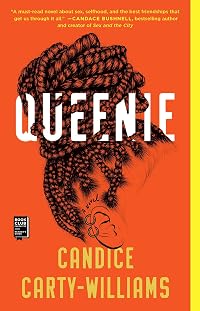
Queenie is a book I kept seeing mentioned on Twitter. It has a fabulous cover and captured my attention straightaway with the idea of the eponymous Queenie, but I honestly didn’t take much notice of the blurb and so I wasn’t entirely sure what to expect when I started reading. I made a special little place in my schedule for Queenie and when I embarked on her story I fervently hoped that I would be pleased I had done so. Was I going to like this story of a quite prickly young woman? Well, I can tell you quite categorically that the answer is yes. I loved it!
I think the reason the blurb didn’t quite stick in my mind as such is because Queenie is a slice of life story. It doesn’t have a major plot, it’s more a case of the reader show more looking on at a snapshot of a time when Queenie is 25, about to turn 26. She’s on a break from her boyfriend of three years, Tom, (it’s definitely a break, not the end, she’s sure) and she goes on something of a collision course. She allows herself to be used by other men, she spends all her time at work talking with Darcy, her friend, instead of getting on with what she’s supposed to be doing. Frankly, her life starts to become a bit of a mess.
Two things really stand out about this book for me. One is the treatment of Queenie as a black woman. I was agape at the way people would talk to her and treat her in the derogatory way that they did. I’m sure that Candice Carty-Williams is writing from experience or knowledge or both, and either way, it’s truly shocking.
Which brings me round to the second thing that stands out: Queenie’s self-esteem, or lack of. A difficult childhood and the way she has been treated have really knocked her confidence and she doesn’t think she’s worth very much. I really wanted to reach into the book and tell her that she absolutely is a queen in every way. She’s sassy, she’s outspoken and she’s just a wondrous, glorious woman.
Her group of friends try to keep her on the straight and narrow and I thought they were a great group (for the most part). They often made me smile, in fact this is a story that made me smile a lot. It’s about getting knocked down, getting back up again, and rising above where others want to put you.
Then there’s her family. Queenie is British but her family are from the Caribbean. Her grandfather is obsessed with his water meter and her grandmother believes that they should never ask for, or accept, help. I really enjoyed reading these sections as they offered a cultural backdrop to Queenie’s life. Part of her longs for the Jamaican landmarks of Brixton which are disappearing in favour of generic burger bars and the like. They remind her of good times in her childhood, but at the same time she has to deal with trying to fit in as a second generation Londoner and in part this means leaving behind some of her cultural roots, casting her adrift from her family.
Queenie is an amusing story but one which also made me think, and made me hope that Queenie would come out the other end stronger and wiser. It’s a beautifully written debut and I think Queenie is going to go far. show less
I think the reason the blurb didn’t quite stick in my mind as such is because Queenie is a slice of life story. It doesn’t have a major plot, it’s more a case of the reader show more looking on at a snapshot of a time when Queenie is 25, about to turn 26. She’s on a break from her boyfriend of three years, Tom, (it’s definitely a break, not the end, she’s sure) and she goes on something of a collision course. She allows herself to be used by other men, she spends all her time at work talking with Darcy, her friend, instead of getting on with what she’s supposed to be doing. Frankly, her life starts to become a bit of a mess.
Two things really stand out about this book for me. One is the treatment of Queenie as a black woman. I was agape at the way people would talk to her and treat her in the derogatory way that they did. I’m sure that Candice Carty-Williams is writing from experience or knowledge or both, and either way, it’s truly shocking.
Which brings me round to the second thing that stands out: Queenie’s self-esteem, or lack of. A difficult childhood and the way she has been treated have really knocked her confidence and she doesn’t think she’s worth very much. I really wanted to reach into the book and tell her that she absolutely is a queen in every way. She’s sassy, she’s outspoken and she’s just a wondrous, glorious woman.
Her group of friends try to keep her on the straight and narrow and I thought they were a great group (for the most part). They often made me smile, in fact this is a story that made me smile a lot. It’s about getting knocked down, getting back up again, and rising above where others want to put you.
Then there’s her family. Queenie is British but her family are from the Caribbean. Her grandfather is obsessed with his water meter and her grandmother believes that they should never ask for, or accept, help. I really enjoyed reading these sections as they offered a cultural backdrop to Queenie’s life. Part of her longs for the Jamaican landmarks of Brixton which are disappearing in favour of generic burger bars and the like. They remind her of good times in her childhood, but at the same time she has to deal with trying to fit in as a second generation Londoner and in part this means leaving behind some of her cultural roots, casting her adrift from her family.
Queenie is an amusing story but one which also made me think, and made me hope that Queenie would come out the other end stronger and wiser. It’s a beautifully written debut and I think Queenie is going to go far. show less
Queenie Jenkins is a Jamaican British woman in her mid-20s, whose break-up with her boyfriend is one of the catalysts for a mental health crisis. Much of Queenie is about how she learns to work through past traumas, realise that she's not okay, and come to a better understanding of herself.
This is Candice Carty-Williams' first book, and it has a lot of the typical problems associated with a debut novel: the character voice is strong but much of the characterisation is sloppy and sometimes verges on the cartoonish; Queenie is at times a believably warts-and-all protagonist, but at others she reads more like a 15-year-old than a 25-year-old; the tone and the content sometimes clash. (The marketing for this is fairly inexplicable—this show more is not a light, Bridget Jones-esque comedy.) That it's a quick and compelling read despite those issues is a testament to Carty-Williams' promise as a writer. I'll keep an eye out for further books by her, even though I didn't really love this one. show less
This is Candice Carty-Williams' first book, and it has a lot of the typical problems associated with a debut novel: the character voice is strong but much of the characterisation is sloppy and sometimes verges on the cartoonish; Queenie is at times a believably warts-and-all protagonist, but at others she reads more like a 15-year-old than a 25-year-old; the tone and the content sometimes clash. (The marketing for this is fairly inexplicable—this show more is not a light, Bridget Jones-esque comedy.) That it's a quick and compelling read despite those issues is a testament to Carty-Williams' promise as a writer. I'll keep an eye out for further books by her, even though I didn't really love this one. show less
Members
- Recently Added By
Lists

2020 Women's Prize for Fiction Longlist
16 works; 12 members

ALA The Reading List
490 works; 28 members

Best 21st Century Books (So Far)
670 works; 86 members

Recommend the 20 best books you've read in the last five years
2,168 works; 606 members

Favourite Books
1,819 works; 316 members

Female Author
1,234 works; 67 members

Global Reads: Books Set in the United Kingdom and Ireland
109 works; 5 members

Best Workplace Fiction
47 works; 18 members

Top Five Books of 2020
982 works; 350 members

Top Five Books of 2018
802 works; 265 members

Kirkus Starred Fiction Reviews of Books Published in 2019
411 works; 12 members
LibraryThingers' 1001 Books You Must Read Before You Die
442 works; 30 members

Black Authors
384 works; 32 members

Five star books
1,767 works; 110 members

Fiction with Women's Names in the Title
378 works; 15 members

Favorite Books from the 2010s
75 works; 3 members

Books Read in 2020
4,379 works; 124 members
First Novels
373 works; 17 members

Your favorite 20 fiction books PUBLISHED in the last five years
20 works; 1 member

Books Read in 2021
5,361 works; 114 members

World Books
51 works; 4 members

To Read
29 works; 2 members

Books Read in 2018
4,360 works; 110 members

Books Read in 2019
4,052 works; 110 members

2010s
241 works; 3 members
Best Audiobooks
240 works; 114 members
Author Information

5+ Works 2,382 Members
Some Editions
Awards and Honors
Awards
Distinctions
Notable Lists
Common Knowledge
- Original publication date
- 2019-03-19
- People/Characters
- Queenie Jenkins; Darcy Betts; Kyazike; Cassandra; Gina Row; Ted Noman
- Important places
- London, England, UK; Brixton, London, England, UK
- Related movies
- Queenie (2024 | IMDb)
- Dedication
- To all the Queenies out there - you are enough. Trust me.
In loving memory of Dan O'Lone and Anton Garneys - First words
- Queenie:
In the stirrups now.
Wish you were here...
Classifications
Statistics
- Members
- 2,017
- Popularity
- 10,401
- Reviews
- 66
- Rating
- (3.72)
- Languages
- 8 — Dutch, English, Finnish, French, German, Italian, Portuguese, Swedish
- Media
- Paper, Audiobook, Ebook
- ISBNs
- 36
- ASINs
- 5