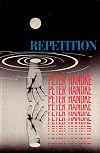
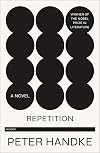
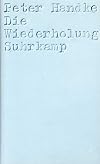
Repetition
by Peter Handke
On This Page
Description
Set in 1960, this novel tells of Filib Kobal's journey from his home in Carinthia to Slovenia on the trail of his missing brother, Gregor. He is armed only with two of Gregor's books: a copy book from agricultural school, and a Slovenian - German dictionary, in which Gregor has marked certain words. The resulting investigation of the laws of language and naming becomes a transformative investigation of himself and the world around him.Tags
Recommendations








Member Reviews
By the 1980s Peter Handke had established himself as a storyteller who had rejected the conventions of storytelling and was more interested in recording and memorializing the traces that the writer leaves behind in his pursuit of story. In Repetition, it is 1960. 20-year-old Filip Kobal leaves his home in southern Austria and heads across the border into Slovenia (his family’s ancestral homeland) in search of his brother Gregor. Filip, 20 years younger than Gregor, has no actual memory of his brother, who fought in World War II, joined the resistance, and never returned home: all he possesses are stories shared by his parents and some elder townspeople and Gregor’s journal and dictionary. Filip’s journey, loosely following in his show more brother’s footsteps, leads him into a landscape that is both alien and familiar, and to a scattering of Slovenian towns and villages where he meets people who are, variously, sympathetic with and indifferent to his quest. Using the journal and his brother’s notations in the dictionary as a guide—and enlightened and motivated by Gregor’s fascination with language and geography—Filip ends up discovering his own close kinship with the land and language of his forebears. The story, as such, is neither straightforward nor action-oriented. Much of what “happens” is simply Filip wandering and observing, remembering events from his childhood, pondering history, reflecting on the possible meaning of what he sees and hears and otherwise witnesses, linking past to present, and looking forward, ruminating on an uncertain future. Repetition is an intensely cerebral novel, one that does not even attempt to incorporate customary storytelling elements like drama, plot and suspense: it seeks to engage on an intellectual rather than an emotional level. Or, one could conceivably argue, it does not care to engage, instead holding itself aloof from whatever the reader might or might not experience in its pages. It also adds a spellbinding, if puzzling, piece to Peter Handke’s uniquely challenging literary legacy. show less
Peter Handke is capable of producing some of the most delicate and lasting images in his prose. Late in the novel, narrator Filip Kobal, and later in life, reimagines his walks up the hills of the Karst region and his encounters with the winds. The wind, he says, takes him by the armpits and raises him up making his climb easier, whether as a headwind or a tailwind. A moment earlier, he says that this wind which comes from the sea only delivers with it an imaginary hint of its saltiness. But there on the summer slopes, it raises the aroma of all the herbs and plants growing there; these he says are real.
Real and imagined form a tension in this story. I confess, I have read this now three times. And each time, I read with a focus on show more something new. It is so richly detailed, so intricately constructed, that I can only concentrate on a few pages, or one dimension, at a time before surrendering to a kind of exhaustion from the effort. That has happened each time. I first read it decades ago. I saw it then as a young man’s adventure to search for his brother, a kind of familial kinship story. But I missed some of the significant details of who his family are, where they come from, and their sense of not fitting neatly into the southern Austrian alpine village where the narrator grew up near the border of Slovenia (also referred to as Yugoslavia, depending on the line of enquiry.)
The Kobals it seems had been in southern Austria since a rebellious ancestor Gregor Kobal led a peasant revolt in 1713, failed, and was executed along with his colleagues, resulting in the Kobals fleeing to what is now Austria. We learn this early, at the point at which Filip steps (as a very young man) across the border from Austria into Slovenia (this is in Iron Curtain days) in search of his brother who made the same crossing twenty-odd years earlier at a similar age. (Filip has two siblings a generation older than him) This parallel sets up that same paradigm of real and imagined. The brother left before WW2, served in that war, disappeared, and Filip can only recreate a relationship through the documentary traces his brother left behind. There are three of these documents – an apple orchard where the brother practiced his agricultural college skills located in a subsided little valley where an underground watercourse caused the land to collapsed and never visible when looking across the landscape. It remains hidden until you stand over it and in it. The other is the notebooks from agricultural college and the Slovenian/German dictionary his brother used to practice his new/old language, ticking off words as he went along. But Filip can only know his brother from the images that this documentary evidence conjures in him. He was a toddler when the brother left.
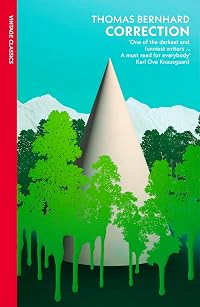
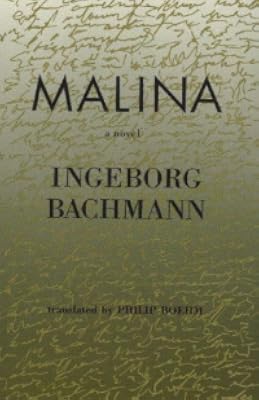
Why is this Slovenia/Austria divide so prominent, I kept asking myself. It is everywhere. When I first read the opening pages of Filip’s first step into this new land, I realised quickly that Handke has always written against the current of history. He was one of those rebellious authors Austria produced in the middle of the last century, Bernhard and Bachman are among the others, challenging power and authority through literature. Yet this novel is intimate, told like a memoir of a loving younger brother yearning and seeking. It is delicate in its layering of image on image, action on action with thoughts and feelings travelling on these images as the young man travels on both the land and in the mind. His most vivid sense, if it is one, is imagination. He interacts with landscapes to feel the faces and actions of the inhabitants of towns he passes, the texture and materials of buildings and the world of nature. He journeys through all these objects and observations attempting to know them, and to know something of his brother. It is a most striking book in that sense, sometimes I feel like I’m reading a 19thC novel by a Bronte, Hardy or G Eliot.
What is it about Slovenia? No matter how long the Kobals had lived in southern Austria, the distance between the locals and the Kobals is expressed through the father in the following way:
The household’s present, its daily life, was dominated by my father’s prisoner mentality. His being a stranger in the village made him a domestic tyrant.
Correspondingly, the father spoke German cleansed of local dialect:
passed onto everybody else in the family
It's a permanent punishment to keep purging corruptions in the German language, purifying it, then ensuring no future generation of his introduces corruptions. An exile (and an immigrant) is always looking to prove themselves. Multi-generational factors are always at play here. Even Filip's two siblings are so much older as to be a generation removed from him.
While the father could speak Slovene it could only erupt into being: As he regularly showed when talking to himself, often very loudly, in his workshop, he himself spoke it in his innermost consciousness, but he felt forbidden to let it out or pass it on to his children.
Handke painstakingly builds a picture of cultural alienation of a deep historical nature, of living a perpetual exile on the only land the (his) Kobals have ever occupied while carrying this cultural artefact of a home language around like a carapace, a home, a weight, a burden, a point of endless differentiation. One cannot settle in this land because it is forever a ‘foreign (Austrian) land’ and language. This picture perfectly explained my own sense of belonging nowhere. It takes a novel of this depth to explain an intangible, unknowable thing. I think Fernando Pessoa with all his examinations of unknowable states of being does something similar, though in more abstract imagery than Handke does. Bifurcated language and the intimate relationship to this divided self, incessantly haunts the mind.
Filip has two ages in the book. He is the young man barely 20 who crosses the border, and the middle-aged man twenty-five years later, examining his former self the way he examined the world of his lost brother. Their journeys parallel in time. One is real, the other unknowable and only recreated through a personal journey through the imagination.
Language, acquiring Slovenian, becomes part of the brother quest. Filip follows his brother’s use of the Slovenian/German dictionary as though following a path through mountains, villages, towns, landscapes. He accumulates words as an adult, studying their nuanced meaning in this new language, explaining like a pedagogue to his reader meanings he had no idea of and states he realises seem only possible in this new Slovenian. As though he can never truly know them. The individual character of language, its untranslatability from its source, is a fascinating journey in itself. Though it seems only academic since it is abstracted from the reality of growing up with it as a lived language. It’s like saying did you know they have this and that word in Slovenian for all sorts of weird and whacky matters. He knows he can only pursue language so far. He reaches a limit, which returns him to that state like his father of permanent exile. Neither in one place nor another.
I have marked this book in hundreds of places. It is only 246 pages long with large print and open line structure. I wish I had the time and place to write out dozens of quotes. It is such a worthwhile reading experience. Like no other. Expansive an unsettling at the same time. show less
Real and imagined form a tension in this story. I confess, I have read this now three times. And each time, I read with a focus on show more something new. It is so richly detailed, so intricately constructed, that I can only concentrate on a few pages, or one dimension, at a time before surrendering to a kind of exhaustion from the effort. That has happened each time. I first read it decades ago. I saw it then as a young man’s adventure to search for his brother, a kind of familial kinship story. But I missed some of the significant details of who his family are, where they come from, and their sense of not fitting neatly into the southern Austrian alpine village where the narrator grew up near the border of Slovenia (also referred to as Yugoslavia, depending on the line of enquiry.)
The Kobals it seems had been in southern Austria since a rebellious ancestor Gregor Kobal led a peasant revolt in 1713, failed, and was executed along with his colleagues, resulting in the Kobals fleeing to what is now Austria. We learn this early, at the point at which Filip steps (as a very young man) across the border from Austria into Slovenia (this is in Iron Curtain days) in search of his brother who made the same crossing twenty-odd years earlier at a similar age. (Filip has two siblings a generation older than him) This parallel sets up that same paradigm of real and imagined. The brother left before WW2, served in that war, disappeared, and Filip can only recreate a relationship through the documentary traces his brother left behind. There are three of these documents – an apple orchard where the brother practiced his agricultural college skills located in a subsided little valley where an underground watercourse caused the land to collapsed and never visible when looking across the landscape. It remains hidden until you stand over it and in it. The other is the notebooks from agricultural college and the Slovenian/German dictionary his brother used to practice his new/old language, ticking off words as he went along. But Filip can only know his brother from the images that this documentary evidence conjures in him. He was a toddler when the brother left.
Why is this Slovenia/Austria divide so prominent, I kept asking myself. It is everywhere. When I first read the opening pages of Filip’s first step into this new land, I realised quickly that Handke has always written against the current of history. He was one of those rebellious authors Austria produced in the middle of the last century, Bernhard and Bachman are among the others, challenging power and authority through literature. Yet this novel is intimate, told like a memoir of a loving younger brother yearning and seeking. It is delicate in its layering of image on image, action on action with thoughts and feelings travelling on these images as the young man travels on both the land and in the mind. His most vivid sense, if it is one, is imagination. He interacts with landscapes to feel the faces and actions of the inhabitants of towns he passes, the texture and materials of buildings and the world of nature. He journeys through all these objects and observations attempting to know them, and to know something of his brother. It is a most striking book in that sense, sometimes I feel like I’m reading a 19thC novel by a Bronte, Hardy or G Eliot.
What is it about Slovenia? No matter how long the Kobals had lived in southern Austria, the distance between the locals and the Kobals is expressed through the father in the following way:
The household’s present, its daily life, was dominated by my father’s prisoner mentality. His being a stranger in the village made him a domestic tyrant.
Correspondingly, the father spoke German cleansed of local dialect:
passed onto everybody else in the family
It's a permanent punishment to keep purging corruptions in the German language, purifying it, then ensuring no future generation of his introduces corruptions. An exile (and an immigrant) is always looking to prove themselves. Multi-generational factors are always at play here. Even Filip's two siblings are so much older as to be a generation removed from him.
While the father could speak Slovene it could only erupt into being: As he regularly showed when talking to himself, often very loudly, in his workshop, he himself spoke it in his innermost consciousness, but he felt forbidden to let it out or pass it on to his children.
Handke painstakingly builds a picture of cultural alienation of a deep historical nature, of living a perpetual exile on the only land the (his) Kobals have ever occupied while carrying this cultural artefact of a home language around like a carapace, a home, a weight, a burden, a point of endless differentiation. One cannot settle in this land because it is forever a ‘foreign (Austrian) land’ and language. This picture perfectly explained my own sense of belonging nowhere. It takes a novel of this depth to explain an intangible, unknowable thing. I think Fernando Pessoa with all his examinations of unknowable states of being does something similar, though in more abstract imagery than Handke does. Bifurcated language and the intimate relationship to this divided self, incessantly haunts the mind.
Filip has two ages in the book. He is the young man barely 20 who crosses the border, and the middle-aged man twenty-five years later, examining his former self the way he examined the world of his lost brother. Their journeys parallel in time. One is real, the other unknowable and only recreated through a personal journey through the imagination.
Language, acquiring Slovenian, becomes part of the brother quest. Filip follows his brother’s use of the Slovenian/German dictionary as though following a path through mountains, villages, towns, landscapes. He accumulates words as an adult, studying their nuanced meaning in this new language, explaining like a pedagogue to his reader meanings he had no idea of and states he realises seem only possible in this new Slovenian. As though he can never truly know them. The individual character of language, its untranslatability from its source, is a fascinating journey in itself. Though it seems only academic since it is abstracted from the reality of growing up with it as a lived language. It’s like saying did you know they have this and that word in Slovenian for all sorts of weird and whacky matters. He knows he can only pursue language so far. He reaches a limit, which returns him to that state like his father of permanent exile. Neither in one place nor another.
I have marked this book in hundreds of places. It is only 246 pages long with large print and open line structure. I wish I had the time and place to write out dozens of quotes. It is such a worthwhile reading experience. Like no other. Expansive an unsettling at the same time. show less
2019 Nobel Prize Winner Update
First there was Proust, then there was Handke. I shall try to explain.
Repetition is a poststructuralist ur-text of sorts, a landmark, a foundational meditation on language, phenomenology, and the work of memory. As Filib Kobal, Handke's geographically and linguistically displaced narrator states: "I look on memory as more than a haphazard thinking back—as work; the work of memory situates experience in a sequence that keeps it alive, a story which can open out into free storytelling, greater life, invention." And isn't that one of the lessons that Proust had taught us, echoed by the work of Freud—namely, that memory is work but a repetitive process worth undertaking for the freedom, the "greater life," show more and the individuality that springs from this very active process?
Proust's Recherche is perhaps the seminal modernist text to cite memory as its thematic concern, and, more specifically, how memory can inform an individual's relation to others, their surroundings, and even, in the end, alter the spatial and temporal landscapes of their lives. Handke's project in Repetition is similar; as such, it is no surprise that he titles his work after Freud's concept of Wiederholungszwang, or repetition-compulsion. Related to trauma, Freud's concept insists on the act of recollection and active memory as repeated forces to overcome traumatic events in lieu of a neurotic repression of them.
Isn't this what Proust's Narrator is doing in the Recherche? And, more to the point here, this is certainly what Handke's Kobal is doing in Repetition; indeed, Handke's situation of Kobal in a deterritorialized borderland between cultures, languages, and histories is critical to the work of memory; in addition, Handke channels Proust in Kobal's iterative considerations of place-names which constitute both an "objective" history (i.e., what the books say, what is passed down by word of mouth) and a "subjective" one, too (i.e., what is experienced as truth by the individual, what the place causes "the self"to be, to become).
A twenty-year-old, who has left his native Austria for Yugoslavia in order to follow the path of his long-absent (and presumed dead) brother, Kobal relies on the stories from his past—his seminary days; life in a Carinthian village where both German and Slovene words were part of daily conversation; and a post-war existence that excludes him from the traumatic histories of those with whom he lives—and also the stories he unearths in two books his brother Gregor has left behind: an agricultural journal, largely concerned with the methods of planting and care of a bountiful and fruitful orchard, and a German-Slovenian dictionary.
This latter book provides Kobal with a deep portrait of the interior life of his brother, and also cause him to confront the trauma of living in the interstitial space between language, citizenship, cultural, familial, and national identity, and a host of other conflicts which Handke allows his narrator to explore through interacting—almost tangibly, tracing them in the air—with words. In Repetition, the working-through comes from Kobal's realization that language is not a stable or static structure, but one that can be used to render deeply personal and subjective experiences into a more exacting and presentable form: a form that, in the end, is able to unite us with others, even despite the inherent trappings of language. In spite of our linguistic differences, Handke seems to argue, we all have the same personalized relationship with words at our disposal, there to help us work through, come to terms, and, in the end, overcome by means of perpetual and ongoing work.
While Proust's text is the modernist literary ur-text dealing with memory and its relation to trauma, Handke's is the poststructuralist literary ur-text dealing with this same major theme, and its Lacanian reworking of Freud are present but extremely subtle—e.g., the interchanging of words for objects; the insistence on signs as incomplete according to a more structural, Saussurean model of language—but work to position Repetition within a genre of largely Austrian-produced works from the mid-1980s onward dealing with memory and phenomenology alongside these questionings of linguistic and territorial borders. Handke's background as a dramatist links him, for example, to the narrative/monologic experiments one finds in the work of Thomas Bernhard (more his contemporary, but the argument, I hope, still holds) and Elfriede Jelinek; also, his influence on writers like W.G. Sebald, Josef Winkler, and even those working in a similar vein (Teju Cole's [b:Open City|8526694|Open City|Teju Cole|https://i.gr-assets.com/images/S/compressed.photo.goodreads.com/books/1327935192l/8526694._SY75_.jpg|13393712] comes immediately to mind) demonstrates how critical his work is to literature being produced today on topics we have only just begun to explore—and, luckily, topics that are so ineffable and even problematic that one needn't fear a dearth of such works any time in the near future. show less
First there was Proust, then there was Handke. I shall try to explain.
Repetition is a poststructuralist ur-text of sorts, a landmark, a foundational meditation on language, phenomenology, and the work of memory. As Filib Kobal, Handke's geographically and linguistically displaced narrator states: "I look on memory as more than a haphazard thinking back—as work; the work of memory situates experience in a sequence that keeps it alive, a story which can open out into free storytelling, greater life, invention." And isn't that one of the lessons that Proust had taught us, echoed by the work of Freud—namely, that memory is work but a repetitive process worth undertaking for the freedom, the "greater life," show more and the individuality that springs from this very active process?
Proust's Recherche is perhaps the seminal modernist text to cite memory as its thematic concern, and, more specifically, how memory can inform an individual's relation to others, their surroundings, and even, in the end, alter the spatial and temporal landscapes of their lives. Handke's project in Repetition is similar; as such, it is no surprise that he titles his work after Freud's concept of Wiederholungszwang, or repetition-compulsion. Related to trauma, Freud's concept insists on the act of recollection and active memory as repeated forces to overcome traumatic events in lieu of a neurotic repression of them.
Isn't this what Proust's Narrator is doing in the Recherche? And, more to the point here, this is certainly what Handke's Kobal is doing in Repetition; indeed, Handke's situation of Kobal in a deterritorialized borderland between cultures, languages, and histories is critical to the work of memory; in addition, Handke channels Proust in Kobal's iterative considerations of place-names which constitute both an "objective" history (i.e., what the books say, what is passed down by word of mouth) and a "subjective" one, too (i.e., what is experienced as truth by the individual, what the place causes "the self"to be, to become).
A twenty-year-old, who has left his native Austria for Yugoslavia in order to follow the path of his long-absent (and presumed dead) brother, Kobal relies on the stories from his past—his seminary days; life in a Carinthian village where both German and Slovene words were part of daily conversation; and a post-war existence that excludes him from the traumatic histories of those with whom he lives—and also the stories he unearths in two books his brother Gregor has left behind: an agricultural journal, largely concerned with the methods of planting and care of a bountiful and fruitful orchard, and a German-Slovenian dictionary.
This latter book provides Kobal with a deep portrait of the interior life of his brother, and also cause him to confront the trauma of living in the interstitial space between language, citizenship, cultural, familial, and national identity, and a host of other conflicts which Handke allows his narrator to explore through interacting—almost tangibly, tracing them in the air—with words. In Repetition, the working-through comes from Kobal's realization that language is not a stable or static structure, but one that can be used to render deeply personal and subjective experiences into a more exacting and presentable form: a form that, in the end, is able to unite us with others, even despite the inherent trappings of language. In spite of our linguistic differences, Handke seems to argue, we all have the same personalized relationship with words at our disposal, there to help us work through, come to terms, and, in the end, overcome by means of perpetual and ongoing work.
While Proust's text is the modernist literary ur-text dealing with memory and its relation to trauma, Handke's is the poststructuralist literary ur-text dealing with this same major theme, and its Lacanian reworking of Freud are present but extremely subtle—e.g., the interchanging of words for objects; the insistence on signs as incomplete according to a more structural, Saussurean model of language—but work to position Repetition within a genre of largely Austrian-produced works from the mid-1980s onward dealing with memory and phenomenology alongside these questionings of linguistic and territorial borders. Handke's background as a dramatist links him, for example, to the narrative/monologic experiments one finds in the work of Thomas Bernhard (more his contemporary, but the argument, I hope, still holds) and Elfriede Jelinek; also, his influence on writers like W.G. Sebald, Josef Winkler, and even those working in a similar vein (Teju Cole's [b:Open City|8526694|Open City|Teju Cole|https://i.gr-assets.com/images/S/compressed.photo.goodreads.com/books/1327935192l/8526694._SY75_.jpg|13393712] comes immediately to mind) demonstrates how critical his work is to literature being produced today on topics we have only just begun to explore—and, luckily, topics that are so ineffable and even problematic that one needn't fear a dearth of such works any time in the near future. show less
The unlikely eventual existence of WG Sebald's four novels presupposes the writing of this book. But that's saying it all backwards, isn't it? The fact is Handke wrote first, and Sebald took what he started to its illogical conclusion with a magically sustained prose. Handke can be a bit dull and dour, his prose a bit labored, and his revelations a bit forced. But that is a given. He's also intensely and seriously sincere, to the point of humorlessness. But that's also something I have a love/hate relationship with. I admire his guts: to write so humorlessly requires true fearlessness. But what he achieves is a rhythm that is the beginning of enticement, if only he had more charm. Parts of this book were amazing!
In the first section, show more the narrator recounts his family past, Rinkenberg, the Austrian village he comes from, and all his mixed emotions having to do with that. This was the most convincing section, because he was not trying to convince me of anything. The paralysis of prose would practically sing at times when an image came out of the clauses (closet?) so unexpectedly and so senselessly, but gleamed bright in the sun with significance. Some of his descriptions transcended description because they were always more than surface descriptions. That's what I mean by significance. Everything means so much to this narrator. When you see the blind window the way he sees it, it bowls you over.
In the second section, the narrator is on foot and in trains in search of his older brother who he's never met but has heard countless stories about. He is in Slovenia, and you realize why that first section was necessary. Knowing where he was from makes this section so much more powerful, since much of what he sees holds its power precisely because of its difference. You rejoice with him at being finally away from home, where he can truly feel at home with the Slovenes who had no real home. (Then there's the other part about how his whole family was likely Slovene, and one of their ancestors may have been a leader in a revolt). Much of this section deals with language and history, and two little books that his brother left behind: a copybook filled with school notes, and a Slovenian-German dictionary with check marks next to the words his brother had a fondness for.
Random story: I was having a nice lunch at the bar when a lady sat down next to me. She had a French accent and we started talking about books and travel. Somehow the topic veered towards Barcelona, a city I've stayed in and loved. Then, out of nowhere she says: "I love Barcelona, but I hate that they speak Catalan. It's just so annoying, it's like if all of America spoke English except one city, and I understand about their heritage, but it's not even a beautiful language," I almost choked on my food. So unexpected was this outburst, so utterly shocked was I at this proposition, that I had no way of responding. Would she have rather the whole city change their language for her convenience? Did she think there was no cultural, artistic, or historic value in a language's preservation, no matter her personal aesthetic judgements on its 'beauty'?
The end of the second section of Repetition dealt with exactly this: the beauty of a language, the pure abstract thing that a language is, an experience conjurer, that it must be appreciated purely for its own existence and not just for any practical usage. I want to show that lady this section of the book, but she would likely not have understood. To her, a language is purely functional. But Filip Kobal, our narrator, is (like me) a sad-sack dreamer, a hopelessly impractical wanderer, and a storyteller.
In the last section, our narrator reaches the Karst, a region of stunning beauty and wondrous natural formations. Caves abound. But his meditations, until this point quite moving, have perhaps a quality of over-reaching. He is trying to say something a bit too much, something about storytelling, and about finding his brother who he never finds, and the significance of it all was too much for me. It felt forced, like a coming of age story that happens all in his head. Or like trying to recount a dream's emotions without any of the dream imagery.
Whereas earlier versions of this worked for me, like the blind window image, they worked even without logic, despite logic. I could understand the pure emotion of something that strikes one for myriad unexplainable reasons, not unlike Proust's madeleines, and guides one back to one's home where a scene unfolds almost as in a dream. A revelation out of nowhere. A something in real life that feels separated out in your memory, as if someone else had lived it. But here at the end of the book, the stretching for revelation was not accompanied by any specific image, or with anything really. The ending, with its hifalutin harping on storytelling seemed more like Handke putting his agenda down, rather than the narrator's own organic musing. show less
In the first section, show more the narrator recounts his family past, Rinkenberg, the Austrian village he comes from, and all his mixed emotions having to do with that. This was the most convincing section, because he was not trying to convince me of anything. The paralysis of prose would practically sing at times when an image came out of the clauses (closet?) so unexpectedly and so senselessly, but gleamed bright in the sun with significance. Some of his descriptions transcended description because they were always more than surface descriptions. That's what I mean by significance. Everything means so much to this narrator. When you see the blind window the way he sees it, it bowls you over.
In the second section, the narrator is on foot and in trains in search of his older brother who he's never met but has heard countless stories about. He is in Slovenia, and you realize why that first section was necessary. Knowing where he was from makes this section so much more powerful, since much of what he sees holds its power precisely because of its difference. You rejoice with him at being finally away from home, where he can truly feel at home with the Slovenes who had no real home. (Then there's the other part about how his whole family was likely Slovene, and one of their ancestors may have been a leader in a revolt). Much of this section deals with language and history, and two little books that his brother left behind: a copybook filled with school notes, and a Slovenian-German dictionary with check marks next to the words his brother had a fondness for.
Random story: I was having a nice lunch at the bar when a lady sat down next to me. She had a French accent and we started talking about books and travel. Somehow the topic veered towards Barcelona, a city I've stayed in and loved. Then, out of nowhere she says: "I love Barcelona, but I hate that they speak Catalan. It's just so annoying, it's like if all of America spoke English except one city, and I understand about their heritage, but it's not even a beautiful language," I almost choked on my food. So unexpected was this outburst, so utterly shocked was I at this proposition, that I had no way of responding. Would she have rather the whole city change their language for her convenience? Did she think there was no cultural, artistic, or historic value in a language's preservation, no matter her personal aesthetic judgements on its 'beauty'?
The end of the second section of Repetition dealt with exactly this: the beauty of a language, the pure abstract thing that a language is, an experience conjurer, that it must be appreciated purely for its own existence and not just for any practical usage. I want to show that lady this section of the book, but she would likely not have understood. To her, a language is purely functional. But Filip Kobal, our narrator, is (like me) a sad-sack dreamer, a hopelessly impractical wanderer, and a storyteller.
In the last section, our narrator reaches the Karst, a region of stunning beauty and wondrous natural formations. Caves abound. But his meditations, until this point quite moving, have perhaps a quality of over-reaching. He is trying to say something a bit too much, something about storytelling, and about finding his brother who he never finds, and the significance of it all was too much for me. It felt forced, like a coming of age story that happens all in his head. Or like trying to recount a dream's emotions without any of the dream imagery.
Whereas earlier versions of this worked for me, like the blind window image, they worked even without logic, despite logic. I could understand the pure emotion of something that strikes one for myriad unexplainable reasons, not unlike Proust's madeleines, and guides one back to one's home where a scene unfolds almost as in a dream. A revelation out of nowhere. A something in real life that feels separated out in your memory, as if someone else had lived it. But here at the end of the book, the stretching for revelation was not accompanied by any specific image, or with anything really. The ending, with its hifalutin harping on storytelling seemed more like Handke putting his agenda down, rather than the narrator's own organic musing. show less
prose which never makes a mistake (if one does not read the third section)
Ratings
Members
- Recently Added By
Lists

Reading LIst
648 works; 1 member
Author Information

210+ Works 8,562 Members
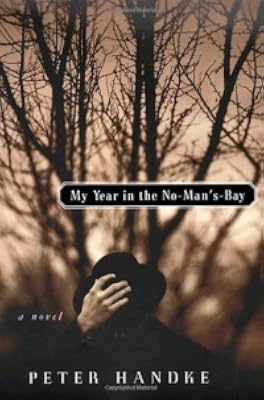
Peter Handke was born in Griffen, Austria on December 6, 1942. He studied law at Graz University from 1961 to 1965. He is a playwright, novelist, poet, and essayist. His plays include Offending the Audience, Kaspar, and The Ride across Lake Constance. His novels include The Goalie's Anxiety at the Penalty Kick, The Left-Handed Woman, and A Sorrow show more beyond Dreams. He was awarded the Buchner Prize in 1973 and refused to accept the Kafka Prize in 1979. (Bowker Author Biography) Peter Handke was born in Griffen, Austria, in 1942. His many works include Absence (FSG, 1990), The Jukebox and Other Essays on Storytelling (FSG, 1994), and, most recently, My Year in the No-Man's-Bay (FSG, 1998). (Publisher Provided) show less
Some Editions
Awards and Honors
Distinctions
Series
Belongs to Publisher Series
Common Knowledge
- Canonical title*
- De herhaling
- Original title
- Die Wiederholung
- Original publication date
- 1986
- People/Characters*
- Filip Kobal; Gregor Kobal
- Important places*
- Slovenië
- Epigraph
- I re dei tempi antichi sono morti,
non hanno trovato il loro nutrimento.
Lo Zohar
Ora ero con questi,
ora con quelli.
Epicarmo
... laboraverimus.
Columella - First words
- Un quarto di secolo o un giorno è passato da quando, sulle tracce di mio fratello scomparso, giunsi a Jesenice.
- Last words
- (Click to show. Warning: May contain spoilers.)Narratore nella tua capanna invasa dalle erbe, tu, dotato del senso dei luoghi, puoi pure ammutolire, tacere forse per secoli e secoli, ascoltando da fuori, immergendoti dentro, ma poi, re, bambino, raccogliti, rialzati, poggiati sui gomiti, sorridi intorno, prendi fiato a fondo e riattacca con quel che appiana ogni contrasto, il tuo: "E...".
- Original language
- German
*Some information comes from Common Knowledge in other languages. Click "Edit" for more information.
Classifications
- Genres
- Fiction and Literature, General Fiction
- DDC/MDS
- 833.914 — Literature & rhetoric German & related literatures German fiction 1900- 1900-1990 1945-1990
- LCC
- PT2668 .A5 .W4713 — Language and Literature German, Dutch and Scandinavian literatures German literature Individual authors or works 1961-2000
- BISAC
Statistics
- Members
- 251
- Popularity
- 129,893
- Reviews
- 5
- Rating
- (3.74)
- Languages
- 10 — Dutch, English, Finnish, French, German, Hungarian, Italian, Portuguese, Spanish, Swedish
- Media
- Paper, Ebook
- ISBNs
- 28
- ASINs
- 4