On This Page
Description
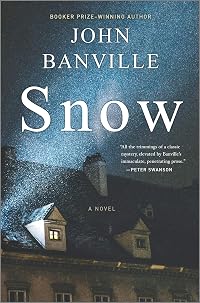
The incomparable Booker Prize winner's next great crime novel-the story of a family whose secrets resurface when a parish priest is found murdered in their ancestral home Detective Inspector St. John Strafford has been summoned to County Wexford to investigate a murder. A parish priest has been found dead in Ballyglass House, the family seat of the aristocratic, secretive Osborne family. The year is 1957 and the Catholic Church rules Ireland with an iron fist. Strafford-flinty, visibly show more Protestant and determined to identify the murderer-faces obstruction at every turn, from the heavily accumulating snow to the culture of silence in the tight-knit community he begins to investigate. As he delves further, he learns the Osbornes are not at all what they seem. And when his own deputy goes missing, Strafford must work to unravel the ever-expanding mystery before the community's secrets, like the snowfall itself, threaten to obliterate everything. show lessTags
Recommendations



















Member Recommendations

Member Reviews
The snowy winter of 1957, a crumbling country house in Ireland. The mutilated corpse of a priest has been found in the library (where else?), and an unconventional young detective is sent out from Dublin to conduct a murder investigation. Banville sets up the pieces for a classic mid-century mystery story, but of course that isn’t what we get here — from the perspective of sixty years later, we know a lot more about things that were normally swept under Irish carpets in those days, and we have a pretty good idea of likely motives for killing a country priest before the story even starts.
Since we know where it’s probably going anyway, Banville doesn’t bother much with the usual business of statements and clues, but focuses on show more supplying us with a lot of meaningful period atmosphere and on DI Strafford’s frustrated attempts to penetrate the wall of ecclesiastical impunity in Irish society. Interesting, and done with a refreshingly light touch, but still rather depressing in the end. show less
Since we know where it’s probably going anyway, Banville doesn’t bother much with the usual business of statements and clues, but focuses on show more supplying us with a lot of meaningful period atmosphere and on DI Strafford’s frustrated attempts to penetrate the wall of ecclesiastical impunity in Irish society. Interesting, and done with a refreshingly light touch, but still rather depressing in the end. show less
When a priest is found murdered and castrated it doesn't take too much imagination to determine who might have committed the deed. This is 1957 and St. John Strafford is the investigating officer, a lone protestant detective among the mainly Catholic police force in a country ruled by the Catholic church. He is instructed by the archbishop to treat the death as an accident to protect the reputation of the church. Banville's writing is atmospheric, melancholy, enhanced by Irish culture and the snowstorm raging outside "with snowflakes as big as communion wafers". Not a whodunnit, but an exposé of the powerful. Despite the body being found in the library, this is certainly not a case for Miss Marple.
'Snow' is a sad, uncomfortable, dispiriting journey back to an Ireland I hope we never see again. One where the power of the Catholic Church, obsessed with protecting its priests, is wrapped around Ireland like a cold wet shroud.
In 1957, Ireland had only been a Republic for nine years. The economy was so badly stalled that sixteen per cent of the population emigrated. Those fought and killed in the War of Independence and the Civil War that followed it had, by 1957, become the police and the politicians.
John Banville sets up the plot of 'Snow' to display the way power worked in Ireland. Issues of class, sectarianism and the power of the Catholic church coat this story like mould on a damp wall.
Yet this more than a dry polemic against show more the Irish Establishment of the day. It's a story illumined by vividly-drawn, memorable characters, all of whom have been touched by the killing of the priest. Snow doesn't offer a particularly challenging mystery, nor is it meant to be.
From the beginning, John Banville chips aways at the conventional country house whodunnit facade of the story with genre references - The first thing the Colonel says to the Detective is 'The body is in the Library', summoning the shade of Miss Marple - a candlestick is offered as a clue - the forensics team job about when Poirot will arrive. It is soon apparent that the first challenge the detective faces is deciding whether his superiors want him to find the killer or cover up the murder because priests do not get murdered in Ireland. Even the priest who is slaughtered in the first few pages of the book shares this view, giving the novel its wonderful first line:
'I'm a priest, for Christ's sake - how can this be happening to me?'
It's not the solving of the mystery that's important to this book but displaying the cancerous behaviour at its heart, seeing how it rots the lives of those it touches, and understanding the silent but passionate pain it produces in a society where what is seen and known is neither acknowledge nor acted upon .
One of the things that I enjoyed most about the book was how well-wrought the main characters were. Three, in particular, stand out: the detective, the priest and the Archbishop (now doesn't that sound like the first line of a joke? ' A detective, a priest and an Archbishop walk into a bar...)
Scion of the landed gentry, member of the Church of Ireland, Dublin-based Detective Inspector St John Strafford is unlike any other fictional detective that I've come across. He is an emotionally distant man, adrift in his own life and already mourning his own lack of purpose. He is uncomfortable in his class and in his job. He's hungry for contact but has a crippling inability to connect or to sustain a connection. He is a man defined by negatives: not living up to the expectations of his class, not being man enough to be a real policeman, not drinking, not smoking, almost not living. For him, abstinence has become such a habit that he is no longer able to access his own passions.
Then there is the priest who has been murdered. John Banville breaks the narrative partway through the book to give us an 'Interlude' inside the priest's head. He is charming, urbane, educated, mildly amusing, completely unable to see himself as anything but a victim, barely a sinner, certainly not the incarnation of sin. He is what God made him so what he is is not his fault. The 'Interlude' gave me a deep insight into the man but didn't generate any empathy. I found him fundamentally and irredeemably repulsive.
We meet the Archbishop when he summons the protestant Strafford to his presence to ensure the policeman knows what is expected of him: to do whatever is necessary to protect the good name of the Church. The Archbishop was Dracula in a cassock and a purple sash. Cold from the heart out but clever and ruthless. Dripping the venom of doubt and threat and disdain. Undead in his own cold grip on life, with his hands tight around the throat of the enemies of the Church. Yep, he definitely made an impression.
Rural Ireland itself is almost a character in this book. It is a place of discomfort where the rooms are never warm enough, the food is rough and the people are no better than they should be. It's a society driven by class and rank and religion, where knowing a person's name will tell you their religion and hearing their accents will tell you their class and where all authority wears a uniform, secular or religious and owes allegiance to a chain of command.
This is a book filled with people who, as children, were deprived of love, especially loving parents and how that shapes the adults they become. The main thing I took away from this book was how corrosive it is to let that deprivation become normalised instead of being made problematic.
I strongly recommend the audiobook version of 'Snow'. Stanley Townsend does a great job of bringing out nuances of accent that I might have missed if I'd read the text myself. show less
John Banville has dispensed with the Benjamin Black nom-de-plume for this gripping whodunit, though the novel shares time and place with his exquisite crime series featuring Dublin pathologist Quirke. In Snow, it is December 1957, Christmas is approaching, and Detective Inspector St. John Strafford has been called to Ballyglass House in County Wexford to investigate the gruesome murder of a priest, Father Tom Lawless, widely known simply as Father Tom. Ancient, gloomy Ballyglass is home to the Osborne family, Anglo-Irish Protestant, wealthy, influential and connected. Father Tom, a frequent guest at Ballyglass, was on this occasion compelled to stay over for the night because a heavy snowfall rendered the roads impassable. Strafford’s show more crime scene is messy, the attack beginning in an upstairs hallway, where someone stabbed the priest in the neck. Pursued by his assailant, Father Tom stumbled down the stairs and into the library, where the killer finished him off with an act of genital mutilation. The brutal and frenzied nature of the crime is sickening. Who would do such a thing? Strafford, only child of a well-off Protestant family, finds himself facing an array of obstacles in his pursuit of the truth: a crime scene that was properly tidied up before the police arrived, snow that continues to fall making travel difficult, the interference of the local Catholic Archbishop who insists that statements to the press about the incident refer to the death as accidental, and the puzzling disappearance of his second-in-command, young DS Jenkins. Despite their status and apparent affluence, the Osborne family is transparently dysfunctional, and all of them—snobbish Colonel Osborne, Sylvia, his flirtatious and heavily medicated and much younger second wife, and the Colonel’s two children from a previous marriage—have things to hide. A bevy of eccentrics round out the cast: employees of the Osbornes (Mrs. Duffy the housekeeper, Fonsey the stable boy) and several local characters, all of whom love a good gossip, and some of whom don’t seem to think all that highly of the Osbornes or Father Tom. The story is suspenseful and intricately plotted, the writing energised by deft touches of dry humour and brought alive by period detail. But, as always with Banville’s fiction, we can look beyond the story and revel in the prose, which is precise, observant, witty, and stunningly atmospheric. Snow is an elegantly written and suspenseful literary thriller whose entertainment value is greatly enhanced by the author’s thorough familiarity with Irish history and culture and the religious and political tensions that touched all aspects of Irish life in the 1950s. It is also highly enjoyable and a welcome addition to Banville’s oeuvre. show less
1957 Irish mystery with a twist!
A Catholic Priest has been rather viciously killed. Detective Inspector (St. John pronounced Sinjun) Strafford has been sent to investigate. And that's an interesting aspect of the story as well.
The snow and cold frame the story's heaviness to a nicety.
The accompanying notes to the Father's death don't leave much room for us not to make the leap as to why he might've been killed but, the melding of Strafford's voice counterpointed by that of the dead man threw me. I wasn't really up for the very matter of fact explanations for abuse dropping from the perpetrator's lips. So reasonable, with such convinced righteousness. Very confronting and shocking! Father Tom had totally convinced himself that it was his show more victims' fault. Banville's writing is so very disarming, and it's this tension that for me carries the drama. As do the cast of characters who inhabit the small village of Ballyclass. A place Strafford, having grown up in one somewhat similar, fits right into. In fact the story is littered with idiosyncratic characters.
Indeed Strafford is rather an unusual person and as we are carried along by his reflections, I found myself standing outside of him and alongside him. I was occasionally well and truly puzzled by his thoughts and his responses especially with women.
As I've said, Banville's writing is alarmingly deceptive, hiding rotten truths and hosting quite an array of very individual characters with numerous references to many parts of Irish social, political and religious happenings, from the Troubles, to religious conflicts and religious scandals, hints of the Magdalene laundries and more. As Strafford works his way through the story behind Father Tom's death, it's perhaps the last chapter, set years later that confirms what we already suspect. (Miss Marple always says that the world can be found in a village.)
Not a story for everyone, with triggers centered around abuse and victims of abuse.
However I must say I was fixated by Banville's writing style. It's that that elevates this novel from a four star to a five star read, difficult though that read is.
A Harlequin Trade ARC via NetGalley show less
A Catholic Priest has been rather viciously killed. Detective Inspector (St. John pronounced Sinjun) Strafford has been sent to investigate. And that's an interesting aspect of the story as well.
The snow and cold frame the story's heaviness to a nicety.
The accompanying notes to the Father's death don't leave much room for us not to make the leap as to why he might've been killed but, the melding of Strafford's voice counterpointed by that of the dead man threw me. I wasn't really up for the very matter of fact explanations for abuse dropping from the perpetrator's lips. So reasonable, with such convinced righteousness. Very confronting and shocking! Father Tom had totally convinced himself that it was his show more victims' fault. Banville's writing is so very disarming, and it's this tension that for me carries the drama. As do the cast of characters who inhabit the small village of Ballyclass. A place Strafford, having grown up in one somewhat similar, fits right into. In fact the story is littered with idiosyncratic characters.
Indeed Strafford is rather an unusual person and as we are carried along by his reflections, I found myself standing outside of him and alongside him. I was occasionally well and truly puzzled by his thoughts and his responses especially with women.
As I've said, Banville's writing is alarmingly deceptive, hiding rotten truths and hosting quite an array of very individual characters with numerous references to many parts of Irish social, political and religious happenings, from the Troubles, to religious conflicts and religious scandals, hints of the Magdalene laundries and more. As Strafford works his way through the story behind Father Tom's death, it's perhaps the last chapter, set years later that confirms what we already suspect. (Miss Marple always says that the world can be found in a village.)
Not a story for everyone, with triggers centered around abuse and victims of abuse.
However I must say I was fixated by Banville's writing style. It's that that elevates this novel from a four star to a five star read, difficult though that read is.
A Harlequin Trade ARC via NetGalley show less
On one level, in this book John Banville offers a sly wink at iconic British crime fiction. This story takes place in a small village at an aristocratic manor house, with all the suspects already at the scene of the crime, committed, of course, in the library with a dagger. The detective only has to deduce which one is guilty, which is accomplished simultaneously with the gradual revelation of the sordid secrets of the suspects.
On another level, this is historical fiction, set in the winter of 1957 Ireland, when tensions were simmering between Protestants and Catholics, and expectations of class, power, and religion colored every interaction between the two groups, even down to preference in whisky. (The Catholics, apparently, prefer show more Jameson’s to Bushmills, and consider it a pointed insult to be offered whisky not in keeping with their heritage, “another of the multitude of minor myths the country thrived on.”)
Police Detective Inspector St John Strafford has been sent in a serious snowstorm from Dublin to Ballyglass House in the County of Wexford. This run-down manor was owned by the Protestant Colonel Osborne, so it was thought that the Protestant Strafford might handle the situation more diplomatically than Catholics in the force. At Ballyglass, a priest who was a guest of the house, Father Tom Lawless, has just been murdered and mutilated. Readers can guess why a priest might have been castrated, and the author eventually supplies us with the gruesome justifications for the crime. But more than one person associated with the manor has a motive, and Strafford must figure out which one it is.
The main characters are odd, and all seem, in Strafford’s eyes, to be playing some sort of roles.
Osborne was “very much a type,” Strafford noticed:
“'Odd,' he thought, 'that a man should take the time to dress and groom himself so punctiliously while the body of a stabbed and castrated priest lay on the floor in his library. But of course the forms must be observed, whatever the circumstances - afternoon tea had been taken every day, often outdoors, during the siege of Khartoum.'”
Osborne’s young (second) wife Sylvia, is generally considered to be crazy, and is administered sedatives every day by a doctor.
Osborne has two children from his first wife who are also at home, as it is Christmastime. Lettie is seventeen, cruel, sarcastic, and full of herself, and Dominic is a morose medical student at Trinity College in Dublin.
In addition, there are a few staff members around, and a few locals who have occasion to stop by frequently at the manor.
Strafford not only had to root through the skeletons hiding in the house. He had to do so within the confines of reality in 1957 Ireland, which meant that:
“The Catholic Church - the powers that be, in other words - would shoulder its way in and take over. There would be a cover-up, some plausible lie would be peddled to the public. The only question was how deeply the facts could be buried.”
Indeed, Strafford was summoned for a parley of sorts with the Archbishop of Dublin, John Charles McQuaid, to discuss his handling of the case, and to receive not so subtle threats about what he did or did not reveal to the press.
Strafford finally closes in on what happened, but only as near as he can get to it by the actors all so wedded to their roles and to their secrets.
Evaluation: This crime story is cleverly told, but the specifics were so abhorrent to me I could hardly bear to read it. This was certainly not the author’s fault, as reality is sometimes just that way, but I can’t really say I enjoyed it. show less
On another level, this is historical fiction, set in the winter of 1957 Ireland, when tensions were simmering between Protestants and Catholics, and expectations of class, power, and religion colored every interaction between the two groups, even down to preference in whisky. (The Catholics, apparently, prefer show more Jameson’s to Bushmills, and consider it a pointed insult to be offered whisky not in keeping with their heritage, “another of the multitude of minor myths the country thrived on.”)
Police Detective Inspector St John Strafford has been sent in a serious snowstorm from Dublin to Ballyglass House in the County of Wexford. This run-down manor was owned by the Protestant Colonel Osborne, so it was thought that the Protestant Strafford might handle the situation more diplomatically than Catholics in the force. At Ballyglass, a priest who was a guest of the house, Father Tom Lawless, has just been murdered and mutilated. Readers can guess why a priest might have been castrated, and the author eventually supplies us with the gruesome justifications for the crime. But more than one person associated with the manor has a motive, and Strafford must figure out which one it is.
The main characters are odd, and all seem, in Strafford’s eyes, to be playing some sort of roles.
Osborne was “very much a type,” Strafford noticed:
“'Odd,' he thought, 'that a man should take the time to dress and groom himself so punctiliously while the body of a stabbed and castrated priest lay on the floor in his library. But of course the forms must be observed, whatever the circumstances - afternoon tea had been taken every day, often outdoors, during the siege of Khartoum.'”
Osborne’s young (second) wife Sylvia, is generally considered to be crazy, and is administered sedatives every day by a doctor.
Osborne has two children from his first wife who are also at home, as it is Christmastime. Lettie is seventeen, cruel, sarcastic, and full of herself, and Dominic is a morose medical student at Trinity College in Dublin.
In addition, there are a few staff members around, and a few locals who have occasion to stop by frequently at the manor.
Strafford not only had to root through the skeletons hiding in the house. He had to do so within the confines of reality in 1957 Ireland, which meant that:
“The Catholic Church - the powers that be, in other words - would shoulder its way in and take over. There would be a cover-up, some plausible lie would be peddled to the public. The only question was how deeply the facts could be buried.”
Indeed, Strafford was summoned for a parley of sorts with the Archbishop of Dublin, John Charles McQuaid, to discuss his handling of the case, and to receive not so subtle threats about what he did or did not reveal to the press.
Strafford finally closes in on what happened, but only as near as he can get to it by the actors all so wedded to their roles and to their secrets.
Evaluation: This crime story is cleverly told, but the specifics were so abhorrent to me I could hardly bear to read it. This was certainly not the author’s fault, as reality is sometimes just that way, but I can’t really say I enjoyed it. show less
It’s Christmas time, 1957, in the south-east of Ireland. The mutilated body of Father Tom Lawless is found in the library of Ballyglass House, the country home of the aristocratic Osborne family. Detective Inspector St. John (Sinjun) Strafford is in charge of the investigation. The Osbornes are not particularly forthcoming, and Strafford, a Protestant, also faces obstruction from the Catholic Church which publicizes the death as an accident.
The mystery is easily solvable. The mutilation of the body makes the motive abundantly clear. There is some question as to the identity of the murderer, but that too soon becomes obvious. What is frustrating is that Strafford seems to ignore obvious clues and doesn’t ask why the murderer would show more behave in a certain way. Perhaps the explanation is that Strafford is living in a time when crime scene profiling had not yet been developed and is living in a place where certain subjects were not discussed, whereas the modern reader has knowledge of Ireland’s social and religious history.
Because the plot is so predictable, the impression is that the mystery is really a stimulus to address a larger social issue, particularly the power and influence of the Catholic Church in Ireland and its history of covering up abuse by priests. The author makes clear that he feels the church has much to answer for. Strafford is told that he must be careful: “’There’s only one Archbishop – only one that counts, at any rate. Dirty your bib and he’ll be down on you like a ton of bricks, whether you’re Catholic, Protestant, Gentile or Jew. Runs a tight outfit, does His Grace, without regard for creed, race or colour – no matter who you are, you’re still liable to get it in the neck. . . . the reverend Doctor only has to lift his little finger and your career goes up in smoke – or into the flames of hellfire, and then up in smoke. And it doesn’t just apply to priests. Anyone who gets a belt of the crozier is done for.’” A young woman tells Strafford much the same: “’A girl has to keep tabs on the likes of His Holiness John Charles, that’s for sure. I don’t want to end up a slave in a laundry somewhere, working my hands to the bone and the nuns shouting at me.’”
The opening sentence of the book suggests the power priests had; Father Tom, as he is attacked, thinks, “I’m a priest, for Christ’s sake – how can this be happening to me?” Later when Strafford asks about why priests are not reported for abuse, he is told: “’Report him to who? Maybe you haven’t heard – you don’t ‘report’ a priest. The clergy are untouchable. . . . The most that could have been done . . . would have been to get him transferred. That’s all the Church ever does, when one of theirs lands in trouble. Then he’d just get up to his old tricks somewhere else.’”
Snow becomes another obstacle Strafford has to overcome. The oppressiveness of the snow serves as a metaphor for the Catholic Church’s oppressive hold on Ireland. Travel becomes difficult in the countryside because of snowfall, just as the murder investigation is complicated by the archbishop’s interference. The snow blankets the country just as the church tries to cover up the circumstances of a priest’s death. At one point, the snow falls “in big flabby flakes the size of Communion wafers.” When Strafford quotes the last paragraph of James Joyce’s “The Dead” (“’Snow is general all over Ireland’”), he can be commenting on the church’s strong grip over the entire country.
Later in the novel there’s an Interlude written from the point of view of a sexual abuser. Reading this section is very disturbing. The man justifies his actions with comments like “[The boy] needed to be loved, whether he knew it or not” and “must have had some sense of pride at having been picked out and made my special one. That must have been a source of pleasure for him.” He addresses those who might accuse him: “Don’t tell me you know about a thing until you’ve done it. And don’t tell me that, having done it, you won’t want to do it again. Don’t point your finger at me and call me names and say that God will punish me. So few of us know what it’s like – more than you’d think, but few, all the same – we who live in the secret, enchanted world.”
It is known that people who were sexually abused in childhood often become abusive themselves. This is the pattern suggested in the novel. This fact means that the reader may feel some sympathy for a person. Since the church did nothing to help abusing priests, the cycle continued. Of course the cyclical nature of abuse also means that the information given about a victim at the end is downright chilling.
Banville’s writing impresses. Much of the language is lyrical. The description of the archbishop is perfect: there is repeated reference to his little dark eyes and his sharp, cold little smile. Telling details suggest his personality: “the tips of his [red velvet] slippers . . . appeared alternately, like crimson tongue-tips, from under the hem of his cassock. He stopped before the fire and held out his hands, which were as pale as cuttlefish bones. . . . flames gave a lurid tinge to his thin, pallid face.” Some of the diction like etiolated and brumous and boreen may have readers consulting a dictionary.
It could be argued that Banville doesn’t reveal anything that most readers don’t already know. What is unique is his using a police procedural as social commentary. The language makes the book a joy to read but the content will discomfit.
Note: I received a digital galley from the publisher via NetGalley.
Please check out my reader's blog (https://schatjesshelves.blogspot.com/) and follow me on Twitter (@DCYakabuski). show less
The mystery is easily solvable. The mutilation of the body makes the motive abundantly clear. There is some question as to the identity of the murderer, but that too soon becomes obvious. What is frustrating is that Strafford seems to ignore obvious clues and doesn’t ask why the murderer would show more behave in a certain way. Perhaps the explanation is that Strafford is living in a time when crime scene profiling had not yet been developed and is living in a place where certain subjects were not discussed, whereas the modern reader has knowledge of Ireland’s social and religious history.
Because the plot is so predictable, the impression is that the mystery is really a stimulus to address a larger social issue, particularly the power and influence of the Catholic Church in Ireland and its history of covering up abuse by priests. The author makes clear that he feels the church has much to answer for. Strafford is told that he must be careful: “’There’s only one Archbishop – only one that counts, at any rate. Dirty your bib and he’ll be down on you like a ton of bricks, whether you’re Catholic, Protestant, Gentile or Jew. Runs a tight outfit, does His Grace, without regard for creed, race or colour – no matter who you are, you’re still liable to get it in the neck. . . . the reverend Doctor only has to lift his little finger and your career goes up in smoke – or into the flames of hellfire, and then up in smoke. And it doesn’t just apply to priests. Anyone who gets a belt of the crozier is done for.’” A young woman tells Strafford much the same: “’A girl has to keep tabs on the likes of His Holiness John Charles, that’s for sure. I don’t want to end up a slave in a laundry somewhere, working my hands to the bone and the nuns shouting at me.’”
The opening sentence of the book suggests the power priests had; Father Tom, as he is attacked, thinks, “I’m a priest, for Christ’s sake – how can this be happening to me?” Later when Strafford asks about why priests are not reported for abuse, he is told: “’Report him to who? Maybe you haven’t heard – you don’t ‘report’ a priest. The clergy are untouchable. . . . The most that could have been done . . . would have been to get him transferred. That’s all the Church ever does, when one of theirs lands in trouble. Then he’d just get up to his old tricks somewhere else.’”
Snow becomes another obstacle Strafford has to overcome. The oppressiveness of the snow serves as a metaphor for the Catholic Church’s oppressive hold on Ireland. Travel becomes difficult in the countryside because of snowfall, just as the murder investigation is complicated by the archbishop’s interference. The snow blankets the country just as the church tries to cover up the circumstances of a priest’s death. At one point, the snow falls “in big flabby flakes the size of Communion wafers.” When Strafford quotes the last paragraph of James Joyce’s “The Dead” (“’Snow is general all over Ireland’”), he can be commenting on the church’s strong grip over the entire country.
Later in the novel there’s an Interlude written from the point of view of a sexual abuser. Reading this section is very disturbing. The man justifies his actions with comments like “[The boy] needed to be loved, whether he knew it or not” and “must have had some sense of pride at having been picked out and made my special one. That must have been a source of pleasure for him.” He addresses those who might accuse him: “Don’t tell me you know about a thing until you’ve done it. And don’t tell me that, having done it, you won’t want to do it again. Don’t point your finger at me and call me names and say that God will punish me. So few of us know what it’s like – more than you’d think, but few, all the same – we who live in the secret, enchanted world.”
It is known that people who were sexually abused in childhood often become abusive themselves. This is the pattern suggested in the novel. This fact means that the reader may feel some sympathy for a person. Since the church did nothing to help abusing priests, the cycle continued. Of course the cyclical nature of abuse also means that the information given about a victim at the end is downright chilling.
Banville’s writing impresses. Much of the language is lyrical. The description of the archbishop is perfect: there is repeated reference to his little dark eyes and his sharp, cold little smile. Telling details suggest his personality: “the tips of his [red velvet] slippers . . . appeared alternately, like crimson tongue-tips, from under the hem of his cassock. He stopped before the fire and held out his hands, which were as pale as cuttlefish bones. . . . flames gave a lurid tinge to his thin, pallid face.” Some of the diction like etiolated and brumous and boreen may have readers consulting a dictionary.
It could be argued that Banville doesn’t reveal anything that most readers don’t already know. What is unique is his using a police procedural as social commentary. The language makes the book a joy to read but the content will discomfit.
Note: I received a digital galley from the publisher via NetGalley.
Please check out my reader's blog (https://schatjesshelves.blogspot.com/) and follow me on Twitter (@DCYakabuski). show less
Members
- Recently Added By
Lists

Unread books
1,063 works; 87 members

Christmas Reading
142 works; 5 members

Books Read in 2022
5,168 works; 114 members

Books Read in 2023
5,547 works; 145 members
Author Information

90+ Works 27,969 Members
Some Editions
Awards and Honors
Awards
Distinctions
Series

Common Knowledge
- Canonical title
- Snow
- Original title
- Snow
- Alternate titles
- Pecado; Delitto d’inverno
- Original publication date
- 2020-09-29
- People/Characters
- Detective Inspector St. John Strafford; Geoffrey Osborne; Lettie Osborne; Sylvia Osborne; Dominic Osborne; Father Thomas Lawless (show all 18); Fonsey (Alphonse Welch); Mrs.Duffy; Detective Sergeant Ambrose Jenkins; Jeremiah Reck; Detective Chief Superintendent Hackett; Archbishop McQuaid; Doctor Hafner; Freddie Harbison; Mrs Reck; Sergeant Redford; Rosemary Lawless; Peggy
- Dedication
- To John and Judith Hannan
- First words
- I’m a priest, for Christ’s sake - how can this be happening to me?
- Last words
- (Click to show. Warning: May contain spoilers.)He watched her until she had crossed the little hump-backed bridge over the duck pond and disappeared into the shadows on the far side, under the trees.
- Original language
- Inglese
Classifications
Statistics
- Members
- 1,153
- Popularity
- 21,822
- Reviews
- 63
- Rating
- (3.38)
- Languages
- 6 — Catalan, Dutch, English, French, Italian, Spanish
- Media
- Paper, Audiobook, Ebook
- ISBNs
- 28
- ASINs
- 9