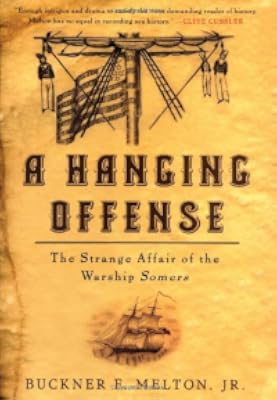
A Hanging Offense: The Strange Affair of the Warship Somers
by Buckner Melton
On This Page
Description
Mutiny on the Bounty is one of history's greatest naval stories--yet few know the similar tale from America's own fledgling navy in the dying days of the Age of Sail, a tale of mutiny and death at sea on an American warship. In 1842, the brig-of-war Somers set out on a training cruise for apprentice seamen, commanded by rising star Alexander Mackenzie. Somers was crammed with teenagers. Among them was Acting Midshipman Philip Spencer, a disturbed youth and a son of the U.S. Secretary of War. show more Buying other crew members' loyalty with pilfered tobacco and alcohol, Spencer dreamed up a scheme to kill the officers and turn Somers into a pirate ship. In the isolated world of a warship, a single man can threaten the crew's discipline and the captain's authority. But one of Spencer's followers warned Mackenzie, who arrested the midshipman and chained him and other ringleaders to the quarterdeck. Fearing efforts to rescue the prisoners, officers had to stay awake in round-the-clock watches. Steering desperately for land, sleep-deprived and armed to the teeth, battling efforts to liberate Spencer, Somers's captain and officers finally faced a fateful choice: somehow keep control of the vessel until reaching port--still hundreds of miles away--or hang the midshipman and his two leading henchmen before the boys could take over the ship. The results shook the nation. A naval investigation of the affair turned into a court-martial and a state trial and led to the founding of the Naval Academy to provide better officers for the still-young republic. Mackenzie's controversial decision may have inspired Herman Melville's great work Billy Budd. The story of Somers raises timeless questions still disturbing in twenty-first-century America: the relationship between civil and military law, the hazy line between peace and war, the battle between individual rights and national security, and the ultimate challenge of command at sea. show lessTags
Recommendations






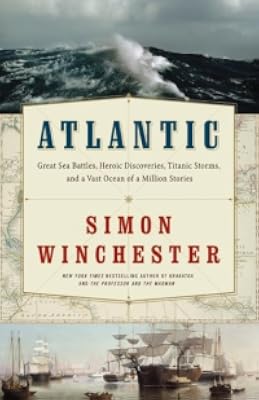

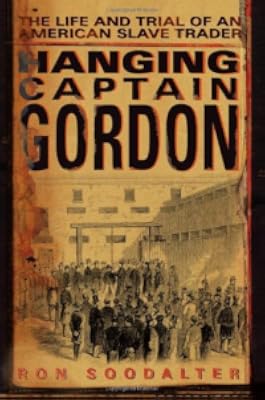
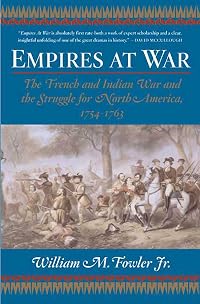
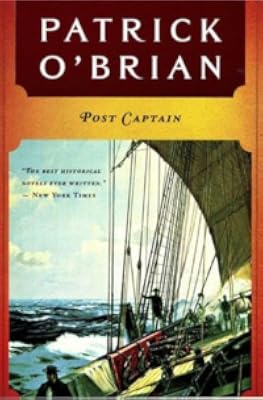
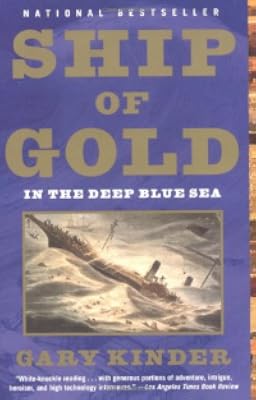
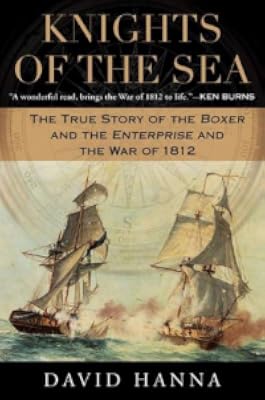

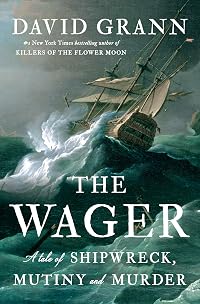
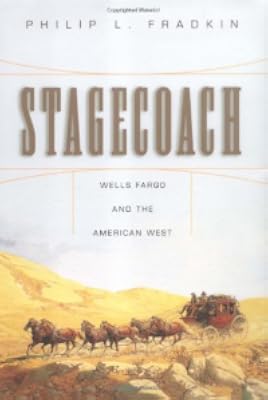
Member Recommendations

Member Reviews
In 1842, eighteen year old Philip Spencer had every opportunity for a promising naval career. He is the son of the Secretary of War, but chafes at authority and discipline at every turn. Thanks to his father's influence, the navy assigns him to the USS Somers as a midshipman under Capt. Mackenzie. Since the U.S. had yet to establish its famous naval academy, Spencer is part of a newly-implemented training exercise. The Somers crew are mostly teenage greenhands and the plan was to sail to West Africa and back. But the navy is not the jolly, adventurous life that Spencer expected it to be. Morale dips ever lower until finally, only 13 days away from New York harbor, Spencer and two cohorts are hung for mutiny.
This one was a quick read, show more but it left me with a lot of questions. For one thing, mutiny is incredibly rare because proper organization and order is necessary to keep everyone alive. That being said, Spencer wasn't especially charismatic. I doubt that Spencer would've remained "in charge" for very long, if the mutiny had been successful. We learn little to nothing at all about Spencer's cohorts, or the other officers for that matter, besides what was possibly said in conspiracy or overheard. What could they gain from mutiny and murder? Melton sympathizes with Mackenzie throughout the book, painting Spencer as a conniving villain. But during the inevitable court-martial, Mackenzie appears untrustworthy. Melton briefly compares the situation to the infamous mutiny on the Bounty and capital punishment as a deterrent, but only in broad generalizations that doesn't get to the heart of the matter. There are over a hundred men on board, and a personal quarrel between an officer and his captain does not trigger a mutiny. Although less than satisfying, it is a dramatic, intriguing, and dreadful episode in the early days of the US navy. show less
This one was a quick read, show more but it left me with a lot of questions. For one thing, mutiny is incredibly rare because proper organization and order is necessary to keep everyone alive. That being said, Spencer wasn't especially charismatic. I doubt that Spencer would've remained "in charge" for very long, if the mutiny had been successful. We learn little to nothing at all about Spencer's cohorts, or the other officers for that matter, besides what was possibly said in conspiracy or overheard. What could they gain from mutiny and murder? Melton sympathizes with Mackenzie throughout the book, painting Spencer as a conniving villain. But during the inevitable court-martial, Mackenzie appears untrustworthy. Melton briefly compares the situation to the infamous mutiny on the Bounty and capital punishment as a deterrent, but only in broad generalizations that doesn't get to the heart of the matter. There are over a hundred men on board, and a personal quarrel between an officer and his captain does not trigger a mutiny. Although less than satisfying, it is a dramatic, intriguing, and dreadful episode in the early days of the US navy. show less
A very readable history of the only mutiny on a U.S. Naval vassal the U.S. Brigg of War Somers in 1842, that resulted in the three ring leaders being hanged. The result of which led to the founding of the U.S. Naval Academy.
On the surface you would say O. K. discipline in those days were harsh and these things happened in those days.. But it ends up that these three young men were hanged without a court Marshall or the benefit of legal council of any kind.
Add to the mix that the mastermind of the mutiny was a young acting Midshipman named Phillip Spencer whose father was John Canfield Spencer was Pres. John Tyler's secretary of war, and had arranged the boy's commission with the help of Capt. Oliver "Hazzard Perry.You now have the show more setting for high drama and what sounds like a Hollywood script.
The book is written in a very low keyed tone. Every chapter is more of an essay on the main people involved and each part of the event as it unfolds. Overall it gives a good account of the facts as known and the condition both political and physical of the U.S. Navy and the Country ain 1842.
The story is a who's who of America and American Maritime History. James Fenmore Cooper, Richard Henry Dana Jr., and almost every member of the Perry family. William H. Seward who would be Pres. Lincoln's Sec. of State in the Civil War.
The Lt. aboard the Somers was Melville's cousin and may have been the source for Melville's book Billy Budd. There are some very striking similarities between Capt. Mackenzie and Captain Vere. The last exchange between Capt. Mackenzie and Seaman Smalls is touching ;
Capt. Meckenzie - "Small" ..."what have I done to you that you won't bid me goodbye?"
..... "I did not know that you would bid a poor bugger like me goodbye Sir,"
.... Now Meckenzie it was who asked forgiveness of Small. He told the seaman that he had to go through with the execution; both the honor of the flag and the safety of the crew demanded it. "Yes, Sir and I honor you for it," replied Small. "God Bless that Flag!"
Billy Budd years later says ""God bless Captain Vere!" show less
On the surface you would say O. K. discipline in those days were harsh and these things happened in those days.. But it ends up that these three young men were hanged without a court Marshall or the benefit of legal council of any kind.
Add to the mix that the mastermind of the mutiny was a young acting Midshipman named Phillip Spencer whose father was John Canfield Spencer was Pres. John Tyler's secretary of war, and had arranged the boy's commission with the help of Capt. Oliver "Hazzard Perry.You now have the show more setting for high drama and what sounds like a Hollywood script.
The book is written in a very low keyed tone. Every chapter is more of an essay on the main people involved and each part of the event as it unfolds. Overall it gives a good account of the facts as known and the condition both political and physical of the U.S. Navy and the Country ain 1842.
The story is a who's who of America and American Maritime History. James Fenmore Cooper, Richard Henry Dana Jr., and almost every member of the Perry family. William H. Seward who would be Pres. Lincoln's Sec. of State in the Civil War.
The Lt. aboard the Somers was Melville's cousin and may have been the source for Melville's book Billy Budd. There are some very striking similarities between Capt. Mackenzie and Captain Vere. The last exchange between Capt. Mackenzie and Seaman Smalls is touching ;
Capt. Meckenzie - "Small" ..."what have I done to you that you won't bid me goodbye?"
..... "I did not know that you would bid a poor bugger like me goodbye Sir,"
.... Now Meckenzie it was who asked forgiveness of Small. He told the seaman that he had to go through with the execution; both the honor of the flag and the safety of the crew demanded it. "Yes, Sir and I honor you for it," replied Small. "God Bless that Flag!"
Billy Budd years later says ""God bless Captain Vere!" show less
Ratings
Members
- Recently Added By
Author Information

10 Works 241 Members
Buckner F. Melton Jr. is a historian and a Distinguished Writer-in-Residence and University Press Fellow at Mercer University. He is the author of A Hanging Offense and Aaron Burr.
Common Knowledge
- Original publication date
- 2003
- People/Characters
- Richard Henry Dana, Jr.; Matthew C. Perry; Samuel Southard; Philip Spencer; John Canfield Spencer; Abel P. Upshur (show all 33); Commodore Charles Morris; Alexander Slidell MacKenzie; James Fenimore Cooper; Jesse D. Elliot; Oliver Hazard Perry; James W. Wales; Matthew C. Perry, Jr.; Olivier H. Perry II; Guert Gansevoort; Egbert Thompson; Charles W. Hays; John H. Tillotson; Adrian Deslonde; Richard W. Leecock; Michael H. Garty; William Neville; William Inglis; Henry Rogers; Horace Heiskill; Benjamin Green; Peter Tyson; Joseph Sears; Thomas Dickerson; Henry King; Jonas Humbert; Oliver B. Browning; Henry Waltham
- Important places
- New York, New York, USA; Funchal, Madeira, Portugal; Isla de la Juventud, Cuba; Cape Mesurado, Liberia; St. Thomas, U.S. Virgin Islands
- Important events
- Disappearance of William Morgan (1826); Battle of Lake Erie (1813-11-10); Somers Mutiny
- Epigraph
- A navy is essentially and necessarily autocratic...Whilst the ships sent forth by the Congress may and must fight for the principles of human rights and republican freedoms, the ships themselves must be ruled and commanded at... (show all) sea under a system of absolute despotism.
-- John Paul Jones
The most amazing wonder of the deep is its unfathomable cruelty.
-- Joseph Conrad, The Mirror of the Sea
What are you doing out here all alone? Aren't you afraid of me?...There isn't anyone to help you. Only me. And I'm the Beast.
-- William Golding, Lord of the Flies - First words
- Even tied up at dock, she gave the impression of speed.
- Quotations
- Commerce is the root of maritime greatness; naval power is merely its guardian.
On this point, I beg that I may not be misunderstood. I revere authority, and in this republican country, I regard its exercise as an evidence if genius, intelligence and virtue. But I have no respect for the base son of an h... (show all)onored father. On the contrary, the conduct of that man who sullies by his crimes the pure fame and the high honor of his parent seems to me to be far more base than one equally guilty from a humbler station. But I wish nothing to do with baseness in any shape; least of all on a vessel belonging to the United States. On this account I wished to get rid of Spencer. - Alexander Slidell MacKenzie - Last words
- (Click to show. Warning: May contain spoilers.)Only the sea knows the truth; and she will not give up her answers, not until Judgement Day.
- Blurbers
- Cussler, Clive; Hagan, Kenneth; Heffernan, Thomas Farel; Shaw, David W.
Classifications
- Genres
- Nonfiction, History, General Nonfiction, Politics and Government
- DDC/MDS
- 343.73 — Society, government, & culture Law Military, defense, public property, public finance, tax, commerce (trade), industrial law North America United States
- LCC
- KF7652 .S66 .M45 — Law Law of the United States Law of the United States (Federal) National defense. Military law The military establishment. Armed Forces Military criminal law and procedure
- BISAC
Statistics
- Members
- 62
- Popularity
- 499,507
- Reviews
- 2
- Rating
- (3.50)
- Languages
- English
- Media
- Paper, Ebook
- ISBNs
- 4
- ASINs
- 1