On This Page
Description
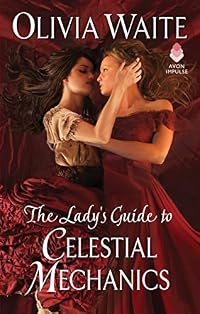
As Lucy Muchelney watches her ex-lover's sham of a wedding, she wishes herself anywhere else. It isn't until she finds a letter from the Countess of Moth, looking for someone to translate a groundbreaking French astronomy text, that she knows where to go. Showing up at the Countess' London home, she hoped to find a challenge, not a woman who takes her breath away. Catherine St Day looks forward to a quiet widowhood once her late husband's scientific legacy is fulfilled. She expected to hand show more off the translation and wash her hands of the project-instead, she is intrigued by the young woman who turns up at her door, begging to be allowed to do the work, and she agrees to let Lucy stay. But as Catherine finds herself longing for Lucy, everything she believes about herself and her life is tested. While Lucy spends her days interpreting the complicated French text, she spends her nights falling in love with the alluring Catherine. But sabotage and old wounds threaten to sever the threads that bind them. Can Lucy and Catherine find the strength to stay together or are they doomed to be star-crossed lovers? show lessTags
Recommendations























Member Recommendations

Sammelsurium Shared themes of love and science.
Member Reviews
This was much more serious and leisurely than I’d expected and all the better for it, much more a romance of slowly realized attraction than it is a romance of fluffy tropes. I liked the larger stories of Lucy’s science and Catherine’s art, and the unusual period settings, and the feminism. I also liked that Waite took her time building things up, but also the “let’s date” part of the book came reasonably early because it made the romance feel a lot more solid.
In some ways, this isn’t even a romance novel. There’s so much feminism, women striving for their place in the world and complaining that traditionally female tasks are devalued and raising each other up whenever they can, and not just within Lucy’s and show more Catherine’s relationship either. Watching Lucy and Catherine support and stand up for each other in the face of opposition and doubt would’ve been just as great if they hadn’t been falling for each other at the same time, and since they were, well, I like that trope of lovers having each others’ backs. It’s a good one.
The romance itself is very believable, both in how Lucy and Catherine feel each other out and act with each other, and in its historical context. There’s acknowledgement that queerness makes life and relationships that much more complicated, but also that queer people have always been here, just like women in STEM. Even when it hit some of the big romance tropes, it just sort of lead into and out of them gradually, rather than making it obvious we were Doing That Scene Now. It was, in sort, lovely.
And I liked the themes! There’s so much about what makes science and art what they are, and who does them and why, and the interplay of creativity and logic—all of which serve the romance just as much as the rest of the story. And the historical details Waite brought in around this, even when I knew they were fictionalized, they felt true to the period, which was just yay!
In short, this was solid. There’s nothing that doesn’t do double-duty one way or another, and it was a very refreshing sort of romance to boot. It’s a finely crafted novel and the only reason I’m not giving it an 8 is because I think I could’ve been sucked in a little more. For recommendation purposes, just assume it that 0.2 higher. ‘Tis good. show less
In some ways, this isn’t even a romance novel. There’s so much feminism, women striving for their place in the world and complaining that traditionally female tasks are devalued and raising each other up whenever they can, and not just within Lucy’s and show more Catherine’s relationship either. Watching Lucy and Catherine support and stand up for each other in the face of opposition and doubt would’ve been just as great if they hadn’t been falling for each other at the same time, and since they were, well, I like that trope of lovers having each others’ backs. It’s a good one.
The romance itself is very believable, both in how Lucy and Catherine feel each other out and act with each other, and in its historical context. There’s acknowledgement that queerness makes life and relationships that much more complicated, but also that queer people have always been here, just like women in STEM. Even when it hit some of the big romance tropes, it just sort of lead into and out of them gradually, rather than making it obvious we were Doing That Scene Now. It was, in sort, lovely.
And I liked the themes! There’s so much about what makes science and art what they are, and who does them and why, and the interplay of creativity and logic—all of which serve the romance just as much as the rest of the story. And the historical details Waite brought in around this, even when I knew they were fictionalized, they felt true to the period, which was just yay!
In short, this was solid. There’s nothing that doesn’t do double-duty one way or another, and it was a very refreshing sort of romance to boot. It’s a finely crafted novel and the only reason I’m not giving it an 8 is because I think I could’ve been sucked in a little more. For recommendation purposes, just assume it that 0.2 higher. ‘Tis good. show less
4.5 stars. Hidden Figures but make it Regency. And gay.
Take a network of women who want to be astronomers and botanists and zoologists. Surround them by men who won't let them. Have them do it anyway. Stir in a black mathematician and plenty of lesbian lust. And, just to make it perfect, lots of embroidery and dress descriptions. This is a mass-market romance, but it's also about who decides what counts as art and science and who decides who gets to do them.
Take a network of women who want to be astronomers and botanists and zoologists. Surround them by men who won't let them. Have them do it anyway. Stir in a black mathematician and plenty of lesbian lust. And, just to make it perfect, lots of embroidery and dress descriptions. This is a mass-market romance, but it's also about who decides what counts as art and science and who decides who gets to do them.
After watching her ex-lover's sham of a wedding, Lucy Muchelney jumps (or, rather, make sthe trek to London) at the chance to translate a lauded French astronomy book for the recently widowed Countess of Moth, Catherine St. Day. What neither woman expected was to fall in love while fighting back against the rampant misogyny in the world of science, and the trechery of former loves.
If you read this book, I deeply hope you like embroidery because there's a lot of it here. But, beyond that, the story between Lucy and Catherine is very sweet while the sex is quite spicy. The gender-based pushback they both face in their professional and personal lives is hard to read sometimes so be wary if you prefer your romances to be easier and escapist.
If you read this book, I deeply hope you like embroidery because there's a lot of it here. But, beyond that, the story between Lucy and Catherine is very sweet while the sex is quite spicy. The gender-based pushback they both face in their professional and personal lives is hard to read sometimes so be wary if you prefer your romances to be easier and escapist.
Lady astronomers! Textile arts! Queer book clubs of the 19th century! Truly a novel with something for everyone.
Waite is a fantastic writer; this novel has some of the best prose I've encountered in romance fiction. As is fitting in a story about art and science, Waite takes a genuine interest in the sensory details of this world, from decorative tableware to the ammonites of Dorset. Just as the book is grounded in the physical world, the depiction of women's experiences in the arts and sciences felt realistic and nuanced. This is solid historical fiction, giving equal attention to the women's professional and romantic lives, and I dug it.
Lady's Guide is a very cozy novel, and perhaps a bit slow, but I was happy to enjoy the quiet show more domesticity. That said, I think I wanted a little more from the romance. I liked Lucy and Catherine but they are both very bad at communication and emotional intimacy, which meant the dreaded miscommunication trope reared its head at certain points. I applaud Waite for being realistic in the depiction of two characters with trust issues, but the result made the relationship feel fragile in ways that made me doubt the HEA.
All in all, this was a top-notch read, and I think this would be an excellent entry point to historical romance for folks who are new to the genre. show less
Waite is a fantastic writer; this novel has some of the best prose I've encountered in romance fiction. As is fitting in a story about art and science, Waite takes a genuine interest in the sensory details of this world, from decorative tableware to the ammonites of Dorset. Just as the book is grounded in the physical world, the depiction of women's experiences in the arts and sciences felt realistic and nuanced. This is solid historical fiction, giving equal attention to the women's professional and romantic lives, and I dug it.
Lady's Guide is a very cozy novel, and perhaps a bit slow, but I was happy to enjoy the quiet show more domesticity. That said, I think I wanted a little more from the romance. I liked Lucy and Catherine but they are both very bad at communication and emotional intimacy, which meant the dreaded miscommunication trope reared its head at certain points. I applaud Waite for being realistic in the depiction of two characters with trust issues, but the result made the relationship feel fragile in ways that made me doubt the HEA.
All in all, this was a top-notch read, and I think this would be an excellent entry point to historical romance for folks who are new to the genre. show less
A solid, if occasionally a little too stolid, historical f/f romance. In Regency England, a young astronomer, Lucy, falls for the wealthy widowed countess, Catherine. Together they learn to trust one another, do science, and advocate for other women. I liked Olivia Waite’s care with making sure that Lucy and Catherine’s relationship felt like an attraction that believably deepened into love, and with making neither Lucy nor Catherine firsts of their kind or ahead of their time trailblazers, but rather some of many women persisting at their work even as the world around them devalues it. However, it does at times read a little bit like A Very Special Episode, with Lessons to be Learned. And, while I appreciate the difficulty of show more writing a same-sex romance novel with all the attendant potential for pronoun confusion, Waite really needed to stop using so many epithets. Having one partner think of the other as “the countess” or “the astronomer” in the middle of a sex scene is highly distracting. show less
Lucy Muchelney learned astronomy under the tutelage of her late father. She finds an opportunity to translate a new astronomy text from French, but is turned down by the gentleman's science society on the basis of her sex. Instead, the widow Catherine, Countess of Moth becomes her patron allowing Lucy the luxury to create a translation with her own commentary. Soon the two women are drawn to more than the stars, and form a romance. But will the conniving of the scientific men ruin Lucy's reputation? And what about Lucy's former lover who jilted her to marry a man but now wants her back? There is a twist at the end of the novel that's telegraphed early but nevertheless satisfying. This is the first feminist Regency romance about sapphic show more scientists that I've ever read, but it's a pretty good one. show less
This book has so many wonderful things in it: Passionate scientists! Gorgeous dresses! Embroidery porn! Actual porn! Lesbians AND bisexual women! Women advocating for each other! It made me miss my bus stop, I was reading so hard.
Missing that fifth star for two reasons: 1) Maybe it's because I myself have been a female scientist, but the awful sexism of the male astronomers, and Lucy's brother, was all too real. It made me sick to my stomach. In a romance, I'd expect to see that balanced by an equally satisfying (if unrealistic) takedown, and it just didn't happen. I guess I wanted more grovelling and humiliation on the part of the sexist bastards.
and 2) I'd have liked the book to be a bit longer-- there's so much packed into so few show more pages that Lucy and Catherine's relationship and emotional growth felt a bit forced in places. They've both gone through so much that I found it difficult to accept a HEA (Happily Ever After) so soon. I'd have been happier with an HFN (Happy For Now). show less
Missing that fifth star for two reasons: 1) Maybe it's because I myself have been a female scientist, but the awful sexism of the male astronomers, and Lucy's brother, was all too real. It made me sick to my stomach. In a romance, I'd expect to see that balanced by an equally satisfying (if unrealistic) takedown, and it just didn't happen. I guess I wanted more grovelling and humiliation on the part of the sexist bastards.
and 2) I'd have liked the book to be a bit longer-- there's so much packed into so few show more pages that Lucy and Catherine's relationship and emotional growth felt a bit forced in places. They've both gone through so much that I found it difficult to accept a HEA (Happily Ever After) so soon. I'd have been happier with an HFN (Happy For Now). show less
Members
- Recently Added By
Lists

f/f regency romance
23 works; 1 member

Favorite Modern Romance Novels
70 works; 1 member

Kirkus Starred Fiction Reviews of Books Published in 2019
411 works; 12 members

ALA The Reading List
490 works; 28 members

Books Read in 2021
5,361 works; 114 members

Books Mentioned in the A+ Autostraddle Pop Up Discords Nov 2022 & Dec 2022
223 works; 3 members

Favorite Romance Fiction
247 works; 115 members

Books Read in 2025
4,090 works; 97 members
Author Information

15+ Works 1,690 Members
Some Editions
Awards and Honors
Awards
Distinctions
Notable Lists
Series

Common Knowledge
- Canonical title
- The Lady's Guide to Celestial Mechanics
- Original title
- A Lady's Guide to Celestial Mechanics
- Original publication date
- 2019-06-04
- People/Characters
- Lucy Muchelney; Catherine St Day (Countess of Moth)
- Important places
- London, England, UK
- Dedication
- For Caroline, Mary, Katherine, and Sally
- First words
- Miss Priscilla Carmichael made a lovely bride.
- Last words
- (Click to show. Warning: May contain spoilers.)“Where do we start?”
- Publisher's editor
- Woodward, Tessa
- Original language
- English
- Canonical DDC/MDS
- 813.6
- Canonical LCC
- PS3623.A3565575
Classifications
Statistics
- Members
- 640
- Popularity
- 45,088
- Reviews
- 28
- Rating
- (4.03)
- Languages
- English
- Media
- Paper, Audiobook, Ebook
- ISBNs
- 7
- ASINs
- 3