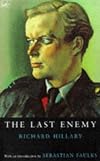
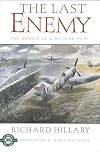
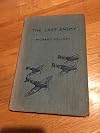
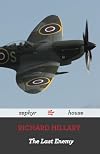
The Last Enemy
by Richard Hillary
On This Page
Description
Includes the Aerial Warfare In Europe During World War II illustrations pack with over 200 maps, plans, and photos.The Last Enemy, is an autobiographical book by Spitfire pilot Richard Hillary. Hillary was born in Sydney, Australia in 1919 but was educated at Shrewsbury School in England and Trinity College, Oxford. He joined the Royal Air Force at the start of World War II. The book, written in New York whilst recovering from surgery, covers his training and his experiences in the RAF, the show more Battle of Britain and his ordeal after suffering severe burns to his face and hands after a crash. He underwent plastic surgery, by the famous pioneering surgeon Archibald McIndoe and returned to flying at RAF Charterhall in November 1942. He was lost on night training when his Blenheim crashed on the 8th January 1943."The Last Enemy rapidly acquired the aura of a book that says something vital, whose importance goes beyond what it literally describes"-Sebastian Faulks"This slim volume of Hillary's seems to have a weight which makes it sink into the depths of one's memory, while tons of printed bulk drift as flotsom on its surface"-Arthur Koestler"One of the classic books of World War Two"-Philip French, London Review of Books"Rivetingly well told...It will still speak to anyone who cares for the romance and tragedy of a lost hero."-Godfrey Smith, Sunday Times"Elegantly affecting memoir"-David Horspool, The Times show lessTags
Recommendations




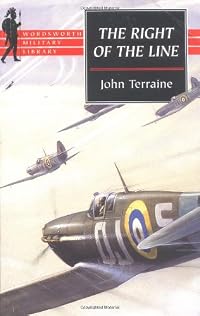


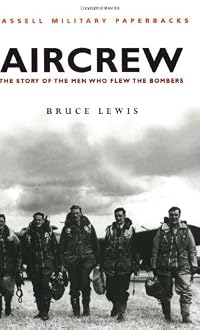


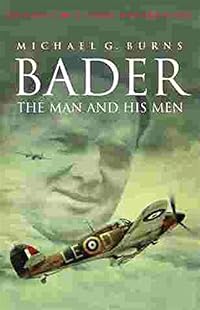

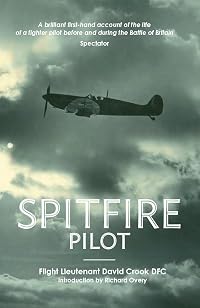
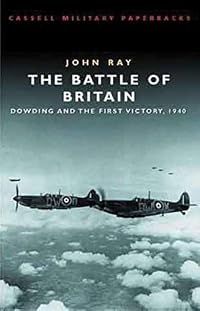


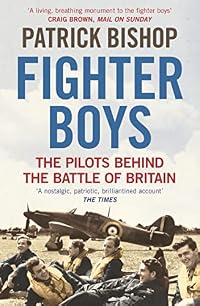


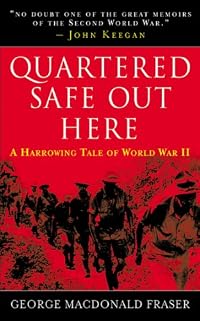
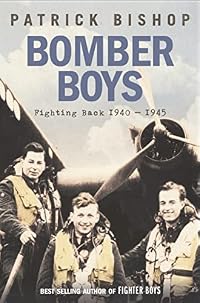


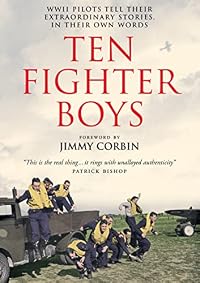
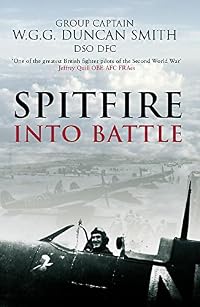


Member Recommendations



Member Reviews
Described by critics as "not a book written by a pilot about the war, but a book written by a writer about a pilot", The Last Enemy tells the story of a young writer's experiences as a Spitfire pilot in training and during the Battle of Britain, and of the life he led after being shot down.
Richard Hillary begins his story with a gripping account of his flight from Hornchurch on September 3, 1940, up and out over the Channel and into ferocious aerial combat, "a blur of twisting machines and tracer bullets". His plane hit and hurtling towards the water, Richard bails out of the flaming cockpit and parachutes into the Channel where, hours later, he is eventually rescued by the Margate lifeboat.
The Last Enemy then tells the extraordinary show more and moving story surrounding that September day. It describes carefree days at Trinity College, Oxford, light-hearted competitive rowing in Germany and Hungary, training as a fighter pilot, aerial combat and then, after being shot down and cruelly burnt by the flames, of a slow and painful recovery. Richard tells also of great friendship and of tragic loss and - in yet more sombre tones - of intense and agonizing personal reflection and questioning about his own war experience, which transformed him fromm a gifted and handsome athlete, admired and envied by his contemporaries, into a ravaged figure. Unsure of whether or not he would ever be passed fit enough to fly again, Richard asks himself what he can do for those who have died? As he himself wrote: "Then after a while it came to me. I could write." And so he came to write The Last Enemy. show less
Richard Hillary begins his story with a gripping account of his flight from Hornchurch on September 3, 1940, up and out over the Channel and into ferocious aerial combat, "a blur of twisting machines and tracer bullets". His plane hit and hurtling towards the water, Richard bails out of the flaming cockpit and parachutes into the Channel where, hours later, he is eventually rescued by the Margate lifeboat.
The Last Enemy then tells the extraordinary show more and moving story surrounding that September day. It describes carefree days at Trinity College, Oxford, light-hearted competitive rowing in Germany and Hungary, training as a fighter pilot, aerial combat and then, after being shot down and cruelly burnt by the flames, of a slow and painful recovery. Richard tells also of great friendship and of tragic loss and - in yet more sombre tones - of intense and agonizing personal reflection and questioning about his own war experience, which transformed him fromm a gifted and handsome athlete, admired and envied by his contemporaries, into a ravaged figure. Unsure of whether or not he would ever be passed fit enough to fly again, Richard asks himself what he can do for those who have died? As he himself wrote: "Then after a while it came to me. I could write." And so he came to write The Last Enemy. show less
Poignant, sad, relevant yet devoid of sentimentality, Hillary describes in engaging terms his journey from student to RAF fighter pilot during WWII, making friends only to see so many of them perish - his journey through reconstructive surgery after a crash through to a stirring final realization that he may in actual fact be fighting for something larger than himself. A very important read.
The Last Enemy is a must for anyone interested in how WW2 was actually experienced. Hillary spends little time writing about his battle experiences, but much more on the period before the outbreak of war and his subsequent time in hospital. He deals with the reasons why people went to war and raises issues that have been glossed over in literature that was written after the war. The story itself is filled with poignancy in that one knows that Hillary did not live to see the outcome of the war yet saw many of his friends die. In short it captures feelings and moods that we are so sadly not witness to.
Late last year, I came across a small quarterly magazine/journal by the name of Slightly Foxed ( https://foxedquarterly.com ) and was intrigued, so I subscribed.
The quarterly 'simply' has people writing about a forgotten or underappreciated book that the writer believes would be of interest to a wider audience. The most recent edition I have is No 73 Spring 2022 (its a publication from the UK, so its March 2022 that I read it) looked at 16 different authors/books across a wide range of topics etc.
Of those authors/works featured I was aware of 5 of the 16 authors in the spotlight. I have read works by 5 of them (some only a little and not the work in question; some a lot but again not the work in question; the last was the actual book show more in question but only because having read the article, I immediately acquired and read the book (my review is [here]).
Slightly Foxed (amongst other things) also publishes a limited edition (of some 2000 copies; approx 60 or so books as of March 2022) of a series of memoirs across a wide range.
I have purchased a random selection of them and have read 2 of them so far. (Sorry for the long introduction but) one of them is the book in question here: The Last Enemy by Richard Hillary.
It tells very briefly of the early life and education of the author but concentrates on his training for, participation in as a fighter pilot and death in the Second World War. My mention of his death is not a spoiler, as it is evident from early on in the book.
It depicts the wide variety of attitudes and reactions of people when faced with the prospect of participation in the war effort: from at least pacifist; a number of patriotic fighters; people from New Zealand, Australia and South Africa, which were not at that time directly involved or at least directly affected by the War; those who were only interested in the challenge of defeating an enemy. And the question of whether any of those attitudes changed over the course of the War and if so why?
Neither the description of the War nor people's participation is not jingoistic nor glorified. And whilst some of the events and the deaths were in themselves horrifying, were not described that made one's stomach turn.
Much of the memoir is less about the War itself than about the group of friends and fellow travellers of the author.
And it depicts an England and a London of a different era. and with the Russian invasion of Ukraine going on as I write, one can only think of the suffering and despair and loss of life that is being repeated (regardless whatever one thinks of the respective merits of the claims of the warring countries.
A compelling read and a reflection on humanity and on the humanity of people.
Big Ship
14 March 2022 show less
The quarterly 'simply' has people writing about a forgotten or underappreciated book that the writer believes would be of interest to a wider audience. The most recent edition I have is No 73 Spring 2022 (its a publication from the UK, so its March 2022 that I read it) looked at 16 different authors/books across a wide range of topics etc.
Of those authors/works featured I was aware of 5 of the 16 authors in the spotlight. I have read works by 5 of them (some only a little and not the work in question; some a lot but again not the work in question; the last was the actual book show more in question but only because having read the article, I immediately acquired and read the book (my review is [here]).
Slightly Foxed (amongst other things) also publishes a limited edition (of some 2000 copies; approx 60 or so books as of March 2022) of a series of memoirs across a wide range.
I have purchased a random selection of them and have read 2 of them so far. (Sorry for the long introduction but) one of them is the book in question here: The Last Enemy by Richard Hillary.
It tells very briefly of the early life and education of the author but concentrates on his training for, participation in as a fighter pilot and death in the Second World War. My mention of his death is not a spoiler, as it is evident from early on in the book.
It depicts the wide variety of attitudes and reactions of people when faced with the prospect of participation in the war effort: from at least pacifist; a number of patriotic fighters; people from New Zealand, Australia and South Africa, which were not at that time directly involved or at least directly affected by the War; those who were only interested in the challenge of defeating an enemy. And the question of whether any of those attitudes changed over the course of the War and if so why?
Neither the description of the War nor people's participation is not jingoistic nor glorified. And whilst some of the events and the deaths were in themselves horrifying, were not described that made one's stomach turn.
Much of the memoir is less about the War itself than about the group of friends and fellow travellers of the author.
And it depicts an England and a London of a different era. and with the Russian invasion of Ukraine going on as I write, one can only think of the suffering and despair and loss of life that is being repeated (regardless whatever one thinks of the respective merits of the claims of the warring countries.
A compelling read and a reflection on humanity and on the humanity of people.
Big Ship
14 March 2022 show less
Richard Hillary was a member of a privileged English elite with money and education. He grew up between the two world wars with the conviction that the purpose of being alive was to have a good time and that his university education and foreign travel, only accessible in those days to the wealthy, were to contribute to his pleasure. At the outbreak of WW II, in common with many young men of his class, he joined the Royal Air Force with the intention of becoming a fighter pilot, which he achieved. The book tells an unforgettable story of flying the Spitfire, the fastest and the best of the propeller-driven single-seat fighting planes, of his experiences in the early days of the war and of the death of almost all his friends as one by one show more they failed to return from combat over the skies of Southern England and the English Channel. He was himself shot down and badly burned on the face and hands; the second part of the book tells not only of his hospital experiences and his long series of operations at the hands of McIndoe, the great plastic surgeon, but of his experiences during the nightly bombing of London and of his changing philosophical outloook after the death of his great friend Peter Pease, also a pilot. This is a memorable book by a man who had the insight to see what he had been and what he had become. He returned to flying with the RAF, some believe before his hands had healed properly, and was killed together with his observer when his Bristol Blenheim crashed during a night training flight in 1943. show less
The Last Enemy, by Richard Hillary (1942; reprinted London: Macmillan, 1963) is a book I think I read years ago under the title Falling Through Space. Hillary begins with being shot out of the air and badly burned (on September 3rd, 1940, in the Battle of Britain, just a year to the day after the war started) and then goes back to Oxford before the war. Hillary talks about winning a rowing race in Germany in 1938 and losing one in Hungary. The war begins and Hillary describes flight training and his friends. Then he goes back to his crash and his long convalescence. The fiancée of one of his dead buddies accuses him of stifling all his emotional reaction to what has happened. In London he helps dig a woman out of a bombed house next to show more the pub where he had been drinking. She looks at his face and says before she dies, “I see they got you too.” This is an epiphany for him, and he finally starts to feel the death of his friends, rage at the evil of the war, and a conviction to be a writer. show less
The Last Enemy (first published in America as Falling Through Space), is a war memoir written by the Second World War Anglo-Australian fighter pilot Richard Hillary detailing his experiences during the Battle of Britain in 1940. It details his experiences as a Spitfire pilot during the Battle of Britain, during which he was shot down in action, sustaining severe injuries, severely facially scarred. The Last Enemy, taken from (I Corinthians 15:26, "The last enemy that shall be destroyed is death".
(Recommended by David Mamet)
(Recommended by David Mamet)
Members
- Recently Added By
Author Information

5+ Works 428 Members
Some Editions
Series
Belongs to Publisher Series
Wings of War (book 2)
En bok för alla (2007)
Lanterne (L 23)
Work Relationships
Is contained in
Is abridged in
Common Knowledge
- Canonical title
- The Last Enemy
- Original title
- The last enemy
- Alternate titles
- Falling Through Space
- Original publication date
- 1942
- People/Characters
- Richard Hillary
- Important events
- World War II (1939 | 1945); Battle of Britain (1940)
- Disambiguation notice
- "Falling Through Space" and "The Last Enemy" are actually the same; it looks like the Americans printed one title and the Europeans printed the other. "Falling through Space" was printed in the US while due to copyright issue... (show all)s the international series printed "The Last Enemy". http://www.volumelists.com/detail.php...
Classifications
- Genres
- Biography & Memoir, History, Nonfiction
- DDC/MDS
- 940.544941 — History & geography History of Europe History of Europe 1918- Military history of World War II Air operations Operations of specific countries Europe British Isles
- LCC
- D786 .H5 — History of Europe, Asia, Africa and Oceania History (General) World War II (1939-1945)
- BISAC
Statistics
- Members
- 383
- Popularity
- 81,254
- Reviews
- 10
- Rating
- (3.74)
- Languages
- 12 — Danish, Dutch, English, Finnish, French, German, Hungarian, Italian, Norwegian (Bokmål), Norwegian, Spanish, Swedish
- Media
- Paper, Audiobook, Ebook
- ISBNs
- 43
- ASINs
- 17