
Max Arthur
Author of Forgotten Voices of the Great War
Series
Works by Max Arthur
The Faces of World War I: The Tragedy of the Great War in Words and Pictures (2007) 104 copies, 5 reviews
Last of the Few: The Battle of Britain in the Words of the Pilots Who Won It (2010) 95 copies, 1 review
Lost Voices of the Royal Navy: Vivid Eyewitness Accounts of Life in the Royal Navy from 1914-1945 (2005) 54 copies
The Real Band of Brothers: First-hand Accounts from the Last British Survivors of the Spanish Civil War (2009) 35 copies
The Road Home: The Aftermath of the Great War Told by the Men and Women Who Survived It (2010) 23 copies, 1 review
The Paras: 'Earth's most elite fighting unit' - Telegraph: From the Falklands to Afghanistan in Their Own Words (2017) 9 copies
Churchill The Life 3 copies
Forgotten Voices of the Great War - The Struggle to Victory: August 1917 - November 1918 (2003) 1 copy
Associated Works
Tagged
Common Knowledge
- Birthdate
- 1939
- Gender
- male
- Occupations
- military historian
author - Awards and honors
- Officer of the Order of the British Empire (2013)
- Nationality
- UK
- Birthplace
- Sussex, England, UK
- Associated Place (for map)
- England, UK
Members
Reviews
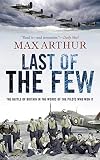
Excellent primary source, and one that I recognized while reading as having been used by other authors. Arthur was not an academic grand strategist or historian, but by putting down the words of those who experienced the Battle of Britain (and other wars in his other books), he provides an invaluable service to historians and deserves their gratitude.
He simply steps aside and lets the combat pilots, ground crew, WAAFs, occasional civilians, and others speak for themselves. He doesn't so much show more humanize them as allow their humanity to come through naturally, illuminating the fundamental illogic of war and how those who find themselves caught up in it manage to get their jobs done and cling to sanity, even as it frays around the edges.
Read this book not for a historical treatment of the Battle of Britain but as a catalogue of who the human beings on the front lines were, how they coped and occasionally failed to cope, what their hopes and fears were, how they tried to hold onto the values of chivalry while attempting to blast one another to pieces, and how the Battle shaped them as it wore on. You will learn more details about the Battle from other books, but from this one you will learn far more about how human nature adapts to an inhuman situation. show less
He simply steps aside and lets the combat pilots, ground crew, WAAFs, occasional civilians, and others speak for themselves. He doesn't so much show more humanize them as allow their humanity to come through naturally, illuminating the fundamental illogic of war and how those who find themselves caught up in it manage to get their jobs done and cling to sanity, even as it frays around the edges.
Read this book not for a historical treatment of the Battle of Britain but as a catalogue of who the human beings on the front lines were, how they coped and occasionally failed to cope, what their hopes and fears were, how they tried to hold onto the values of chivalry while attempting to blast one another to pieces, and how the Battle shaped them as it wore on. You will learn more details about the Battle from other books, but from this one you will learn far more about how human nature adapts to an inhuman situation. show less
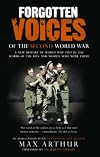
In contrast to Max Arthur's similar book on the Great War, Forgotten Voices of the Second World War chafes somewhat against the limitations of the oral history format. Whereas the Great War experience was relatively linear – trench warfare with some occasional forays into air combat or Jutland or Gallipoli – and therefore allowed for greater intensity in the recollected experiences, Arthur's Second World War book must necessarily be more sprawling. There's more to cover – on land, sea show more and air, and in Europe, the Atlantic, the Pacific and Russia.
Consequently, this Forgotten Voices book strains under the effort of trying to contain all of the second war's multitudes. To do so, it relies on a conventional understanding of the war, which threatens to make the book stale, and discusses with excessive brevity many important events of the war, giving crib histories and, in some cases, only one eyewitness to an event. In Arthur's Great War book, you could soak into the mud of the relentless trench warfare and get to grips with its horror; here, much of the intensity of events is diluted.
Where the book does make its mark is later on, in the 1944-45 accounts. It may just be me, but it feels that, Arnhem aside, the second half of the war tends to feature much less in the British historical memory (and Arthur's book is definitely focused on the British and Commonwealth experience), so Forgotten Voices' emphasis on this period felt much fresher. The advance into Germany and the doodlebugs over London both get interesting coverage, as do (aptly enough, for a book titled Forgotten Voices) the efforts of the 'Forgotten Army' who fought the bloody Burma campaign in places like Kohima. (That said, the book in general seems to treat the war against Japan almost as an addendum to the Germany war.)
The book becomes much more engrossing in its final acts, with the oral history angle coming more into its own when the events covered are those less well-known. I was particularly struck at how British servicemen liberated in 1945 from German PoW camps – where they had been since 1940 – didn't recognise the approaching British uniforms and didn't know if they were friend or foe (pg. 415), and that some in a Japanese camp thought Eisenhower was "a bloody German" (pg. 450). Devoting time, at the end of the book, to the plight of the PoWs under Japanese barbarism was an honourable decision on the author's part, and the dissonant note struck in the final pages works very well. The accounts of those people who struggled to adjust to the outbreak of peace, and in some cases began to miss the purpose and togetherness war had brought, emphasise just how much harder it has been, in our culture, to process the Second World War compared to the First – something the book also wrestles with throughout and, in the end, surmounts. show less
Consequently, this Forgotten Voices book strains under the effort of trying to contain all of the second war's multitudes. To do so, it relies on a conventional understanding of the war, which threatens to make the book stale, and discusses with excessive brevity many important events of the war, giving crib histories and, in some cases, only one eyewitness to an event. In Arthur's Great War book, you could soak into the mud of the relentless trench warfare and get to grips with its horror; here, much of the intensity of events is diluted.
Where the book does make its mark is later on, in the 1944-45 accounts. It may just be me, but it feels that, Arnhem aside, the second half of the war tends to feature much less in the British historical memory (and Arthur's book is definitely focused on the British and Commonwealth experience), so Forgotten Voices' emphasis on this period felt much fresher. The advance into Germany and the doodlebugs over London both get interesting coverage, as do (aptly enough, for a book titled Forgotten Voices) the efforts of the 'Forgotten Army' who fought the bloody Burma campaign in places like Kohima. (That said, the book in general seems to treat the war against Japan almost as an addendum to the Germany war.)
The book becomes much more engrossing in its final acts, with the oral history angle coming more into its own when the events covered are those less well-known. I was particularly struck at how British servicemen liberated in 1945 from German PoW camps – where they had been since 1940 – didn't recognise the approaching British uniforms and didn't know if they were friend or foe (pg. 415), and that some in a Japanese camp thought Eisenhower was "a bloody German" (pg. 450). Devoting time, at the end of the book, to the plight of the PoWs under Japanese barbarism was an honourable decision on the author's part, and the dissonant note struck in the final pages works very well. The accounts of those people who struggled to adjust to the outbreak of peace, and in some cases began to miss the purpose and togetherness war had brought, emphasise just how much harder it has been, in our culture, to process the Second World War compared to the First – something the book also wrestles with throughout and, in the end, surmounts. show less
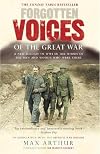
This one was intense. Not that I did not expect it to be, given the topic - but it still took the wind out of me on a few occasions.
Mr. Arthur - through the testimonies of the people who lived through it - pulls no punches. Whatsoever. You are taken on an emotionally intense, vivid, brutal and flat-out visceral tour of those four pivotal years in modern history.
But this is not a piece of "Rule, Britannia"-esque, self-promoting literature. You get to hear the voices of the Germans, the show more French, members of the ANZAC corps - and last but not least, the civilians. The voice of the home front.
And when I say visceral, I mean visceral. You are not spared any details. Decomposing bodies, gangrenous wounds, people drowning in latrines, foolhardy blaze-of-glory charges to no avail - it's all there, in gory detail. This book is not for the faint-hearted.
But you also hear of the more light-hearted aspects. The banter. The jokes. The famous Christmas truce. The stories of medical officers haranguing the common soldiery about the dangers of venereal disease - only to sneak into the clinic shortly after to give himself the treatment he was giving the privates' privates.
And of course the armistice. The collapse of the German army. How soldiers home on leave were handed the white feathers of cowardice because they were wearing "civvy clothes".
This book was an experience. It took some time to digest. But I heartily recommend it! show less
Mr. Arthur - through the testimonies of the people who lived through it - pulls no punches. Whatsoever. You are taken on an emotionally intense, vivid, brutal and flat-out visceral tour of those four pivotal years in modern history.
But this is not a piece of "Rule, Britannia"-esque, self-promoting literature. You get to hear the voices of the Germans, the show more French, members of the ANZAC corps - and last but not least, the civilians. The voice of the home front.
And when I say visceral, I mean visceral. You are not spared any details. Decomposing bodies, gangrenous wounds, people drowning in latrines, foolhardy blaze-of-glory charges to no avail - it's all there, in gory detail. This book is not for the faint-hearted.
But you also hear of the more light-hearted aspects. The banter. The jokes. The famous Christmas truce. The stories of medical officers haranguing the common soldiery about the dangers of venereal disease - only to sneak into the clinic shortly after to give himself the treatment he was giving the privates' privates.
And of course the armistice. The collapse of the German army. How soldiers home on leave were handed the white feathers of cowardice because they were wearing "civvy clothes".
This book was an experience. It took some time to digest. But I heartily recommend it! show less
Spine-tingling brilliant.
The variety of of accounts successfully showed how both wars affected everyone, from the front line soldiers right down to the civilians who never saw a pitched battle. Some of the excerpts made me laugh out loud and others had me crying, overall it was incredibly powerful.
The variety of of accounts successfully showed how both wars affected everyone, from the front line soldiers right down to the civilians who never saw a pitched battle. Some of the excerpts made me laugh out loud and others had me crying, overall it was incredibly powerful.
Lists
THE WAR ROOM (2)
Awards

You May Also Like


Associated Authors
Statistics
- Works
- 37
- Also by
- 2
- Members
- 2,022
- Popularity
- #12,712
- Rating
- 3.9
- Reviews
- 34
- ISBNs
- 122
- Languages
- 3