On This Page
Description
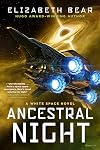
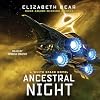
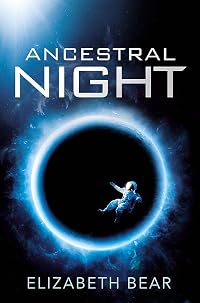
A space salvager and her partner make the discovery of a lifetime that just might change the universe in this wild, big-ideas space opera from Hugo Award-winning author Elizabeth Bear. Halmey Dz and her partner Connla Kurucz are salvage operators, living just on the inside of the law...usually. Theirs is the perilous and marginal existence-with barely enough chance of striking it fantastically big-just once-to keep them coming back for more. They pilot their tiny ship into the scars left by show more unsuccessful White Transitions, searching for the relics of lost human and alien vessels. But when they make a shocking discovery about an alien species that has been long thought dead, it may be the thing that could tip the perilous peace mankind has found into full-out war. Energetic and electrifying, Ancestral Night is a dazzling space opera, sure to delight fans of Alastair Reynolds, Iain M. Banks, and Peter F. Hamilton. show lessTags
Recommendations


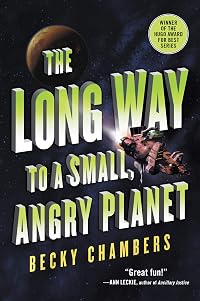
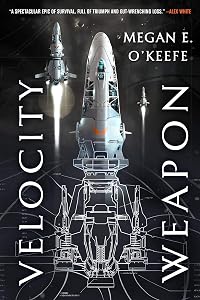
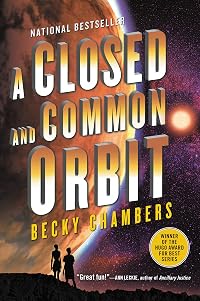
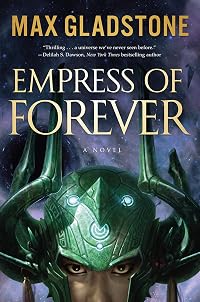











Member Reviews
I'm not usually a fan of first-person narrative but five minutes into Ancestral Night I stopped noticing it and never looked back. Elizabeth Bear has a knack.
Our protagonist, Haimey, who lives in a society which is able to "tune" their emotions and hormonal responses in order to live more regulated lives, struggles with the surprising number of side-effects and drawbacks that result, and much of this is, of course, personal and internal. Hence the need for a lot of first-person introspective navel-gazing which, while well thought-out and beautifully narrated, becomes a frustrating side-issue you just want to get past when the bullets are flying and the situation desperate. I have to admit to skimming some of these parts, and that didn't show more seem to detract from the story.
A second read may be worthwhile - once the plot is known one may be less desperate to find out what happens next and instead read slower and more carefully plumb its depths. I believe this book deserves that.
Bear's forays into the human psyche are very insightful if you take the time to digest them. However I fear many readers will find them too intrusive, but as I say, skimming over a lot of that does not disturb the plot too much. I loved Bear's cognisance of the pitfalls when adjusting one's own emotions and hormones. One of my favourites is where our protagonist considers the importance of setting an on-timer before turning one's conscience off, since one would never consider turning it back on from that state of mind - and she explains it so much better than I.
Much of this novel is about personal choices, about who you really are, who you could be with the right tweaks, whether you could be better, and what is "better" anyway? The antagonist, Farweather, is a pirate who is an unadjusted human and eschews all this mind-tampering stuff, so the interaction between her and Haimey - whose personal moralities are poles apart - provides another area of conflict quite apart from the ongoing physical battle between the two.
Of course there is the usual cast of intriguing aliens, mind and body mods, ships, space-stations, AIs and good science, which is the usual reason I read SF.
Thank the stars there are no marines, or the dreary wall-to-wall carpet-bombing and galaxy-wide wars that I'm sick to death of.
I like Bear's writing style, well constructed and intelligent with an undercurrent of humour, beauty, and little insights (and the occasional big one) that give this tale a nice lift. I went looking for an example and found three on the first page I looked at: "Anger is an inoculant. It gets your immune system working against bullshit."
I think this book taught me a few things about myself which is a somewhat unusual outcome for a fictional tale, and I'm definitely looking forward to the next in the series. show less
Our protagonist, Haimey, who lives in a society which is able to "tune" their emotions and hormonal responses in order to live more regulated lives, struggles with the surprising number of side-effects and drawbacks that result, and much of this is, of course, personal and internal. Hence the need for a lot of first-person introspective navel-gazing which, while well thought-out and beautifully narrated, becomes a frustrating side-issue you just want to get past when the bullets are flying and the situation desperate. I have to admit to skimming some of these parts, and that didn't show more seem to detract from the story.
A second read may be worthwhile - once the plot is known one may be less desperate to find out what happens next and instead read slower and more carefully plumb its depths. I believe this book deserves that.
Bear's forays into the human psyche are very insightful if you take the time to digest them. However I fear many readers will find them too intrusive, but as I say, skimming over a lot of that does not disturb the plot too much. I loved Bear's cognisance of the pitfalls when adjusting one's own emotions and hormones. One of my favourites is where our protagonist considers the importance of setting an on-timer before turning one's conscience off, since one would never consider turning it back on from that state of mind - and she explains it so much better than I.
Much of this novel is about personal choices, about who you really are, who you could be with the right tweaks, whether you could be better, and what is "better" anyway? The antagonist, Farweather, is a pirate who is an unadjusted human and eschews all this mind-tampering stuff, so the interaction between her and Haimey - whose personal moralities are poles apart - provides another area of conflict quite apart from the ongoing physical battle between the two.
Of course there is the usual cast of intriguing aliens, mind and body mods, ships, space-stations, AIs and good science, which is the usual reason I read SF.
Thank the stars there are no marines, or the dreary wall-to-wall carpet-bombing and galaxy-wide wars that I'm sick to death of.
I like Bear's writing style, well constructed and intelligent with an undercurrent of humour, beauty, and little insights (and the occasional big one) that give this tale a nice lift. I went looking for an example and found three on the first page I looked at: "Anger is an inoculant. It gets your immune system working against bullshit."
I think this book taught me a few things about myself which is a somewhat unusual outcome for a fictional tale, and I'm definitely looking forward to the next in the series. show less
Not too long ago, I was writing about a book co-written by Elizabeth Bear and bemoaning the lack of pirates therein. Now, just two months later, I am writing about her most recent novel, and you know what? It not only has pirates in it, but they’re space pirates! To paraphrase Goethe, some days one feels seriously tempted to believe that there may exist a benevolent God after all.
Ancestral Night is, I think, Elizabeth Bear’s first straightforward Science Fiction novel since her Jacob’s Ladder trilogy and appears to be set in the same universe as that one (I have not read the trilogy yet, but Ancestral Night openly references it at one stage). It is space opera, but not in the over-the-top vein practiced by E.E. Smith and his show more successors but rather in the low-key, both scientifically and psychologically realistic vein introduced by C.J. Cherryh with her genre-changing Downbelow Station but with some added super tech, which in, which in turn is somewhat reminiscent of the late great Iain M. Banks (it even got me wondering whether Bear may not have intended the Synarche (the galactic civilization she describes here) as a kind of proto-Culture). And it is, by far more obviously than The Cobbler’s Boy was, a riff off Stevenson’s Treasure Island. It even has a Long John Silver analogue in Sexy Pirate Zanya Farweather, who may not quite live up to the original (but then, seriously, who does?) but comes very close indeed.
For its first half, the novel seems quite linear – our first person protagonist Haimey Dz and her two team members (one of them an AI) attempt to salvage a stranded alien star ship, are attacked by pirates and then hunted through half the galaxy. Then there is a sudden and quite sharp turn of events, Haimey finds out that she is not who we (or indeed, she herself) thought she was, and the novel switches to introspection and psychodrama, only for the narrative to change direction again and culminate in a treasure hunt. And ongoing through all of this are discussions about politics, identity, freedom and several other big concepts, making this an adventure novel of ideas; and in the tradition of the very best Science Fiction the debates are just as adventurous as the action. at about 500 pages, the novel is not even that huge, but it is crammed full with enough action and ideas to easily have filled a thousand pages under the pen of a lesser writer. Bear, however manages to juggle both her action apples and her concept coconuts so well that she not only never drops any of them but also creates an interwoven pattern in which they enhance and emphasize each other.
Every time the action pauses to let the reader catch their breath, there is some pertinent political debate, a fascinating philosophical point or just some scintillating piece of world building to delight in. It’s all brilliantly constructed (but of course, one would not expect anything else from Elizabeth Bear) and a lot of fun to read (which, again, is no surprise with this particular author). Ancestral Night is both thought-provoking and an enjoyable romp and strongly recommended. Apparently, Bear is currently writing on a not-quite-a-sequel novel which will be set in the same universe and while not being a direct continuation will share some links with Ancestral Nights – needless to say, I am very much looking forward to that.
Oh, and I’d totally read a novel about space mantis cop investigating crime. show less
Ancestral Night is, I think, Elizabeth Bear’s first straightforward Science Fiction novel since her Jacob’s Ladder trilogy and appears to be set in the same universe as that one (I have not read the trilogy yet, but Ancestral Night openly references it at one stage). It is space opera, but not in the over-the-top vein practiced by E.E. Smith and his show more successors but rather in the low-key, both scientifically and psychologically realistic vein introduced by C.J. Cherryh with her genre-changing Downbelow Station but with some added super tech, which in, which in turn is somewhat reminiscent of the late great Iain M. Banks (it even got me wondering whether Bear may not have intended the Synarche (the galactic civilization she describes here) as a kind of proto-Culture). And it is, by far more obviously than The Cobbler’s Boy was, a riff off Stevenson’s Treasure Island. It even has a Long John Silver analogue in Sexy Pirate Zanya Farweather, who may not quite live up to the original (but then, seriously, who does?) but comes very close indeed.
For its first half, the novel seems quite linear – our first person protagonist Haimey Dz and her two team members (one of them an AI) attempt to salvage a stranded alien star ship, are attacked by pirates and then hunted through half the galaxy. Then there is a sudden and quite sharp turn of events, Haimey finds out that she is not who we (or indeed, she herself) thought she was, and the novel switches to introspection and psychodrama, only for the narrative to change direction again and culminate in a treasure hunt. And ongoing through all of this are discussions about politics, identity, freedom and several other big concepts, making this an adventure novel of ideas; and in the tradition of the very best Science Fiction the debates are just as adventurous as the action. at about 500 pages, the novel is not even that huge, but it is crammed full with enough action and ideas to easily have filled a thousand pages under the pen of a lesser writer. Bear, however manages to juggle both her action apples and her concept coconuts so well that she not only never drops any of them but also creates an interwoven pattern in which they enhance and emphasize each other.
Every time the action pauses to let the reader catch their breath, there is some pertinent political debate, a fascinating philosophical point or just some scintillating piece of world building to delight in. It’s all brilliantly constructed (but of course, one would not expect anything else from Elizabeth Bear) and a lot of fun to read (which, again, is no surprise with this particular author). Ancestral Night is both thought-provoking and an enjoyable romp and strongly recommended. Apparently, Bear is currently writing on a not-quite-a-sequel novel which will be set in the same universe and while not being a direct continuation will share some links with Ancestral Nights – needless to say, I am very much looking forward to that.
Oh, and I’d totally read a novel about space mantis cop investigating crime. show less
In Ancestral Night, a far-future space salvager from a galaxy-wide civilization discovers a series of ancient relics with unknown advanced technology. Unfortunately, pirates have already found and started using this technology to evade the authorities and claim even bigger prizes, and they have lured our protagonist Haimey into their operation in an attempt to get information only she knows. While this sounds like a fast-moving action story, it's actually very philosophical, as Haimey ends up stuck on the relic vessel with the pirate Farweather, and they spend a large portion of the time debating politics. In fact, the political debate--Haimey's Iain Banks-style AI communism versus Farweather's free-for-all rugged individualism--is very show more central to the book and often backgrounds the other plot elements. Despite this, I enjoyed both the world-building and the debate, even if the ancient alien relics didn't have the "woah" factor of something like Rendezvous at Rama. show less
This novel had a lot of the same strengths as the Culture series by Iain M. Banks, but it was more focused, with a first-person narrator instead of a sprawling cast. Speaking of the main character, this was probably the best portrayal of trauma I've read in a while. The protagonist's deep dark secret from the past gains another layer of complexity when combined with her more subtly traumatic origin in a cult-like environment. The character-driven and idea-driven parts of the story seemed slow at times, but maybe that's just because it's summer. I wish I had time to add the whole book to Goodreads, quote by quote, which is usually how I show my appreciation. For now, this review will have to do.
Deeply cerebral, high-concept space opera, with cats. A good read but difficult in parts with much introspection and pondering of deep philosophical questions about life, the universe and everything. As a straightforward space opera it works quite well. Haimey Dz, a physically and psychically augmented engineer and her small salvage crew locate an abandoned ship, wherein they find evidence of a hideous crime against a gentle spacefaring race and Haimey finds herself inadvertently inoculated with a sophisticated sensory web created from the flesh of the murdered creatures. Before she can digest the implications of this her ship is attacked by pirates and they forced to flee to a space station where they find the law less than helpful and show more where Haimey is contacted by an attractive and confident young pirate named Zanya Farweather, who puts Haimey on the track of a lost alien starship hidden in the black hole at the centre of the galaxy. As it turns out, Farweather has ulterior motives, and Haimey meets her again aboard the alien craft after the pirates have (Haimey thinks) destroyed her ship and crew. From there the story becomes a long slow chase to the heart of a lost civilization, while Haimey comes to terms with what she is and what she has become. Its a dense book, readers looking for rip-roaring guns blazing space opera will be disappointed, but as far as it goes the author has found a comfortable medium between genuine space opera and more philosophical SF that repays the patience needed to see it through. show less
There is a lot I like about this book, and a lot that was extremely frustrating and would have led me to not finish it except the other stuff was so compelling.
I love the alien and alien technology concepts, and the nerdery about spacetime - gravity, dark gravity, and black holes included. The action plot involving stolen tech and mysterious ships/artefacts was fun, with interesting side characters. Cheeirilaq the space mantis alien is pretty cool!
I hated some of the inconsistencies in description. One thing is usually described as golden or coppery, but for a chapter or two was silvery, and I wasn't sure if that was supposed to be significant. But it never came up.
The language feels inconsistent, too. Words for the passage of time are show more based on "dia" for day and "an" for year, but as soon as I thought i got a grasp on them, it seemed they were changed up. But those are the only new words to indicate the far future for current concepts. And there is a lot of use of very current 21st century earth imagery where I would have expected it to be strange or unknown to someone who has lived their entire life in a space society with hundreds(?) of alien species, never visited earth. But then there is one thing spaceified that added further confusion: "Well" as a curse word where someone might say "god" or "fuck". It's still used as a discourse marker, too, so i often stopped to try to figure out if it was a curse word or not. It changes the tone of the sentence when it is!
The main character and first-person point of view spends a lot of time thinking or talking to herself, often repeating things she said before. It got pretty tiresome, and i nearly started a drinking game for the word "atavistic". The depiction of anxiety was good, but it just kept going on and on when i really wanted to get back to the stranded with alien tech plot.
And no matter how much Haimey navel-gazed and questioned her own motives and instincts, she never considered some of the assumptions she made about the ancient alien tech, which somehow always conveniently worked out. (The one time I didn't find it weird and overly convenient was also the one time she wasn't correct in her assumptions!) I mean, this stuff is from before any of the current species were space-capable, so why is it assumed that modern tech can interface with it in any way? I don't remember even a throwaway line, which would have been nice to be repeated like some of the other things that got repeated.
The middle of the book was a huge slog of this navel-gazing, as well as a "debate" of sorts about Haimey's society and Freeporters. Haimey happily uses "tuning" on her brain chemicals and hormones to suppress or enhance "atavistic" behaviors, to adjust adrenaline or turn off pain. Her society provides everyone with what they need to live, but expects everyone to in turn contribute to the good of all. People who are dangerous to themselves or society are tuned to block the dangerous urges. The antagonist calls this brainwashing and lack of freedom. Haimey thinks the antagonist is selfish and cruel. The winner is obvious and nothing ever contradicts Haimey, which I found frustrating. I kept thinking that there would be a big reveal to justify all the pages spent going around in circles, that the utopia isn't, but certain other facts meant when there was a reveal, those pages continued to feel like pointless blather.
And yet. As frustrating as I found so much of the book, when it offered me a preview of the sequel, I eagerly turned the page to see where Haimey was going next. show less
I love the alien and alien technology concepts, and the nerdery about spacetime - gravity, dark gravity, and black holes included. The action plot involving stolen tech and mysterious ships/artefacts was fun, with interesting side characters. Cheeirilaq the space mantis alien is pretty cool!
I hated some of the inconsistencies in description. One thing is usually described as golden or coppery, but for a chapter or two was silvery, and I wasn't sure if that was supposed to be significant. But it never came up.
The language feels inconsistent, too. Words for the passage of time are show more based on "dia" for day and "an" for year, but as soon as I thought i got a grasp on them, it seemed they were changed up. But those are the only new words to indicate the far future for current concepts. And there is a lot of use of very current 21st century earth imagery where I would have expected it to be strange or unknown to someone who has lived their entire life in a space society with hundreds(?) of alien species, never visited earth. But then there is one thing spaceified that added further confusion: "Well" as a curse word where someone might say "god" or "fuck". It's still used as a discourse marker, too, so i often stopped to try to figure out if it was a curse word or not. It changes the tone of the sentence when it is!
The main character and first-person point of view spends a lot of time thinking or talking to herself, often repeating things she said before. It got pretty tiresome, and i nearly started a drinking game for the word "atavistic". The depiction of anxiety was good, but it just kept going on and on when i really wanted to get back to the stranded with alien tech plot.
And no matter how much Haimey navel-gazed and questioned her own motives and instincts, she never considered some of the assumptions she made about the ancient alien tech, which somehow always conveniently worked out. (The one time I didn't find it weird and overly convenient was also the one time she wasn't correct in her assumptions!) I mean, this stuff is from before any of the current species were space-capable, so why is it assumed that modern tech can interface with it in any way? I don't remember even a throwaway line, which would have been nice to be repeated like some of the other things that got repeated.
The middle of the book was a huge slog of this navel-gazing, as well as a "debate" of sorts about Haimey's society and Freeporters. Haimey happily uses "tuning" on her brain chemicals and hormones to suppress or enhance "atavistic" behaviors, to adjust adrenaline or turn off pain. Her society provides everyone with what they need to live, but expects everyone to in turn contribute to the good of all. People who are dangerous to themselves or society are tuned to block the dangerous urges. The antagonist calls this brainwashing and lack of freedom. Haimey thinks the antagonist is selfish and cruel. The winner is obvious and nothing ever contradicts Haimey, which I found frustrating. I kept thinking that there would be a big reveal to justify all the pages spent going around in circles, that the utopia isn't, but certain other facts meant when there was a reveal, those pages continued to feel like pointless blather.
And yet. As frustrating as I found so much of the book, when it offered me a preview of the sequel, I eagerly turned the page to see where Haimey was going next. show less
Ancestral Night by Elizabeth Bear vs “Three Bodies At Mitanni” by Seth Dickinson-- fight!
There was a lot to love about the characters in this book-- Haimey, her fellow salvage crew Connla and the shipmind Singer, their cats, their sexy anti-augmentation pirate antagonist, and the giant insect space sheriff helping them. I mean, what a list! And the plot and worldbuilding tackled some interesting ideas and settings. But I felt like there were some things about Ancestral Night that never landed quite right for me. Let's see if I can explain.
First, I'm not sure how I feel about the ethical arguments of this book. The central issue it tackled was an interesting one, but I was really expecting there to be a moment in the book that would show more upset the moral world of the Synarche, and well.... there kind of was. But it didn't feel like much. I don't want to spoil since I think the book is still definitely a worthwhile read, but it never felt to me like Haimey's world and beliefs were sufficiently challenged-- she never really changes her mind about anything over the course of the story.
Also, even when Haimey has good reason to be feeling and acting radically different than normal I didn't feel like their was an appreciable difference in her behavior. Part of this might be the consistency lent by the fact that she is an incredibly self-reflective and self-aware character. I wish that Bear had managed to convey the complexities of her personality and emotions without just constantly having her introspect and then explain what she's feeling and why.
But overall, there were a lot of things I liked about this book, and it hit a lot of sweet spots for a space opera/novel of ideas sci fi read-- AIs, found family, sufficiently alien aliens, ethical dilemmas, unique governmental systems, and moderately comprehensible sci fi gobbledygook. A little bit of deus ex space whale, but that happens to the best of us, right? And I loved those cats. show less
There was a lot to love about the characters in this book-- Haimey, her fellow salvage crew Connla and the shipmind Singer, their cats, their sexy anti-augmentation pirate antagonist, and the giant insect space sheriff helping them. I mean, what a list! And the plot and worldbuilding tackled some interesting ideas and settings. But I felt like there were some things about Ancestral Night that never landed quite right for me. Let's see if I can explain.
First, I'm not sure how I feel about the ethical arguments of this book. The central issue it tackled was an interesting one, but I was really expecting there to be a moment in the book that would show more upset the moral world of the Synarche, and well.... there kind of was. But it didn't feel like much. I don't want to spoil since I think the book is still definitely a worthwhile read, but it never felt to me like Haimey's world and beliefs were sufficiently challenged-- she never really changes her mind about anything over the course of the story.
Also, even when Haimey has good reason to be feeling and acting radically different than normal I didn't feel like their was an appreciable difference in her behavior. Part of this might be the consistency lent by the fact that she is an incredibly self-reflective and self-aware character. I wish that Bear had managed to convey the complexities of her personality and emotions without just constantly having her introspect and then explain what she's feeling and why.
But overall, there were a lot of things I liked about this book, and it hit a lot of sweet spots for a space opera/novel of ideas sci fi read-- AIs, found family, sufficiently alien aliens, ethical dilemmas, unique governmental systems, and moderately comprehensible sci fi gobbledygook. A little bit of deus ex space whale, but that happens to the best of us, right? And I loved those cats. show less
Members
- Recently Added By
Lists

Best Science Fiction Novels
816 works; 430 members

Favorite Science Fiction by Women Authors
737 works; 197 members

2020 Hugo Eligible Novels
71 works; 12 members

Science Fiction by female authors
43 works; 4 members

Top Five Books of 2020
982 works; 350 members
LGBTQ+ Speculative Fiction
821 works; 51 members

hypatian_kat to-read
429 works; 3 members

Best Audiobooks
240 works; 114 members

Book Worlds We'd Like To Visit
322 works; 158 members
Favorite Science Fiction
456 works; 218 members
Talk Discussions
Past Discussions
Found: Sci fi dangerous nanobots in space in Name that Book (June 2024)
Author Information

176+ Works 16,460 Members

Elizabeth Bear is a LibraryThing Author, an author who lists their personal library on LibraryThing.
Some Editions
Awards and Honors
Awards
Distinctions
Series

Common Knowledge
- Canonical title
- Ancestral Night
- Original publication date
- 2019
- People/Characters
- Haimey Dz; Singer; Connla Kurucz
- Dedication
- This book is for Jon Singer.
- First words
- The boat didn't have a name.
- Publisher's editor
- Redfearn, Gillian; Wolfe, Navah
Classifications
Statistics
- Members
- 773
- Popularity
- 36,285
- Reviews
- 40
- Rating
- (3.67)
- Languages
- English
- Media
- Paper, Audiobook, Ebook
- ISBNs
- 11
- ASINs
- 3