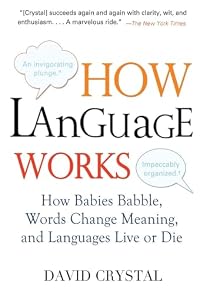
How Language Works
by David Crystal
On This Page
Description
"This book is not about music, cookery, or sex. But it is about how we talk about music, cookery, and sex--or, indeed, anything at all." Language is so fundamental to everyday life that we take it for granted. But as linguist Crystal makes clear, language is an extremely powerful tool that defines the human species. Crystal offers general readers a personal tour of the intricate workings of language. He moves effortlessly from big subjects like the origins of languages, how children learn to show more speak, and how conversation works to subtle but revealing points such as how email differs from both speech and writing in important ways, how language reveals a person's social status, and how we decide whether a word is rude or polite. Broad and deep, but with a light and witty touch, this is a layman's guide to how we communicate with one another.--From publisher description. show lessTags
Recommendations













Member Recommendations
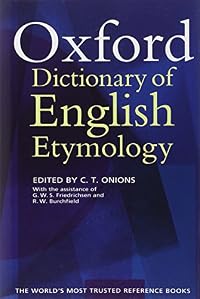
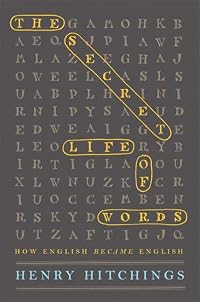
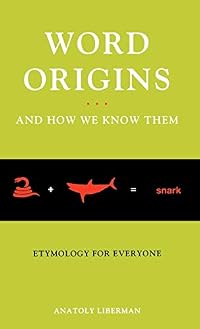
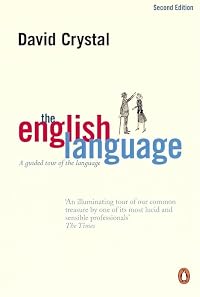
lorax A much more interesting exploration of basic linguistics.
84
Member Reviews
I think this would be a good absolute first linguistics book - it does a good job of touching on absolutely everything that might come up in the study of linguistics, but there wasn't much depth, which is to be expected, I guess. I think the problem was just that I have already read a couple of books on language and linguistics, so most of the information was already known to me (not to sound like an expert, which I am certainly not!). Overall, I found it was really a slog getting through this book - reading bits for nearly nine months!
If you don't know much about linguistics, this is a good place to start. It could also be useful for learning about areas of linguistics you have never entered before. If you have already read a number of books about language/linguistics you will be bored.
How Language Works is a masterful book on everything related to language. Author David Crystal’s specialty is in the English language, but that doesn’t mean he can’t tell us about other aspects of language acquisition. Each chapter is a self-contained section with references to other sections. While you can read the book from cover-to-cover, it is also possible to explore the different sections and find information on a particular item you might be interested in. This particular feature gives the book a good steady clip that makes it go by quickly.
When I say the book is a masterful account, I mean it covers everything. It goes into sign language, the brain structures that formulate and understand language, how the positions of the show more mouth structures translate into different sounds, the basic idea of how to write down different sounds, and a lot more. I would consider the book to be exhaustive without being tiring.
The book has images and illustrations that clearly show the anatomical structures related to speech and hearing and so on. Charts and tables display the phonetic alphabet and other language-related things.
I really enjoyed the book. I didn’t find it to be lacking or missing any information at all. Then again, I am not a linguist and can’t really say that with any level of confidence. show less
When I say the book is a masterful account, I mean it covers everything. It goes into sign language, the brain structures that formulate and understand language, how the positions of the show more mouth structures translate into different sounds, the basic idea of how to write down different sounds, and a lot more. I would consider the book to be exhaustive without being tiring.
The book has images and illustrations that clearly show the anatomical structures related to speech and hearing and so on. Charts and tables display the phonetic alphabet and other language-related things.
I really enjoyed the book. I didn’t find it to be lacking or missing any information at all. Then again, I am not a linguist and can’t really say that with any level of confidence. show less
Language has many roles. One of them can be to reveal the nature of language, to show “how language works” (the book’s title). This book explores this metalinguistic topic in 500 easy to read pages. As such, the book is remarkably informative with great breadth. No doubt, every reader is likely to be interested in something different.
Language is our birthright, an essential part of our humanity. Yet specific languages are potentially dangerous, more powerful than national cultures and identity. However, we cannot clearly define any one language. There are no standards to draw the line between languages or between dialects. Thus we guess there are perhaps 6000 human languages – some thriving, some endangered, all equally modern. show more
But what else should I pick upon? Ending sentences with prepositions? Starting sentences with a conjunctive? I should say the author is not another pop-linguist. He seeks to inform not to entertain or pontificate. For instance, he explains why a monograph ought not to be a monologue. He ably shows that an author can engage a reader in a feigned dialogue with appropriate cues to upcoming contents and required mode of thinking.
The explanations are beautiful spun, and easily accessed. Hence the book is well worth reading. show less
Language is our birthright, an essential part of our humanity. Yet specific languages are potentially dangerous, more powerful than national cultures and identity. However, we cannot clearly define any one language. There are no standards to draw the line between languages or between dialects. Thus we guess there are perhaps 6000 human languages – some thriving, some endangered, all equally modern. show more
But what else should I pick upon? Ending sentences with prepositions? Starting sentences with a conjunctive? I should say the author is not another pop-linguist. He seeks to inform not to entertain or pontificate. For instance, he explains why a monograph ought not to be a monologue. He ably shows that an author can engage a reader in a feigned dialogue with appropriate cues to upcoming contents and required mode of thinking.
The explanations are beautiful spun, and easily accessed. Hence the book is well worth reading. show less
At times interesting and educational other times snore worthy. Was expecting it to be a bit more like the last book of David Crystal's that I read (Spell it out) which was much more layperson friendly and ( to me at least) consistently interesting. Still worth reading but most people (myself included) will need to break it up a bit to get through.
Disappointing. Far too superficial and too focused on issues that aren't really linguistic in nature (how written language differs from spoken). Several chapters toward the end are devoted toward capsule descriptions of language families -- potentially interesting, but they didn't actually say much of anything ABOUT the languages in question, instead limiting themselves to number of speakers, geography, and related languages. There was basically nothing about the structure of other languages; it seemed very English-focused to me. I was skimming by the time I was halfway through, in sharp contrast to Steven Pinker's The Language Instinct which I've read more than once and found absolutely fascinating.
An overview of the study of language. Sounds interesting - promising all sorts of insights and snippets, but ends up reading like an extended index (Crystal is a noted indexer!) and manages to make an interesting topic boring. Read May 2009.
Members
- Recently Added By
Published Reviews
ThingScore 63
What Mr. Crystal, widely regarded as a leading authority on linguistics, has done is to assume the role of a master distiller of knowledge who takes the whole subject of language and pours it into 73 clearly labeled bottles all beginning with the word “How” — as in, “How we use tone of voice,” “How children learn to mean,” “How conversation works.”
added by Ludi_Ling
The book is the perfect one-volume introduction to the study of language. In 73 chapters Crystal covers everything from "How we transmit sounds" to "How conversation works"; the book also includes excellent diagrams of the inner ear and the vocal organs.
added by Ludi_Ling
Lists

Great Books About Language
73 works; 45 members

What're you reading? ..Words, words words.
11 works; 2 members
Author Information

103+ Works 14,169 Members
David Crystal is Honorary Professor of Linguistics at the University of Wales, Bangor.
Common Knowledge
- Canonical title
- How Language Works
- Original title
- How Language Works: How Babies Babble, Words Change Meaning, and Languages Live or Die
- Original publication date
- 2006-11-16
- First words
- (Preface)
I know an artist who has spent his whole life painting a still-life, in innumerable versions, in order to get it right.
‘Language’, the title of this book says. - Last words
- (Click to show. Warning: May contain spoilers.)If you do not, return to page 1, and try again.
- Blurbers
- Humphrys, John
- Original language
- English UK
Classifications
- Genres
- Nonfiction, General Nonfiction, Science & Nature
- DDC/MDS
- 401.4 — Language Language Philosophy and theory; international languages Communication; semantics, pragmatics, languages for special purposes
- LCC
- P107 .C77 — Language and Literature Philology. Linguistics Language. Linguistic theory. Comparative grammar
- BISAC
Statistics
- Members
- 1,018
- Popularity
- 25,401
- Reviews
- 13
- Rating
- (3.70)
- Languages
- Chinese, English
- Media
- Paper, Ebook
- ISBNs
- 11
- ASINs
- 3