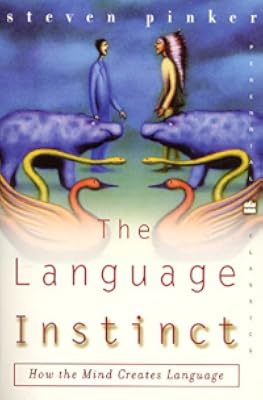
The Language Instinct: How the Mind Creates Language
by Steven Pinker
On This Page
Description
The classic book on the development of human language by the world's leading expert on language and the mind. In this classic, the world's expert on language and mind lucidly explains everything you always wanted to know about language: how it works, how children learn it, how it changes, how the brain computes it, and how it evolved. With deft use of examples of humor and wordplay, Steven Pinker weaves our vast knowledge of language into a compelling story: language is a human instinct, show more wired into our brains by evolution. The Language Instinct received the William James Book Prize from the American Psychological Association and the Public Interest Award from the Linguistics Society of America. This edition includes an update on advances in the science of language since The Language Instinct was first published. show lessTags
Recommendations



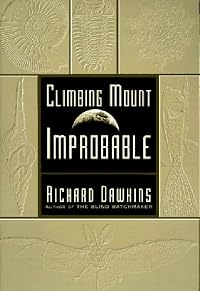

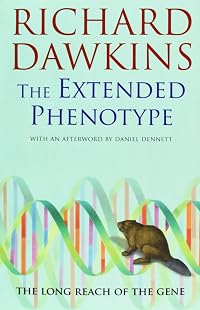
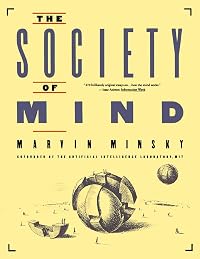
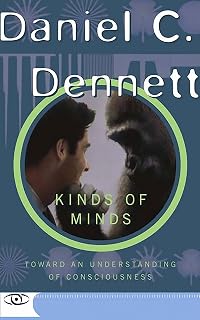




Member Recommendations
Member Reviews
It's a hard one to treat fairly, this. Pinker is trying to do three things: 1) provide a general introduction to how language and the science of language work; 2) debunk some common myths, from the really dumb ones about splitting infinitives and suchlike onward; and 3) give a polemical screed against linguists and psychologists, and there are many, who argue that language in general is not necessarily a dedicated human capacity and that Chomskyan generative grammar in particular is not necessarily what actually generates linguistic productions.
The first two tasks are relatively uncontroversial, and he completes them with reasonable aplomb. There are different choices a non-Chomskyan would have made about how to talk about certain show more things, of course, notably grammar (although I pity the poor general readin' fool that tries to slog through that chapter for reasons that have nothing to do with my opinions about the content--or Pinker's writing, which is fine--but merely that modelling syntax is a mess and a half and seemingly always will be). And I'm not quite sure his ridicule of the "language mavens" is always proportional to their sins (big difference between hamless logophily stuff like silly fake etymologies and shopping actual class shibboleths like split infinitives).
But it's in what amounts to the same old nature–nurture debate that Pinker makes me turn a little green. Pretty much every linguist and cognitive scientist out there these days, as far as I know, thinks nature–nurture is at most 70–30 one way or the other. That debate is dead, or has at least advanced far, far beyond the stage it's presented at here, and with clearer vision Pinker might have realized that what he was actually doing was engaging in a bit of linguistic historiography on what was a powerful and perennial clash for a long long time. Instead, like a good Chomskyan, he constructs straw men as opponents, reducing the "language is learned" position's scope so that it only covers people who think language is 100% learned and leave 0% room for an innate linguistic module (which is nobody at all, not since, I dunno, Skinner in the fifties?) and then treats all his opponents like they fall into that tiny box.
It's a way to sell copies, I suppose. But it makes you like th Bill Bryson of actual linguists, Steven Pinker, with your reducing Whorfian linguistic relativity to George Orwell's Newspeak, your reduction of learning to vulgar induction (pretty sure everyone in that camp thinks kids learn language mostly by pattern-finding and hypothesizing and trying things out), your trading of tired myths like the poverty of the stimulus and the idea that you can read a billion English (or whatever) sentences and never read the same one twice. Sometimes they are just little factual inaccuracies because you are trying to throw your discipline a coming-out party and want everyone to have a good time and want things to seem more exciting than they are, like when you overstate the scope of the McGurk effect. Sometimes, though, you're making choices that skew things in a more fundamental way, and you are most certainly not stupid, so I think it has to be intentional, building the broader perception of the field in your (camp's) image.
I think I won't even get into the generative grammar stuff, except to say that clearly if you're trying to make arguments about what kind of sentences we find syntactically appropriate even if semantically odd, "colourless green ideas sleep furiously" doesn't license you to take structurally very strange (but interpretable and plausibly grammatical) sentences as examples, because there is nothing weird about its grammar. I also want to say that obviously a general-learning theory that works is not rule- but token-based, and that the weirder and more different your sentences get form normal speech the less relevant it is whether you can make a tree that works for them, since obviously real speakers find them problematic, even if not in the same way as word salad. "Oooh, technically, this is a sentence!" Right, and you make the tree more and more complicated to deal with it, which is the sickness of syntax. "Just move this and this and this and the theory can handle it!" Even when it's quite evident that the human being cannot handle a sentence like that (e.g., with more than a few layers of embedded phrases). Working memory, jerk. It seems so clear that grammar is a few basic parameters and then convention and probabilism gradually laying in patterns over free variation within those parameters. (In this regard I wonder about Chomsky's "minimalism," which I don't know much about. It may be that it handles the rulehappiness of the old ways.)
It gets more innocuous after that. The chapter on language acquisition is good, although Pinker obviously has his biases as hinted above. I like the evolutionary explanation for the critical period--why spend limited genetic resources giving the old human abilities when statistically speaking the human is more likely to be young than old (since in the aggregate more of us are dead when we're e.g. 50 than 20, etc.), and when 90% (or whatever) of all people born will benefit from super language power at age 5 but only some smaller proportion at 35? And the the chapter on proto-language hypotheses (Nostratic, Proto-World, etc.) gives an interesting look into that freaky world (though it has nothing to do with language being an instinct--and there is another dumb error here where he says that the Indo-European people must have dominated everything from Ireland to India, obviously thinking of groups of them spreading out and hten staying in place and developing their different languages, when clearly migration and language differentiation happened simultaneously and in weird back-and-forth never-gonna-be-completely-traceable ways).
But then in the last chapter he's ushing his thesis again in this cowardly way where he deploys Fodor to say "I hate relativism" and some smuggy smug grad student to sneer at the caricaturized version of the standard social sciences model (NOBODY except far rightists thinks human cultures can vary freely and without limit forever, my god. You say this has been the model "since the 1920s" but I think you mean it was the model in the 1920s). And of course he implies by proxy that relativism is more totalitarian since the blank slate (which is what you need at the beginning to have relativism if you are going to take biological determinism off the table, since either our differences are rooted in cognition or in culture) is the dictator's dream. Where to start? First--of course there is a fascist relativism where groups are qualitatively, biologically different and other. And of course a totally blank slate, which nobody thinks is what a person is, can be abused. But there is also a fluid, polyphilic difference-of-tendencies rooted in the various manifestations of culture that leads us to multiculturalism and good things. Pinker seems to be blaming relativism for both the biological and cultural variants, which is silly considering no one relativist can hold both positions.
And alongside Pinker's "we're all one fam" nativist universalism there is clearly a totalitarian universalism where there is one single biological human nature and those who fall outside it are illegit. (In practice, of course, Pinker's universal human nature is more or less neoliberal--he is keen to reject Chomsky's progressive politics.)
And the list of universals across cultures he gives from the work of Donald Brown is interesting and inspiring and takes up several pages (everything from gossip to tool use to extended families some form of privacy urge for sex to a "natural biology" where we recognize the differences between organisms as qualitatively different from those between other objects--so humans have no problem with a wheelchair being furniture and a vehicle but a big problem with a mule being a donkey and a horse--no, it's a mule, crossculturally!)
This would make a great beach read if you felt no compunctions about skipping the sentence trees and if you didn't have a lot invested in the universalism/relativism and naturalism/arbitrarism debates, which I currently seem to. I'll be less judgy when my MA thesis is done, pinks. show less
The first two tasks are relatively uncontroversial, and he completes them with reasonable aplomb. There are different choices a non-Chomskyan would have made about how to talk about certain show more things, of course, notably grammar (although I pity the poor general readin' fool that tries to slog through that chapter for reasons that have nothing to do with my opinions about the content--or Pinker's writing, which is fine--but merely that modelling syntax is a mess and a half and seemingly always will be). And I'm not quite sure his ridicule of the "language mavens" is always proportional to their sins (big difference between hamless logophily stuff like silly fake etymologies and shopping actual class shibboleths like split infinitives).
But it's in what amounts to the same old nature–nurture debate that Pinker makes me turn a little green. Pretty much every linguist and cognitive scientist out there these days, as far as I know, thinks nature–nurture is at most 70–30 one way or the other. That debate is dead, or has at least advanced far, far beyond the stage it's presented at here, and with clearer vision Pinker might have realized that what he was actually doing was engaging in a bit of linguistic historiography on what was a powerful and perennial clash for a long long time. Instead, like a good Chomskyan, he constructs straw men as opponents, reducing the "language is learned" position's scope so that it only covers people who think language is 100% learned and leave 0% room for an innate linguistic module (which is nobody at all, not since, I dunno, Skinner in the fifties?) and then treats all his opponents like they fall into that tiny box.
It's a way to sell copies, I suppose. But it makes you like th Bill Bryson of actual linguists, Steven Pinker, with your reducing Whorfian linguistic relativity to George Orwell's Newspeak, your reduction of learning to vulgar induction (pretty sure everyone in that camp thinks kids learn language mostly by pattern-finding and hypothesizing and trying things out), your trading of tired myths like the poverty of the stimulus and the idea that you can read a billion English (or whatever) sentences and never read the same one twice. Sometimes they are just little factual inaccuracies because you are trying to throw your discipline a coming-out party and want everyone to have a good time and want things to seem more exciting than they are, like when you overstate the scope of the McGurk effect. Sometimes, though, you're making choices that skew things in a more fundamental way, and you are most certainly not stupid, so I think it has to be intentional, building the broader perception of the field in your (camp's) image.
I think I won't even get into the generative grammar stuff, except to say that clearly if you're trying to make arguments about what kind of sentences we find syntactically appropriate even if semantically odd, "colourless green ideas sleep furiously" doesn't license you to take structurally very strange (but interpretable and plausibly grammatical) sentences as examples, because there is nothing weird about its grammar. I also want to say that obviously a general-learning theory that works is not rule- but token-based, and that the weirder and more different your sentences get form normal speech the less relevant it is whether you can make a tree that works for them, since obviously real speakers find them problematic, even if not in the same way as word salad. "Oooh, technically, this is a sentence!" Right, and you make the tree more and more complicated to deal with it, which is the sickness of syntax. "Just move this and this and this and the theory can handle it!" Even when it's quite evident that the human being cannot handle a sentence like that (e.g., with more than a few layers of embedded phrases). Working memory, jerk. It seems so clear that grammar is a few basic parameters and then convention and probabilism gradually laying in patterns over free variation within those parameters. (In this regard I wonder about Chomsky's "minimalism," which I don't know much about. It may be that it handles the rulehappiness of the old ways.)
It gets more innocuous after that. The chapter on language acquisition is good, although Pinker obviously has his biases as hinted above. I like the evolutionary explanation for the critical period--why spend limited genetic resources giving the old human abilities when statistically speaking the human is more likely to be young than old (since in the aggregate more of us are dead when we're e.g. 50 than 20, etc.), and when 90% (or whatever) of all people born will benefit from super language power at age 5 but only some smaller proportion at 35? And the the chapter on proto-language hypotheses (Nostratic, Proto-World, etc.) gives an interesting look into that freaky world (though it has nothing to do with language being an instinct--and there is another dumb error here where he says that the Indo-European people must have dominated everything from Ireland to India, obviously thinking of groups of them spreading out and hten staying in place and developing their different languages, when clearly migration and language differentiation happened simultaneously and in weird back-and-forth never-gonna-be-completely-traceable ways).
But then in the last chapter he's ushing his thesis again in this cowardly way where he deploys Fodor to say "I hate relativism" and some smuggy smug grad student to sneer at the caricaturized version of the standard social sciences model (NOBODY except far rightists thinks human cultures can vary freely and without limit forever, my god. You say this has been the model "since the 1920s" but I think you mean it was the model in the 1920s). And of course he implies by proxy that relativism is more totalitarian since the blank slate (which is what you need at the beginning to have relativism if you are going to take biological determinism off the table, since either our differences are rooted in cognition or in culture) is the dictator's dream. Where to start? First--of course there is a fascist relativism where groups are qualitatively, biologically different and other. And of course a totally blank slate, which nobody thinks is what a person is, can be abused. But there is also a fluid, polyphilic difference-of-tendencies rooted in the various manifestations of culture that leads us to multiculturalism and good things. Pinker seems to be blaming relativism for both the biological and cultural variants, which is silly considering no one relativist can hold both positions.
And alongside Pinker's "we're all one fam" nativist universalism there is clearly a totalitarian universalism where there is one single biological human nature and those who fall outside it are illegit. (In practice, of course, Pinker's universal human nature is more or less neoliberal--he is keen to reject Chomsky's progressive politics.)
And the list of universals across cultures he gives from the work of Donald Brown is interesting and inspiring and takes up several pages (everything from gossip to tool use to extended families some form of privacy urge for sex to a "natural biology" where we recognize the differences between organisms as qualitatively different from those between other objects--so humans have no problem with a wheelchair being furniture and a vehicle but a big problem with a mule being a donkey and a horse--no, it's a mule, crossculturally!)
This would make a great beach read if you felt no compunctions about skipping the sentence trees and if you didn't have a lot invested in the universalism/relativism and naturalism/arbitrarism debates, which I currently seem to. I'll be less judgy when my MA thesis is done, pinks. show less
This is a book of 500 pages, counting the index (and a book this long badly needs an index, when it refers on page 400-something to a debunked urban myth mentioned on page 65). The author does go on and on and ON sometimes. Evolutionary theory of language is so unproven and unable to be proven historically, but Pinker certainly employs a lot of verbiage in the attempt.
High spots which may warrant keeping the book on the shelf include the discussion in Chapter 11, pp 334 ff, of ape "language" (basically a hoax, with a lot of self-deception by starry-eyed researchers); the Deaf community has been saying for years that ASL is not what language-trained apes are signing, and it's a relief to see that message validated and confirmed in show more mainstream popular linguistics... and the discussion centering around page 424 of how research reveals that human children from quite a young age have an innate sense that "living things fall into kinds with hidden essences", i.e. a shaved and painted raccoon is still a raccoon and not a skunk even if doctors operate and put a "sac of really smelly stuff" inside it; and that children are uncomfortable with the idea of a horse that has cow insides and cow parents. This kind of data has definite implications for gender theory in the elementary classroom and its effects on children's cognitive development and mental health. show less
High spots which may warrant keeping the book on the shelf include the discussion in Chapter 11, pp 334 ff, of ape "language" (basically a hoax, with a lot of self-deception by starry-eyed researchers); the Deaf community has been saying for years that ASL is not what language-trained apes are signing, and it's a relief to see that message validated and confirmed in show more mainstream popular linguistics... and the discussion centering around page 424 of how research reveals that human children from quite a young age have an innate sense that "living things fall into kinds with hidden essences", i.e. a shaved and painted raccoon is still a raccoon and not a skunk even if doctors operate and put a "sac of really smelly stuff" inside it; and that children are uncomfortable with the idea of a horse that has cow insides and cow parents. This kind of data has definite implications for gender theory in the elementary classroom and its effects on children's cognitive development and mental health. show less
Steven Pinker lost me as a buyer of his thesis with the very second sentence of his book:
"For you and I belong to a species with a remarkable ability: we can shape events in other's brains with exquisite precision".
It you take that for granted, Pinker's book will seem compelling and not especially controversial. Steven Pinker clearly takes it for granted, perhaps because he can't conceive of how we could possibly communicate effectively and coherently if it were not true.
Consider the following, which I think perfectly encapsulates the world view Pinker can't conceive of, by Ogden Nash:
Caught in a mesh of living veins,
In cell of padded bone,
He loneliest is when he pretends
That he is not alone.
We'd free the incarcerate race of man show more
That such a doom endures
Could only you unlock my skull,
Or I creep into yours.
To my way of thinking, it is the very fact that we *can't* "shape events in other's brains with exquisite precision" - or with any reliable certainty at all, that describes the human condition. The frisson created by precisely that ambiguity underpins all communication; it is the source of irony, tragedy, comedy, invention and imagination. Any theory of language which denies that fundamental contingency of human communication (as this one does) is going to have to prove it, and displacing that onus is a heavy task indeed.
Pinker's psycho-linguistics makes precisely that denial, by holding that all human communication - every language - shares an inate, evolutionary programmed Universal Grammar, precisely because Pinker can't conceive how else human communication could be possible.
I'm no academic, and certainly I have no background in linguistics. Given that this theory - which is from the same tradition as Noam Chomsky's - has been the ascendancy amongst academic linguistics for the best part of the last thirty years, Steven Pinker being one of the leading "normal scientists" within the paradigm (if I should be so bold as to use that word), and that The Language Instinct is considered fairly widely to be his magnum opus, I was expecting to have my naive relativistic assumptions carefully and systematically dissected, then annihilated, one by one.
So imagine my surprise to find that in the place of carefully drawn arguments and compelling statistical data, one finds a tissue of anecdotal arguments carefully selected to fit the theory, arguments from authority ("Chomsky is one of the ten most cited writers in all of the humanities"), dubious suppositions in place of statistical data (the "it is difficult to imagine the following grammatical construction being used" sort of thing), begged questions, non sequiturs, and Roger Penrose-style irrelevant scientific waffle - especially as regards evolution - and a decided absence of any consideration of competing theories of linguistics - and straw men versions of those which do rate a mentioned.
In short, Steven Pinker employs just about every illegitimate arguing technique in the book. His theory completely fails to account for metaphor (metaphor is barely mentioned in the book), nor the incremental development of language, the evolution of different languages with different grammars and vocabularies. At times Pinker is forced to argue that the grammar of our language is sometimes different from the words we actually speak and write, containing unspoken "inaudible symbols" representing a word or phrase which has been moved elsewhere in the sentence, so the sentence "The car was put in the garage", according to Pinker's Universal Grammar should technically be rendered as: "was put the car in the garage", and the construction we use can only be explained by movement of "The car" and the insertion in its place of an inaudible "trace":
"[The car] was put [trace] in the garage".
Now, again I am no technical linguist, but this has all the hallmarks of pure bull manure to me.
Finally, Pinker is at pains to point out that Universal Grammar is only ever applicable to oral language: written language didn't arise for centuries after oral grammar "evolved" as a phenotype.
But this hardly helps Pinker, since (as he himself points out, with reference to a transcript of the Watergate Tapes) when people talk in ordinary conversation they almost *never* use complete grammatical sentences: they interrupt themselves, they rely on physical gestures, they break off in mid stream and start a new thought, they don't punctuate (there's no unequivocal punctuation in spoken English), all the time.
As is fashionable amongst the "reductivist" and "evolutionary" set these days (a set I would otherwise, in general terms, consider myself in agreement with), relativist arguments are scorned. But Pinker's paradigm implies that, provided we are competent in constructing our own sentences, we should all understand each other perfectly, all the time: there should be no ambiguity; no room for miscontrual; no possibility for evolution in ideas or language. It is difficult to see how anyone could believe such a thing. But neither the structure of language and grammar nor its practical use needs to be perfect for effective communication *at some level* to be possible, and surely that is all that is needed. The beauty of the contingent view of language, which Pinker seems unable to appreciate, is how it can account for the missed margin of communication which might explain the everyday cultural and interpretative problems we all face, and the figurative and metaphorical power we all find at our disposal. Ogden Nash's dilemma is our dilemma, however much Steven Pinker might wish it were otherwise.
An earlier reviewer has mentioned Geoffrey Sampson's "the Language Instinct Debate" as a compelling antidote to Pinker's world view. Having recently read it (on the strength of that recommendation), I would firmly agree. In perhaps an ill-advisedly grumpy tone, Sampson - whose position at the University of Sussex inevitably means his academic profile is lower than Pinker's or Chomsky's - systematically and convincingly annihilates many of the arguments (such as they are) in Pinker's work. show less
"For you and I belong to a species with a remarkable ability: we can shape events in other's brains with exquisite precision".
It you take that for granted, Pinker's book will seem compelling and not especially controversial. Steven Pinker clearly takes it for granted, perhaps because he can't conceive of how we could possibly communicate effectively and coherently if it were not true.
Consider the following, which I think perfectly encapsulates the world view Pinker can't conceive of, by Ogden Nash:
Caught in a mesh of living veins,
In cell of padded bone,
He loneliest is when he pretends
That he is not alone.
We'd free the incarcerate race of man show more
That such a doom endures
Could only you unlock my skull,
Or I creep into yours.
To my way of thinking, it is the very fact that we *can't* "shape events in other's brains with exquisite precision" - or with any reliable certainty at all, that describes the human condition. The frisson created by precisely that ambiguity underpins all communication; it is the source of irony, tragedy, comedy, invention and imagination. Any theory of language which denies that fundamental contingency of human communication (as this one does) is going to have to prove it, and displacing that onus is a heavy task indeed.
Pinker's psycho-linguistics makes precisely that denial, by holding that all human communication - every language - shares an inate, evolutionary programmed Universal Grammar, precisely because Pinker can't conceive how else human communication could be possible.
I'm no academic, and certainly I have no background in linguistics. Given that this theory - which is from the same tradition as Noam Chomsky's - has been the ascendancy amongst academic linguistics for the best part of the last thirty years, Steven Pinker being one of the leading "normal scientists" within the paradigm (if I should be so bold as to use that word), and that The Language Instinct is considered fairly widely to be his magnum opus, I was expecting to have my naive relativistic assumptions carefully and systematically dissected, then annihilated, one by one.
So imagine my surprise to find that in the place of carefully drawn arguments and compelling statistical data, one finds a tissue of anecdotal arguments carefully selected to fit the theory, arguments from authority ("Chomsky is one of the ten most cited writers in all of the humanities"), dubious suppositions in place of statistical data (the "it is difficult to imagine the following grammatical construction being used" sort of thing), begged questions, non sequiturs, and Roger Penrose-style irrelevant scientific waffle - especially as regards evolution - and a decided absence of any consideration of competing theories of linguistics - and straw men versions of those which do rate a mentioned.
In short, Steven Pinker employs just about every illegitimate arguing technique in the book. His theory completely fails to account for metaphor (metaphor is barely mentioned in the book), nor the incremental development of language, the evolution of different languages with different grammars and vocabularies. At times Pinker is forced to argue that the grammar of our language is sometimes different from the words we actually speak and write, containing unspoken "inaudible symbols" representing a word or phrase which has been moved elsewhere in the sentence, so the sentence "The car was put in the garage", according to Pinker's Universal Grammar should technically be rendered as: "was put the car in the garage", and the construction we use can only be explained by movement of "The car" and the insertion in its place of an inaudible "trace":
"[The car] was put [trace] in the garage".
Now, again I am no technical linguist, but this has all the hallmarks of pure bull manure to me.
Finally, Pinker is at pains to point out that Universal Grammar is only ever applicable to oral language: written language didn't arise for centuries after oral grammar "evolved" as a phenotype.
But this hardly helps Pinker, since (as he himself points out, with reference to a transcript of the Watergate Tapes) when people talk in ordinary conversation they almost *never* use complete grammatical sentences: they interrupt themselves, they rely on physical gestures, they break off in mid stream and start a new thought, they don't punctuate (there's no unequivocal punctuation in spoken English), all the time.
As is fashionable amongst the "reductivist" and "evolutionary" set these days (a set I would otherwise, in general terms, consider myself in agreement with), relativist arguments are scorned. But Pinker's paradigm implies that, provided we are competent in constructing our own sentences, we should all understand each other perfectly, all the time: there should be no ambiguity; no room for miscontrual; no possibility for evolution in ideas or language. It is difficult to see how anyone could believe such a thing. But neither the structure of language and grammar nor its practical use needs to be perfect for effective communication *at some level* to be possible, and surely that is all that is needed. The beauty of the contingent view of language, which Pinker seems unable to appreciate, is how it can account for the missed margin of communication which might explain the everyday cultural and interpretative problems we all face, and the figurative and metaphorical power we all find at our disposal. Ogden Nash's dilemma is our dilemma, however much Steven Pinker might wish it were otherwise.
An earlier reviewer has mentioned Geoffrey Sampson's "the Language Instinct Debate" as a compelling antidote to Pinker's world view. Having recently read it (on the strength of that recommendation), I would firmly agree. In perhaps an ill-advisedly grumpy tone, Sampson - whose position at the University of Sussex inevitably means his academic profile is lower than Pinker's or Chomsky's - systematically and convincingly annihilates many of the arguments (such as they are) in Pinker's work. show less
A highly readable account on how language is an inherent characteristic of the human species, which I found a bit unpleasant to read at times. Pinker is such a good writer that I feel a little inadequate in responding to his book, but that aside, I thought it was an erudite book on a complex topic, like all Pinker’s books. It is also a bit controversial, as Pinker skewers many a layman’s misguided ideas about language, its origins, and its uniqueness to humanity. And not only a layman’s ideas; Pinker takes everyone from the social scientists to what he calls the ‘language mavens’ (editors and other arbiters of prescriptive grammar) to task for promulgating false ideas about language. I found Pinker’s more polemical chapters show more a bit uncongenial, mostly because they attack some of my own subconscious ideas about language. I didn’t realise that I felt as strongly about prescriptive grammar until Pinker attacked it and its proponents. I don’t mind Pinker’s attacks on some of the more archaic rules of grammar (such as split infinitives and ending sentences on prepositions, and so forth) but I did find his fulminating a bit tiresome at times, especially when he sets up some straw men that he can easily knockdown. A quibble, really, but still.
Pinker is on much firmer, and to me more interesting, ground when he explains the psychological and evolutionary origins of language. This is simply brilliant and lucid exposition, and I enjoyed it immeasurably. Pinker’s explanation of how language evolves in children, and how this seems to argue for a ‘language instinct’ in humans (Chomsky’s Universal Grammar) is masterful. I also enjoyed his withering refutations of the assertions of those primatologists who claim to have taught chimpanzees sign language, and the more absurd claims of some anthropologists (such as the infamous ‘100 different words for snow’ claimed for the Eskimos).
My one problem with the book is that it came out in 1994, so how up to date it is, in an ever-changing field, is problematic. I wish Pinker would update the book, but maybe he’s too busy writing books about the decline in violence (The Better Angels of Our Nature, which I intend to read next year), and whatnot.
Highly recommended, but not one to swallow hook, line, and sinker. show less
Pinker is on much firmer, and to me more interesting, ground when he explains the psychological and evolutionary origins of language. This is simply brilliant and lucid exposition, and I enjoyed it immeasurably. Pinker’s explanation of how language evolves in children, and how this seems to argue for a ‘language instinct’ in humans (Chomsky’s Universal Grammar) is masterful. I also enjoyed his withering refutations of the assertions of those primatologists who claim to have taught chimpanzees sign language, and the more absurd claims of some anthropologists (such as the infamous ‘100 different words for snow’ claimed for the Eskimos).
My one problem with the book is that it came out in 1994, so how up to date it is, in an ever-changing field, is problematic. I wish Pinker would update the book, but maybe he’s too busy writing books about the decline in violence (The Better Angels of Our Nature, which I intend to read next year), and whatnot.
Highly recommended, but not one to swallow hook, line, and sinker. show less
The Language Instinct is as thorough an introduction to the preoccupations of a linguist as one would be likely to ask for. Pinker divides his work into chapters on phonology, universal grammar, historical linguistics, cognitive linguistics, the evolution of language, prescriptivism versus descriptivism, and more. Whole books could be written (and have been) on any one of these topics, and so there’s something a bit schizophrenic about any one book that attempts to cover so much ground. Many of the chapters relate to one another only obliquely—which is not to say that they aren’t admirable when viewed as units—only that the work as a whole is rather poorly unified.
Pinker’s prose here fails to snap as it does in, say, The Blank show more Slate. In that book, his words had moments where they shone with righteous fury, whereas, in The Language Instinct, Pinker’s anger (when it makes an appearance, mostly aimed at prescriptivists) just comes off as coarse and mocking. Speaking of prescriptivists, I once considered myself a rather thoroughgoing descriptivist. After reading Pinker’s take on the “Language Mavens” (Ch. 12), I recognize that I am nothing of the kind. You’ll never hear me whining that the English language is being destroyed by slang and loose usage, or wielding the word “non-standard” as a slur, but I’ll likewise never jump through the intellectual hoops that Pinker does in order to defend the subject-verb agreement of the sentence, “Give Al Gore and I a chance.” It pains me just to type it.
One accolade that The Language Instinct definitely deserves is that it contains the most lucid argument I have yet heard for the preservation of linguistic diversity. Popular works on historical linguistics frequently cite statistics that one-half of the world’s 6,000 languages are in danger of becoming extinct within a generation. Of course, people usually have sound economic reasons for giving up their ancestral tongues, and it’s presumptuous for us to try to hold them back just to satisfy a latent appetite for crypto-colonial voyeurism. The only thing that a historical linguist has to add to this conversation is that we can’t allow such-and-such a language to die out—we haven’t placed it on the jumbo family tree of languages yet! (It’s precisely this sort of argument that spoiled John McWhorter’s otherwise laudable The Power of Babel for me). Pinker however, having already pointed out that language is the best window we have into human cognition, notes that every lost language is a lost data point in the quest to flesh out what the human mind is capable of, and how it works. This, at least, is a better reason to maintain linguistic diversity, though even Pinker admits that it doesn’t resolve the ethical tensions raised by the issue.
I feel bad that I’ve spent the bulk of my review talking about prescriptivism and linguistic diversity, which comprise relatively minor points in Pinker’s book. For me, the most fascinating parts, and the ones I commend to you most highly, were about language and the brain. It was a surprise how certain genetic or acquired disorders could have such specific effects on a person’s ability to acquire or use language—without necessarily affecting muscle control, hearing, or general intelligence.
A word to the wise: certain chapters, especially the ones on Chomsky’s universal grammar, are quite technical, and these technical chapters are mostly located at the beginning of the book. If you find them to be tough going, don’t despair, and don’t hesitate to skip ahead. The later chapters are more intuitive, and mostly refer back to the technical stuff only tangentially. show less
Pinker’s prose here fails to snap as it does in, say, The Blank show more Slate. In that book, his words had moments where they shone with righteous fury, whereas, in The Language Instinct, Pinker’s anger (when it makes an appearance, mostly aimed at prescriptivists) just comes off as coarse and mocking. Speaking of prescriptivists, I once considered myself a rather thoroughgoing descriptivist. After reading Pinker’s take on the “Language Mavens” (Ch. 12), I recognize that I am nothing of the kind. You’ll never hear me whining that the English language is being destroyed by slang and loose usage, or wielding the word “non-standard” as a slur, but I’ll likewise never jump through the intellectual hoops that Pinker does in order to defend the subject-verb agreement of the sentence, “Give Al Gore and I a chance.” It pains me just to type it.
One accolade that The Language Instinct definitely deserves is that it contains the most lucid argument I have yet heard for the preservation of linguistic diversity. Popular works on historical linguistics frequently cite statistics that one-half of the world’s 6,000 languages are in danger of becoming extinct within a generation. Of course, people usually have sound economic reasons for giving up their ancestral tongues, and it’s presumptuous for us to try to hold them back just to satisfy a latent appetite for crypto-colonial voyeurism. The only thing that a historical linguist has to add to this conversation is that we can’t allow such-and-such a language to die out—we haven’t placed it on the jumbo family tree of languages yet! (It’s precisely this sort of argument that spoiled John McWhorter’s otherwise laudable The Power of Babel for me). Pinker however, having already pointed out that language is the best window we have into human cognition, notes that every lost language is a lost data point in the quest to flesh out what the human mind is capable of, and how it works. This, at least, is a better reason to maintain linguistic diversity, though even Pinker admits that it doesn’t resolve the ethical tensions raised by the issue.
I feel bad that I’ve spent the bulk of my review talking about prescriptivism and linguistic diversity, which comprise relatively minor points in Pinker’s book. For me, the most fascinating parts, and the ones I commend to you most highly, were about language and the brain. It was a surprise how certain genetic or acquired disorders could have such specific effects on a person’s ability to acquire or use language—without necessarily affecting muscle control, hearing, or general intelligence.
A word to the wise: certain chapters, especially the ones on Chomsky’s universal grammar, are quite technical, and these technical chapters are mostly located at the beginning of the book. If you find them to be tough going, don’t despair, and don’t hesitate to skip ahead. The later chapters are more intuitive, and mostly refer back to the technical stuff only tangentially. show less
This is listed as one of the New Scientist Top 25 Most Influential Popular Science books. The thesis is solid...the execution burdensome. Here's a thought: make a point; reinforce a point; if at that point you feel the need to keep talking, show the reader where in the footnotes or appendix all the repetitious extras can be found.
Pinker spends an enormous amount of time talking about language grammar and the English language in particular, none of which have anything to do with why language is instinctual. It would have been a lot more tedious if I hadn't just listened to John McWhorter's lectures on The Story of Human language. The parallels could not have been coincidental...both relating elements of language development, grammar show more structure, proto-languages...but McWhorter wasn't talking about instinct. He was talking about language. Pinker undermines his case with all the side trips down linguist lane. Focus on instinct, not on the idiosyncrasies of a hodgepodge tongue.
Pinker could have made his point very well in 100 pages. I admire succinct conveyance of knowledge. Pinker sure has a way of complicating concepts with extraneous details. I didn't admire this book. show less
Pinker spends an enormous amount of time talking about language grammar and the English language in particular, none of which have anything to do with why language is instinctual. It would have been a lot more tedious if I hadn't just listened to John McWhorter's lectures on The Story of Human language. The parallels could not have been coincidental...both relating elements of language development, grammar show more structure, proto-languages...but McWhorter wasn't talking about instinct. He was talking about language. Pinker undermines his case with all the side trips down linguist lane. Focus on instinct, not on the idiosyncrasies of a hodgepodge tongue.
Pinker could have made his point very well in 100 pages. I admire succinct conveyance of knowledge. Pinker sure has a way of complicating concepts with extraneous details. I didn't admire this book. show less
If your not sure about this book. Just pick it up in the bookstore and turn to page 355. If find the chart there terribly amusing then go ahead and buy it. If not you might want to move on.
Pinker has obviously thought about this, a lot.
...people simply assume that words determine thoughts...Sometimes it is not easy to find any words that properly convey a thought. When we hear or read, we usually remember the gist, not the exact words, so there has to be such a thing as a gist this is not the same as a bunch of words.
...if there can be two thoughts corresponding to one word, thoughts can't be words.
Our sixth sense may perceive speech as a language, not as sound, but it is a sense, something that connects us to the world, and not just a show more form of suggestibility.
When a series of facts comes in succession, as in a dialogue or text, the language must be structured so that the listener can place each face into an existing framework.
This mirrors my thoughts exactly- not only for words but for knowledge in general.
...there is a specific syndrome called Pure Word Deafness that is exactly what it sounds like: the patients can read and speak, and can recognize environmental sounds ... but cannot recognize spoken words; words are meaningless...
Oh boy! This is sooo me! Often I have to visualize the written words before I can understand what was said.
Great advice Pinker received from one of his editors-
Think of your readers as your college roommates: people who are as smart and intellectually curious as you...
I agreed with most of his conclusions but he lost me at;
"The linguistic clumsiness of [age] might be the price we pay for the linguistic genius we displayed as babies"
I just don't see why it has to be a zero-sum game.
It's funny that the next book I read was Paul Allen's biography. At the end he talks about how incredibly difficult it is to catalog and index vast amounts of information. Pinker was even mentioned by name! Certainly those two geniuses could pool their knowledge and come up with an algorithm based on Pinker's understanding of language to file and organize all that is known on a subject. show less
Pinker has obviously thought about this, a lot.
...people simply assume that words determine thoughts...Sometimes it is not easy to find any words that properly convey a thought. When we hear or read, we usually remember the gist, not the exact words, so there has to be such a thing as a gist this is not the same as a bunch of words.
...if there can be two thoughts corresponding to one word, thoughts can't be words.
Our sixth sense may perceive speech as a language, not as sound, but it is a sense, something that connects us to the world, and not just a show more form of suggestibility.
When a series of facts comes in succession, as in a dialogue or text, the language must be structured so that the listener can place each face into an existing framework.
This mirrors my thoughts exactly- not only for words but for knowledge in general.
...there is a specific syndrome called Pure Word Deafness that is exactly what it sounds like: the patients can read and speak, and can recognize environmental sounds ... but cannot recognize spoken words; words are meaningless...
Oh boy! This is sooo me! Often I have to visualize the written words before I can understand what was said.
Great advice Pinker received from one of his editors-
Think of your readers as your college roommates: people who are as smart and intellectually curious as you...
I agreed with most of his conclusions but he lost me at;
"The linguistic clumsiness of [age] might be the price we pay for the linguistic genius we displayed as babies"
I just don't see why it has to be a zero-sum game.
It's funny that the next book I read was Paul Allen's biography. At the end he talks about how incredibly difficult it is to catalog and index vast amounts of information. Pinker was even mentioned by name! Certainly those two geniuses could pool their knowledge and come up with an algorithm based on Pinker's understanding of language to file and organize all that is known on a subject. show less
Members
- Recently Added By
Lists

Great Books About Language
73 works; 45 members

Non-Fiction Worth Reading
1,016 works; 255 members

Unread books
1,063 works; 87 members

Falling for Science
56 works; 3 members

Books Read in 2013
1,630 works; 51 members

The Great Courses: The Learning Brain
61 works; 1 member

Mind Expanding Books by hackerkid
581 works; 8 members

The r/AskScience Reading List
159 works; 3 members

Biblioteca de não ficção
41 works; 1 member

Favourite Books
1,819 works; 316 members

Books in the Bibliography of The Mind in the Cave by David Lewis-Williams
257 works; 1 member

Books Cited in Blueprint by Nicholas Christakis
261 works; 1 member
Author Information

42+ Works 31,915 Members
Steven Pinker is an authority on language and the mind. He is Peter de Florez professor of psychology in the department of brain and cognitive sciences at the Massachusetts Institute of Technology. He lives in Cambridge, Massachusetts. Steven Arthur Pinker was born on September 18, 1954 in Canada. He is an experimental psychologist, cognitive show more scientist, linguist, and author. He is a psychology professor at Harvard University. He is the author of several non-fiction books including The Language Instinct, How the Mind Works, Words and Rules, The Blank Slate, The Stuff of Thought, and The Sense of Style: The Thinking Person's Guide to Writing in the 21st Century. His research in cognitive psychology has won the Early Career Award in 1984 and Boyd McCandless Award in 1986 from the American Psychological Association, the Troland Research Award in 1993 from the National Academy of Sciences, the Henry Dale Prize in 2004 from the Royal Institution of Great Britain, and the George Miller Prize in 2010 from the Cognitive Neuroscience Society. He was twice a finalist for the Pulitzer Prize, in 1998 and in 2003. In 2006, he received the American Humanist Association's Humanist of the Year award for his contributions to public understanding of human evolution. (Bowker Author Biography) show less
Some Editions
Awards and Honors
Series
Belongs to Publisher Series
Work Relationships
Is abridged in
Common Knowledge
- Canonical title
- The Language Instinct: How the Mind Creates Language
- Original title
- The Language Instinct: How the Mind Creates Language
- Original publication date
- 1994
- People/Characters
- Roger Brown; Noam Chomsky; Charles Darwin [Charles Robert: 1809-1882]; Michael Gazzaniga; Myrna Gopnik; Richard Lederer (show all 8); John Tooby; George Williams
- Dedication
- For Harry and Roslyn Pinker who gave me language
- First words
- Preface
I have never met a person who is not interested in language.
As you are reading these words, you are taking part in one of the wonders of the natural world. - Last words
- (Click to show. Warning: May contain spoilers.)The banter among New Guinean highlanders in the film of their first contact with the rest of the world, the motions of a sign language interpreter, the prattle of little girls in a Tokyo playground—I imagine seeing through the rhythms to the structures underneath, and sense that we all have the same minds.
- Blurbers
- Chomsky, Noam; Dawkins, Richard; Gleitman, Leila; Buckley, William F.; Gardner, Howard; Gazzaniga, Michael S. (show all 11); Ballard, J. G.; Gribbin, John; Jones, Steve; Jenkins, Simon; McEwan, Ian
- Original language
- English
- Canonical DDC/MDS
- 400
Classifications
Statistics
- Members
- 6,521
- Popularity
- 1,867
- Reviews
- 63
- Rating
- (3.97)
- Languages
- 15 — Bulgarian, Chinese, Dutch, English, French, German, Greek, Hungarian, Italian, Japanese, Korean, Portuguese, Russian, Spanish, Turkish
- Media
- Paper, Audiobook, Ebook
- ISBNs
- 47
- ASINs
- 29