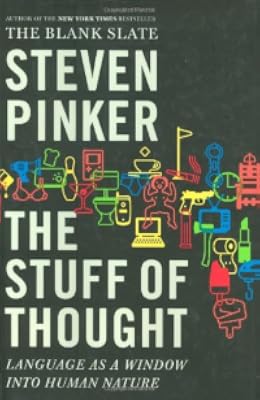
The Stuff of Thought: Language as a Window into Human Nature
by Steven Pinker
On This Page
Description
Psychologist Pinker explains how the mind works in a completely new way--by examining how we use words. Every time we swear, we reveal something about human emotions. When we use an innuendo to convey a bribe, threat, or sexual come-on (rather than just blurting it out), we disclose something about human relationships. Our use of prepositions and tenses tap into peculiarly human concepts of space and time, and our nouns and verbs tap into mental models of matter and causation. Even the names show more we give our babies, as they change from decade to decade, have important things to day about our relations to our children and to society. Pinker takes on both scientific questions--such as whether language affects thought, and which of our concepts are innate--and questions from the headlines and everyday life.--From publisher description. show lessTags
Recommendations

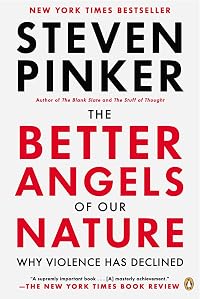
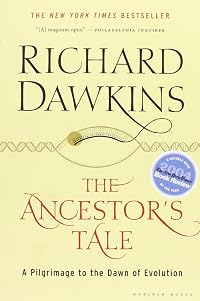
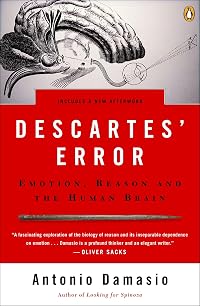
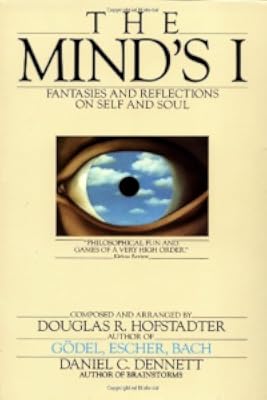




Member Recommendations
Member Reviews
I like books that are a challenge to read and understand. I like being driven to think deeply about things that I take for granted. I like understanding how the universe works.
This is a crazy deep and difficult book. Massively rewarding, I struggled mightily to follow the arguments, understand the examples and look up lots of words in a dictionary.
Pinker is a great mind who puts forward amazing arguments to explain how human minds work, using language as the key. Every page of this book has me gasping in wonder and realisation.
Every page in this book has me floundering in arguments just out of my mental reach and uses words I never heard of (‘If that is what he meant, why not say so...?’).
This is an absolutely fascinating book from show more a popular author who wants to tell us how wonderful the human mind is and how language is the ultimate expression of that wonder. In doing so he made my brain hurt, but in a good way. show less
This is a crazy deep and difficult book. Massively rewarding, I struggled mightily to follow the arguments, understand the examples and look up lots of words in a dictionary.
Pinker is a great mind who puts forward amazing arguments to explain how human minds work, using language as the key. Every page of this book has me gasping in wonder and realisation.
Every page in this book has me floundering in arguments just out of my mental reach and uses words I never heard of (‘If that is what he meant, why not say so...?’).
This is an absolutely fascinating book from show more a popular author who wants to tell us how wonderful the human mind is and how language is the ultimate expression of that wonder. In doing so he made my brain hurt, but in a good way. show less
Steven Pinker is such a frustrating writer. His books are crammed with original and important ideas that impress, but which are presented in such a sea of words that the content gets lost. I find myself, at the end of an absorbing chapter, not able to bring to mind the key concepts just presented. Now, if Pinker wrote more like Jared Diamond, what a joy it would be. This book is more professional and better organised than Blank Slate, but is still a near miss. What a shame. Read July 2010.
http://nwhyte.livejournal.com/1487501.html
I was rather unimpressed by the Pinker book I read last year, but this seemed to be a more coherent assembly of facts and theories relating to linguistics, psychology and philosophy. I'm afraid I still wasn't gripped by it, but that is more to do with my own preferences for intellectual exercise than any fault of the book; I can't get very excited by deep philosophical questions, and psychology has never been an attractive field for me.
There were some points of interest.
* I was startled to read of an old family friend making her reputation by observing and writing up the process by which her daughters learned to speak, and indeed nervously wondered if I too had been an unwitting subject of her show more research. But on reflection, by the time we knew the family her daughters were well past the stage of language acquisition (in English anyway, though for all I know she may have also exploited the liguistic consequences of their subsequent emigration to the Netherlands).
* Good quote on linguistic determinism: 'The idea that Eskimos pay more attention to varieties of snow because they have more words for it is so topsy-turvy (can you think of any other reason why Eskimos might pay attention to snow?) that it's hard to believe it would be taken seriously wer it not for the feeling of cleverness it affords at having transcended common sense.'
* A joke about Eastern European aristocrats having a drinking contest where the winner is the one who can think of the biggest number. After long thought the first one says, 'Three.' The second one ponders long and hard, and finally says, 'You win.'
* But the reason that peoples who count 'one, two, many' don't have larger numbers is that thye don't really need them; Pinker quotes a researcher who finds that the Yanomanö warrior knows each of his arrows individually and so does not count them.
* Rude words for sex are transitive (take a direct object); polite words for sex are intransitive (require a preposition) - 'John bonked Mary'; 'John made love to Mary'. I wonder how true this is in languages other than English.
* Politeness strategies in many languages use similar strategies to make direct questions more acceptable - he gives an example from Tzeltal, 'You wouldn't perhaps sell your chicken, it was said' - similar in concept to English 'You wouldn't be selling your chicken by any chance, would you?'
That last point was rather unusual in that Pinker for once drew from languages other than English for his conclusions, and I would have enjoyed the book more if he had done so more often. I'm glad to have read a better book by him than How The Mind Works, but I won't go out of my way to track his stuff down in future. show less
I was rather unimpressed by the Pinker book I read last year, but this seemed to be a more coherent assembly of facts and theories relating to linguistics, psychology and philosophy. I'm afraid I still wasn't gripped by it, but that is more to do with my own preferences for intellectual exercise than any fault of the book; I can't get very excited by deep philosophical questions, and psychology has never been an attractive field for me.
There were some points of interest.
* I was startled to read of an old family friend making her reputation by observing and writing up the process by which her daughters learned to speak, and indeed nervously wondered if I too had been an unwitting subject of her show more research. But on reflection, by the time we knew the family her daughters were well past the stage of language acquisition (in English anyway, though for all I know she may have also exploited the liguistic consequences of their subsequent emigration to the Netherlands).
* Good quote on linguistic determinism: 'The idea that Eskimos pay more attention to varieties of snow because they have more words for it is so topsy-turvy (can you think of any other reason why Eskimos might pay attention to snow?) that it's hard to believe it would be taken seriously wer it not for the feeling of cleverness it affords at having transcended common sense.'
* A joke about Eastern European aristocrats having a drinking contest where the winner is the one who can think of the biggest number. After long thought the first one says, 'Three.' The second one ponders long and hard, and finally says, 'You win.'
* But the reason that peoples who count 'one, two, many' don't have larger numbers is that thye don't really need them; Pinker quotes a researcher who finds that the Yanomanö warrior knows each of his arrows individually and so does not count them.
* Rude words for sex are transitive (take a direct object); polite words for sex are intransitive (require a preposition) - 'John bonked Mary'; 'John made love to Mary'. I wonder how true this is in languages other than English.
* Politeness strategies in many languages use similar strategies to make direct questions more acceptable - he gives an example from Tzeltal, 'You wouldn't perhaps sell your chicken, it was said' - similar in concept to English 'You wouldn't be selling your chicken by any chance, would you?'
That last point was rather unusual in that Pinker for once drew from languages other than English for his conclusions, and I would have enjoyed the book more if he had done so more often. I'm glad to have read a better book by him than How The Mind Works, but I won't go out of my way to track his stuff down in future. show less
An interesting look at language and what it can tell us about human nature. Some of it probably needs to be studied with more attention than one can provide when reading it in 20-minute spurts over the course of the day. Of particular interest are the chapters on swearing, baby names and the idea of people thinking in metaphors.
Pinker's writing style is accessible and witty, with some well-chosen pop culture references sprinkled throughout. I particularly enjoyed the Calvin and Hobbes and Dilbert references, as well as Monty Python, Doctor Who and Doonesbury. One can even apply some of the topics discussed to the world of writing -- the knowledge that a particular verb or subject choice can change the perspective of the sentence is very show more instructive. For example, saying that you poured milk into the glass is different than filling the glass with milk; you're focusing on different things. Subtle distinctions yes, but it may make all the difference.
This book is well worth a read if you're a linguist, psychologist or just love to read about how the mind works. show less
Pinker's writing style is accessible and witty, with some well-chosen pop culture references sprinkled throughout. I particularly enjoyed the Calvin and Hobbes and Dilbert references, as well as Monty Python, Doctor Who and Doonesbury. One can even apply some of the topics discussed to the world of writing -- the knowledge that a particular verb or subject choice can change the perspective of the sentence is very show more instructive. For example, saying that you poured milk into the glass is different than filling the glass with milk; you're focusing on different things. Subtle distinctions yes, but it may make all the difference.
This book is well worth a read if you're a linguist, psychologist or just love to read about how the mind works. show less
Steven Pinker really is an amazing writer: amazing for his ability to attract crank reviews for his books.
Let’s take KromesTomes’s review as our example: one star, with the main (or rather the only) criticism being that Pinker is a ‘terribly “loose” writer’.
Now, for me, this is strange. It is easy to disagree with some of Pinker’s ideas, as he takes a contentious stand in some of the most fundamental debates in philosophy, psychology and linguistics. His writing style is not normally so controversial – for a writer who likes to tackle the big issues, his prose is unusually lucid.
Most people have a stereotype of academic writing in their heads: they think it is dense and dull. Like many stereotypes, it has some truth to show more it – many academic papers are impenetrable even to specialists in the same field. Academic writing on language, strangely enough, suffers just as much as any other field. Steven Pinker’s writing definitely does not fall into this category – he tries to engage with the reader, to stir up and maintain interest. This is definitely a good idea, as linguistics can be a little dry – try Steven Ullmann’s Semantics: An Introduction to the Science of Meaning as bedtime reading.
So, Pinker uses “actually” in a way which is not recorded in Webster’s. Well, I have news (I’m whispering): sometimes people use words in ways which are different to those described in the dictionary. Sometimes they even use words which aren’t even in the dictionary! Imagine that! Actually (can I say that?), this use is in my dictionary (the Oxford): “used to emphasize that something someone has said or done is surprising”. Yet, this is beside the point, which is that it is not at all difficult to know exactly what Pinker meant when he wrote that sentence, just as I know what is meant by a “loose” writer. I’m sure no native speaker of English requires a dictionary to understand it.
Google doesn’t sell noun phrases? Well, it sells to companies wishing to advertise on their search engine the right to have their ads display when certain words, usually noun phrases, are entered into the search box by a user. As I have worked on Microsoft’s attempt to compete with Google in this arena, I know that it is common within the industry to speak of “buying and selling keywords”, rather than use a two or three dozen word sentence as I’ve just done. Not only does it save a lot of time in meetings, but this linguistic phenomenon also has a name: synecdoche. I’m sure that one’s in Webster’s.
One could pick holes in the English used in the review: some people would object to the comma placed inside the inverted commas in “selling noun phrases,” as this implies that it is part of the quote, or to the use of “but” at the start of a sentence. You might say this is pedantry – I would agree and I apologise – but picking holes in perfectly clear and understandable language (or “how people use language in the real world”) is not restricted to this or the below review. Indeed, Pinker devoted a whole chapter of The Language Instinct to linguistic prescriptivism (Chapter 12 – The Language Mavens).
Don’t get me started on the count nouns and mass nouns thing, as I wouldn’t want to keep you here for another ten minutes, although it’s, erm, actually really interesting.
Have a read – you’ll enjoy it, even if you don’t agree with it. No dictionary needed. show less
Let’s take KromesTomes’s review as our example: one star, with the main (or rather the only) criticism being that Pinker is a ‘terribly “loose” writer’.
Now, for me, this is strange. It is easy to disagree with some of Pinker’s ideas, as he takes a contentious stand in some of the most fundamental debates in philosophy, psychology and linguistics. His writing style is not normally so controversial – for a writer who likes to tackle the big issues, his prose is unusually lucid.
Most people have a stereotype of academic writing in their heads: they think it is dense and dull. Like many stereotypes, it has some truth to show more it – many academic papers are impenetrable even to specialists in the same field. Academic writing on language, strangely enough, suffers just as much as any other field. Steven Pinker’s writing definitely does not fall into this category – he tries to engage with the reader, to stir up and maintain interest. This is definitely a good idea, as linguistics can be a little dry – try Steven Ullmann’s Semantics: An Introduction to the Science of Meaning as bedtime reading.
So, Pinker uses “actually” in a way which is not recorded in Webster’s. Well, I have news (I’m whispering): sometimes people use words in ways which are different to those described in the dictionary. Sometimes they even use words which aren’t even in the dictionary! Imagine that! Actually (can I say that?), this use is in my dictionary (the Oxford): “used to emphasize that something someone has said or done is surprising”. Yet, this is beside the point, which is that it is not at all difficult to know exactly what Pinker meant when he wrote that sentence, just as I know what is meant by a “loose” writer. I’m sure no native speaker of English requires a dictionary to understand it.
Google doesn’t sell noun phrases? Well, it sells to companies wishing to advertise on their search engine the right to have their ads display when certain words, usually noun phrases, are entered into the search box by a user. As I have worked on Microsoft’s attempt to compete with Google in this arena, I know that it is common within the industry to speak of “buying and selling keywords”, rather than use a two or three dozen word sentence as I’ve just done. Not only does it save a lot of time in meetings, but this linguistic phenomenon also has a name: synecdoche. I’m sure that one’s in Webster’s.
One could pick holes in the English used in the review: some people would object to the comma placed inside the inverted commas in “selling noun phrases,” as this implies that it is part of the quote, or to the use of “but” at the start of a sentence. You might say this is pedantry – I would agree and I apologise – but picking holes in perfectly clear and understandable language (or “how people use language in the real world”) is not restricted to this or the below review. Indeed, Pinker devoted a whole chapter of The Language Instinct to linguistic prescriptivism (Chapter 12 – The Language Mavens).
Don’t get me started on the count nouns and mass nouns thing, as I wouldn’t want to keep you here for another ten minutes, although it’s, erm, actually really interesting.
Have a read – you’ll enjoy it, even if you don’t agree with it. No dictionary needed. show less
Fascinating book about how language and thinking are interlated. This covers both ways: language affecting thought and thinking affecting language. Pinker's "psycho-linguistics" has intricate grammatical underpinnings and my eyes always start to glaze over at the finer points of the "past participle", so there is a lot of that to slog through and I think the introductory example of the cardinality of 9/11 events rings rather hollow, but over all this is an enlightening book about how we talking animals think and well worth reading.
(Alistair) Well, I haven't booklogged a non-fiction book for quite a while, and here is why; it's because it took me a good while to read through The Stuff of Thought. Not because it's hard to read, but because it's well worth taking the time to read carefully and let inwardly ferment.
This is an excellent book, whether you're interested in thought, or interested in language, or just easily interested, period. Within, Stephen Pinker, professor of psychology at Harvard, takes us through what our use of language reveals about the way we think, and how therefore the structures of our language may reveal, and to what extent they may reflect, the hardwired cognitive concepts that we have.
In addressing these issues, he takes us through our show more languages assumptions on space, time and causality; our use of metaphor as a tool to illustrate and to think with, the generation of names, expletives, politeness, and language in relationships and as a social tool, delving into what each one can tell us about our minds, before closing with a look at language as a tool for exceeding our cognitive limits. (And, of course, as others have said before me, the chapter on "The Seven Words You Can't Say On Television" is probably worth the price of the book itself...)
Highly recommended for anyone interested in thought, language, or the interface between the two, which since we all think, speak, and write, ought to be damn near everybody.
(Yes, yes, I know it isn't. Meh. Zombies, the lot of them.)
Warning, however: by the standards of most "popular science" books, this is meaty, and does not shy from expecting you to be able to handle complex ideas and think, dammit. Not for the weak or hard of thinking.
( http://weblog.siliconcerebrate.com/cerebrate/2008/08/the_stuff_of_thought_stephe... ) show less
This is an excellent book, whether you're interested in thought, or interested in language, or just easily interested, period. Within, Stephen Pinker, professor of psychology at Harvard, takes us through what our use of language reveals about the way we think, and how therefore the structures of our language may reveal, and to what extent they may reflect, the hardwired cognitive concepts that we have.
In addressing these issues, he takes us through our show more languages assumptions on space, time and causality; our use of metaphor as a tool to illustrate and to think with, the generation of names, expletives, politeness, and language in relationships and as a social tool, delving into what each one can tell us about our minds, before closing with a look at language as a tool for exceeding our cognitive limits. (And, of course, as others have said before me, the chapter on "The Seven Words You Can't Say On Television" is probably worth the price of the book itself...)
Highly recommended for anyone interested in thought, language, or the interface between the two, which since we all think, speak, and write, ought to be damn near everybody.
(Yes, yes, I know it isn't. Meh. Zombies, the lot of them.)
Warning, however: by the standards of most "popular science" books, this is meaty, and does not shy from expecting you to be able to handle complex ideas and think, dammit. Not for the weak or hard of thinking.
( http://weblog.siliconcerebrate.com/cerebrate/2008/08/the_stuff_of_thought_stephe... ) show less
Members
- Recently Added By
Published Reviews
ThingScore 75
Linguistic determinism is just one of the foes Pinker takes on. He engages with a number of rival theories of language. Sometimes he cuts a few argumentative corners in the interests of mounting a persuasive case. Still, it is not hard to forgive him. He may be partisan, but he is never boring. And he does know a lot about words.
added by mikeg2
Lists

Great Books About Language
73 works; 45 members

Top Five Books of 2013
1,562 works; 721 members

Non-Fiction Worth Reading
1,025 works; 264 members

Mind Expanding Books by hackerkid
581 works; 8 members

The r/AskScience Reading List
159 works; 3 members

Unread books
1,063 works; 83 members
Author Information

43+ Works 31,973 Members
Steven Pinker is an authority on language and the mind. He is Peter de Florez professor of psychology in the department of brain and cognitive sciences at the Massachusetts Institute of Technology. He lives in Cambridge, Massachusetts. Steven Arthur Pinker was born on September 18, 1954 in Canada. He is an experimental psychologist, cognitive show more scientist, linguist, and author. He is a psychology professor at Harvard University. He is the author of several non-fiction books including The Language Instinct, How the Mind Works, Words and Rules, The Blank Slate, The Stuff of Thought, and The Sense of Style: The Thinking Person's Guide to Writing in the 21st Century. His research in cognitive psychology has won the Early Career Award in 1984 and Boyd McCandless Award in 1986 from the American Psychological Association, the Troland Research Award in 1993 from the National Academy of Sciences, the Henry Dale Prize in 2004 from the Royal Institution of Great Britain, and the George Miller Prize in 2010 from the Cognitive Neuroscience Society. He was twice a finalist for the Pulitzer Prize, in 1998 and in 2003. In 2006, he received the American Humanist Association's Humanist of the Year award for his contributions to public understanding of human evolution. (Bowker Author Biography) show less
Series
Belongs to Publisher Series
Work Relationships
Is abridged in
Common Knowledge
- Original publication date
- 2007
- Dedication
- For Rebecca
- First words
- Preface
There is a theory of space and time embedded in the way we use words.
On September 11, 2001, at 8:46 A.M., a hijacked airliner crashed into the north tower of the World Trade Center in New York. - Last words
- (Click to show. Warning: May contain spoilers.)We can do this even as our minds flicker with the agonists and antagonists, the points and lines and slabs, the activities and accomplishments, the gods and sex and effluvia, and the sympathy and deference and fairness that make up the stuff of thought.
- Publisher's editor
- Redmon, Hilary; McGrath, Stefan; Goodlad, Will; Rice, Katya
Classifications
Statistics
- Members
- 3,566
- Popularity
- 4,625
- Reviews
- 41
- Rating
- (3.76)
- Languages
- 9 — Chinese, Dutch, English, German, Greek, Italian, Portuguese, Spanish, Turkish
- Media
- Paper, Audiobook, Ebook
- ISBNs
- 24
- ASINs
- 17