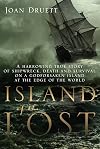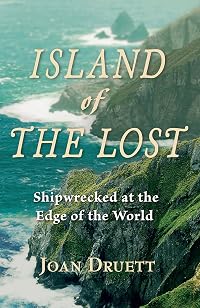
Island of the Lost: Shipwrecked at the Edge of the World
by Joan Druett
On This Page
Description
Auckland Island is a godforsaken place in the middle of the Southern Ocean, 285 miles south of New Zealand. With year-round freezing rain and howling winds, it is one of the most forbidding places in the world. To be shipwrecked there means almost certain death.In 1864 Captain Thomas Musgrave and his crew of four aboard the schooner Grafton wreck on the southern end of the island. Utterly alone in a dense coastal forest, plagued by stinging blowflies and relentless rain, Captain Musgrave show more inspires his men to take action. With barely more than their bare hands, they build a cabin and, remarkably, a forge, where they manufacture their tools.Incredibly, at the same time on the opposite end of the island, the Invercauld wrecks during a horrible storm. Nineteen men stagger ashore. Unlike Captain Musgrave, the captain of the Invercauld falls apart given the same dismal circumstances. His men fight and split up; some die of starvation, others turn to cannibalism. Only three survive. Musgrave and all of his men not only endure for nearly two years, they also plan their own astonishing escape, setting off on one of the most courageous sea voyages in history. show lessTags
Recommendations

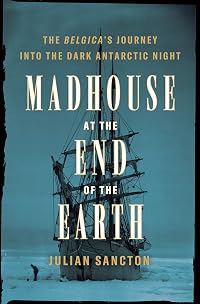
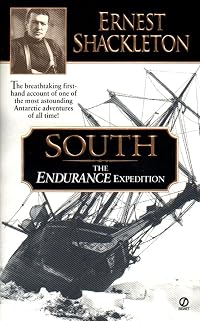
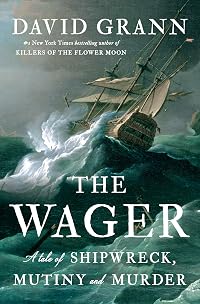
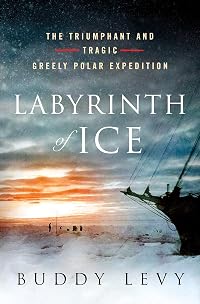
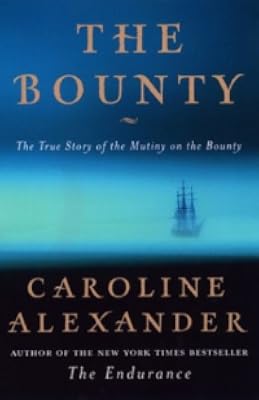
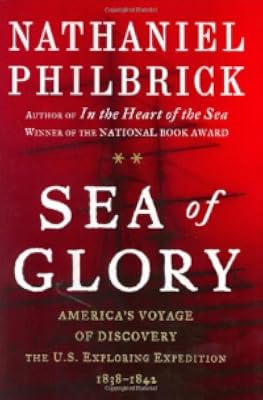
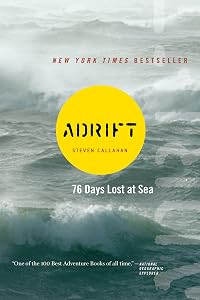
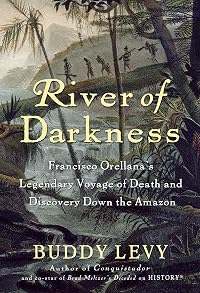

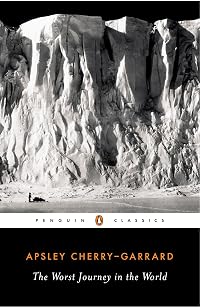
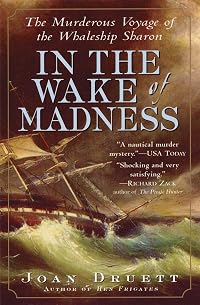
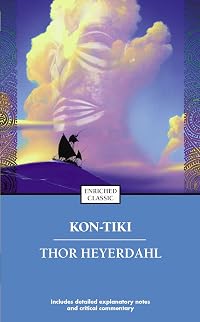
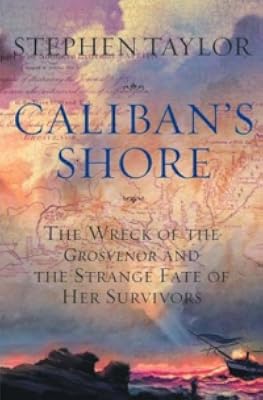




Member Recommendations
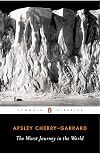
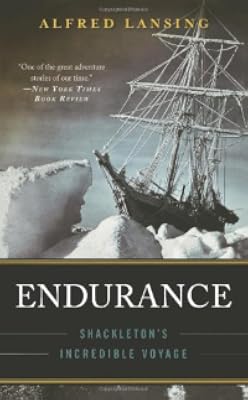
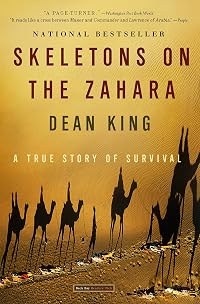
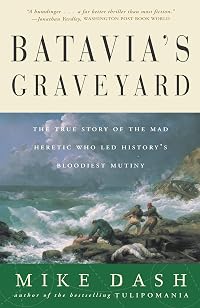
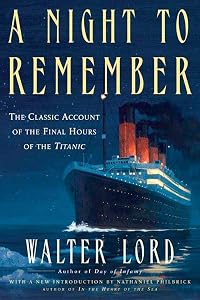
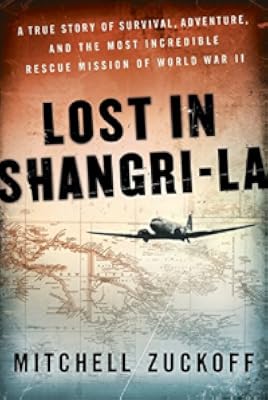
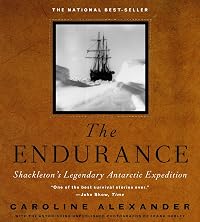
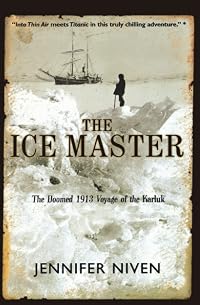
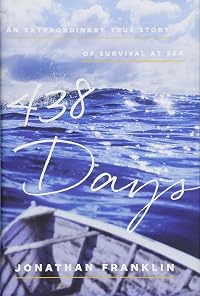
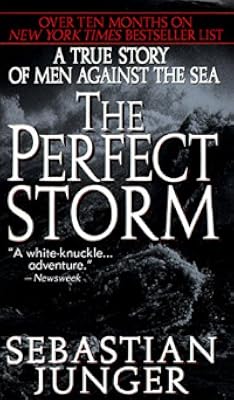
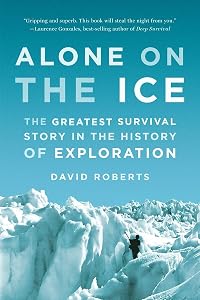
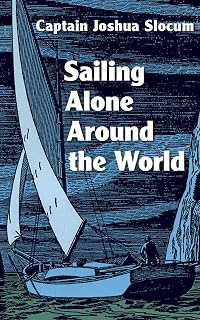
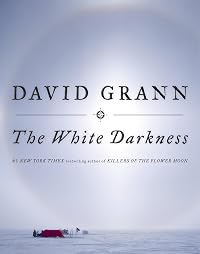
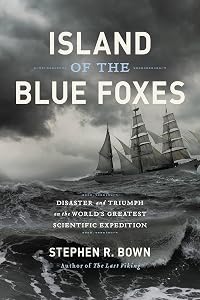
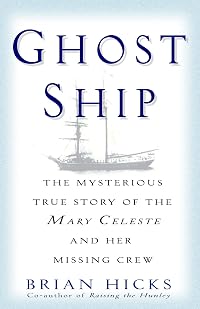
rebeccanyc Both of these books testify to the ability of people in hazardous and terrifying physical conditions to use both hard work and their mental and emotional strength to survive.

Stbalbach Grafton shipwreck survivor. In the 19th century, this was the best-selling account of the shipwreck and the inspiration for Verne's The Mysterious Island.

Stbalbach Grafton shipwreck survivor.
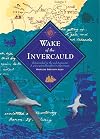
Wake of the Invercauld: Shipwrecked in the Sub-Antarctic: A Great-Granddaughter's Pilgrimage by Madelene Allen
Stbalbach Great-grandaughter of Invercauld survivor Robert Holding.
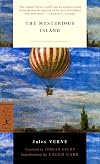
Stbalbach The Mysterious Island was inspired by the real-life shipwreck told in Island of the Lost
Member Reviews
I have read the accounts of a few subantarctic shipwrecks, but never one which was as recently written and one that was so well-researched. This story was compiled from survivor accounts, official documents and newspaper clippings concerning the wreck of the Grafton in 1864 on the Auckland Islands, 300 miles south of New Zealand. It tells the story of the 5 survivors as they salvage what they can from their wrecked ship, and make a life for themselves in their wait for rescue.
The Auckland Islands are a harsh place. The main island has immense cliffs the entire western coast, it is cold, wet and tremendous storms batter it winter-long. The forest is gnarly, boggy and virtually impenetrable. The survivors faced the most shocking show more conditions as they wintered over, and, frequently on the brink of starvation, spent their days foraging, hunting, and trying as they could to improve their shelter.
There area many amazing things about this story, but one of the most incredible is that during their "stay", another ship wrecked at the other end of the island, a mere 20 miles away, and the parallel story of those survivors is also told. Each group knew nothing of the other. The most recent castaways faced even harsher circumstances. We come to see the value in having organisation and good leadership, the fortune of having a wrecked ship to salvage, and the importance of those first few days in getting food and shelter fast. I think this book is rare(ish),but find it if you can as it is a rollicking story- and true at that. show less
The Auckland Islands are a harsh place. The main island has immense cliffs the entire western coast, it is cold, wet and tremendous storms batter it winter-long. The forest is gnarly, boggy and virtually impenetrable. The survivors faced the most shocking show more conditions as they wintered over, and, frequently on the brink of starvation, spent their days foraging, hunting, and trying as they could to improve their shelter.
There area many amazing things about this story, but one of the most incredible is that during their "stay", another ship wrecked at the other end of the island, a mere 20 miles away, and the parallel story of those survivors is also told. Each group knew nothing of the other. The most recent castaways faced even harsher circumstances. We come to see the value in having organisation and good leadership, the fortune of having a wrecked ship to salvage, and the importance of those first few days in getting food and shelter fast. I think this book is rare(ish),but find it if you can as it is a rollicking story- and true at that. show less
In 1864, two sailing vessels both wreck on tiny Auckland Island, in the sub-Antarctic, 300 miles south of New Zealand. The Grafton, captained by Thomas Musgrave, is dashed ashore on January 3, in a bay on the southern side of the island while scouting for seal hunting grounds. All 5 crew members survived. Four months later, the Invercauld, captained by George Dalgarno, is wrecked into the cliffs on the northern side of the island en route from Australia to Peru. Of 25 crew, 19 made it to shore alive. Neither party is aware of the other, or ever makes contact.
Musgrave put his men to work to build a shelter from the Grafton wreckage. He assigned them each daily responsibilities, and they spend their time in industrious pursuits--hunting show more seals for meat and clothing, gathering wood for fire, building a sturdy shelter, finding edible plants, writing in journals, solving daily challenges, and teaching each other from the books that survived. Each had responsibilities, kept to a schedule, and cared for one another. In an extraordinary feat, after a year awaiting rescue, they spent the next 6 months constructing a fragile but seaworthy dinghy and sailed to rescue to a southern island of New Zealand 300 miles to the north.
There is no such organization or optimism among the Invercauld survivors, most of whom die in the ensuing days, weeks, and months. Disunited and despairing, they scatter and each pursue their own objectives, and ultimately most of them paid with their lives.
This is a deftly woven story of survival and demise, taken from the original journals, letters, and newspaper accounts of those involved. Ultimately, it's a tale of the difference that resources (where they landed on the island, the food available to them, the wreckage that was salvageable) make, but also that resourcefulness (how they spent their time, what kept them hoping, how they worked together) makes in who lived and who died.
I found this true story to be expertly researched and crafted by author Joan Druett. I was notably fascinated by Musgrave and his men and how they managed to survive for so long, and then have the courage to rescue themselves, in a sense, through sheer force of will and ingenuity.
There are lessons here, but they are subtle, and left to the reader to filter from these stories. A tremendous tale of survival, "Island of the Lost" is well worth the read and goes down as one of the best I have read in this, one of my favorite genres (exploration, discovery, survival). This book was a gift from my wife for Christmas 2021, and she nailed it. show less
Musgrave put his men to work to build a shelter from the Grafton wreckage. He assigned them each daily responsibilities, and they spend their time in industrious pursuits--hunting show more seals for meat and clothing, gathering wood for fire, building a sturdy shelter, finding edible plants, writing in journals, solving daily challenges, and teaching each other from the books that survived. Each had responsibilities, kept to a schedule, and cared for one another. In an extraordinary feat, after a year awaiting rescue, they spent the next 6 months constructing a fragile but seaworthy dinghy and sailed to rescue to a southern island of New Zealand 300 miles to the north.
There is no such organization or optimism among the Invercauld survivors, most of whom die in the ensuing days, weeks, and months. Disunited and despairing, they scatter and each pursue their own objectives, and ultimately most of them paid with their lives.
This is a deftly woven story of survival and demise, taken from the original journals, letters, and newspaper accounts of those involved. Ultimately, it's a tale of the difference that resources (where they landed on the island, the food available to them, the wreckage that was salvageable) make, but also that resourcefulness (how they spent their time, what kept them hoping, how they worked together) makes in who lived and who died.
I found this true story to be expertly researched and crafted by author Joan Druett. I was notably fascinated by Musgrave and his men and how they managed to survive for so long, and then have the courage to rescue themselves, in a sense, through sheer force of will and ingenuity.
There are lessons here, but they are subtle, and left to the reader to filter from these stories. A tremendous tale of survival, "Island of the Lost" is well worth the read and goes down as one of the best I have read in this, one of my favorite genres (exploration, discovery, survival). This book was a gift from my wife for Christmas 2021, and she nailed it. show less
Joan Druett's Island of the Lost is an impeccably researched, well-written, well-presented history of two concurrent wrecks on the Auckland Islands in the late 19th century.
Her easy style balances journalistic integrity with the need to captivate the reader, and holds you from the first paragraph and never lags.
Overall, the stories of these two groups of shipwrecked sailors is a keen contrast between the higher ideals and purposes of humans, and our more base, predatory instincts. In fact, the actions of these real, historical people will both astonish and disgust you.
Oh, and now Auckland Islands is now the second place on earth I would never wish to visit unless I had a death-wish.
Her easy style balances journalistic integrity with the need to captivate the reader, and holds you from the first paragraph and never lags.
Overall, the stories of these two groups of shipwrecked sailors is a keen contrast between the higher ideals and purposes of humans, and our more base, predatory instincts. In fact, the actions of these real, historical people will both astonish and disgust you.
Oh, and now Auckland Islands is now the second place on earth I would never wish to visit unless I had a death-wish.
Very, very satisfying; I do love a good disaster nonfiction! And this is such a bizarre story! Five men are shipwrecked on a forbidding, frozen lump of land (the ship being outfitted with shoddy equipment by landlubbing jerks); they surv-thrive through the sort of gumption that one associates with redheaded orphans.
Four months later there comes another shipwreck to the island -- although the terrain is frustrating enough, and the habitations separated enough that the groups never meet (!) even when a ship comes (!!) and takes away one party but not the other (!!!).
HEARTBREAKING.
A certain amount of fictionalization necessarily creeps into non-fiction and it usually aggravates me -- but in this case the main sailors kept (threadbare) show more journals and wrote memoirs, so. It helps. I appreciate the author's afterword, too; she explains which castaway's journal she chose to follow in which instance, how she determined likely veracity (sometimes by using sea lion breeding schedules), all that.
It's good to admit to uncertainty.
Especially because THESE PEOPLE MADE SOAP AND CONCRETE AND BUILT A BELLOWS AND SHIT. I mean. Who would believe that? except ... they left the tannery and forge and everything on the island, so clearly they actually did it. Ridiculous, and humbling. I can't keep my laundry on-track.
read this in an afternoon. show less
Four months later there comes another shipwreck to the island -- although the terrain is frustrating enough, and the habitations separated enough that the groups never meet (!) even when a ship comes (!!) and takes away one party but not the other (!!!).
HEARTBREAKING.
A certain amount of fictionalization necessarily creeps into non-fiction and it usually aggravates me -- but in this case the main sailors kept (threadbare) show more journals and wrote memoirs, so. It helps. I appreciate the author's afterword, too; she explains which castaway's journal she chose to follow in which instance, how she determined likely veracity (sometimes by using sea lion breeding schedules), all that.
It's good to admit to uncertainty.
Especially because THESE PEOPLE MADE SOAP AND CONCRETE AND BUILT A BELLOWS AND SHIT. I mean. Who would believe that? except ... they left the tannery and forge and everything on the island, so clearly they actually did it. Ridiculous, and humbling. I can't keep my laundry on-track.
read this in an afternoon. show less
Not only a fascinating survival story, but an interesting study in who survives and who doesn't. As others have noted, there is a lot of gory detail about hunting sea lions; I found it appropriate, though, as the experiences of these men were quite brutal and it does them an injustice to ignore the realities of what surviving actually involves. The ingenuity of the crew of the Grafton is impressive, although I think their unity owes far more to Raynal than to Captain Musgrove, whose depressive nature prevented him being an effective leader. The contrasting story of the crew of the Invercauld very clearly sets out the personal attributes that promote survival without ignoring the element of chance.
Druett balances the stories effectively show more and keeps the narrative moving at an engaging clip. I hate to call this tale enjoyable, steeped as it is in the very real suffering of real people, but it is an entertaining read. show less
Druett balances the stories effectively show more and keeps the narrative moving at an engaging clip. I hate to call this tale enjoyable, steeped as it is in the very real suffering of real people, but it is an entertaining read. show less
In 1864, two ships wrecked on Auckland Island, an isolated island group in the subantarctic ocean south of New Zealand. Remarkably, during their time on the island, neither band of survivors knew of the other's existence. The first band forged a brotherhood of mutual assistance and survival, while the other collapsed into anarchy, starvation, and death.
This is a unique study in the crucial role leadership plays in a crisis. To be fair, circumstances also play their role. The wrecked sailors who died almost to a man washed ashore much closer to winter, and in a region of the island with fewer food resources. Among the other band of survivors, the unique value of François Raynal is almost incalculable — a man gifted with training in show more engineering, experience managing groups of men, and hardscrabble skills extracted from ten years in the Australian gold fields.
Still, circumstances alone can't explain the dogged determination with which one group of men worked together to survive, and the speed with which the other group of men fell apart and died. No one can discount the true hinge on which fate turns: leaders who devote themselves to the wellbeing of their men, and leaders who devote themselves to serving their own ends. The stark difference between these two types of leaders meant the difference between life and death on opposite ends of a single island in one storm-tossed year. show less
This is a unique study in the crucial role leadership plays in a crisis. To be fair, circumstances also play their role. The wrecked sailors who died almost to a man washed ashore much closer to winter, and in a region of the island with fewer food resources. Among the other band of survivors, the unique value of François Raynal is almost incalculable — a man gifted with training in show more engineering, experience managing groups of men, and hardscrabble skills extracted from ten years in the Australian gold fields.
Still, circumstances alone can't explain the dogged determination with which one group of men worked together to survive, and the speed with which the other group of men fell apart and died. No one can discount the true hinge on which fate turns: leaders who devote themselves to the wellbeing of their men, and leaders who devote themselves to serving their own ends. The stark difference between these two types of leaders meant the difference between life and death on opposite ends of a single island in one storm-tossed year. show less
This is a non-fiction story of shipwreck and survival, set in the seas south of New Zealand in the early 1860s. A crew of five departed Sydney, Australia in a small vessel, seeking silver laden ore on uninhabited Campbell Island. In route home, they were shipwrecked on nearby Auckland Island, likewise uninhabited. This is mainly a story of how they survived their lengthy isolation.
Midway through the story, however, a second ship, quite a bit larger, was likewise dashed upon the rocky shores, at a point some distance from the original crew. Nineteen people survived this wreck, however their experience on Auckland Island was far different.
I can’t say that this is an outstanding read. It is quite short, and while it contains a good bit show more of interesting information, there just isn’t much story here. The ingenuity of both groups, especially the former, is quite impressive. Today, we just go to the story and get some nails, or buy groceries. These folks manufactured cement and soap. They constructed a forge with bellows and crafted the tools and items they needed from scrap metal salvaged from their shipwreck. They built a water tight cabin, with fireplace and survived for 18 months.
Especially striking was the different experience of the two groups of shipwrecked sailors, especially as it relates to the interpersonal dynamic and the leadership skills exhibited by one and not the other. This is short read and worth the time to read, especially if you enjoy stories of this type, show less
Midway through the story, however, a second ship, quite a bit larger, was likewise dashed upon the rocky shores, at a point some distance from the original crew. Nineteen people survived this wreck, however their experience on Auckland Island was far different.
I can’t say that this is an outstanding read. It is quite short, and while it contains a good bit show more of interesting information, there just isn’t much story here. The ingenuity of both groups, especially the former, is quite impressive. Today, we just go to the story and get some nails, or buy groceries. These folks manufactured cement and soap. They constructed a forge with bellows and crafted the tools and items they needed from scrap metal salvaged from their shipwreck. They built a water tight cabin, with fireplace and survived for 18 months.
Especially striking was the different experience of the two groups of shipwrecked sailors, especially as it relates to the interpersonal dynamic and the leadership skills exhibited by one and not the other. This is short read and worth the time to read, especially if you enjoy stories of this type, show less
Members
- Recently Added By
Lists

Top Five Books of 2021
604 works; 181 members

Days of yarrr
13 works; 1 member

Club Read's Recommended Nonfiction Written by Women
618 works; 30 members

The Edge of Survival: Tales from Beyond
12 works; 1 member

Books Cited in Blueprint by Nicholas Christakis
261 works; 1 member
Author Information

33 Works 1,889 Members
Joan Druett's previous books have won many awards, including a New York Public Library Book to Remember citation, a John Lyman Award for Best Book of American Maritime History, and the Kendall Whaling Museum's L. Byrne Waterman Award
Work Relationships
Common Knowledge
- Original publication date
- 2007
- People/Characters
- François Raynal; Thomas Musgrave; George Dalgarno; Robert Holding
- Important places
- Auckland Islands; Steward Island; Campbell Island
- Epigraph
- It has seldom fallen to our lot as journalists to record a more remarkable instance of escape from the perils of shipwreck, and subsequent providential deliverance from the privations of a desolate island, after two years' so... (show all)journ, than that we have now to furnish. -Southland News, July 29, 1865
The man who has experienced shipwreck shudders even at a calm sea. -Ovid - Dedication
- For Roberta McIntyre, whose early encouragement could not have been more well timed.
- First words
- It was October 1863, early springtime in Sydney, Australia.
- Last words
- (Click to show. Warning: May contain spoilers.)Thomas Musgrave, without a doubt, would have thoroughly approved.
Classifications
- Genres
- General Nonfiction, History, Nonfiction, Travel
- DDC/MDS
- 919.399 — History & geography Geography & travel Geography of and travel in Australasia, Pacific Ocean islands, Atlantic Ocean islands, Arctic islands, Antarctica and on extraterrestrial worlds New Zealand Otago Region, Southland Region, outlying islands Outlying islands
- LCC
- G525 .D78 — Geography, Anthropology and Recreation Geography (General) Adventures, shipwrecks, buried treasure, etc.
- BISAC
Statistics
- Members
- 700
- Popularity
- 40,781
- Reviews
- 43
- Rating
- (3.94)
- Languages
- English
- Media
- Paper, Audiobook, Ebook
- ISBNs
- 9
- ASINs
- 5