On This Page
Description
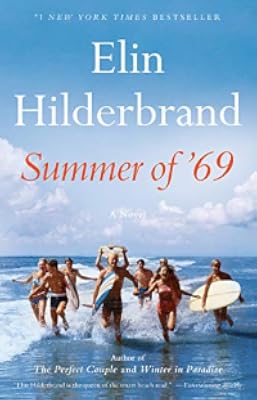
Four siblings experience the drama, intrigue, and upheaval of the '60s summer when everything changed in Elin Hilderbrand's #1 New York Times bestselling historical novel.Welcome to the most tumultuous summer of the twentieth century. It's 1969, and for the Levin family, the times they are a-changing. Every year the children have looked forward to spending the summer at their grandmother's historic home in downtown Nantucket. But like so much else in America, nothing is the same: Blair, the show more oldest sister, is marooned in Boston, pregnant with twins and unable to travel. Middle sister Kirby, caught up in the thrilling vortex of civil rights protests and determined to be independent, takes a summer job on Martha's Vineyard. Only-son Tiger is an infantry soldier, recently deployed to Vietnam. And thirteen-year-old Jessie suddenly feels like an only child, marooned in the house with her out-of-touch grandmother and her worried mother, while each of them hides a troubling secret.
As the summer heats up, Ted Kennedy sinks a car in Chappaquiddick, man flies to the moon, and Jessie and her family experience their own dramatic upheavals along with the rest of the country. In her first historical novel, rich with the details of an era that shaped both a nation and an island thirty miles out to sea, Elin Hilderbrand once again earns her title as queen of the summer novel. show less
Tags
Recommendations
































Member Reviews
The delight of any Elin Hilderbrand book is the wonderful quirky cast of characters and her ability to transport you to her beach destinations for a mini-vacation. We’re back on Nantucket (and Martha’s Vineyard) for the summer, staying in seaside cottages, going to the beach, enjoying Portuguese bread and BLTs, lobster, corn coleslaw and strawberry shortcake (the food descriptions in this one were absolutely decadent.)
It’s the summer of 1969, David and Kate have four children. Their oldest daughter Blair is in an unhappy marriage, about to give birth, another daughter Kirby is part of the women’s rights movement, their son Tiger is fighting in Vietnam, and daughter Jessie is stuck under her grandmother’s thumb, being dragged show more to the club and forced into tennis lessons. Each person’s individual story was woven into a larger tapestry, and it was one of those large family epics that really worked with lots of POV because we got to relax and spend a while in each segment of the story.
Absolutely loved this tale. (And, Elin Hildebrand, I’m still holding out that you will one day write another AMAZING Christmas series, because even though you are absolute queen of the beach read, you are soooo good at bringing the Christmas, too! I will always treasure Winter Street!)
Trigger Warnings: sexual assault
Please excuse typos/name misspellings. Entered on screen reader. show less
It’s the summer of 1969, David and Kate have four children. Their oldest daughter Blair is in an unhappy marriage, about to give birth, another daughter Kirby is part of the women’s rights movement, their son Tiger is fighting in Vietnam, and daughter Jessie is stuck under her grandmother’s thumb, being dragged show more to the club and forced into tennis lessons. Each person’s individual story was woven into a larger tapestry, and it was one of those large family epics that really worked with lots of POV because we got to relax and spend a while in each segment of the story.
Absolutely loved this tale. (And, Elin Hildebrand, I’m still holding out that you will one day write another AMAZING Christmas series, because even though you are absolute queen of the beach read, you are soooo good at bringing the Christmas, too! I will always treasure Winter Street!)
Trigger Warnings:
Please excuse typos/name misspellings. Entered on screen reader. show less
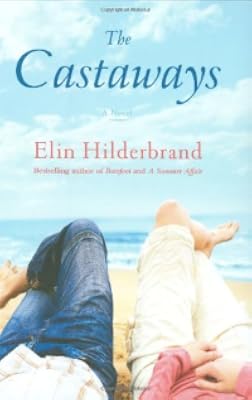
Elin Hilderbrand is not only the queen of summer reading but she is also an auto-read author for me. I remember taking her book The Castaways on our 2009 honeymoon trip to St. John and it was just the beginning of a long love affair with her writing. At that point, I read everything on her backlist and have read every single one of her book releases since then.
Elin Hilderbrand June book releases always signify the unofficial start of summer for me. Summer of ‘69 was released on June 18th but I grabbed it a couple of weeks early in my Book of the Month box and couldn’t wait to dive in.
I knew going into it that this book would be a little different than her others. While it was still set on the beautiful island of Nantucket, she show more took us back to 1969 in her first historical fiction novel. I always love reading the authors notes at the beginning of books and Hilderbrand shared that Summer of '69 was in honor of her 50th birthday, and I loved that connection so much.
Summer of '69 delivered with Hilderbrand's gift of the summer beach read while also diving into some historic events like the lunar landing, The Vietnam War and Chappaquiddick.
We meet the Levin family and with this, there is a personal look at feminist issues, the civil rights movement and the life changes and transitions for this family. This book was packed full of powerful moments but was also an enjoyable coming of age story. There were many different personalities and perspectives in this story which made it feel multifaceted while also being a completely engrossing read.
Having grown up in the 80s and 90s I couldn't connect personally with this time period but she was able to bring me right there with her vivid details and ability to connect the music and other pop culture of this time in history. I highly recommend adding this to your summer reading list! show less
Elin Hilderbrand June book releases always signify the unofficial start of summer for me. Summer of ‘69 was released on June 18th but I grabbed it a couple of weeks early in my Book of the Month box and couldn’t wait to dive in.
I knew going into it that this book would be a little different than her others. While it was still set on the beautiful island of Nantucket, she show more took us back to 1969 in her first historical fiction novel. I always love reading the authors notes at the beginning of books and Hilderbrand shared that Summer of '69 was in honor of her 50th birthday, and I loved that connection so much.
Summer of '69 delivered with Hilderbrand's gift of the summer beach read while also diving into some historic events like the lunar landing, The Vietnam War and Chappaquiddick.
We meet the Levin family and with this, there is a personal look at feminist issues, the civil rights movement and the life changes and transitions for this family. This book was packed full of powerful moments but was also an enjoyable coming of age story. There were many different personalities and perspectives in this story which made it feel multifaceted while also being a completely engrossing read.
Having grown up in the 80s and 90s I couldn't connect personally with this time period but she was able to bring me right there with her vivid details and ability to connect the music and other pop culture of this time in history. I highly recommend adding this to your summer reading list! show less
A beach read with a touch of substance but with no fear that things won't work out all right. Excellent to sink into and hang out in a family's drama and interactions. Remarkably compelling for a book with no plot to speak of and developments you know are coming all along. A "brain turned down but not off" bit of entertainment about people peopling.
I only bought this because of the year in which the story is set, and the 'beach read' recommendation nearly put me off, but I absolutely loved every day spent with the Nichols/Foley/Levin family on Nantucket island during the summer of 1969! Readers who get bored with Anne Tyler's books because 'nothing happens!' will probably feel the same about this novel, but I prefer character-centric stories so this was wonderfully enjoyable.
Based on the birth of the author and her twin brother, Summer of '69 does feature two key historical events - the moon landing and Mary Jo Kopechne's death at Chappaquiddick - but the heart of the story is three generations of one family and their annual summer vacation on Nantucket. Grandmother and matriarch show more Exalta - what a name! - takes her daughter Kate and youngest grandchild Jessie with her to the family home, All's Fair. Kate is racked with guilt and fear because her only son, Tiger (an annoying nickname that I never adjusted to!), has been drafted and sent to fight in Vietnam, so she takes to the bottle. In Boston, Kate's eldest daughter Blair is pregnant but suspects that her husband is cheating on her. Second daughter Kirby has chosen to take a hotel job on Martha's Vineyard instead of staying with her family. And youngest child Jessie, from Kate's second marriage, is falling in love for the first time at thirteen with the mysterious grandson of All Fair's caretaker. So no, nothing much happens, except that every page made me love these women more and more. They all have their secrets, of course - this is a 'beach read'! - but I didn't need dramatic hooks to keep me reading.
I'm glad that everyone found their happy ever after, but even more grateful that Tiger's fate wasn't neatly tied in a bow with that 'Hollywood ending' - that would have been too much! A delightful read with quirky and sympathetic characters who felt like a real family. show less
Based on the birth of the author and her twin brother, Summer of '69 does feature two key historical events - the moon landing and Mary Jo Kopechne's death at Chappaquiddick - but the heart of the story is three generations of one family and their annual summer vacation on Nantucket. Grandmother and matriarch show more Exalta - what a name! - takes her daughter Kate and youngest grandchild Jessie with her to the family home, All's Fair. Kate is racked with guilt and fear because her only son, Tiger (an annoying nickname that I never adjusted to!), has been drafted and sent to fight in Vietnam, so she takes to the bottle. In Boston, Kate's eldest daughter Blair is pregnant but suspects that her husband is cheating on her. Second daughter Kirby has chosen to take a hotel job on Martha's Vineyard instead of staying with her family. And youngest child Jessie, from Kate's second marriage, is falling in love for the first time at thirteen with the mysterious grandson of All Fair's caretaker. So no, nothing much happens, except that every page made me love these women more and more. They all have their secrets, of course - this is a 'beach read'! - but I didn't need dramatic hooks to keep me reading.
I'm glad that everyone found their happy ever after, but even more grateful that Tiger's fate wasn't neatly tied in a bow with that 'Hollywood ending' - that would have been too much! A delightful read with quirky and sympathetic characters who felt like a real family. show less
For Kate Foley Levin, the annual family pilgrimage in summer 1969 to her mother’s home in Nantucket will feel sparse and lonely. Her only son has been drafted and is an infantry grunt in Vietnam; any moment, she expects the telegram announcing his death. Kate responds by withdrawing to finds solace in the bottle.
Meanwhile, her eldest, pregnant daughter can’t leave Boston to join the family, for her due date is weeks away, and she’s too uncomfortable to travel. Said daughter also suspects her geeky MIT husband, who consults for the Apollo space program, is cheating on her.
The next eldest daughter, a contentious soul, has annoyed Kate by making a mess of college and getting arrested at protest marches. But she won’t be there to show more bother anyone, because she has a job on Martha’s Vineyard, where, unbeknownst to Mom, she falls for a Harvard man who happens to be Black.
Jessie Levin, half-sister to these siblings (her father, David, is Kate’s second husband) needs her mother more than ever. Just turned thirteen, she feels utterly bereft without her family, especially her half-brother, to whom she’s very close. She’s also fighting several losing battles, most notably with her bigoted, vicious grandmother, Exalta, which Kate might have helped with, but forget that. One firefight concerns Jessie’s identification with her (purely cultural) Jewishness, a link she shares with her father; she’s freaked out that Exalta’s an anti-Semite.
So we’ve got the Vietnam War, to which the Levins and Foleys are opposed, and a son at risk. We have possible marital infidelity, alcoholism, political protest, interracial romance, and anti-Semitism. As if that weren’t enough, we have sexual and physical abuse, feminism, Jessie’s sexual awakening, and abortion. And oh, yes, Jessie’s reading The Diary of Anne Frank for school. Summer of ’69 purports to be beach reading, but that’s one hell of a load.
What we don’t have is the Sixties — the lingo, the vibe, the sense that this was an unusual decade, the belief that so much was possible yet so much was wrong, and that you felt compelled to take sides and make a statement. Hilderbrand shows none of that.
She’s strong on fashion, issues, and headlines, but those are period details, museum exhibits. The summer of 1969 was my last before my senior year of high school, so we share a fascination for that moment (she was born that July). But, much as I enjoy re-creations of that time and salute her attempt, I don’t think she gets it.
In her favor, she can keep the pages turning. She’s a keen observer of family dynamics, and she manages to thread several narratives without missing a stitch. In her world, people don’t talk to each other, and the closer they are by blood, the less they say, because they have secrets to hide. She also has a friendly, drop-in-for-a-chat-dear-reader tone that makes her narrative pleasant company, like an easy-listening radio station.
But Hilderbrand’s ease cuts two ways. Despite the pain the characters suffer and the issues she raises, which couldn’t be more momentous, the treatment feels one-dimensional, like posed family snapshots. Everything seems too far away to hurt anybody for real. With so much simmering conflict and so little honesty, you’d think more would explode, and that’s why I finished the book. I wanted to know how Hilderbrand would resolve these conflicts—and I now know I wandered into Never-Never Land.
One problem’s the characterization. Kate’s controlling and craven by turns, and it’s not clear why. David’s a good guy with no depth, and the older sisters represent themes but lack compelling internal lives. Jessie’s the only character who seems reflective about what matters.
Yet this girl, intelligent and emotionally tuned in, gets upset that Anne Frank dies; she thinks the book shouldn’t have ended like that. The Holocaust! Who knew? Hilderbrand warps her narrative up, down, and sideways to let her characters find redemption and forgiveness and throws in the world’s most famous Holocaust victim, as though Anne defined those values. But don’t get me started on writers who co-opt a Jewish girl as a Christian saint, a Joan of Arc who turned the other cheek.
Let’s stay with Jessie, a perceptive, nominally Jewish child whose brother’s in the Viet Cong’s crosshairs. Her heart’s been broken, and she has a sense of painful reality, even if she doesn’t always understand the why or how. Maybe she unconsciously connects her brother’s fate with Anne’s. They’re both so good; how can they die?
That’s a worthy question, but Hilderbrand doesn’t stay there. Having shown how bad things can almost happen to good people, she bails them out by snapping her authorial fingers, relieving them of the hard work of living. Maybe that’s what a beach book is supposed to do, keep you at a distance from work. But in relying on that illusion of substance, Summer of ’69 trivializes its subject matter. show less
Meanwhile, her eldest, pregnant daughter can’t leave Boston to join the family, for her due date is weeks away, and she’s too uncomfortable to travel. Said daughter also suspects her geeky MIT husband, who consults for the Apollo space program, is cheating on her.
The next eldest daughter, a contentious soul, has annoyed Kate by making a mess of college and getting arrested at protest marches. But she won’t be there to show more bother anyone, because she has a job on Martha’s Vineyard, where, unbeknownst to Mom, she falls for a Harvard man who happens to be Black.
Jessie Levin, half-sister to these siblings (her father, David, is Kate’s second husband) needs her mother more than ever. Just turned thirteen, she feels utterly bereft without her family, especially her half-brother, to whom she’s very close. She’s also fighting several losing battles, most notably with her bigoted, vicious grandmother, Exalta, which Kate might have helped with, but forget that. One firefight concerns Jessie’s identification with her (purely cultural) Jewishness, a link she shares with her father; she’s freaked out that Exalta’s an anti-Semite.
So we’ve got the Vietnam War, to which the Levins and Foleys are opposed, and a son at risk. We have possible marital infidelity, alcoholism, political protest, interracial romance, and anti-Semitism. As if that weren’t enough, we have sexual and physical abuse, feminism, Jessie’s sexual awakening, and abortion. And oh, yes, Jessie’s reading The Diary of Anne Frank for school. Summer of ’69 purports to be beach reading, but that’s one hell of a load.
What we don’t have is the Sixties — the lingo, the vibe, the sense that this was an unusual decade, the belief that so much was possible yet so much was wrong, and that you felt compelled to take sides and make a statement. Hilderbrand shows none of that.
She’s strong on fashion, issues, and headlines, but those are period details, museum exhibits. The summer of 1969 was my last before my senior year of high school, so we share a fascination for that moment (she was born that July). But, much as I enjoy re-creations of that time and salute her attempt, I don’t think she gets it.
In her favor, she can keep the pages turning. She’s a keen observer of family dynamics, and she manages to thread several narratives without missing a stitch. In her world, people don’t talk to each other, and the closer they are by blood, the less they say, because they have secrets to hide. She also has a friendly, drop-in-for-a-chat-dear-reader tone that makes her narrative pleasant company, like an easy-listening radio station.
But Hilderbrand’s ease cuts two ways. Despite the pain the characters suffer and the issues she raises, which couldn’t be more momentous, the treatment feels one-dimensional, like posed family snapshots. Everything seems too far away to hurt anybody for real. With so much simmering conflict and so little honesty, you’d think more would explode, and that’s why I finished the book. I wanted to know how Hilderbrand would resolve these conflicts—and I now know I wandered into Never-Never Land.
One problem’s the characterization. Kate’s controlling and craven by turns, and it’s not clear why. David’s a good guy with no depth, and the older sisters represent themes but lack compelling internal lives. Jessie’s the only character who seems reflective about what matters.
Yet this girl, intelligent and emotionally tuned in, gets upset that Anne Frank dies; she thinks the book shouldn’t have ended like that. The Holocaust! Who knew? Hilderbrand warps her narrative up, down, and sideways to let her characters find redemption and forgiveness and throws in the world’s most famous Holocaust victim, as though Anne defined those values. But don’t get me started on writers who co-opt a Jewish girl as a Christian saint, a Joan of Arc who turned the other cheek.
Let’s stay with Jessie, a perceptive, nominally Jewish child whose brother’s in the Viet Cong’s crosshairs. Her heart’s been broken, and she has a sense of painful reality, even if she doesn’t always understand the why or how. Maybe she unconsciously connects her brother’s fate with Anne’s. They’re both so good; how can they die?
That’s a worthy question, but Hilderbrand doesn’t stay there. Having shown how bad things can almost happen to good people, she bails them out by snapping her authorial fingers, relieving them of the hard work of living. Maybe that’s what a beach book is supposed to do, keep you at a distance from work. But in relying on that illusion of substance, Summer of ’69 trivializes its subject matter. show less
Elin Hilberbrand’s latest Summer of ’69 is a disappointment from this beloved author. The nostalgia of the late sixties isn’t enough of a backdrop to warrant a contrived plot dealing with the anxiety of having a son in Vietnam, marriage turmoil, and coming of age. Elin does her usual excellent detail of Nantucket with a brilliant writer’s essence. Yet an emotional core is missing.
Summer of ‘69 is the story of a family, holidaying in Nantucket over the summer each year. We’re getting an insight into their life during the eponymous “Summer of ‘69”.
Exalta, the grandparent generation, is the matriarch of the family. Her husband, Penn, passed away years ago and is idolised by Exalta who herself has been a prisoner of the (sometimes questionable) morals of the time but is on her way to make the best of the tumultuous times.
Exalta’s daughter, Kate, is part of the parent generation. Her first husband, Wilder, who served in the Korean War, died shortly after coming home while cleaning his gun. Wilder is the father of Kate’s daughters Blair and Kirby and her son Tiger whereas her third daughter, Jessie, is show more her second husband’s child.
David, Jessie’s father, is a lawyer and made sure Kate got the life insurance payout after Wilder’s death.
David is such a great guy, that instead of talking to his binge-drinking wife, he passive-aggressively avoids her completely - to which she responds by buying something huge…
Tiger has quit college to go to war in Vietnam and finds out that’s what he wants to do. Of course, he’s the good kind of soldier and rescues a young boy whose mother was killed (but she was Viet Cong, of course!) instead of massacring innocent villagers, using Napalm and Agent Orange like the rest of them (cf. My Lai).
Kate is so upset about his leaving that she starts drinking heavily. Well, Kate, wait till you see the pictures of what Tiger and his nice buddies did in Vietnam...
Her oldest daughter, Blair, is married to Angus (whose brother, Joey, she used to date) and is expecting their first child. Angus is mostly married to his job at NASA, though, and is working on the planned moon landing while possibly cheating on Blair.
Blair’s sister Kirby is a bit younger; a young adult with a secret that changed her outlook on life. Kirby strives to be more independent and, thus, finds herself a job on Martha’s Vineyard instead of summering with her family in Nantucket.
From a young age on, Kirby wanted to be a rebel and, thus, went on a march with Dr. King and her teacher. She rather actively “befriends” the police (the nice guys routinely murdering coloured people in the USA, cf. George Floyd) while at it; slightly defeating the purpose.
She’s quite principled as well - unless the guy’s hot in which case she tells him off (his parents might not approve!) to later date him again when nobody will know it...
Finally, there’s Jessie: Jessie has just turned 13 and falls for Pick, 16, the son of the caretaker of her family’s summer home in Nantucket. Unfortunately for her, while he’s trying to get to second base with her, he’s working on another girl in parallel. Once that girl agrees to “go steady”, Jessie’s dismissed. Just in case, though, he keeps in touch with her as her penpal.
Jessie also routinely steals when under pressure but her grandmother, Exalta, quickly fixes that for her to “save face”. Exalta doesn’t really want to know the reasons either, she just grounds Jessie for a week.
There are other characters like Bill, Pick’s grandfather, Bill’s hippie child-neglecting commune-living daughter Lorraine (AKA Lavender), the grabby tennis teacher, the pseudo-feminist tennis teacher, some of the “upper echelon”, etc. etc. but you get the gist.
Why do I tell you all this when I usually just skip to the nitty-gritty? Because you should know what this book is about before you stumble into it, knowing nothing - like I did. I have no idea why this book made it to my “to-read” list and I probably wouldn’t have read it in the first place had I known what I was in for.
By now, you might come to the conclusion that I’m not exactly fond of “Summer of ‘69”. Surprisingly (and somewhat shamefully), that’s not the case. In fact, I really enjoyed reading this multi-generation family soap opera of a book.
Sure, while writing this review, I feel like I should hate every single person that is even mentioned in passing in this book and, yet, it’s a feel-good summer read which is what I wanted. And now a storm is brewing here - must be karma for actually liking this.
A guilty-feeling four stars.
Blog | Facebook | Twitter | Instagram show less
Exalta, the grandparent generation, is the matriarch of the family. Her husband, Penn, passed away years ago and is idolised by Exalta who herself has been a prisoner of the (sometimes questionable) morals of the time but is on her way to make the best of the tumultuous times.
Exalta’s daughter, Kate, is part of the parent generation. Her first husband, Wilder, who served in the Korean War, died shortly after coming home while cleaning his gun. Wilder is the father of Kate’s daughters Blair and Kirby and her son Tiger whereas her third daughter, Jessie, is show more her second husband’s child.
David, Jessie’s father, is a lawyer and made sure Kate got the life insurance payout after Wilder’s death.
David is such a great guy, that instead of talking to his binge-drinking wife, he passive-aggressively avoids her completely - to which she responds by buying something huge…
Tiger has quit college to go to war in Vietnam and finds out that’s what he wants to do. Of course, he’s the good kind of soldier and rescues a young boy whose mother was killed (but she was Viet Cong, of course!) instead of massacring innocent villagers, using Napalm and Agent Orange like the rest of them (cf. My Lai).
Kate is so upset about his leaving that she starts drinking heavily. Well, Kate, wait till you see the pictures of what Tiger and his nice buddies did in Vietnam...
Her oldest daughter, Blair, is married to Angus (whose brother, Joey, she used to date) and is expecting their first child. Angus is mostly married to his job at NASA, though, and is working on the planned moon landing while possibly cheating on Blair.
Blair’s sister Kirby is a bit younger; a young adult with a secret that changed her outlook on life. Kirby strives to be more independent and, thus, finds herself a job on Martha’s Vineyard instead of summering with her family in Nantucket.
From a young age on, Kirby wanted to be a rebel and, thus, went on a march with Dr. King and her teacher. She rather actively “befriends” the police (the nice guys routinely murdering coloured people in the USA, cf. George Floyd) while at it; slightly defeating the purpose.
She’s quite principled as well - unless the guy’s hot in which case she tells him off (his parents might not approve!) to later date him again when nobody will know it...
Finally, there’s Jessie: Jessie has just turned 13 and falls for Pick, 16, the son of the caretaker of her family’s summer home in Nantucket. Unfortunately for her, while he’s trying to get to second base with her, he’s working on another girl in parallel. Once that girl agrees to “go steady”, Jessie’s dismissed. Just in case, though, he keeps in touch with her as her penpal.
Jessie also routinely steals when under pressure but her grandmother, Exalta, quickly fixes that for her to “save face”. Exalta doesn’t really want to know the reasons either, she just grounds Jessie for a week.
There are other characters like Bill, Pick’s grandfather, Bill’s hippie child-neglecting commune-living daughter Lorraine (AKA Lavender), the grabby tennis teacher, the pseudo-feminist tennis teacher, some of the “upper echelon”, etc. etc. but you get the gist.
Why do I tell you all this when I usually just skip to the nitty-gritty? Because you should know what this book is about before you stumble into it, knowing nothing - like I did. I have no idea why this book made it to my “to-read” list and I probably wouldn’t have read it in the first place had I known what I was in for.
By now, you might come to the conclusion that I’m not exactly fond of “Summer of ‘69”. Surprisingly (and somewhat shamefully), that’s not the case. In fact, I really enjoyed reading this multi-generation family soap opera of a book.
Sure, while writing this review, I feel like I should hate every single person that is even mentioned in passing in this book and, yet, it’s a feel-good summer read which is what I wanted. And now a storm is brewing here - must be karma for actually liking this.
A guilty-feeling four stars.
Blog | Facebook | Twitter | Instagram show less
Members
- Recently Added By
Lists

Best Beach Reads
99 works; 61 members

Top Five Books of 2019
387 works; 111 members

Books Read in 2019
4,052 works; 110 members

Books Read in 2021
5,361 works; 114 members
Author Information

67+ Works 35,821 Members
Elin Hilderbrand grew up in Collegeville, Pennsylvania. She graduated from Johns Hopkins University and the graduate fiction workshop at the University of Iowa. Her first book, The Beach Club, was published in 2000. Her other works include The Blue Bistro, Barefoot, A Summer Affair, The Castways, The Island, Summerland, The Matchmaker, Winter show more Street, The Rumor, and Winter Stroll. Elin's novels, Here's to Us and Winter Storms, made the New York Times bestseller list in 2016. (Bowker Author Biography) show less
Some Editions
Awards and Honors
Awards
Distinctions
Series

Common Knowledge
- Original publication date
- 2019-06
- People/Characters
- Katharine "Kate" Nichols Foley Levin; Jessica Levin; David Levin; Blair Foley Whalen; Angus Whalen; Joey Whalen (show all 25); Katharine "Kirby" Foley; Richard "Tiger" Pennington Foley; Exalta Nichols; Bill Crimmins; Pickford "Pick" Crimmins; Lorraine "Lavender" Crimmins; Darren Frazier; Patricia "Patty" O'Callahan; Luke Winslow; Rajani Patel; Bitsy Entwistle Dunscombe; Heather Dunscombe; Helen Dunscombe; Wilder Foley; Scottie Turbo; Genevieve Foley Whalen; George Nichols Whalen; Garrison Howe; Magee Johnson
- Important places
- Nantucket Island, Massachusetts, USA; Vietnam; Martha's Vineyard, Massachusetts, USA; Brookline, Massachusetts, USA
- Important events
- Woodstock Music and Art Fair; Vietnam War; Apollo 11 Moon Landing; Chappaquiddick Incident
- Dedication
- This book is for the three people who were with me in then early-morning hours of July 17, 1969.
My mother, Sally Hilderbrand, who went into labor four weeks before her due date.
My maternal grandmother, Ruth Hu... (show all)ling, who "ran every red light" to get my mother to the Boston Hospital for Women.
My twin brother, Eric Hilderbrand, who i imagine turned to me and said, "Are you ready for this?" - First words
- When the Selective Service notice comes for Tiger, Kate's first instinct is to throw it away.
- Quotations
- It seemed the cruelest circumstance life had to offer---that someone she loved so profoundly could hurt her so badly and still that love did not die. If anything, it intensified.
Ten or twenty years from now, when she looks back on the summer of 1969, she will think: That was the summer I became real. My own real person. - Last words
- (Click to show. Warning: May contain spoilers.)"Amen," he says.
- Blurbers
- Hubbard, Kim; Cahalan, Susannah; Mallette, Catherine
Classifications
Statistics
- Members
- 1,652
- Popularity
- 13,600
- Reviews
- 62
- Rating
- (3.73)
- Languages
- 5 — English, French, German, Russian, Spanish
- Media
- Paper, Audiobook, Ebook
- ISBNs
- 36
- ASINs
- 4