On This Page
Description
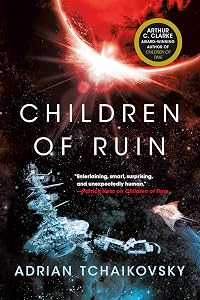
Thousands of years ago, Earth's terraforming program took to the stars. On the world they called Nod, scientists discovered alien life - but it was their mission to overwrite it with the memory of Earth. Then humanity's great empire fell, and the program's decisions were lost to time. Aeons later, humanity and its new spider allies detected fragmentary radio signals between the stars. They dispatched an exploration vessel, hoping to find cousins from old Earth. But those ancient terraformers show more woke something on Nod better left undisturbed. And it's been waiting for them. show lessTags
Recommendations





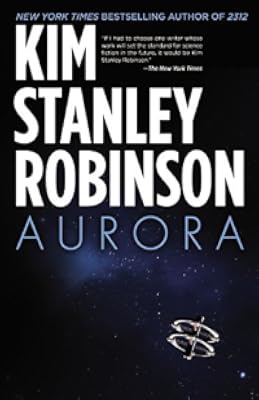
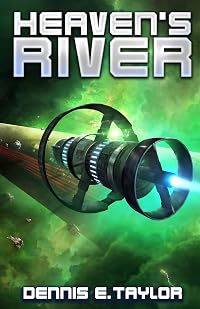
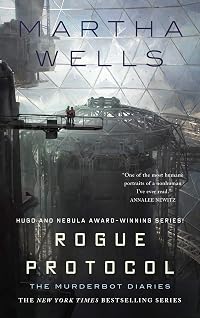
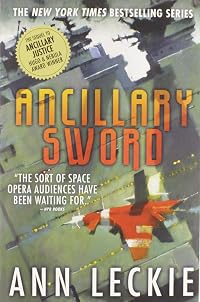


Member Recommendations
Member Reviews
Who do you like best? Spiders or octopi? That is the question.
Tchaikovsky impressed me yet again. I am so happy!
The second instalment in the Children of Time series begins at the same time as book 1. Here is another human terraforming mission. They are working on one planet (a watery world) and exploring another. A scientist decides to uplift some octopi.
The timeline jumps between this mission and spider/Human explorers from book 1 who have come to this solar system and discover a cephalopod civilization. They discover something else, too. Something creepy. Something horrible. Something scary. Something very alien. (I will have a very interesting reaction to the phrase “we are going on an adventure” from now on. Heeeeelp. IYKYK.)
I show more loved the relationships between spiders and Humans and how they have developed since book 1. The octopi are amazing! Their way of being is both alien and relatable, as are the workings of their civilization. Their language is beautifully imagined.
”…could be great-hearted enough to be happy that someone else was laughing, even if they couldn’t get the joke.”
This is a novel of ideas and world building, but I thought the characters here were more impressive and had more personality than in the first book. I could read three more books just about all these species getting to know each other and learning to communicate. The whole series is really about the acceptance of something alien. (The best character arc belongs to an AI, though.)
This is a wonderfully plotted novel, at times I could not put the book down. The ending is very-very-very satisfying!
P. S. I’d love to be friends with Paul the octopus. show less
Tchaikovsky impressed me yet again. I am so happy!
The second instalment in the Children of Time series begins at the same time as book 1. Here is another human terraforming mission. They are working on one planet (a watery world) and exploring another. A scientist decides to uplift some octopi.
The timeline jumps between this mission and spider/Human explorers from book 1 who have come to this solar system and discover a cephalopod civilization. They discover something else, too. Something creepy. Something horrible. Something scary. Something very alien. (I will have a very interesting reaction to the phrase “we are going on an adventure” from now on. Heeeeelp. IYKYK.)
I show more loved the relationships between spiders and Humans and how they have developed since book 1. The octopi are amazing! Their way of being is both alien and relatable, as are the workings of their civilization. Their language is beautifully imagined.
”…could be great-hearted enough to be happy that someone else was laughing, even if they couldn’t get the joke.”
This is a novel of ideas and world building, but I thought the characters here were more impressive and had more personality than in the first book. I could read three more books just about all these species getting to know each other and learning to communicate. The whole series is really about the acceptance of something alien. (The best character arc belongs to an AI, though.)
This is a wonderfully plotted novel, at times I could not put the book down. The ending is very-very-very satisfying!
P. S. I’d love to be friends with Paul the octopus. show less
Good fun! It's trying to do a little too much. It's the sequel to Children of Time, which was already doing quite a lot—a generation starship story, and a multi-generation evolution-of-intelligent-spiders story, and let's raise a glass to that becoming a genre, please. Anyway Children of Ruin follows an expedition of AI, humans, and spiders looking for more life (and other Earthly descendants), finds a system inhabited by both uplifted octopuses and a deadly native organism. My only complaint with this is that there's a little too much going on to let some of the bigger ideas breathe. In particular, Tchaikovsky's notion of how the octopus intelligence works is really intriguing, and could have been enough novelty for one book, with show more three very distinct elements—Crown, Reach, and Guise—that work in parallel. It's one of the best alien psychologies I've encountered, highly recommended for those interested in theory of mind. A very fun (though busy) novel. show less
I loved the first book in this series. And I love octopuses. So I went into this book confidently. And then, inside it, I encountered the screaming meemies on a level that would normally make me close the book, delete it, and possibly flee the area. I did manage to keep reading, so I guess I enjoyed this? But, wow, not nearly as much as I wanted to, hoped to, expected to.
This book does feature octopuses, and they are good octopuses, although in my opinion there’s not nearly enough octopus in this book by volume. Instead, there’s another lifeform, and I do not want to spoil this for anyone, but it is FUCKING TERRIFYING. I ended up reading more than a million words of fan fiction in between tiny snatches of this book, because I could show more barely deal with it. (I admit I’m a wimp when it comes to horror, and especially the specific type of horror this is, so take my opinion with a grain of salt, here. But: TERRIFYING. LIFEFORM.)
I mean, overall, this remains a hopeful book, or at least it has a hopeful ending. And I was delighted to see the author course-correct on at least some aspects of diversity; every human (and Portiid and octopus) is still firmly entrenched in the gender binary, but in this book there were queer people aplenty. (I mean, for the given value of “there are just a few humans in the book and we never really learn what queerness looks like in the non-human species,” but still. Of the roughly 8 significant human characters, 4 were queer.) And this was a fascinating commentary on terraforming, and on the value of difference, and on what it means to make contact between different species. It’s a good book. Just, you know. Hard to read.
So, to sum, I will gladly read other books in this series or by this author, but I — I will probably seek out some spoilers, first. Because did I mention that this book was a living nightmare in places? IT WAS. Worth reading, but — yikes. show less
This book does feature octopuses, and they are good octopuses, although in my opinion there’s not nearly enough octopus in this book by volume. Instead, there’s another lifeform, and I do not want to spoil this for anyone, but it is FUCKING TERRIFYING. I ended up reading more than a million words of fan fiction in between tiny snatches of this book, because I could show more barely deal with it. (I admit I’m a wimp when it comes to horror, and especially the specific type of horror this is, so take my opinion with a grain of salt, here. But: TERRIFYING. LIFEFORM.)
I mean, overall, this remains a hopeful book, or at least it has a hopeful ending. And I was delighted to see the author course-correct on at least some aspects of diversity; every human (and Portiid and octopus) is still firmly entrenched in the gender binary, but in this book there were queer people aplenty. (I mean, for the given value of “there are just a few humans in the book and we never really learn what queerness looks like in the non-human species,” but still. Of the roughly 8 significant human characters, 4 were queer.) And this was a fascinating commentary on terraforming, and on the value of difference, and on what it means to make contact between different species. It’s a good book. Just, you know. Hard to read.
So, to sum, I will gladly read other books in this series or by this author, but I — I will probably seek out some spoilers, first. Because did I mention that this book was a living nightmare in places? IT WAS. Worth reading, but — yikes. show less
Now, this book is fun.
Things Gets Weird
Adrian Tchaikovsky is good at weird. In fact, he's probably better at weird than he is at normal. The human characters in Children of Time who wanted normal things like a home or family were functional, but the cast of Children of Ruin are brought alive by their offbeat motivations and wide assortment of idiosyncracies. Now almost every character has as much dynamism of Avrana Kern did in the first novel. Not least of all Kern herself! Personalities like a scientist that wants to transform a planet into a paradise for hyperintelligent octopuses or an AI that resorts to unethical methods to experience human emotions are exactly what Tchaikovsky's stories require, and they really flourish here.
Life show more Is a Many-Splendored Thing
While the first book was pretty good, one way it fell short for me is that human-Portiid contact is pretty limited until the very last section of the book; and even then, it's characterized on the human side by disgust and fear that forecloses deeper interactions between the two species. This book shows a humanity that has evolved beyond that past. Human chauvinism is a well-worn sci-fi trope, so it's nice to see a culture that consciously rejects that in favor of an expansive interspecies cosmopolitanism. The fact that humans are a minority group on Kern's World also produces some interesting dynamics. That's not even talking about the new species that the novel introduces. If you're looking for human-alien interactions, you won't be disappointed.
Payoff
It's really satisfying to see Tchaikovsky develop the world of this series in new directions, because he's never satisfied with retreading old ground. As a result of the build-up performed in the previous novel, this book is able to go much further afield than the last. The species it focuses on go in completely different developmental directions that the Portiids, and their alienness is felt by the main characters (both Portiid and human) in a very different way. The more Tchaikovsky writes in this world, the more complex and strange the ideas he expresses through it become. With its central themes of translation and transhumanism, this is a book delighted by discovery and the unknown, and it is an absolute pleasure to read. show less
Things Gets Weird
Adrian Tchaikovsky is good at weird. In fact, he's probably better at weird than he is at normal. The human characters in Children of Time who wanted normal things like a home or family were functional, but the cast of Children of Ruin are brought alive by their offbeat motivations and wide assortment of idiosyncracies. Now almost every character has as much dynamism of Avrana Kern did in the first novel. Not least of all Kern herself! Personalities like a scientist that wants to transform a planet into a paradise for hyperintelligent octopuses or an AI that resorts to unethical methods to experience human emotions are exactly what Tchaikovsky's stories require, and they really flourish here.
Life show more Is a Many-Splendored Thing
While the first book was pretty good, one way it fell short for me is that human-Portiid contact is pretty limited until the very last section of the book; and even then, it's characterized on the human side by disgust and fear that forecloses deeper interactions between the two species. This book shows a humanity that has evolved beyond that past. Human chauvinism is a well-worn sci-fi trope, so it's nice to see a culture that consciously rejects that in favor of an expansive interspecies cosmopolitanism. The fact that humans are a minority group on Kern's World also produces some interesting dynamics. That's not even talking about the new species that the novel introduces. If you're looking for human-alien interactions, you won't be disappointed.
Payoff
It's really satisfying to see Tchaikovsky develop the world of this series in new directions, because he's never satisfied with retreading old ground. As a result of the build-up performed in the previous novel, this book is able to go much further afield than the last. The species it focuses on go in completely different developmental directions that the Portiids, and their alienness is felt by the main characters (both Portiid and human) in a very different way. The more Tchaikovsky writes in this world, the more complex and strange the ideas he expresses through it become. With its central themes of translation and transhumanism, this is a book delighted by discovery and the unknown, and it is an absolute pleasure to read. show less
Children of Ruin doubles everything good about the first book and drops all of the stuff I didn't like. A scientific expedition of Portiids and Humans has arrived at a star that has been broadcasting radio waves to find two new sentiences and all the hazards that encompass.
The easiest ones are uplifted octopodes, descendants of another Old Empire terraforming expedition. The octopodes have a truly bizarre cognitive framework, bifurcated between the emotional "I" of the Crown and the rational yet unspeaking tentacular Reach. Their creator left them high technology, enough to kickstart an undersea industrial base and space-faring capabilities, yet their civilization has been gripped by decades of fraught resource wars driven by show more overpopulation that their fluid and protean political system is unable to grapple with.
At least the Octopodes are neural, Earth-descendended. The other minds is the Nodians, some kind of nano-parasite that acts as an aggressively hegemonizing mindjacking swarm. With the terrifying refrain "We are going on an adventure!", Nod infected entities are deadly threats to Octopodes, as well as any humans and spiders they might encounter. It's up to a small group of Portiids, Humans, and an Avrala Kern fragment to navigate a deadly flux of mistranslation to find common ground and common peace. Children of Ruin is great work of modern space opera! show less
The easiest ones are uplifted octopodes, descendants of another Old Empire terraforming expedition. The octopodes have a truly bizarre cognitive framework, bifurcated between the emotional "I" of the Crown and the rational yet unspeaking tentacular Reach. Their creator left them high technology, enough to kickstart an undersea industrial base and space-faring capabilities, yet their civilization has been gripped by decades of fraught resource wars driven by show more overpopulation that their fluid and protean political system is unable to grapple with.
At least the Octopodes are neural, Earth-descendended. The other minds is the Nodians, some kind of nano-parasite that acts as an aggressively hegemonizing mindjacking swarm. With the terrifying refrain "We are going on an adventure!", Nod infected entities are deadly threats to Octopodes, as well as any humans and spiders they might encounter. It's up to a small group of Portiids, Humans, and an Avrala Kern fragment to navigate a deadly flux of mistranslation to find common ground and common peace. Children of Ruin is great work of modern space opera! show less
Adrian Tchaikovsky’s Children of Ruin, the sequel to the very good Children of Time, explores evolution, intelligence, and the complexities of interspecies communication and expands on the themes of its predecessor. However, the book lacks aspects that make Children of Time special. The characters, especially the new species, are underdeveloped, and the storytelling is replaced with boring explanations of overcomplicated events. He also added a cheesy horror element. Overall, the book was a disappointment for me, and I hope the third installment in the series is better.
*Note: it is a good idea to read Book 1: Children of Time prior to reading this one as it sets up the main species understanding. This series is heavy Sci-Fi oriented re: evolution of species other than Human and Human space exploration.*
First, this is one of my favorite series in the Sci-Fi genre, hands down. I barreled through CoT and immediately started CoR [life got in the way for a while though]. The very concepts Tchaikovsky puts into these novels hold huge interest for me and the evolutionary aspects of species other than Human is amazing. This book centers around Portiid [arachnid] and human exploration of space and other planets from the planet in book one. It simultaneously uses past and present narrative to tell the story of show more the new species encountered as well as how things for the Portiids and humans are going at the same time.
Some characters are part of the species from book one on Kern’s world; evolved Portiid [arachnid] species descendants and Humans descendants from the original Human exploration unit. Between the two books, Time has passed and evolutionary and scientific advance has been made so the Portiid and Humans can interact and work together. This small unit of Portiid and Human has a unique but understandable dynamic. They interact with each other in a hierarchy built from Portiid society. There is, to a human reader, a reversal of gender domination in this series. These characters each have unique voices and attitudes which Tchaikovsky uses to great advantage.
Other characters are also human voices we’re reading as they are going about their own exploration and science but in past events. Their voices are used to tell the great need for expansion from a human perspective, the excitement of going off into space, despair, hopelessness, loneliness, and much more. One new species encountered is Cephalopods first created by a human scientist. Their story is intertwined with and eventually takes over from the “past humans” to continue forward and interact with the present Portiid/Human narrative. There is another key character that is both interesting and terrifying if you have watched any Sci-Fi movies. This character is We and they are one, they are all, and they are some. They interact with both the humans of the past narrative and the Portiids/Humans/Cephalopods of the present narrative.
The story at its base is a space exploration/first contact story; only, the main species characters aren’t Human. In fact, humans are not the end all be all in this series at all which is refreshing and we aren’t reading about a humanoid version of aliens either. Tchaikovsky has given us a completely different alien to consider. The stakes are intense and you can feel yourself sitting on the edge. Especially in the back half of the book as the four species come together.
The writing is superb. This much science-heavy jargon and explanation would normally go over people's heads but Tchaikovsky has a way of incorporating it and those twenty-dollar words with ease and readability. The smoothness of pacing allows the reader the chance to ponder the science while enjoying the character interactions and dynamics as well as interpreting the action in a way that is exciting.
This is a great series to read IMO if you’re into heavy science fiction or if you’re interested in trying sci-fi with non-human/non-humanoid mains. Enthusiastically recommended!
*All thoughts and opinions are my own. I own a copy of this book.* show less
First, this is one of my favorite series in the Sci-Fi genre, hands down. I barreled through CoT and immediately started CoR [life got in the way for a while though]. The very concepts Tchaikovsky puts into these novels hold huge interest for me and the evolutionary aspects of species other than Human is amazing. This book centers around Portiid [arachnid] and human exploration of space and other planets from the planet in book one. It simultaneously uses past and present narrative to tell the story of show more the new species encountered as well as how things for the Portiids and humans are going at the same time.
Some characters are part of the species from book one on Kern’s world; evolved Portiid [arachnid] species descendants and Humans descendants from the original Human exploration unit. Between the two books, Time has passed and evolutionary and scientific advance has been made so the Portiid and Humans can interact and work together. This small unit of Portiid and Human has a unique but understandable dynamic. They interact with each other in a hierarchy built from Portiid society. There is, to a human reader, a reversal of gender domination in this series. These characters each have unique voices and attitudes which Tchaikovsky uses to great advantage.
Other characters are also human voices we’re reading as they are going about their own exploration and science but in past events. Their voices are used to tell the great need for expansion from a human perspective, the excitement of going off into space, despair, hopelessness, loneliness, and much more. One new species encountered is Cephalopods first created by a human scientist. Their story is intertwined with and eventually takes over from the “past humans” to continue forward and interact with the present Portiid/Human narrative. There is another key character that is both interesting and terrifying if you have watched any Sci-Fi movies. This character is We and they are one, they are all, and they are some. They interact with both the humans of the past narrative and the Portiids/Humans/Cephalopods of the present narrative.
The story at its base is a space exploration/first contact story; only, the main species characters aren’t Human. In fact, humans are not the end all be all in this series at all which is refreshing and we aren’t reading about a humanoid version of aliens either. Tchaikovsky has given us a completely different alien to consider. The stakes are intense and you can feel yourself sitting on the edge. Especially in the back half of the book as the four species come together.
The writing is superb. This much science-heavy jargon and explanation would normally go over people's heads but Tchaikovsky has a way of incorporating it and those twenty-dollar words with ease and readability. The smoothness of pacing allows the reader the chance to ponder the science while enjoying the character interactions and dynamics as well as interpreting the action in a way that is exciting.
This is a great series to read IMO if you’re into heavy science fiction or if you’re interested in trying sci-fi with non-human/non-humanoid mains. Enthusiastically recommended!
*All thoughts and opinions are my own. I own a copy of this book.* show less
Members
- Recently Added By
Lists

2020 Hugo Eligible Novels
71 works; 12 members

Books Read in 2019
4,052 works; 110 members

Favorite Animal Fiction
359 works; 154 members

infjsarah's wishlist
408 works; 2 members

Books Read in 2023
5,547 works; 145 members

Kindle Fantasy/Science Fiction Re-Read
151 works; 1 member
Author Information

132+ Works 27,773 Members
Adrian Tchaikovsky is a British fantasy and science fiction author, born on June 14, 1972 in Woodhall Spa, Lincolnshire. He studied Zoology and Psychology at the University of Reading. His career focus changed to law and has worked as a Legal Executive in both Reading and Leeds. He's the author of the Shadows of the Apt series, and his standalone show more novel Children of Time is the winner of the 2016 Arthur C Clarke Award for Best Science Fiction Novel. (Bowker Author Biography) show less
Some Editions
Awards and Honors
Awards
Series

Belongs to Publisher Series
Gallimard, Folio SF (726)
Work Relationships
Is contained in
Common Knowledge
- Canonical title
- Children of Ruin
- Original title
- Children of Ruin
- Original publication date
- 2019-05-14
- Dedication
- To Paul
- First words
- So many stories start with a waking.
- Publisher's editor
- Pagan, Bella; Hvide, Brit
- Original language*
- Englisch
*Some information comes from Common Knowledge in other languages. Click "Edit" for more information.
Classifications
Statistics
- Members
- 2,103
- Popularity
- 9,770
- Reviews
- 69
- Rating
- (3.92)
- Languages
- 9 — Czech, Dutch, English, French, German, Hungarian, Italian, Polish, Spanish
- Media
- Paper, Audiobook, Ebook
- ISBNs
- 35
- ASINs
- 11