
On This Page
Description
What unites Katherine Mansfield, Charlie Chaplin, Shakespeare, Rilke, Beethoven, Brexit, the present, the past, the north, the south, the east, the west, a man mourning lost times, a woman trapped in modern times? Spring. The great connective. With an eye to the migrancy of story over time and riffing on Pericles, one of Shakespeare's most resistant and rollicking works, Ali Smith tell the impossible tale of an impossible time. In a time of walls and lockdown, Smith opens the door. The time show more we're living in is changing nature. Will it change the nature of story? Hope springs eternal.-- show lessTags
Recommendations










Member Reviews
Spring, Ali Smith's third installment in her seasons quartet, begins with Richard, an aging director who is deeply unhappy with the direction of the project he was working on. He ends up standing on a platform at a train station in the north of Scotland. Meanwhile, Brit is working as a guard at a detention center for refugees. There is a story floating around about a girl who can move around without being stopped and when Brit sees her, she feels compelled to join the girl, Florence, on a train journey to a small station in the north of Scotland.
Spring makes the same references to the arts as the previous two novels, moving between the main story and one about [[Katherine Mansfield]] and [[Rainer Maria Rilke]] in a hotel in the Swiss show more Alps, as well as the photographer Tacita Dean who, like Pauline Boty from [Autumn], was new to me. Smith is a talented author, writing at the peak of her abilities and yet this book feels like the weakest in the quartet so far. It is just a little too blunt in its execution to match the subtler approach of the first two books. Her anger is apparent and utterly justifiable; the way asylum seekers and refugees are treated by the wealthiest and allegedly Christian nations is abominable. A less heavy-handed approach might have been more effective. No one enjoys a sermon, even when one agrees with every word. show less
Spring makes the same references to the arts as the previous two novels, moving between the main story and one about [[Katherine Mansfield]] and [[Rainer Maria Rilke]] in a hotel in the Swiss show more Alps, as well as the photographer Tacita Dean who, like Pauline Boty from [Autumn], was new to me. Smith is a talented author, writing at the peak of her abilities and yet this book feels like the weakest in the quartet so far. It is just a little too blunt in its execution to match the subtler approach of the first two books. Her anger is apparent and utterly justifiable; the way asylum seekers and refugees are treated by the wealthiest and allegedly Christian nations is abominable. A less heavy-handed approach might have been more effective. No one enjoys a sermon, even when one agrees with every word. show less
I started reading this book a few weeks ago. After reading the first chapter--a full-on rant in the voice of a member of the so-called "populist" right--I put it aside. I mean, I have to hear about Trump's tweets and rallies and rants and actively avoid his supporters' facebook posts every day, so did I want to read more of the same? Nope. So I put it aside. Fortunately, I liked Autumn and Winter enough that I went back to it. And fortunately, that is the only full-on rant. Maybe Smith had to get it out of her system before she got to her characters. Or maybe she wanted to make sure that she had set the stage for her novel. If you pick up this book, just keep reading. I promise, it's not all misery and hate.
Richard Lease is a director show more best known for his 1970's TV plays. Now in his 60s, he's mourning the death of his writing partner and trying to work on a film adaptation of 'April,' a popular novel spun off the fact that the writers Katherine Mansfield and Rainier Maria Rilke stayed in a Swiss resort town at the same time but never met. It's a premise that he initially detested, but his partner, Paddy, convinced him that it could be wonderful, and after reading some of each writer's work and doing research on their lives, he is seeing new possibilities. The problem is that the director has other ideas--in short, a romance with (of course) hot sex scenes in every conceivable (and inconceivable) location. After several conversations with his imaginary daughter (who at Paddy's suggestion replaced the real one he hasn't seen in 27 years), he decides to end it all by laying on the underground tracks.
Brit is a young DCO in an IRC for the HO--in other words, she works in a detention center for newly arrived immigrants. She's torn by empathy for some of the detainees, considering the filthy, crowded conditions in which they are living and the fact that most have stayed far longer than the law dictates, and by the necessity of developing a hard shell to survive in her job. The DCOs have been exchanging stories about a girl who somehow got past security and into the director's office, where she convinced him to bring in professionals to steam clean the toilets. And it is rumored that the girl went into a brothel and freed all of the trafficked sex workers. On her way to work one day, Brit sees a young girl heading towards the underground and is convinced that this is the magical child of the stories. Coincidence upon coincidence brings them to the platform where young Florence notices Richard on the tracks.
And so begins an unlikely adventure and an unlikely partnership. Florence is, on one hand, an extremely precocious child, but on the other, as she says, "I'm just a twelve-year old girl." She is fascinated by an old post card depicting a lake in Scotland and convinces first Brit and then Richard to join her. Once they arrive as far as they can go by train, they persuade Alda, an immigrant food truck owner, to drive them the rest of the way. In her food truck.
Spring is marked by all of the characteristics of an [[Ali Smith]] novel: a literary and artistic intelligence (Mansfield, Rilke, Shelley, Shakespeare, Charlie Chaplin, Nina Simone, and a little known photographer, Tacita Dean), politics (Brexit, racism, anti-immigration, global warming, the 24-hour news cycle, social media, etc.), plenty of humor, and brilliant writing. It's structure loosely re-imagines Shakespeare's [Pericles], one of the late romances in which a young girl brings redemption to the older generation--Smith's stab at bringing hope into today's challenging and often ugly world. It's a wonderful story, not one that whisks away all the world's problems in the end but that at least presents the possibility of optimism.
Each novel in this planned quartet has been better than the last. I can't wait to see what Summer will bring. show less
Richard Lease is a director show more best known for his 1970's TV plays. Now in his 60s, he's mourning the death of his writing partner and trying to work on a film adaptation of 'April,' a popular novel spun off the fact that the writers Katherine Mansfield and Rainier Maria Rilke stayed in a Swiss resort town at the same time but never met. It's a premise that he initially detested, but his partner, Paddy, convinced him that it could be wonderful, and after reading some of each writer's work and doing research on their lives, he is seeing new possibilities. The problem is that the director has other ideas--in short, a romance with (of course) hot sex scenes in every conceivable (and inconceivable) location. After several conversations with his imaginary daughter (who at Paddy's suggestion replaced the real one he hasn't seen in 27 years), he decides to end it all by laying on the underground tracks.
Brit is a young DCO in an IRC for the HO--in other words, she works in a detention center for newly arrived immigrants. She's torn by empathy for some of the detainees, considering the filthy, crowded conditions in which they are living and the fact that most have stayed far longer than the law dictates, and by the necessity of developing a hard shell to survive in her job. The DCOs have been exchanging stories about a girl who somehow got past security and into the director's office, where she convinced him to bring in professionals to steam clean the toilets. And it is rumored that the girl went into a brothel and freed all of the trafficked sex workers. On her way to work one day, Brit sees a young girl heading towards the underground and is convinced that this is the magical child of the stories. Coincidence upon coincidence brings them to the platform where young Florence notices Richard on the tracks.
And so begins an unlikely adventure and an unlikely partnership. Florence is, on one hand, an extremely precocious child, but on the other, as she says, "I'm just a twelve-year old girl." She is fascinated by an old post card depicting a lake in Scotland and convinces first Brit and then Richard to join her. Once they arrive as far as they can go by train, they persuade Alda, an immigrant food truck owner, to drive them the rest of the way. In her food truck.
Spring is marked by all of the characteristics of an [[Ali Smith]] novel: a literary and artistic intelligence (Mansfield, Rilke, Shelley, Shakespeare, Charlie Chaplin, Nina Simone, and a little known photographer, Tacita Dean), politics (Brexit, racism, anti-immigration, global warming, the 24-hour news cycle, social media, etc.), plenty of humor, and brilliant writing. It's structure loosely re-imagines Shakespeare's [Pericles], one of the late romances in which a young girl brings redemption to the older generation--Smith's stab at bringing hope into today's challenging and often ugly world. It's a wonderful story, not one that whisks away all the world's problems in the end but that at least presents the possibility of optimism.
Each novel in this planned quartet has been better than the last. I can't wait to see what Summer will bring. show less
Spring follows a similar sort of recipe to the previous two in the seasonal quartet: a not-quite-resolved story involving characters who refuse to fit well into current society and who sometimes seem to have a touch of the allegorical about them; extended references to some of Smith's artistic heroes (Katherine Mansfield, Rilke, Tacita Dean and Charlie Chaplin); and gloriously ranting Dickensian prose-poems telling us about some of the many things that are wrong with society.
Having played around with the openings of A tale of two cities and A Christmas carol in the previous parts, this one riffs on the opening of Hard Times, which of course leads us into one of the big themes of the book: the increased obligation artists have to tell show more the truth in a society that seems to have given up valuing facts over lies. That side of the story is represented in particular by Richard, a TV director who made radical, hard-hitting dramas back in the seventies with his mentor and writing partner Patricia, but is finding it hard to see a way forward since her death.
The other big topic is the vast and all-but-invisible Gulag created in the service of Mrs May's Hostile Environment for (those suspected of being) foreigners, which is represented by Brittany, who works as a guard for a private security company at one of their Immigration Detention Centres, and seems to be losing the ability to live a normal life as a result.
All this is stirred up and shuffled around by one of Smith's always-wonderful mischievous agents of change, a young girl called Florence who sometimes seems to be a normal high-school student, and at other times turns into a kind of personification of spring. As usual, we're left in a little bit of doubt about where precisely all the bits have landed, and there seem to be two or three competing endings out there, including one in which Kingussie is a station on the Underground Railroad, but - as with the others in the series - it's not the narrative that drives this story, but the reader's engagement with Smith's argument about the dangers of sitting back and not doing our little bit to help fix things (however quixotic) when we see something wrong happening in the world around us.
It would be worth getting just for the Hockney cover-art, but there's a lot more to enjoy when you get past that, even if this is one of Smith's darker works. show less
Having played around with the openings of A tale of two cities and A Christmas carol in the previous parts, this one riffs on the opening of Hard Times, which of course leads us into one of the big themes of the book: the increased obligation artists have to tell show more the truth in a society that seems to have given up valuing facts over lies. That side of the story is represented in particular by Richard, a TV director who made radical, hard-hitting dramas back in the seventies with his mentor and writing partner Patricia, but is finding it hard to see a way forward since her death.
The other big topic is the vast and all-but-invisible Gulag created in the service of Mrs May's Hostile Environment for (those suspected of being) foreigners, which is represented by Brittany, who works as a guard for a private security company at one of their Immigration Detention Centres, and seems to be losing the ability to live a normal life as a result.
All this is stirred up and shuffled around by one of Smith's always-wonderful mischievous agents of change, a young girl called Florence who sometimes seems to be a normal high-school student, and at other times turns into a kind of personification of spring. As usual, we're left in a little bit of doubt about where precisely all the bits have landed, and there seem to be two or three competing endings out there, including one in which Kingussie is a station on the Underground Railroad, but - as with the others in the series - it's not the narrative that drives this story, but the reader's engagement with Smith's argument about the dangers of sitting back and not doing our little bit to help fix things (however quixotic) when we see something wrong happening in the world around us.
It would be worth getting just for the Hockney cover-art, but there's a lot more to enjoy when you get past that, even if this is one of Smith's darker works. show less
There is something about an Ali Smith novel that just fizzes, a kind of effervescence, as characters spark, linguistically, off of each other, alive to the possibilities of language however serendipitous. And that makes a novel like this one a joy to read even if, from another perspective, it’s a bit gangly and disjointed.
Richard is a filmmaker. Or he used to be. He’s old now, though not ancient. He’s been roped in to direct what is turning out to be a dog’s breakfast of a film about an erotic meeting between a famous poet and a famous writer of short fiction from the early part of 20th century that actually never happened. History, as they say, is now just history. Whereas in story, you can do whatever the hell you want (or show more whatever the upper brass the BBC want). Richard’s storyline is intersected by another. Brittany is a security guard in a detention centre for refugees. She is increasingly hardened by her working environment of non-caring. But a chance (is it chance?) encounter with an almost legendary 12 year old girl leads to an extended trek up to Scotland and the aforementioned encounter with Richard. Thematically charged events ensue.
Smith is, I think, burdened by a supercharged creative imagination. Everything is an opportunity either for a meaningful pun or an oblique segue into a different track of thought. Especially when there is an astoundingly precocious pre-teen involved. It’s exhausting. Fun, but exhausting. And sometimes there are, possibly, more useful things that might be done with plot and character. Though Smith is no slouch at those either. I sometimes wonder what a novel of hers might be like if she spent significantly longer on it. But it’s entirely possible that her virtues are her virtues and they might be lost by other means. So we take what we get and enjoy what we can. Besides, they’ll be another novel along next season in any case. I hope.
Gently recommended. show less
Richard is a filmmaker. Or he used to be. He’s old now, though not ancient. He’s been roped in to direct what is turning out to be a dog’s breakfast of a film about an erotic meeting between a famous poet and a famous writer of short fiction from the early part of 20th century that actually never happened. History, as they say, is now just history. Whereas in story, you can do whatever the hell you want (or show more whatever the upper brass the BBC want). Richard’s storyline is intersected by another. Brittany is a security guard in a detention centre for refugees. She is increasingly hardened by her working environment of non-caring. But a chance (is it chance?) encounter with an almost legendary 12 year old girl leads to an extended trek up to Scotland and the aforementioned encounter with Richard. Thematically charged events ensue.
Smith is, I think, burdened by a supercharged creative imagination. Everything is an opportunity either for a meaningful pun or an oblique segue into a different track of thought. Especially when there is an astoundingly precocious pre-teen involved. It’s exhausting. Fun, but exhausting. And sometimes there are, possibly, more useful things that might be done with plot and character. Though Smith is no slouch at those either. I sometimes wonder what a novel of hers might be like if she spent significantly longer on it. But it’s entirely possible that her virtues are her virtues and they might be lost by other means. So we take what we get and enjoy what we can. Besides, they’ll be another novel along next season in any case. I hope.
Gently recommended. show less
Given the similarity of their themes, I can’t help comparing ‘Spring’ with [b:Only Americans Burn in Hell|41735690|Only Americans Burn in Hell|Jarett Kobek|https://i.gr-assets.com/images/S/compressed.photo.goodreads.com/books/1536361803l/41735690._SY75_.jpg|65121368]. Both elucidate the horrors of second modernity (as [a:Shoshana Zuboff|710768|Shoshana Zuboff|https://images.gr-assets.com/authors/1563298665p2/710768.jpg] calls it), including social media death threats, neo-fascist demagogues, and persecution of refugees. Both address the reader directly at least some of time; both use allegorical and somewhat fantastical elements (Kobek more than Smith). Harsh as it sounds, Smith is definitely a more skilled writer, however the show more most significant difference is tone. Both confront the reader with horrifying realities that we’d rather ignore, Smith by taking you into a squalid government detention centre for refugees. While Kobek’s novel leaves the reader feeling almost completely hopeless, though, Smith's does not. Her characters have a vividness, a kindness, and an empathy that is missing from Kobek’s book, apparently deleted by the shock of Donald Trump’s presidency. ‘Spring’ follows a suicidal TV director, a detention centre employee, and a mysterious young girl from one end of Britain to the other. While the narrative isn't naively optimistic, neither does it discard the power of community, kindness, and art to counter cruelty.
I found ‘Spring’ a return to the heights of [b:Autumn|28446947|Autumn (Seasonal, #1)|Ali Smith|https://i.gr-assets.com/images/S/compressed.photo.goodreads.com/books/1456560519l/28446947._SY75_.jpg|48572278], which was a highlight of my 2017 reading. [b:Winter|34516974|Winter (Seasonal #2)|Ali Smith|https://i.gr-assets.com/images/S/compressed.photo.goodreads.com/books/1498905680l/34516974._SY75_.jpg|55647867] was very good without being revelatory, but with ‘Spring’ Smith has once again seized the zeitgeist and played clever literary games with it to brilliant effect. She considers, amongst other things, how art interprets the world and people justify collusion with evil, how we experience grief and regret, our responses to service automation, history, and social media. For example:
On a related note, I’m still reading [b:The Age of Surveillance Capitalism: The Fight for a Human Future at the New Frontier of Power|26195941|The Age of Surveillance Capitalism The Fight for a Human Future at the New Frontier of Power|Shoshana Zuboff|https://i.gr-assets.com/images/S/compressed.photo.goodreads.com/books/1521733914l/26195941._SY75_.jpg|46170685] and can already tell it’s going to be one of those books I go on about endlessly to anyone who will listen. ‘Spring’ includes a glorious riff on the concept:
And this heartbreaking sequence:
‘Spring’ may have all the beauty that [b:Only Americans Burn in Hell|41735690|Only Americans Burn in Hell|Jarett Kobek|https://i.gr-assets.com/images/S/compressed.photo.goodreads.com/books/1536361803l/41735690._SY75_.jpg|65121368] lacks, but it’s no less mercilessly insightful. The prose is bright, sharp, and full of layered subtlety. It commands your attention and forces contemplation. What an utterly brilliant novel; I absolutely recommend it. show less
I found ‘Spring’ a return to the heights of [b:Autumn|28446947|Autumn (Seasonal, #1)|Ali Smith|https://i.gr-assets.com/images/S/compressed.photo.goodreads.com/books/1456560519l/28446947._SY75_.jpg|48572278], which was a highlight of my 2017 reading. [b:Winter|34516974|Winter (Seasonal #2)|Ali Smith|https://i.gr-assets.com/images/S/compressed.photo.goodreads.com/books/1498905680l/34516974._SY75_.jpg|55647867] was very good without being revelatory, but with ‘Spring’ Smith has once again seized the zeitgeist and played clever literary games with it to brilliant effect. She considers, amongst other things, how art interprets the world and people justify collusion with evil, how we experience grief and regret, our responses to service automation, history, and social media. For example:
But why? Richard had asked when it came to audience questions. Why are you doing this? Why go out of your way to create any of this at all?
To demonstrate what people will write or send when they contact the website, the young man said. People like feeling. They like to be asked to feel. Feeling is a very powerful thing. I’ve already been approached by numerous advertisers keen to advertise on Mourning Has Broken.
Do the people who respond to your, your, website, do they know that these people you’re displaying as having so sadly passed away are all completely made up? Richard said.
We explain that the profiles are fictional prototypes in the small print of the terms and conditions for initial log-in to the website, the man said. You have to log in if you want to send us a message. Which also means we have, as a by-product, an expanding list, it’s called a database, of personal information about our website members.
But you’re lying, someone in the audience said. You’re lying about life, about the deaths, about emotional connection.
No, I’m storytelling, the young man said. The emotional connection is true. And it’s very very valuable.
But you’re pretending it’s real, and it isn’t, the woman holding the microphone said.
It is real, the young man said. It’s real if you think it is.
On a related note, I’m still reading [b:The Age of Surveillance Capitalism: The Fight for a Human Future at the New Frontier of Power|26195941|The Age of Surveillance Capitalism The Fight for a Human Future at the New Frontier of Power|Shoshana Zuboff|https://i.gr-assets.com/images/S/compressed.photo.goodreads.com/books/1521733914l/26195941._SY75_.jpg|46170685] and can already tell it’s going to be one of those books I go on about endlessly to anyone who will listen. ‘Spring’ includes a glorious riff on the concept:
We want to narrate your life. We want to be the book of you. We want to be the only connection that matters. We want it to be inconvenient for you not to use us. We want you to look at us and as soon as you stop looking at us to feel the need to look at us again. We want you not to associate us with lynch mobs, witchhunts, and purges unless they’re your lynch mobs, witchhunts, and purges.
We want your pasts and your presents because we want your futures too.
We want all of you.
And this heartbreaking sequence:
My being ineligible makes you all the more eligible.
No worries. Happy to help.
Also you’ll notice this face resembles the drawings on the posters that tell you to report anything you think looks suspicious.
Tell the police if you see anyone who looks like me, because my face is of urgent matter to your nation.
Not at all. No problem. Glad to be of service.
‘Spring’ may have all the beauty that [b:Only Americans Burn in Hell|41735690|Only Americans Burn in Hell|Jarett Kobek|https://i.gr-assets.com/images/S/compressed.photo.goodreads.com/books/1536361803l/41735690._SY75_.jpg|65121368] lacks, but it’s no less mercilessly insightful. The prose is bright, sharp, and full of layered subtlety. It commands your attention and forces contemplation. What an utterly brilliant novel; I absolutely recommend it. show less
Each of the books in Smith's Seasonal Quartet focus on a few major subjects/social justice issues/moral imperatives. Spring explores the detainment of refugees and migrants as well as the dehumanization of the people who we place in these centers (as well as the general disregard and/or derision that our society has for people labeled 'other' or 'foreign') . She looks at this topic through a few different lenses so that the reader can get a full view of the situation. We see the inside of a detainment facility in the UK through the eyes of a Detainment Officer named Brittany who has lost all compassion for the people under her 'care'. [A/N: The care aspect is dubious at best if the person doing the caring sees the people as show more inconveniences instead of humans which is pretty much the main point that Smith is making.] When Brittany meets a young girl at the train station who seems to have an almost hypnotic effect on everyone that she meets (including Brittany) the story takes a turn because Brittany (as well as the reader) is confronted with serious questions about otherness, belonging, and moral responsibility on a macro scale.
The same time that this storyline is unfolding there is a parallel storyline following a director named Richard who has lost someone very close to him and has decided that life has lost all meaning as a result. His story is told very descriptively through literature and film references and without any visuals still manages to evoke clear pictures in the mind of the reader. (If you couldn't tell I really loved it.) Rainer Maria Rilke and Katherine Mansfield's stories are told alongside his as he wrestles with adapting a book about them into a film. I feel that Smith's writing is valuable and poignant as well as incredibly relevant (purposely so which is why I somewhat regret not reading these as they came out). I'm very much looking forward to the last in the series but I'm also sad to be finishing the journey. Spring is a definite 10/10.
[A/N: As a slight spoiler, there are mentions of suicidal ideation so be aware if that might be triggering to you.] show less
The same time that this storyline is unfolding there is a parallel storyline following a director named Richard who has lost someone very close to him and has decided that life has lost all meaning as a result. His story is told very descriptively through literature and film references and without any visuals still manages to evoke clear pictures in the mind of the reader. (If you couldn't tell I really loved it.) Rainer Maria Rilke and Katherine Mansfield's stories are told alongside his as he wrestles with adapting a book about them into a film. I feel that Smith's writing is valuable and poignant as well as incredibly relevant (purposely so which is why I somewhat regret not reading these as they came out). I'm very much looking forward to the last in the series but I'm also sad to be finishing the journey. Spring is a definite 10/10.
[A/N: As a slight spoiler, there are mentions of suicidal ideation so be aware if that might be triggering to you.] show less
Another near masterpiece from Ali Smith's seasonal quartet - in some ways I think this one is the best yet. Once again, she weaves a number of strands in a way which can seem almost random, but the further you get into the quartet, the more the whole seems planned, and everything is there for a reason. I am not going to write a long detailed review - I recommend these, from Gumble's Yard and Paul. (Update 11 April - I also recommend these from Neil and Jonathan) .
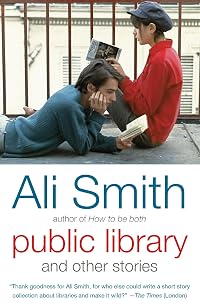
This time the foreground story has two main parts. Richard is a TV producer best known for his BBC Plays for Today in the 70s, which were written by his friend Paddy (Patricia), who has recently died. Paddy is a wonderful creation - erudite and perceptive. Richard has been show more asked to produce a sexed up travesty adapting a novel set in Switzerland in the 1920s about Katherine Mansfield and Rainer Maria Rilke, who lived there at the same time but probably never met (incidentally Mansfield was also the subject of a story in [b:Public Library and Other Stories|25902919|Public Library and Other Stories|Ali Smith|https://images.gr-assets.com/books/1488373004s/25902919.jpg|45787034], so the links with Smith's earlier work go further than the earlier books in the quartet). Paddy explains the various reasons why the adaptation is risible nonsense, and Richard attempts to escape the project. After her death he takes a train to Scotland, getting off the train at Kingussie on a whim.This section ends with Richard's attempted suicide by lying in front of a train, from which he is rescued by a young girl.
About a third of the way through the focus changes, and we meet Brittany, who works in a detention centre for immigrants (run by SA4A, a big company who also play a part in Autumn and Spring). The staff play linguistic games to make their roles seem less barbaric. She becomes aware of the rumour that a schoolgirl has been walking through the building seemingly invisible to security, and has managed to shame the management into deep cleaning the toilets. The girl, Florence, has elements of Greta Thunberg, offering Smith the chance to humanise some deeply unpleasant subject matter by turning it into a modern fairytale. Britt meets Florence, who has received a postcard of the golf course at Kingussie and is determined to get there. Britt follows her and the pair form a bond.
The foreground stories are punctuated by set piece soliloquies on the state of the nation and the state of the earth.
In the final part things get more complicated and these parallel stories intertwine, but I won't spoil that here.
As always with Smith the story is full of allusions to real people, mostly artists. Tacita Dean is the most prominent visual artist, and in addition to Mansfield and Rilke, Beethoven and Charlie Chaplin play their parts too, as do the Gaelic folksongs of the likes of Julie Fowlis and the story of the battle of Culloden.
Smith's politics may be too radical for some tastes, but she never loses sight of the human stories, making parts of the book deeply moving. As ever, she delights in wordplay, and once again precocious children play an important part. I am really looking forward to the fourth part and the completion of the project. show less
This time the foreground story has two main parts. Richard is a TV producer best known for his BBC Plays for Today in the 70s, which were written by his friend Paddy (Patricia), who has recently died. Paddy is a wonderful creation - erudite and perceptive. Richard has been show more asked to produce a sexed up travesty adapting a novel set in Switzerland in the 1920s about Katherine Mansfield and Rainer Maria Rilke, who lived there at the same time but probably never met (incidentally Mansfield was also the subject of a story in [b:Public Library and Other Stories|25902919|Public Library and Other Stories|Ali Smith|https://images.gr-assets.com/books/1488373004s/25902919.jpg|45787034], so the links with Smith's earlier work go further than the earlier books in the quartet). Paddy explains the various reasons why the adaptation is risible nonsense, and Richard attempts to escape the project. After her death he takes a train to Scotland, getting off the train at Kingussie on a whim.
About a third of the way through the focus changes, and we meet Brittany, who works in a detention centre for immigrants (run by SA4A, a big company who also play a part in Autumn and Spring). The staff play linguistic games to make their roles seem less barbaric. She becomes aware of the rumour that a schoolgirl has been walking through the building seemingly invisible to security, and has managed to shame the management into deep cleaning the toilets. The girl, Florence, has elements of Greta Thunberg, offering Smith the chance to humanise some deeply unpleasant subject matter by turning it into a modern fairytale. Britt meets Florence, who has received a postcard of the golf course at Kingussie and is determined to get there. Britt follows her and the pair form a bond.
The foreground stories are punctuated by set piece soliloquies on the state of the nation and the state of the earth.
In the final part things get more complicated and these parallel stories intertwine, but I won't spoil that here.
As always with Smith the story is full of allusions to real people, mostly artists. Tacita Dean is the most prominent visual artist, and in addition to Mansfield and Rilke, Beethoven and Charlie Chaplin play their parts too, as do the Gaelic folksongs of the likes of Julie Fowlis and the story of the battle of Culloden.
Smith's politics may be too radical for some tastes, but she never loses sight of the human stories, making parts of the book deeply moving. As ever, she delights in wordplay, and once again precocious children play an important part. I am really looking forward to the fourth part and the completion of the project. show less
Members
- Recently Added By
Published Reviews
ThingScore 100
Like its two predecessors this dynamic novel captures the many turmoils of life in the contemporary U.K. through ecstatic language and indirect narrative collisions. The first third, set mostly on a Scottish train platform, concerns Richard Lease, an over-the-hill TV and film director mourning his recently deceased collaborator, Paddy. Rife with nuanced reflections on the nature of art and show more mourning, Richard's ruminative section is the book's most immediate and engaging. After Richard lowers himself into the path of an oncoming train, readers meet his would-be rescuer, Brit, a security guard at a migrant detention facility. Brit has been lured into an impromptu journey by Florence, a pseudo-messianic young girl seemingly capable of inspiring empathy in even the darkest of hearts. The three mismatched characters are soon traveling together, on their way to an old battlefield where the violences of yesteryear and the present day will converge. As was the case with Autumn and Winter, the novel's setting is its foremost strength and increasingly enervating flaw, leading to writing that alternately astounds and exasperates. About three-quarters of the way through the third quarter of this series, the book's most memorable character, Richard, provides a relevant description of the whole enterprise, a response for every season: Gimmicky, but impressive all the same. show less
added by VivienneR
This is a novel that contains multitudes, and the wonder is that Smith folds so much in, from visionary nature writing to Twitter obscenities, in prose that is so deceptively relaxed.
added by thorold
Lists

Top Five Books of 2021
604 works; 181 members

Top Five Books of 2019
387 works; 111 members

Kirkus Starred Fiction Reviews of Books Published in 2019
411 works; 12 members

Books Read in 2023
5,547 works; 145 members

Books Read in 2022
5,168 works; 114 members

Books Read in 2019
4,052 works; 110 members

Books Read in 2021
5,361 works; 114 members

Novels without quotation marks
25 works; 1 member
Author Information

54+ Works 17,461 Members
Some Editions
Awards and Honors
Awards
Distinctions
Notable Lists
Series

Work Relationships
Is contained in
Common Knowledge
- Canonical title
- Spring
- Original title
- Spring
- Original publication date
- 2019
- People/Characters
- Richard Lease; Patricia (Paddy) Heal (Paddy); Florence Smith; Brittany Hall
- Important places
- Kingussie, Scotland
- Important events
- Brexit
- Epigraph
- He seems to be a stranger, but his present is
A withered branch that's only green at top.
The motto: in hac spe vivo.
William Shakespeare
But if the endlessly dead awakened a symbol in us,
perhaps they would point to the catkins hanging from the bare
branches of the hazes-trees, or
would evoke the raindrops that fall onto the dark earth in springtime. ... (show all)-
Rainer Maria Rilke / Stephen Mitchell
We must begin, which is the point.
After Trump, we must begin.
Alain Badiou
I am looking for signs of Spring already.
Katherine Mansfield
The year stretched like a child
and rubbed its eyes on light.
George Mackay Brown - Dedication
- To keep in mind
my brother
Gordon Smith
and for
my brother
Andrew Smith
to keep in mind
my friend
Sarah Daniel
and for
o bloomiest!
Sarah Wood - First words
- Now what we don't want is Facts.
- Last words
- (Click to show. Warning: May contain spoilers.)Pass any flowering bush or tree and you can't not hear it, the buzz of the engine, the new life already at work in it, time's factory.
- Original language
- English
Classifications
Statistics
- Members
- 1,009
- Popularity
- 25,851
- Reviews
- 43
- Rating
- (3.98)
- Languages
- 14 — Catalan, Chinese, Danish, Dutch, English, Finnish, German, Greek, Italian, Japanese, Portuguese, Spanish, Swedish, Turkish
- Media
- Paper, Audiobook, Ebook
- ISBNs
- 37
- ASINs
- 6