Norco '80: The True Story of the Most Spectacular Bank Robbery in American History
by Peter Houlahan
On This Page
Description
"Norco '80 tells the story of how five heavily armed young men--led by an apocalyptic born-again Christian--attempted a bank robbery that turned into one of the most violent criminal events in U.S. history, forever changing the face of American law enforcement. Part action thriller and part courtroom drama, Norco '80 transports the reader back to the Southern California of the 1970s, an era of predatory evangelical gurus, doomsday predictions, megachurches, and soaring crime rates, with the show more threat of nuclear obliteration looming over it all. In this riveting true story, a group of landscapers transformed into a murderous gang of bank robbers armed to the teeth with military-grade weapons. Their desperate getaway turned the surrounding towns into war zones. When it was over, three were dead and close to twenty wounded; a police helicopter was forced down from the sky, and thirty-two police vehicles were destroyed by thousands of rounds of ammo. The resulting trial shook the community to the core, raising many issues that continue to plague society today: from the epidemic of post-traumatic stress disorder within law enforcement to religious extremism and the militarization of local police forces." -- Dust jacket. show lessTags
Recommendations






Member Reviews
Peter Houlahan should design rollercoasters because that is exactly what reading Norco ’80 felt like in the best way possible. The pacing of the story was at times a slow build and at others a fast-paced dive and barrel roll through the events of this insane bank robbery gone wrong. Now, I freely admit that I may be a little biased in my review because I grew up around the Norco area and am very familiar with the streets and local businesses (granted, I wasn’t alive in 1980, but so many of the same businesses are still there today—looking at you, Carl’s Jr.—that it almost feels like this could have happened in the last 10 years instead of 40 years ago), but even without a local’s knowledge of the area, Norco ’80 grabs the show more reader from the first page and doesn’t let go until the very end. That said, I wouldn’t recommend the audio version unless you are listening with a pen and paper as I just think that there are too many names and details to remember, but Houlahan does a fantastic job of recounting this little piece of history in an unbiased manner. I will never look at Hamner and Fourth St. the same. show less
I recently expressed the opinion that most true crime books can be divided into 2 categories, either a straightforward retelling, generally with additional detail, of a contemporary criminal event, or books that delve more deeply into the particulars of a time, place or subject, where that background is necessary to understand the crime under examination.
This analysis of a bank robbery gone horribly wrong could be placed in the first category, since it is definitely a retelling of a specific event, with a boatload of detail. I'd suggest, however, that the historical moment, 1980, and the location, Southern California, were key elements in how this violent story played out.
The brief summary: five guys, down on their luck and obsessed show more with apocalyptic religious fervor, decide to rob a bank in the small city of Norco, California. Their objective was to obtain the funds they need to purchase a remote property on which they could build an armed hideout where they could live during the cataclysm they anticipated. Several of them were veterans whose personalities were affected by the experience of being in the military during the Vietnam war era. A couple were not physically well and easily led by one who was especially disturbed and manipulative.
They acquired an extensive armory of automatic weapons, to which they added home-made explosives, and proceeded with their plan even when the wheels started falling off early on the day designated for the heist. Things went from bad to worse, with the botched robbery followed by a bizarre car chase that ended with their arrest in the San Gabriel mountains. They were pursued by police from several jurisdictions, all of them significantly less well armed than the group of five.
So what made this event so connected to the time and place, as reflected in this book?
*Southern California was knee deep in extremist religious groups in the late 70's, such that this group did not stand out as unique, did not call attention to themselves.
*1980 was only five years after the end of the Vietnam war and many returning servicemen carried scars visible and otherwise.
*The state did not have especially strict gun control laws, and nothing stood in the way of the group purchasing their arsenal, again not calling attention to themselves.
*By contrast, it was not normal in 1980 for state or local law enforcement officers to be armed with assault weapons. These circumstances set up the lengthy car chase and the ultimate outcome of the robbery.
In fact, the discrepancy in weaponry in Norco led directly to changes in police departments across the nation. it was clear that the time had arrived when criminals could be, and were happy to be, in a position to outgun law enforcement.
The aftermath of the event also unfolded in ways that reflected time and place. The California judiciary tended to be liberal, although capital punishment was available as a sentence. Both of these elements had an affect on the trial. (The lengthy trial had far too many extraordinary elements to recount here.)
The most pronounced after effect of the event, in my opinion (formed solely by reading this book, I will confess), was the way in which the post traumatic stress suffered by so many of the law enforcement officers wasn't immediately recognized or addressed. PTSD was only added to the Diagnostic and Manual of Psychiatric Disorders in that year, so that's understandable, if unfortunate.
So, enough philosophizing. The book held my interest all the way through. My one problem with it was something over which the author had no control: too many similar names, especially for a listener. It took me an entire chapter to figure out that there was a Manny Delgado and an Andy Delgado, one on each side. BTW, the narrator, Joe Bennett, is a good match for the material.
Not quite as good as the true crime books I've rated most highly, but a very solid 4. show less
This analysis of a bank robbery gone horribly wrong could be placed in the first category, since it is definitely a retelling of a specific event, with a boatload of detail. I'd suggest, however, that the historical moment, 1980, and the location, Southern California, were key elements in how this violent story played out.
The brief summary: five guys, down on their luck and obsessed show more with apocalyptic religious fervor, decide to rob a bank in the small city of Norco, California. Their objective was to obtain the funds they need to purchase a remote property on which they could build an armed hideout where they could live during the cataclysm they anticipated. Several of them were veterans whose personalities were affected by the experience of being in the military during the Vietnam war era. A couple were not physically well and easily led by one who was especially disturbed and manipulative.
They acquired an extensive armory of automatic weapons, to which they added home-made explosives, and proceeded with their plan even when the wheels started falling off early on the day designated for the heist. Things went from bad to worse, with the botched robbery followed by a bizarre car chase that ended with their arrest in the San Gabriel mountains. They were pursued by police from several jurisdictions, all of them significantly less well armed than the group of five.
So what made this event so connected to the time and place, as reflected in this book?
*Southern California was knee deep in extremist religious groups in the late 70's, such that this group did not stand out as unique, did not call attention to themselves.
*1980 was only five years after the end of the Vietnam war and many returning servicemen carried scars visible and otherwise.
*The state did not have especially strict gun control laws, and nothing stood in the way of the group purchasing their arsenal, again not calling attention to themselves.
*By contrast, it was not normal in 1980 for state or local law enforcement officers to be armed with assault weapons. These circumstances set up the lengthy car chase and the ultimate outcome of the robbery.
In fact, the discrepancy in weaponry in Norco led directly to changes in police departments across the nation. it was clear that the time had arrived when criminals could be, and were happy to be, in a position to outgun law enforcement.
The aftermath of the event also unfolded in ways that reflected time and place. The California judiciary tended to be liberal, although capital punishment was available as a sentence. Both of these elements had an affect on the trial. (The lengthy trial had far too many extraordinary elements to recount here.)
The most pronounced after effect of the event, in my opinion (formed solely by reading this book, I will confess), was the way in which the post traumatic stress suffered by so many of the law enforcement officers wasn't immediately recognized or addressed. PTSD was only added to the Diagnostic and Manual of Psychiatric Disorders in that year, so that's understandable, if unfortunate.
So, enough philosophizing. The book held my interest all the way through. My one problem with it was something over which the author had no control: too many similar names, especially for a listener. It took me an entire chapter to figure out that there was a Manny Delgado and an Andy Delgado, one on each side. BTW, the narrator, Joe Bennett, is a good match for the material.
Not quite as good as the true crime books I've rated most highly, but a very solid 4. show less
On May 9, 1980, what usually only happens in action-thriller movies came to life in Orange County, California. I don’t usually read true-crime, but Houlahan’s writing pulled me in. While reading this meticulous researched and documented account, I could almost smell the gun powder, hear the cacophony of gunfire making my ears ring and see the dust clear as the largest crime scene in American history came into view.
Documented here is how an attempted bank robbery and its subsequent trial would forever change a town, its people and law enforcement nation-wide. The crime and court case may have been an unbelievable catastrophe, but this book is pitch-perfect.
Documented here is how an attempted bank robbery and its subsequent trial would forever change a town, its people and law enforcement nation-wide. The crime and court case may have been an unbelievable catastrophe, but this book is pitch-perfect.
On May 9, 1980, what usually only happens in action-thriller movies came to life in Orange County, California. I don’t usually read true-crime, but Houlahan’s writing pulled me in. While reading this meticulous researched and documented account, I could almost smell the gun powder, hear the cacophony of gunfire making my ears ring and see the dust clear as the largest crime scene in American history came into view.
Documented here is how an attempted bank robbery and its subsequent trial would forever change a town, its people and law enforcement nation-wide. The crime and court case may have been an unbelievable catastrophe, but this book is pitch-perfect.
Documented here is how an attempted bank robbery and its subsequent trial would forever change a town, its people and law enforcement nation-wide. The crime and court case may have been an unbelievable catastrophe, but this book is pitch-perfect.
Very well researched of not only the crime and the individuals involved in the crime, law enforcement and the trial, but of the events that took place in the era to make you further understand all the deficiencies that occurred. Very well written without a lot of unnecessary information to keep the story moving at a quick pace. While some of this did help to make changes in how law enforcement responded and treated their officers after traumatic events, it was just one of many that unfortunately had taken place. Choosing this one helped make it interesting to the reader while highlighting those problems.
The 1980 bank robbery in Norco, California is important because it led to improvements in both the armament and communications of US law enforcement. The cops were hopelessly outgunned; they had .38 Special revolvers, 12-gauge shotguns, and a M16 with a defective magazine catch (borrowed from the evidence locker). The bank robbers had 5.56mm and 7.62mm rifles. The cops from different agencies were unable to communicate directly with each other, because of different radio systems.
This book should be read by anyone who thinks they can plan a bank raid after watching a few heist movies. The perpetrators had the basic idea of how to mount a successful robbery, but screwed up the planning badly. That, and the usual friction of combat, led show more to an abject failure. For a take of twenty grand, two perpetrators died and the remaining three have been in prison for over forty years.
But this wasn’t the gang that couldn’t shoot straight. After bungling the robbery, they conducted a running gun battle for many miles and hours. Initially, they planned to use a soft-skinned van as a getaway vehicle. Incredibly they carjacked the van just before the robbery, and brought the driver along as a hostage. If you don’t have the skill to steal and modify vehicles, you shouldn’t rob banks. At the scene, the police shot up the van, killing the perp who was driving.
Through either luck or skill, they immediately hijacked a commercial truck that offered protection from the low caliber rounds that the police were using, while giving them an elevated shooting platform. While not particularly fast, the truck was powerful. The police were not able to disable or trap it.
After bungling the robbery, these men showed remarkable fortitude, courage, and skill in the ensuing gun battles. They killed one officer, wounded eight, and disabled more than thirty police vehicles, including a helicopter. If these men were under my command, I would have put them in for medals: a Silver Star for George Smith and Bronze Stars for the other three on the truck.
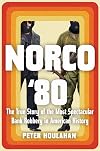
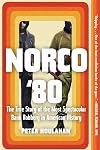
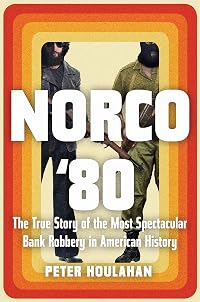
With such an action-packed story, this could have been an engrossing read. Unfortunately Houlahan is a pedestrian writer. Coupled with repeated and inconsistent factual errors about firearms and helicopters, this is annoying. He constantly confuses H&K G3 rifles with AR-15s. This stupidity continues to the cover art. One figure is armed with a Garand, and the other with an AK. None of the robbers or LEOs used either weapon.
He also mixes up Hughes 500 and Bell Huey helicopters. This is the sort of nonsense you expect from crime fiction writers, but the facts about weapons and vehicles are relevant to this story. Writers can’t know everything, but their editors should. So, if you don’t know guns and choppers yourself, don’t take Houlahan as gospel. show less
This book should be read by anyone who thinks they can plan a bank raid after watching a few heist movies. The perpetrators had the basic idea of how to mount a successful robbery, but screwed up the planning badly. That, and the usual friction of combat, led show more to an abject failure. For a take of twenty grand, two perpetrators died and the remaining three have been in prison for over forty years.
But this wasn’t the gang that couldn’t shoot straight. After bungling the robbery, they conducted a running gun battle for many miles and hours. Initially, they planned to use a soft-skinned van as a getaway vehicle. Incredibly they carjacked the van just before the robbery, and brought the driver along as a hostage. If you don’t have the skill to steal and modify vehicles, you shouldn’t rob banks. At the scene, the police shot up the van, killing the perp who was driving.
Through either luck or skill, they immediately hijacked a commercial truck that offered protection from the low caliber rounds that the police were using, while giving them an elevated shooting platform. While not particularly fast, the truck was powerful. The police were not able to disable or trap it.
After bungling the robbery, these men showed remarkable fortitude, courage, and skill in the ensuing gun battles. They killed one officer, wounded eight, and disabled more than thirty police vehicles, including a helicopter. If these men were under my command, I would have put them in for medals: a Silver Star for George Smith and Bronze Stars for the other three on the truck.
With such an action-packed story, this could have been an engrossing read. Unfortunately Houlahan is a pedestrian writer. Coupled with repeated and inconsistent factual errors about firearms and helicopters, this is annoying. He constantly confuses H&K G3 rifles with AR-15s. This stupidity continues to the cover art. One figure is armed with a Garand, and the other with an AK. None of the robbers or LEOs used either weapon.
He also mixes up Hughes 500 and Bell Huey helicopters. This is the sort of nonsense you expect from crime fiction writers, but the facts about weapons and vehicles are relevant to this story. Writers can’t know everything, but their editors should. So, if you don’t know guns and choppers yourself, don’t take Houlahan as gospel. show less
This story of the spectacular and deadly 1980 bank robbery and subsequent chase is certainly interesting. And very detailed – perhaps a little too detailed for me. While the story was interesting, that didn't keep it from dragging in places.
I did like that background was given on quite a few of the people involved, which helps me understand actions and decisions better. In the epilogue, we're told what has happened to key players, and I appreciated the updates.
I didn't appreciate this observation: “One of the court watchers, almost all of them nosy old retirees, nodded in his direction and whispered something to the old crone beside her.” Excuse me, Mr. Houlahan? This particular nosy old crone doesn't really enjoy being show more stereotyped.
At first, I wondered about the lack of quotes in most of what people were saying. The parts were a bit of conjecture. Quotation marks were used when the actual conversations were known. There are no footnotes and no bibliography. However, there is a section on the author's research. The photos at the end of the Kindle version were poor quality but helpful. This was an eye-opening, if a bit too long, story for people interested in reading true crime stories. show less
I did like that background was given on quite a few of the people involved, which helps me understand actions and decisions better. In the epilogue, we're told what has happened to key players, and I appreciated the updates.
I didn't appreciate this observation: “One of the court watchers, almost all of them nosy old retirees, nodded in his direction and whispered something to the old crone beside her.” Excuse me, Mr. Houlahan? This particular nosy old crone doesn't really enjoy being show more stereotyped.
At first, I wondered about the lack of quotes in most of what people were saying. The parts were a bit of conjecture. Quotation marks were used when the actual conversations were known. There are no footnotes and no bibliography. However, there is a section on the author's research. The photos at the end of the Kindle version were poor quality but helpful. This was an eye-opening, if a bit too long, story for people interested in reading true crime stories. show less
Members
- Recently Added By
Author Information
3 Works 210 Members
Peter Houlahan is a freelance writer and emergency medical technician. He holds an MFA from Sarah Lawrence College. A native of Southern California, Houlahan now lives in Fairfield County, Connecticut. Find out more at peterhoulahan.com.
Some Editions
Awards and Honors
Awards
Distinctions
Common Knowledge
- Original publication date
- 2019
- Important places
- California, USA
- First words
- The motive for robbing banks has remained the same since February 13, 1866, when members of the James-Younger Gang walked into the Clay County Savings Bank in Liberty, Missouri, stole $60,000, and shot a bystander to death in... (show all) what is widely believed to be the first bank robbery in United States history. Robbers rob for money and rob banks "because that's where the money is." -Author's Note
The bus came up over the rise and then descended toward the cove of white sand, the Pacific Ocean shimmering blue-gray in the afternoon sun. The youngsters inside the bs had been singing one of their favorite songs, but their... (show all) voices burst into a cheer when they saw the scene below. They were everywhere, hundreds of them, gathered on the cropping of rocks that jutted out into the ocean and on the sandstone bluffs ringing the cove at Corona del Mar. A smattering had waded out into the gentle surf lapping at the sheltered beach, some with their hands lifted to the sku. A young girl gasped. Praise God, praise God, she repeated breathlessly, overcome with joy at the sight of it. -Prologue: 1973. Orange County, California.
Chris Harven was at the bottom of the pit. He set the shovel down, leaned against the cool dirt sides of the hole, fished another joint out of the pocket of his denim shirt, and sparked it. He drew in deeply, held the smoke f... (show all)or a long few seconds, and blew it out through his nose. It was his third joint of the day and not yet one o'clock in the afternoon. He might have been out of a job and almost out of money, but he sure as hell was not going to go without weed. Or without guns. -Chapter 1, The Jupiter Effect, April 1980, Mira Loma, California - Canonical DDC/MDS
- 364.15520979497
- Canonical LCC
- HV6661.C22
Classifications
- Genres
- Nonfiction, General Nonfiction, History, Politics and Government
- DDC/MDS
- 364.15520979497 — Society, government, & culture Social problems and social services Crime Criminal offenses Offenses against the person Other violent offenses against the person Robbery Standard subdivisions History, geographic treatment, biography
- LCC
- HV6661 .C22 — Social sciences Social pathology. Social and public welfare. Criminology Social pathology. Social and public welfare. Criminology Crimes and offenses
- BISAC
Statistics
- Members
- 200
- Popularity
- 163,249
- Reviews
- 12
- Rating
- (3.96)
- Languages
- English
- Media
- Paper, Audiobook, Ebook
- ISBNs
- 5
- ASINs
- 2