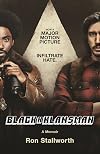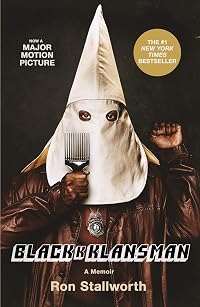
Black Klansman
by Ron Stallworth
On This Page
Description
The #1 New York Times Bestseller!This extraordinary true story, read by the author, is the basis for the Academy Award winning film BlacKkKlansman, written and directed by Spike Lee, produced by Jordan Peele, and starring John David Washington and Adam Driver.
When detective Ron Stallworth, the first black detective in the history of the Colorado Springs Police Department, comes across a classified ad in the local paper asking for all those interested in joining the Ku Klux Klan to contact show more a P.O. box, Detective Stallworth does his job and responds with interest, using his real name while posing as a white man. He figures he'll receive a few brochures in the mail, maybe even a magazine, and learn more about a growing terrorist threat in his community.
A few weeks later the office phone rings, and the caller asks Ron a question he thought he'd never have to answer, "Would you like to join our cause?" This is 1978, and the KKK is on the rise in the United States. Its Grand Wizard, David Duke, has made a name for himself, appearing on talk shows, and major magazine interviews preaching a "kinder" Klan that wants nothing more than to preserve a heritage, and to restore a nation to its former glory.
Ron answers the caller's question that night with a yes, launching what is surely one of the most audacious, and incredible undercover investigations in history. Ron recruits his partner Chuck to play the "white" Ron Stallworth, while Stallworth himself conducts all subsequent phone conversations. During the months-long investigation, Stallworth sabotages cross burnings, exposes white supremacists in the military, and even befriends David Duke himself.
Black Klansman is an amazing true story that unfolds like a crime thriller, and a searing portrait of a divided America and the extraordinary heroes who dare to fight back.
. show less
Tags
Recommendations



Member Recommendations
Thieves of Baghdad: One Marine's Passion for Ancient Civilizations and the Journey to Recover the World's Stolen Treasures by Matthew Bogdanos
Sandydog1 Both titles are written bu participants not writers. Both cover a small portion of a fascinating event. 'A very small portion.
Member Reviews
“A black cop infiltrating the Klan? This is nuts.”
And it really kind of is! The author gets into the Klan, talks to the Grand Wizard on a regular basis, and even works as their bodyguard! It's an amazing story, and I'm glad I read it before I saw the film! F@ the Klan and David Duke!
Regarding David Duke’s election as a Republican, “The conservative right-wing Republican agenda was then and still is much more in sync with white, hate-fueled racist extremist groups like the Ku Klux Klan.” Boy, is that the truth! Especially now-2018 under Grand Wizard Trump!
It’s funny, toward the end of the book, I was wondering what the point of the investigation was, aside from information gathering. And then Stallworth dropped this show more quote-“Success often lies not in what happens but in what you prevent from happening.” Bam! And, “This was an intelligence investigation, not a criminal investigation resulting in no charges.”
No charges, but pretty damn amazing, and at times hilarious, story! show less
And it really kind of is! The author gets into the Klan, talks to the Grand Wizard on a regular basis, and even works as their bodyguard! It's an amazing story, and I'm glad I read it before I saw the film! F@ the Klan and David Duke!
Regarding David Duke’s election as a Republican, “The conservative right-wing Republican agenda was then and still is much more in sync with white, hate-fueled racist extremist groups like the Ku Klux Klan.” Boy, is that the truth! Especially now-2018 under Grand Wizard Trump!
It’s funny, toward the end of the book, I was wondering what the point of the investigation was, aside from information gathering. And then Stallworth dropped this show more quote-“Success often lies not in what happens but in what you prevent from happening.” Bam! And, “This was an intelligence investigation, not a criminal investigation resulting in no charges.”
No charges, but pretty damn amazing, and at times hilarious, story! show less
The story in Ron Stallworth’s memoir is almost too ridiculous to believe, and yet, the undeniable proof is there: a Black cop duped the KKK into granting him membership, and Stallworth has the membership cards and photographs to prove it. I watched the movie a few years back when it came out, and while Stallworth’s writing is a bit less action-driven in its narrative (obviously some things were emphasised to make the screenplay more exciting), his voice is engaging throughout the book and it reads more like a novel where you can’t stop turning the pages to find out what comes next. What is brought out further in the book are Stallworth’s careful explanations of police protocol, the social dynamics of the time, and the show more departmental rationale for his investigation – all of which ground the narrative from becoming a borderline absurd “how was this even possible” urban myth. This was definitely one of the more worthwhile memoirs I’ve read recently (especially considering I’m not a fan of the genre as a whole), and it’s no wonder that it was chosen for the silver screen, considering the unique story, intriguing characters, and constant tension of the events themselves. show less
If there's a downside to this book, it's that Stallworth's issues with anti-racist activism could really be explored further. Like most works that cover hate groups, there's a lot of false equivalency applied to people working for civil rights because they upset law enforcement sensibilities.
"It was as if Dennis the menace was running a hate group."
The meat of this story though, Stallworth's infiltration of the KKK, oh my! On one hand, you want to laugh at the buffoonery of David Duke and his co-conspirators. On the other, the terror of the Klan is that they somehow manage to survive and succeed in their terrorism despite their idiocy.
If nothing else, you come out of Black Klansman deeply aware that the powers that be do not take show more racist hate groups seriously enough. If a lone municipal investigator like Stallworth could comprehensively discombobulate regional Klan activity, why aren't more resources applied to hack such cancerous growth back to the root? show less
"It was as if Dennis the menace was running a hate group."
The meat of this story though, Stallworth's infiltration of the KKK, oh my! On one hand, you want to laugh at the buffoonery of David Duke and his co-conspirators. On the other, the terror of the Klan is that they somehow manage to survive and succeed in their terrorism despite their idiocy.
If nothing else, you come out of Black Klansman deeply aware that the powers that be do not take show more racist hate groups seriously enough. If a lone municipal investigator like Stallworth could comprehensively discombobulate regional Klan activity, why aren't more resources applied to hack such cancerous growth back to the root? show less
I really enjoyed this book and Stallworth's retelling of his investigation into the Klan in Colorado Springs. A great look at how the KKK operated in the 1970's (and probably still today) and how the determination and ingenuity of one Black police detective had a major impact on Klan activities. At times humorous, and often reflective, Stallworth's narrative is quite informative and is well worth the read.
A really quick read that was interesting but really could have used better editing. There were times the cohesiveness of the story was lost, there was some unnecessary repetition, and some very unnecessary potshots at old colleagues that Stallworth obviously still has some beef with.
Still, the thought of a black police officer leading the undercover investigation against the KKK was hilarious, and I enjoyed Stallworth's recollections of that. I can't say I enjoyed the insight into the Klan mentality, but it is necessary and needed.
Still, the thought of a black police officer leading the undercover investigation against the KKK was hilarious, and I enjoyed Stallworth's recollections of that. I can't say I enjoyed the insight into the Klan mentality, but it is necessary and needed.
In this memoir, Ron Stallworth writes about becoming the first black detective in the Colorado Springs Police Department and doing a bit of undercover work investigating the Black Panthers before eventually becoming deeply involved in an investigation into local KKK activities. And by "deeply involved," I mean that he accidentally ended up in an undercover investigation as the voice of a white man named Ron Stallworth who was supposedly interested in joining the Klan. He communicated with KKK members over the phone, while a narcotics officer named Chuck acted as the face of white Ron Stallworth when face-to-face meetings were necessary.
I bought this, even though I almost never read memoirs, because this case sounded bonkers and because show more it was set in Colorado Springs, one of the primary places I grew up. I had seen previews for the movie but didn't immediately realize it was based on a book, and I somehow missed that it was set in Colorado Springs. Since it didn't seem likely that the movie would be shown in my area (it wasn't), I figured I'd give the book a shot.
For the most part, I enjoyed this, and I'd recommend that anyone with a connection to Colorado Springs read it. It was a fascinating piece of the city's history, and although I'm too young to have been in the city at the time it took place, I still enjoyed seeing places mentioned that I knew and/or had been to before.
There was a lot of stuff here that I didn't know. For example, I hadn't known about the grip that the KKK had on Colorado politics in the 1920s and 1930s, or that they had such a huge presence in Denver in particular. I went to both middle school and high school in Colorado and don't remember any of this coming up. I suppose this information could have been covered and I just missed it (history didn't generally interest me), but I'd have thought this kind of thing would have stuck with me.
I enjoyed the times when Stallworth poked fun at the KKK, and there were a few moments in the investigation that made me outright gasp. I wonder how much of it made it into the movie (I still need to watch it). There was a bit involving a KKK application that I imagine would have looked overdone onscreen - I still can't believe that Chuck and the other officer got out of there without any of the KKK members figuring anything out or growing suspicious.
The book's organization was a little confusing, to the point that it was sometimes difficult to follow the case's timeline. I had thought that Stallworth was writing about events relatively chronologically, but this didn't turn out to be the case. For example, on page 84 of my copy of the book, Stallworth was asked by those who knew about his investigation to show off his KKK membership card (which struck me as risky - was it a good idea for so many people to know about the investigation and for Stallworth to show off the card? what if any of those people were secretly KKK members?). Four pages later, Stallworth was calling David Duke to ask about the status of his membership card. There were a few other moments like this, but this one was the most glaring. I also found his occasional "Officer Ed" rants to be overly sudden and a little off-putting.
There were many things Stallworth wrote about that were still applicable today. At one point, for example, there was an anti-KKK protest, and 20 or so KKK members showed up as counter-protesters. They were initially ignored and didn't even bother to put on their robes until one of them asked a member of the media if they'd like a story and the person said yes. After that, it became a media feeding frenzy. As Stallworth wrote:
It's the kind of thing you can still see in play today, as the media gives screen- and air-time to white supremacists who wouldn't otherwise have that significant of a platform. That said, there were times when I very much disagreed with Stallworth's interpretations, particularly his thoughts on "Antifa" (his decision to capitalize it, not mine).
I wonder whether the movie faithfully stuck to the book's ending, or whether it embellished things a bit? If this had been fiction, the ending would have been deeply disappointing -instead of coming to some sort of satisfying conclusion, complete with arrests and whatever else, Stallworth was ordered to close the investigation. (I wondered at the legality of what he did to get the documents he eventually used in order to write this book. I assume he wouldn't have gone ahead with the memoir if possessing and using those documents could still have gotten him in trouble, but I honestly don't know.)
All in all, I'm glad I read this, despite my issues with some of it.
Extras:
Several pages of black-and-white photos of documents, items, and photographs relating to the KKK investigation and the beginning of Stallworth's career as a police officer.
(Original review posted on A Library Girl's Familiar Diversions.) show less
I bought this, even though I almost never read memoirs, because this case sounded bonkers and because show more it was set in Colorado Springs, one of the primary places I grew up. I had seen previews for the movie but didn't immediately realize it was based on a book, and I somehow missed that it was set in Colorado Springs. Since it didn't seem likely that the movie would be shown in my area (it wasn't), I figured I'd give the book a shot.
For the most part, I enjoyed this, and I'd recommend that anyone with a connection to Colorado Springs read it. It was a fascinating piece of the city's history, and although I'm too young to have been in the city at the time it took place, I still enjoyed seeing places mentioned that I knew and/or had been to before.
There was a lot of stuff here that I didn't know. For example, I hadn't known about the grip that the KKK had on Colorado politics in the 1920s and 1930s, or that they had such a huge presence in Denver in particular. I went to both middle school and high school in Colorado and don't remember any of this coming up. I suppose this information could have been covered and I just missed it (history didn't generally interest me), but I'd have thought this kind of thing would have stuck with me.
I enjoyed the times when Stallworth poked fun at the KKK, and there were a few moments in the investigation that made me outright gasp. I wonder how much of it made it into the movie (I still need to watch it). There was a bit involving a KKK application that I imagine would have looked overdone onscreen - I still can't believe that Chuck and the other officer got out of there without any of the KKK members figuring anything out or growing suspicious.
The book's organization was a little confusing, to the point that it was sometimes difficult to follow the case's timeline. I had thought that Stallworth was writing about events relatively chronologically, but this didn't turn out to be the case. For example, on page 84 of my copy of the book, Stallworth was asked by those who knew about his investigation to show off his KKK membership card (which struck me as risky - was it a good idea for so many people to know about the investigation and for Stallworth to show off the card? what if any of those people were secretly KKK members?). Four pages later, Stallworth was calling David Duke to ask about the status of his membership card. There were a few other moments like this, but this one was the most glaring. I also found his occasional "Officer Ed" rants to be overly sudden and a little off-putting.
There were many things Stallworth wrote about that were still applicable today. At one point, for example, there was an anti-KKK protest, and 20 or so KKK members showed up as counter-protesters. They were initially ignored and didn't even bother to put on their robes until one of them asked a member of the media if they'd like a story and the person said yes. After that, it became a media feeding frenzy. As Stallworth wrote:
"The media all too often unwittingly creates the very news it reports because of its zeal to get a story. This only benefits the person or subject being covered and gives them or it a power neither deserves." (126)
It's the kind of thing you can still see in play today, as the media gives screen- and air-time to white supremacists who wouldn't otherwise have that significant of a platform. That said, there were times when I very much disagreed with Stallworth's interpretations, particularly his thoughts on "Antifa" (his decision to capitalize it, not mine).
I wonder whether the movie faithfully stuck to the book's ending, or whether it embellished things a bit? If this had been fiction, the ending would have been deeply disappointing -
All in all, I'm glad I read this, despite my issues with some of it.
Extras:
Several pages of black-and-white photos of documents, items, and photographs relating to the KKK investigation and the beginning of Stallworth's career as a police officer.
(Original review posted on A Library Girl's Familiar Diversions.) show less
This is a memoir by a Black policeman who, in the late 1970s, led an undercover investigation of the Colorado Springs chapter of the KKK. After spotting a newspaper ad for the nascent Colorado Springs KKK chapter, Ron Stallworth was offered the chance to join the group. Working with a white police detective who played Stallworth for face-to-face meetings with Klan members, Stallworth became an official card-carrying member of the hate group and led an investigation into the Klan and related racially-fueled hate groups in Colorado and more broadly.
This book was definitely eye-opening to me in its depiction of the (mostly) modern KKK's ideology, and that of related groups. While I am of course aware of the KKK and its role in American show more history, I didn't know much about it after the Civil Rights era. I found this book very informative in that regard, and it was also interesting to read about the somewhat fragmented anti-KKK response at the time of Stallworth's investigation.
There's an inherent darkly humorous element in Stallworth's story of a Black man spearheading an undercover investigation of the KKK, and I'm definitely glad that Stallworth has shared his story. The writing of the book isn't the best, which is too bad, but the main points are definitely clear. I found this book completely on a whim in my library's eaudio catalog, and I'm definitely happy that I did. show less
This book was definitely eye-opening to me in its depiction of the (mostly) modern KKK's ideology, and that of related groups. While I am of course aware of the KKK and its role in American show more history, I didn't know much about it after the Civil Rights era. I found this book very informative in that regard, and it was also interesting to read about the somewhat fragmented anti-KKK response at the time of Stallworth's investigation.
There's an inherent darkly humorous element in Stallworth's story of a Black man spearheading an undercover investigation of the KKK, and I'm definitely glad that Stallworth has shared his story. The writing of the book isn't the best, which is too bad, but the main points are definitely clear. I found this book completely on a whim in my library's eaudio catalog, and I'm definitely happy that I did. show less
Members
- Recently Added By
Lists

Macmillan Publishers
129 works; 3 members

Books Read in 2021
5,361 works; 114 members
Author Information

7+ Works 797 Members
Awards and Honors
Awards
Work Relationships
Has the adaptation
Common Knowledge
- Canonical title
- Black Klansman
- Original title
- Black Klansman: Race, Hate, and the Undercover Investigation of a Lifetime
- Alternate titles
- Black Klansman: Race, hate, and the undercover investigation of a lifetime
- Original publication date
- 2014
- People/Characters
- Ron Stallworth; Chuck; Ralph David Abernathy; Donald Black; Stokeley Carmichael; Barbara Coppersmith (show all 28); David Duke; Marianne Gilbert; David Scott Lee; Michael W. Miller; Ken O'dell; James W. Rose; Ralph Sanchez; Guy Thomas; Ken Trapp; Douglas Vaughn; Fred Wilkens; James Woods; Arthur; Baron; Bob; Butch; Carole; Officer Ed; John; Tim; The RAC; Agent X
- Important places
- Colorado Springs, Colorado, USA; Denver, Colorado, USA
- Related movies
- BlacKkKlansman (2018 | IMDb)
- Epigraph
- Each time a man stands up for an ideal, or acts to improve the lot of others, or strikes out against injustice, he sends forth a tiny ripple of hope.
... (show all) - Robert kennedy
The most common way people give up their power is by thinking they don't have any.
- Alice Walker - Dedication
- For my wife, Patsy Terrazas-Stallworth,
and for Mr. Elroy Bode - First words
- All of this began in October 1978.
- Quotations
- David Duke twice ran for public office in Louisiana as a Democrat and lost. When he switched his affiliation to Republican, because he was closer in ideology and racial thinking to the GOP than to the Democrats, and ran again... (show all) for the Louisiana House of Representatives, the conservative voters in his district rewarded him with a victory. In each case his position on the issues remained the same; white supremacist/ethno-nationalist endorsement of a race-centered rhetoric and nativist populism. What changed were the voters. Democrats rejected Duke’s politics while Republicans embraced him.
- Last words
- (Click to show. Warning: May contain spoilers.)It has defined me in ways unimaginable and has always fascinated those who hear its tale.
- Original language
- English
Classifications
- Genres
- Nonfiction, General Nonfiction, Biography & Memoir, History
- DDC/MDS
- 322.4 — Society, government, & culture Political science Relation of the state to organized groups and their members Political action groups
- LCC
- HS2330 .K63 .S727 — Social sciences Societies: secret, benevolent, etc. Societies: secret, benevolent, etc. Other societies. By classes Political and "patriotic" societies
- BISAC
Statistics
- Members
- 782
- Popularity
- 35,729
- Reviews
- 36
- Rating
- (3.39)
- Languages
- English, French, Italian, Spanish
- Media
- Paper, Audiobook, Ebook
- ISBNs
- 22
- ASINs
- 7