1920: The Year of the Six Presidents
by David Pietrusza
On This Page
Description
A vivid portrait of the election that shaped modern America.Tags
Recommendations







Member Reviews
Review of: 1920: The Year of the Six Presidents, by David Pietrusza
by Stan Prager (June 4, 2016)
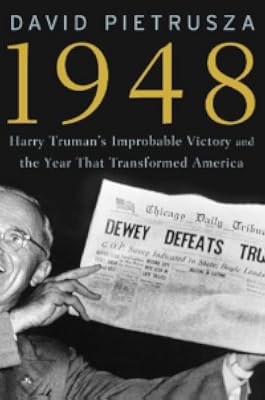
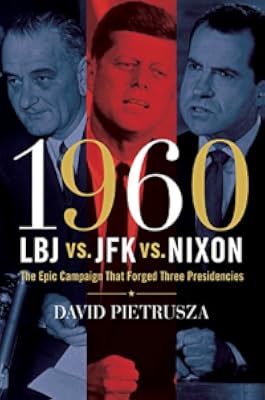
In an election year that at first glance seems unprecedented – the Republican nominee is not really a Republican, a woman is likely for the first time to head up a national ticket, and her stubborn rival for the Democratic nomination is not really a Democrat – I turned to historian David Pietrusza as a reminder that this is hardly the first Presidential electoral cycle branded with the air of the peculiar. I’m a big fan of Pietrusza: his frenetic retelling of two of the most consequential elections of the postwar twentieth century – 1948: Harry Truman’s Improbable Victory and the Year that Transformed America, and 1960: LBJ vs. JFK show more vs. Nixon The Epic Campaign that Forged Three Presidencies – represent some of the best accounts I have read about modern politics and elections, and his style is often both compelling and irresistible.
This time, I selected his earlier work, the fascinating but in my opinion deeply flawed 1920: The Year of the Six Presidents, which recounts how in the days when deals made in smoke-filled rooms overruled primaries, an unlikely dark horse from Ohio named Warren Harding became the Republican nominee and eventually the President of the United States. Harding – who on the convention’s first ballot polled a dreadful sixth with only 65 votes while the top two contenders garnered 287 and 211 votes respectively – became the eventual nominee largely because, as famously noted by Republican Connecticut Senator Frank Brandegee, “We’ve got a lot of second-raters and Warren Harding is the best of the second-raters.” [p225]
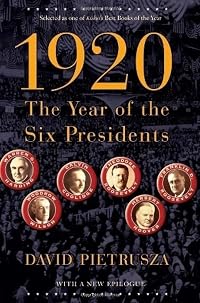
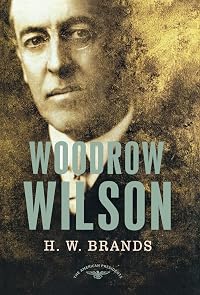
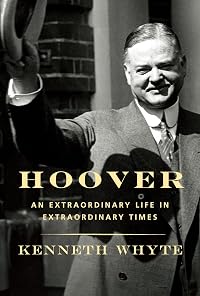
The book’s subtitle is a little misleading: one of the “Six Presidents” is actually Theodore Roosevelt, who actually died before he could fulfill or dispel predictions that after some years of exile due to his 1912 third-party revolt he would again be the Republican Party’s standard bearer, and Pietrusza does not really explore how the ghost of his probable candidacy weighed on the election. Another is Woodrow Wilson, the reigning President, a stroke victim broken both physically and emotionally, who dreams of a third term that virtually no one else considers possible. The remainder, in addition to Harding, are indeed future Presidents: Herbert Hoover, at this point a progressive whom (like the future Dwight Eisenhower) no one is sure is Republican or Democrat; Calvin Coolidge, the laconic and little-known governor of Massachusetts who becomes Harding’s Vice-President; and, Franklin Roosevelt, the handsome pre-polio rising star who becomes the vice-presidential candidate on the opposing ticket.
The level of detail in 1920 is daunting, but a little lop-sided on the Republican side. There is a deep study of the biographies of Harding and Coolidge and a host of other party regulars, as well as moment-by-moment coverage of the Republican convention, but I walked away still knowing almost nothing of substance about James Cox, the other dark horse from Ohio who became Harding’s opponent on the Democratic side, and the coverage of the latter convention was superficial in comparison. One wonders whether this is because Pietrusza is a conservative historian, although that is hardly detectable in his later works, 1960 and 1948, where he appears to disdain all candidates equally. In 1920, on the other hand, he seems unable to suppress his admiration for Harding, who nevertheless comes off as an intellectual lightweight and somewhat of a cad who is most successful at accumulating much younger mistresses. He also clearly favors Coolidge, a strange man and kind of a political stick-figure who rose to national prominence by crushing a police strike, and then unexpectedly ascends to the Oval Office on the death of Harding.
For Democrat FDR, on the other hand, Pietrusza reserves a kind of barely suppressed loathing. Nearly two chapters are disproportionately devoted to exploring unseemly scandals involving homosexual sailors during Roosevelt’s tenure as Secretary of the Navy in the Wilson Administration. For instance, the author roundly condemns FDR for his responsibility in the return to active duty of former inmates of a naval prison – many who were termed “moral perverts” – to the consternation of ranking officers. While it is true that there was great antipathy at the time towards what were termed “unlawful and unnatural acts,” what is striking and perhaps cringe-worthy in this narrative is that Pietrusza writing from a twenty-first century perspective cannot disguise his own horror at those he freely terms “perverts” roaming navy ships at will [p134-35]. There is of course a certain irony in historical retrospect: Harding presided over one of the most irresponsibly corrupt administrations in the nation’s history; Coolidge – whose economic policies are lauded by the author – was barely out of office before the nation suffered catastrophic economic collapse; yet it is FDR, who provided existential leadership through depression and war, who is widely heralded by historians as the nation’s third greatest President of all time, following only Lincoln and Washington.
Pietrusza’s other books are generally fast-paced; this one often gets bogged down with minutiae, but there are highlights that draw both sharp contrasts and parallels to this election season nearly a century beyond it. And the topic of “gays in the military” is not the only one that resounds to the present day. This was the first election where women had the franchise; almost a hundred years later there is yet to be a female President, although Hillary Rodham Clinton may very well change that in November. Socialism and progressivism, as well as populism, were central albeit fading elements of political discourse. Terrorism – in this case bombs lobbed by anarchists – was much in the news. Business and labor were at odds, and the proper role of government in this and other arenas was much debated. Most striking was the chilling anti-immigrant nativism that reverberates today … cross out and replace the ethnicities in the quote below from Woodrow Wilson’s own shamefully resurrected 1903 commentary on the nation’s “wretched refuse” and 2016 sounds too much like 1920:
“Now there came multitudes of men of the lowest class from the south of Italy and men of the meaner sort out of Hungary and Poland, men out of the ranks where there was neither skill nor energy nor any initiative of quick intelligence; and they came in numbers which increased from year to year, as if the countries of the south of Europe were disburdening themselves of the more sordid and hapless elements of their population, the men whose standards of life and of work were such as American workmen had never dreamed of hitherto.” [p326-27]
[Now replay this scary echo: “When Mexico sends its people, they're not sending the best. They're not sending you, they're sending people that have lots of problems and they're bringing those problems. They're bringing drugs, they're bringing crime. They're rapists . . .” – Donald Trump, 2015]
Internationalism vs isolationism was also a potent issue. World War I was part of the fabric of the very recent past and both major parties were sharply divided within their own ranks about whether to embrace or reject Wilson’s beloved but doomed offspring of the peace, the League of Nations. And this is in my estimation where the greatest fault of 1920 is most detectable, for conspicuous in its absence is a focused examination of this single great issue that dominated the national contest like no other. The reader will learn where each candidate stood on the League – or how well he waffled about it – but not the weightier arguments that defined the debate. Perhaps pages devoted to blow-by-blow tallies of convention votes, detailed accounts of Harding’s numerous peccadillos, and Roosevelt’s role in the scandals of gay sailors might better have been redirected to a more thorough exploration of this critical topic.
While this is certainly not his finest book, Pietrusza is both a talented writer and historian, which is far more admirably evident in his later works. And despite its flaws, 1920 is a worthwhile drive-through of an often overlooked election that ends up telling us perhaps more than we would like to know about our own times and about how little we have grown up nearly a century later. To channel Jean-Baptiste Karr, (plus ça change, plus c'est la même chose) "the more things change, the more they stay the same."
My latest book review - 1920: The Year of the Six Presidents, by David Pietrusza, is live on my book blog https://regarp.com/2016/06/04/review-of-1920-the-year-of-the-six-presidents-by-d... show less
by Stan Prager (June 4, 2016)
In an election year that at first glance seems unprecedented – the Republican nominee is not really a Republican, a woman is likely for the first time to head up a national ticket, and her stubborn rival for the Democratic nomination is not really a Democrat – I turned to historian David Pietrusza as a reminder that this is hardly the first Presidential electoral cycle branded with the air of the peculiar. I’m a big fan of Pietrusza: his frenetic retelling of two of the most consequential elections of the postwar twentieth century – 1948: Harry Truman’s Improbable Victory and the Year that Transformed America, and 1960: LBJ vs. JFK show more vs. Nixon The Epic Campaign that Forged Three Presidencies – represent some of the best accounts I have read about modern politics and elections, and his style is often both compelling and irresistible.
This time, I selected his earlier work, the fascinating but in my opinion deeply flawed 1920: The Year of the Six Presidents, which recounts how in the days when deals made in smoke-filled rooms overruled primaries, an unlikely dark horse from Ohio named Warren Harding became the Republican nominee and eventually the President of the United States. Harding – who on the convention’s first ballot polled a dreadful sixth with only 65 votes while the top two contenders garnered 287 and 211 votes respectively – became the eventual nominee largely because, as famously noted by Republican Connecticut Senator Frank Brandegee, “We’ve got a lot of second-raters and Warren Harding is the best of the second-raters.” [p225]
The book’s subtitle is a little misleading: one of the “Six Presidents” is actually Theodore Roosevelt, who actually died before he could fulfill or dispel predictions that after some years of exile due to his 1912 third-party revolt he would again be the Republican Party’s standard bearer, and Pietrusza does not really explore how the ghost of his probable candidacy weighed on the election. Another is Woodrow Wilson, the reigning President, a stroke victim broken both physically and emotionally, who dreams of a third term that virtually no one else considers possible. The remainder, in addition to Harding, are indeed future Presidents: Herbert Hoover, at this point a progressive whom (like the future Dwight Eisenhower) no one is sure is Republican or Democrat; Calvin Coolidge, the laconic and little-known governor of Massachusetts who becomes Harding’s Vice-President; and, Franklin Roosevelt, the handsome pre-polio rising star who becomes the vice-presidential candidate on the opposing ticket.
The level of detail in 1920 is daunting, but a little lop-sided on the Republican side. There is a deep study of the biographies of Harding and Coolidge and a host of other party regulars, as well as moment-by-moment coverage of the Republican convention, but I walked away still knowing almost nothing of substance about James Cox, the other dark horse from Ohio who became Harding’s opponent on the Democratic side, and the coverage of the latter convention was superficial in comparison. One wonders whether this is because Pietrusza is a conservative historian, although that is hardly detectable in his later works, 1960 and 1948, where he appears to disdain all candidates equally. In 1920, on the other hand, he seems unable to suppress his admiration for Harding, who nevertheless comes off as an intellectual lightweight and somewhat of a cad who is most successful at accumulating much younger mistresses. He also clearly favors Coolidge, a strange man and kind of a political stick-figure who rose to national prominence by crushing a police strike, and then unexpectedly ascends to the Oval Office on the death of Harding.
For Democrat FDR, on the other hand, Pietrusza reserves a kind of barely suppressed loathing. Nearly two chapters are disproportionately devoted to exploring unseemly scandals involving homosexual sailors during Roosevelt’s tenure as Secretary of the Navy in the Wilson Administration. For instance, the author roundly condemns FDR for his responsibility in the return to active duty of former inmates of a naval prison – many who were termed “moral perverts” – to the consternation of ranking officers. While it is true that there was great antipathy at the time towards what were termed “unlawful and unnatural acts,” what is striking and perhaps cringe-worthy in this narrative is that Pietrusza writing from a twenty-first century perspective cannot disguise his own horror at those he freely terms “perverts” roaming navy ships at will [p134-35]. There is of course a certain irony in historical retrospect: Harding presided over one of the most irresponsibly corrupt administrations in the nation’s history; Coolidge – whose economic policies are lauded by the author – was barely out of office before the nation suffered catastrophic economic collapse; yet it is FDR, who provided existential leadership through depression and war, who is widely heralded by historians as the nation’s third greatest President of all time, following only Lincoln and Washington.
Pietrusza’s other books are generally fast-paced; this one often gets bogged down with minutiae, but there are highlights that draw both sharp contrasts and parallels to this election season nearly a century beyond it. And the topic of “gays in the military” is not the only one that resounds to the present day. This was the first election where women had the franchise; almost a hundred years later there is yet to be a female President, although Hillary Rodham Clinton may very well change that in November. Socialism and progressivism, as well as populism, were central albeit fading elements of political discourse. Terrorism – in this case bombs lobbed by anarchists – was much in the news. Business and labor were at odds, and the proper role of government in this and other arenas was much debated. Most striking was the chilling anti-immigrant nativism that reverberates today … cross out and replace the ethnicities in the quote below from Woodrow Wilson’s own shamefully resurrected 1903 commentary on the nation’s “wretched refuse” and 2016 sounds too much like 1920:
“Now there came multitudes of men of the lowest class from the south of Italy and men of the meaner sort out of Hungary and Poland, men out of the ranks where there was neither skill nor energy nor any initiative of quick intelligence; and they came in numbers which increased from year to year, as if the countries of the south of Europe were disburdening themselves of the more sordid and hapless elements of their population, the men whose standards of life and of work were such as American workmen had never dreamed of hitherto.” [p326-27]
[Now replay this scary echo: “When Mexico sends its people, they're not sending the best. They're not sending you, they're sending people that have lots of problems and they're bringing those problems. They're bringing drugs, they're bringing crime. They're rapists . . .” – Donald Trump, 2015]
Internationalism vs isolationism was also a potent issue. World War I was part of the fabric of the very recent past and both major parties were sharply divided within their own ranks about whether to embrace or reject Wilson’s beloved but doomed offspring of the peace, the League of Nations. And this is in my estimation where the greatest fault of 1920 is most detectable, for conspicuous in its absence is a focused examination of this single great issue that dominated the national contest like no other. The reader will learn where each candidate stood on the League – or how well he waffled about it – but not the weightier arguments that defined the debate. Perhaps pages devoted to blow-by-blow tallies of convention votes, detailed accounts of Harding’s numerous peccadillos, and Roosevelt’s role in the scandals of gay sailors might better have been redirected to a more thorough exploration of this critical topic.
While this is certainly not his finest book, Pietrusza is both a talented writer and historian, which is far more admirably evident in his later works. And despite its flaws, 1920 is a worthwhile drive-through of an often overlooked election that ends up telling us perhaps more than we would like to know about our own times and about how little we have grown up nearly a century later. To channel Jean-Baptiste Karr, (plus ça change, plus c'est la même chose) "the more things change, the more they stay the same."
My latest book review - 1920: The Year of the Six Presidents, by David Pietrusza, is live on my book blog https://regarp.com/2016/06/04/review-of-1920-the-year-of-the-six-presidents-by-d... show less
A well written popular history of the election year, but also of the various candidates and their lives leading up to it. The author is rather opinionated and is not reluctant to judge. There are copious notes to sustain his facts, if not necessarily his opinions. The book moves along at a good pace and is well structured to prevent the reader from being overwhelmed with it's cast of dozens of characters. I would definitely recommend it to all readers, although due to the judgmental tone I would suggest caution regarding forming final opinions on the people or their actions.
Fairly solid account of the 1920 presidential campaign that saw Warren Harding defeat James Cox, in a quasi-referendum on Woodrow Wilson's policies. A lot of the material in this book, of course, is covered in other places, though the author springs a few surprises with respect to Franklin D. Roosevelt, and the assorted scandals he was involved in (including a hairy sex scandal, and his treatment of Haiti as Assistant Secretary of the Navy). Not many individuals come out well in this account; even the quasi-martyred Eugene Debs comes across as crabby and irritable. Altogether, 1920's election was not a high point.
This a fun book by one of my favorite authors, David Pietrusza.
It was 1920, when six men who had been, were or would be president ran for the highest office.
Ex-president Theodore Roosevelt led the pack and was the favorite to get the Republican nomination. The very ill and very stubborn Woodrow Wilson wanted to run again to save his League of Nations. Also in the mix, eventual winner Warren G. Harding, his vice-president Calvin Coolidge, Herbert Hoover and Teddy’s cousin Franklin Roosevelt.
They aren’t the only players, of course. Many other colorful characters are involved, such as the Democrat nominee James Cox, Socialist Eugene Debs, ex-president William Howard Taft, and various lovers, suffragists and prohibitionists.
It is a show more colorful tale about a colorful time in the nation’s history, just before the bottom dropped out.
Pietrusza knows how to tell a complicated tale, and does so thoroughly and thoughtfully.
There are a lot of moving parts to this story, and they’re all handled with aplomb and care.
Recommended.
For more of my reviews, go to Ralphsbooks. show less
It was 1920, when six men who had been, were or would be president ran for the highest office.
Ex-president Theodore Roosevelt led the pack and was the favorite to get the Republican nomination. The very ill and very stubborn Woodrow Wilson wanted to run again to save his League of Nations. Also in the mix, eventual winner Warren G. Harding, his vice-president Calvin Coolidge, Herbert Hoover and Teddy’s cousin Franklin Roosevelt.
They aren’t the only players, of course. Many other colorful characters are involved, such as the Democrat nominee James Cox, Socialist Eugene Debs, ex-president William Howard Taft, and various lovers, suffragists and prohibitionists.
It is a show more colorful tale about a colorful time in the nation’s history, just before the bottom dropped out.
Pietrusza knows how to tell a complicated tale, and does so thoroughly and thoughtfully.
There are a lot of moving parts to this story, and they’re all handled with aplomb and care.
Recommended.
For more of my reviews, go to Ralphsbooks. show less
The presidential election of 1920 was dramatic. The book's title comes from six once-and-future presidents angling in the race: Woodrow Wilson, Warren G. Harding, Calvin Coolidge, Franklin Delano Roosevelt, Herbert Hoover, and Theodore Roosevelt. There as many non-president actors of significance, including socialist leader Eugene V. Debs, leading American progressive and isolationist politician from California Hiram Johnson, the Democratic U.S. presidential candidate in 1928 Al Smith, and more. Is it that unusual a half-dozen former and future presidents populate the stage? I don't know about that, but the drama of the year includes women's suffrage, U.S. post-WW I isolationism (League of Nations, fear of "internationalism", show more immigration), the high tide of organized socialism, the end of the Progressive Era period of widespread social activism and political reform across the United States from the 1890s to 1920s, the two major parties evolving into the shape we now know, the maturing of the primary process, and the political effects of American urbanization. show less
An excellent history of the 1920 presidential election. Chapters are devoted to mini-biographies of all the major and (seemingly) minor candidates—including Teddy Roosevelt who was present only in spirit. The author also covers the issues that affected the campaign and the mood of the nation at the time. Well written and very enjoyable.
Lousy, tangential title. Started off slow, and prose is in the style of an over-excited history teacher trying to make "our little drama" hip to his students. However, as the story took shape, and the title forgotten, and the prose style less eager, the book improved into a readable and breezy history.
Members
- Recently Added By
Lists

What A Year: Books titled with a particular year
147 works; 2 members
Author Information

37+ Works 1,297 Members
David Pietrusza and his work have appeared on Good Morning America, Morning Joe, The Voice of America, The History Channel, ESPN, NPR, and C-SPAN. He has spoken at the Harry S. Truman, John F. Kennedy, and Franklin D. Roosevelt presidential libraries and museums, as well as at various universities and festivals. He lives in upstate New York. Visit show more www.davidpietrusza.com. show less
Common Knowledge
Classifications
- Genres
- Nonfiction, History, General Nonfiction, Politics and Government, Biography & Memoir
- DDC/MDS
- 324.973 — Society, government, & culture Political science Politics & Elections Biography And History North America United States
- LCC
- E783 .P54 — History of the United States United States Twentieth century Wilson's administrations, 1913-1921
- BISAC
Statistics
- Members
- 385
- Popularity
- 81,445
- Reviews
- 11
- Rating
- (3.94)
- Languages
- English
- Media
- Paper, Audiobook, Ebook
- ISBNs
- 4
- ASINs
- 5