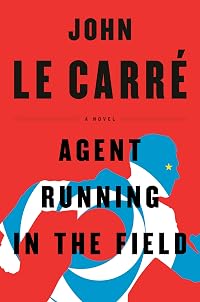
Agent Running in the Field
by John le Carré
On This Page
Description
"Nat, a 47 year-old veteran of Britain's Secret Intelligence Service, believes his years as an agent runner are over. He is back in London with his wife, the long-suffering Prue. But with the growing threat from Moscow Centre, the office has one more job for him. Nat is to take over The Haven, a defunct substation of London General with a rag-tag band of spies. The only bright light on the team is young Florence, who has her eye on Russia Department and a Ukrainian oligarch with a finger in show more the Russia pie. Nat is not only a spy, he is a passionate badminton player. His regular Monday evening opponent is half his age: the introspective and solitary Ed. Ed hates Brexit, hates Trump and hates his job at some soulless media agency. And it is Ed, of all unlikely people, who will take Prue, Florence, and Nat himself down the path of political anger that will ensnare them all. Agent Running in the Field is a chilling portrait of our time, now heartbreaking, now darkly humorous, told to us with unflagging tension by the greatest chronicler of our age." --Book jacket. show lessTags
Recommendations
















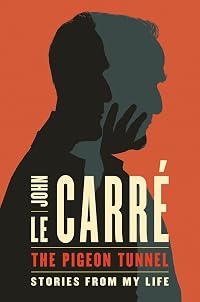
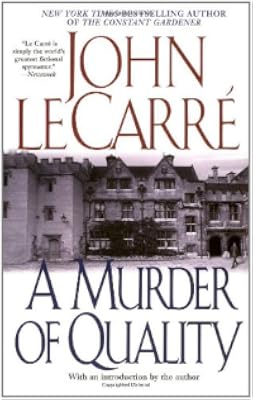

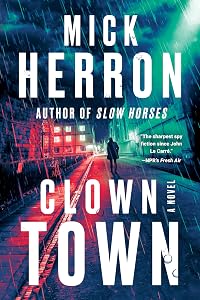
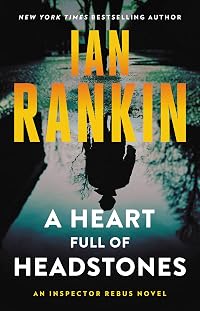



Member Recommendations

Member Reviews
Even when Le Carre is at less than his best, he still laps the rest of the field! My main grouse with this is that Le Carre isn't breaking any new ground, just doing what he does so well: plunging his likeable/humble/shrewd protagonist into a situation that turns increasingly impossible and compromising, then somehow extracting him at the end, bloodied/bruised but somehow unvanquished.
In this case the protagonist is Nat, avid badminton player and experienced agent runner back from the cold and facing retirement - but on his way out, would he mind terribly temporarily supervising a home for washed-up assets? Except, of course, as soon as he arrives, at least one of his ponies transforms into a racehorse and before you know it we're show more surveilling dead drops, reinvestigating long-forgotten intelligence disasters through a new lens, and taking meetings with foreign agents. Game on!
Especially intriguing given current events is the novel's setting in time and space. The plot unfolds against a background of post-Brexit despair and trepidation about the potential consequences of Trump's presidency on the stability of the European Union. What's a patriot to do when his country is being run by "a pig-ignorant foreign secretary" and his nation's closest ally is in the hands of a Putin fanboy? A question that turns out to be as relevant today as it was back in 2018 when Le Carre was setting paper to pen.
Besides his gorgeous use of language, idiom, and metaphor, what I love about Le Carre novels are the all-too-human protagonists, simultaneously idealistic but jaded, resilient but vulnerable, honorable but flawed. Nat's a patriot but, after a career in intelligence, he's also struggling to reconcile the many hypocrisies of his chosen career field. He's brilliant at his professional responsibilities, but painfully insecure when it comes to the care and handling of the wife (liberal lawyer) and daughter (prickly hipster) he adores. His heart is pure, but not exempt from prejudices and desires (for sport, for companionship, for normalcy) that end up leading him into a situation fraught with moral and ethical implications.
The book ends somewhat abruptly: I get the sense that, once Le Carre wrote the parts that mattered to him, he simply couldn't be bothered whisking away the dishes or sweeping up crumbs. Moreover, the ending hits as a bit unrealistic (especially for Le Carre, the ultimate worldly realist), positing that an otherwise shrewd, careful operative would choose morality over duty. But such are the prerogatives of an author at the end of his career, aware that he has nothing left to prove. show less
In this case the protagonist is Nat, avid badminton player and experienced agent runner back from the cold and facing retirement - but on his way out, would he mind terribly temporarily supervising a home for washed-up assets? Except, of course, as soon as he arrives, at least one of his ponies transforms into a racehorse and before you know it we're show more surveilling dead drops, reinvestigating long-forgotten intelligence disasters through a new lens, and taking meetings with foreign agents. Game on!
Especially intriguing given current events is the novel's setting in time and space. The plot unfolds against a background of post-Brexit despair and trepidation about the potential consequences of Trump's presidency on the stability of the European Union. What's a patriot to do when his country is being run by "a pig-ignorant foreign secretary" and his nation's closest ally is in the hands of a Putin fanboy? A question that turns out to be as relevant today as it was back in 2018 when Le Carre was setting paper to pen.
Besides his gorgeous use of language, idiom, and metaphor, what I love about Le Carre novels are the all-too-human protagonists, simultaneously idealistic but jaded, resilient but vulnerable, honorable but flawed. Nat's a patriot but, after a career in intelligence, he's also struggling to reconcile the many hypocrisies of his chosen career field. He's brilliant at his professional responsibilities, but painfully insecure when it comes to the care and handling of the wife (liberal lawyer) and daughter (prickly hipster) he adores. His heart is pure, but not exempt from prejudices and desires (for sport, for companionship, for normalcy) that end up leading him into a situation fraught with moral and ethical implications.
The book ends somewhat abruptly: I get the sense that, once Le Carre wrote the parts that mattered to him, he simply couldn't be bothered whisking away the dishes or sweeping up crumbs. Moreover, the ending hits as a bit unrealistic (especially for Le Carre, the ultimate worldly realist), positing that an otherwise shrewd, careful operative would choose morality over duty. But such are the prerogatives of an author at the end of his career, aware that he has nothing left to prove. show less
John le Carré’s latest novel, Agent Running in the Field, realistically and informatively describes spy tradecraft like only an experienced insider can. [During the 1950s and 1960s, le Carré worked for both the Security Service (MI5) and the Secret Intelligence Service (MI6).] Nat, the narrator and protagonist, is a middle age British spy who believes he is about to be declared “redundant” by his employer, the British Secret Service. Although he is probably in his late 40s, he is very fit; in fact, he is the champion badminton player at the tony Athleticus Club. But he is rather old for an active agent, and more importantly, doesn’t take well to authority. The Secret Service does not fire Nat, but it gives him a rather show more dead-end assignment reporting to a man he detests.
One day, a young American named Ed comes into Nat’s fancy club and challenges him to a badminton match. The two are pretty evenly matched, and after some time, Nat and Ed become fast friends, usually sharing a pint or two after each match. Ed is very vocal about his politics: he thinks Brexit is a disaster for Britain and he hates Trump. One can almost, but not quite, hear the author opining through Ed. Nat is very reserved about expressing his opinions and never discloses his profession - after all, he is a spy. Ed’s affection for Nat becomes so intense that he eventually asks Nat to be the best man at his wedding.
Things get very complicated when Nat’s unit discovers a Russian agent is actively attempting to recruit a British resident to disclose the details of a very secret [so secret that Nat is not even informed of its nature] project involving the U.K. and the U.S.A. Complications proliferate when Nat discovers that the Russians’ target is none other than his friend Ed. The British spy service then tasks Nat with the job of turning Ed into a double agent.
This in fact has been Nat’s specialty over his career: “agent running” - that is, cultivating a source to work for the British Secret Service. It is a long game, requiring patience and a willingness to privilege strategy and tactics over relationships, much like badminton.
Le Carré describes Ed as very moral, but quite naive, and Nat sees him in just that light. Nat knows that Ed’s motives are pure even if his actions may run counter to British interests. Nat is conflicted between his professional duty and personal friendship. Ed is facing substantial prison time if he does not agree to work with the British. His only way of avoiding the Hobson’s choice of prison or double agency is to leave the country, a difficult if not impossible task now that the British have an eye on him.
At this point, Le Carré’s (and Nat’s) knowledge of spy tradecraft takes over and provides a satisfying if not thoroughly happy denouement.
The story is somewhat more complicated than I can do justice to in a short review. Le Carré’s prose is limpid; he is able to carry the action along largely by dialog.
Evaluation: Le Carré may be 88, but he hasn’t lost his touch. I was thoroughly engrossed in this story.
(JAB) show less
One day, a young American named Ed comes into Nat’s fancy club and challenges him to a badminton match. The two are pretty evenly matched, and after some time, Nat and Ed become fast friends, usually sharing a pint or two after each match. Ed is very vocal about his politics: he thinks Brexit is a disaster for Britain and he hates Trump. One can almost, but not quite, hear the author opining through Ed. Nat is very reserved about expressing his opinions and never discloses his profession - after all, he is a spy. Ed’s affection for Nat becomes so intense that he eventually asks Nat to be the best man at his wedding.
Things get very complicated when Nat’s unit discovers a Russian agent is actively attempting to recruit a British resident to disclose the details of a very secret [so secret that Nat is not even informed of its nature] project involving the U.K. and the U.S.A. Complications proliferate when Nat discovers that the Russians’ target is none other than his friend Ed. The British spy service then tasks Nat with the job of turning Ed into a double agent.
This in fact has been Nat’s specialty over his career: “agent running” - that is, cultivating a source to work for the British Secret Service. It is a long game, requiring patience and a willingness to privilege strategy and tactics over relationships, much like badminton.
Le Carré describes Ed as very moral, but quite naive, and Nat sees him in just that light. Nat knows that Ed’s motives are pure even if his actions may run counter to British interests. Nat is conflicted between his professional duty and personal friendship. Ed is facing substantial prison time if he does not agree to work with the British. His only way of avoiding the Hobson’s choice of prison or double agency is to leave the country, a difficult if not impossible task now that the British have an eye on him.
At this point, Le Carré’s (and Nat’s) knowledge of spy tradecraft takes over and provides a satisfying if not thoroughly happy denouement.
The story is somewhat more complicated than I can do justice to in a short review. Le Carré’s prose is limpid; he is able to carry the action along largely by dialog.
Evaluation: Le Carré may be 88, but he hasn’t lost his touch. I was thoroughly engrossed in this story.
(JAB) show less
The last novel published before John le Carré’s death is set in a world where the bad guys are Trump, Putin and Boris rather than Stalin and Ho Chi Minh, and where Brexit has replaced the Cold War as the chief threat to Britain’s security, but otherwise it draws very much on the world of professionalism, betrayal and office politics that we first met in books like The spy who came in from the cold and Tinker, tailor. Nat, the time-served agent-runner and amateur badminton player who narrates this story, returning to the UK after a spell abroad in the full expectation that the Service will want to put him out to grass, would have a lot in common with Alec Lomas and George Smiley. They even talk with the same intonation.
Not le show more Carré’s strongest book — there is the weak initial premise of the two protagonists meeting accidentally at the badminton club and each not noticing that the other’s account of what he does for a living is full of the kind of deliberate vagueness only professional spies ever use (…in this kind of novel). The slightly rushed and uncharacteristically optimistic ending is a disappointment too. But it’s full of good stuff along the way, both in the usual sharp observations of how office politics works in government offices and in the acerbic comments on the current world situation that he puts in the mouths of his characters (a Ukrainian ex-KGB gangster characterises Trump as “Putin’s shit-house cleaner”, for example). show less
Not le show more Carré’s strongest book — there is the weak initial premise of the two protagonists meeting accidentally at the badminton club and each not noticing that the other’s account of what he does for a living is full of the kind of deliberate vagueness only professional spies ever use (…in this kind of novel). The slightly rushed and uncharacteristically optimistic ending is a disappointment too. But it’s full of good stuff along the way, both in the usual sharp observations of how office politics works in government offices and in the acerbic comments on the current world situation that he puts in the mouths of his characters (a Ukrainian ex-KGB gangster characterises Trump as “Putin’s shit-house cleaner”, for example). show less
I was amazed when I saw that Trump and Brexit had actually made it into a LeCarre novel. This was published in 2019 so it was based only on the start of Trump’s first term. If he only knew what was to come. Sigh.
Spoiler alert. I’m about to divulge some serious plot twists so if you would rather be surprised read the book before reading this review.
Like several of LeCarre books this features an older British spy, Nat, in this case he’s old enough to worry about be declared redundant the next time he hears from The Office. He, like many others, is a Russian speaker so he has worked in the Moscow embassy station and assorted embassies behind what we used to call the Iron Curtain. He has a wife, Prue, who’s a lawyer and is aware of show more his real occupation while their daughter, Steff, has been told he’s a Commercial consultant for Her Majesty but now that she’s old enough it’s time to let her in to daddy’s little secret. She’s bright enough to know not to spill the beans but adds yet another reason to the many she has to be angry with her parents about. Nat is now comfortably back in London and is the reigning single’s badminton champion of his club. But one day an upstart young man, Ed Shannon, joins the club specifically to challenge him for the championship. Our man is intrigued and rather than tell Ed to come up through the ranks like everyone else he accepts the challenge. Ed’s a very good player and they begin to play regularly.
Rather than being declared redundant, The Office has asked Nat to manage a small office, The Haven, which has become a dumping ground rather than a seriously operational unit. One of its young members, Flo, is talented but considered erratic and thus has been sidelined. But she has developed an asset who could likely supply important information in a potential operation. The operation, code named Rosebud, needs high level authorization which after real consideration is rejected by the powers that be. Unceremoniously Flo immediately resigns leaving no information as to why and all assuming it had to do with Rosebud not being authorized. Nat was out of the office when this occurred, he assumes it was by design by his superior. He is feeling left out and wants to know why he’s also not read into Project Jericho. All of this leads to his feeling pushed aside. This is all the back story. The real events pick up at this point.
The Office has learned that a major KGB figure is coming to London to complete the recruitment of a mole in one of the sister services and The Office sets up a situation to observe who this double agent might be. Nat is astounded when he recognizes who the mole is, it’s Ed. He immediately tells everyone he knows Ed. This changes everything. Nat is now implicated. He’s investigated for days, removed from his control of The Haven, and confined to house arrest. He is instructed to continue playing badminton with Ed so everything should appear to Ed as normal. But at their next game Ed announces that he is getting married and is now engaged to, wait for it, Flo. To make things even stranger Ed asks Nat to be his Best Man. Turns out Nat had actually introduced Flo to Ed when he needed a partner so they could play a game with Ed’s younger sister. At that time Nat had told Ed he only knew Flo from a chance encounter so he needed to continue this cover story hoping Flo was still playing by the rules. To celebrate, Nat invites Flo and Ed to his house. He hopes to pass surreptitiously to Flo what Ed’s situation is alerting her that Ed will likely be arrested and allow her to get out of this situation before she becomes a target as well. At the dinner Prue is asked to be Flo’s Maid of Honor. Now Prue is part of the mix. Flo, even after reading Nat’s warning message, wants to proceed anyway. She rejects the floated solution to turn Ed back into a British asset, in a sense, a triple agent. She knew Ed both would reject the notion and doubted he could even pull it off. She sees him as bursting to say what is on his mind and incapable of consistently lying, it is not in his nature.
The wedding proceeds. Nat and Prue participate as asked. The Office knows all this. They’re now easily considered accomplices. Now it’s decision time. How do they play the next phase? Go with The Office and throw themselves on its mercy or some plan B. They opt for plan B, misleading The Office and aid Flo and Ed to get out of England. In a sense they do what Nat has long been trained to do, exfiltrate compromised assets to protect them. Why Ed and Flo do what they do makes some sense. They are facing jail and they no longer believe The Office is doing what is best for Britain. Maybe they see what working with Trump will do. But then there’s Nat and Prue. Nat has been shown he is facing, at best, being declared redundant. He has ties outside of Britain so perhaps it’s time to go. And Prue, she’s ready to support Nat, her life long partner. That’s how I see what they’ve done making some sense. Who knows.
A good read. show less
Spoiler alert. I’m about to divulge some serious plot twists so if you would rather be surprised read the book before reading this review.
Like several of LeCarre books this features an older British spy, Nat, in this case he’s old enough to worry about be declared redundant the next time he hears from The Office. He, like many others, is a Russian speaker so he has worked in the Moscow embassy station and assorted embassies behind what we used to call the Iron Curtain. He has a wife, Prue, who’s a lawyer and is aware of show more his real occupation while their daughter, Steff, has been told he’s a Commercial consultant for Her Majesty but now that she’s old enough it’s time to let her in to daddy’s little secret. She’s bright enough to know not to spill the beans but adds yet another reason to the many she has to be angry with her parents about. Nat is now comfortably back in London and is the reigning single’s badminton champion of his club. But one day an upstart young man, Ed Shannon, joins the club specifically to challenge him for the championship. Our man is intrigued and rather than tell Ed to come up through the ranks like everyone else he accepts the challenge. Ed’s a very good player and they begin to play regularly.
Rather than being declared redundant, The Office has asked Nat to manage a small office, The Haven, which has become a dumping ground rather than a seriously operational unit. One of its young members, Flo, is talented but considered erratic and thus has been sidelined. But she has developed an asset who could likely supply important information in a potential operation. The operation, code named Rosebud, needs high level authorization which after real consideration is rejected by the powers that be. Unceremoniously Flo immediately resigns leaving no information as to why and all assuming it had to do with Rosebud not being authorized. Nat was out of the office when this occurred, he assumes it was by design by his superior. He is feeling left out and wants to know why he’s also not read into Project Jericho. All of this leads to his feeling pushed aside. This is all the back story. The real events pick up at this point.
The Office has learned that a major KGB figure is coming to London to complete the recruitment of a mole in one of the sister services and The Office sets up a situation to observe who this double agent might be. Nat is astounded when he recognizes who the mole is, it’s Ed. He immediately tells everyone he knows Ed. This changes everything. Nat is now implicated. He’s investigated for days, removed from his control of The Haven, and confined to house arrest. He is instructed to continue playing badminton with Ed so everything should appear to Ed as normal. But at their next game Ed announces that he is getting married and is now engaged to, wait for it, Flo. To make things even stranger Ed asks Nat to be his Best Man. Turns out Nat had actually introduced Flo to Ed when he needed a partner so they could play a game with Ed’s younger sister. At that time Nat had told Ed he only knew Flo from a chance encounter so he needed to continue this cover story hoping Flo was still playing by the rules. To celebrate, Nat invites Flo and Ed to his house. He hopes to pass surreptitiously to Flo what Ed’s situation is alerting her that Ed will likely be arrested and allow her to get out of this situation before she becomes a target as well. At the dinner Prue is asked to be Flo’s Maid of Honor. Now Prue is part of the mix. Flo, even after reading Nat’s warning message, wants to proceed anyway. She rejects the floated solution to turn Ed back into a British asset, in a sense, a triple agent. She knew Ed both would reject the notion and doubted he could even pull it off. She sees him as bursting to say what is on his mind and incapable of consistently lying, it is not in his nature.
The wedding proceeds. Nat and Prue participate as asked. The Office knows all this. They’re now easily considered accomplices. Now it’s decision time. How do they play the next phase? Go with The Office and throw themselves on its mercy or some plan B. They opt for plan B, misleading The Office and aid Flo and Ed to get out of England. In a sense they do what Nat has long been trained to do, exfiltrate compromised assets to protect them. Why Ed and Flo do what they do makes some sense. They are facing jail and they no longer believe The Office is doing what is best for Britain. Maybe they see what working with Trump will do. But then there’s Nat and Prue. Nat has been shown he is facing, at best, being declared redundant. He has ties outside of Britain so perhaps it’s time to go. And Prue, she’s ready to support Nat, her life long partner. That’s how I see what they’ve done making some sense. Who knows.
A good read. show less
A gentle, convincing, compelling story of modern spying, filled with real people, surprising twists and scathing assessments of our Brexit Blunder and Trump as Putin's poodle.
I recommend listening to John Le Carré narrating "Agent Running In The Field".His measured delivery which captures every nuance, his perfectly rendered accents for characters domestic and foreign and his patient, bear-with-me-I-promise-it-will-be-worth-it tone add authenticity to the read. The book is written as a first-person account of events addressed directly to the reader. Le Carré's narration makes it easy to maintain the illusion that you and he are settled in comfortable armchairs, sharing a glass of something in a private room in his club.
"Agent Running show more In The Field" is the story of a spy in his mid-forties, returned to England towards the end of his operational career after years spent in various parts of Europe, recruiting agents, mostly to combat Russia's hybrid war on Western Europe who is now trying to decide what to do next. He ends us with a domestic posting to an obscure branch of the service where circumstances and his own inability to leave his operational instincts behind, result in him being in the centre of a major counter-espionage operation against the Russians in London.
This plot provides the framework for exploring the impact on long-serving offficers of being led by a government committed to delivering Putin's Brexit and a Foreign Secretary (now Prime Minister) that the security services themselves have identified as a security risk because of his close ties to Russia, at a time when Trump is declaring Europe to be his enemy, undermining NATO and apparently doing whatever Putin asks him to do.
There is an example, early in the book, where the spy tries to explain for the first time to his now-university-age daughter that he is not a low-flying diplomat but a spy tasked with persuading foreign nationals to betray their country. When he explains that some people do this because of their ideals, his daughter, rather sceptically, asks him to specify. What follows gives a great insight into how those who serve our present government may feel about them. The spy says:
"Let's say, just for instance, somebody has an idealistic vision of England as the Mother of all democracies or they love our dear Queen with an unexplained fervour. It may not be an England that exists for us any more, if it ever did, but they think it does, so go with it."
"Do you think it does?"
"With reservations."
"Serious reservations?"
"Well, who wouldn't have for Christ's sake?", I reply, stung by the suggestion that I've somehow failed to notice that the country's in free-fall. A minority Cabinet of tenth raters. A pig-ignorant Foreign Secretary who I'm supposed to be serving. Labour no better. The sheer bloody lunacy of Brexit. I break off. I have feelings too. Let my indignant silence say the rest.
"Then you do have serious reservations," she says in her purest tone, "even very serious. Yes?"
Too late I realise that I've left myself wide open. But perhaps that was what I wanted to achieve all along, to give her the victory, acknowledge that I'm not up to the standard of her brilliant professors and then we can go back to being who we were.
"So, if I've got this right," she resumes as we embark on our next ascent, "for the sake of a country that you have serious reservations about, even very serious, you persuade other nationals to betray their own countries." And as an after thought: "The reason being that they don't share the same reservations that you have about your country, wereas they do have reservations about their own country. Yes?"
Yet this book is more than a polemic against the success of Putin's campaign to destroy the West. It gives a convincing portrait of a man re-assessing his life: his marriage, his relationship with his daughter, the impact of his operational life on his own character and his responsibility to act when he can.
As this is Le Carré, it also provides a very convincing view of modern spycraft which is all the more powerful for its matter-of-factness. Even when the spy places himself in harm's way, Le Carré manages to convey the reality of the threat without resorting to melodrama.
The plot is entertaining. You know that the various strands must be connected but how and when they connected continued to surprise and please me, right up to the surprisingly action-packed ending. show less
I recommend listening to John Le Carré narrating "Agent Running In The Field".His measured delivery which captures every nuance, his perfectly rendered accents for characters domestic and foreign and his patient, bear-with-me-I-promise-it-will-be-worth-it tone add authenticity to the read. The book is written as a first-person account of events addressed directly to the reader. Le Carré's narration makes it easy to maintain the illusion that you and he are settled in comfortable armchairs, sharing a glass of something in a private room in his club.
"Agent Running show more In The Field" is the story of a spy in his mid-forties, returned to England towards the end of his operational career after years spent in various parts of Europe, recruiting agents, mostly to combat Russia's hybrid war on Western Europe who is now trying to decide what to do next. He ends us with a domestic posting to an obscure branch of the service where circumstances and his own inability to leave his operational instincts behind, result in him being in the centre of a major counter-espionage operation against the Russians in London.
This plot provides the framework for exploring the impact on long-serving offficers of being led by a government committed to delivering Putin's Brexit and a Foreign Secretary (now Prime Minister) that the security services themselves have identified as a security risk because of his close ties to Russia, at a time when Trump is declaring Europe to be his enemy, undermining NATO and apparently doing whatever Putin asks him to do.
There is an example, early in the book, where the spy tries to explain for the first time to his now-university-age daughter that he is not a low-flying diplomat but a spy tasked with persuading foreign nationals to betray their country. When he explains that some people do this because of their ideals, his daughter, rather sceptically, asks him to specify. What follows gives a great insight into how those who serve our present government may feel about them. The spy says:
"Let's say, just for instance, somebody has an idealistic vision of England as the Mother of all democracies or they love our dear Queen with an unexplained fervour. It may not be an England that exists for us any more, if it ever did, but they think it does, so go with it."
"Do you think it does?"
"With reservations."
"Serious reservations?"
"Well, who wouldn't have for Christ's sake?", I reply, stung by the suggestion that I've somehow failed to notice that the country's in free-fall. A minority Cabinet of tenth raters. A pig-ignorant Foreign Secretary who I'm supposed to be serving. Labour no better. The sheer bloody lunacy of Brexit. I break off. I have feelings too. Let my indignant silence say the rest.
"Then you do have serious reservations," she says in her purest tone, "even very serious. Yes?"
Too late I realise that I've left myself wide open. But perhaps that was what I wanted to achieve all along, to give her the victory, acknowledge that I'm not up to the standard of her brilliant professors and then we can go back to being who we were.
"So, if I've got this right," she resumes as we embark on our next ascent, "for the sake of a country that you have serious reservations about, even very serious, you persuade other nationals to betray their own countries." And as an after thought: "The reason being that they don't share the same reservations that you have about your country, wereas they do have reservations about their own country. Yes?"
Yet this book is more than a polemic against the success of Putin's campaign to destroy the West. It gives a convincing portrait of a man re-assessing his life: his marriage, his relationship with his daughter, the impact of his operational life on his own character and his responsibility to act when he can.
As this is Le Carré, it also provides a very convincing view of modern spycraft which is all the more powerful for its matter-of-factness. Even when the spy places himself in harm's way, Le Carré manages to convey the reality of the threat without resorting to melodrama.
The plot is entertaining. You know that the various strands must be connected but how and when they connected continued to surprise and please me, right up to the surprisingly action-packed ending. show less
At 88, David Cornwell, much better known as John Le Carré, is still writing exceptional novels about spies, what they do and how, and the impact their work has on their inner wellbeing. His newest creation is less complex than many of his most notable works, but it reflects his view of contemporary politics, particularly Brexit and the shambles of US governance.
The story focuses primarily on Nat, a British agent returning home after an overseas stint "running agents", expecting his career to end after 47 years. Rather than being sacked, he's assigned to direct a deadend bureau in London, of course with a detested, ambitious, and untrustworthy colleague overseeing his handling of the assignment. A primary responsibility is debriefing a show more Russian, ostensibly a defector, but one the Service suspects is intended to be a double agent, who will win the trust of the British and then pass Russian disinformation to them.
Nat quickly finds himself juggling a reunion with his lawyer wife Prue after a multi-year overseas assignment, reconnecting—perhaps more accurately connecting—with a rebellious daughter, readopting a proper British lifestyle, and extending his career as an amoral representative of British intelligence, playing mind games with his superiors in the Service as well as possibly (likely) duplicitous colleagues. The Service has a cast of specialists, and naturally each departmental supervisor is wary of the other supervisors. This is intelligence, after all. Agents manipulating other agents in a realm of intrigue, deception, and, if necessary to achieve a desired end, betrayal.
Then Nat learns of secret British documents being offered to a foreign intelligence service. It triggers perhaps the trickiest "agent running" operation of his career. He suspects many of his long-time colleagues are counting on his failure. Ha!
Recommended. show less
The story focuses primarily on Nat, a British agent returning home after an overseas stint "running agents", expecting his career to end after 47 years. Rather than being sacked, he's assigned to direct a deadend bureau in London, of course with a detested, ambitious, and untrustworthy colleague overseeing his handling of the assignment. A primary responsibility is debriefing a show more Russian, ostensibly a defector, but one the Service suspects is intended to be a double agent, who will win the trust of the British and then pass Russian disinformation to them.
Nat quickly finds himself juggling a reunion with his lawyer wife Prue after a multi-year overseas assignment, reconnecting—perhaps more accurately connecting—with a rebellious daughter, readopting a proper British lifestyle, and extending his career as an amoral representative of British intelligence, playing mind games with his superiors in the Service as well as possibly (likely) duplicitous colleagues. The Service has a cast of specialists, and naturally each departmental supervisor is wary of the other supervisors. This is intelligence, after all. Agents manipulating other agents in a realm of intrigue, deception, and, if necessary to achieve a desired end, betrayal.
Then Nat learns of secret British documents being offered to a foreign intelligence service. It triggers perhaps the trickiest "agent running" operation of his career. He suspects many of his long-time colleagues are counting on his failure. Ha!
Recommended. show less
Nat is an agent runner in “the Office”—one of Britain’s secret intelligence services. He’s approaching the dangerous middle age when he’s too young to be pushed upstairs (even if he wanted to be) but too old to be considered at the top of his game. However, an opportunity for an operation lands in his lap, and with it the chance to prove one last time that he has what it takes.
I picked up this book and couldn’t put it down until I’d finished. The adjectives that spring to mind are “light, crisp, clear”—while some may complain of other le Carré works being labyrinthine, filled with riddles wrapped in intrigues wrapped in enigmas, this is as stripped-down as a spy story can get. It’s up to the minute, being set in show more the UK in 2018, with Brexit and Anglo-American relations high on the national radar, and the remnants of the Cold War play to le Carré’s strengths.
I did have one revelation in the back of my mind from fairly early on, but seeing how it played out, and what other elements of the story came together in the conclusion was well worth the price of admission. show less
I picked up this book and couldn’t put it down until I’d finished. The adjectives that spring to mind are “light, crisp, clear”—while some may complain of other le Carré works being labyrinthine, filled with riddles wrapped in intrigues wrapped in enigmas, this is as stripped-down as a spy story can get. It’s up to the minute, being set in show more the UK in 2018, with Brexit and Anglo-American relations high on the national radar, and the remnants of the Cold War play to le Carré’s strengths.
I did have one revelation in the back of my mind from fairly early on, but seeing how it played out, and what other elements of the story came together in the conclusion was well worth the price of admission. show less
Members
- Recently Added By
Lists

Books Read in 2020
4,379 works; 124 members

Books Read in 2021
5,361 works; 114 members

Las mejores obras literarias leídas en 2020 -- Magistrales (R. D.)
14 works; 1 member

Best Political Fiction
92 works; 12 members
Author Information

215+ Works 99,041 Members
David John Moore Cornwell was born in Poole, Dorsetshire, England in 1931. He attended Bern University in Switzerland from 1948-49 and later completed a B.A. at Lincoln College, Oxford. He taught at Eton from 1956-58 and was a member of the British Foreign Service from 1959 to 1964. He writes espionage thrillers under the pseudonym John le Carré. show more The pseudonym was necessary when he began writing, in the early 1960s because, at that time, he held a diplomatic position with the British Foreign Office and was not allowed to publish under his own name. When his third book, The Spy Who Came in from the Cold, became a worldwide bestseller in 1964, he left the foreign service to write full time. His other works include Call for the Dead; A Murder of Quality; Tinker, Tailor, Soldier, Spy; The Honourable Schoolboy; and Smiley's People. He has received numerous awards for his writing, including the Grand Master Award from the Mystery Writers of America in 1986 and the Diamond Dagger from the Crime Writers Association in 1988. In 2011 he accepted the Goethe Medal. And in 2020, he accepted the Olof Palme Prize. Ten of his books have been adapted for television and motion pictures including The Spy Who Came in from the Cold, The Russia House, The Constant Gardener, A Most Wanted Man, and Our Kind of Traitor. Le Carré's memoir, The Pigeon Tunnel: Stories from my Life, became a New York Times bestseller in 2016. In 2019, he published a spy thriller, Agent Running in the Field. John Le Carré died on December 12, 2020 from pneumonia at the age of 89. (Bowker Author Biography) John le Carre was born in 1931. After attending the univesities of Berne and Oxford, he spent five years in the British Foreign Service. He's the author of eighteen novels, translated into twenty-five languages. He lives in England. (Publisher Provided) show less
Some Editions
Awards and Honors
Distinctions
Series
Belongs to Publisher Series
El balancí [Edicions 62] (811)
Common Knowledge
- Canonical title
- Agent Running in the Field
- Original title
- Agent Running in the Field
- Original publication date
- 2019
- People/Characters
- Anatoly Nathaniel ' Nat'; Prudence ' Prue'; Edward Stanley 'Ed' Shannon; Florence; Madame Galina; Bryn Sykes-Jordan (show all 10); Dominic 'Dom' Trench; Giles Wackford; Percy price; Guy Brammel
- Important places
- London, England
- Important events
- Brexit
- Dedication
- To Jane
- First words
- Our meeting was not contrived.
- Quotations
- “It is my considered opinion that for Britain and Europe, and for liberal democracy across the entire world as a whole, Britain’s departure from the European Union in the time of Donald Trump, and Britain’s consequent u... (show all)nqualified dependence on the United States in an era when the US is heading straight down the road to institutional racism and neo-fascism, is an unmitigated clusterfuck bar none.”
"A minority Tory cabinet of tenth-raters. A pig-ignorant foreign secretary who I’m supposed to be serving. Labour no better. The sheer bloody lunacy of Brexit." - Last words
- (Click to show. Warning: May contain spoilers.)I had wanted to tell him I was a decent man, but it was too late.
- Original language
- English UK
Classifications
Statistics
- Members
- 1,739
- Popularity
- 12,789
- Reviews
- 62
- Rating
- (3.80)
- Languages
- 12 — Danish, Dutch, English, Estonian, Finnish, French, German, Italian, Portuguese, Romanian, Spanish, Swedish
- Media
- Paper, Audiobook, Ebook
- ISBNs
- 53
- ASINs
- 13