On This Page
Description
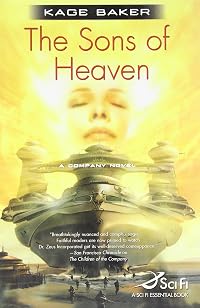
This is the Kage Baker novel everyone has been waiting for: the conclusion to the story of Mendoza and The Company. In The Sons of Heaven, the forces gathering to seize power finally move on the Company. The immortal Lewis wakes to find himself blinded, crippled, and left with no weapons but his voice, his memory, and the friendship of one extraordinary little girl. Edward Alton Bell-Fairfax, resurrected Victorian superman, plans for world domination. The immortal Mendoza makes a desperate show more bargain to delay him. Enforcer Budu, assisted by Joseph, enlists an unexpected ally in his plans to free his old warriors and bring judgment on his former masters. Executive Facilitator Suleyman uses his intelligence operation to uncover the secret of Alpha-Omega, vital to the mortals' survival. The mortal masters of the Company, terrified of a coup, invest in a plan they believe will terminate their immortal servants. And they awaken a powerful AI whom they call Dr Zeus. This web of a story is filled with great climaxes, wonderful surprises, and gripping characters many readers have grown to love or hate. It's a triumph of SF! At the Publisher's request, this title is being sold without Digital Rights Management Software (DRM) applied. show lessTags
Recommendations














Member Reviews
Wow! I could not imagine how [a:Kage Baker|53193|Kage Baker|https://images.gr-assets.com/authors/1224057034p2/53193.jpg] was going to wrap up all the diverse storylines and bring this series to anything resembling a satisfying conclusion, but she did and then some! I can’t say much more for fear of spoilers, but what seemed like an unholy mess filled with dead ends at the conclusion of [b:The Machine's Child|270487|The Machine's Child (The Company, #7)|Kage Baker|https://images.gr-assets.com/books/1389234785s/270487.jpg|262219] turns out to be quite neatly resolved. Aahhhh, the payoff is worth the wait.
Been a long time getting here, but after diversion and digressions, this is it. The immortals versus the mortals, and it must be said at first glance it doesn't seem like much of a competition, the mortals being a rather limp and unimpressive lot, for all that they created the cyborgs to live through all of recorded history preserving knowledge and artifacts to profit the Company in the future. However, there's a lot going on, with factions of evil cyborgs and factions of good (ish) cyborgs racing to be the first to defeat the Company and, basically, take over the world. Then there's poor Lewis trapped under a hill, and Mendoza and the three recombinant Enforcers she has loved and lost at various points during the series, engaged in a show more bizarre family arrangement or experiment outside of time under the watchful eye of a powerful piratical AI. Who will rule all in the end, if anyone? show less
The Sons of Heaven in no way fixed my objection to the multiple-personality problem, although the "raising a cyborg" interludes were occasionally funny. The good parts are Lewis and his captor/princess, the intra-Company politicking, and the overall neat wrap-up of the larger plot, which I was mostly satisfied with.
This is really the end of the series - there are a few other bits and pieces here and there, but they're purely bonus material. I have to say after reading everything, I remain convinced that the Company works better as a conceit to build short stories from than as a world to build actual novels in, but it comes together well enough at the end.
This is really the end of the series - there are a few other bits and pieces here and there, but they're purely bonus material. I have to say after reading everything, I remain convinced that the Company works better as a conceit to build short stories from than as a world to build actual novels in, but it comes together well enough at the end.
It seems no series these days can end without going all super-hero on its characters (I'm looking at you, Peter Hamilton), and Baker's long-running Company series is no exception. "Feh!" I say. If I wanted the Avengers, I'd buy comics.
Still I did enjoy the book. It was certainly much better than its most recent predecessors. There's not a lot of doubt how things will end, only the details of who does what to whom, there being so many parties revved up to be the last mortals or immortals standing in 2355. Baker does a good job bouncing between them. Mendoza is no longer the swooning heroine of a bad romance novel, but neither is she as interesting or as important as she was in the early novels. The rest of Baker's heros would be right at show more home in a classic to late Heinlein novel. Her villains continue to be powerful and unbelievably clueless. It's not a fair fight, but it's a fun one. show less
Still I did enjoy the book. It was certainly much better than its most recent predecessors. There's not a lot of doubt how things will end, only the details of who does what to whom, there being so many parties revved up to be the last mortals or immortals standing in 2355. Baker does a good job bouncing between them. Mendoza is no longer the swooning heroine of a bad romance novel, but neither is she as interesting or as important as she was in the early novels. The rest of Baker's heros would be right at show more home in a classic to late Heinlein novel. Her villains continue to be powerful and unbelievably clueless. It's not a fair fight, but it's a fun one. show less
The Company-- known as Dr. Zeus, Incorporated in its final form-- has sent its immortal cyborg operatives sneaking through the interstices of recorded history all the way back to the Paleolithic, preserving art, literature, cultural information, and extinct species for their own profit. The operatives all work within the Temporal Concordance, the collection of all recorded history... which terminates in the Silence, on July 9, 2355. No one knows what will happen on this day, and many are preparing for it-- some with monstrously dangerous conspiracies, some as loose cannons, largely in ignorance of each other's schemes. Baker weaves together the plot threads of her tales of the Company to a very satisfying finale.
The finale to The Company series.
After blitzing through all eight books of this series, the finale comes as somewhat of a big disappointment as the revelation and resolution of the end came in an anti-climactic fashion, due to part of its deus ex machina nature. This is in some part due to one of the biggest pitfalls of time travel stories; the question of how to answer all the temporal divergent plots in a logical manner without causing a paradox. For "The Sons of Heaven", the solution seems have been in the vein of to "let God sort out the mess" as the ending was literally a deus ex machina ("God from the machine") as the main characters somehow unlocked the secrets of time and space, and for all intents and purposes, became show more omnipotent beings. And with that, dictated the end of the conflict, and thus the series. This is not usually an issue, if the result was due to some conflict the protagonist had to overcome. Instead, the end result seemed to have been divorced from any main plot progression making this seem come out of nowhere with no rational. Yes, Edward was able to somehow discover the true meaning of space-time, but that was also due to his own deus ex machina moment, which makes it more than one too many.
This is all the more disappointing, as Kage Baker was able to effectively build the suspense of the Silence through effective story telling and interesting characters. For the end to come as such, feels really out of place. Instead of a complex and engaging story, we are treated to a Twin Peaks-like tangent, in a "Swiss Family Mendoza" bizarro story that had almost no relevant connection to the other subplots. If this development with Alex/Nicholas/Edward and Mendoza was written in its own book, it would have at least made for some interesting reading, similar to "The Man Who Folded Himself" or "The Time Traveler's Wife", books that deal with the personal stories of living out of time. However, as part of a story that was supposed to be the buildup to the Silence, it felt really out of place, effectively weakening the overall story, instead of strengthening it.
For seven volumes, Kage Baker has managed to keep the series and story alive due to the strength of her characters and by subtly building up the mystery of the Silence. It's sad to see that effort seem to be squandered away with this last volume. show less
After blitzing through all eight books of this series, the finale comes as somewhat of a big disappointment as the revelation and resolution of the end came in an anti-climactic fashion, due to part of its deus ex machina nature. This is in some part due to one of the biggest pitfalls of time travel stories; the question of how to answer all the temporal divergent plots in a logical manner without causing a paradox. For "The Sons of Heaven", the solution seems have been in the vein of to "let God sort out the mess" as the ending was literally a deus ex machina ("God from the machine") as the main characters somehow unlocked the secrets of time and space, and for all intents and purposes, became show more omnipotent beings. And with that, dictated the end of the conflict, and thus the series. This is not usually an issue, if the result was due to some conflict the protagonist had to overcome. Instead, the end result seemed to have been divorced from any main plot progression making this seem come out of nowhere with no rational. Yes, Edward was able to somehow discover the true meaning of space-time, but that was also due to his own deus ex machina moment, which makes it more than one too many.
This is all the more disappointing, as Kage Baker was able to effectively build the suspense of the Silence through effective story telling and interesting characters. For the end to come as such, feels really out of place. Instead of a complex and engaging story, we are treated to a Twin Peaks-like tangent, in a "Swiss Family Mendoza" bizarro story that had almost no relevant connection to the other subplots. If this development with Alex/Nicholas/Edward and Mendoza was written in its own book, it would have at least made for some interesting reading, similar to "The Man Who Folded Himself" or "The Time Traveler's Wife", books that deal with the personal stories of living out of time. However, as part of a story that was supposed to be the buildup to the Silence, it felt really out of place, effectively weakening the overall story, instead of strengthening it.
For seven volumes, Kage Baker has managed to keep the series and story alive due to the strength of her characters and by subtly building up the mystery of the Silence. It's sad to see that effort seem to be squandered away with this last volume. show less
The forces gathering to seize power finally move on the Company. The immortal Lewis wakes to find himself blinded, crippled, and left with no weapons but his voice, his memory, and the friendship of one extraordinary little girl. Edward Alton Bell-Fairfax, resurrected Victorian superman, plans for world domination. The immortal Mendoza makes a desperate bargain to delay him. Enforcer Budu, assisted by Joseph, enlists an unexpected ally in his plans to free his old warriors and bring judgment on his former masters. Executive Facilitator Suleyman uses his intelligence operation to uncover the secret of Alpha-Omega, vital to the mortals' survival. The mortal masters of the Company, terrified of a coup, invest in a plan they believe will show more terminate their immortal servants. And they awaken a powerful AI whom they call Dr Zeus. This web of a story is filled with great climaxes, wonderful surprises, and gripping characters many readers have grown to love or hate.
Well, the roller coaster ride is over. The series is finished. And wow, what a ride it was.
Considering that Baker had about eight different factions (I'm not 100% sure how many, I kept losing track) all making plans for what would happen at the moment of Silence, I am highly impressed by the way she brought everything together and made it all fit together.
In a way, the solution was startlingly simple after all the machinations involved in getting there. I sort of feel like it should have been a little anti-climatic, but it wasn't. Instead, we slipped neatly into the resolution and fitted there rather nicely.
The main story of Mendoza and her men continues apace. I was terribly worried about Edward and what he was going to do by the end of the previous book, and again, Baker works out a neat solution. At it's topmost level, there's a little bit of a 'squick factor' in what she does, so I was very impressed with the way she made everything fall into place. This all led to a most delightful epilogue of a few paragraps that really summed up Mendoza's "happy ending". (And the opportunity this provides to totally disconcert Joseph was a delight.)
I also thought the reason for the Silence, once we found out what it was, was so beautifully simple it was totally brilliant.
I did get a little lost at one point, but as it was the moment when she jumped from "science" to "super science" I'm willing to take the blame myself and say that my brain failed to make the jump with the author. I still got the whole drift of where she was going and I'm happy with that, but I'm sure I missed some nice subtleties. However, give me a few years and I'm sure I'll be reading the series again (if I can get my grubby little paws on copies of the earlier books) so hopefully it will make more sense then. I find that that is usually the case for me.
I also found myself reading this book in small snippets instead of digesting in whole in one big gulp as I did with the earlier volumes. I think this was a combination of two thing - my health at the time and the fact I didn't want the story to end almost exactly as much as I wanted to find out the end of it. This didn't hurt my reading at all and I enjoyed my progress through the book and the ending.
So even if I did get a little confused for a bit, The Sons of Heaven got fully marks from me and the series as a whole would get a very solid 9/10 from this satisfied reader.
The Sons of Heaven
Kage Baker
10/10
As a reminder and guide, the full series is:
In the Garden of Iden
Sky Coyote
Mendoza in Hollywood
The Graveyard Game
The Life of the World to Come
The Children of the Company
The Machine's Child
The Sons of Heaven
There are also two books of short stories - Black Projects, White Knights and Gods and Pawns. All the stories are fun, but I feel the only one you really need to read to help the series make sense is Welcome to Olympus, Mr Hearst in Gods and Pawns. show less
Well, the roller coaster ride is over. The series is finished. And wow, what a ride it was.
Considering that Baker had about eight different factions (I'm not 100% sure how many, I kept losing track) all making plans for what would happen at the moment of Silence, I am highly impressed by the way she brought everything together and made it all fit together.
In a way, the solution was startlingly simple after all the machinations involved in getting there. I sort of feel like it should have been a little anti-climatic, but it wasn't. Instead, we slipped neatly into the resolution and fitted there rather nicely.
The main story of Mendoza and her men continues apace. I was terribly worried about Edward and what he was going to do by the end of the previous book, and again, Baker works out a neat solution. At it's topmost level, there's a little bit of a 'squick factor' in what she does, so I was very impressed with the way she made everything fall into place. This all led to a most delightful epilogue of a few paragraps that really summed up Mendoza's "happy ending". (And the opportunity this provides to totally disconcert Joseph was a delight.)
I also thought the reason for the Silence, once we found out what it was, was so beautifully simple it was totally brilliant.
I did get a little lost at one point, but as it was the moment when she jumped from "science" to "super science" I'm willing to take the blame myself and say that my brain failed to make the jump with the author. I still got the whole drift of where she was going and I'm happy with that, but I'm sure I missed some nice subtleties. However, give me a few years and I'm sure I'll be reading the series again (if I can get my grubby little paws on copies of the earlier books) so hopefully it will make more sense then. I find that that is usually the case for me.
I also found myself reading this book in small snippets instead of digesting in whole in one big gulp as I did with the earlier volumes. I think this was a combination of two thing - my health at the time and the fact I didn't want the story to end almost exactly as much as I wanted to find out the end of it. This didn't hurt my reading at all and I enjoyed my progress through the book and the ending.
So even if I did get a little confused for a bit, The Sons of Heaven got fully marks from me and the series as a whole would get a very solid 9/10 from this satisfied reader.
The Sons of Heaven
Kage Baker
10/10
As a reminder and guide, the full series is:
In the Garden of Iden
Sky Coyote
Mendoza in Hollywood
The Graveyard Game
The Life of the World to Come
The Children of the Company
The Machine's Child
The Sons of Heaven
There are also two books of short stories - Black Projects, White Knights and Gods and Pawns. All the stories are fun, but I feel the only one you really need to read to help the series make sense is Welcome to Olympus, Mr Hearst in Gods and Pawns. show less
Members
- Recently Added By
Author Information

105+ Works 11,922 Members
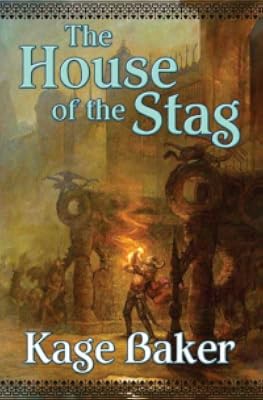
Kage Baker was born in Hollywood, California on June 10, 1952. Her first novel, In the Garden of Iden, was published in 1997. She was a science fiction and fantasy writer, who was best known for The Company series. Her other works included Mendoza in Hollywood (2000), House of the Stag (2009), and the short story Caverns of Mystery (2009). The show more Empress of Mars (2003) won the Theodore Sturgeon Award. She died from uterine cancer on January 31, 2010. (Bowker Author Biography) show less
Some Editions
Awards and Honors
Awards
Series

Work Relationships
Is contained in
Common Knowledge
- Canonical title
- The Sons of Heaven
- Original publication date
- 2007-07-10
- Dedication
- To the man himself.
- First words
- Before the first stone was set in Zimbabwe's wall...
- Last words
- (Click to show. Warning: May contain spoilers.)There are few things in life as annoying as being forgiven by Nicholas Harpole.
Classifications
Statistics
- Members
- 505
- Popularity
- 59,711
- Reviews
- 23
- Rating
- (3.84)
- Languages
- English
- Media
- Paper, Ebook
- ISBNs
- 3
- ASINs
- 1