On This Page
Description
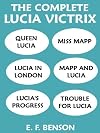
The Mapp and Lucia novels feature humorous incidents in the lives of (mainly) upper-middle-class British characters in the 1920s and 1930s, many of whom do not work for a living, who vie for social prestige and one-upmanship in an atmosphere of extreme cultural snobbery. Several of them are set in the small seaside town of Tilling, closely based on Rye, East Sussex, where the author Benson lived for a number of years and (like Lucia) served as mayor.Tags
Recommendations






















Member Reviews
Queen Lucia
And now for our heavenly Mozart. You must be patient with me, Georgino, for you know how badly I read. Caro! How difficult it looks! I am frightened! Lucia never saw such a dwefful thing to read!'
And it had been those very bars which Georgie had heard through the open window just now.
'Georgie's is much more dwefful!' he said, remembering the double sharp that came in the second bar. 'Georgie fwightened, too at reading it. O-o-h!' and he gave a little scream. 'Cattivo Mozart, to write anything so dwefful diffy!'
A comedy of manners, set in an English village in the 1920s. Emmeline Lucas (known as Lucia to her friends) rules the upper-class inhabitants of the Elizabethan cottages in Riseholme, guiding all their social and show more artistic activities with the loyal support of her husband Philip and her friend Georgie Pillson. Her pretentiousness is embarrassingly awful, but very funny; speaking Italian with her husband and baby-talk with Georgie, building an extension to her house furnishing it in the Elizabethan manner, with rushes on the floor, 16th century books and no electric lighting, practicing her part of new piano duets then claiming that it is the first time she has opened the music when she first practises with Georgie (although he knows she does so, and does the same himself), and planning all artistic activities well in advance so she has time to read up on the subject and appear an expert.
When Lucia 'steals' Daisy Quantock's Indian guru, moving him into her spare bedroom and running yoga and meditation classes at her house, her subjects start to get restless, and she finally gets her comeuppance when a newcomer charms the villagers away from her without even trying, including her beloved Georgie.
Miss Mapp
'And what about Miss Mapp being told?'
'She'll find it out by degrees,' said the ruthless Diva. 'It will hurt more in bits.'
'Oh, but she mustn't be hurt,' said Miss Mackintosh. 'She's too precious, I adore her.'
'So do we,' said Diva. 'But we like her to be found out occasionally. You will, too, when you know her.'
From the garden room of her Georgian house in the town of Tilling, situated at a sharp bend in the road, Miss Elizabeth Mapp has a perfect view of her neighbours' comings and goings. Armed with opera glasses and notebook, she is well-placed to scheme, spread gossip and manipulate the townsfolk, but unfortunately for Elizabeth, her friend and main rival, Godiva 'Diva' Plaistow, usually manages to get her own back. The struggle for social pre-eminence takes place during tea parties, bridge games, rounds of golf and the daily shopping trips, accompanied by malicious gossip, long-held grudges, quarrelling and blatant hypocrisy.
Lucia in London
Types and striking characters like Lucia, who pursued undaunted and indefatigable their aim in life, were rare, and when they occurred should be studied with reverent affection . . . Sometimes on of the old and original members of the Luciaphils discovered others, and if when Lucia's name was mentioned an eager and kindly light shone in their eyes, and they said in a hushed whisper, 'Did you hear who was there on Thursday?' they thus disclosed themselves as Luciaphils . . .
In this book, Pepino inherits a house in London from an aunt, and Lucia decides that they will spend part of their time there and part in Riseholme. Lucia throws herself into London society with her usual determination, but unfortunately she rather neglects Riseholme, even her beloved Georgie, and when she brings her smart new friends down for the weekend and doesn't so much as introduce them to her old friends, it is the last straw and Riseholme sends her to Coventry. And Nemesis is waiting for her in the wings.
My favourite part was the Luciaphils, a group of Lucia's London friends who know exactly what Lucia is up to, but adore her for it, and gather in gleeful huddles to discuss her latest brazen acts of social climbing.
Mapp and Lucia
But Foljambe, Cadman!' he cried. 'Foljambe can't come back here every night from Riseholme. What am I to do ? Is it all irrevocable?'
Lucia bridled. She was quite aware that this parting (if there was to be one) between him and Foljambe would be a dagger, but it was surprising, to say the least, that the thought of the parting between herself and him should not have administered him the first shock. However, there it was. Foljambe first by all means.
When Lucia, having retreated from the social whirl of Riseholme over the last year, finds that Daisy Quantock has cast herself in the starring role of Queen Elizabeth in Riseholme's Elizabethan fete, she decides to absent herself from Riseholme for the summer, and takes Miss Mapp's house in Tilling for August and September. Lucia takes exception to Miss Mapp's proprietorial attitude towards her, and refusing to let herself be 'run', she introduces the exciting innovation of dinner parties to the townsfolk, whose main social activities up to that point had been tea followed by bridge. The inhabitants of Tilling don't take sides, but look on enthralled at the struggle for social supremacy between Elizabeth Mapp and the newcomer. Georgie follows Lucia to Riseholme, but is more worried about the possibility of losing his peerless maid Foljambe, than about anything Lucia does.
Lucia's Progress
You know how I hate all fuss, dear Padre,' she said, 'but I do think, don't you, that Tilling would wish for a little pomp and ceremony. An idea occurred to me: the Mayor and Corporation perhaps might like to escort the Bishop in procession to the church from here after lunch. If that is their wish, I should not dream of opposing it. Maces, scarlet robes; there would be a picturesqueness about it which would be suitable on such an occasion. Of course I couldn't suggest it myself, but, as Vicar, you might ascertain what they felt.'
The last-but-one of E.F. Benson's books about Lucia and Miss Mapp is just as full of social climbing, back-biting and breathtaking hypocrisy as the others, but there is quite a surprise towards the end.
Trouble for Lucia
Georgie felt the sensation, that was becoming odiously familiar, of being hunted and harried. Life for him was losing that quality of leisure, which gave one time to feel busy and ready to take so great an interest in the minute happenings of the day. Lucia was poisoning that eager fount by this infusion of Mayoral duties and responsibilities, and tedious schemes for educational lectures and lighting of the streets. True, the old pellucid spring gushed out sometimes: who, for instance, but she could have made Tilling bicycle-crazy or have convinced Susan that Blue Birdie had gone to a higher sphere? That was her real metier, to render the trivialities of life intense for others. But how her schemes for the good of Tilling bored him.
This books opens with Lucia about to become Mayor of Tilling, and the other women all vying for the role of her Mayoress. I was pleased to see that Lucia didn't get things all her own way this time, as she was conceited enough about being Mayor and just loved everyone calling her 'Your Worship'. Among other set-backs, Georgie is bored with all Lucia' talk of politics, and mutinies when she says she is too busy for them to go and stay with Olga Bracely, and an absent-minded Duchess causes her to lose face with her friends. I can't say I liked the sub-plot about Susan Wyse's budgie - gruesome and rather tasteless.
This is the last of E.F. Benson's Lucia books, although Tom Holt has written a couple more called "Lucia in Wartime" and "Lucia Triumphant", one of which I read one of a long time ago. Until the last few months it was the only Lucia book I had read. show less
And now for our heavenly Mozart. You must be patient with me, Georgino, for you know how badly I read. Caro! How difficult it looks! I am frightened! Lucia never saw such a dwefful thing to read!'
And it had been those very bars which Georgie had heard through the open window just now.
'Georgie's is much more dwefful!' he said, remembering the double sharp that came in the second bar. 'Georgie fwightened, too at reading it. O-o-h!' and he gave a little scream. 'Cattivo Mozart, to write anything so dwefful diffy!'
A comedy of manners, set in an English village in the 1920s. Emmeline Lucas (known as Lucia to her friends) rules the upper-class inhabitants of the Elizabethan cottages in Riseholme, guiding all their social and show more artistic activities with the loyal support of her husband Philip and her friend Georgie Pillson. Her pretentiousness is embarrassingly awful, but very funny; speaking Italian with her husband and baby-talk with Georgie, building an extension to her house furnishing it in the Elizabethan manner, with rushes on the floor, 16th century books and no electric lighting, practicing her part of new piano duets then claiming that it is the first time she has opened the music when she first practises with Georgie (although he knows she does so, and does the same himself), and planning all artistic activities well in advance so she has time to read up on the subject and appear an expert.
When Lucia 'steals' Daisy Quantock's Indian guru, moving him into her spare bedroom and running yoga and meditation classes at her house, her subjects start to get restless, and she finally gets her comeuppance when a newcomer charms the villagers away from her without even trying, including her beloved Georgie.
Miss Mapp
'And what about Miss Mapp being told?'
'She'll find it out by degrees,' said the ruthless Diva. 'It will hurt more in bits.'
'Oh, but she mustn't be hurt,' said Miss Mackintosh. 'She's too precious, I adore her.'
'So do we,' said Diva. 'But we like her to be found out occasionally. You will, too, when you know her.'
From the garden room of her Georgian house in the town of Tilling, situated at a sharp bend in the road, Miss Elizabeth Mapp has a perfect view of her neighbours' comings and goings. Armed with opera glasses and notebook, she is well-placed to scheme, spread gossip and manipulate the townsfolk, but unfortunately for Elizabeth, her friend and main rival, Godiva 'Diva' Plaistow, usually manages to get her own back. The struggle for social pre-eminence takes place during tea parties, bridge games, rounds of golf and the daily shopping trips, accompanied by malicious gossip, long-held grudges, quarrelling and blatant hypocrisy.
Lucia in London
Types and striking characters like Lucia, who pursued undaunted and indefatigable their aim in life, were rare, and when they occurred should be studied with reverent affection . . . Sometimes on of the old and original members of the Luciaphils discovered others, and if when Lucia's name was mentioned an eager and kindly light shone in their eyes, and they said in a hushed whisper, 'Did you hear who was there on Thursday?' they thus disclosed themselves as Luciaphils . . .
In this book, Pepino inherits a house in London from an aunt, and Lucia decides that they will spend part of their time there and part in Riseholme. Lucia throws herself into London society with her usual determination, but unfortunately she rather neglects Riseholme, even her beloved Georgie, and when she brings her smart new friends down for the weekend and doesn't so much as introduce them to her old friends, it is the last straw and Riseholme sends her to Coventry. And Nemesis is waiting for her in the wings.
My favourite part was the Luciaphils, a group of Lucia's London friends who know exactly what Lucia is up to, but adore her for it, and gather in gleeful huddles to discuss her latest brazen acts of social climbing.
Mapp and Lucia
But Foljambe, Cadman!' he cried. 'Foljambe can't come back here every night from Riseholme. What am I to do ? Is it all irrevocable?'
Lucia bridled. She was quite aware that this parting (if there was to be one) between him and Foljambe would be a dagger, but it was surprising, to say the least, that the thought of the parting between herself and him should not have administered him the first shock. However, there it was. Foljambe first by all means.
When Lucia, having retreated from the social whirl of Riseholme over the last year, finds that Daisy Quantock has cast herself in the starring role of Queen Elizabeth in Riseholme's Elizabethan fete, she decides to absent herself from Riseholme for the summer, and takes Miss Mapp's house in Tilling for August and September. Lucia takes exception to Miss Mapp's proprietorial attitude towards her, and refusing to let herself be 'run', she introduces the exciting innovation of dinner parties to the townsfolk, whose main social activities up to that point had been tea followed by bridge. The inhabitants of Tilling don't take sides, but look on enthralled at the struggle for social supremacy between Elizabeth Mapp and the newcomer. Georgie follows Lucia to Riseholme, but is more worried about the possibility of losing his peerless maid Foljambe, than about anything Lucia does.
Lucia's Progress
You know how I hate all fuss, dear Padre,' she said, 'but I do think, don't you, that Tilling would wish for a little pomp and ceremony. An idea occurred to me: the Mayor and Corporation perhaps might like to escort the Bishop in procession to the church from here after lunch. If that is their wish, I should not dream of opposing it. Maces, scarlet robes; there would be a picturesqueness about it which would be suitable on such an occasion. Of course I couldn't suggest it myself, but, as Vicar, you might ascertain what they felt.'
The last-but-one of E.F. Benson's books about Lucia and Miss Mapp is just as full of social climbing, back-biting and breathtaking hypocrisy as the others, but there is quite a surprise towards the end.
Trouble for Lucia
Georgie felt the sensation, that was becoming odiously familiar, of being hunted and harried. Life for him was losing that quality of leisure, which gave one time to feel busy and ready to take so great an interest in the minute happenings of the day. Lucia was poisoning that eager fount by this infusion of Mayoral duties and responsibilities, and tedious schemes for educational lectures and lighting of the streets. True, the old pellucid spring gushed out sometimes: who, for instance, but she could have made Tilling bicycle-crazy or have convinced Susan that Blue Birdie had gone to a higher sphere? That was her real metier, to render the trivialities of life intense for others. But how her schemes for the good of Tilling bored him.
This books opens with Lucia about to become Mayor of Tilling, and the other women all vying for the role of her Mayoress. I was pleased to see that Lucia didn't get things all her own way this time, as she was conceited enough about being Mayor and just loved everyone calling her 'Your Worship'. Among other set-backs, Georgie is bored with all Lucia' talk of politics, and mutinies when she says she is too busy for them to go and stay with Olga Bracely, and an absent-minded Duchess causes her to lose face with her friends. I can't say I liked the sub-plot about Susan Wyse's budgie - gruesome and rather tasteless.
This is the last of E.F. Benson's Lucia books, although Tom Holt has written a couple more called "Lucia in Wartime" and "Lucia Triumphant", one of which I read one of a long time ago. Until the last few months it was the only Lucia book I had read. show less
Though my favorite Benson is Paying Guests (see my rev), I prepared for it through the Lucia series, a delightful rendering of neighborly interface before neighbors were armed and dangerous. The Lucia novels embrace village life and bourgeoise pretense in exactly the right level of critique and amusement.
One would not suspect them written by the son of an Archbishop of Canterbury--and the founder of the newest English Cathedral, Truro. His siblings followed their father into the church; they were not known for their humor, though the church must require some.
Lucia's coastal town of Tilling [and its summer dynamics, each homeowner moving out to the next lower rent to make way for what Mainers call "the summer complaint") explains any show more coastal town in New England. The particular dynamics of Tilling are more closed, bounded almost by the town itself--which only adds to our amusement.
The neighborly concern for others' gardens, or tea, or habits, strikes home as a fundamental of human behavior. The great ape knows where, exactly, she is on the pecking order, while the novelist brings exactly that into question. Perhaps only an Archibishop's son could write with such assurance and amusement about pecking order and neighborly intrusion.
I wonder if Benson will ever be "taught." He is too accessible, too apparently simple, and yet doubtless, one of the greatest novelists of the 20th C. Americans will never credit my statement, since they're looking for "serious" lit. I have told them for decades (in classes): the best "serious" lit is humorous--Chaucer, Shakespeare, Moliere, Wycherley, L Sterne, Byron, Austen, Dickens, Twain, Bellow, etc. show less
One would not suspect them written by the son of an Archbishop of Canterbury--and the founder of the newest English Cathedral, Truro. His siblings followed their father into the church; they were not known for their humor, though the church must require some.
Lucia's coastal town of Tilling [and its summer dynamics, each homeowner moving out to the next lower rent to make way for what Mainers call "the summer complaint") explains any show more coastal town in New England. The particular dynamics of Tilling are more closed, bounded almost by the town itself--which only adds to our amusement.
The neighborly concern for others' gardens, or tea, or habits, strikes home as a fundamental of human behavior. The great ape knows where, exactly, she is on the pecking order, while the novelist brings exactly that into question. Perhaps only an Archibishop's son could write with such assurance and amusement about pecking order and neighborly intrusion.
I wonder if Benson will ever be "taught." He is too accessible, too apparently simple, and yet doubtless, one of the greatest novelists of the 20th C. Americans will never credit my statement, since they're looking for "serious" lit. I have told them for decades (in classes): the best "serious" lit is humorous--Chaucer, Shakespeare, Moliere, Wycherley, L Sterne, Byron, Austen, Dickens, Twain, Bellow, etc. show less
This is a massive book, nearly 1000 pages altogether, and I devoured it in big bites. It is the story of a socialite named Emmeline Lucas (Lucia to her friends) who was the undisputed social leader of her small village of Riseholme. Set in the 1920s and early 30s, these novels are filled with delightful characterizations of people for whom the smallest details of each others' lives are the fuel that runs the gossip mill and social whirl. The first two novels center on Lucia herself, a woman who always comes out on top no matter how things turn out, who manipulates things to her best advantage on a daily basis. And while her neighbors may grumble about her high-handedness and haughty ways, they are all fully aware that without Lucia and show more her grand ideas and grace, their lives would be dull as dishwater. You will have to be a big fan of British humor in order to fully enjoy Lucia's adventures, but I found her to be one of the most memorable fictional characters I've ever met.
Lucia is completely absent in Miss Mapp, as it centers on another social dominatrix in the village of Tilling. The characters of Tilling are well fleshed out and absolutely hilarious, as well. They make no secret of their resentment of Elizabeth Mapp and when her position of authority in Tilling is challenged by Godiva Plaistow, the results are intriguingly funny. Eventually, Benson brings these two titans together in "Mapp and Lucia" when Lucia moves to Tilling after the death of her husband. The sparks fly continually between them as they constantly maneuver themselves and the other villagers in a battle for social supremacy.
The characters in these books are as colorful as any I've ever seen gathered together on the written page. Reading all of these delightful works, one right after the other, was almost as decadent as standing at the kitchen sink and eating a whole quart of Jamoca Almond Fudge ice cream, all by myself. I didn't want them to end, and I know that I'll be making some return visits to Tilling in years to come. These are keepers. Every single novel gets a high 5 from me. show less
Lucia is completely absent in Miss Mapp, as it centers on another social dominatrix in the village of Tilling. The characters of Tilling are well fleshed out and absolutely hilarious, as well. They make no secret of their resentment of Elizabeth Mapp and when her position of authority in Tilling is challenged by Godiva Plaistow, the results are intriguingly funny. Eventually, Benson brings these two titans together in "Mapp and Lucia" when Lucia moves to Tilling after the death of her husband. The sparks fly continually between them as they constantly maneuver themselves and the other villagers in a battle for social supremacy.
The characters in these books are as colorful as any I've ever seen gathered together on the written page. Reading all of these delightful works, one right after the other, was almost as decadent as standing at the kitchen sink and eating a whole quart of Jamoca Almond Fudge ice cream, all by myself. I didn't want them to end, and I know that I'll be making some return visits to Tilling in years to come. These are keepers. Every single novel gets a high 5 from me. show less
Honestly I couldn't think of any better stay-at-home distraction reading than 900+ pages of Benson's delightful tales of small-stakes English country melodramatics. It did the trick perfectly.
Light weight and very much of their time, these novels follow the social adventures of upper-middle class residents of quiet country villages near London in the period between the wars. Lucia is pretentious and social climbing, but an interesting character study of a woman whose abilities would have taken her in quite different directions in another era. As Nancy Mitford remarks in her introduction, the oddly sexless Georgie Pillson and the rebellious woman painter, Irene, could not be creations of a modern writer. The rise and fall of fads among Lucia's social circle: spiritualism, Ouija boards, yoga, raw food diets, exercise programs and such, reminds us that human nature doesn't change that much, at least among those who have show more resources and time to devote to hobbies. show less
I've read this compendium so many times that the pages are falling out. It is addictive and hilarious and delicious. All I can say is that if you've never read about Lucia and Miss Mapp -- I envy you because you've a singularly great read coming. If you can find this edition in a used bookshop, buy it.
Six books in all. Loved reading these; such fun. Here's what I wrote after reading in 1988: "Life in small villages of Edwardian England - did people really live so? The memorable characters: Mrs. Emmeline Lucas Pillson (Lucia) - The Queen of Riseholm and then Tilling. Simply unbeatable. Georgia Pillson - The almost confirmed bachelor. A lover of embroidery and fashionable clothes. Elizabeth Mapp - Prior Queen of Tilling. Formidable and vicious. Quaint Irene - Eccentric and artistic. A downright lover of Lucia. Quite enjoyable and very often humorous. Recall the hoarding of food in Miss Mapp's garden room (Lucia's giardino segretto) closet and Diva's spilling the secret. Great fun." Wasn't the wallpaper you put up in the first house show more inspired by these books? show less
Members
- Recently Added By
Lists

Best of British Literature
226 works; 40 members

Pre-1969 LGBTQ Literature
184 works; 68 members

Favorite Series
238 works; 94 members

Books We Want To Read Again For The First Time
384 works; 160 members

Folio Society
831 works; 50 members
Author Information

256+ Works 9,850 Members
Some Editions
Series

Belongs to Publisher Series
Work Relationships
Contains
Common Knowledge
- Canonical title
- The Mapp and Lucia Novels
- Original title
- The Mapp and Lucia Novels
- Alternate titles
- Make Way For Lucia
- Original publication date
- 1994
- People/Characters
- Emmeline Lucas (Lucia); Elizabeth Mapp; Philip Lucas (Pepino); Georgie Pillson
- Important places
- Tilling, Hampshire, England, UK; Riseholme, Worcestershire, England, UK; London, England, UK
- Important events
- Jazz Age; 1930s
- Related movies
- "Mapp & Lucia" (1985 | IMDb | TV series); Mapp & Lucia (2014 | IMDb | TV series)
- Disambiguation notice
- This is all six (and only six) works in the Mapp & Lucia series (a single volume OR the six volume set containing all six works in the series). Whether a single volume or six volumes, these are the same six works, and, th... (show all)erefore, should be kept combined.
Please do not combine these six-work editions with single editions or editions containing works other than all, and only, the original six by Benson.
Classifications
Statistics
- Members
- 569
- Popularity
- 52,135
- Reviews
- 18
- Rating
- (4.49)
- Languages
- Czech, English, French, Italian
- Media
- Paper, Ebook
- ISBNs
- 13
- ASINs
- 25