Wakenhyrst
by Michelle Paver
On This Page
Description
In Edwardian Suffolk, a manor house stands alone in a lost corner of the Fens: a glinting wilderness of water whose whispering reeds guard ancient secrets. Maud is a lonely child growing up without a mother, ruled by her repressive father. When he finds a painted medieval devil in a graveyard, unhallowed forces are awakened. Maud's battle has begun. She must survive a world haunted by witchcraft, the age-old legends of her beloved fen - and the even more nightmarish demons of her show more father's past. Spanning five centuries, Wakenhyrst is a darkly gothic thriller about murderous obsession and one girl's longing to fly free by the bestselling author of Dark Matter and Thin Air. Wakenhyrst is an outstanding new piece of story-telling, a tale of mystery and imagination laced with terror. It is a masterwork in the modern gothic tradition that ranges from Mary Shelley and Bram Stoker to Neil Gaiman and Sarah Perry. show lessTags
Recommendations








Member Reviews
I completely forgot that I borrowed this novel - four years ago! - until I found the title in my Kindle library. Overall, I won't say that I enjoyed the story, but I was certainly captivated and loved the author's writing. Maud is a strong protagonist, befitting the name (my great grandmother's), and the historical and geographical research helped to ground, no pun intended, the fantastical plot. The Suffolk fens make a beautiful and wild natural setting and the connection between the Stearne family at Wake's End and the marshes that surround them made the house into a character, like Manderley. I would love to learn more about that area. Also, bonus points to the author for including the magpie, or chatterpie, that she rescued in real show more life, even if he did meet a sad end - corvids are incredible birds!
An unearthly combination of The Secret Garden and Where The Crawdads Sing, in my opinion, with a dash of Lady Chatterley's Lover thrown in (sorry Maud!), Wakenhyrst is a powerful read full of strong imagery and unlikeable yet sympathetic characters. Fewer chapters full of the father's religious waffling would have suited me better, but I'm glad I finally got around to reading this one! show less
An unearthly combination of The Secret Garden and Where The Crawdads Sing, in my opinion, with a dash of Lady Chatterley's Lover thrown in (sorry Maud!), Wakenhyrst is a powerful read full of strong imagery and unlikeable yet sympathetic characters. Fewer chapters full of the father's religious waffling would have suited me better, but I'm glad I finally got around to reading this one! show less
"Something has been let loose..." In Edwardian Suffolk, a manor house stands alone in a lost corner of the Fens: a glinting wilderness of water whose whispering reeds guard ancient secrets. Maud is a lonely child growing up without a mother, ruled by her repressive father. When he finds a painted medieval devil in a graveyard, unhallowed forces are awakened. Maud's battle has begun. She must survive a world haunted by witchcraft, the age-old legends of her beloved fen and the even more nightmarish demons of her father's past.
Maud is a memorable character... a smart, and courageous girl who lived in a time when females weren't valued much for anything except childbearing, and certainly not for any of their other abilities. Maud loved to show more read, and she had educated herself, but she is very naive when it comes to life in general.
The book rushes into how difficult life was for women at that time, being forced to endure so many things in order to just have a passable life. Social norms have trapped Maud in a life she never wanted and pushed her to be someone she wasn't. Then she falls for a gardener, bringing a little happiness in an otherwise claustrophobic, lonely existence. In spite of this, the "main man" in her life is and will always be her awful, tyrannical father, who rules her life as well as the entire household. Maud learning who her father really is gradually destroys her innocence and any idealism she may have had.
Her father, Edmund Stearn is a man who goes to church and talks about God, but neglects his wife, regularly visits brothels, and is hiding a secret so deep he has almost forgotten that it even exists. He doesn’t recognize his daughter’s intelligence but simply uses her as a tool for his work. When Maud discovers his hypocrisy, she promises to somehow make him pay.
The daughter vs the father storyline was a compelling one! The setting of the manor house in Wake’s End feels remote and cut off from the world. But Maud finds solace in the Fen. I felt like I was there through the vibrant and life-like descriptions of the place. Little details like the characters’ superstitions made for a vivid reading experience. Edmund’s diary entries take up a large part of the story. I thought the entries were interesting at first but after a while they became tiring as they were in reality, just the thoughts of a very unlikable, unredeemable, totally self-centered, man.
The book explores the class differences, the gender disparity, as well as religion, superstitions and madness. There are some hints of the supernatural, but it seems to become mostly an afterthought. The real horrors are the unwavering beliefs of this madman and the desperate life of his teenage daughter. A daughter desperately fighting to be free. When the truth of the murder finally comes out, it feels like the pieces finally fall into place.... but the effect is still devastating.
It's not a book that I would have rushed right out to buy or to read...but it was an interesting and thought producing novel...a gothic "slow burner" that is both chilling and heartbreaking. Something that is certainly capable of making the 20th Century reader thankful they didn't live in that period of history. show less
Maud is a memorable character... a smart, and courageous girl who lived in a time when females weren't valued much for anything except childbearing, and certainly not for any of their other abilities. Maud loved to show more read, and she had educated herself, but she is very naive when it comes to life in general.
The book rushes into how difficult life was for women at that time, being forced to endure so many things in order to just have a passable life. Social norms have trapped Maud in a life she never wanted and pushed her to be someone she wasn't. Then she falls for a gardener, bringing a little happiness in an otherwise claustrophobic, lonely existence. In spite of this, the "main man" in her life is and will always be her awful, tyrannical father, who rules her life as well as the entire household. Maud learning who her father really is gradually destroys her innocence and any idealism she may have had.
Her father, Edmund Stearn is a man who goes to church and talks about God, but neglects his wife, regularly visits brothels, and is hiding a secret so deep he has almost forgotten that it even exists. He doesn’t recognize his daughter’s intelligence but simply uses her as a tool for his work. When Maud discovers his hypocrisy, she promises to somehow make him pay.
The daughter vs the father storyline was a compelling one! The setting of the manor house in Wake’s End feels remote and cut off from the world. But Maud finds solace in the Fen. I felt like I was there through the vibrant and life-like descriptions of the place. Little details like the characters’ superstitions made for a vivid reading experience. Edmund’s diary entries take up a large part of the story. I thought the entries were interesting at first but after a while they became tiring as they were in reality, just the thoughts of a very unlikable, unredeemable, totally self-centered, man.
The book explores the class differences, the gender disparity, as well as religion, superstitions and madness. There are some hints of the supernatural, but it seems to become mostly an afterthought. The real horrors are the unwavering beliefs of this madman and the desperate life of his teenage daughter. A daughter desperately fighting to be free. When the truth of the murder finally comes out, it feels like the pieces finally fall into place.... but the effect is still devastating.
It's not a book that I would have rushed right out to buy or to read...but it was an interesting and thought producing novel...a gothic "slow burner" that is both chilling and heartbreaking. Something that is certainly capable of making the 20th Century reader thankful they didn't live in that period of history. show less
An old-fashioned gothic tale set in the early 1900s in an ivy-shrouded English manor at the edge of a wild, marshy fen, Wakenhyrst centers on Edmund Stearne and his teenage daughter Maud. The framing device reveals that Stearne was committed to an insane asylum and after his death his grotesque paintings of demons became famous, bringing unwanted media attention to the reclusive, now-elderly Maud; this is how her story comes to light. After her mother dies in childbirth under horrific circumstances, teenage Maud becomes de facto mistress of the house and secretary to her father, a medieval historian. Stearne is obsessed with the story of Alice Pyett, a 16th-century resident of the area who thought she had visions of Jesus and who was show more believed might be possessed by demons. When Stearne discovers a medieval painting called the Doom in the local churchyard, his obsession grows, and he begins to believe there are demons invading his house from the fen. Maud, who is growing independent and rebellious, discovers through reading her father's journals and her own investigation a secret her father has been hiding since boyhood and gradually unravels her father's madness. Wakenhyrst is a slow-moving but highly atmospheric gothic story that is also a coming-of-age story, an absorbing character study, and a love letter to wild and untouched places that may or may not harbor ghosts. It was a slow read, but I very much enjoyed it. show less
Set in Edwardian Sussex, Maud lives in a manor house in the Fens with her tyrranical father. When he discovers a painting, later named The Doom, in the graveyard of their local church, it seems to unleash all sorts of terrible things. Are they real or just part of a lurid imagination? Can Maud find out the truth?
I very much enjoyed this atmospheric story. There is a good sense of time and place and the feeling of pervading menace is very strong. It’s definitely a gothic thriller type of tale rather than a traditional ghost story. It wasn’t what I was expecting when I first picked the book up, but nevertheless it kept me gripped throughout. It’s creepy and sinister as well as being quite sad in parts. It’s beautifully written and show more I liked the epistolary sections. They made it feel all more real somehow. The characters really came alive for me and the descriptions of the Fens are very vivid. If I didn’t know better, I would think Wake’s End and it’s Fens really existed! An engaging, eerie and engrossing read. show less
I very much enjoyed this atmospheric story. There is a good sense of time and place and the feeling of pervading menace is very strong. It’s definitely a gothic thriller type of tale rather than a traditional ghost story. It wasn’t what I was expecting when I first picked the book up, but nevertheless it kept me gripped throughout. It’s creepy and sinister as well as being quite sad in parts. It’s beautifully written and show more I liked the epistolary sections. They made it feel all more real somehow. The characters really came alive for me and the descriptions of the Fens are very vivid. If I didn’t know better, I would think Wake’s End and it’s Fens really existed! An engaging, eerie and engrossing read. show less
‘’The reeds stood tall and dead: I had the oddest feeling they wanted me gone. The light was failing. I caught a swampy smell of decay. Behind me something rustles and I saw the reeds part for some unseen creature. I thought: No wonder Maud’s mad.’’
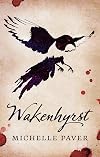
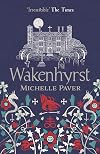
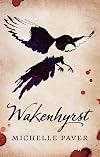
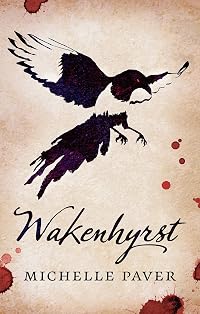
Hold this beautiful book in your hands. Let your eyes feast on the haunting magpie and the blood-red stains. Concentrate on the images that will - no doubt- start flooding your mind. Εach and every thought that visits you becomes real once you start reading this novel. It is haunting and ruthless and its cover speaks more eloquently than any blurb. Wakenhyrst by Michelle Paver mighty be the best book of 2019. But be aware: it is not for the faint of heart but for the readers who show more embrace darkness…
‘’Those who make you believe absurdities can make you commit atrocities.’’
Voltaire
Our story begins with a stranger. 1967. A young art historian visits the daughter of Edmund Stearne, a scholar and painter, who has left a strange body of work behind him. Maud takes us back in time, in 1913. Through letters, articles, pages of diaries and our heroine’s own thoughts, we find ourselves wandering in the fens, ‘’the forbidden realms of magical creatures’’, in the darkness. A darkness that suffocates the members of the Stearne household, so thick and muddy and twisted that no moonlight can light our way. Enigmatic and terrifying like the woman in a long, black dress that appears on Edmund’s paintings, secretive like Wakenhyrst and its residents. Suffocating like the sets of rules set by Edmund, a cruel and sadistic man. Or is he?
‘’I know what you did. It is only a picture. It won’t do me any harm...a high thin cry on the fen…’’
The sins of the past is a recurring motif in Gothic Fiction and here it is used to absolute perfection. The fullness of time has come and the house itself has become a character, the fens have paved the way for retribution. Maud becomes the hand, the one who wants to break free. Paver creates atmosphere in such a powerful way, creating a novel that would find its proper depiction as a Bosch masterpiece. Strange findings, dark omens. Traces of witchcraft, owls, moonlit nights that hide terrible secrets. Children are playing in the cemetery, knocking off the wings of angels. Will-o’-the-wisps and dark fairies. Ghosts. Foreboding thoughts that seem to call for Death. And Death is everywhere.
‘’One for the rook, one for the crow, one to rot and one to grow.’’
In Edmund’s mind, the Devil seems to have taken control over his life. Paver uses a perfect combination of literary and raw language to depict the havoc in the man’s life. Jesus said that there are those who think they are righteous because they say ‘’yes’’ to God. Edmund embodies the hypocrisy of the ones who pretend to be devoted when in fact they are worse than the very thing they fear. Art is also used as a symbol of knowledge and a constant reminder of the pagan past that Edmund hates. A depiction of the Doom brings disarray in the community and the discovery of a Green Man haunts Edmund. The hidden messages, the symbolisms, the soul of the artists form a menacing danse macabre and taunt him mercilessly. Paver uses the magpie as a symbol of obsession and temptation along with a multitude of the customs of the countryside that make the novel such a rich read.
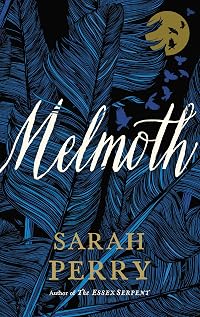
The winter is bitter, frosty. Arctic winds are blowing. The haunting sound of the ice, breathing through another winter. In an atmosphere of mysticism, superstition, and tradition, you will feel your heart pounding and breaking. You will experience the fear of looking at yourself in the mirror, the dread of looking out of the window in a stormy night. This reminded me of Sarah Perry’s masterpiece Melmoth. The house seems to have acquired a life and a will of its own, becoming a nest for troubled spirits and confused human. And in the centre of everything that takes place we find Maud.
‘’The woman at the heart of each one is a witch. The creatures swarming around her are her evil familiars. And the witch is Maud.’’
Maud is a woman who isn’t interested in saints but in the demons and monsters that have been defeated. Who will narrate their stories? She twists every prejudice against women and throws them back at those who deem themselves superior. She is an outstanding character. Resilient, firm, wise and realistically shady. She is not afraid to punish those who think they are entitled to diminish her and is ruthless enough to fight for what is right. Her views on religion reflect certain thoughts that have crossed my mind over the years. Maud is one of those characters that are so vivid you can even ‘’hear’’ their voice in your mind. You know how they speak, how they walk and behave, what they look like. She is the heart of this superb novel.
Read it, friends. That’s all I can tell you…
‘’It is God who made me order the Doom to be torn down, thereby setting the demon loose. And now it is God who commands me to go into battle.’’
Many thanks to Head of Zeus and NetGalley for the ARC in exchange for an honest review.
My reviews can also be found on https://theopinionatedreaderblog.wordpress.com/ show less
Hold this beautiful book in your hands. Let your eyes feast on the haunting magpie and the blood-red stains. Concentrate on the images that will - no doubt- start flooding your mind. Εach and every thought that visits you becomes real once you start reading this novel. It is haunting and ruthless and its cover speaks more eloquently than any blurb. Wakenhyrst by Michelle Paver mighty be the best book of 2019. But be aware: it is not for the faint of heart but for the readers who show more embrace darkness…
‘’Those who make you believe absurdities can make you commit atrocities.’’
Voltaire
Our story begins with a stranger. 1967. A young art historian visits the daughter of Edmund Stearne, a scholar and painter, who has left a strange body of work behind him. Maud takes us back in time, in 1913. Through letters, articles, pages of diaries and our heroine’s own thoughts, we find ourselves wandering in the fens, ‘’the forbidden realms of magical creatures’’, in the darkness. A darkness that suffocates the members of the Stearne household, so thick and muddy and twisted that no moonlight can light our way. Enigmatic and terrifying like the woman in a long, black dress that appears on Edmund’s paintings, secretive like Wakenhyrst and its residents. Suffocating like the sets of rules set by Edmund, a cruel and sadistic man. Or is he?
‘’I know what you did. It is only a picture. It won’t do me any harm...a high thin cry on the fen…’’
The sins of the past is a recurring motif in Gothic Fiction and here it is used to absolute perfection. The fullness of time has come and the house itself has become a character, the fens have paved the way for retribution. Maud becomes the hand, the one who wants to break free. Paver creates atmosphere in such a powerful way, creating a novel that would find its proper depiction as a Bosch masterpiece. Strange findings, dark omens. Traces of witchcraft, owls, moonlit nights that hide terrible secrets. Children are playing in the cemetery, knocking off the wings of angels. Will-o’-the-wisps and dark fairies. Ghosts. Foreboding thoughts that seem to call for Death. And Death is everywhere.
‘’One for the rook, one for the crow, one to rot and one to grow.’’
In Edmund’s mind, the Devil seems to have taken control over his life. Paver uses a perfect combination of literary and raw language to depict the havoc in the man’s life. Jesus said that there are those who think they are righteous because they say ‘’yes’’ to God. Edmund embodies the hypocrisy of the ones who pretend to be devoted when in fact they are worse than the very thing they fear. Art is also used as a symbol of knowledge and a constant reminder of the pagan past that Edmund hates. A depiction of the Doom brings disarray in the community and the discovery of a Green Man haunts Edmund. The hidden messages, the symbolisms, the soul of the artists form a menacing danse macabre and taunt him mercilessly. Paver uses the magpie as a symbol of obsession and temptation along with a multitude of the customs of the countryside that make the novel such a rich read.
The winter is bitter, frosty. Arctic winds are blowing. The haunting sound of the ice, breathing through another winter. In an atmosphere of mysticism, superstition, and tradition, you will feel your heart pounding and breaking. You will experience the fear of looking at yourself in the mirror, the dread of looking out of the window in a stormy night. This reminded me of Sarah Perry’s masterpiece Melmoth. The house seems to have acquired a life and a will of its own, becoming a nest for troubled spirits and confused human. And in the centre of everything that takes place we find Maud.
‘’The woman at the heart of each one is a witch. The creatures swarming around her are her evil familiars. And the witch is Maud.’’
Maud is a woman who isn’t interested in saints but in the demons and monsters that have been defeated. Who will narrate their stories? She twists every prejudice against women and throws them back at those who deem themselves superior. She is an outstanding character. Resilient, firm, wise and realistically shady. She is not afraid to punish those who think they are entitled to diminish her and is ruthless enough to fight for what is right. Her views on religion reflect certain thoughts that have crossed my mind over the years. Maud is one of those characters that are so vivid you can even ‘’hear’’ their voice in your mind. You know how they speak, how they walk and behave, what they look like. She is the heart of this superb novel.
Read it, friends. That’s all I can tell you…
‘’It is God who made me order the Doom to be torn down, thereby setting the demon loose. And now it is God who commands me to go into battle.’’
Many thanks to Head of Zeus and NetGalley for the ARC in exchange for an honest review.
My reviews can also be found on https://theopinionatedreaderblog.wordpress.com/ show less
Wakenhyrst by Michelle Paver is a gothic mystery set in a fen in Edwardian Suffolk surrounded by folklore, superstition and legends. The ancient manor house of Wake's End near the hamlet of Wakenhyrst has been Maud's home for the past 50 years where she's lived as a recluse. Maud's story is closely connected with that of her father, historian Edmund Stearne and the mystery of the crime he committed in 1913.
The reader is taken back in time to Maud's childhood and her overbearing father's increasing obsession with 15th Century mystic Alice Pyett. A medieval Doom painting is discovered in the nearby Church and Edmund is affected by the artist's depiction of the Last Judgement. Maud discovers her authoritarian father's diary and we show more interpret the content along with Maud as she tries to figure out what's happening.
I can understand why some readers will find Wakenhyrst a slow read, but that's what builds the tension. Gothic tension takes time, and Paver does an excellent job of allowing the reader to see every single stage of Edmund's decline.
I enjoyed the overall setting of Wake's End, including the members of the household and the superstitions of the local people about the fen. Secrets and the sins of the past are also present, as is a feeling of otherworldly goings on. Paver does a brilliant job of setting the scene and I especially enjoyed the reference to Quieting Syrup on page 246:
"Nurse hated her for pointing out that as Quieting Syrup is a mixture of black treacle and opium, it is hardly advisable to give it to a four-year-old."
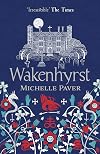
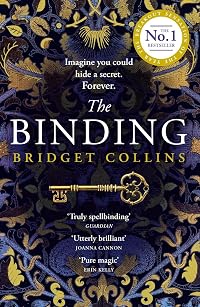
I fell into Wakenhyrst by Michelle Paver with immediate gusto, and the early chapters gave me the same bookish shivers I had at the beginning of The Binding by Bridget Collins. I love the cover art and animal lovers will enjoy knowing that the magpie on the cover has a role to play in the novel.
When we've reached the climax of the story and finally get back to the present, the ending seems hastily wrapped up in comparison to the slow burn of the rest of the novel. I found this quite jarring and wanted a little more time with Maud.
I thoroughly recommend Wakenhyrst by Michelle Paver for fans of historical fiction and gothic suspense novels.
* Copy courtesy of Harper Collins * show less
The reader is taken back in time to Maud's childhood and her overbearing father's increasing obsession with 15th Century mystic Alice Pyett. A medieval Doom painting is discovered in the nearby Church and Edmund is affected by the artist's depiction of the Last Judgement. Maud discovers her authoritarian father's diary and we show more interpret the content along with Maud as she tries to figure out what's happening.
I can understand why some readers will find Wakenhyrst a slow read, but that's what builds the tension. Gothic tension takes time, and Paver does an excellent job of allowing the reader to see every single stage of Edmund's decline.
I enjoyed the overall setting of Wake's End, including the members of the household and the superstitions of the local people about the fen. Secrets and the sins of the past are also present, as is a feeling of otherworldly goings on. Paver does a brilliant job of setting the scene and I especially enjoyed the reference to Quieting Syrup on page 246:
"Nurse hated her for pointing out that as Quieting Syrup is a mixture of black treacle and opium, it is hardly advisable to give it to a four-year-old."
I fell into Wakenhyrst by Michelle Paver with immediate gusto, and the early chapters gave me the same bookish shivers I had at the beginning of The Binding by Bridget Collins. I love the cover art and animal lovers will enjoy knowing that the magpie on the cover has a role to play in the novel.
When we've reached the climax of the story and finally get back to the present, the ending seems hastily wrapped up in comparison to the slow burn of the rest of the novel. I found this quite jarring and wanted a little more time with Maud.
I thoroughly recommend Wakenhyrst by Michelle Paver for fans of historical fiction and gothic suspense novels.
* Copy courtesy of Harper Collins * show less
‘Wakenhyrst’ by Michelle Paver is a creepy atmospheric novel that has been described as a ghost story, but the only ghosts in it are in the minds of the people. Which of course makes them enormously powerful and frightening. I found myself eager to return to this book, resenting time away from it. Paver is a skilled storyteller and I am coming to anticipate her new books with relish. If you haven’t read her adult novels, you are in for a treat.
The story starts with a newspaper article written in 1966 entitled ’The Mystery of Edmund Stearne’. The journalist, who has spoken to Stearne’s daughter Maud about the conviction of her father for murder in 1913, casts doubt on Maud’s version of events. Could Maud be the guilty one? show more The story is set at Wake’s End, a country house at Wakenhyrst, a village beside the Guthlaf’s Fen in Suffolk. Paver creates this setting with all the intensity and atmosphere with which she created the Arctic in ‘Dark Matter’ and the Himalayas in ‘Thin Air’. The fens haunt every aspect of life at the house and on bad days, when the weather closes in and the mind is in turmoil, the fens invade the rooms too. The rotting stench. A scratching at the windows. Damp and infection. Edmund hates the fens and forbids Maud and her older brother Richard from crossing the bridge; Nurse too is full of scary stories of ferishes and hobby-lanterns that entice people to their death. Others are more pragmatic, depending on the fens for their living and for food.
When Maud’s mother dies in childbirth everything changes at Wake’s End. Richard is sent away to school and thirteen-year old Maud becomes housekeeper and then secretary for her father who is a medieval historian. Edmund’s odd behavior begins when he uncovers an ancient painting in the graveyard of local church St Guthlaf’s. He imagines that the eyes of the Doom, the painted devil, are staring at him with purpose, that the devil knows his secret. The Doom is restored and hung again in the church, but in a locked room. When Edmund kills Maud’s favourite magpie, Chatterpie, her dislike of her father becomes a mission to fathom the truth of his odd behavior.
This is a thoughtful mystery rather than a thriller, the danger and threats unfold at a steady pace and the questions continue until the end. What was Edmund’s crime and how far will he go to hide the truth? Why does he hate the fens so much? How exactly do the strands of waterweed appear on his pillow? Not so much a ghost story as a mystery of rational understanding clouded by folktale, medieval legend and tales of ancient witchcraft and superstition.
The story unfolds through Maud’s eyes and the excerpts she reads of her father’s diaries, plus Edmund’s translations of a medieval mystic Alice Pyett and ‘The Life of St Guthlaf’. Although Edmund is an unsympathetic character, I did pause at one point to wonder the reliability of Maud’s account. Maud is an impressive character; denied education because she is a girl she reads secretly and resents her father’s nightly use of her mother, multiple pregnancies which eventually lead to Maman’s death. Paver is good at drawing a picture of the community; fen-dweller Jubal Rede, assistant gardener Clem Walker, servant Ivy, rector Mr Broadstairs, Dr Grayson and village wisewoman Boddy Thrussel. Modern medicine beside folk remedies. Church of England beside centuries-old folklore.
So creepy is the story, so isolated is this house beside the fen, that the setting feels older than Edwardian England. It could easily be set in the 19th century, excepting the references to trains and telegraphs. The isolation of the community is key to the crimes committed; truth may disappear, be disguised and denied, but someone always sees, someone always knows. The fen holds the answers.
Excellent.
Read more of my book reviews at http://www.sandradanby.com/book-reviews-a-z/ show less
The story starts with a newspaper article written in 1966 entitled ’The Mystery of Edmund Stearne’. The journalist, who has spoken to Stearne’s daughter Maud about the conviction of her father for murder in 1913, casts doubt on Maud’s version of events. Could Maud be the guilty one? show more The story is set at Wake’s End, a country house at Wakenhyrst, a village beside the Guthlaf’s Fen in Suffolk. Paver creates this setting with all the intensity and atmosphere with which she created the Arctic in ‘Dark Matter’ and the Himalayas in ‘Thin Air’. The fens haunt every aspect of life at the house and on bad days, when the weather closes in and the mind is in turmoil, the fens invade the rooms too. The rotting stench. A scratching at the windows. Damp and infection. Edmund hates the fens and forbids Maud and her older brother Richard from crossing the bridge; Nurse too is full of scary stories of ferishes and hobby-lanterns that entice people to their death. Others are more pragmatic, depending on the fens for their living and for food.
When Maud’s mother dies in childbirth everything changes at Wake’s End. Richard is sent away to school and thirteen-year old Maud becomes housekeeper and then secretary for her father who is a medieval historian. Edmund’s odd behavior begins when he uncovers an ancient painting in the graveyard of local church St Guthlaf’s. He imagines that the eyes of the Doom, the painted devil, are staring at him with purpose, that the devil knows his secret. The Doom is restored and hung again in the church, but in a locked room. When Edmund kills Maud’s favourite magpie, Chatterpie, her dislike of her father becomes a mission to fathom the truth of his odd behavior.
This is a thoughtful mystery rather than a thriller, the danger and threats unfold at a steady pace and the questions continue until the end. What was Edmund’s crime and how far will he go to hide the truth? Why does he hate the fens so much? How exactly do the strands of waterweed appear on his pillow? Not so much a ghost story as a mystery of rational understanding clouded by folktale, medieval legend and tales of ancient witchcraft and superstition.
The story unfolds through Maud’s eyes and the excerpts she reads of her father’s diaries, plus Edmund’s translations of a medieval mystic Alice Pyett and ‘The Life of St Guthlaf’. Although Edmund is an unsympathetic character, I did pause at one point to wonder the reliability of Maud’s account. Maud is an impressive character; denied education because she is a girl she reads secretly and resents her father’s nightly use of her mother, multiple pregnancies which eventually lead to Maman’s death. Paver is good at drawing a picture of the community; fen-dweller Jubal Rede, assistant gardener Clem Walker, servant Ivy, rector Mr Broadstairs, Dr Grayson and village wisewoman Boddy Thrussel. Modern medicine beside folk remedies. Church of England beside centuries-old folklore.
So creepy is the story, so isolated is this house beside the fen, that the setting feels older than Edwardian England. It could easily be set in the 19th century, excepting the references to trains and telegraphs. The isolation of the community is key to the crimes committed; truth may disappear, be disguised and denied, but someone always sees, someone always knows. The fen holds the answers.
Excellent.
Read more of my book reviews at http://www.sandradanby.com/book-reviews-a-z/ show less
Members
- Recently Added By
Lists

Best Gothic Fiction
110 works; 31 members

Best 21st Century Books (So Far)
670 works; 85 members

Best Contemporary Literary Fiction (Around the Last 30 Years)
388 works; 122 members

Best Horror Books
281 works; 85 members

Historical Fiction
889 works; 91 members

Top Five Books of 2020
982 works; 350 members

Female Protagonist
1,056 works; 57 members

Houses and Buildings as Characters in Fiction
182 works; 29 members
Literature About Women and Girls
394 works; 39 members

Books Read in 2020
4,379 works; 124 members
Novels featuring Fathers
56 works; 7 members

ScaredyKIT 2020
16 works; 1 member

Recommended Horror and Dark Fiction by Women
81 works; 13 members

Fiction Published in 2019
35 works; 1 member

Huxley's Reading Log 2020
24 works; 1 member

Historical Fantasy
93 works; 14 members
Haunted Places and Ghost Stories Reading List
99 works; 4 members

GoodReads Horror Choice Awards
160 works; 4 members
Historical fiction set in Britain
13 works; 1 member

Kindle Fantasy/Science Fiction Re-Read
151 works; 1 member
Author Information

63+ Works 10,818 Members
Some Editions
Awards and Honors
Notable Lists
Common Knowledge
- Canonical title*
- I demoni di Wakenhyrst
- Original title
- Wakenhyrst
- Original publication date
- 2018
- People/Characters
- Maud Stearne; Edmund Stearne
- Important places
- Wake's End; Wakenhyrst, Suffolk, England, UK
- First words*
- Come il covo della strega di una favola, l'antico maniero se ne sta tutto raccolto in mezza a un giardino inestricabile.
- Last words*
- (Click to show. Warning: May contain spoilers.)Con un ultimo sguardo alla cartolina, Maud scese al piano di sotto per andare a fare la sua passeggiata. Era il momento di stare nella palude con gli storni e di percepire il fruscio delle loro ali, come se volasse anche lei.
- Original language*
- Inglese
*Some information comes from Common Knowledge in other languages. Click "Edit" for more information.
Classifications
Statistics
- Members
- 659
- Popularity
- 43,782
- Reviews
- 29
- Rating
- (3.78)
- Languages
- English, German, Italian, Swedish
- Media
- Paper, Audiobook, Ebook
- ISBNs
- 11
- ASINs
- 9