On This Page
Description
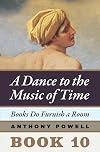
Anthony Powell's universally acclaimed epic A Dance to the Music of Time offers a matchless panorama of twentieth-century London. Now, for the first time in decades, readers in the United States can read the books of Dance as they were originally published--as twelve individual novels--but with a twenty-first-century twist: they're available only as e-books.The tenth volume, Books Do Furnish a Room (1971), finds Nick Jenkins and his circle beginning to re-establish their lives and careers in show more the wake of the war. Nick dives into work on a study of Robert Burton; Widmerpool grapples with the increasingly difficult and cruel Pamela Flitton--now his wife; and we are introduced to the series' next great character, the dissolute Bohemian novelist X. Trapnel, a man who exudes in equal measure mystery, talent, and an air of self-destruction."Anthony Powell is the best living English novelist by far. His admirers are addicts, let us face it, held in thrall by a magician."--Chicago Tribune"A book which creates a world and explores it in depth, which ponders changing relationships and values, which creates brilliantly living and diverse characters and then watches them grow and change in their milieu. . . . Powell's world is as large and as complex as Proust's."--Elizabeth Janeway, New York Times"One of the most important works of fiction since the Second World War. . . . The novel looked, as it began, something like a comedy of manners; then, for a while, like a tragedy of manners; now like a vastly entertaining, deeply melancholy, yet somehow courageous statement about human experience."--Naomi Bliven, New Yorker"The most brilliant and penetrating novelist we have."--Kingsley Amis show lessTags
Recommendations































Member Recommendations



Member Reviews
"Après la guerre,
There'll be a good time everywhere."
The 10th novel in Powell's Music of Time cycle takes us to the years after WWII. Nick Jenkins is now in his 40s, with a second(?) child on the way, and London is a world greatly changed from his youth. The wonderfully titled Books Do Furnish a Room takes two unexpectedly connected subjects as its centrepieces: the short-lived left-wing magazine Fission, to which Jenkins hitches his wagon alongside a plethora of supporting characters from pre-War novels, and the antagonistic marriage of Kenneth Widmerpool (now an MP) and Pamela Flitton. We knew there would be sparks and savagery when these two married, but the truth is even more delectable. Widmerpool (whom the delightful Rosie show more Manasch likens to Lewis Carroll's Frog Footman) has matured into the great villain of the series, but Pam sure gives him a run for her money. When she arrives for a funeral early in the novel, pale as ever in her black dress and red lipstick, Jenkins remarks that she seems an appropriate attendant on Death. (The best revelation is that Pam's repeated final insult to her male lovers that they are terrible in a bed is in fact a feint; she is the frigid one, and ol' Kenneth gave up after just a couple of attempts. Marriage... is complicated.)
The two plots are linked by the almost-overpowering presence of a new character, X. Trapnel, a proto-beatnik writer whose ambitions outweigh his achievements. (I'm not sure which of his titles I prefer best, Camel Ride to the Tomb - a literal scene in his Egyptian novel but also a metaphor for life - or Bin Ends!) "A novelist is like a fortune teller", says the bearded, perpetually sunglass-wearing Trapnel, "who can impart certain information but not necessarily what the reader wants to hear". He feels both a loving parody of a particular kind of writer but also an acknowledgement of the burden those destined to create great art must often carry.
Now that Nick and his crew are older than myself, I was prepared to struggle with the sixtysomething Powell's inevitable reflection on time, and the pains of memory. So I was surprised to discover that Books is perhaps the volume least interested in the act of memory, at least since the very first. This is a very much a novel about the art of making art. Its specific nature, especially given that many of the parodies of post-War literary life are all but lost to me, will give some readers pause. But I found it rather invigorating. Powell had certainly not lost any of his touch (Hilary Spurling, in her recent biography, notes that he was undergoing renewed inspiration, especially as he was beginning to fear his life might end before he finished the cycle!).
By now, I have made my peace with Powell's unorthodox decision to sideline Jenkins, our narrator, almost completely. It is still difficult to appreciate his wife Isobel, barely a sketch outline, or to know if he has truly had any friends since the day he left highschool in the first volume. (Powell always insisted he would have written this series even if Proust had not existed, making out that the influence didn't concern him, but I still believe his creation of a twelve-volume series without a "self" at the centre if a deliberate inversion of Proust's more centripetal work.) Yet I appreciate now that Jenkins is a kind of narrative voice personified. He is able to be present at every major moment - think of the twin deaths of the Lovells in the previous volume, or the twin confrontation scenes involving Widmerpool and Pamela here - without anyone raising an eyebrow. While the narrative could function without Jenkins, it is his connection to events, as a kind of living recorder, the annalist par excellence, that keeps him relevant. If these novels are ultimately an attempt to depict Time on the page, Jenkins is the clock hand itself, slowly ticking ever closer to midnight.
I wanted to share this quote from Evelyn Waugh, a lifelong friend of Powell's and an admirer of the novels - although he did not live to see the series end:
"Less original novelists tenaciously follow their protagonists. In the Music of Time we watch through the glass of a tank; one after another various specimens swim towards us; we see them clearly, then with a barely perceptible flick of fin or tail, they are off into the murk... Their presence has no particular significance. It is recorded as part of the permeating and inebriating atmosphere of the haphazard which is the essence of Mr Powell's art."
I'll be truthful; I'm a little nervous about approaching the end of this series. For two reasons: first, I'm aware that - after covering 30 years in 10 volumes, Powell is now going to cover another 20 years in just 2; I'm hopeful the series does not just become (as Philip Larkin cruelly put it) "social accountancy". More to the point, though, I'm nervous about revelation. When I completed Proust's In Search of Lost Time, the climax had me unsettled and in awe for days. I was a wreck. If Powell does not equal that, I'll be eternally dissatisfied. If he does equal that, I will need to prepare myself for some weeping.
Ah, well. The future will have its way with us, whether we like it or not. show less
There'll be a good time everywhere."
The 10th novel in Powell's Music of Time cycle takes us to the years after WWII. Nick Jenkins is now in his 40s, with a second(?) child on the way, and London is a world greatly changed from his youth. The wonderfully titled Books Do Furnish a Room takes two unexpectedly connected subjects as its centrepieces: the short-lived left-wing magazine Fission, to which Jenkins hitches his wagon alongside a plethora of supporting characters from pre-War novels, and the antagonistic marriage of Kenneth Widmerpool (now an MP) and Pamela Flitton. We knew there would be sparks and savagery when these two married, but the truth is even more delectable. Widmerpool (whom the delightful Rosie show more Manasch likens to Lewis Carroll's Frog Footman) has matured into the great villain of the series, but Pam sure gives him a run for her money. When she arrives for a funeral early in the novel, pale as ever in her black dress and red lipstick, Jenkins remarks that she seems an appropriate attendant on Death. (The best revelation is that Pam's repeated final insult to her male lovers that they are terrible in a bed is in fact a feint; she is the frigid one, and ol' Kenneth gave up after just a couple of attempts. Marriage... is complicated.)
The two plots are linked by the almost-overpowering presence of a new character, X. Trapnel, a proto-beatnik writer whose ambitions outweigh his achievements. (I'm not sure which of his titles I prefer best, Camel Ride to the Tomb - a literal scene in his Egyptian novel but also a metaphor for life - or Bin Ends!) "A novelist is like a fortune teller", says the bearded, perpetually sunglass-wearing Trapnel, "who can impart certain information but not necessarily what the reader wants to hear". He feels both a loving parody of a particular kind of writer but also an acknowledgement of the burden those destined to create great art must often carry.
Now that Nick and his crew are older than myself, I was prepared to struggle with the sixtysomething Powell's inevitable reflection on time, and the pains of memory. So I was surprised to discover that Books is perhaps the volume least interested in the act of memory, at least since the very first. This is a very much a novel about the art of making art. Its specific nature, especially given that many of the parodies of post-War literary life are all but lost to me, will give some readers pause. But I found it rather invigorating. Powell had certainly not lost any of his touch (Hilary Spurling, in her recent biography, notes that he was undergoing renewed inspiration, especially as he was beginning to fear his life might end before he finished the cycle!).
By now, I have made my peace with Powell's unorthodox decision to sideline Jenkins, our narrator, almost completely. It is still difficult to appreciate his wife Isobel, barely a sketch outline, or to know if he has truly had any friends since the day he left highschool in the first volume. (Powell always insisted he would have written this series even if Proust had not existed, making out that the influence didn't concern him, but I still believe his creation of a twelve-volume series without a "self" at the centre if a deliberate inversion of Proust's more centripetal work.) Yet I appreciate now that Jenkins is a kind of narrative voice personified. He is able to be present at every major moment - think of the twin deaths of the Lovells in the previous volume, or the twin confrontation scenes involving Widmerpool and Pamela here - without anyone raising an eyebrow. While the narrative could function without Jenkins, it is his connection to events, as a kind of living recorder, the annalist par excellence, that keeps him relevant. If these novels are ultimately an attempt to depict Time on the page, Jenkins is the clock hand itself, slowly ticking ever closer to midnight.
I wanted to share this quote from Evelyn Waugh, a lifelong friend of Powell's and an admirer of the novels - although he did not live to see the series end:
"Less original novelists tenaciously follow their protagonists. In the Music of Time we watch through the glass of a tank; one after another various specimens swim towards us; we see them clearly, then with a barely perceptible flick of fin or tail, they are off into the murk... Their presence has no particular significance. It is recorded as part of the permeating and inebriating atmosphere of the haphazard which is the essence of Mr Powell's art."
I'll be truthful; I'm a little nervous about approaching the end of this series. For two reasons: first, I'm aware that - after covering 30 years in 10 volumes, Powell is now going to cover another 20 years in just 2; I'm hopeful the series does not just become (as Philip Larkin cruelly put it) "social accountancy". More to the point, though, I'm nervous about revelation. When I completed Proust's In Search of Lost Time, the climax had me unsettled and in awe for days. I was a wreck. If Powell does not equal that, I'll be eternally dissatisfied. If he does equal that, I will need to prepare myself for some weeping.
Ah, well. The future will have its way with us, whether we like it or not. show less
By quite a margin, I found this to be the most readable of the entire series of volumes so far. This is because Powell develops a number of minor characters into major ones, most notably in this volume Pamela nee Flitton and X Trapnel the esoteric author whose lifestyle forms a major theme.
And not only does Powell develop these characters as individuals in their own right, he arranges a number of quite memorable scenes in which their characters come to the fore. Through these, as we have come to expect, Widmerpool blunders in his usual socially reckless manner. It all makes for a quick episode.
The era is post war and the characters are trying to figure out how to get back to normal. Jenkins returns to university and eventually ends up show more working as an editor for a new literary review which is the backdrop for Powell’s continuing fascination with cultural hoi polloi (or, just to show how
cultured I am, should that be hoy polloy. I forget.)
Although this exploration of art, literature and the like is, overall, the one major common theme of the entire series of 12 volumes, Powell does not leave the reader with only that to trawl through for pithy statements regarding life, the universe and everything. Rather, he sets up some well-crafted conflicts between the characters of Widmerpool, Pamela and X Trapnel who get involved in a sort of hate-triangle.
There’s also an amusing incident with a Chinese urn.
I enjoyed this one and it’s a good thing too. After hearing all about the dreary misery of wartime allied administration, I needed it. show less
And not only does Powell develop these characters as individuals in their own right, he arranges a number of quite memorable scenes in which their characters come to the fore. Through these, as we have come to expect, Widmerpool blunders in his usual socially reckless manner. It all makes for a quick episode.
The era is post war and the characters are trying to figure out how to get back to normal. Jenkins returns to university and eventually ends up show more working as an editor for a new literary review which is the backdrop for Powell’s continuing fascination with cultural hoi polloi (or, just to show how
cultured I am, should that be hoy polloy. I forget.)
Although this exploration of art, literature and the like is, overall, the one major common theme of the entire series of 12 volumes, Powell does not leave the reader with only that to trawl through for pithy statements regarding life, the universe and everything. Rather, he sets up some well-crafted conflicts between the characters of Widmerpool, Pamela and X Trapnel who get involved in a sort of hate-triangle.
There’s also an amusing incident with a Chinese urn.
I enjoyed this one and it’s a good thing too. After hearing all about the dreary misery of wartime allied administration, I needed it. show less
A books with a series of incidents, most relating to a journal publication and an author of a ground breaking book. Pamela Widmerpool features heavily, and, as usual with Pamela, doesn't come out of it very well. I think she's a type of woman that the author struggled to understand. The book finishes with Nick back as his school, seeing about a place for his son. And so the cycle repeats itself.
The War is over, and Nick Jenkins witnesses the beginning of Post-war Britain. Widmerpool is at last successful, and has fallen to marrying Pamela Flitton. It won't end well, I'm afraid.
One of my favorites in the series. Lots on the publishing world, Widmerpool, and a bit more on Nick, who so often is like a specter.
I didn't much care for the character of X. Trapnell, which made this a bit of a tough read. I think some of his attributes which were supposed to be humorous just seemed fairly common and mundane to me. I think this book might be one of the more dated ones in the series. I sort of started reading just to get to the end of the series at this point.
This is volume ten of the monumental 'A Dance to the Music of Time' .Nick Jenkins is now firmly embroiled in the literary world and is attempting to produce a work on Robert Burton and his 'Anatomy of Melancholy'. The reader is introduced to the fascinating character,X.Trapnel and his explosive affair with Pamela Widmerpool. We also become reacquainted with La Bas who was Nick Jenkins teacher in 'A Question of Upbringing'.
Ten down and two to go.
Ten down and two to go.
Members
- Recently Added By
Lists

Backlisted
109 works; 9 members

Time Magazine's "All-Time 100"
113 works; 15 members

1,001 BYMRBYD Concensus
723 works; 27 members

Books With the Most Memorable Titles
478 works; 158 members
Talk Discussions
Past Discussions
A Dance to the Music of Time GR 2013 - October: Books Do Furnish A Room in 75 Books Challenge for 2013 (November 2013)
Author Information

61+ Works 13,440 Members
Anthony Powell was born on December 21, 1905 in Westminster, England and was educated at Eton College and Balliol College, Oxford. In 1926 he became an editor at Duckworth & Co. and later moved on to be a scriptwriter for Warner Brothers. By 1937 he was a regular contributor to The Spectator and the Daily Telegraph. From 1953-1959 Powell was the show more Literary Editor of Punch. His first book, The Barnard Letter, was published in 1928 and his first novel, Afternoon Men, was published in 1931. In 1951 Powell published A Question of Upbringing, which was the first of the 12-novel sequence A Dance to the Music of Time. In 1975 he published Hearing Secret Harmonies, which was the last novel of the sequence. Powell wrote Infants of the Spring, which is part of To Keep the Ball Rolling, his memoirs. He also published The Fisher King in 1986. Anthony Powell died peacefully at his home, The Chantry, aged 94 on March 28, 2000. (Bowker Author Biography) show less
Some Editions
Series

Work Relationships
Is contained in
Has as a reference guide/companion
Common Knowledge
- Canonical title
- Books Do Furnish a Room
- Original publication date
- 1971
- People/Characters
- Nicholas Jenkins; Kenneth Widmerpool; Sillery; Pamela Widmerpool; X. Trapnel
- Important places
- London, England, UK
- Dedication
- for Rupert
- First words
- Reverting to the university at forty, one immediately recaptured all the crushing melancholy of the undergraduate condition.
- Last words
- (Click to show. Warning: May contain spoilers.)When I was in Cairo in the 'twenties, I won a packet on a French horse he rode called Amour Piquant.
Classifications
Statistics
- Members
- 475
- Popularity
- 63,823
- Reviews
- 10
- Rating
- (3.87)
- Languages
- English, French, German
- Media
- Paper, Ebook
- ISBNs
- 15
- ASINs
- 13