On This Page
Description
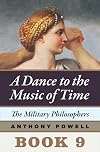
Anthony Powell's universally acclaimed epic A Dance to the Music of Time offers a matchless panorama of twentieth-century London. Now, for the first time in decades, readers in the United States can read the books of Dance as they were originally published--as twelve individual novels--but with a twenty-first-century twist: they're available only as e-books.The ninth volume, The Military Philosophers (1968), takes the series through the end of the war. Nick has found a place, reasonably show more tolerable by army standards, as an assistant liaison with foreign governments in exile. But like the rest of his countrymen, he is weary of life in uniform and looking ahead to peacetime. Until then, however, the fortunes of war continue to be unpredictable: more names are cruelly added to the bill of mortality, while other old friends and foes prosper. Widmerpool becomes dangerously entranced by the beautiful, fascinating, and vicious Pamela Flitton; and Nick's old flame Jean Duport makes a surprising reappearance. Elegiac and moving, but never without wit and perception, this volume wraps up Powell's unsurpassed treatment of England's finest yet most costly hour."Anthony Powell is the best living English novelist by far. His admirers are addicts, let us face it, held in thrall by a magician."--Chicago Tribune"A book which creates a world and explores it in depth, which ponders changing relationships and values, which creates brilliantly living and diverse characters and then watches them grow and change in their milieu. . . . Powell's world is as large and as complex as Proust's."--Elizabeth Janeway, New York Times"One of the most important works of fiction since the Second World War. . . . The novel looked, as it began, something like a comedy of manners; then, for a while, like a tragedy of manners; now like a vastly entertaining, deeply melancholy, yet somehow courageous statement about human experience."--Naomi Bliven, New Yorker"The most brilliant and penetrating novelist we have."--Kingsley Amis show lessTags
Recommendations




































Member Recommendations




Member Reviews
"Such a mental picture of the past was no doubt largely unhistorical, indeed totally illusory, freedom from one sort of humbug merely implying, with human beings of any epoch, thraldom to another. The past, just as the present, had to be accepted for what it thought and what it was."
Really very strong. Taking place during the second half of WWII, Powell's 9th Music of Time novel deals candidly with the rigours of war: the perpetual loss, the feeling of society being one unanimous organ brought together for a cause, and - of course - the paperwork.
It strikes me that the book's Goodreads rating is highly subjective. I imagine few people make it to #9 in a series from half a century ago unless they're quite enjoying the proceedings!I note show more this more because, although I am absorbed by Powell's writing, I think he has justly faded from the general public consciousness. So much of what made his work so powerful to its contemporary audience was that they had lived the proceedings. Our culture's current fetishisation of works set in 1980s and early '90s will no doubt yield some true classics. But it's fair to say that many of the works we are enjoying in this mode are zeitgeist-y at best. Well made, but ultimately appealing to us because of what they teach us about the now, as refracted through our recent past. Similarly, for 1960s audiences who had lived through the War, the archetypes and exchanges herein must have had much greater depth.
What is neat about this volume - which flits between Jenkins' postings over 3 or 4 years - is the feeling of time elongated. In 1945, someone can completely have forgotten a person they served with in 1942. Someone who lost their relative only a couple of years ago can see it as "long past". From my 2020 vantage point - only 8 weeks since my country activated its pandemic response plan, the most bizarre uprooting of the status quo in my lifetime - I am horrified by the prospect of what six long years at war would feel like.
By now, Powell has so perfected his style that the brief sketches of new characters are as probing and subtle as those of our longstanding friends and enemies. Widmerpool (is he the only character to have appeared in every book thus far, aside from NJ?) is more odious than ever. And we at last meet Pamela Flitton, a character whom I have associated with this series long before I knew anything about it, knowing only that she was played by Miranda Richardson in the UK TV adaptation; she certainly makes an impression here as a potential villainess (although character roles have changed before, so I will remain agnostic).
The final chapter, in which Jenkins attends the Victory church service, is one of the author's most assured pieces of writing yet, tackling his internal mental state through an almost stream-of-consciousness range of memories. Afterward, in a London deeply damaged by the Blitz and general decay, we descend into a dark despair but also - from our retrospective point-of-view - hopeful for the reconstruction and the new Elizabethan Golden Age we know lies ahead. (Probably less Golden for our boy Kenneth, setting his sights on administrating one of the colonies!)
Where to from here? show less
Really very strong. Taking place during the second half of WWII, Powell's 9th Music of Time novel deals candidly with the rigours of war: the perpetual loss, the feeling of society being one unanimous organ brought together for a cause, and - of course - the paperwork.
It strikes me that the book's Goodreads rating is highly subjective. I imagine few people make it to #9 in a series from half a century ago unless they're quite enjoying the proceedings!I note show more this more because, although I am absorbed by Powell's writing, I think he has justly faded from the general public consciousness. So much of what made his work so powerful to its contemporary audience was that they had lived the proceedings. Our culture's current fetishisation of works set in 1980s and early '90s will no doubt yield some true classics. But it's fair to say that many of the works we are enjoying in this mode are zeitgeist-y at best. Well made, but ultimately appealing to us because of what they teach us about the now, as refracted through our recent past. Similarly, for 1960s audiences who had lived through the War, the archetypes and exchanges herein must have had much greater depth.
What is neat about this volume - which flits between Jenkins' postings over 3 or 4 years - is the feeling of time elongated. In 1945, someone can completely have forgotten a person they served with in 1942. Someone who lost their relative only a couple of years ago can see it as "long past". From my 2020 vantage point - only 8 weeks since my country activated its pandemic response plan, the most bizarre uprooting of the status quo in my lifetime - I am horrified by the prospect of what six long years at war would feel like.
By now, Powell has so perfected his style that the brief sketches of new characters are as probing and subtle as those of our longstanding friends and enemies. Widmerpool (is he the only character to have appeared in every book thus far, aside from NJ?) is more odious than ever. And we at last meet Pamela Flitton, a character whom I have associated with this series long before I knew anything about it, knowing only that she was played by Miranda Richardson in the UK TV adaptation; she certainly makes an impression here as a potential villainess (although character roles have changed before, so I will remain agnostic).
The final chapter, in which Jenkins attends the Victory church service, is one of the author's most assured pieces of writing yet, tackling his internal mental state through an almost stream-of-consciousness range of memories. Afterward, in a London deeply damaged by the Blitz and general decay, we descend into a dark despair but also - from our retrospective point-of-view - hopeful for the reconstruction and the new Elizabethan Golden Age we know lies ahead. (Probably less Golden for our boy Kenneth, setting his sights on administrating one of the colonies!)
Where to from here? show less
In this entry into the series sees Nick working in military liaison, dealing with several Allied countries who all have their own way of expecting the war to go. At one point he escorts a group to France and stays at a hotel that, as he is leaving, he realises features in Proust. Nick, the reader, gets very wrapped up in this as an idea. It's a book with a lot of change, with school friends and relatives being killed.
The things that have annoyed me most about this series, the privilege and the way he presents women were less at for fore here, and so I enjoyed this particular installment.
That is the end of the war, now what happens to family life in the years that follow.
The things that have annoyed me most about this series, the privilege and the way he presents women were less at for fore here, and so I enjoyed this particular installment.
That is the end of the war, now what happens to family life in the years that follow.
Not my favourite in the series by any means, this volume charts the end of the war and Nick’s subsequent demobbing.
The writing carries on in its normal vein with the usual insight into a whole host of characters excepting the narrator himself. Widmerpool features heavily of course and a certain romantic attachment gets more focus than usual. There are however lots of passages dealing with the all to unfascinating intricacies of Allied administration. These bored the pants off me.
To liven things up, there’s an air raid seen from the roof of a block of flats with a nice range of characters responding to it including the apocalyptic Mrs Erdleigh.
I doubt anyone would mark this as the most readable of the lot, but it is significant in show more introducing Pamela Flitton who plays a significant and certainly dramatic role as the book nears its terminus. show less
The writing carries on in its normal vein with the usual insight into a whole host of characters excepting the narrator himself. Widmerpool features heavily of course and a certain romantic attachment gets more focus than usual. There are however lots of passages dealing with the all to unfascinating intricacies of Allied administration. These bored the pants off me.
To liven things up, there’s an air raid seen from the roof of a block of flats with a nice range of characters responding to it including the apocalyptic Mrs Erdleigh.
I doubt anyone would mark this as the most readable of the lot, but it is significant in show more introducing Pamela Flitton who plays a significant and certainly dramatic role as the book nears its terminus. show less
I didn't enjoy this as much as other books in the series. I found it hard to relate to many of the characters and to keep track of what was happening: not so much in terms of the plot as the themes and what it's all supposed to mean. Of course that might have been a reflection on the reader as much as the text. I think some of the political intrigue left me a bit cold because it's all ancient history now and long resolved. It didn't even have the poignant ending that I love in a humorous book.
Book nine in the 'A Dance to the Music of Time' series and book three in the War section of the series. Alas I have to admit that for me this is the least successful and the least interesting book yet. It tells of Jenkins war-time experiences,which are less than heroic as he is not involved in any front-line fighting at all.He is involved in administration and paper-shuffling (what used to be known as producing bumph) None of the usual marvelous set-pieces that delight the reader,that appear from time to time in the other volumes.Is this book merely padding or not ? We shall have to see if the next volume improves the situation.
à propos Berlin
A couple of days short of September, procrastinating with my term paper, I have started the next novel, volume nine, in »A Dance to the Music of Time« by Anthony Powell. It is a 1971 edition, Fontana book, I purchased second hand, featuring on the cover [...] a likely scenario behind the many doors of Whitehall were Nicholas Jenkins works with the Intelligence Corps, as Pennistone’s assistant in Polish Liaison in WWII.
Here’s to Berlin (p. 31):
»Michalski, now in his late thirties, had served like Bobrowski with the Polish contingent in France. Of large size, sceptical about most matters, he belonged to the world of industrial design – statuettes for radiator caps and such decorative items – working latterly in show more Berlin, which had left some marks on him of its bitter individual humor. In fact Pennistone always said talking to Michalski made him feel he was sitting in the Romanisches Café.« [28 August 2020] show less
A couple of days short of September, procrastinating with my term paper, I have started the next novel, volume nine, in »A Dance to the Music of Time« by Anthony Powell. It is a 1971 edition, Fontana book, I purchased second hand, featuring on the cover [...] a likely scenario behind the many doors of Whitehall were Nicholas Jenkins works with the Intelligence Corps, as Pennistone’s assistant in Polish Liaison in WWII.
Here’s to Berlin (p. 31):
»Michalski, now in his late thirties, had served like Bobrowski with the Polish contingent in France. Of large size, sceptical about most matters, he belonged to the world of industrial design – statuettes for radiator caps and such decorative items – working latterly in show more Berlin, which had left some marks on him of its bitter individual humor. In fact Pennistone always said talking to Michalski made him feel he was sitting in the Romanisches Café.« [28 August 2020] show less
The 9th book and done with third movement;Autumn. This completes the war years. Jenkins is serving with the Poles and then the Belgiums. Again there are many characters coming and going and some die. Jenkins is a person who listens to others. People tell him things. This book brings us to the end of war. Widmerpool marries.
Members
- Recently Added By
Lists

The Guardian's 1000 Novels Everyone Must Read
1,005 works; 547 members

Time Magazine's "All-Time 100"
113 works; 15 members

1,001 BYMRBYD Concensus
723 works; 27 members

Best Sellers / Popular 1968
237 works; 5 members
Talk Discussions
Past Discussions
A Dance to the Music of Time GR 2013 - September: The Military Philosophers in 75 Books Challenge for 2013 (October 2013)
Author Information

61+ Works 13,440 Members
Anthony Powell was born on December 21, 1905 in Westminster, England and was educated at Eton College and Balliol College, Oxford. In 1926 he became an editor at Duckworth & Co. and later moved on to be a scriptwriter for Warner Brothers. By 1937 he was a regular contributor to The Spectator and the Daily Telegraph. From 1953-1959 Powell was the show more Literary Editor of Punch. His first book, The Barnard Letter, was published in 1928 and his first novel, Afternoon Men, was published in 1931. In 1951 Powell published A Question of Upbringing, which was the first of the 12-novel sequence A Dance to the Music of Time. In 1975 he published Hearing Secret Harmonies, which was the last novel of the sequence. Powell wrote Infants of the Spring, which is part of To Keep the Ball Rolling, his memoirs. He also published The Fisher King in 1986. Anthony Powell died peacefully at his home, The Chantry, aged 94 on March 28, 2000. (Bowker Author Biography) show less
Some Editions
Awards and Honors
Notable Lists
Series

Work Relationships
Is contained in
Has as a reference guide/companion
Common Knowledge
- Original publication date
- 1968
- People/Characters
- Nicholas Jenkins; David Pennistone; Kenneth Widmerpool; Pamela Flitton
- Important places
- London, England, UK
- Important events
- World War II
- Dedication
- For Georgina
- First words
- Towards morning the teleprinter's bell sounded.
- Last words
- (Click to show. Warning: May contain spoilers.)"Except the underclothes."
Classifications
Statistics
- Members
- 427
- Popularity
- 72,063
- Reviews
- 11
- Rating
- (3.79)
- Languages
- English, French, German
- Media
- Paper, Ebook
- ISBNs
- 16
- ASINs
- 11