On This Page
Description
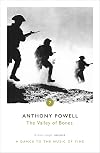
Anthony Powell's universally acclaimed epic A Dance to the Music of Time offers a matchless panorama of twentieth-century London. Now, for the first time in decades, readers in the United States can read the books of Dance as they were originally published--as twelve individual novels--but with a twenty-first-century twist: they're available only as e-books.World War II has finally broken out, and The Valley of Bones (1964) finds Nick Jenkins learning the military arts. A stint at a training show more academy in Wales introduces him to the many unusual characters the army has thrown together, from the ambitious bank clerk-turned-martinet, Gwatkin, to the hopelessly slovenly yet endearing washout, Bithel. Even during wartime, however, domestic life proceeds, as a pregnant Isobel nears her term and her siblings' romantic lives take unexpected turns--their affairs of the heart lent additional urgency by the ever-darkening shadow of war."Anthony Powell is the best living English novelist by far. His admirers are addicts, let us face it, held in thrall by a magician."--Chicago Tribune"A book which creates a world and explores it in depth, which ponders changing relationships and values, which creates brilliantly living and diverse characters and then watches them grow and change in their milieu. . . . Powell's world is as large and as complex as Proust's."--Elizabeth Janeway, New York Times"One of the most important works of fiction since the Second World War. . . . The novel looked, as it began, something like a comedy of manners; then, for a while, like a tragedy of manners; now like a vastly entertaining, deeply melancholy, yet somehow courageous statement about human experience."--Naomi Bliven, New Yorker"The most brilliant and penetrating novelist we have."--Kingsley Amis show lessTags
Recommendations

























Member Recommendations

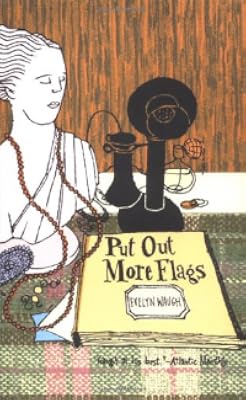
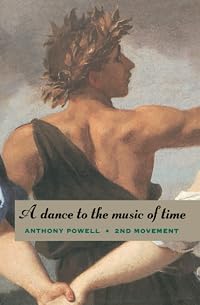
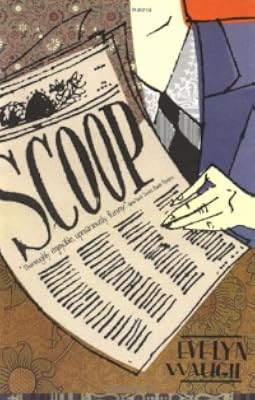
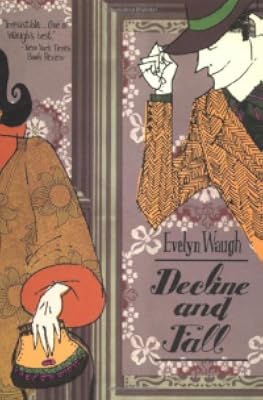
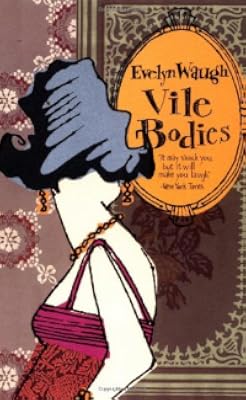
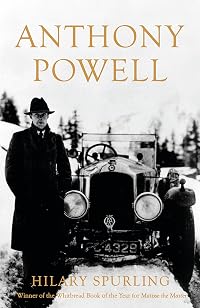
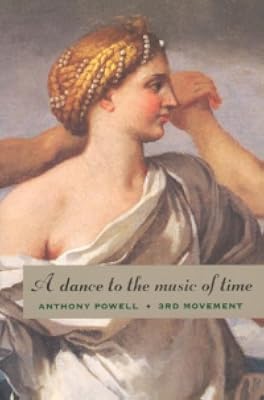
thorold Anthony Powell and Evelyn Waugh both served as slightly elderly junior officers in World war II and used their experiences as the basis for novel sequences - it's fascinating to read them side-by-side. Waugh is the funnier of the two, as you would expect, but Powell's account tells you a bit more about the details of army life. (NB: you can also find these books as the first parts of Sword of honour and A Dance to the music of time, 3rd movement, respectively)


Member Reviews
‘No porridge?’
‘No porridge, sir.’
General Liddament pondered this assertion for some seconds in resentful silence. He seemed to be considering porridge in all its aspects, bad as well as good. At last he came out with an unequivocal moral judgement.
‘There ought to be porridge,’ he said.
In my review of The Kindly Ones, I said that the carnival of Europe was over after that heartbreaking day in September 1939. Here, however, in the 7th volume of Powell's Dance to the Music of Time, the carousel is still moving. The calliope is starting to wheeze, true. The horses' faces have taken on a slightly macabre appearance in the fading neon lights. But there is still merriment.
The Valley of Bones follows Nicholas Jenkins after he show more enlists in the army, posted to his Welsh regiment (training primarily in Northern Ireland) during 1940. The war is still an unknown quantity; there is little talk here of being posted overseas or of the grim horrors taking place on the continent. Instead, Powell's knack for deft character sketches, moments of high comedy, and comedies of errors proliferate. Aside from a brief stopover in London - where some old scenes are reframed in a new light - and the ominous final few pages, we see nothing of existing characters from Nick's background. This is a new war, a new world, and we are successfully estranged from his previous world.
It is almost exclusively a comic novel, with a tiny number of pathos-laden passages baked in - especially the death of a supporting character reported from the continent. More tellingly, the final scene is the first time that Powell has left a book without a feeling of independent closure. War does not offer such certainties.
This is wonderful stuff. As always, at least for readers who are (like me) younger and/or not British, I heartily recommend the unabridged recording of the novels by Simon Vance. So much of the dialogue in these books was designed to recall people - either specific individuals or more often well-known types from the era. Three generations and half a globe removed from Powell, I find Vance indispensable in introducing me to the speech patterns of these characters, and through their speech their personality - especially here, where dialect plays such an important role. I will feel more comfortable returning to the Dance - as I know I will several times - now that I have grasped the characters in all their complexity. show less
‘No porridge, sir.’
General Liddament pondered this assertion for some seconds in resentful silence. He seemed to be considering porridge in all its aspects, bad as well as good. At last he came out with an unequivocal moral judgement.
‘There ought to be porridge,’ he said.
In my review of The Kindly Ones, I said that the carnival of Europe was over after that heartbreaking day in September 1939. Here, however, in the 7th volume of Powell's Dance to the Music of Time, the carousel is still moving. The calliope is starting to wheeze, true. The horses' faces have taken on a slightly macabre appearance in the fading neon lights. But there is still merriment.
The Valley of Bones follows Nicholas Jenkins after he show more enlists in the army, posted to his Welsh regiment (training primarily in Northern Ireland) during 1940. The war is still an unknown quantity; there is little talk here of being posted overseas or of the grim horrors taking place on the continent. Instead, Powell's knack for deft character sketches, moments of high comedy, and comedies of errors proliferate. Aside from a brief stopover in London - where some old scenes are reframed in a new light - and the ominous final few pages, we see nothing of existing characters from Nick's background. This is a new war, a new world, and we are successfully estranged from his previous world.
It is almost exclusively a comic novel, with a tiny number of pathos-laden passages baked in - especially the death of a supporting character reported from the continent. More tellingly, the final scene is the first time that Powell has left a book without a feeling of independent closure. War does not offer such certainties.
This is wonderful stuff. As always, at least for readers who are (like me) younger and/or not British, I heartily recommend the unabridged recording of the novels by Simon Vance. So much of the dialogue in these books was designed to recall people - either specific individuals or more often well-known types from the era. Three generations and half a globe removed from Powell, I find Vance indispensable in introducing me to the speech patterns of these characters, and through their speech their personality - especially here, where dialect plays such an important role. I will feel more comfortable returning to the Dance - as I know I will several times - now that I have grasped the characters in all their complexity. show less
This is a lovely gentle entry in the series, which seems an odd description when it takes place in war. It feels like the phoney war, and Nick has a commission in a regiment drawn from the valleys of Wales and is sent to North Wales and then Ireland for training and to protect the border. There is a usual variety of male goings on, but it reads as if looked back on with nostalgia.
This was one of my favourite books in the series. After running out of puff after the end of the Summer books, I decided to take a break from reading the series and read something else. But the couple of books I picked up were not great and in the end it felt silly to enter a totally new imaginative world and try to keep this one simmering in the background. So after a week or two of no (fiction) reading, I came back to the series. I found this book very funny and poignant once again. I liked a lot of the characterisation and it was nice to see the narrator somewhat humbled.
For me, the beginning of three books that make up the war trilogy section of A Dance to a Music of Time was an entertaining read with more of a tendency to farce than any of the previous novels so far. I wondered if this was the result of Powell’s own experience in the war.
Those of you hoping for any action sequences will be disappointed. Nick Jenkins sees no combat service and is, instead, involved in a series of bureaucratic posts that seem, to me at least, interminably dull occupations.
There’s the occasional military exercise to spice things up a bit but, for the most part, this novel in the sequence is most memorably characterised by comic events involving various army personnel. When I say ‘comic’ here, please bear in mind show more that they might raise a faint smile rather than see you split your sides laughing. Like the narrator he has created, Powell seems far too straight laced to actually be able to make anyone laugh out loud.
The characters plod on. Widmerpool surfaces again (as I believe he does in all 12 novels at some point), this time in the role of a rising star of wartime administration. But several more are introduced often with most ludicrous names. What parents would ever call their son Odo for goodness sake? show less
Those of you hoping for any action sequences will be disappointed. Nick Jenkins sees no combat service and is, instead, involved in a series of bureaucratic posts that seem, to me at least, interminably dull occupations.
There’s the occasional military exercise to spice things up a bit but, for the most part, this novel in the sequence is most memorably characterised by comic events involving various army personnel. When I say ‘comic’ here, please bear in mind show more that they might raise a faint smile rather than see you split your sides laughing. Like the narrator he has created, Powell seems far too straight laced to actually be able to make anyone laugh out loud.
The characters plod on. Widmerpool surfaces again (as I believe he does in all 12 novels at some point), this time in the role of a rising star of wartime administration. But several more are introduced often with most ludicrous names. What parents would ever call their son Odo for goodness sake? show less
I tried to find a picture of a wooden bound old prayer book without avail. Islam book binding sometimes has wooden boards covered in leather. I wonder, if there would be carved or inlaid book covers. The prayer book Kedward ist telling about probably is a Christian one, though.
*
Meeting up with Kipling
Further on in „The Valley of Bones“, volume seven from „The Music of Time“ by Anthony Powell, the army has moved to new quarters, still back in Great Britain. Nicholas Jenkins shares the room with Captain Gwatkin who wakes him in the night because he himself was startled out of sleep by the thought that he might have forgotten to put the new codeword order into the safebox. -- It is only „The Jungle Book“ I ever have read by show more Kipling so far, and it was back in the late Seventies at the Diavolezza mountain hut above the mighty Morteratsch glacier, the day before our little rope team crossed the three summits of Piz Palü – a much nicer prospect than battling the Huns.
*
The aftermath of the defeat of Dunkirk with victims among his acquaintances makes Nicholas Jenkins ponder:
"The potential biographies of those who die young possess the mystic dignity of a headless statue, the poetry of enigmatic passages in an unfinished or mutilated manuscript, unburdened with contrived or banal ending." show less
*
Meeting up with Kipling
Further on in „The Valley of Bones“, volume seven from „The Music of Time“ by Anthony Powell, the army has moved to new quarters, still back in Great Britain. Nicholas Jenkins shares the room with Captain Gwatkin who wakes him in the night because he himself was startled out of sleep by the thought that he might have forgotten to put the new codeword order into the safebox. -- It is only „The Jungle Book“ I ever have read by show more Kipling so far, and it was back in the late Seventies at the Diavolezza mountain hut above the mighty Morteratsch glacier, the day before our little rope team crossed the three summits of Piz Palü – a much nicer prospect than battling the Huns.
*
The aftermath of the defeat of Dunkirk with victims among his acquaintances makes Nicholas Jenkins ponder:
"The potential biographies of those who die young possess the mystic dignity of a headless statue, the poetry of enigmatic passages in an unfinished or mutilated manuscript, unburdened with contrived or banal ending." show less
For me personally 'The Valley of Bones' stands out as the best and funniest of this excellent series. It takes Nicholas Jenkins into the Army at a time just prior to the beginning of the Second World War. Second Lieutenant Jenkins is here involved with his Company Commander,Captain Gwatkin as well as a number of new and mostly engaging characters and a completely different world from that in the preceding six volumes. We also meet once more,but in a new guise, the monstrous Widmerpool.
It had long been suggested to me by my father that I should read something of Powell's, though I was long reluctant to do so. I think that now I know why - I didn't enjoy this book any more than I enjoyed my father's other suggestions, and having read it I felt a distance between us that would be hard to overcome.
"The Valley of the Bones" is not a bad book, and my review is somewhat harsh for personal reasons, but it left me dry and untouched, the language too flowery and too constipated to flow easily into my memory.
"The Valley of the Bones" is not a bad book, and my review is somewhat harsh for personal reasons, but it left me dry and untouched, the language too flowery and too constipated to flow easily into my memory.
Members
- Recently Added By
Lists

The Guardian's 1000 Novels Everyone Must Read
1,005 works; 550 members

Time Magazine's "All-Time 100"
113 works; 15 members

1,001 BYMRBYD Concensus
723 works; 27 members

A Good Read (Radio 4)
145 works; 1 member
Talk Discussions
Past Discussions
A Dance to the Music of Time GR 2013 - July: The Valley Of Bones in 75 Books Challenge for 2013 (July 2013)
Author Information

61+ Works 13,440 Members
Anthony Powell was born on December 21, 1905 in Westminster, England and was educated at Eton College and Balliol College, Oxford. In 1926 he became an editor at Duckworth & Co. and later moved on to be a scriptwriter for Warner Brothers. By 1937 he was a regular contributor to The Spectator and the Daily Telegraph. From 1953-1959 Powell was the show more Literary Editor of Punch. His first book, The Barnard Letter, was published in 1928 and his first novel, Afternoon Men, was published in 1931. In 1951 Powell published A Question of Upbringing, which was the first of the 12-novel sequence A Dance to the Music of Time. In 1975 he published Hearing Secret Harmonies, which was the last novel of the sequence. Powell wrote Infants of the Spring, which is part of To Keep the Ball Rolling, his memoirs. He also published The Fisher King in 1986. Anthony Powell died peacefully at his home, The Chantry, aged 94 on March 28, 2000. (Bowker Author Biography) show less
Some Editions
Awards and Honors
Notable Lists
Series

Work Relationships
Is contained in
Has as a reference guide/companion
Common Knowledge
- Canonical title
- The Valley of Bones
- Original publication date
- 1964
- People/Characters
- Nicholas Jenkins; Rowland Gwatkin
- Important places
- Northern Ireland, UK
- Important events
- World War II
- First words
- Snow from yesterday's fall still lay in patches and the morning air was glacial.
- Last words
- (Click to show. Warning: May contain spoilers.)On the news that night, motorized elements of the German army were reported as occupying the outskirts of Paris.
Classifications
Statistics
- Members
- 444
- Popularity
- 68,871
- Reviews
- 15
- Rating
- (3.84)
- Languages
- English, French, German
- Media
- Paper, Ebook
- ISBNs
- 16
- ASINs
- 17