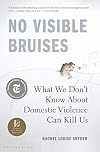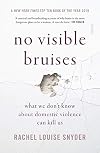
No Visible Bruises: What We Don’t Know About Domestic Violence Can Kill Us
by Rachel Louise Snyder
On This Page
Description
WINNER OF THE HILLMAN PRIZE FOR BOOK JOURNALISM, THE HELEN BERNSTEIN BOOK AWARD, AND THE LUKAS WORK-IN-PROGRESS AWARD * A NEW YORK TIMES TOP 10 BOOKS OF THE YEAR * NATIONAL BOOK CRITICS CIRCLE AWARD FINALIST * LOS ANGELES TIMES BOOK PRIZE FINALIST * ABA SILVER GAVEL AWARD FINALIST * KIRKUS PRIZE FINALISTNAMED ONE OF THE BEST BOOKS OF 2019 BY: Esquire, Amazon, Kirkus, Library Journal, Publishers Weekly, BookPage, BookRiot, Economist, New York Times Staff Critics
"A seminal and breathtaking show more account of why home is the most dangerous place to be a woman . . . A tour de force." -Eve Ensler
"Terrifying, courageous reportage from our internal war zone." -Andrew Solomon
"Extraordinary." -New York Times ,"Editors' Choice"
"Gut-wrenching, required reading." -Esquire
"Compulsively readable . . . It will save lives." -Washington Post
"Essential, devastating reading." -Cheryl Strayed, New York Times Book Review
An award-winning journalist's intimate investigation of the true scope of domestic violence, revealing how the roots of America's most pressing social crises are buried in abuse that happens behind closed doors.
We call it domestic violence. We call it private violence. Sometimes we call it intimate terrorism. But whatever we call it, we generally do not believe it has anything at all to do with us, despite the World Health Organization deeming it a "global epidemic." In America, domestic violence accounts for 15 percent of all violent crime, and yet it remains locked in silence, even as its tendrils reach unseen into so many of our most pressing national issues, from our economy to our education system, from mass shootings to mass incarceration to #MeToo. We still have not taken the true measure of this problem.
In No Visible Bruises, journalist Rachel Louise Snyder gives context for what we don't know we're seeing. She frames this urgent and immersive account of the scale of domestic violence in our country around key stories that explode the common myths-that if things were bad enough, victims would just leave; that a violent person cannot become nonviolent; that shelter is an adequate response; and most insidiously that violence inside the home is a private matter, sealed from the public sphere and disconnected from other forms of violence. Through the stories of victims, perpetrators, law enforcement, and reform movements from across the country, Snyder explores the real roots of private violence, its far-reaching consequences for society, and what it will take to truly address it. show less
Tags
Recommendations









































Member Reviews
Domestic violence, or more accurately described as domestic terrorism, may be the only crime where the victim lands in jail before the perpetrator. What I mean here is that the victims are placed in shelters to protect them from assault and worse often before their abusers are located and locked up for any length of time.
And the reason for this is that in many cases the perpetrator is literally unstoppable in civil society today.
Why?
For one thing we tend to silo information in bureaucracies such that the breadcrumbs that would lead us to anticipate violence and homicide are spread across government agencies that do not coordinate their information. Sometimes we do this to protect individuals against the abuses against privacy, sometimes show more it is simply because civil and criminal institutions operate separately.
Another reason is the sheer power perpetrators exercise over their victims that prevent them from coming forward. They may not want to disrupt the family home even more than the abusers already do. Sometimes they fear with justification that the justice system will move too slowly to protect them before it’s too late.
Sometimes front line law enforcement are insufficiently trained to recognize the markers of abuse, or are insensitive to the victim’s situation, or may even be abusers themselves.
In many cases society hasn’t created the institutions that can cope with the epidemic of domestic violence. Not all jurisdictions have laws against strangulation, for example. There may be insufficient courts to cope with the flood of complaints. And the funds to finance enforcement of restraining orders are often lacking.
One need only look over to India to find a society drowning in its unpreparedness to prevent violence against women in domestic situations.
I can’t remember having read a book that so upset me and in which I marvelled at the bravery of the author — she went into rooms with murderers and offenders to get their side of the story — as in Rachel Louise Snyder’s “No Visible Bruises: What We Don’t Know About Domestic Violence Can Kill Us.”
Over years of researching the topic she suffered through the stories of the victims and the perpetrators, the front line case workers, with the academics who slowly over years pieced together what was going on, and suffered along with the families (and the guilt of the families) who didn’t recognize lethal situations or recognized dangerous situation but didn’t to do anything about it because it would break unwritten norms to keep family secrets. She writes clearly and I would not be surprised if she were not herself suffering PTSD from writing this book.
But let’s go back to the shelters: caseworkers try to helicopter women and children out of dangerous situations for their own wellbeing, literally keeping them out of the comfort of their own homes, sometimes tearing them away from familial obligations to elderly parents, allowing the perpetrators to destroy family financial and physical assets, disrupting friendships, schooling, and disrupting the mundane things we do in normal households.
It shouldn’t be this way. The victims have suffered enough.
It is all in an effort to stop serious crime before it happens. Like Minority Report.
Which raises a new question: how effective can any strategy be to contain the violence that only reacts?
Snyder believes the longer term approach is to show younger men at an earlier age that being a man should be less about control than about making the home a safe place for all.
But the problem is large and pressing. In 2006 Washington, DC, alone had 30,000 complaints registered with the police. I checked the numbers in my own home town Toronto and saw comparable numbers for the increased population: about 45,000 women victimized in 2017 including cases where the victims were not related to the perpetrator. That means that every day an average of 123 people are being assaulted or strangled or shot or beaten in the city I live.
The problems are exacerbated by the easy availability of guns in America. And even where the guns are not being used to commit a felony their presence in the family home gives the abuser leverage over other members of the household.
Given the numbers of attacks we are talking about I can’t help but think the main reason American men worry about government taking away their guns is not because they are worried about outside attackers invading their home, it’s because they don’t want their own power in the home diminished.
When the attacks are not reported in America it also raises the question of why women don’t report them even more often. Do black women only report the attacks as a last resort because they know what the ultimate fate will be for a black man entering the American justice system?
Then there is the disruption caused by evictions of families being terrorized by the man in the household. There is the role of opioids and alcohol, or unemployment and the disruption of jobs lost through automation.
Domestic violence is spawned by silence and our unwillingness to address the imbalance of power in the home. It is neither unusual nor unpredictable. It is literally all around us. show less
And the reason for this is that in many cases the perpetrator is literally unstoppable in civil society today.
Why?
For one thing we tend to silo information in bureaucracies such that the breadcrumbs that would lead us to anticipate violence and homicide are spread across government agencies that do not coordinate their information. Sometimes we do this to protect individuals against the abuses against privacy, sometimes show more it is simply because civil and criminal institutions operate separately.
Another reason is the sheer power perpetrators exercise over their victims that prevent them from coming forward. They may not want to disrupt the family home even more than the abusers already do. Sometimes they fear with justification that the justice system will move too slowly to protect them before it’s too late.
Sometimes front line law enforcement are insufficiently trained to recognize the markers of abuse, or are insensitive to the victim’s situation, or may even be abusers themselves.
In many cases society hasn’t created the institutions that can cope with the epidemic of domestic violence. Not all jurisdictions have laws against strangulation, for example. There may be insufficient courts to cope with the flood of complaints. And the funds to finance enforcement of restraining orders are often lacking.
One need only look over to India to find a society drowning in its unpreparedness to prevent violence against women in domestic situations.
I can’t remember having read a book that so upset me and in which I marvelled at the bravery of the author — she went into rooms with murderers and offenders to get their side of the story — as in Rachel Louise Snyder’s “No Visible Bruises: What We Don’t Know About Domestic Violence Can Kill Us.”
Over years of researching the topic she suffered through the stories of the victims and the perpetrators, the front line case workers, with the academics who slowly over years pieced together what was going on, and suffered along with the families (and the guilt of the families) who didn’t recognize lethal situations or recognized dangerous situation but didn’t to do anything about it because it would break unwritten norms to keep family secrets. She writes clearly and I would not be surprised if she were not herself suffering PTSD from writing this book.
But let’s go back to the shelters: caseworkers try to helicopter women and children out of dangerous situations for their own wellbeing, literally keeping them out of the comfort of their own homes, sometimes tearing them away from familial obligations to elderly parents, allowing the perpetrators to destroy family financial and physical assets, disrupting friendships, schooling, and disrupting the mundane things we do in normal households.
It shouldn’t be this way. The victims have suffered enough.
It is all in an effort to stop serious crime before it happens. Like Minority Report.
Which raises a new question: how effective can any strategy be to contain the violence that only reacts?
Snyder believes the longer term approach is to show younger men at an earlier age that being a man should be less about control than about making the home a safe place for all.
But the problem is large and pressing. In 2006 Washington, DC, alone had 30,000 complaints registered with the police. I checked the numbers in my own home town Toronto and saw comparable numbers for the increased population: about 45,000 women victimized in 2017 including cases where the victims were not related to the perpetrator. That means that every day an average of 123 people are being assaulted or strangled or shot or beaten in the city I live.
The problems are exacerbated by the easy availability of guns in America. And even where the guns are not being used to commit a felony their presence in the family home gives the abuser leverage over other members of the household.
Given the numbers of attacks we are talking about I can’t help but think the main reason American men worry about government taking away their guns is not because they are worried about outside attackers invading their home, it’s because they don’t want their own power in the home diminished.
When the attacks are not reported in America it also raises the question of why women don’t report them even more often. Do black women only report the attacks as a last resort because they know what the ultimate fate will be for a black man entering the American justice system?
Then there is the disruption caused by evictions of families being terrorized by the man in the household. There is the role of opioids and alcohol, or unemployment and the disruption of jobs lost through automation.
Domestic violence is spawned by silence and our unwillingness to address the imbalance of power in the home. It is neither unusual nor unpredictable. It is literally all around us. show less
“The culture that tells women to keep the family intact, to find love and be loved at all costs, is the same culture that emasculates and shames man in abusive situations, that tells men if they are victims, it is because they are weak and not real men. It is the same culture that tells them violence is acceptable as a response to any external threat or internal pain, but tears are not. It is a culture that limits both victim and perpetrator, the abused and the abuser.”
I am learning and I am hurting. I spent a considerable amount of time on this review and on processing No Visible Bruises. This book is acutely, vitally important. Considering the Violence Against Women Act, which expired a year ago to date. Considering the murder of show more women by intimate partner violence has increased 11% since 2014. Considering the majority of mass shootings in the United States begin as domestic violence. Considering the CDC found in 2017 that more than eight million girls experienced rape or intimate partner violence before the age of eighteen. Considering over 50 women are killed every month in the United States by intimate partners. We are floundering and we are suffering.
This book is an educational revelation that will keep you up at night and instill you with the need to publicly roar about this profound yet under addressed issue that is corrupting and razing our communities. No Visible Bruises is the ideal balance of storytelling, science, and statistics, as Snyder moves us, informs us, and incites change in us. She approaches the issues from all angles, considering not just the victims, but also the perpetrators, the lawmakers, the shelter workers, the advocates, the police officers, the medical professionals, leaving no stone unturned. Snyder shreds notions we’ve internalized involving victim blaming and the inherent misogyny in how we report on and discuss intimate partner violence. Parts of No Visible Bruises made me sob, others made me queasy, and still others made me rage with indignant recognition.
“If men are taught not to cry, women are taught crying is acceptable. If men are taught anger is their sole allowable emotion, women are taught never to be angry. Men who yell are being men; women who yell are shrill or they’re drama queens or they’re hysterical...Sinclair calls this ‘the elephant in the room.’ That we won’t say, simply, that it is men who are violent. It is men who take their violence out on masses of others. School shootings are carried out by young men. Mass murders. Gang warfare, murder-suicides and familicides and matricides and even genocides: all men. Always men.”
Snyder applies her journalistic expertise to seemingly every challenging aspect of domestic violence including the essential gagging of medical professionals by HIPAA laws; the often insurmountable challenges rehab programs for batterers face; the sometimes deadly communication failures between police, shelter staff, and hospital staff; the survival mindset many victims of domestic violence embody, which often looks like acquiescence to outsiders who lack understanding of the framework; and, finally, a systemic viewing of domestic violence as just that, a domestic issue, which leads to poorly written laws, gaping loopholes, and a lack of understanding of how domestic violence escalates, resulting in the deaths of countless women. No Visible Bruises firmly rejects any easy explanations, cop outs, oversimplified solutions, and insistence that our society and our system has done anything other than fail women left dead by intimate partner violence.
“Read any news story today about domestic violence homicide and you’re likely to see some version of the question why didn’t she leave? What you almost surely won’t see is why was he violent? Or better yet, why couldn’t he stop his violence?”
Reading things like “Domestic violence didn’t become a crime in Washington D.C., until 1991” and “The United States spends as much as twenty-five times more on researching cancer or heart disease than it does on violence prevention” and “In many states today, still, victims are barred from using their long histories of enduring violence at the hands of their partners in their own defense” and “Nearly 30% of [police] officers with domestic violence complaints were still employed in their same positions a year later” makes my stomach plummet to the ground. Snyder juxtaposes chilling statistics and harsh realities with tangible solutions, insisting that despite dismal realities we can be catalysts for change. No Visible Bruises is a fluid read and by far one of the most compelling nonfiction narratives that I have ever read, coming at a critical time in our society and enduring as a symbol of hope. Absolutely essential reading. show less
I am learning and I am hurting. I spent a considerable amount of time on this review and on processing No Visible Bruises. This book is acutely, vitally important. Considering the Violence Against Women Act, which expired a year ago to date. Considering the murder of show more women by intimate partner violence has increased 11% since 2014. Considering the majority of mass shootings in the United States begin as domestic violence. Considering the CDC found in 2017 that more than eight million girls experienced rape or intimate partner violence before the age of eighteen. Considering over 50 women are killed every month in the United States by intimate partners. We are floundering and we are suffering.
This book is an educational revelation that will keep you up at night and instill you with the need to publicly roar about this profound yet under addressed issue that is corrupting and razing our communities. No Visible Bruises is the ideal balance of storytelling, science, and statistics, as Snyder moves us, informs us, and incites change in us. She approaches the issues from all angles, considering not just the victims, but also the perpetrators, the lawmakers, the shelter workers, the advocates, the police officers, the medical professionals, leaving no stone unturned. Snyder shreds notions we’ve internalized involving victim blaming and the inherent misogyny in how we report on and discuss intimate partner violence. Parts of No Visible Bruises made me sob, others made me queasy, and still others made me rage with indignant recognition.
“If men are taught not to cry, women are taught crying is acceptable. If men are taught anger is their sole allowable emotion, women are taught never to be angry. Men who yell are being men; women who yell are shrill or they’re drama queens or they’re hysterical...Sinclair calls this ‘the elephant in the room.’ That we won’t say, simply, that it is men who are violent. It is men who take their violence out on masses of others. School shootings are carried out by young men. Mass murders. Gang warfare, murder-suicides and familicides and matricides and even genocides: all men. Always men.”
Snyder applies her journalistic expertise to seemingly every challenging aspect of domestic violence including the essential gagging of medical professionals by HIPAA laws; the often insurmountable challenges rehab programs for batterers face; the sometimes deadly communication failures between police, shelter staff, and hospital staff; the survival mindset many victims of domestic violence embody, which often looks like acquiescence to outsiders who lack understanding of the framework; and, finally, a systemic viewing of domestic violence as just that, a domestic issue, which leads to poorly written laws, gaping loopholes, and a lack of understanding of how domestic violence escalates, resulting in the deaths of countless women. No Visible Bruises firmly rejects any easy explanations, cop outs, oversimplified solutions, and insistence that our society and our system has done anything other than fail women left dead by intimate partner violence.
“Read any news story today about domestic violence homicide and you’re likely to see some version of the question why didn’t she leave? What you almost surely won’t see is why was he violent? Or better yet, why couldn’t he stop his violence?”
Reading things like “Domestic violence didn’t become a crime in Washington D.C., until 1991” and “The United States spends as much as twenty-five times more on researching cancer or heart disease than it does on violence prevention” and “In many states today, still, victims are barred from using their long histories of enduring violence at the hands of their partners in their own defense” and “Nearly 30% of [police] officers with domestic violence complaints were still employed in their same positions a year later” makes my stomach plummet to the ground. Snyder juxtaposes chilling statistics and harsh realities with tangible solutions, insisting that despite dismal realities we can be catalysts for change. No Visible Bruises is a fluid read and by far one of the most compelling nonfiction narratives that I have ever read, coming at a critical time in our society and enduring as a symbol of hope. Absolutely essential reading. show less
This took me a long time to read, because Snyder's research is so harrowing that I could only read it in chunks. But this is vital reading. I was so encouraged to read of the many people across the country trying to get a toe-hold anywhere to addressing how law enforcement, judges, clergy, social workers, and families can work together to save lives of the abused. This book will tear you up, might even cause you to judge the women and men whose stories you read. Don't.
As Snyder writes, "No victim of domestic violence ever imagines that they're the type of person who would wind up in such a situation. Whatever we envision when we envision a victim, there is one universal truth to each and every one of those images: none of us ever show more picture ourselves." show less
As Snyder writes, "No victim of domestic violence ever imagines that they're the type of person who would wind up in such a situation. Whatever we envision when we envision a victim, there is one universal truth to each and every one of those images: none of us ever show more picture ourselves." show less
It's one thing to take you through a domestic violence (or, as we could call it, intimate partner terrorism) and answer the question "why do victims stay?" It's something else to ask another question: "Why do we ask victims to leave? Why don't we ask abusers to stop?"
Whatever answers we have to that question, Snyder's decision to ask it--and to ask us why we don't--hit me in the gut. Of course, I think abusers should stop. But like everyone else, I always asked first why the victim didn't leave, because that's what I was taught to ask. No Visible Bruises is more than a catalogue of systemic failures, though there's plenty to show. Snyder is also interested in deeper questions--about violence and gender and about our society's show more relationship to gendered violence.
She focuses primarily on physical violence and its ultimate endpoint, murder. But physical violence doesn't exist on its own. It's intimately tied to emotional terror and control, and understanding that is key to any solutions. Snyder seeks to answer her own questions about teaching abusers to stop by looking at programs that try to teach abusers to change. This is difficult to read--I came away feeling that the programs are important and necessary, but that as a woman I could never afford to risk trusting any of the men in them.
There are a lot of systemic failures to document, but there are also efforts aimed at correcting those flaws and improving knowledge--understanding which women are in the most danger, why shelter is a flawed answer, improving police and advocacy.
The stories in this book--and the questions they raised--hit me in the gut and as I do so often, I came away feeling that there was so much more to discuss. show less
Whatever answers we have to that question, Snyder's decision to ask it--and to ask us why we don't--hit me in the gut. Of course, I think abusers should stop. But like everyone else, I always asked first why the victim didn't leave, because that's what I was taught to ask. No Visible Bruises is more than a catalogue of systemic failures, though there's plenty to show. Snyder is also interested in deeper questions--about violence and gender and about our society's show more relationship to gendered violence.
She focuses primarily on physical violence and its ultimate endpoint, murder. But physical violence doesn't exist on its own. It's intimately tied to emotional terror and control, and understanding that is key to any solutions. Snyder seeks to answer her own questions about teaching abusers to stop by looking at programs that try to teach abusers to change. This is difficult to read--I came away feeling that the programs are important and necessary, but that as a woman I could never afford to risk trusting any of the men in them.
There are a lot of systemic failures to document, but there are also efforts aimed at correcting those flaws and improving knowledge--understanding which women are in the most danger, why shelter is a flawed answer, improving police and advocacy.
The stories in this book--and the questions they raised--hit me in the gut and as I do so often, I came away feeling that there was so much more to discuss. show less
Really solid journalism. The narrative is roughly broken into three main segments: the victims, the perpetrators, and the victim advocates and crime investigators. I will admit that, at first, the coverage of the victims, centering on a particular case in Montana, as superbly written as it was, was disturbing to me in how it showed how very little had been done to avoid and respond to domestic violence -- intimate partner terrorism -- since the case I personally saw unfold in the very early 1980s.
Back then, I met a woman on a jury panel for a rape case. I was the jury foreman. After the verdict was turned in, we needed to decompress from the tension of the case, so we took a breather from the courtroom for a beverage near by. Perhaps it show more was because of the subject matter of the case or maybe how I responded to it but this woman started to slowly confide in me about her own situation. I was kept in the loop as the situation progressed. As briefly as I can describe it, she had two small kids, worked as professional, and her husband was a radio DJ. Knowing that the "Psycho" shower scene freaked her out, he would purposely leave a big kitchen knife outside her shower. (There's a reference to a rattlesnake in this book that applies.) She separates from him, and files for divorce. During that process, she changes the locks of her house, but he figures out how to get in through a window in the garage in the middle of the night, into the house, and into the bedroom, where he holds her by her throat while he rapes her, and leaves. With some encouragement, she files a rape charge, including submitting to a rape kit. He is not yet in jail but has a restraining order against him. She goes to a women's shelter. He tracks her down. She moves out to an apartment in a nearby town. He tracks her down. So far, no violence, but his anger escalates. He shows up one evening with a shotgun demanding to be let in. Prepared for this eventuality, the cops are called. He's arrested, tried, convicted, and sent to prison. I should say, sent back to prison. The two had met while she was teaching classes inside a prison. While drunk, he had shot his roommate to death because the roommate had laughed at him. Her family upbringing had been highly religious, fundamentalist Christian.
Soon after, I found myself studying domestic violence and "battered women" cases. I even did a college research paper on it. I will always remember one of the female students in the class during my paper's presentation, with her eyes bugging out while I described the situations on which I was reporting. I never knew if she was shocked by the subject matter or she thought I was describing her own current situation. A year or two after the trial, I finally bumped into the woman and her two kids again at a local mall. She was shadowed by a man hovering over her like a Secret Service agent. Had she found herself in a similar situation again? Or had the new guy heard the whole story and was hyper-vigilant against a repeat?
The good news is (1) the author is exceptional in both detail and word craft in her coverage of victims, (2) she very interestingly and quite intimately gets feedback from a number of people who had committed domestic violence, helping to understand the source of the problem, and (3) the coverage of what research and what programs have been implemented over the years, sheds light on what is actually helping. The downside is those programs have not flourished and spread nearly far enough or rapidly enough. Thus, the need for this book. show less
Back then, I met a woman on a jury panel for a rape case. I was the jury foreman. After the verdict was turned in, we needed to decompress from the tension of the case, so we took a breather from the courtroom for a beverage near by. Perhaps it show more was because of the subject matter of the case or maybe how I responded to it but this woman started to slowly confide in me about her own situation. I was kept in the loop as the situation progressed. As briefly as I can describe it, she had two small kids, worked as professional, and her husband was a radio DJ. Knowing that the "Psycho" shower scene freaked her out, he would purposely leave a big kitchen knife outside her shower. (There's a reference to a rattlesnake in this book that applies.) She separates from him, and files for divorce. During that process, she changes the locks of her house, but he figures out how to get in through a window in the garage in the middle of the night, into the house, and into the bedroom, where he holds her by her throat while he rapes her, and leaves. With some encouragement, she files a rape charge, including submitting to a rape kit. He is not yet in jail but has a restraining order against him. She goes to a women's shelter. He tracks her down. She moves out to an apartment in a nearby town. He tracks her down. So far, no violence, but his anger escalates. He shows up one evening with a shotgun demanding to be let in. Prepared for this eventuality, the cops are called. He's arrested, tried, convicted, and sent to prison. I should say, sent back to prison. The two had met while she was teaching classes inside a prison. While drunk, he had shot his roommate to death because the roommate had laughed at him. Her family upbringing had been highly religious, fundamentalist Christian.
Soon after, I found myself studying domestic violence and "battered women" cases. I even did a college research paper on it. I will always remember one of the female students in the class during my paper's presentation, with her eyes bugging out while I described the situations on which I was reporting. I never knew if she was shocked by the subject matter or she thought I was describing her own current situation. A year or two after the trial, I finally bumped into the woman and her two kids again at a local mall. She was shadowed by a man hovering over her like a Secret Service agent. Had she found herself in a similar situation again? Or had the new guy heard the whole story and was hyper-vigilant against a repeat?
The good news is (1) the author is exceptional in both detail and word craft in her coverage of victims, (2) she very interestingly and quite intimately gets feedback from a number of people who had committed domestic violence, helping to understand the source of the problem, and (3) the coverage of what research and what programs have been implemented over the years, sheds light on what is actually helping. The downside is those programs have not flourished and spread nearly far enough or rapidly enough. Thus, the need for this book. show less
Well researched and storied, giving more than just the cold statistics of those caught in the cycle of domestic violence. The journalistic aspect brings to life the lack of network and support, on a personal, cultural, and governmental level, that seems to doom even the strongest survivor of abuse to a continued life of torment with no hope of escape. Thought provoking and eye opening to the responsibility of the village to protect each of its inhabitants.
very, very hard to read --it took me two full months, and i was constently working at it, managing a few pages or a chapter a week. a lot of this is very new, and a lot of it is very, very familiar.
-- this book was written during Trump Presidency The First (pub. 2019, so just prior to covid), and i'm living through Trump Presidency The Second, and i don't want to get especially political here but it is amazing, astonishing, horrific, to see how a serial domestic abuser -- which Trump is -- slide so easily into the need to control everything, everyone, everywhere, forever. "Why does he stay?" asks the book, and we can answer: he is full of shame and fear and emotional poverty, and inflicting that on someone else is the only way he can, show more briefly, feel okay. show less
-- this book was written during Trump Presidency The First (pub. 2019, so just prior to covid), and i'm living through Trump Presidency The Second, and i don't want to get especially political here but it is amazing, astonishing, horrific, to see how a serial domestic abuser -- which Trump is -- slide so easily into the need to control everything, everyone, everywhere, forever. "Why does he stay?" asks the book, and we can answer: he is full of shame and fear and emotional poverty, and inflicting that on someone else is the only way he can, show more briefly, feel okay. show less
Members
- Recently Added By
Published Reviews
ThingScore 100
In its scope and seriousness — its palpable desire to spur change — this book invites reflection not only about violence but about writing itself. What kinds of reportage really move policy? What kinds of narrative — what sorts of tone, structure, examples — can stoke a reader’s outrage and then translate that outrage into action, keeping it from curdling into cynicism or despair?
added by melmore
Lists

Recovery from Psychopath
127 works; 1 member
Author Information

9 Works 670 Members
Rachel Louise Snyder's work has appeared in the New Yorker, the New York Times Magazine, the Washington Post, the New Republic, the Atlantic, and elsewhere. She is the author of Fugitive Denim and the novel What We've Lost Is Nothing. An associate professor at American University, Snyder lives in Washington, D.C. Follow her on Twitter at @RLSWrites
Awards and Honors
Awards
Distinctions
Common Knowledge
- Original publication date
- 2019-05-07
- Dedication
- For Barbara J. Snyder
- First words
- I drive my rental car from downtown Billings to a four-story house far outside of town, oerched up on a hill, where the man inside can view anything that might come his way. -Preface
Paul Monson's house has an open floor plan, living room to dining room, dining room to kitchen. -Little Lunatics, Chapter 1 - Canonical DDC/MDS
- 362.82920973
- Canonical LCC
- HV6626.2
Classifications
- Genres
- Sociology, Politics and Government, General Nonfiction, Nonfiction, Sexuality and Gender Studies
- DDC/MDS
- 362.82920973 — Society, Government, and Culture Social problems and social services Social Welfare Problems of and services to other groups Families Specific problems Abuse within the family History, geographic treatment, biography North America United States
- LCC
- HV6626.2 — Social sciences Social pathology. Social and public welfare. Criminology Social pathology. Social and public welfare. Criminology Crimes and offenses
- BISAC
Statistics
- Members
- 418
- Popularity
- 73,677
- Reviews
- 15
- Rating
- (4.52)
- Languages
- English
- Media
- Paper, Audiobook, Ebook
- ISBNs
- 11
- ASINs
- 3