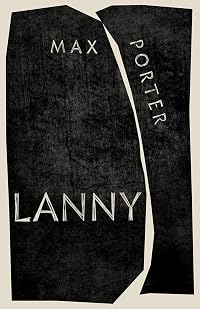
Lanny
by Max Porter
On This Page
Description
"Not far from London, there is a village. This village belongs to the people who live in it and to those who lived in it hundreds of years ago. It belongs to England's mysterious past and its confounding present. It belongs to Mad Pete, the grizzled artist. To ancient Peggy, gossiping at her gate. To families dead for generations, and to those who have only recently moved here. But it also belongs to Dead Papa Toothwort who has woken from his slumber in the woods. Dead Papa Toothwort, who is show more listening to them all. Chimerical, audacious, strange and wonderful - a song to difference and imagination, to friendship, youth and love, Lanny is the globally anticipated new novel from Max Porter."--Publisher's description. show lessTags
Recommendations









Member Reviews
Lanny is a little boy living in an English village outside London. His father, Robert, is an asset manager in the city. His mother, Jolie, was once an actress and now writes edgy psychological thrillers. Lanny is learning about art from Pete, a famous artist who resides in the village who has agreed, at Jolie’s plea, to take on Lanny’s art tutelage. But deeper underground, or in the air, or in everything perhaps, is Dead Papa Toothwort, the elemental spirit of this land that sees all, feels all, and becomes all. And he’s taken a special interest in Lanny.
Max Porter’s writing captures the lives in this village in remarkably brief lines, like a charcoal sketch. But the village totally comes to life. He peoples it with the full show more range of village characters all of whom, of course, Toothwort himself embodies. It is a lively dance as the reader bounces across characters’ thoughts in the Toothwort sections of the novel. But the picture created of Lanny himself is always a bit vague. In part that’s because everyone sees him a bit differently. And in part because he is a bit different. He’s so in tune with his present moment, which in this case is also the ancient mythical Toothwort moment, that he is more naturally a resident of the village than anyone else there, and at the same time somewhat otherworldly. Enchanted would not be too much to say.
I found this novel entirely captivating. And it’s impossible not to be wondering even as you are reading, how did this novel find a publisher? It’s so unusual. Almost like an extended poem. And yet so dramatic (and sometimes traumatic). A wonderful, significant achievement.
Definitely recommended. show less
Max Porter’s writing captures the lives in this village in remarkably brief lines, like a charcoal sketch. But the village totally comes to life. He peoples it with the full show more range of village characters all of whom, of course, Toothwort himself embodies. It is a lively dance as the reader bounces across characters’ thoughts in the Toothwort sections of the novel. But the picture created of Lanny himself is always a bit vague. In part that’s because everyone sees him a bit differently. And in part because he is a bit different. He’s so in tune with his present moment, which in this case is also the ancient mythical Toothwort moment, that he is more naturally a resident of the village than anyone else there, and at the same time somewhat otherworldly. Enchanted would not be too much to say.
I found this novel entirely captivating. And it’s impossible not to be wondering even as you are reading, how did this novel find a publisher? It’s so unusual. Almost like an extended poem. And yet so dramatic (and sometimes traumatic). A wonderful, significant achievement.
Definitely recommended. show less
Lanny is a young boy whose parents have recently moved from London to a village an hour's train ride away. His father works in the City, and his mother is a former actress who is trying to reinvent herself as an author of grisly mystery novels. He is an unusual child, who is wise beyond his years, more than a little odd, and in touch with nature and his environment, especially in the woods at the outskirts of the town. His best friend is a well known artist, an older man who lives a hermetic existence and is considered to be "mad. The long time residents of the village are small minded, conservative and generally disdainful of the new residents, who they view as ostentatious and immodest, and Lanny and his mother struggle to find their show more place amongst their new neighbors.
Overlooking the village and its people is Dead Papa Toothwort, a somewhat malevolent spirit who lived there centuries ago and spends his days observing the residents in their homes and listening to their intimate conversations. The spirit, like the artist, is very fond of Lanny, who is aware of the legend of Toothwort, and both the boy and the spirit actively seek out the other, which results in a fateful meeting.
Lanny is a highly inventive, multilayered and daring work of experimental fiction that completely captured my attention from the first page to the last. This review is intentionally vague, as I want to avoid giving too much information that would spoil the plot and the book's surprising and imaginative ending. This novel would seem to be a shoo in for this year's Booker Prize longlist, and if it is chosen I'll read it again this summer. Highly recommended! show less
Overlooking the village and its people is Dead Papa Toothwort, a somewhat malevolent spirit who lived there centuries ago and spends his days observing the residents in their homes and listening to their intimate conversations. The spirit, like the artist, is very fond of Lanny, who is aware of the legend of Toothwort, and both the boy and the spirit actively seek out the other, which results in a fateful meeting.
Lanny is a highly inventive, multilayered and daring work of experimental fiction that completely captured my attention from the first page to the last. This review is intentionally vague, as I want to avoid giving too much information that would spoil the plot and the book's surprising and imaginative ending. This novel would seem to be a shoo in for this year's Booker Prize longlist, and if it is chosen I'll read it again this summer. Highly recommended! show less
Max Porter uses his virtuoso writing skills to captivate the reader of his haunting story of a peculiar singing child who becomes lost in the forest as he builds his "museum of magic things." Usually, I eschew accounts of children, fanciful fables and mothering stories. Porter led me into this book like an obedient puppy. I was confused, impressed and spellbound into sleeplessness. The POV changed willy nilly. There's a fanciful creature whose lines run all over the page, dipping and circling like the story in our hands. At times, it made no sense but I couldn't put it down. Perhaps he's a bit harsh with the father's imperfections and the nosy nasty old busybody neighbor, Mrs. Larton, is a chance for the author to run wild as Lanny's show more mom takes her on:
"I just wonder if you've seen my son, you awful bitch, your pissy clingfilm hag and by the way I hate hate hate you. I despise your smell of fetid carpets and toast; Silk Cut, marmalade, gas and antiques. I feel sick just thinking about your yellow-stained lamb's-ear fuzzy upper lip, your heirloom rings stacked on your Churchillian pug-knuckles, the inside of your huge dank house, your weighty silver biro in your splotched hand as you scratch away at the puzzles in your evil newspaper."
The artist Mad Pete is a hero throughout and the mother is a mom any of us would love even if she writes crime stories. Breathtaking. Read it. show less
"I just wonder if you've seen my son, you awful bitch, your pissy clingfilm hag and by the way I hate hate hate you. I despise your smell of fetid carpets and toast; Silk Cut, marmalade, gas and antiques. I feel sick just thinking about your yellow-stained lamb's-ear fuzzy upper lip, your heirloom rings stacked on your Churchillian pug-knuckles, the inside of your huge dank house, your weighty silver biro in your splotched hand as you scratch away at the puzzles in your evil newspaper."
The artist Mad Pete is a hero throughout and the mother is a mom any of us would love even if she writes crime stories. Breathtaking. Read it. show less
Beautiful, ethereal, disturbing, poetic, mystical, and hopeful. Beware of spoilers (none in this review except a trigger warning for anyone who’s had a child go missing ).
A young family move to a small village. Robert commutes to his job in the City of London, “trebling invisible fortunes” (a kind of magic, as it requires belief in unseen forces?). Jolie, a former actor, writes a gory crime-revenge novel. And Lanny immerses himself in the natural world, connected to it in some primordial way, while being detached from almost everyone and everything else. He is odd in ways that worry and annoy his father, but that his mother mostly finds endearing. Art lessons with Pete draw Lanny into local folklore, flora, fauna, and bones.
Image: show more Eight of Chris Kenny’s “Twelve Twigs” (Source)
This is not a conventional narrative. In some ways it is about narrative, and it experiments with different ways to tell a story. It’s certainly about words and language, as well as art, which is a wordless form of language. Acceptance is important too, both spoken and unspoken: without it, one can’t belong; without it, one can’t engage with such a story, featuring magic and fate. Throwaway lines prove prophetic - or maybe they’re just coincidences. What do you believe?
One, two, three…
“Human sound, tethered to his interest, dragged across the field, sucked into his great need…
He swims in it, he gobbles it up and wraps himself in it… wanting it fizzing on his tongue.”
The book opens with Dead Papa Toothwort feasting on overheard conversations. He’s a sort of timeless, shape-shifting Green Man.
“I’m waxed leaves and hard flint, storing tomorrow’s sunshine in my bark, invisible.”
The first half of the book comprises short alternating sections by “Lanny’s Mum”, “Lanny’s Dad”, and Pete, all writing mostly about Lanny, with interjections from Dead Papa Toothwort. He lusts after Lanny’s words most of all because Lanny is a kindred spirit:
“Taking things from wherever he’s been listening, soaking up the sounds of this world and spinning out threads of another.”
Image: Fragments overheard around London, when I was reading this book
It sounds idyllic, but mundane.
Fear not on that score.
Fear.
“The darkness was uneven, slippery.
The pressure between different objects in my house was all wrong.”
The second section still features multiple voices, but they’re disorganised, muddled, unnamed, stream-of-consciousness. It’s dramatic, gossipy, and worrying. Something Bad has happened, and that changes everything and everyone - individually and as a community. What to do, and who to blame?
The third section firmly leaves the normal, rational world behind, but Max Porter has prepared readers for it, just as Dead Papa Toothwort has prepared the villagers.
Image: “Belisama”, a kind of Green Woman, surrounded by trees, by Simon Gudgeon (Source)
Quotes
• “Either side of us, woods. Ahead of us, hills. Counties lapping falsely at each other over the stone plates which rough-and-tumbled to form this gentle landscape. Some very old trees round this way. Saints.”
• “Which do you think is more patient, an idea or a hope?”
• “There is a moment like a cello note, then. Warm and wooden and full of other things. Nobody speaks but we are all listening.”
• “You cannot simply buy a sense of belonging.”
• “The village hall’s usual small (dried modelling clay, pensioner dust, flower arranging foam, urine, smelly plimsolls).”
• “Mile-wide slabs of rain romp across the valley. Palette-knife smears of bad weather rush past the windows.”
• “The myth, the shapeshifter, the souvenir, the non-existent spirit of English place.”
• “He has been in story form in every bedroom of every house in this place. He is in them like water… In this place he is as old as time.”
• “Born of dark gaps in Sunday school nightmares, choked by tendrils growing out of his mouth… tree demon, uncle and dad, king of the hawthorn and hops, harvest and hope, threat of starvation.”
• “Nobody was truly born here, apart from him.”
See also
• Porter’s award-winning Grief is the Thing With Feathers. See my review HERE.
• Ancient folklore seeping into modern myth also reminded me of Daisy Johnson’s superb collection, Fen. See my review HERE.
• A child goes missing in a village, told by an omniscient narrator, but in this the magic is in the way the story is told, rather than the nature of the narrator, Jon McGregor's Reservoir 14. See my review HERE. show less
A young family move to a small village. Robert commutes to his job in the City of London, “trebling invisible fortunes” (a kind of magic, as it requires belief in unseen forces?). Jolie, a former actor, writes a gory crime-revenge novel. And Lanny immerses himself in the natural world, connected to it in some primordial way, while being detached from almost everyone and everything else. He is odd in ways that worry and annoy his father, but that his mother mostly finds endearing. Art lessons with Pete draw Lanny into local folklore, flora, fauna, and bones.
Image: show more Eight of Chris Kenny’s “Twelve Twigs” (Source)
This is not a conventional narrative. In some ways it is about narrative, and it experiments with different ways to tell a story. It’s certainly about words and language, as well as art, which is a wordless form of language. Acceptance is important too, both spoken and unspoken: without it, one can’t belong; without it, one can’t engage with such a story, featuring magic and fate. Throwaway lines prove prophetic - or maybe they’re just coincidences. What do you believe?
One, two, three…
“Human sound, tethered to his interest, dragged across the field, sucked into his great need…
He swims in it, he gobbles it up and wraps himself in it… wanting it fizzing on his tongue.”
The book opens with Dead Papa Toothwort feasting on overheard conversations. He’s a sort of timeless, shape-shifting Green Man.
“I’m waxed leaves and hard flint, storing tomorrow’s sunshine in my bark, invisible.”
The first half of the book comprises short alternating sections by “Lanny’s Mum”, “Lanny’s Dad”, and Pete, all writing mostly about Lanny, with interjections from Dead Papa Toothwort. He lusts after Lanny’s words most of all because Lanny is a kindred spirit:
“Taking things from wherever he’s been listening, soaking up the sounds of this world and spinning out threads of another.”
Image: Fragments overheard around London, when I was reading this book
It sounds idyllic, but mundane.
Fear not on that score.
Fear.
“The darkness was uneven, slippery.
The pressure between different objects in my house was all wrong.”
The second section still features multiple voices, but they’re disorganised, muddled, unnamed, stream-of-consciousness. It’s dramatic, gossipy, and worrying. Something Bad has happened, and that changes everything and everyone - individually and as a community. What to do, and who to blame?
The third section firmly leaves the normal, rational world behind, but Max Porter has prepared readers for it, just as Dead Papa Toothwort has prepared the villagers.
Image: “Belisama”, a kind of Green Woman, surrounded by trees, by Simon Gudgeon (Source)
Quotes
• “Either side of us, woods. Ahead of us, hills. Counties lapping falsely at each other over the stone plates which rough-and-tumbled to form this gentle landscape. Some very old trees round this way. Saints.”
• “Which do you think is more patient, an idea or a hope?”
• “There is a moment like a cello note, then. Warm and wooden and full of other things. Nobody speaks but we are all listening.”
• “You cannot simply buy a sense of belonging.”
• “The village hall’s usual small (dried modelling clay, pensioner dust, flower arranging foam, urine, smelly plimsolls).”
• “Mile-wide slabs of rain romp across the valley. Palette-knife smears of bad weather rush past the windows.”
• “The myth, the shapeshifter, the souvenir, the non-existent spirit of English place.”
• “He has been in story form in every bedroom of every house in this place. He is in them like water… In this place he is as old as time.”
• “Born of dark gaps in Sunday school nightmares, choked by tendrils growing out of his mouth… tree demon, uncle and dad, king of the hawthorn and hops, harvest and hope, threat of starvation.”
• “Nobody was truly born here, apart from him.”
See also
• Porter’s award-winning Grief is the Thing With Feathers. See my review HERE.
• Ancient folklore seeping into modern myth also reminded me of Daisy Johnson’s superb collection, Fen. See my review HERE.
• A child goes missing in a village, told by an omniscient narrator, but in this the magic is in the way the story is told, rather than the nature of the narrator, Jon McGregor's Reservoir 14. See my review HERE. show less
Lanny is an intriguing, brilliantly constructed little novel. It starts off with a poeticism that really grabs the reader, pulls them into the pace of this village, the voices of the individuals as well as the hum of the hive. It's lyrical without pretentiousness. The imaginative range of the narrative is both ominous and magical.
As far as story, the first two-thirds of Lanny are wonderful. I was pulled into this village, and into the mind of the mythical creature known as Dead Papa Toothwort. The third part of the story lost me though, enough so I disappointingly felt the need to drop a star. I lost the thread of the story and the rhythm of its telling. Those with a more substantial attention span than I have may have a better show more appreciation for this section. I didn't follow.
Lanny is oh so comparable in subject and tone to several previous Booker Prize nominees. I don't know if that means it's more or less likely to receive a nod this July, but I won't be surprised if it's on the long list. show less
As far as story, the first two-thirds of Lanny are wonderful. I was pulled into this village, and into the mind of the mythical creature known as Dead Papa Toothwort. The third part of the story lost me though, enough so I disappointingly felt the need to drop a star. I lost the thread of the story and the rhythm of its telling. Those with a more substantial attention span than I have may have a better show more appreciation for this section. I didn't follow.
Lanny is oh so comparable in subject and tone to several previous Booker Prize nominees. I don't know if that means it's more or less likely to receive a nod this July, but I won't be surprised if it's on the long list. show less
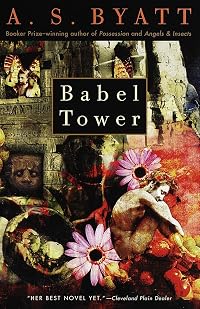
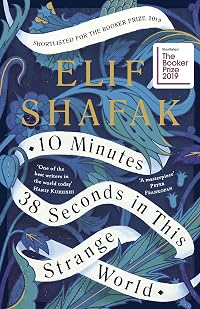
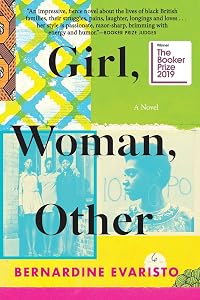
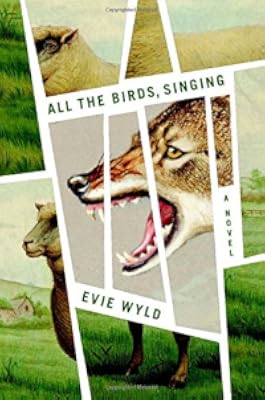
Longlisted for the Booker Prize 2019
I loved this book but I really don't know how to review it. It really shouldn't work - a magic realist fantasy set in an English village that brings a fresh eye to contemporary problems, history and the environment. It is poetic, and its most fantastic character Dead Papa Toothwort, the village bogeyman - a mixture of green man myth with collective memory and shapeshifting, talks in a wild tangle of overheard phrases that refuse normal typographical rules and twist around the page decoratively.
Other characters are more conventional. At its heart is Lanny, a free spirited young boy who roams the village and the woods around it, his imagination fired by his lessons with the eccentric old artist "Mad" show more Pete. Lanny's parents are Jolie, a former actress now writing a graphic murder mystery who struggles to keep darker thoughts at bay, and Robert, who has an office job in London and the attitudes that go with it, but comes to accept and appreciate Pete. Both are incomers to the village.
In the first half of the book the perspective shifts between Toothwort, Pete and Lanny's parents. The second part begins with Lanny's disappearance, which takes the story into darker territory, allowing Porter to explore many social issues and the way the media portrays them (there are strong echoes of the McCann case and the hounding of Christopher Jefferies), but the magical element is never lost and the resolution is surprisingly satisfying.
Highly recommended - I hope to see it on next month's Booker longlist.
update 3 Sep - for me this was probably the most disappointing omission from the Booker shortlist show less
I loved this book but I really don't know how to review it. It really shouldn't work - a magic realist fantasy set in an English village that brings a fresh eye to contemporary problems, history and the environment. It is poetic, and its most fantastic character Dead Papa Toothwort, the village bogeyman - a mixture of green man myth with collective memory and shapeshifting, talks in a wild tangle of overheard phrases that refuse normal typographical rules and twist around the page decoratively.
Other characters are more conventional. At its heart is Lanny, a free spirited young boy who roams the village and the woods around it, his imagination fired by his lessons with the eccentric old artist "Mad" show more Pete. Lanny's parents are Jolie, a former actress now writing a graphic murder mystery who struggles to keep darker thoughts at bay, and Robert, who has an office job in London and the attitudes that go with it, but comes to accept and appreciate Pete. Both are incomers to the village.
In the first half of the book the perspective shifts between Toothwort, Pete and Lanny's parents. The second part begins with Lanny's disappearance, which takes the story into darker territory, allowing Porter to explore many social issues and the way the media portrays them (there are strong echoes of the McCann case and the hounding of Christopher Jefferies), but the magical element is never lost and the resolution is surprisingly satisfying.
Highly recommended - I hope to see it on next month's Booker longlist.
update 3 Sep - for me this was probably the most disappointing omission from the Booker shortlist show less
I adore this book. It is grounded in the natural world and yet supremely magical. The writing weaves a tapestry made up of branches and moss and lost wooly jumpers and leaves and bones and birds nests and bottle caps. The prose winds its way through the three parts like a stream which leads into a river.
The story begins peaceful and languid, setting a calm and friendly pace as we get to know Lanny (a sweet, gentle, peculiar, and prescient boy) through his mother and father, and Pete, an old eccentric artist. The pace of the story mimics the pace of life in a small village. It's slow and comfortable. Time meanders here and we would feel safe but for Dead Papa Toothwort, a myth of the village, who creeps among its inhabitants listening show more in. We gets snippets of conversations as he moves through them... Some bitter, some funny, some lonely, some horny, some gentle, some jealous. He is a version of a Green Man legend and he feels quite menacing waking from the forest to judge the mortals who have lost touch with nature. But he sees Lanny and he sees the way in which Lanny connects with the natural world.
As we reach Part 2, the stream has not only met a river but has hit the rapids with Lanny's disappearance. The writing takes off at a pace. The town is manic with fear, suspicion, grief, blame, and gossip. The snippets of voices we heard through Dead Papa Toothwort are now front and center. It's almost a stream of consciousness of the village itself as we move through all of the thoughts and emotions of the inhabitants. It is rocky and anxious and the village is no longer the safe place we came to know.
Part three brings us out of the rapids into the wide, deep, cool waters of the river. It takes us into the magical world of Dead Papa Toothwort as he comes to the fore to bring us to the conclusion. The pace is slower again but not calm, not peaceful. The river here is deep and treading in the moving water takes energy but investing that engery is so rewarding. Papa Toothwort's forest is Lanny's forest. It is verdant, alive, primeval, and magnificent. It is to be admired, honoured, and respected.
This book took my breath away. It is a simple story but poetic in its telling. I fell in love with the prose and with Lanny. While it may have had a tickle of the mawkish about it (I am an exceedingly cynical person), I was willing to overlook it because it's just so fucking beautiful.
Needless to say, highly recommended. show less
The story begins peaceful and languid, setting a calm and friendly pace as we get to know Lanny (a sweet, gentle, peculiar, and prescient boy) through his mother and father, and Pete, an old eccentric artist. The pace of the story mimics the pace of life in a small village. It's slow and comfortable. Time meanders here and we would feel safe but for Dead Papa Toothwort, a myth of the village, who creeps among its inhabitants listening show more in. We gets snippets of conversations as he moves through them... Some bitter, some funny, some lonely, some horny, some gentle, some jealous. He is a version of a Green Man legend and he feels quite menacing waking from the forest to judge the mortals who have lost touch with nature. But he sees Lanny and he sees the way in which Lanny connects with the natural world.
As we reach Part 2, the stream has not only met a river but has hit the rapids with Lanny's disappearance. The writing takes off at a pace. The town is manic with fear, suspicion, grief, blame, and gossip. The snippets of voices we heard through Dead Papa Toothwort are now front and center. It's almost a stream of consciousness of the village itself as we move through all of the thoughts and emotions of the inhabitants. It is rocky and anxious and the village is no longer the safe place we came to know.
Part three brings us out of the rapids into the wide, deep, cool waters of the river. It takes us into the magical world of Dead Papa Toothwort as he comes to the fore to bring us to the conclusion. The pace is slower again but not calm, not peaceful. The river here is deep and treading in the moving water takes energy but investing that engery is so rewarding. Papa Toothwort's forest is Lanny's forest. It is verdant, alive, primeval, and magnificent. It is to be admired, honoured, and respected.
This book took my breath away. It is a simple story but poetic in its telling. I fell in love with the prose and with Lanny. While it may have had a tickle of the mawkish about it (I am an exceedingly cynical person), I was willing to overlook it because it's just so fucking beautiful.
Needless to say, highly recommended. show less
Members
- Recently Added By
Published Reviews
ThingScore 88
Despite reading it twice, I suspect Lanny will be a novel I will return to again, simply to absorb the strangeness of the story, the cleverness of the structure, the authenticity of the dialogue and the ethereal mystery that surrounds the book’s titular character. For those who are put off by experimental fiction, and I confess to being one, this is a novel to shatter your prejudices, for show more Max Porter understands that even the most complex idea must have a decipherable meaning if it is to be of any worth to a reader. show less
added by SimoneA
Max Porter’s second novel is a fable, a collage, a dramatic chorus, a joyously stirred cauldron of words. It follows his startlingly original debut, Grief Is the Thing With Feathers, the dark, comic, wild, beautiful prose-poem-novel that was a runaway success in 2015 and won the Dylan Thomas prize. Lanny is similarly remarkable for its simultaneous spareness and extravagance, and again it is show more a book full of love. It plays pretty close to the edge over which lie the fey and the kooky; anyone allergic to green men may need to take a deep breath. But Porter has no truck with cynicism and gets on, bravely, exuberantly, with rejuvenating our myths. show less
added by SimoneA
Lists

Recommend the 20 best books you've read in the last five years
2,168 works; 606 members

Top Five Books of 2020
982 works; 350 members

child hero ~ adult novel
60 works; 12 members

Booker Prize
491 works; 62 members

2020 Notable Books for Adults
26 works; 5 members

Books with a Character's Name as the Title
129 works; 9 members

Kirkus Starred Fiction Reviews of Books Published in 2019
411 works; 12 members

Facebook list
55 works; 3 members

BBC Radio 4 Bookclub
340 works; 13 members

READ in 2023
244 works; 1 member

Books Read in 2020
4,379 works; 124 members

Books Read in 2019
4,052 works; 108 members

To Read
617 works; 7 members

Books Read in 2021
5,361 works; 114 members

To Read (Prospector)
86 works; 1 member

Books We Want To Read Again For The First Time
384 works; 160 members
Author Information

9+ Works 3,386 Members
Max Porter is the author of Grief is the Thing with Feathers, which made the Goldsmiths Prize shortlist 2015. This title also was shortlisted for the Guardian First Book Award. (Bowker Author Biography)
Some Editions
Awards and Honors
Awards
Distinctions
Common Knowledge
- Canonical title*
- Lanny
- Original title
- Lanny : a novel
- Original publication date
- 2019
- People/Characters
- Lanny; Dead Papa Toothwort; Mad Pete; Jolie Lloyd, Lanny's Mum; Robert Lloyd, Lanny's Dad
- Epigraph
- Peace, my stranger is a tree
Growing naturally through all its
Discomforts, trials and emergencies
Of growth.
It is green and resolved
It breathes with anguish
Yet it releases peace, peace of mind
Growth,... (show all) movement.
It walks this greening sweetness
Throughout all the earth,
Why sky and sun tender its habits
As I would yours.
Lynette Robert's, 'Green Madrigal (I)' - First words
- Dead Papa Toothwort wakes from his standing nap an acre wide and scrapes off dream dregs of bitumen glistening thick with liquid globs of litter.
- Last words
- (Click to show. Warning: May contain spoilers.)They have an hour of good light left. _ They draw the woods around them.
- Original language
- English UK
- Canonical DDC/MDS
- 823.92
- Canonical LCC
- PR6116.O76
*Some information comes from Common Knowledge in other languages. Click "Edit" for more information.
Classifications
Statistics
- Members
- 1,094
- Popularity
- 23,298
- Reviews
- 57
- Rating
- (3.98)
- Languages
- 12 — Catalan, Danish, Dutch, English, Finnish, French, German, Greek, Italian, Portuguese, Spanish, Swedish
- Media
- Paper, Audiobook, Ebook
- ISBNs
- 31
- ASINs
- 6