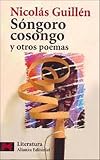
Sóngoro cosongo y otros poemas
by Nicolás Guillén
On This Page
Description
Cuban poetry about both being black and denouncing injustices.Tags
Recommendations





















Member Reviews
The poems in the collection were written and published in the 1930s, as various freedom movements, for independence from colonialism and against fascism, were getting stronger. The combination of Afro-Cuban rhythmic forms and liberation messages is heady and potent.
Ratings
Members
- Recently Added By
Author Information

112+ Works 493 Members
Guillen, one of the leaders of the Afro-Antillean school of poetry, was inspired by popular dance, ballads, song rhythms, and speech patterns, all of which show a heavy African influence. In his first volumes, Motives of Sound (1930) and Songoro Cosongo (1931), meaning is communicated primarily through sound, and many poems are in regional popular show more dialect. Much of his subsequent poetry reflects his profound social commitment: West Indies Limited (1934) opposes imperialism, and Spain (1937) expresses his support for the republic during the Spanish civil war. Tengo (1964) deals with the Cuban Revolution in a tone aimed at a popular audience. All Guillen's work is an intense effort to relate poetry to the culture of the Cuban people and to political and social protest. (Bowker Author Biography) show less
Awards and Honors
Classifications
Statistics
- Members
- 40
- Popularity
- 730,729
- Reviews
- 1
- Rating
- (4.00)
- Languages
- Portuguese, Spanish
- Media
- Paper
- ISBNs
- 6