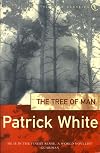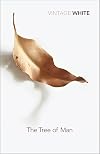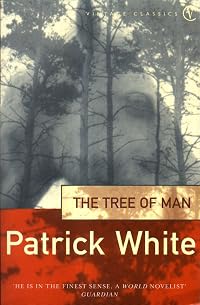
The Tree of Man
by Patrick White
On This Page
Description
Stan Parker, with only a horse and a dog for company journeys to a remote patch of land he has inherited in the Australian hills. Once the land is cleared and a rudimentary house built, he brings his wife Amy to the wilderness. Together they face lives of joy and sorrow as they struggle against the environment.Tags
Recommendations















Member Reviews
A true masterpiece in every conceivable sense of that overused word, Patrick White’s fourth novel, The Tree of Man, is an attempt by the author to chronicle an entire life story, with all manner of suffering and solace, triumph and disappointment, strength and weakness. At some point in the early part of the 20th Century, a young man named Stan Parker leaves the town where he grew up and, with nothing but a horse, cart, dog and a few tools, moves to a plot of land that he’s inherited located deep in Australian bush country, and begins life anew. Resourceful and practical by nature, undaunted by solitude and hard work, seemingly immune to challenges posed by rough terrain and severe weather, Parker clears the land and builds himself show more a rudimentary house. In time, he takes a wife, named Amy, who comes to live on Parker’s farm and begins adding appropriate feminine touches to an austere, utilitarian home in the bush. Stan Parker is thoughtful but taciturn, unsentimental, but with an appreciation of the natural world that approaches a spiritual connection. Amy, a dreamy, curious, empathetic woman, possesses a fiery temperament and is more articulate when it comes to emotions. She quickly learns however, and accepts, that her husband is unlikely to share his private musings and will rarely express his feelings. Within a few years Amy has given birth to two children, Ray and Thelma. Ray grows into a diffident child, easily bored, constantly in need of distraction but devoted to his father and endlessly craving Stan’s approval. As Thelma matures, she holds herself aloof from the household in which she was raised. Upon reaching her teens, she develops an appetite for the outside world and, the more she sees of it, the deeper her shame at her rustic origin and the stronger her desire to erase all traces of it. Neither Ray nor Thelma have any interest in farming, and as adults both reject (and even mock) their parents’ pastoral simplicity. White’s novel, published in 1955, covers every aspect of Stan and Amy Parker’s life together, from marriage to death, and depicts the gradual settling and suburban transformation of the land around them. Throughout the book, White’s prose is a bracing mix of bluntly eccentric exposition and magical flights of lyricism, with occasional forays into stream-of-consciousness. Though Stan and Amy dominate the narrative, White tells the story from multiple points of view, effortlessly shifting perspective from one scene to the next or even within a single scene. For anyone familiar with White’s previous novels, the advancement in his development as a writer demonstrated in this densely written, vividly imagined, sometimes difficult but eminently rewarding tome will be apparent. This is a hugely ambitious novel filled with contradiction and wonder at the human capacity to survive hardship and find joy in the simple act of being alive, one that speaks eloquently of the transience of all things and the mystery of human connection and endurance. The novel vaulted Patrick White to the front ranks of the Australian literary world and gained attention globally. Mammoth in scope, buzzing with sensory detail, often funny and always humane, The Tree of Man is a must-read for any serious student of 20th-Century fiction. show less
One of the most wondrous books I have ever read, and one I return to whenever I need a reminder of the joys of literature.
This will be too dense for some, too languid for others, but it fits neatly into my Venn diagram of literary interests. Broadly well-intentioned characters slowly moving toward personal relevation? Check. An epic scope grafted on to ordinary lives? Check. A sense of tightly-spun character profiles in which each person is seen through multiple eyes, until a fully honed person emerges? Check. Other things I could list just to annoy you with this repetitive rhetoric? Check check check.
Although The Tree of Man is quintessentially Australian (so much so that it feels like a Tom Roberts has sprung to life) it has an show more abstract, intimate quality that suggests to me it could be read by anyone. As long as your culture has gone from rustic to urban, as long as you yourself have felt the quiet pull of loneliness, unexpected intimacy, doubt, and thwarted ambition. As long as you have at some point wondered if there was more to the universe than your tiny role in it, but perhaps put those thoughts away rather than face what they may mean.
This is a book that might be classified as "tough going" (like so much of White, whom I adore) but it's not intended to be read in one sitting. This really is a novel to be savoured. Let the language and the gradual expanse wash over you. You'll be okay in the end. If there is an end. show less
This will be too dense for some, too languid for others, but it fits neatly into my Venn diagram of literary interests. Broadly well-intentioned characters slowly moving toward personal relevation? Check. An epic scope grafted on to ordinary lives? Check. A sense of tightly-spun character profiles in which each person is seen through multiple eyes, until a fully honed person emerges? Check. Other things I could list just to annoy you with this repetitive rhetoric? Check check check.
Although The Tree of Man is quintessentially Australian (so much so that it feels like a Tom Roberts has sprung to life) it has an show more abstract, intimate quality that suggests to me it could be read by anyone. As long as your culture has gone from rustic to urban, as long as you yourself have felt the quiet pull of loneliness, unexpected intimacy, doubt, and thwarted ambition. As long as you have at some point wondered if there was more to the universe than your tiny role in it, but perhaps put those thoughts away rather than face what they may mean.
This is a book that might be classified as "tough going" (like so much of White, whom I adore) but it's not intended to be read in one sitting. This really is a novel to be savoured. Let the language and the gradual expanse wash over you. You'll be okay in the end. If there is an end. show less
I am thoroughly captivated by [The Tree of Man], its quiet tone, density of language and description begging to be re-read. The sometimes-unfamiliar use of language and phrasing took a bit of getting used to, forcing me to slow, but ultimately savor, my reading. It was this that led me to what I found most compelling about this novel - the ways in which the author quietly weaves in themes of the separateness of individuals’ interior lives, and the differing impacts of love, affection, and habit in relationships.
As a young couple, Stan Parker and his wife, Amy, build a modest home and farm in the isolated hills of the Australian bush, where they go about the daily tasks of raising cattle, crops, and a family – a son, Ray and show more daughter, Thelma. Their family saga is narrated variously by each of the four Parkers. The plot is deceptively simple, with even threats of flooding, catastrophic fire, war, and unfaithfulness insufficient to substantially change the steady, repetitive flow of ordinary, daily life.
Stan Parker is content in his marriage and the demands of his farm, but struggles with his wish to better understand himself and to see inside the mind of his wife. Despite his mother’s introducing him as a youth to Shakespeare and the Bible, Stan is unable to express his emotions in words. “He had in him great words of love and beauty, below the surface if they could be found.” Amy loves her husband and fulfills the roles of being a farming wife, but is ambivalent towards the constraints of marriage and the disappointments of motherhood. Their conversations are limited to mundane matters; their marriage held firmly together by habit.
Through the years of their marriage, love gradually transforms into affection.
“The woman Amy Fibbens was absorbed in the man Stan Parker, whom she had married. And the man, the man consumed the woman. That was the difference.”
“She loved her husband. Even after the drudgery of love she could still love him.”
“In time the man and woman came to accept each other’s mystery…Sometimes at night they would wake singly and listen to each other’s breathing, and wonder. Then they would fall asleep again, because they were tired, and would not dream. Habit comforted them, like warm drinks and slippers, and even went disguised as love.”
“Lack of expectation…is easier to bear. So too he had discovered an affection for his wife, which is less terrible than love.”
The couple’s children take very different paths in life. Ray is consumed by restlessness, rebellion, and feelings of violence, creating a rift between him as an adult and his family, but especially his mother. Thelma aspires to a more staid, affluent life, and marries well. As a youth she seems distant and self-contained, yet as an adult maintains a surprising attachment to her aging parents and their deteriorating family home.
As always in life, death ultimately changes the course of the Parker’s family saga, shifting the focus to a younger generation in a brief and moving closing chapter, told from the perspective of the Parkers’ grandson, who is barely known to the reader.
“So that in the end there were the trees. The boy walking through them with his head drooping as he increased in stature. Putting out shoots of green thought. So that, in the end, there was no end.”
Patrick White won the Nobel Prize for Literature in 1973, a well-deserved achievement. [The Tree of Man] is his fourth novel, and along with [The Aunt’s Story] is considered to have been a turning point in his work.
This review does not begin to do justice to the brilliance of this novel, which I highly recommend. show less
As a young couple, Stan Parker and his wife, Amy, build a modest home and farm in the isolated hills of the Australian bush, where they go about the daily tasks of raising cattle, crops, and a family – a son, Ray and show more daughter, Thelma. Their family saga is narrated variously by each of the four Parkers. The plot is deceptively simple, with even threats of flooding, catastrophic fire, war, and unfaithfulness insufficient to substantially change the steady, repetitive flow of ordinary, daily life.
Stan Parker is content in his marriage and the demands of his farm, but struggles with his wish to better understand himself and to see inside the mind of his wife. Despite his mother’s introducing him as a youth to Shakespeare and the Bible, Stan is unable to express his emotions in words. “He had in him great words of love and beauty, below the surface if they could be found.” Amy loves her husband and fulfills the roles of being a farming wife, but is ambivalent towards the constraints of marriage and the disappointments of motherhood. Their conversations are limited to mundane matters; their marriage held firmly together by habit.
Through the years of their marriage, love gradually transforms into affection.
“The woman Amy Fibbens was absorbed in the man Stan Parker, whom she had married. And the man, the man consumed the woman. That was the difference.”
“She loved her husband. Even after the drudgery of love she could still love him.”
“In time the man and woman came to accept each other’s mystery…Sometimes at night they would wake singly and listen to each other’s breathing, and wonder. Then they would fall asleep again, because they were tired, and would not dream. Habit comforted them, like warm drinks and slippers, and even went disguised as love.”
“Lack of expectation…is easier to bear. So too he had discovered an affection for his wife, which is less terrible than love.”
The couple’s children take very different paths in life. Ray is consumed by restlessness, rebellion, and feelings of violence, creating a rift between him as an adult and his family, but especially his mother. Thelma aspires to a more staid, affluent life, and marries well. As a youth she seems distant and self-contained, yet as an adult maintains a surprising attachment to her aging parents and their deteriorating family home.
As always in life, death ultimately changes the course of the Parker’s family saga, shifting the focus to a younger generation in a brief and moving closing chapter, told from the perspective of the Parkers’ grandson, who is barely known to the reader.
“So that in the end there were the trees. The boy walking through them with his head drooping as he increased in stature. Putting out shoots of green thought. So that, in the end, there was no end.”
Patrick White won the Nobel Prize for Literature in 1973, a well-deserved achievement. [The Tree of Man] is his fourth novel, and along with [The Aunt’s Story] is considered to have been a turning point in his work.
This review does not begin to do justice to the brilliance of this novel, which I highly recommend. show less
In 1973 was Patrick White de eerste Australiër die de Nobelprijs voor Literatuur kreeg voor ‘een episch en psychologisch verhalende kunst die een nieuw continent geïntroduceerd heeft in de literatuur’. Dit vind je duidelijk terug in ’De lotgevallen van een pionier’, de vertaling door Guido Golüke van ’The Tree of Man’, een verwijzing naar de boom van goed en kwaad. Het verhaal start in het begin van de twintigste eeuw en is opgebouwd uit vier delen, zoals er vier seizoenen zijn die de levensfasen van de mens symboliseren.
Het leven van het hoofdpersonage Stan Parker krijgt pas richting na de dood van zijn ouders. Hij vertrekt uit zijn geboortestadje naar een perceel grond dat hij van zijn vader heeft geërfd. Met een bijl show more valt hij de bomen aan. Wat is zijn plan? Nadat hij zelf een huis heeft gebouwd, vindt hij een vrouw: Amy. In den beginne lijken ze Adam en Eva. Na verloop van tijd komen er buren, weliswaar op een respectabele afstand van enkele mijlen. Dagdagelijkse gebeurtenissen weven een spinnenweb van verhalen waarin de aandacht van de lezer gevangen wordt.
’De sleur was vertroostend, als warme thee en pantoffels, en had zich zelfs vermomd als liefde.’
De kleine kantjes van de mens worden discreet aangestipt, de rimpelingen in de verhouding tussen man en vrouw worden met de mantel der liefde bedekt, de verhouding tot god wordt in vraag gesteld, het ophouden van de schone schijn en het afwijken van het rechte pad worden minutieus uit de doeken gedaan. Toch laat de auteur veel ruimte voor de fantasie van de lezer en wordt het nergens belerend. Het valt op hoe snel de bladzijde wordt omgeslagen na persoonlijk verdriet zoals een miskraam of na natuurrampen zoals overstromingen en bosbranden.
‘(…) terwijl er aldoor een uitwisseling gaande was tussen ziel en omgeving, waarbij het landschap met verhevigde hartstocht en intensiteit op hem afkwam, de bomen hem omarmden en de wolken zich boven hem verzamelden met een tederheid die hij nooit had ervaren.’
Naast symboliek bedient de auteur zich gretig van allerhande stijlfiguren die voor een literair leesfestijn zorgen. Zijn beschrijvende schrijfstijl schetst een duidelijk beeld van het Australische binnenland en van de veranderingen van paard en kar naar automobiel, van houten huizen naar bakstenen villa’s. De bomen staan stevig geworteld in het ruige landschap en lopen als een rode draad door de roman:
‘De eucalyptusbomen rezen boven het warrige struikgewas uit met de eenvoud van waarachtige grandeur’ (tegenstelling)
‘Zo te zien had hij veel bomen geschilderd, in allerlei houdingen, hun takken gevouwen in slaap of overpeinzing, of kronkelend van pijn.’ (personificatie)
‘Zijn langere, scherpere gezicht, een bijl haast, doorkliefde het donker.’ (materialisatie)
De verhuizing van Patrick White naar Castle Hill bij Sydney zorgde voor inspiratie, omdat het leven er zo monotoon was, dat hij in zijn fantasie op zoek ging naar verborgen aspecten onder de oppervlakte. Deze roman is allesbehalve eentonig, want hij sleurt ons mee in de strijd tegen het natuurgeweld en verborgen instincten. Dit alles in een rijke taal vol symboliek die het verhaal alle eer aandoet. Forget the Great American Novel and embrace the Great Australian Novel. show less
Het leven van het hoofdpersonage Stan Parker krijgt pas richting na de dood van zijn ouders. Hij vertrekt uit zijn geboortestadje naar een perceel grond dat hij van zijn vader heeft geërfd. Met een bijl show more valt hij de bomen aan. Wat is zijn plan? Nadat hij zelf een huis heeft gebouwd, vindt hij een vrouw: Amy. In den beginne lijken ze Adam en Eva. Na verloop van tijd komen er buren, weliswaar op een respectabele afstand van enkele mijlen. Dagdagelijkse gebeurtenissen weven een spinnenweb van verhalen waarin de aandacht van de lezer gevangen wordt.
’De sleur was vertroostend, als warme thee en pantoffels, en had zich zelfs vermomd als liefde.’
De kleine kantjes van de mens worden discreet aangestipt, de rimpelingen in de verhouding tussen man en vrouw worden met de mantel der liefde bedekt, de verhouding tot god wordt in vraag gesteld, het ophouden van de schone schijn en het afwijken van het rechte pad worden minutieus uit de doeken gedaan. Toch laat de auteur veel ruimte voor de fantasie van de lezer en wordt het nergens belerend. Het valt op hoe snel de bladzijde wordt omgeslagen na persoonlijk verdriet zoals een miskraam of na natuurrampen zoals overstromingen en bosbranden.
‘(…) terwijl er aldoor een uitwisseling gaande was tussen ziel en omgeving, waarbij het landschap met verhevigde hartstocht en intensiteit op hem afkwam, de bomen hem omarmden en de wolken zich boven hem verzamelden met een tederheid die hij nooit had ervaren.’
Naast symboliek bedient de auteur zich gretig van allerhande stijlfiguren die voor een literair leesfestijn zorgen. Zijn beschrijvende schrijfstijl schetst een duidelijk beeld van het Australische binnenland en van de veranderingen van paard en kar naar automobiel, van houten huizen naar bakstenen villa’s. De bomen staan stevig geworteld in het ruige landschap en lopen als een rode draad door de roman:
‘De eucalyptusbomen rezen boven het warrige struikgewas uit met de eenvoud van waarachtige grandeur’ (tegenstelling)
‘Zo te zien had hij veel bomen geschilderd, in allerlei houdingen, hun takken gevouwen in slaap of overpeinzing, of kronkelend van pijn.’ (personificatie)
‘Zijn langere, scherpere gezicht, een bijl haast, doorkliefde het donker.’ (materialisatie)
De verhuizing van Patrick White naar Castle Hill bij Sydney zorgde voor inspiratie, omdat het leven er zo monotoon was, dat hij in zijn fantasie op zoek ging naar verborgen aspecten onder de oppervlakte. Deze roman is allesbehalve eentonig, want hij sleurt ons mee in de strijd tegen het natuurgeweld en verborgen instincten. Dit alles in een rijke taal vol symboliek die het verhaal alle eer aandoet. Forget the Great American Novel and embrace the Great Australian Novel. show less
This is a life enhancing novel. Patrick White has brought his undoubted talents as a writer to bear to create a story that is both human and metaphysical. A novel of power and conviction, beautifully focused on the lives of his two central characters; Amy and Stan Parker
At the turn of the 20th century; the young Stan Parker inherits a plot of land in the Australian outback. He is a practical slow thinking, hard working man who decides to clear the land and build himself a house. He finds a wife in a local frontier town with whom he will share his life. They make a farm together and watch other people move into the land around them, they survive floods and fire and Stan comes back from the war. They have children a boy and a girl who show more both in their way reject their parents honest simple life, but Amy and Stan endure; through their love for each other and the natural world around them, which cannot be expressed in words and remains a mystery to them, but speaks of some higher omnipotence, of which Stan is dimly aware.
There was a seven year gap since the publication of White’s previous novel The Aunts Story and during that time he had moved back to Australia with his partner Manoly Lascaris. The cultured, artistic life style of pre war London had been exchanged for the rough, tough life on a farm deep in the Australian hinterland. The two men worked hard to scratch a living and there was little time for writing, however when the need to write came upon White again he had a whole new experience on which to draw upon. David Marr’s excellent biography of Patrick White links episodes from the life of Patrick and Manoly directly to passages in Tree of Man and I am tempted to think that Stan Parker; perhaps Whites first good character is based on Manoly.
The dazzling prose and post modernist style of much of The Aunts Story has been stripped back for Tree of Man. White seems to have undergone a process of re-invention and certainly his more direct style suits the subject matter. His move back to Australia has allowed him to pick up the speech idioms of the country people and to present to us their less sophisticated views and emotions in sentences that seem perfectly natural. The cleverness has gone out of his style and he seems no longer to have to prove to his readers that he can write. There are still plenty of purple patches in his prose style, but they no longer distance the reader from the subject matter. White is a master of the stream of conscious technique, but it is reigned back here and used more sparingly. He uses it particularly well when there is music or art present. A concert or theatre going experience will lead his characters to muse about their own lives as they listen to a performance, stimulated by what they hear their mind will wander in all sorts of directions, allowing White to introduce new thoughts and ideas.
Stan and Amy Parker are indeed a fine creation. It is through their thoughts that much of the story is told although there are excursions into the lives of their disappointing children. Ray is a particular problem who seems in revolt against his father’s goodness. He shy’s away from his mother’s love as though he is not worthy in comparison with his father and when he leaves home it is no surprise that he get’s involved in criminal activities that will have harmful effects on those around him. His father on hearing about one of his escapades feels obliged to do something and White writes poignantly about Stan:
“But Stan Parker came.
He could not have avoided coming. In the beginning, as a young man, when he was clearing his land, he had hewn at trees with no exact plan in his head, but he got them down, even at the expense of his hands, though these in time became hard, and there were boulders to be moved, that he strained against with his horse, till the soft bellies of man and horse grew hard and stony too, and the stone of will prevailed over rock. It was in this frame of mind that Stan Parker, the father, blundered into town. He had no plan. He was bewildered by much of what he had been told. But he would if given a chance, harness his will to the situation and move it by strength and determination. He supposed. In the end he had hewn a shape and order out of the chaos he had found. He was also an improviser of honest objects of wood and iron, which, if crude in design, had survived to that day. His only guide in all of this had been his simplicity.”
Love is of course a central theme in the novel and White seems to explore similar ideas in this respect to D H Lawrence. Amy and Stan have an undying love that Stan accepts as given, but this is not enough for Amy. She worries that she does not show or does not in fact love Stan enough. She craves to get closer to her husband and finds it difficult to accept that in many respects each of them are inviolable. This is in contrast to the O’Dowds who live on a neighbouring farm, their lives seem completely at odds to the Parkers, O’Dowd is an alcoholic, their farm is a ramshackle affair they appear on the edge of chaos and yet they love each other unconditionally and demonstratively.
At the time of writing Tree of Man White was looking towards religion as a possible salvation from the human condition and some of this is explored in the novel, but it is left inconclusive. It is practical experience that will play the biggest part in the life of the Parkers. Stan experiences an epiphany at the end of his life, but it is his simplicity and his wisdom that leads him to it. For Amy there is not quite the same thing as she desperately tries to share in her husband’s vision.
In previous novels Patrick White has kept his characters at arms length from his readers, but this changes with Tree of Man. He makes us care about the characters. Their humanity is there for us all to see, their faults their failings, but also their love and their kindnesses. He gets us right in close and it is painful sometimes, but the rewards are great and the emotional impact of Stan’s death will live long in my memory. Patrick White has found his voice with Tree of Man. Highly recommended and a 5 star read.. show less
At the turn of the 20th century; the young Stan Parker inherits a plot of land in the Australian outback. He is a practical slow thinking, hard working man who decides to clear the land and build himself a house. He finds a wife in a local frontier town with whom he will share his life. They make a farm together and watch other people move into the land around them, they survive floods and fire and Stan comes back from the war. They have children a boy and a girl who show more both in their way reject their parents honest simple life, but Amy and Stan endure; through their love for each other and the natural world around them, which cannot be expressed in words and remains a mystery to them, but speaks of some higher omnipotence, of which Stan is dimly aware.
There was a seven year gap since the publication of White’s previous novel The Aunts Story and during that time he had moved back to Australia with his partner Manoly Lascaris. The cultured, artistic life style of pre war London had been exchanged for the rough, tough life on a farm deep in the Australian hinterland. The two men worked hard to scratch a living and there was little time for writing, however when the need to write came upon White again he had a whole new experience on which to draw upon. David Marr’s excellent biography of Patrick White links episodes from the life of Patrick and Manoly directly to passages in Tree of Man and I am tempted to think that Stan Parker; perhaps Whites first good character is based on Manoly.
The dazzling prose and post modernist style of much of The Aunts Story has been stripped back for Tree of Man. White seems to have undergone a process of re-invention and certainly his more direct style suits the subject matter. His move back to Australia has allowed him to pick up the speech idioms of the country people and to present to us their less sophisticated views and emotions in sentences that seem perfectly natural. The cleverness has gone out of his style and he seems no longer to have to prove to his readers that he can write. There are still plenty of purple patches in his prose style, but they no longer distance the reader from the subject matter. White is a master of the stream of conscious technique, but it is reigned back here and used more sparingly. He uses it particularly well when there is music or art present. A concert or theatre going experience will lead his characters to muse about their own lives as they listen to a performance, stimulated by what they hear their mind will wander in all sorts of directions, allowing White to introduce new thoughts and ideas.
Stan and Amy Parker are indeed a fine creation. It is through their thoughts that much of the story is told although there are excursions into the lives of their disappointing children. Ray is a particular problem who seems in revolt against his father’s goodness. He shy’s away from his mother’s love as though he is not worthy in comparison with his father and when he leaves home it is no surprise that he get’s involved in criminal activities that will have harmful effects on those around him. His father on hearing about one of his escapades feels obliged to do something and White writes poignantly about Stan:
“But Stan Parker came.
He could not have avoided coming. In the beginning, as a young man, when he was clearing his land, he had hewn at trees with no exact plan in his head, but he got them down, even at the expense of his hands, though these in time became hard, and there were boulders to be moved, that he strained against with his horse, till the soft bellies of man and horse grew hard and stony too, and the stone of will prevailed over rock. It was in this frame of mind that Stan Parker, the father, blundered into town. He had no plan. He was bewildered by much of what he had been told. But he would if given a chance, harness his will to the situation and move it by strength and determination. He supposed. In the end he had hewn a shape and order out of the chaos he had found. He was also an improviser of honest objects of wood and iron, which, if crude in design, had survived to that day. His only guide in all of this had been his simplicity.”
Love is of course a central theme in the novel and White seems to explore similar ideas in this respect to D H Lawrence. Amy and Stan have an undying love that Stan accepts as given, but this is not enough for Amy. She worries that she does not show or does not in fact love Stan enough. She craves to get closer to her husband and finds it difficult to accept that in many respects each of them are inviolable. This is in contrast to the O’Dowds who live on a neighbouring farm, their lives seem completely at odds to the Parkers, O’Dowd is an alcoholic, their farm is a ramshackle affair they appear on the edge of chaos and yet they love each other unconditionally and demonstratively.
At the time of writing Tree of Man White was looking towards religion as a possible salvation from the human condition and some of this is explored in the novel, but it is left inconclusive. It is practical experience that will play the biggest part in the life of the Parkers. Stan experiences an epiphany at the end of his life, but it is his simplicity and his wisdom that leads him to it. For Amy there is not quite the same thing as she desperately tries to share in her husband’s vision.
In previous novels Patrick White has kept his characters at arms length from his readers, but this changes with Tree of Man. He makes us care about the characters. Their humanity is there for us all to see, their faults their failings, but also their love and their kindnesses. He gets us right in close and it is painful sometimes, but the rewards are great and the emotional impact of Stan’s death will live long in my memory. Patrick White has found his voice with Tree of Man. Highly recommended and a 5 star read.. show less
The prose in this book is impossible to read fast. It constantly pulls you up and makes you look at a particular word or image – or, if you don’t stop, leaves you with an uneasy feeling that you’ve missed something. The point of view frequently moves around within a single short sentence, or rather within a grouping of words between consecutive full stops, since White is a great user of syntactical fragments. Even the very first sentence, innocuous enough at first glance (‘A cart drove between the two big stringybarks and stopped’), has the reader slightly wrong-footed with its abrupt rhythm, its lack of a human or even animal subject, its slightly skewed use of articles (‘the cart drove between two big stringybarks’ be show more more natural, but would mean something quite different).
I came close to genuflecting at the first four chapters, which tell of the primal encounter of ‘the man’, ‘the woman’ and the bush. I wondered if I would be able to keep up with prose of such intensity for the whole 480 pages. But once the narrative emerged into something resembling a social world – the man and the woman become Stan Parker and Amy Parker nee Figgins, the bush becomes a small farm and eventually a suburb – I was less enthralled. I just don’t believe in the nastiness of most of the characters. I can’t stand the snobbishness of the narrative voice. The drunken Irish shenanigans (read domestic violence, despair, wretched poverty and, towards the end, dubious religion) of the O’Dowds fail to amuse me. The pretentions of the nouveaux riches Armstrongs are awkwardly unconvincing, as is almost everything about the younger Parkers. The book seems to assume that some people, inarticulate or otherwise, have a capacity for rich inner lives, while others (most?) don’t, and must settle at best for synthetic souls with occasional glimpses of higher possibilties.
Perhaps the most striking disappointment is the vast, gaping silence about Aboriginal Australians. When Stan’s cart stops between the stringy barks in that first sentence, it’s definitely in terra nullius. ‘Blacks’ are mentioned twice, once when young Ray refers to their arcane knowledge of how to survive in the desert, and again in the closing pages when the missionary mentions sex with black women as a sign of his youthful depravity. The phrase ‘dream time’ occurs twice. The first time, Stan and Amy have come to an ‘uneasy dream-time’. Since that probably signifies that neither of them was fully awake in relation to the other, the Aboriginal reference may be coincidental, but in the second, near the beginning of the fourth and final part, Stan looks back on his first days at the farm as ‘the dream time’. Here the phrase does refer to a time of creation, of beginnings, and it disturbingly invokes this continent’s history of genocide, dispossession and cultural appropriation. It invokes that history without acknowledging it. Aboriginal people have been erased and over-written.
Then, there’s a passage where Stan remembers a stretch of land as it was when he first cleared it, 'on it the white chips lying that his axe had carved out of the trees, and some trees and young saplings still standing and glistening there, waiting for the axe', and he goes away 'disturbed, and thinking'. In a book that makes much of ‘things that are too terrible and wonderful to speak of’ is it too much to imagine that in this moment the thing Stan does not wish to see is the silenced Aboriginal history? That that history is almost forcing its way into the narrative? There may well be hundreds of learned articles about this disturbed silence, but that’s my two bob’s worth. show less
I came close to genuflecting at the first four chapters, which tell of the primal encounter of ‘the man’, ‘the woman’ and the bush. I wondered if I would be able to keep up with prose of such intensity for the whole 480 pages. But once the narrative emerged into something resembling a social world – the man and the woman become Stan Parker and Amy Parker nee Figgins, the bush becomes a small farm and eventually a suburb – I was less enthralled. I just don’t believe in the nastiness of most of the characters. I can’t stand the snobbishness of the narrative voice. The drunken Irish shenanigans (read domestic violence, despair, wretched poverty and, towards the end, dubious religion) of the O’Dowds fail to amuse me. The pretentions of the nouveaux riches Armstrongs are awkwardly unconvincing, as is almost everything about the younger Parkers. The book seems to assume that some people, inarticulate or otherwise, have a capacity for rich inner lives, while others (most?) don’t, and must settle at best for synthetic souls with occasional glimpses of higher possibilties.
Perhaps the most striking disappointment is the vast, gaping silence about Aboriginal Australians. When Stan’s cart stops between the stringy barks in that first sentence, it’s definitely in terra nullius. ‘Blacks’ are mentioned twice, once when young Ray refers to their arcane knowledge of how to survive in the desert, and again in the closing pages when the missionary mentions sex with black women as a sign of his youthful depravity. The phrase ‘dream time’ occurs twice. The first time, Stan and Amy have come to an ‘uneasy dream-time’. Since that probably signifies that neither of them was fully awake in relation to the other, the Aboriginal reference may be coincidental, but in the second, near the beginning of the fourth and final part, Stan looks back on his first days at the farm as ‘the dream time’. Here the phrase does refer to a time of creation, of beginnings, and it disturbingly invokes this continent’s history of genocide, dispossession and cultural appropriation. It invokes that history without acknowledging it. Aboriginal people have been erased and over-written.
Then, there’s a passage where Stan remembers a stretch of land as it was when he first cleared it, 'on it the white chips lying that his axe had carved out of the trees, and some trees and young saplings still standing and glistening there, waiting for the axe', and he goes away 'disturbed, and thinking'. In a book that makes much of ‘things that are too terrible and wonderful to speak of’ is it too much to imagine that in this moment the thing Stan does not wish to see is the silenced Aboriginal history? That that history is almost forcing its way into the narrative? There may well be hundreds of learned articles about this disturbed silence, but that’s my two bob’s worth. show less
From my journal notes, 8th January, 2006
The Tree of Man is a very rich work, deceptively simple in plot, and mysteriously dense in language. I read it first years ago when I was at Teachers’ College, where it mystified us all. I don’t remember now, how much of it I then understood, but I did retain over the years, a sense of the simple heroism of Amy and Stan Parker. What has also stayed with me is a sense of the Australian bush — its vast spaces, its silence, its timelessness.
Re-reading it, thirty years later [i.e. in 2006], there are new resonances. I begin to understand White’s theme of the tension between permanence and transience as they play out in the Parkers’ lives. I begin to understand how both of them are never sure show more if they love one another but have a long marriage based on affection and habit.
BEWARE: SPOILERS (though anybody reading PW for the plot is going to be disappointed).
There are many sterile relationships in the novel. Thelma Parker marries the solicitor Mr Fosdyke, for reasons of status. She has no children, only asthma, and as she discovers at the club to which she belongs, she is never really accepted despite her efforts with elocution and the purchase of a ‘crocodile bag’. Madeline Fisher’s family ignore her after Madeline’s death because she cannot ever be rich enough. White is merciless in his depiction of this wasted tragic life, preoccupied with society and appearances and achieving nothing at all, not even attendance at the Government House dinner because her father’s funeral is held that day.
The imperatives of sex are comprehensible now too, as they were not 30 years ago. The one-ness of young lust and love becomes transformed into a separateness. Amy has an adulterous but brief relationship with a travelling salesman; in her old age she thinks she would have liked to have had many more. But Stan’s only shame comes from the night he found out about this relationship, went down to the city and got drunk and nearly strangled an old hobo woman in his rage. In my twenties, I simply did not even notice the tragedy of this event in their marriage. I forgot about it and read on, absorbing the betrayal as part of things. Just as Stan seemed to, but did not. He remembered it on his deathbed.
The final scenes are more confusing than ever. I know that there are religious aspects to White’s writing, and I have an inkling that he’s drawing on Revelations but I’m not sure how*. Mrs O’Dowd’s death, for example, is almost comic, with hordes of people from the district there, and almost no room for her husband near the bed. Yet they send for Amy, who has neglected her friend out of inertia, and amongst all the hubbub, and the strange two-page story that is told by the nameless Man from Deniliquin, it is she who announces the death even as the doctor, awash with self-importance, prepares some belated pain relief. He has been out delivering a baby — inverting the words of the Book of Common Prayer in the midst of death we are in life. Amy has been holding her friend’s hand, and felt it grow cold, but in an echo of Stan’s long ago inability to tell about the dead man upside-down in the tree in the flood, Amy could not say anything until she had to. And then she gets up and goes away, leaving the carnival crowd to lay out Mrs O’Dowd and mutter about how Amy Parker had always been stuck-up and had no reason to be.
To read the rest of my review please visit https://anzlitlovers.com/2020/12/02/the-tree-of-man-by-patrick-white-winner-of-t... show less
The Tree of Man is a very rich work, deceptively simple in plot, and mysteriously dense in language. I read it first years ago when I was at Teachers’ College, where it mystified us all. I don’t remember now, how much of it I then understood, but I did retain over the years, a sense of the simple heroism of Amy and Stan Parker. What has also stayed with me is a sense of the Australian bush — its vast spaces, its silence, its timelessness.
Re-reading it, thirty years later [i.e. in 2006], there are new resonances. I begin to understand White’s theme of the tension between permanence and transience as they play out in the Parkers’ lives. I begin to understand how both of them are never sure show more if they love one another but have a long marriage based on affection and habit.
BEWARE: SPOILERS (though anybody reading PW for the plot is going to be disappointed).
There are many sterile relationships in the novel. Thelma Parker marries the solicitor Mr Fosdyke, for reasons of status. She has no children, only asthma, and as she discovers at the club to which she belongs, she is never really accepted despite her efforts with elocution and the purchase of a ‘crocodile bag’. Madeline Fisher’s family ignore her after Madeline’s death because she cannot ever be rich enough. White is merciless in his depiction of this wasted tragic life, preoccupied with society and appearances and achieving nothing at all, not even attendance at the Government House dinner because her father’s funeral is held that day.
The imperatives of sex are comprehensible now too, as they were not 30 years ago. The one-ness of young lust and love becomes transformed into a separateness. Amy has an adulterous but brief relationship with a travelling salesman; in her old age she thinks she would have liked to have had many more. But Stan’s only shame comes from the night he found out about this relationship, went down to the city and got drunk and nearly strangled an old hobo woman in his rage. In my twenties, I simply did not even notice the tragedy of this event in their marriage. I forgot about it and read on, absorbing the betrayal as part of things. Just as Stan seemed to, but did not. He remembered it on his deathbed.
The final scenes are more confusing than ever. I know that there are religious aspects to White’s writing, and I have an inkling that he’s drawing on Revelations but I’m not sure how*. Mrs O’Dowd’s death, for example, is almost comic, with hordes of people from the district there, and almost no room for her husband near the bed. Yet they send for Amy, who has neglected her friend out of inertia, and amongst all the hubbub, and the strange two-page story that is told by the nameless Man from Deniliquin, it is she who announces the death even as the doctor, awash with self-importance, prepares some belated pain relief. He has been out delivering a baby — inverting the words of the Book of Common Prayer in the midst of death we are in life. Amy has been holding her friend’s hand, and felt it grow cold, but in an echo of Stan’s long ago inability to tell about the dead man upside-down in the tree in the flood, Amy could not say anything until she had to. And then she gets up and goes away, leaving the carnival crowd to lay out Mrs O’Dowd and mutter about how Amy Parker had always been stuck-up and had no reason to be.
To read the rest of my review please visit https://anzlitlovers.com/2020/12/02/the-tree-of-man-by-patrick-white-winner-of-t... show less
Members
- Recently Added By
Lists

The Guardian's 1000 Novels Everyone Must Read
1,005 works; 547 members

1950s
340 works; 22 members

My E-Book Collection - Opinions Welcome
92 works; 10 members
Talk Discussions
Past Discussions
The Tree of Man - discussion in Patrick White 100th Anniversary Challenge (April 2012)
Author Information

42+ Works 7,682 Members
Patrick White was born on May 28, 1912 in Knightsbridge, London, to Australian parents. He studied modern languages at King's College, Cambridge. During World War II, he served in the Royal Air Force. His first novel, Happy Valley, was published in 1939. His other works include The Tree of Man, Voss, Riders in the Chariot, The Solid Mandala, The show more Twyborn Affair, and The Hanging Garden. He also wrote several plays including The Season at Sarsaparilla, Night on Bald Mountain, and Signal Driver. They never met with the success his fiction had and have not been produced outside Australia. He won the Nobel Prize for Literature in 1973. He died on September 30, 1990. (Bowker Author Biography) show less
Some Editions
Awards and Honors
Awards
Distinctions
Series
Belongs to Publisher Series
Work Relationships
Common Knowledge
- Canonical title
- The Tree of Man
- Original title
- The Tree of Man
- Alternate titles*
- De lotgevallen van een pionier : roman
- Original publication date
- 1955
- People/Characters
- Amy Parker; Stan Parker
- Important places
- Australia
- Dedication
- To Manoly
- First words
- A cart drove between the two stringybarks and stopped.
- Last words
- (Click to show. Warning: May contain spoilers.)So that, in the end, there was no end.
- Original language*
- Engels
*Some information comes from Common Knowledge in other languages. Click "Edit" for more information.
Classifications
Statistics
- Members
- 864
- Popularity
- 31,456
- Reviews
- 20
- Rating
- (4.12)
- Languages
- 9 — Czech, Dutch, English, Estonian, German, Hungarian, Polish, Russian, Swedish
- Media
- Paper, Audiobook, Ebook
- ISBNs
- 22
- ASINs
- 15