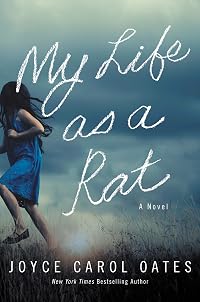
My Life as a Rat
by Joyce Carol Oates
On This Page
Description
"Which should prevail: loyalty to family or loyalty to the truth? Is telling the truth ever a mistake and is lying for one's family ever justified? Can one do the right thing, but bitterly regret it? ... My Life as a Rat follows Violet Rue Kerrigan, a young woman who looks back upon her life in exile from her family following her testimony, at age twelve, concerning what she knew to be the racist murder of an African-American boy by her older brothers. In a succession of vividly recalled show more episodes Violet contemplates the circumstances of her life as the initially beloved youngest child of seven Kerrigan children who inadvertently "informs" on her brothers, setting into motion their arrests and convictions and her own long estrangement."--Publisher description. show lessTags
Recommendations









Member Reviews
When Violet Rue Kerrigan is twelve, she comes downstairs in the middle of the night to hear a confusing conversation between two of her older brothers. It will be a few days before she puts together the pieces of a conversation about fixing a car and hiding a baseball bat with the murder of a black high school student. The Kerrigans are a large Irish family with an unpredictable father, whose moods are carefully monitored by the rest of the family, especially by Violet's mother and sisters. Her brothers are rapidly becoming as domineering and prone to violence, although they still defer to their father. As their family, along with the working class Irish Catholic community as a whole, draw together to protect the boys, Violet is feeling show more increasingly unsafe around her brothers, a fear she shares with a teacher in a vulnerable moment. That moment will shatter Violet's life.
Joyce Carol Oates writes best when she's describing the experience of being a girl growing up in dysfunctional patriarchal households, of being unsafe and knowing that the very men that you love can easily do you great harm, and often do. With this novel, JCO is writing to her strengths and the result is a powerful and emotionally resonant novel about belonging, identity and resilience. I don't think I've ever read anything that so perfectly explains why an abused child will desperately try to return to the very environment that endangers her. JCO's singular writing style is perfectly suited to the voice of Violet Rue and while this isn't a novel that pulls any punches with what happens to children removed from whatever security they may have known and the battles Violet wages just to survive, she also tempers this all with grace notes and moments where Violet discovers that she's stronger than she thought she was.
This may well be my favorite work by this author. show less
Joyce Carol Oates writes best when she's describing the experience of being a girl growing up in dysfunctional patriarchal households, of being unsafe and knowing that the very men that you love can easily do you great harm, and often do. With this novel, JCO is writing to her strengths and the result is a powerful and emotionally resonant novel about belonging, identity and resilience. I don't think I've ever read anything that so perfectly explains why an abused child will desperately try to return to the very environment that endangers her. JCO's singular writing style is perfectly suited to the voice of Violet Rue and while this isn't a novel that pulls any punches with what happens to children removed from whatever security they may have known and the battles Violet wages just to survive, she also tempers this all with grace notes and moments where Violet discovers that she's stronger than she thought she was.
This may well be my favorite work by this author. show less
Damn, this is an (unintentional) endorsement of the "no snitchin" mentality if there ever was one. In my wildest fantasies I am imagining street criminals handing this JCO book to their enemies to warn them about what will happen if they even *think* about testifying in court! On a more serious note though, this book is brutal, but with a sliver of hope at the end, as per usual with Joyce. The characters are all very well fleshed out and vivid in my mind. I can always count on Joyce to give me something to chew on for a few days, which is why she is still my favorite author after all these years.
My Life as a Rat is the shocking story of Violet Rue Kerrigan, youngest of seven children in a working-class Irish Catholic family living in hardscrabble early-1990s South Niagara, NY. Violet’s domestic life is largely governed by the family’s tight budget and her short-tempered father’s moods, attitudes and habits. This is a time and place where men and boys expect to be served and girls and women unquestioningly assume a submissive role. Violet’s world is also one suffused by an undercurrent of misogyny and racism, mostly unspoken but unmistakable and unavoidable, and coloured by a belief that loyalty to family is more important than almost anything else. Violet is unexceptional. She accepts life as it is. Smart and show more perceptive, she is not inclined to rebellion or defiance. She loves her parents and siblings. But everything changes one night when she is twelve. Violet is awakened when her two eldest brothers, Jerome and Lionel, return home from a night out drinking. She creeps downstairs and witnesses them washing up, using water from the garden hose to clean blood from a baseball bat, overhears them in whispers debating how to get rid of it. She suspects something is wrong but can’t imagine what it might be. But the next day she learns that a black boy from her school, Hadrian Johnson, has been found gravely injured after a violent beating and is in hospital. The situation escalates after Hadrian dies. Tormented by what she knows, Violet cannot hold back the secret, and when the truth emerges and her brothers are convicted, she is astonished to find that her family regards her actions as betrayal and want nothing to do with her. The novel follows Violet’s life in exile, living first with her aunt and uncle in Port Oriskany, and finally on her own, yearning for a reconciliation with her parents, fearing what her brothers could do to her once they’ve served their sentences and are free. As often happens in Oates’s fiction, the emotionally isolated female protagonist is targeted by predatory males who sense her helplessness and exploit her lack of trust in the world at large. And though Violet is a survivor—self-reliant, tough, capable of unscrupulous behaviour when it helps her escape untenable situations—it is her soft spot for her family that almost does her in. Throughout the book, Oates uses a breathless narrative style to create urgency and ramp up the tension: we compulsively turn the pages, knowing we’re in the hands of a master. In telling Violet's story, Joyce Carol Oates does not shy away from brutal realities. Undoubtedly My Life as a Rat is sometimes difficult, but it is a thoroughly engaging novel that delivers on its premise in spades. show less
At twelve years old, Violet Kerrigan is the youngest child of a large Catholic, working-class family in western New York in the 1990s. We are introduced to Violet amidst intricate and powerful family dynamics. One night she hears her oldest brothers come home late and creeps downstairs to spy on them and discovers them in the garage area talking excitedly but quietly, while washing a bloodstained baseball bat. She listens to their conversation and watches them bury the bat. When a young black teen is found badly beaten (and dies the next day of his wounds), Violet begins to wonder and puts the clues together…. Her brothers and others become suspects and the investigation continues without the whole truth. A few days later after one show more brother maliciously causes her to slip on the ice, the distressed and injured girl breaks down and blurts out the truth to her teacher.
"A painful truth of family life: the most tender emotions can change in an instant. You think your parents love you but is it you they love, or the child who is theirs?"
In this fast moving story, we are meant to observe the legacy of violence and the consequences of Violet’s actions over the next 14 or 15 years. She is put into a safe house; her parents disown her, and she is then placed with a childless aunt and uncle. She is emotionally damaged, has trouble functioning, and a cycle of abuse by men begins. It is as if, Violet notes, she is the one serving a prison sentence. Oates is very good at putting the reader in someone’s head and so we share Violet’s intimate thoughts and feelings as she struggles. It’s a very, very uncomfortable place to be at times, and, to be honest, as reader, I began to weary of it and almost put the book down. But, stay with it for a few more pages as a miniature bulldog appears in the story and it signals a change. The story comes to a somewhat unexpected suspenseful climax and leaves us with a sense of hope. show less
"A painful truth of family life: the most tender emotions can change in an instant. You think your parents love you but is it you they love, or the child who is theirs?"
In this fast moving story, we are meant to observe the legacy of violence and the consequences of Violet’s actions over the next 14 or 15 years. She is put into a safe house; her parents disown her, and she is then placed with a childless aunt and uncle. She is emotionally damaged, has trouble functioning, and a cycle of abuse by men begins. It is as if, Violet notes, she is the one serving a prison sentence. Oates is very good at putting the reader in someone’s head and so we share Violet’s intimate thoughts and feelings as she struggles. It’s a very, very uncomfortable place to be at times, and, to be honest, as reader, I began to weary of it and almost put the book down. But, stay with it for a few more pages as a miniature bulldog appears in the story and it signals a change. The story comes to a somewhat unexpected suspenseful climax and leaves us with a sense of hope. show less
Unrelentingly sad and haunting, and yet impossible to put down, this story of Vi’let and her large and troubled family is heartbreaking.
It’s a tale so many women know, of being left at the end of life events, having been put there not under their own agency, but at the hands of others. Mainly male others.
There’s heartache and abandonment here, tales of a woman who is so wrapped in desperate events one has to wonder how she kept going on, how she cling to a version of herself that tried to do good with the small powers she had.
Definitely a “high-residue” story, told masterfully.
I won’t forget it soon, and the resonance of Violet’s experiences with those I’ve had made it affect me even more strongly.
Not for the weak-hearted.
It’s a tale so many women know, of being left at the end of life events, having been put there not under their own agency, but at the hands of others. Mainly male others.
There’s heartache and abandonment here, tales of a woman who is so wrapped in desperate events one has to wonder how she kept going on, how she cling to a version of herself that tried to do good with the small powers she had.
Definitely a “high-residue” story, told masterfully.
I won’t forget it soon, and the resonance of Violet’s experiences with those I’ve had made it affect me even more strongly.
Not for the weak-hearted.
Oof. Another painful JCO book depicting realistic troubles I don't want to experience in person or on the page. It's excruciatingly well written, full of all kinds of triggers. I raced through all the ugly parts that are sadly true to life. I chose this title for my bookclub's JCO "genre" because I thought the concept was fascinating.
The best aspect of this story is that it ends with hopeful notes - that's the spoiler. I gave it only 3 stars because, well, I didn't enjoy reading it at all, even though it's an excellent book.
The best aspect of this story is that it ends with hopeful notes - that's the spoiler. I gave it only 3 stars because, well, I didn't enjoy reading it at all, even though it's an excellent book.
The Cost of Doing Right
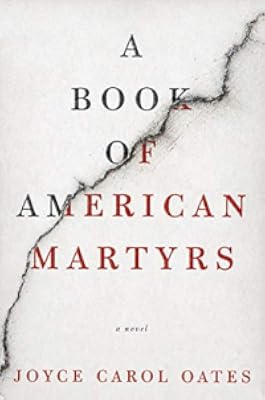
Joyce Carol Oates has written volumes of fiction on family, race, womanhood, childhood. She has woven real-life events into powerful and enlightening novels, among them in recent years The Sacrifice and A Book of American Martyrs. Now, in her newest release, she takes on a subject in the news and touching every American, our national reversion to virulent tribalism. Correctly, as her novel points out, tribalism has always been with us in its most elemental form, the family. In the hierarchy of loyalty, so it goes, one is loyal first to family, next to country, and last to humanity in general. Mixed into tribal novel, adding texture, and often brutal reality, are the physical and sexual abuse and subjugation of show more women, the terror of childhood, and seemingly ineradicable racism. But JCO also finds hope here in the strength and independence of the individual. All this gets folded into one of her most put upon creations, Violet Rue Kerrigan. Quite a name, as readers will come to appreciate, for a young girl who manages to survive, and thrive, but never forget.
Violet Rue Kerrigan grows up in the Kerrigan clan of South Niagara, New York. She lives in a large immediate family, father Jerome, mother Lula, siblings in order, Jerome Jr., Miriam, Lionel, Les, Katie, Rick, and Violet. They live in a small house, a workingman’s house that Jerome takes special pride in keeping well tended, in contrast to his neighbors, located at 388 Black Rock St., South Niagara, New York, an address repeated often because the essence here is unity of and loyalty to family, no matter what, and the importance of home. The Kerrigans are a big clan that include all levels of success, all the way up to an old-style boss politician who wields considerable influence in the region. And Violet Rue’s Kerrigans are as traditional Irish Catholic as they come with a clear immutable division of male and female roles. Which is not to say that the women, particularly Lula, happily embrace their roles, but rather find themselves trapped in them by the yokes of force and money.
The novel opens with Violet Rue at twelve and the two older boys already defined as brutal troublemakers due to their abuse and rape of special needs student Liza Deaver, which for various reasons well known to anybody who follows situations like this, they get away with. They then go on to bigger crime. While out drinking and joy riding with a cousin and a friend, they come upon Hadrian Johnson, a classmate, a lettered athlete, riding his bike home in the dark. They hit him with their car and then proceed to beat him to death with a baseball bat. It’s a racial crime that gets turned on its head by the Kerrigans and the other whites in South Niagara as prejudice against the white boys. That is, until Violet Rue, having seen her bothers cleaning the murder weapon that they later bury near home, becomes so overwhelmingly traumatized, so sick, that she from the need to rid herself of the knowledge inadvertently reveals it in the school nurse’s office. This results in the imprisonment of her brothers Jerome, Jr. and Lionel and her ostracized from the family, sent off to live with an Aunt and her husband in Port Oriskany, a place JCO readers know well.
To this point, the men in Violet Rue’s life have been pretty bad and she has not only been traumatized by them, by their murderous ways, but also permanently separated from her immediate family. Now, when in her most vulnerable state, the men get much worse, in the forms of her aunt’s lewd husband; Mr. Sandman, a math teacher by day and a sexual abuser and neo-Nazi by night; and later Professor Orlando Metti, manipulative, and both emotionally cruel and abusive. Fact is, until near the end of the novel the only decent male in her life is the little French bulldog Brindle that Metti requires Violet to care for and then uses to callously torment her with. Through all of this, Violet Rue yearns to be with her family, hopes that her father will accept her again, and fears that her brothers, once released from prison, will not come looking for her with murder in their hearts.
And yet, through all this turmoil and torture, Violet Rue manages to survive. Not only survive, she finds strength in herself, she finishes college, she plans a future, and she meets a man from her past with whom, despite everything, she might have a relationship. And then there is her family, the fate of her brothers, the father and mother, her sisters, the house at 388 Black Rock St., South Niagara, New York. What happens to them, and to her relationship with them? It’s a difficult road for Violet Rue back to the street and whether she makes it back, and if she does what she may find. These are left up to the reader to discover on their own in this recommended novel about breaking from the tribe to do the right thing. show less
Joyce Carol Oates has written volumes of fiction on family, race, womanhood, childhood. She has woven real-life events into powerful and enlightening novels, among them in recent years The Sacrifice and A Book of American Martyrs. Now, in her newest release, she takes on a subject in the news and touching every American, our national reversion to virulent tribalism. Correctly, as her novel points out, tribalism has always been with us in its most elemental form, the family. In the hierarchy of loyalty, so it goes, one is loyal first to family, next to country, and last to humanity in general. Mixed into tribal novel, adding texture, and often brutal reality, are the physical and sexual abuse and subjugation of show more women, the terror of childhood, and seemingly ineradicable racism. But JCO also finds hope here in the strength and independence of the individual. All this gets folded into one of her most put upon creations, Violet Rue Kerrigan. Quite a name, as readers will come to appreciate, for a young girl who manages to survive, and thrive, but never forget.
Violet Rue Kerrigan grows up in the Kerrigan clan of South Niagara, New York. She lives in a large immediate family, father Jerome, mother Lula, siblings in order, Jerome Jr., Miriam, Lionel, Les, Katie, Rick, and Violet. They live in a small house, a workingman’s house that Jerome takes special pride in keeping well tended, in contrast to his neighbors, located at 388 Black Rock St., South Niagara, New York, an address repeated often because the essence here is unity of and loyalty to family, no matter what, and the importance of home. The Kerrigans are a big clan that include all levels of success, all the way up to an old-style boss politician who wields considerable influence in the region. And Violet Rue’s Kerrigans are as traditional Irish Catholic as they come with a clear immutable division of male and female roles. Which is not to say that the women, particularly Lula, happily embrace their roles, but rather find themselves trapped in them by the yokes of force and money.
The novel opens with Violet Rue at twelve and the two older boys already defined as brutal troublemakers due to their abuse and rape of special needs student Liza Deaver, which for various reasons well known to anybody who follows situations like this, they get away with. They then go on to bigger crime. While out drinking and joy riding with a cousin and a friend, they come upon Hadrian Johnson, a classmate, a lettered athlete, riding his bike home in the dark. They hit him with their car and then proceed to beat him to death with a baseball bat. It’s a racial crime that gets turned on its head by the Kerrigans and the other whites in South Niagara as prejudice against the white boys. That is, until Violet Rue, having seen her bothers cleaning the murder weapon that they later bury near home, becomes so overwhelmingly traumatized, so sick, that she from the need to rid herself of the knowledge inadvertently reveals it in the school nurse’s office. This results in the imprisonment of her brothers Jerome, Jr. and Lionel and her ostracized from the family, sent off to live with an Aunt and her husband in Port Oriskany, a place JCO readers know well.
To this point, the men in Violet Rue’s life have been pretty bad and she has not only been traumatized by them, by their murderous ways, but also permanently separated from her immediate family. Now, when in her most vulnerable state, the men get much worse, in the forms of her aunt’s lewd husband; Mr. Sandman, a math teacher by day and a sexual abuser and neo-Nazi by night; and later Professor Orlando Metti, manipulative, and both emotionally cruel and abusive. Fact is, until near the end of the novel the only decent male in her life is the little French bulldog Brindle that Metti requires Violet to care for and then uses to callously torment her with. Through all of this, Violet Rue yearns to be with her family, hopes that her father will accept her again, and fears that her brothers, once released from prison, will not come looking for her with murder in their hearts.
And yet, through all this turmoil and torture, Violet Rue manages to survive. Not only survive, she finds strength in herself, she finishes college, she plans a future, and she meets a man from her past with whom, despite everything, she might have a relationship. And then there is her family, the fate of her brothers, the father and mother, her sisters, the house at 388 Black Rock St., South Niagara, New York. What happens to them, and to her relationship with them? It’s a difficult road for Violet Rue back to the street and whether she makes it back, and if she does what she may find. These are left up to the reader to discover on their own in this recommended novel about breaking from the tribe to do the right thing. show less
Members
- Recently Added By
Lists

Llibres que he llegit el 2024
77 works; 1 member
Author Information

476+ Works 62,341 Members
Joyce Carol Oates was born on June 16, 1938 in Lockport, New York. She received a bachelor's degree in English from Syracuse University and a master's degree in English from the University of Wisconsin. She is the author of numerous novels and collections of short stories. Her works include We Were the Mulvaneys, Blonde, Bellefleur, You Must show more Remember This, Because It Is Bitter, Because It Is My Heart, Solstice, Marya : A Life, and Give Me Your Heart. She has received numerous awards including the National Book Award for Them, the PEN/Malamud Award for Excellence in Short Fiction, and the F. Scott Fitzgerald Award for Lifetime Achievement in American Literature. She was a finalist for the 2015 Pulitzer Prize for Fiction with her title Lovely, Dark, Deep. She also wrote a series of suspense novels under the pseudonym Rosamond Smith. In 2015, her novel The Accursed became listed as a bestseller on the iBooks chart. She worked as a professor of English at the University of Windsor, before becoming the Roger S. Berlind Distinguished Professor of Humanities at Princeton University. She and her late husband Raymond J. Smith operated a small press and published a literary magazine, The Ontario Review. (Bowker Author Biography) Joyce Carol Oates is one of the most eminent and prolific literary figures and social critics of our times. She has won the National Book Award and several O. Henry and Pushcart prizes. Among her other awards are an NEA grant, a Guggenheim fellowship, the PEN/Malamud Lifetime Achievement Award, and the F. Scott Fitzgerald Award for Lifetime Achievement in American Literature. (Publisher Provided) show less
Common Knowledge
- Canonical title
- My Life as a Rat
- Original title
- Mitt liv som råtta
- Original publication date
- 2019
- People/Characters
- Violet Rue Kerrigan
Classifications
Statistics
- Members
- 295
- Popularity
- 108,709
- Reviews
- 20
- Rating
- (3.52)
- Languages
- 8 — Danish, English, Finnish, French, Italian, Portuguese (Portugal), Spanish, Swedish
- Media
- Paper, Audiobook, Ebook
- ISBNs
- 28
- ASINs
- 4