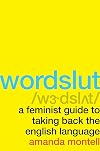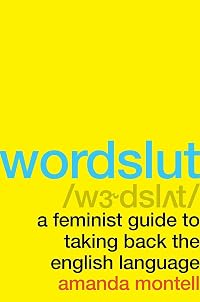
Wordslut: A Feminist Guide to Taking Back the English Language
by Amanda Montell
On This Page
Description
A brash, enlightening, and wildly entertaining feminist look at gendered language and the way it shapes us, written with humor and playfulness that challenges words and phrases and how we use them. The word bitch conjures many images for many people, but it is most often meant to describe an unpleasant woman. Even before its usage to mean a female canine, bitch didn't refer to gender at all-it originated as a gender-neutral word meaning genitalia. A perfectly innocuous word devolving into a show more female insult is the case for tons more terms, including hussy-which simply meant housewife-or slut, which meant an untidy person and was also used to describe men. These words are just a few among history's many English slurs hurled at women. Amanda Montell, reporter and feminist linguist, deconstructs language-from insults and cursing, gossip, and catcalling to grammar and pronunciation patterns-to reveal the ways it has been used for centuries to keep women and other marginalized genders from power. Ever wonder why so many people are annoyed when women talk with vocal fry or use the word like as a filler? Or why certain gender-neutral terms stick and others don't? Or where stereotypes of how women and men speak come from in the first place? Montell effortlessly moves between history, science, and popular culture to explore these questions and more-and how we can use the answers to effect real social change. Montell's irresistible humor shines through, making linguistics not only approachable but both downright hilarious and profound, demonstrated in chapters such as: Slutty Skanks and Nasty Dykes: A Comprehensive List of Gendered Insults. How to Embarrass the Shit Out of People Who Try to Correct Your Grammar. Fuck it: An Ode to Cursing While Female. Cyclops, Panty Puppet, Bald Headed Bastard and 100+ Other Things to Call Your Genitalia. Montell effortlessly moves between history and popular culture to explore these questions and more. Wordslut gets to the heart of our language, marvels at its elasticity, and sheds much-needed light into the biases that shadow women in our culture and our consciousness. show lessTags
Recommendations






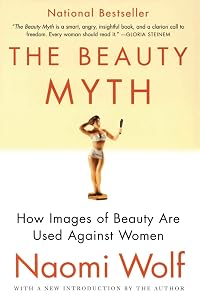
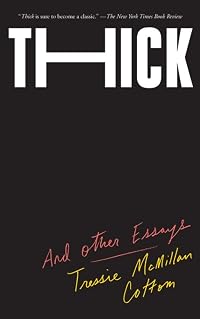
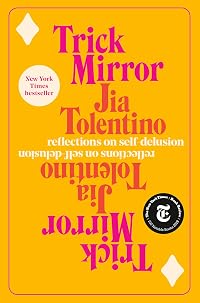
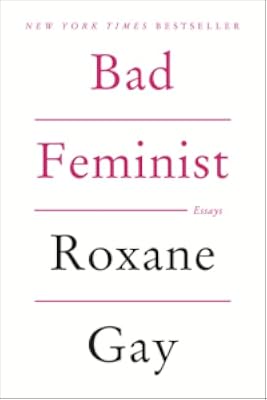



Member Recommendations

andbirds A celebration of words and their histories and how they work.
Member Reviews
I loved this book so much it may have blinded me...
Amanda Montell''s Wordslut is a deep dive into a feminist view of the English language - its history, the evolution of grammar, the intersection of language and gender, etc. - it is fiendishly funny, playful, gleeful, thoroughly researched and erudite. it explores many fascinating themes like "grammatical gender", the origin of swear words (so fun!), and how language can affect sexuality, and vice versa. For me, this book was deeply resonant and quite validating. it's both a highly perceptive analysis of language as well as hilariously entertaining. It is a delight for language lovers, logophiles, linguists, and anyone with an interest in gender and language issues.
Montell breaks it show more all down by taking a metaphorical looking glass and peering very closely at the origins of grammar, how we use language in our a day-to-day lives, as well as all the hows and whys of language and gender. She cites many professions that address these issues: linguists, writers, speech pathologists, sociologists, lexicographers, etymologists, phoneticians and all our fellow "language geeks."
Montell does a wonderful job at being inclusive. She takes it all into consideration - race, gender, sexuality, ethnicity, and socioeconomic status. Plus others I may have/probably missed.
Sidenote: I honestly liked that Montell refers to men as "dudes" throughout the book. I know, reading other reviews, that some readers found this tiresome and hokey, but I found it kinda refreshing and funny to boot.
This woman has some serious writing chops. She delves into the academic study and theory of language and gender, but it is also accessible, which I appreciated. Simply put, I was blown away by this book. It's wonderfully fascinating, relevant, entertaining, humorous and very necessary. it was a delectable treat for wordy birdy me. An enthusiastic five stars! show less
Amanda Montell''s Wordslut is a deep dive into a feminist view of the English language - its history, the evolution of grammar, the intersection of language and gender, etc. - it is fiendishly funny, playful, gleeful, thoroughly researched and erudite. it explores many fascinating themes like "grammatical gender", the origin of swear words (so fun!), and how language can affect sexuality, and vice versa. For me, this book was deeply resonant and quite validating. it's both a highly perceptive analysis of language as well as hilariously entertaining. It is a delight for language lovers, logophiles, linguists, and anyone with an interest in gender and language issues.
Montell breaks it show more all down by taking a metaphorical looking glass and peering very closely at the origins of grammar, how we use language in our a day-to-day lives, as well as all the hows and whys of language and gender. She cites many professions that address these issues: linguists, writers, speech pathologists, sociologists, lexicographers, etymologists, phoneticians and all our fellow "language geeks."
Montell does a wonderful job at being inclusive. She takes it all into consideration - race, gender, sexuality, ethnicity, and socioeconomic status. Plus others I may have/probably missed.
Sidenote: I honestly liked that Montell refers to men as "dudes" throughout the book. I know, reading other reviews, that some readers found this tiresome and hokey, but I found it kinda refreshing and funny to boot.
This woman has some serious writing chops. She delves into the academic study and theory of language and gender, but it is also accessible, which I appreciated. Simply put, I was blown away by this book. It's wonderfully fascinating, relevant, entertaining, humorous and very necessary. it was a delectable treat for wordy birdy me. An enthusiastic five stars! show less
A fun and fascinating look at sex, gender, and language. When Montell talks about those second-wave feminists like Dale Spender and Mary Daly, it took me back to my college days and my sociolinguistic class taught by Cheris Kramarae. I’m happy to say that there’s been a lot more research into language and gender, even if there hasn’t been a whole lot of real-world progress in, say, use of gender-neutral pronouns (though I guess the notion isn’t regarded as fringe as it used to be) or perceptions of women’s speech (e.g., Alexandria Ocasio-Cortez is still characterized as “shrill” by detractors, women are still chastized as sounding as “indecisive” or “weak”—even by other women—for using speech habits like show more qualifiers and uptalk). The chapters on gay speech and slang for genitalia were especially interesting.
I don’t usually list a table of contents, but the one in this book is super fun and gives a good sense of the flavor of this book:
Chapter 0: Meet Sociolinguistics: What All the Cool Feminists Are Talking About
Chapter 1: Slutty Skank-hoes and Nasty Dykes
Chapter 2: Wait, What Does the Word “Woman” Mean Anyway? Plus Other Questions of Sex, Gender, and the Language Behind Them
Chapter 3: Mmm-hmm, Girl, You’re Right: How Women Talk to Each Other When Dudes Aren’t Around
Chapter 4: Women Didn’t Ruin the English Language, They, Like, Invented It
Chapter 5: How to Embarrass the Shit Out of People Who Try to Correct Your Grammar
Chapter 6: How to Confuse a Cat-Caller and Other Ways to Verbally Smash the Patriarchy
Chapter 7: Fuck It: An Ode to Cursing While Female
Chapter 8: Cackling Clinton and Sexy Scar-jo: The Struggle of Being a Woman in Public
Chapter 9: Time to Make this Book Just a Little Bit Gayer
Chapter 10: Cyclops, Panty Puppet, Bald-Headed Bastard, and 100+ Other Things to Call Your Genitalia
Chapter 11: So, in 1,000 Years, Will Women Rule the English Language show less
I don’t usually list a table of contents, but the one in this book is super fun and gives a good sense of the flavor of this book:
Chapter 0: Meet Sociolinguistics: What All the Cool Feminists Are Talking About
Chapter 1: Slutty Skank-hoes and Nasty Dykes
Chapter 2: Wait, What Does the Word “Woman” Mean Anyway? Plus Other Questions of Sex, Gender, and the Language Behind Them
Chapter 3: Mmm-hmm, Girl, You’re Right: How Women Talk to Each Other When Dudes Aren’t Around
Chapter 4: Women Didn’t Ruin the English Language, They, Like, Invented It
Chapter 5: How to Embarrass the Shit Out of People Who Try to Correct Your Grammar
Chapter 6: How to Confuse a Cat-Caller and Other Ways to Verbally Smash the Patriarchy
Chapter 7: Fuck It: An Ode to Cursing While Female
Chapter 8: Cackling Clinton and Sexy Scar-jo: The Struggle of Being a Woman in Public
Chapter 9: Time to Make this Book Just a Little Bit Gayer
Chapter 10: Cyclops, Panty Puppet, Bald-Headed Bastard, and 100+ Other Things to Call Your Genitalia
Chapter 11: So, in 1,000 Years, Will Women Rule the English Language show less
Wordslut by Amanda Montell is a captivating exploration of the intricate relationship between language and societal attitudes towards women. It’s always nice to stumble across an unexpected gem, and finding this book is one such occasion. The cover's striking colour and standout title may have reeled me in, but it was the intriguing subject matter and Montell's accessible writing style which kept me reading.
Far from the radical feminist manifesto I had feared, Wordslut is witty, engaging, and well-researched. Montell displays a particular talent for making complex linguistic concepts comprehensible to a broader audience, challenging readers to contemplate their language use and question societal norms. Montell prompts readers to show more rethink language not merely as a reflection but as a potent influencer of societal dynamics and attitudes towards women. This book is not a comprehensive treatise on sociolinguistics, but it’s not meant to be. It is an introduction of the topic to the masses, and, in this, it certainly serves its purpose.
Montell delves into some polarising topics, with her take on political correctness, in particular, likely provoking strong reactions, especially among conservatives. Political correctness, she tells us, ‘…does not endanger our freedom of expression at all. The only thing it actually threatens is the notion that we can separate our word choices from our politics – that how we choose to communicate doesn’t say something deeper about who we are…What rubs people the wrong way about political correctness is not that they can’t use certain words anymore, it’s that political neutrality is no longer an option.’ Nevertheless, publishing a book on such topics as those discussed in Wordslut inevitably involves stepping on someone's toes; it's impossible to avoid offense.
A helpful addition to future additions would be the inclusion of a glossary and reference list. Needing to flick back through the book when I forgot an acronym, or qualification was an annoyance, and I often seek out further reading on the topics that interest me. While in-text references are included, an easily accessible list at the back would have been more convenient.
Minor inconveniences aside, Wordslut skilfully navigates the intricate role language plays in shaping our attitudes, beliefs, and behaviours, introducing sociolinguistics to the layperson, and encouraging readers to question social norms and the role of their own linguistic choices in shaping who they are. Whether or not you agree with Montell’s arguments, I encourage you to read what she has to say. show less
Far from the radical feminist manifesto I had feared, Wordslut is witty, engaging, and well-researched. Montell displays a particular talent for making complex linguistic concepts comprehensible to a broader audience, challenging readers to contemplate their language use and question societal norms. Montell prompts readers to show more rethink language not merely as a reflection but as a potent influencer of societal dynamics and attitudes towards women. This book is not a comprehensive treatise on sociolinguistics, but it’s not meant to be. It is an introduction of the topic to the masses, and, in this, it certainly serves its purpose.
Montell delves into some polarising topics, with her take on political correctness, in particular, likely provoking strong reactions, especially among conservatives. Political correctness, she tells us, ‘…does not endanger our freedom of expression at all. The only thing it actually threatens is the notion that we can separate our word choices from our politics – that how we choose to communicate doesn’t say something deeper about who we are…What rubs people the wrong way about political correctness is not that they can’t use certain words anymore, it’s that political neutrality is no longer an option.’ Nevertheless, publishing a book on such topics as those discussed in Wordslut inevitably involves stepping on someone's toes; it's impossible to avoid offense.
A helpful addition to future additions would be the inclusion of a glossary and reference list. Needing to flick back through the book when I forgot an acronym, or qualification was an annoyance, and I often seek out further reading on the topics that interest me. While in-text references are included, an easily accessible list at the back would have been more convenient.
Minor inconveniences aside, Wordslut skilfully navigates the intricate role language plays in shaping our attitudes, beliefs, and behaviours, introducing sociolinguistics to the layperson, and encouraging readers to question social norms and the role of their own linguistic choices in shaping who they are. Whether or not you agree with Montell’s arguments, I encourage you to read what she has to say. show less
Amanda Montell explores studies in sociolinguistics that explore how the very language we use supports the default system of patriarchy and how as everyday users we can try to be more proactive in how we use English as feminists.
I adored this book from the opening introduction. While the linguistics studies Montell is unpacking are rigorous and academic, she makes them clear and understandable for a general audience while being smart and funny and entertaining. Whether she's exploring the swears we use, the euphemisms we use for genitalia, or how women talk amongst themselves, everything is well explored and clear for the non-expert. Highly recommended for all feminists but also for those who are just curious about how English really works.
I adored this book from the opening introduction. While the linguistics studies Montell is unpacking are rigorous and academic, she makes them clear and understandable for a general audience while being smart and funny and entertaining. Whether she's exploring the swears we use, the euphemisms we use for genitalia, or how women talk amongst themselves, everything is well explored and clear for the non-expert. Highly recommended for all feminists but also for those who are just curious about how English really works.
Best for:
Those interested in learning more about how our language is shaped by - and shapes - society. Everyone who speaks US English.
In a nutshell:
Author Montell explores a variety of aspects of language and how it reinforces and can be used to fight the patriarchy.
Worth quoting:
N/A (but only because it was an audio book and usually I was running while listening so didn’t have a way to note something down)
Why I chose it:
The topic was intriguing to me.
Review:
I wish I’d read a hard copy instead of reading an audio version because I think I would have been underlining a lot and keeping it for future reference. That aid, it was great to listen to the author read her work.
The book explores multiple ways that language reinforces the show more patriarchy (the English language, specifically). Things like the default for ‘person’ being man, for example. As though men are the standard or the norm, and women are a deviation from that. But also more insidious things, like creating gendered qualifiers for words that theoretically are gender neutral, suggesting again that the default boss is male (hence ‘girl boss’). Or, conversely, some insults again should be gender neutral, but the default for the negatives are female (whore vs manwhore, for example).
Montell argues convincingly that this isn’t just an issue of sticks and stones, its that the words show the values of the speakers overall. She makes the point even clearer in the chapter where she references how some folks complain about how ‘you can’t say anything anymore;’ it’s not that one can’t say things, it’s that what they say and the words they choose reflect their values, and people are allowed to make judgments based on those values.
Each chapter covers a different aspect of language, including language changes from the LGBTQ community, the use of singular they/them, and how women are judged for sounding ‘shrill’ when they speak. This book was written a few years ago, and it’s disappointing to think about how much language and our acceptance of new usages to better reflect reality has been rolled back as more conservatives and more anti-trans folks have gained power.
The section on vulgar language and the slang that exists for penises vs vaginas (spell check wants me to call that vaginae?) was also so interesting. I’ve obviously thought in passing about how gross it is that the worst insults for men are to refer to them by terms associated with female genitalia, but hearing it spelled out here made it even clearer how gross that is. show less
Those interested in learning more about how our language is shaped by - and shapes - society. Everyone who speaks US English.
In a nutshell:
Author Montell explores a variety of aspects of language and how it reinforces and can be used to fight the patriarchy.
Worth quoting:
N/A (but only because it was an audio book and usually I was running while listening so didn’t have a way to note something down)
Why I chose it:
The topic was intriguing to me.
Review:
I wish I’d read a hard copy instead of reading an audio version because I think I would have been underlining a lot and keeping it for future reference. That aid, it was great to listen to the author read her work.
The book explores multiple ways that language reinforces the show more patriarchy (the English language, specifically). Things like the default for ‘person’ being man, for example. As though men are the standard or the norm, and women are a deviation from that. But also more insidious things, like creating gendered qualifiers for words that theoretically are gender neutral, suggesting again that the default boss is male (hence ‘girl boss’). Or, conversely, some insults again should be gender neutral, but the default for the negatives are female (whore vs manwhore, for example).
Montell argues convincingly that this isn’t just an issue of sticks and stones, its that the words show the values of the speakers overall. She makes the point even clearer in the chapter where she references how some folks complain about how ‘you can’t say anything anymore;’ it’s not that one can’t say things, it’s that what they say and the words they choose reflect their values, and people are allowed to make judgments based on those values.
Each chapter covers a different aspect of language, including language changes from the LGBTQ community, the use of singular they/them, and how women are judged for sounding ‘shrill’ when they speak. This book was written a few years ago, and it’s disappointing to think about how much language and our acceptance of new usages to better reflect reality has been rolled back as more conservatives and more anti-trans folks have gained power.
The section on vulgar language and the slang that exists for penises vs vaginas (spell check wants me to call that vaginae?) was also so interesting. I’ve obviously thought in passing about how gross it is that the worst insults for men are to refer to them by terms associated with female genitalia, but hearing it spelled out here made it even clearer how gross that is. show less
Brilliant, necessary, and funny besides, this book covers gendered insults, gender itself, how language changes and evolves (and who helps that along - namely, women and minorities), catcalling, gay culture and language, nicknames for genitalia, and an entire chapter on cursing. Highly recommended for everyone.
Quotes
Context will typically reveal if a term is being used in an objectifying way or a courteous one. (in a footnote on p. 35)
"The more one talks and the less one listens, the more likely it is that one's viewpoint will function as if it were community consensus even if it is not....
The more attention one pays to perspectives different from one's own, the more likely one is to give tacit - indeed sometimes unwitting - support to show more these other views simply by being able to understand them." Thus, women's experiences wind up getting squashed under their own generosity as listeners. (Sally McConnell-Ginet, Cornell University linguist, 36-37)
The purpose of name-calling is to accuse a person of not behaving as they should in the eyes of the speaker. (Chi Luu, JSTOR, 37)
If gender isn't something that comes fully formed at birth, where exactly do each of our genders come from then? This might not seem like a language question, but some philosophers theorize that gender is actually constructed through language itself....Language brings gender to life. (65)
[UK linguist Jennifer Coates examined speech styles of all-women and all-men groups - genderlects - and observed that] while men's speech styles can be categorized as "competitive," women's is "cooperative." [Vertical, hierarchical structure vs. horizontal, supportive structure] (84)
"Language is not always about making an argument or conveying information in the cleanest, simplest way possible. It's often about building relationships. It's about making yourself understood and trying to understand someone else." (Journalist Ann Friedman, 93)
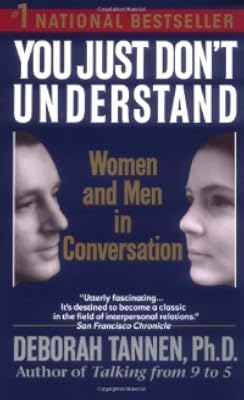
...from early childhood, women and men are socialized to live in two opposing cultures with two opposing sets of values, so they grow up to understand things differently. Not better or worse, just different. As a result, men's goals when they talk are to communicate information, while women's are to form connections. (Deborah Tannen, You Just Don't Understand, 1990, p. 100)
...judgments about linguistic prestige depend a whole lot on how we feel about the speaker....People don't seem to care or even notice when men talk this way [uptalk, vocal fry, hedging]. Only when it comes from female mouths does it cause such an upset. (127)
"You can wonder why it is that the language of a powerless group gets taken up later by the majority - but perhaps it has always been the powerless who use language as a form of power." (Louise Vasvari, 131)
There is a simple way we can be part of the shift toward a less judgmental linguistic future: instead of acting crotchety and pedantic toward new language trends, we can feel curious and fascinated by them. (132)
One of our culture's least helpful pieces of advice is that women need to change the way they speak to sound less "like women" (or that queer people need to sound straighter, or that people of color need to sound whiter). The way any of these folks talk isn't inherently more or less worthy of respect. It only sounds that way because it reflects an underlying assumption about who holds more power in our culture. (133)
"The power of sexuality is asymmetrical, in part, because being seen as sexual has different consequences for women and men." (Beth A. Quinn, 183)
There is one unified reason why many men feel as though they have an inherent right to comment on women's bodies, ignore them in meetings, or dismiss them with the excuse that they're on their periods and acting hysterical: it's because of a lack of empathy. (183)
The way to get to that world starts not with teaching women how to protect themselves from harm but with teaching men, ideally from very early on, that the whole world does not belong to them. (188)
Sapir-Whorf hypothesis: language influences thought; language determines thought (277)
...women (or any oppressed group) can come up with new words to express what were once unnamed experiences, but sometimes the backlash is louder than the progress. (re: "mansplaining" 285) show less
Quotes
Context will typically reveal if a term is being used in an objectifying way or a courteous one. (in a footnote on p. 35)
"The more one talks and the less one listens, the more likely it is that one's viewpoint will function as if it were community consensus even if it is not....
The more attention one pays to perspectives different from one's own, the more likely one is to give tacit - indeed sometimes unwitting - support to show more these other views simply by being able to understand them." Thus, women's experiences wind up getting squashed under their own generosity as listeners. (Sally McConnell-Ginet, Cornell University linguist, 36-37)
The purpose of name-calling is to accuse a person of not behaving as they should in the eyes of the speaker. (Chi Luu, JSTOR, 37)
If gender isn't something that comes fully formed at birth, where exactly do each of our genders come from then? This might not seem like a language question, but some philosophers theorize that gender is actually constructed through language itself....Language brings gender to life. (65)
[UK linguist Jennifer Coates examined speech styles of all-women and all-men groups - genderlects - and observed that] while men's speech styles can be categorized as "competitive," women's is "cooperative." [Vertical, hierarchical structure vs. horizontal, supportive structure] (84)
"Language is not always about making an argument or conveying information in the cleanest, simplest way possible. It's often about building relationships. It's about making yourself understood and trying to understand someone else." (Journalist Ann Friedman, 93)
...from early childhood, women and men are socialized to live in two opposing cultures with two opposing sets of values, so they grow up to understand things differently. Not better or worse, just different. As a result, men's goals when they talk are to communicate information, while women's are to form connections. (Deborah Tannen, You Just Don't Understand, 1990, p. 100)
...judgments about linguistic prestige depend a whole lot on how we feel about the speaker....People don't seem to care or even notice when men talk this way [uptalk, vocal fry, hedging]. Only when it comes from female mouths does it cause such an upset. (127)
"You can wonder why it is that the language of a powerless group gets taken up later by the majority - but perhaps it has always been the powerless who use language as a form of power." (Louise Vasvari, 131)
There is a simple way we can be part of the shift toward a less judgmental linguistic future: instead of acting crotchety and pedantic toward new language trends, we can feel curious and fascinated by them. (132)
One of our culture's least helpful pieces of advice is that women need to change the way they speak to sound less "like women" (or that queer people need to sound straighter, or that people of color need to sound whiter). The way any of these folks talk isn't inherently more or less worthy of respect. It only sounds that way because it reflects an underlying assumption about who holds more power in our culture. (133)
"The power of sexuality is asymmetrical, in part, because being seen as sexual has different consequences for women and men." (Beth A. Quinn, 183)
There is one unified reason why many men feel as though they have an inherent right to comment on women's bodies, ignore them in meetings, or dismiss them with the excuse that they're on their periods and acting hysterical: it's because of a lack of empathy. (183)
The way to get to that world starts not with teaching women how to protect themselves from harm but with teaching men, ideally from very early on, that the whole world does not belong to them. (188)
Sapir-Whorf hypothesis: language influences thought; language determines thought (277)
...women (or any oppressed group) can come up with new words to express what were once unnamed experiences, but sometimes the backlash is louder than the progress. (re: "mansplaining" 285) show less
Any college or university writing or English course needs to include "Wordslut: A Feminist Guide to Taking Back the English Language" as one of the required texts. It makes one think about the motivations behind people's peculiar linguistic habits, like the use of fillers or hedging.
An in-depth analysis of how words associated with femininity frequently evolve into derogatory terms, while words associated with masculinity use power and authority connotations is given in this insightful piece that explores the evolution of gendered language throughout centuries of human social circles.
The book also examines how gendered language affects the LGBTQIA+ community and looks at how slang and the internet interact to influence linguistic show more norms.
With a delightfully snarky tone, the book delivers an engaging reading experience that is both enlightening and enjoyable. show less
An in-depth analysis of how words associated with femininity frequently evolve into derogatory terms, while words associated with masculinity use power and authority connotations is given in this insightful piece that explores the evolution of gendered language throughout centuries of human social circles.
The book also examines how gendered language affects the LGBTQIA+ community and looks at how slang and the internet interact to influence linguistic show more norms.
With a delightfully snarky tone, the book delivers an engaging reading experience that is both enlightening and enjoyable. show less
Members
- Recently Added By
Lists

Club Read's Recommended Nonfiction Written by Women
618 works; 30 members

Top Five Books of 2025
954 works; 303 members
Author Information

4 Works 3,181 Members
Amanda Montell is a writer and reporter from Baltimore whose writing has been featured in Marie Claire, Nylon, Glamour, Cosmopolitan, The Rumpus, Byrdie.com, and Who What Wear. Amanda graduated from NYU with a degree in linguistics and lives in Los Angeles. Her favorite English word is nook and her favorite foreign word is tartle, the Scottish show more term for when you hesitate while introducing someone because you've forgotten their name. show less
Some Editions
Awards and Honors
Awards
Distinctions
Common Knowledge
- Original publication date
- 2019-05-28
- Dedication
- For B, C, and D. And in loving memory of E.
- First words
- When I sat the word bitch, what comes to mind?
- Quotations
- In the wrong hands, speech can be used as a weapon. But in the right ones, it can change the world.
…human beings use language as a social tool to do things like create solidarity, form relationships, and assert authority.
We're living in an era when many of us often feel overwhelmed and silenced by the English language.
Perhaps you've heard this feminist riddle: “A young boy was rushed to the hospital from the scene of an accident, where his father was killed, and prepped for emergency surgery. The surgeon walked in, took one look, and sai... (show all)d, ‘I can't operate on him – he's my son.' How is this possible?” This scenario trips people up because if the boy's father is dead, how could he be operating on him? Few come to the conclusion that surgeon was in fact his mother. The rare and exotic lady surgeon.
Back in Chaucer's day, the word girl meant a child of any sex. In Old English, pretty meant crafty or cunning. In Middle English, dinner literally mean breakfast.
One of my greatest cultural pet peeves is the belief that watching, playing, and talking about sports are more prestigious and valuable than taking an interest in beauty or fashion. I once worked at a beauty magazine where mo... (show all)st of the staff was female but several of the higher-ups were men. It was hard not to notice how tirelessly these guys worked to assert their manliness by making sports references in all their company-wide presentations, only to immediately suggest that they were surely going over our silly female heads. Objectively, there is nothing more complicated or of greater consequence about discussing who won the World Series than there is about discussing who put on the most beautiful show at New York Fashion Week; it's simply that the former is generally a more male-centric endeavor and thus perceived as more important.
Young women use the linguistic features that they do, not as mindless affectations, but as power tools for establishing and strengthening relationships. Vocal fry, uptalk, and even like, are in fact not signs of ditzin... (show all)ess, but instead all have a unique history and specific social utility.
[Janet] Holmes's numbers demonstrated that the total number of you knows collected were almost identical between genders, but women used the phrase with a flat pitch, communicating confidence, over 20 percent more than... (show all) men. And yet, most people don't hear it that way – at the first sign of a woman hedging, they automatically assume insecurity.
…condemning others' grammar is one of the most universally accepted snobberies in Western culture.
…it is highly possible – and sometimes inevitable – for the gender of a word to bleed into speakers' perceptions of what that word means.
In a language that assigns masculinity to the word doctor and femin... (show all)inity to the word nurse, its speakers might subconsciously start to think of those professions in a fundamentally gendered way.
Pronouns aside, there are also some languages that are essentially gender-free, containing very few words that make reference to a person's “natural” gender at all. Yoruba, a language spoken in Nigeria, has neither gender... (show all)ed pronouns nor the dozens of gendered nouns we have in English, including son, daughter, host, hostess, hero, heroine, etc. Instead, the most important distinction in Yoruba is the age of the person you're talking about. So, instead of saying brother and sister, you would say older sibling and younger sibling, or egbun and aburo. The only Yoruba words that make reference to a person's gender (or sex, as it were) are obirin and okorin, meaning “one who has a vagina” and “one who has a penis.” So if you really wanted to call someone your sister, you would have to say egbon mi obirin, or “my older sibling, the one with the vagina.” When you get that specific, it makes our English obsession with immediately identifying people's sexes seem just plain creepy.
…what these metaphors of women as nature, territories, and technologies do is place feminine gender in that same distant category of “other.” According to [Suzanne] Romaine, by comparing her to things like storms and se... (show all)as, “woman is symbolic of the conflict between nature and civilization, tempting men with her beauty, attracting men with her charms, but dangerous and therefore in need of conquest.” Woman is a continent to colonize, a fortress to siege. These sentiments are reflected not only in English; in languages all over the world, from Italian to Thai, a nation's government is labelled as having “founding fathers,” while the land itself (“Mother Nature,” “virgin territory”) is perceived as a feminine entity. In grammar as in allegory as in life, women are considered reckless places outside the civilized male world – wild things meant to be tamed into the weak, delicate flowers we've traditionally wanted women to be.
“Hitler wasn't any less fascist because he could write a coherent sentence.” [Deborah Cameron].
“Language pedantry is snobbery and snobbery is prejudice,” [Deborah] Cameron says. “And that IMHO, s nothing to be proud of.”
…political correctness does not endanger our freedom of expression at all. The only thing it actually threatens is the notion that we can separate our word choices from our politics – that how we choose to communicate doe... (show all)sn't say something deeper about who we are. As American English speakers, we are perfectly at liberty to use whatever language we want; we just have to know that our words reveal our social and moral beliefs to some extent… What rubs people the wrong way about political correctness is not that they can't use certain words anymore, it's that political neutrality is no longer an option.
I think the golden rule for men should be: If you're a man, don't say anything to a woman on the street that you wouldn't want a man saying to you in prison.”
Here's one of my favorite cursing facts from Phonology 101: swears are the only types of English words that you can use as an infix.
Perhaps the most conspicuous one [pattern] he [Jonathon Green] found was how consistent, and how unsettling, the themes of our genitalia words have remained over time. As green told reporters shortly after his study was publi... (show all)shed, “The penis is often going to be some kid of weapon, the vagina some kind of narrow passage, intercourse some way of saying ‘man hits woman.'”
“Overall it's really clear that the way we talk about genitals is a super concentrated representation of how we thing about sex and gender,” he [Lal Zimman] tells me. “The research that people have done on heteronormati... (show all)ve gender naming really shows that our worst cultural values are reflected in the ways we talk about genitals. Like penises are always weapons that exist for penetrating, sex is always violence, and women and vaginas are passive and absence, just a place to put a penis.”
Just think of some of the most common verbs used to illustrate sex: bone, drill, screw. In the world of these words, the person with the erection is both the star and the narrator. If one were to describe sex from the ... (show all)vagina's standpoint – to say something like, “We enveloped all night,” or “I sheathed the living daylights out of him,” or “we clitsmashed” – it would be such an exceptional rebellion against mainstream sex talk that to many listeners, it would be a real head-scratcher. (257)
At the time I am writing this, one of the definitions of vagina from TheFreeDictionary.com's medical glossary reads, “An organ of copulation that receives the penis during sexual intercourse.” This is not a politic... (show all)al view of the vagina, it's a medical one. And yet, I would invite a doctor to try telling a lesbian that her vagina is “an organ that receives the penis.” See how well that goes.
The on-screen depiction of oral sex performed on women has consistently earned movies an NC-17 rating – Blue Valentine, Boys Don't Cry, and Charlie Countryman are a few that come to mind. The same stand... (show all)ard has certainly not been applied to on-screen blow jobs. I often think of 2013s Lovelace, a biopic about the star of the 1972 porn film Deep Throat. This was an entire movie dedicated to fellatio, and to extreme sexual violence, and even that was given a mild R. Sure, let the kids watch a porn star get repeatedly raped, but female desire? No, no, no.
“Anytime language reform happens, it has to happen in the context of social change,” he [Lal Zimmerman] says. “You can't have just the linguistic change first and then expect people to get on board with the cultural stu... (show all)ff.” - Last words
- (Click to show. Warning: May contain spoilers.)"You have to believe that it's possible."
- Blurbers
- Soloway, Jill; Dunn, Gaby; Perri, Camille; Irby, Samantha; Cummings, Whitney; Roberson, Blyth
- Original language
- English
- Canonical DDC/MDS
- 305.42; 427.973
- Canonical LCC
- P120.S48
Classifications
- Genres
- Sexuality and Gender Studies, General Nonfiction, Nonfiction
- DDC/MDS
- 427.973 — Language English & Old English languages Historical and geographic variations, modern nongeographic variations of English Geographic variations Geographic variations in North America United States
- LCC
- P120 .S48 — Language and Literature Philology. Linguistics Language. Linguistic theory. Comparative grammar
- BISAC
Statistics
- Members
- 693
- Popularity
- 41,346
- Reviews
- 25
- Rating
- (4.12)
- Languages
- Chinese, English
- Media
- Paper, Audiobook, Ebook
- ISBNs
- 14
- ASINs
- 4