On This Page
Description
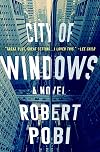
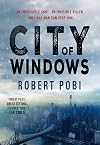
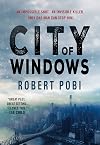
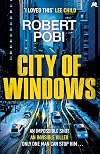
"A tough, wise, knowing narrative voice, a great plot, a great setting, and even better characters — I loved this." —Lee Child, New York Times bestselling authorIn the tradition of Jeffery Deaver's Lincoln Rhyme and David Baldacci's Amos Decker, Robert Pobi's City of Windows introduces Lucas Page, a brilliant, reluctant investigator, matching wits with a skilled, invisible killer
During the worst blizzard in memory, an FBI agent in a moving SUV in New York City is killed by a nearly show more impossible sniper shot. Unable to pinpoint where the shot came from, as the storm rapidly wipes out evidence, the agent-in-charge Brett Kehoe turns to the one man who might be able to help them—former FBI agent Lucas Page.
Page, a university professor and bestselling author, left the FBI years ago after a tragic event robbed him of a leg, an arm, an eye, and the willingness to continue. But he has an amazing ability to read a crime scene, figure out angles and trajectories in his head, and he might be the only one to be able to find the sniper's nest. With a new wife and family, Lucas Page has no interest in helping the FBI—except for the fact that the victim was his former partner.
Agreeing to help for his partner's sake, Page finds himself hunting a killer with an unknown agenda and amazing sniper skills in the worst of conditions. And his partner's murder is only the first in a series of meticulously planned murders carried out with all-but-impossible sniper shots. The only thing connecting the deaths is that the victims are all with law enforcement—that is until Page's own family becomes a target.
To identify and hunt down this ruthless, seemingly unstoppable killer, Page must discover what hidden past connects the victims before he himself loses all that is dear to him.
. show less
Tags
Recommendations








Member Reviews
"City Of Windows" is the first book of a series of thrillers centred around Lucas Page, a former FBI man turned Maths Professor who has an extraordinary (verging on the 'yeah, right - I so believe that.) ability to visual objects moving through three-dimensional spaces - just what you need if you're out to catch a sniper.
I picked up "City Of Windows" after reading Escape From The ER's review of the next book in the series. 'Under Pressure'. I was in the mood for a thriller with a difference and a strong main character that wasn't a Jack Bauer clone, and I got one, although, at first, I wasn't sure what I'd bought. Here's my initial reaction.
I'm four chapters in and we've spent that time seeing the killing (FBI agent driving through show more Manhattan shot by a sniper), meeting our hero (science professor with prosthetic limbs and a substantial foster family) and hearing FBI SAIC (yep, you need to know this stuff- keep up) making his recruitment pitch.
The whole thing has all the subtlety of a Heavy Metal arena anthem The moves are as familiar as the steps to Mud's 'Tiger Feet' and at least as old. The narrator amplifies this by sounding like he's always on the edge of a Joe Friday impersonation.
I should be saying: 'The prose is too self-consciously muscular, the emotions are all loud and confined to three chords - I'm outta here.'
But I'm not.
Because a GOOD heavy metal anthem always has something new. It may be the familiar beats and chords that get your feet moving but its the small touches of originality that keep you listening.
There are two touches here that worked for me and have me heading happily to Chapter Five.
Firstly, our hero has just brought a Christmas tree home, despite being distracted by the news footage of the crime and he is in the middle of performing the alphabet song for the younger kids when the FBI arrive. I liked that. Not so alpha male. More just human.
Secondly, and this is the kicker, his response to the FBI SAIC's recruitment pitch was to paraphrase Rick Deckard's response to Bryant at the start of 'BladeRunner' - 'I was quit when you came in and I'm twice as quit now.' How can I resist a hero who quotes 'Bladerunner'?
So, I'm going to relax into this and let it carry me along the familiar routes and keep an ear open for all the things that make a difference.
I soon realised that I'd been unfair to both the author and the narrator. Pobi managed to deliver a character study of Lucas Page, complete with flashbacks to his childhood, as well delivering a rollercoaster thriller with multiple peaks that we're carefully led up to and then dropped from at alarming speed. Stephen Graybill, the narrator, showed more nuance as he went along and I'm hoping he'll be kept as the narrator for future books.
'City Of Windows' is a real page-turner with plots that curl in on one another in ways that make sense looking back but which you can't see coming. The action scenes are clearly visualised, the violence is graphic and the tension is wound so tight it hurts, especially when Pobi cuts from one set of characters to another in the middle of scenes of extreme threat.
I liked the fact that Page's family felt so real, that his wife was strong and that the kids, including the adopted and fostered ones, were cherished. It made Page more human.
Lucas Page is about as far away from Jack Bauer as it's possible to get while still being a man you really, really don't want to threaten. He has only one eye and uses a prosthetic arm and leg but that barely slows him down. He's allergic to stupid and incapable of tact or even polite small talk. He's obsessed with numbers. He puts his wife and his kids ahead of his job and he has no real desire to work for the FBI anymore.
I found that, apart from his almost supernatural ability to visualise numbers, I believed in him. He's a hard guy to like. He has no manners. He's aggressive. He rants. He has almost no need for people beyond the doors of his own household. He's also honest and rational and relentless.
'City of Windows' is filled with great one-liners from Lucas Page like this thought from our almost always irritable hero, who has had a VERY bad night:
´He resented feeling that the life he had ordered was out of stock.´
This is followed, a little later, with Page reflecting on how absurd it is to believe that everyone carrying a gun would make everyone safer and coining the phrase:
'America. Land of the free. Home of the afraid.'
Pobi is also an author who hides easter eggs in the text. The FBI has had orders from on high, telling them that the shooter they're looking for is a French national called Froissante. It's clear that 'on high' has it wrong but Froissante isn't a common French surname so I looked it up and found that 'une remarque froissante' translates to 'an upsetting remark'. That kind of thing, especially as a throw-away, makes me smile.
Pobi certainly succeeded in giving me a hero who wasn't Jack Bauer. Bauer came to American screens less than two months after 9/11. He became emblematic of Bush's 'Mission Accomplished' mindset. 'City Of Windows' was published in August 2019, more than two years into Trump's presidency and different times need a different hero. Lucas Page is a numbers guy. He uses them to assess and respond to risk. He believes in expertise, especially his own and he has no ability to live with stupid just because it's what everyone feels.
Page is a professor so it's not surprising that he has a tendency to go on a bit. He also disdains Graves, a former colleague from his time in the FBI. Pobi uses these two things to treat us to an extended, numbers-based ass-kicking that I enjoyed and would have liked to have given myself. It starts with Page saying:
'"Most Americans go nuts when you mention ISIS, even if they're not a threat in any statistical way."
Graves rolled his eyes at that. "Not a threat. You wanna talks about that."
"Not really, but I will. It wasn't hard to see through the statistics. Since 9/11 fewer than 200 US citizens have been killed on US soil by what can credibly be called Islamic Extremists, fewer than two hundred," Lucas said, very slowly. "Your basic Muslim Extremist is not any real threat and I'm not saying that can't change in an instant, but as things stand, they pose less of a statistical problem than being eaten by your own house-cat. The real threat is your Christian neighbour, Those yahoos kill what? twelve to fifteen thousand Americans a year? The Iron Man of the Mass Shooting Championship is your average American asshole."
He turned to Whittaker and asked, "How many mass shootings this week alone?"
Whittaker's eyes cycled up as she said, " Six in the last five days."
Lucas turned back to Graves. "We can chalk half of those up to the silly season but this country has more mass shooters who are American-made than lottery winners. How's that?"
But he doesn't stop there. After denying any political agenda a claiming to be just a person who understands numbers, he says:
"Check out the stats on virtually every mass shooting in the fucking history of this country and you won't find a Radical Muslim behind it. You'll find a Good Old Boy or mental case, raised on the belief that guns are a God-given right under the umbrella of the constitution, granted by Jesus."
He goes on (yes, he does that a lot, except when he's being shot at or people around him are being threatened. Then he shuts up and fights) to describe the gun-carrying public's ability to dismiss mass shootings by white guys. He says:
'Apparently, believing that a Secret World Order carries out atrocious crimes in order to garner public sympathy in an effort to take their guns away is more believable than the truth, which is that having so many guns out there is a cultural mistake, I've said it before, there's a crisis of stupidity in America,. All you have to do is look at the numbers around the world.'
When Graves retorts that that's not how people feel and that it's still a free country, Page delivers that final shot in his argument and I wanted to cheer. He says:
'This isn't about feelings. This is about facts And although everyone is allowed to have a position, not all positions are created equal. There are experts in any given field. One person's ignorance is not just as valuable as another's knowledge and the fact is your average American has to worry about his neighbour more than terrorist by orders of magnitude.'
Most of the book is a high-pressure I-have-to-read-the-next-page-NOW kind of thriller but for me, Page's rants added something special.
I'm a facts person myself so I thought I'd look and see if the US really has that many mass shootings (I live in England. England and Wales - population 58 million - have 50-60 gun-related deaths a year and that's seen as too many). Here's what I found: 435 mass shootings (about 36 a month) leaving 517 dead and 1,648 injured (43 dead and 147 injured per month). As Lucas Page would say, 'Numbers don't lie.'
I'll be carrying on this series when 'Under Pressure' is published in August. If you'd like a taste of the audiobook version of 'City Of Windows', click on the SoundCloud link below.
https://soundcloud.com/macaudio-2/city-of-windows-by-robert-pobi-audiobook-excer... show less
I picked up "City Of Windows" after reading Escape From The ER's review of the next book in the series. 'Under Pressure'. I was in the mood for a thriller with a difference and a strong main character that wasn't a Jack Bauer clone, and I got one, although, at first, I wasn't sure what I'd bought. Here's my initial reaction.
I'm four chapters in and we've spent that time seeing the killing (FBI agent driving through show more Manhattan shot by a sniper), meeting our hero (science professor with prosthetic limbs and a substantial foster family) and hearing FBI SAIC (yep, you need to know this stuff- keep up) making his recruitment pitch.
The whole thing has all the subtlety of a Heavy Metal arena anthem The moves are as familiar as the steps to Mud's 'Tiger Feet' and at least as old. The narrator amplifies this by sounding like he's always on the edge of a Joe Friday impersonation.
I should be saying: 'The prose is too self-consciously muscular, the emotions are all loud and confined to three chords - I'm outta here.'
But I'm not.
Because a GOOD heavy metal anthem always has something new. It may be the familiar beats and chords that get your feet moving but its the small touches of originality that keep you listening.
There are two touches here that worked for me and have me heading happily to Chapter Five.
Firstly, our hero has just brought a Christmas tree home, despite being distracted by the news footage of the crime and he is in the middle of performing the alphabet song for the younger kids when the FBI arrive. I liked that. Not so alpha male. More just human.
Secondly, and this is the kicker, his response to the FBI SAIC's recruitment pitch was to paraphrase Rick Deckard's response to Bryant at the start of 'BladeRunner' - 'I was quit when you came in and I'm twice as quit now.' How can I resist a hero who quotes 'Bladerunner'?
So, I'm going to relax into this and let it carry me along the familiar routes and keep an ear open for all the things that make a difference.
I soon realised that I'd been unfair to both the author and the narrator. Pobi managed to deliver a character study of Lucas Page, complete with flashbacks to his childhood, as well delivering a rollercoaster thriller with multiple peaks that we're carefully led up to and then dropped from at alarming speed. Stephen Graybill, the narrator, showed more nuance as he went along and I'm hoping he'll be kept as the narrator for future books.
'City Of Windows' is a real page-turner with plots that curl in on one another in ways that make sense looking back but which you can't see coming. The action scenes are clearly visualised, the violence is graphic and the tension is wound so tight it hurts, especially when Pobi cuts from one set of characters to another in the middle of scenes of extreme threat.
I liked the fact that Page's family felt so real, that his wife was strong and that the kids, including the adopted and fostered ones, were cherished. It made Page more human.
Lucas Page is about as far away from Jack Bauer as it's possible to get while still being a man you really, really don't want to threaten. He has only one eye and uses a prosthetic arm and leg but that barely slows him down. He's allergic to stupid and incapable of tact or even polite small talk. He's obsessed with numbers. He puts his wife and his kids ahead of his job and he has no real desire to work for the FBI anymore.
I found that, apart from his almost supernatural ability to visualise numbers, I believed in him. He's a hard guy to like. He has no manners. He's aggressive. He rants. He has almost no need for people beyond the doors of his own household. He's also honest and rational and relentless.
'City of Windows' is filled with great one-liners from Lucas Page like this thought from our almost always irritable hero, who has had a VERY bad night:
´He resented feeling that the life he had ordered was out of stock.´
This is followed, a little later, with Page reflecting on how absurd it is to believe that everyone carrying a gun would make everyone safer and coining the phrase:
'America. Land of the free. Home of the afraid.'
Pobi is also an author who hides easter eggs in the text. The FBI has had orders from on high, telling them that the shooter they're looking for is a French national called Froissante. It's clear that 'on high' has it wrong but Froissante isn't a common French surname so I looked it up and found that 'une remarque froissante' translates to 'an upsetting remark'. That kind of thing, especially as a throw-away, makes me smile.
Pobi certainly succeeded in giving me a hero who wasn't Jack Bauer. Bauer came to American screens less than two months after 9/11. He became emblematic of Bush's 'Mission Accomplished' mindset. 'City Of Windows' was published in August 2019, more than two years into Trump's presidency and different times need a different hero. Lucas Page is a numbers guy. He uses them to assess and respond to risk. He believes in expertise, especially his own and he has no ability to live with stupid just because it's what everyone feels.
Page is a professor so it's not surprising that he has a tendency to go on a bit. He also disdains Graves, a former colleague from his time in the FBI. Pobi uses these two things to treat us to an extended, numbers-based ass-kicking that I enjoyed and would have liked to have given myself. It starts with Page saying:
'"Most Americans go nuts when you mention ISIS, even if they're not a threat in any statistical way."
Graves rolled his eyes at that. "Not a threat. You wanna talks about that."
"Not really, but I will. It wasn't hard to see through the statistics. Since 9/11 fewer than 200 US citizens have been killed on US soil by what can credibly be called Islamic Extremists, fewer than two hundred," Lucas said, very slowly. "Your basic Muslim Extremist is not any real threat and I'm not saying that can't change in an instant, but as things stand, they pose less of a statistical problem than being eaten by your own house-cat. The real threat is your Christian neighbour, Those yahoos kill what? twelve to fifteen thousand Americans a year? The Iron Man of the Mass Shooting Championship is your average American asshole."
He turned to Whittaker and asked, "How many mass shootings this week alone?"
Whittaker's eyes cycled up as she said, " Six in the last five days."
Lucas turned back to Graves. "We can chalk half of those up to the silly season but this country has more mass shooters who are American-made than lottery winners. How's that?"
But he doesn't stop there. After denying any political agenda a claiming to be just a person who understands numbers, he says:
"Check out the stats on virtually every mass shooting in the fucking history of this country and you won't find a Radical Muslim behind it. You'll find a Good Old Boy or mental case, raised on the belief that guns are a God-given right under the umbrella of the constitution, granted by Jesus."
He goes on (yes, he does that a lot, except when he's being shot at or people around him are being threatened. Then he shuts up and fights) to describe the gun-carrying public's ability to dismiss mass shootings by white guys. He says:
'Apparently, believing that a Secret World Order carries out atrocious crimes in order to garner public sympathy in an effort to take their guns away is more believable than the truth, which is that having so many guns out there is a cultural mistake, I've said it before, there's a crisis of stupidity in America,. All you have to do is look at the numbers around the world.'
When Graves retorts that that's not how people feel and that it's still a free country, Page delivers that final shot in his argument and I wanted to cheer. He says:
'This isn't about feelings. This is about facts And although everyone is allowed to have a position, not all positions are created equal. There are experts in any given field. One person's ignorance is not just as valuable as another's knowledge and the fact is your average American has to worry about his neighbour more than terrorist by orders of magnitude.'
Most of the book is a high-pressure I-have-to-read-the-next-page-NOW kind of thriller but for me, Page's rants added something special.
I'm a facts person myself so I thought I'd look and see if the US really has that many mass shootings (I live in England. England and Wales - population 58 million - have 50-60 gun-related deaths a year and that's seen as too many). Here's what I found: 435 mass shootings (about 36 a month) leaving 517 dead and 1,648 injured (43 dead and 147 injured per month). As Lucas Page would say, 'Numbers don't lie.'
I'll be carrying on this series when 'Under Pressure' is published in August. If you'd like a taste of the audiobook version of 'City Of Windows', click on the SoundCloud link below.
https://soundcloud.com/macaudio-2/city-of-windows-by-robert-pobi-audiobook-excer... show less
This page-turning crime thriller is set in New York City in the present day. Lucas Page left the FBI ten years earlier after an incident which cost him a leg, an arm, and an eye. Now fitted with prosthetics, he teaches astrophysics at Columbia University, and shares a home with his wife Erin and five foster children in various stages of being adopted by them.
The action begins during a brutal winter storm with a sniper making what seems like an impossible shot and killing an FBI agent driving in a car in downtown Manhattan. The agent happened to be Page’s former partner.
Brett Kehoe, the Special Agent in charge of Manhattan, needs Page’s help in finding the sniper, and uses the identity of the victim to pull him into the show more investigation. Page knew he was being manipulated, but it didn’t take much to convince him to take a break from his boring and frustrating job at the university. A part of his mind, he told his wife Erin, “only comes alive out there.” As he discovered in therapy during his recovery, there was a real possibility his PTSD “wasn’t a retroactive stress from past experiences but the loss of stress in the day-to-day - and he somehow missed it.”
Page, a prodigy in math, inter alia, has the ability to interpret a crime scene by transforming a landscape into a geometric pattern, calculating the angles and trajectories of a bullet’s path, and thus reverse-engineering where the bullet originated.
Before the day is over, a second murder occurs, with the same unusual type of armor-piercing bullets, and evincing the same exceptional skill in shooting. After a third victim, it is clear there is a pattern to the selection of targets, and Page recruits his brightest grad students to help figure out precisely what it is. He stresses to them they need to look for what is not there, and indeed, this proves to be the key to the connection.
On the ground, Kehoe partners Page with Agent Whitaker, a fierce and fearless black woman who in many ways is a perfect match for Page.
Page and Whitaker come to believe they are dealing with a militant vigilante “patriot” group.
Whitaker specializes in these groups and explains to Page:
“Since oh-eight, when Obama took to the Oval Office, there’s been a massive surge in militia enrollment. They all like to use words like patriot, truth, and freedom, but not a single group seems to have any kind of cohesive philosophy. Or even a very basic understanding of the Constitution. They like guns, say they hate the government but love America, seem to dislike people of color and the concept of paying for the infrastructure that they enjoy using. They call any kind of government intervention tyranny. And they complain. Constantly. Basically, they’re pissed because people who are smarter than they are, or who work harder than they do, have more than they do. They spew a libertarian line about every man for himself and it’s up to the individual to map their own path, yet they blame immigrants for their woes. Zero personal responsibility and zero self-awareness.”
[The circumstances in the book hew closely to actual facts. White nationalism and white supremacy, and violence inspired by them, are on the rise, in the U.S. and around the world. As factcheck.org reports:
“A study by the Center for Strategic and International Studies found the number of terrorist attacks by far-right perpetrators quadrupled in the U.S. between 2016 and 2017, and that far-right attacks in Europe rose 43 percent over the same period. Among those incidents, CSIS states, the rise of attacks by white supremacists and anti-government extremists is ‘of particular concern.’”]
Meanwhile, in the book, the right-wing media tries to pin the killings first on blacks - they propose it must be some sort of outgrowth from the Black Lives Matter movement - and then on Muslim terrorists. The Administration (never mentioned by name but clearly the Trump Administration) is pressuring the FBI to charge a French terrorist. Kehoe is chafing under the pressure “to get a crime to fit someone else’s confirmation bias.”
Page knows all these theories are crazy and counter-productive. As for Islamic extremists, he points out, again adhering to actual (non-fiction) data:
“Since 9/11, fewer than two hundred Americans have been killed on U.S. soil b what could credibly be called Islamic extremists. . . . Your basic Muslim extremist is not any real threat - and I’m not saying that can’t change in an instant - but as things stand, they pose less of a statistical problem than being eaten by your own house cat. The real threat is your Christian neighbor. Those yahoos kill, what? - twelve to fifteen thousand Americans a year. . . .”
He adds an important point that is also a commentary on the "false equivalency" tendency by some to credit or blame both sides for bias in reporting:
“This isn’t about feelings; this is about facts. Numbers don’t lie. And although everyone is allowed to have a position, not all positions are created equal. There are experts in any given field; one person’s ignorance is not just as valuable as another’s knowledge, and the fact is your average American has to worry about his neighbor more than terrorists by orders of magnitude."
Page keeps intending to return to Erin and the kids for Christmas, but more murders pull him back on the case. And then his own family is targeted, and it becomes imperative that he solve the crime and stop the killer. As the action builds to a terrifying denouement, we can’t be sure who will make it out alive, because Pobi seems to have no qualms about killing off major characters in the interest of realism.
Evaluation: Page is a fascinating character unlike the usual law enforcement stereotypes in fiction. Whitaker has some special talents herself, and adds a welcome aspect of humor to the mix, in addition to revealing more about Page through their interactions. I can't wait for more books in the series. show less
The action begins during a brutal winter storm with a sniper making what seems like an impossible shot and killing an FBI agent driving in a car in downtown Manhattan. The agent happened to be Page’s former partner.
Brett Kehoe, the Special Agent in charge of Manhattan, needs Page’s help in finding the sniper, and uses the identity of the victim to pull him into the show more investigation. Page knew he was being manipulated, but it didn’t take much to convince him to take a break from his boring and frustrating job at the university. A part of his mind, he told his wife Erin, “only comes alive out there.” As he discovered in therapy during his recovery, there was a real possibility his PTSD “wasn’t a retroactive stress from past experiences but the loss of stress in the day-to-day - and he somehow missed it.”
Page, a prodigy in math, inter alia, has the ability to interpret a crime scene by transforming a landscape into a geometric pattern, calculating the angles and trajectories of a bullet’s path, and thus reverse-engineering where the bullet originated.
Before the day is over, a second murder occurs, with the same unusual type of armor-piercing bullets, and evincing the same exceptional skill in shooting. After a third victim, it is clear there is a pattern to the selection of targets, and Page recruits his brightest grad students to help figure out precisely what it is. He stresses to them they need to look for what is not there, and indeed, this proves to be the key to the connection.
On the ground, Kehoe partners Page with Agent Whitaker, a fierce and fearless black woman who in many ways is a perfect match for Page.
Page and Whitaker come to believe they are dealing with a militant vigilante “patriot” group.
Whitaker specializes in these groups and explains to Page:
“Since oh-eight, when Obama took to the Oval Office, there’s been a massive surge in militia enrollment. They all like to use words like patriot, truth, and freedom, but not a single group seems to have any kind of cohesive philosophy. Or even a very basic understanding of the Constitution. They like guns, say they hate the government but love America, seem to dislike people of color and the concept of paying for the infrastructure that they enjoy using. They call any kind of government intervention tyranny. And they complain. Constantly. Basically, they’re pissed because people who are smarter than they are, or who work harder than they do, have more than they do. They spew a libertarian line about every man for himself and it’s up to the individual to map their own path, yet they blame immigrants for their woes. Zero personal responsibility and zero self-awareness.”
[The circumstances in the book hew closely to actual facts. White nationalism and white supremacy, and violence inspired by them, are on the rise, in the U.S. and around the world. As factcheck.org reports:
“A study by the Center for Strategic and International Studies found the number of terrorist attacks by far-right perpetrators quadrupled in the U.S. between 2016 and 2017, and that far-right attacks in Europe rose 43 percent over the same period. Among those incidents, CSIS states, the rise of attacks by white supremacists and anti-government extremists is ‘of particular concern.’”]
Meanwhile, in the book, the right-wing media tries to pin the killings first on blacks - they propose it must be some sort of outgrowth from the Black Lives Matter movement - and then on Muslim terrorists. The Administration (never mentioned by name but clearly the Trump Administration) is pressuring the FBI to charge a French terrorist. Kehoe is chafing under the pressure “to get a crime to fit someone else’s confirmation bias.”
Page knows all these theories are crazy and counter-productive. As for Islamic extremists, he points out, again adhering to actual (non-fiction) data:
“Since 9/11, fewer than two hundred Americans have been killed on U.S. soil b what could credibly be called Islamic extremists. . . . Your basic Muslim extremist is not any real threat - and I’m not saying that can’t change in an instant - but as things stand, they pose less of a statistical problem than being eaten by your own house cat. The real threat is your Christian neighbor. Those yahoos kill, what? - twelve to fifteen thousand Americans a year. . . .”
He adds an important point that is also a commentary on the "false equivalency" tendency by some to credit or blame both sides for bias in reporting:
“This isn’t about feelings; this is about facts. Numbers don’t lie. And although everyone is allowed to have a position, not all positions are created equal. There are experts in any given field; one person’s ignorance is not just as valuable as another’s knowledge, and the fact is your average American has to worry about his neighbor more than terrorists by orders of magnitude."
Page keeps intending to return to Erin and the kids for Christmas, but more murders pull him back on the case. And then his own family is targeted, and it becomes imperative that he solve the crime and stop the killer. As the action builds to a terrifying denouement, we can’t be sure who will make it out alive, because Pobi seems to have no qualms about killing off major characters in the interest of realism.
Evaluation: Page is a fascinating character unlike the usual law enforcement stereotypes in fiction. Whitaker has some special talents herself, and adds a welcome aspect of humor to the mix, in addition to revealing more about Page through their interactions. I can't wait for more books in the series. show less
Ok thriller lovers, listen up. There’s a lot of buzz around this book & I’m here to say you can believe it. This is a cracking read that delivers. Tense action, intricate plot lines, a frighteningly efficient killer & suspense that builds to a hair raising finish. It may sound like a stock recipe for any thriller but the reason this one succeeds so well is down to two things…..how the author blends those ingredients then tosses in a compelling & charismatic MC.
Dr. Lucas Page is a brilliant man with a unique ability. Once upon a time he was an FBI agent with a partner named Doug Hartke. That was before “the event” that ended his career & resulted in him losing a leg, an arm & one eye. Now he’s a mix of man & metal who spends show more his days teaching at Columbia University. The rest of his time is devoted to wife Erin & the 5 kids they foster. Until NYC Special Agent Brett Kehoe comes knocking.
Hartke is dead. He was sitting in downtown traffic when killed by a sniper. Kehoe needs Lucas’ brain & is willing to play the guilt card to get it. No one “sees” like Lucas. HIs gift is the ability to shut out the noise & reduce his surroundings to a series of vectors, angles & numbers to pinpoint where a shot originated. But when he visits the crime scene it becomes clear they’re not dealing with your garden variety sniper. The shot came from a distant roof top & should have been impossible.
As far as Lucas is concerned, it’s a one & done job. He’s well aware Erin is less than thrilled about him working with the FBI again & besides, he promised to devote the Xmas season to their herd of kids. Then another member of law enforcement is taken out in similar fashion. More will follow, each shot more unbelievable than the last. Lucas helps out but resists an official return to service until his family is targeted. Now it’s personal.
Holy Cats, buckle up people. This one will keep you on your toes. What follows is an engrossing tale of the hunt for a highly skilled killer. Lucas & his colleagues must dig deep to discover motives & connections. There is a large & diverse cast of characters that add colour, humour & drama to the story. One standout is Whitaker, the agent assigned to Lucas. She’s a whip smart woman whose quiet demeanour masks a spine of steel. Good thing because while she may find Lucas’ abilities fascinating she’s less enamoured with his complete lack of social skills. Watching their relationship develop was one of the things I enjoyed most about this book.
But everything revolves around Lucas & he’s up for carrying the story. At work he’s terse, impatient & antisocial, sometimes with unintentionally humorous results. At home we get to see his softer side & through a series of childhood flashbacks we come to understand why he & Erin have created their unique family. It turns out he was once just like them, unwanted & moved around at the whim of social services. Another thing that is very well done are descriptions of his prosthetics & how they affect daily life.
It’s a great example of what sets this book apart from other thrillers. Yes, there’s plenty of action but it’s the personal details & characters’ histories that add the human element necessary for a reader to truly engage. I ripped through this in a day & sincerely hope it’s not the last we’ve heard from Dr. Lucas Page. show less
Dr. Lucas Page is a brilliant man with a unique ability. Once upon a time he was an FBI agent with a partner named Doug Hartke. That was before “the event” that ended his career & resulted in him losing a leg, an arm & one eye. Now he’s a mix of man & metal who spends show more his days teaching at Columbia University. The rest of his time is devoted to wife Erin & the 5 kids they foster. Until NYC Special Agent Brett Kehoe comes knocking.
Hartke is dead. He was sitting in downtown traffic when killed by a sniper. Kehoe needs Lucas’ brain & is willing to play the guilt card to get it. No one “sees” like Lucas. HIs gift is the ability to shut out the noise & reduce his surroundings to a series of vectors, angles & numbers to pinpoint where a shot originated. But when he visits the crime scene it becomes clear they’re not dealing with your garden variety sniper. The shot came from a distant roof top & should have been impossible.
As far as Lucas is concerned, it’s a one & done job. He’s well aware Erin is less than thrilled about him working with the FBI again & besides, he promised to devote the Xmas season to their herd of kids. Then another member of law enforcement is taken out in similar fashion. More will follow, each shot more unbelievable than the last. Lucas helps out but resists an official return to service until his family is targeted. Now it’s personal.
Holy Cats, buckle up people. This one will keep you on your toes. What follows is an engrossing tale of the hunt for a highly skilled killer. Lucas & his colleagues must dig deep to discover motives & connections. There is a large & diverse cast of characters that add colour, humour & drama to the story. One standout is Whitaker, the agent assigned to Lucas. She’s a whip smart woman whose quiet demeanour masks a spine of steel. Good thing because while she may find Lucas’ abilities fascinating she’s less enamoured with his complete lack of social skills. Watching their relationship develop was one of the things I enjoyed most about this book.
But everything revolves around Lucas & he’s up for carrying the story. At work he’s terse, impatient & antisocial, sometimes with unintentionally humorous results. At home we get to see his softer side & through a series of childhood flashbacks we come to understand why he & Erin have created their unique family. It turns out he was once just like them, unwanted & moved around at the whim of social services. Another thing that is very well done are descriptions of his prosthetics & how they affect daily life.
It’s a great example of what sets this book apart from other thrillers. Yes, there’s plenty of action but it’s the personal details & characters’ histories that add the human element necessary for a reader to truly engage. I ripped through this in a day & sincerely hope it’s not the last we’ve heard from Dr. Lucas Page. show less
Why is this not a movie? Pobi is an amazing dramatist weaving an intricate, violent story that keeps escalating until you can’t breathe. I opened the book and moved from breakfast to the couch, to the table, back to the couch and never put this book down until I turned the last page.
Unfortunately I have read his more recent Lucas Page installments and I am now left waiting to see if another is on the horizon.
Unfortunately I have read his more recent Lucas Page installments and I am now left waiting to see if another is on the horizon.
Dr. Lucas Page, the hero in Robert Pobi's hard-hitting, dark, and violent thriller, "City of Windows," is an astrophysicist and college professor who has an uncanny ability to discern patterns and make complex mathematical calculations without the aid of a computer. Sadly, Lucas is wounded in more ways than one. After suffering grave injuries when he was with the FBI, he nearly died, but he miraculously made it through and lives a fairly normal life with a prosthetic arm and leg, and one good eye. Page is a taciturn man who does not suffer fools gladly, and he rarely shows vulnerability except when it comes to his wife, Erin, a pediatric surgeon, and their five foster children.
During the winter holidays, with a fierce snowstorm show more pummeling New York City, the FBI asks Lucas for help. An unidentified sniper has murdered Lucas's former partner, Doug Hartke, and senior agent Brett Kehoe enlists Page to figure out where the perpetrator lay in wait before shooting his victim. Erin is annoyed, since Lucas had promised to spend two uninterrupted weeks at home, but she soon realizes that her husband needs to undertake this challenging mission. Along with his temporary partner, the smart and sassy Alice Whitaker, Lucas travels down a rabbit hole that will lead him to a confrontation with anti-government types who would rather die than give up their weapons.
Poli's colorful characters include a reclusive master gunsmith, a waitress in a Manhattan diner, the Pages' intrepid Australian tenant, and various members of law enforcement. In addition, Page will give a critical assignment—one that could alter the case's trajectory—to a handful of his brightest students. During this investigation, Lucas endures bitter winds and biting cold, get by with little sleep, and try to stay alert by drinking endless cups of coffee. In addition, he demonstrates his talent for analyzing crime scenes, keen insight into the intricacies of human nature, and a gift for solving bewildering puzzles. "A City of Windows" is a bit too long and convoluted, but it is also an intriguing, suspenseful, and intense nail-biter. Although Page is cranky and sarcastic, his courage, persistence, resilience, and superior intellect enable him to accomplish seemingly impossible tasks. Furthermore, his talent for thinking outside the box and spotting the little things that others miss make him an invaluable asset when the FBI tries to take down a dangerous and stealthy serial killer. show less
During the winter holidays, with a fierce snowstorm show more pummeling New York City, the FBI asks Lucas for help. An unidentified sniper has murdered Lucas's former partner, Doug Hartke, and senior agent Brett Kehoe enlists Page to figure out where the perpetrator lay in wait before shooting his victim. Erin is annoyed, since Lucas had promised to spend two uninterrupted weeks at home, but she soon realizes that her husband needs to undertake this challenging mission. Along with his temporary partner, the smart and sassy Alice Whitaker, Lucas travels down a rabbit hole that will lead him to a confrontation with anti-government types who would rather die than give up their weapons.
Poli's colorful characters include a reclusive master gunsmith, a waitress in a Manhattan diner, the Pages' intrepid Australian tenant, and various members of law enforcement. In addition, Page will give a critical assignment—one that could alter the case's trajectory—to a handful of his brightest students. During this investigation, Lucas endures bitter winds and biting cold, get by with little sleep, and try to stay alert by drinking endless cups of coffee. In addition, he demonstrates his talent for analyzing crime scenes, keen insight into the intricacies of human nature, and a gift for solving bewildering puzzles. "A City of Windows" is a bit too long and convoluted, but it is also an intriguing, suspenseful, and intense nail-biter. Although Page is cranky and sarcastic, his courage, persistence, resilience, and superior intellect enable him to accomplish seemingly impossible tasks. Furthermore, his talent for thinking outside the box and spotting the little things that others miss make him an invaluable asset when the FBI tries to take down a dangerous and stealthy serial killer. show less
Ten years before the start of this book, Dr. Lucas Page, astrophysicist, left his FBI career on uneasy terms after an accident with explosives nearly killed him. He now has a prosthetic arm, a prosthetic leg, and one ceramic eye that doesn’t quite track with the other. Page’s challenges in dealing with the bionic parts of his body greatly increase the depth of his character.
Now Page teaches at Columbia University in Manhattan. He thinks his students are generally lackluster, but then he has a jaded view of most things. Except his family. His wife Erin is a pediatrician. They have five kids and a happy dog—a ragtag collection of children “whose biological parents had failed them and the system had given up on.” The family show more interactions provide a nice balance to the story’s crime elements, though the kids are possibly too cooperative.
As the university’s semester closes out for the Christmas holiday, a huge blizzard is under way. Many blocks south in midtown Manhattan, a bizarre shooting has occurred, and the news reports show Page’s old FBI colleagues working the case. The victim was in a moving vehicle, shot from a high angle from a considerable distance. Identifying the sniper’s nest will be difficult.
Because Page has an uncanny ability to plot bullet trajectories and lines of sight, that evening’s visit from his former FBI supervisor, though unwelcome, is not unexpected. The Bureau is involved because the dead man was one of their own, Page’s former partner. Page’s uncanny ability, though rusty, still works—automatic, instinctive, and unexplainable. He identifies a building almost eight football fields away from the point of impact.
Old jealousies arise, family needs pull at him, his former supervisor is as opaque as ever, there’s political pressure to pin the shooting on a Muslim extremist, without any evidence, and Page is not on a track that will make him friends, but when a second law enforcement officer is assassinated a mere thirteen hours later, any hope evaporates that the first agent’s death was a fluke. In his heart of hearts, Page loves this work.
The second victim was shot on the semi-crowded tram that operates between Roosevelt Island and Manhattan, moving at almost eighteen miles an hour, through the continuing snowstorm, from a distance of almost a half-mile. Another impossible shot. And again, Page pinpoints the shooter’s position. When yet a third law enforcement officer is killed, it’s clear the killer is after specific individuals, but they seem unrelated and even are from different law enforcement agencies. Figuring out what they have in common calls on Page’s insightful investigatory skills, aided by three of those maligned college students.
As the bodies pile up, it appears that Page and his family are the assassin’s ultimate targets. This is the book’s weakest point, as it seems manufactured so the plot can culminate in a showdown between Page and the killer. While the rationale for the earlier murders follows a kind of twisted logic, the targeting of Page and his family does not. That problem aside, the story provides plenty of thrills along the way, and I hope Pobi writes more about Lucas Page. show less
Now Page teaches at Columbia University in Manhattan. He thinks his students are generally lackluster, but then he has a jaded view of most things. Except his family. His wife Erin is a pediatrician. They have five kids and a happy dog—a ragtag collection of children “whose biological parents had failed them and the system had given up on.” The family show more interactions provide a nice balance to the story’s crime elements, though the kids are possibly too cooperative.
As the university’s semester closes out for the Christmas holiday, a huge blizzard is under way. Many blocks south in midtown Manhattan, a bizarre shooting has occurred, and the news reports show Page’s old FBI colleagues working the case. The victim was in a moving vehicle, shot from a high angle from a considerable distance. Identifying the sniper’s nest will be difficult.
Because Page has an uncanny ability to plot bullet trajectories and lines of sight, that evening’s visit from his former FBI supervisor, though unwelcome, is not unexpected. The Bureau is involved because the dead man was one of their own, Page’s former partner. Page’s uncanny ability, though rusty, still works—automatic, instinctive, and unexplainable. He identifies a building almost eight football fields away from the point of impact.
Old jealousies arise, family needs pull at him, his former supervisor is as opaque as ever, there’s political pressure to pin the shooting on a Muslim extremist, without any evidence, and Page is not on a track that will make him friends, but when a second law enforcement officer is assassinated a mere thirteen hours later, any hope evaporates that the first agent’s death was a fluke. In his heart of hearts, Page loves this work.
The second victim was shot on the semi-crowded tram that operates between Roosevelt Island and Manhattan, moving at almost eighteen miles an hour, through the continuing snowstorm, from a distance of almost a half-mile. Another impossible shot. And again, Page pinpoints the shooter’s position. When yet a third law enforcement officer is killed, it’s clear the killer is after specific individuals, but they seem unrelated and even are from different law enforcement agencies. Figuring out what they have in common calls on Page’s insightful investigatory skills, aided by three of those maligned college students.
As the bodies pile up, it appears that Page and his family are the assassin’s ultimate targets. This is the book’s weakest point, as it seems manufactured so the plot can culminate in a showdown between Page and the killer. While the rationale for the earlier murders follows a kind of twisted logic, the targeting of Page and his family does not. That problem aside, the story provides plenty of thrills along the way, and I hope Pobi writes more about Lucas Page. show less
Exciting start to a new series!
It is frigid and snowing like mad in New York City when an FBI agent is killed by a single bullet while driving down a busy street. When the logistics prove difficult and the investigation hampered, the head of the local FBI office, Brett Kehoe, calls in Lucas Page.
This is the first book in a very action packed and clever series. I had read the third installment before realizing that Lucas had appeared in two previous novels so had to go back to the beginning as I enjoyed it so much. Lucas is a very interesting character -- missing one arm, a leg, and an eye, he has some crazy skills in mathematical analysis that make him the person for the impossible jobs. He's also not got much of a social personality show more and does not suffer fools. He left the FBI after the accident that disabled him and has started over as a professor at a local university and a bestselling author. He's married to Erin and they have adopted 5 children so he really has no interest in helping until he is told that the casualty was his former partner. Unfortunately, the sniper is not finished and when the additional victims are also found to be associated with law enforcement, Lucas must use all his skills to figure out the killer's identity and motive. The stakes are raised when Lucas's own family is targeted.
I really like the writing style and the way the investigation details are related. The only irritant was that I could not really find a reason for Lucas's family to be twice involved in life-threatening situations as neither incident made any logical sense. The investigation is complicated and requires meticulous examination of redacted files and a historic tragedy that lends to a revenge motive and an unlikely suspect. There is some political editorializing in the narrative that may be off-putting to some readers. Despite those vexations, I do want to find out more about Lucas Page as his backstory is revealed and plan to read his second in this series next.
I would recommend these books and would love to see as a television program. show less
It is frigid and snowing like mad in New York City when an FBI agent is killed by a single bullet while driving down a busy street. When the logistics prove difficult and the investigation hampered, the head of the local FBI office, Brett Kehoe, calls in Lucas Page.
This is the first book in a very action packed and clever series. I had read the third installment before realizing that Lucas had appeared in two previous novels so had to go back to the beginning as I enjoyed it so much. Lucas is a very interesting character -- missing one arm, a leg, and an eye, he has some crazy skills in mathematical analysis that make him the person for the impossible jobs. He's also not got much of a social personality show more and does not suffer fools. He left the FBI after the accident that disabled him and has started over as a professor at a local university and a bestselling author. He's married to Erin and they have adopted 5 children so he really has no interest in helping until he is told that the casualty was his former partner. Unfortunately, the sniper is not finished and when the additional victims are also found to be associated with law enforcement, Lucas must use all his skills to figure out the killer's identity and motive. The stakes are raised when Lucas's own family is targeted.
I really like the writing style and the way the investigation details are related. The only irritant was that I could not really find a reason for Lucas's family to be twice involved in life-threatening situations as neither incident made any logical sense. The investigation is complicated and requires meticulous examination of redacted files and a historic tragedy that lends to a revenge motive and an unlikely suspect. There is some political editorializing in the narrative that may be off-putting to some readers. Despite those vexations, I do want to find out more about Lucas Page as his backstory is revealed and plan to read his second in this series next.
I would recommend these books and would love to see as a television program. show less
Members
- Recently Added By
Lists

Troublesome bodies
110 works; 7 members
Author Information
11+ Works 626 Members
Series

Common Knowledge
- Canonical title
- City of Windows
- People/Characters
- Lucas Page; Alice Whitaker; Brett Kehoe; Grover Graves; Martin Hudson (Dingo)
- Important places
- Manhattan, New York, New York, USA; Wyoming, USA
Classifications
Statistics
- Members
- 244
- Popularity
- 132,730
- Reviews
- 11
- Rating
- (3.64)
- Languages
- 5 — Dutch, English, French, German, Italian
- Media
- Paper, Audiobook, Ebook
- ISBNs
- 18
- ASINs
- 4