On This Page
Description
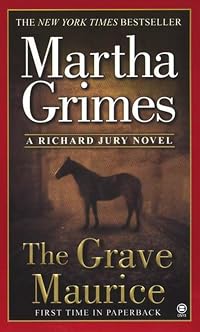
Fiction. Mystery. Suspense. Thriller. HTML:"Chew on this," says Melrose Plant to Richard Jury, who's in the hospital being driven crazy by Hannibal, a nurse who likes to speculate on his chances for survival. Jury could use a good story, preferably one not ending with his own demise. Plant tells Jury of something he overheard in The Grave Maurice, a pub near the hospital. A woman told an intriguing story about a girl named Nell Ryder, granddaughter to the owner of the Ryder Stud Farm in show more Cambridgeshire, who went missing more than a year before and has never been found. What is especially interesting to Plant is that Nell is also the daughter of Jury's surgeon.But Nell's disappearance isn't the only mystery at the Ryder farm. A woman has been found dead on the track-a woman who was a stranger even to the Ryders.
But not to Plant. She's the woman he saw in The Grave Maurice. Together with Jury, Nell's family, and the Cambridgeshire police, Plant embarks on a search to find Nell and bring her home. But is there more to their mission than just restoring a fifteen-year-old girl to her family?
The Grave Maurice is the eighteenth entry in the Richard Jury series and, from its pastoral opening to its calamitous end, is full of the same suspense and humor that devoted readers expect from Martha Grimes.
. show less
Tags
Recommendations


Member Reviews
18th in the series and the first book that just felt too long at times to read. Plus the tragic ending was just one too many tragedies for me in my murder mysteries. After being shot at the end of the previous novel, Richard Jury finds himself in the hospital being ministered to by Dr. Roger Ryder whose daughter, Nell disappeared 2 years before. To keep himself busy while recuperating, Richard decides to look into the case with the able help of Melrose Plant who ends up buying himself a racehorse.
Entertaining, just not quite as compelling as her previous novels were to me.
Entertaining, just not quite as compelling as her previous novels were to me.
This is another Richard Jury novel whose title comes from the name of an English pub (as do all the Richard Jury titles). Jury is recuperating from gunshot wounds but his friend, Melrose Plant, knows just the thing to get him well, a mystery. Jury's surgeon had a daughter abducted 2 years previously and never heard from her again. I thought the solution was contrived and not very believable. Usually, the eccentric characters in this series make a book worth reading but even they seemed stretched thin.
Richard Jury is laid up in hospital, recovering from some serious wounds. Melrose Plant and Sargeant Wiggins have been frequent visitors. In an effort to give Jury something to occupy his mind, Wiggins gives him a copy of “The Daughter of Time” by Josephine Tey. Wiggins had been given the book by Plant when Wiggins was in hospital. The main character of the book is in a situation similar to Jury’s. The second plot to the book is the mystery concerning Richard the Third and the princes who were kept in the tower and mysteriously disappeared. Wiggins gesture is well meant, but Jury is not a mystery reader.
To distract Jury, Plant tells him of a conversation he overheard at the Grave Maurice, across the street from the hospital.
Plant show more sits to the bar and overhears two women talking. They were discussing about someone named Ryder and that he was a “poor sod” as his daughter had disappeared about two years ago. Then a comment was made about a brother and he’d been killed. Only bits and pieces, but it interests Plant. And it turns out Jury’s doctor is the “poor sod” and asks if Jury would look into the matter “unofficially.”
Jury is released from hospital with instructions to rest, but he immediately starts investigating. The case is stone cold, but little by little Jury gets bits and pieces, tying them together.
It turns out the girl’s disappearance isn’t the only mystery. There is the death of the doctor’s brother during a race in Paris and the mysterious goings on at a nearby stud farm. Somehow they seem related.
This is not a book to race through. The clues are not always obvious and neither are the connections. show less
To distract Jury, Plant tells him of a conversation he overheard at the Grave Maurice, across the street from the hospital.
Plant show more sits to the bar and overhears two women talking. They were discussing about someone named Ryder and that he was a “poor sod” as his daughter had disappeared about two years ago. Then a comment was made about a brother and he’d been killed. Only bits and pieces, but it interests Plant. And it turns out Jury’s doctor is the “poor sod” and asks if Jury would look into the matter “unofficially.”
Jury is released from hospital with instructions to rest, but he immediately starts investigating. The case is stone cold, but little by little Jury gets bits and pieces, tying them together.
It turns out the girl’s disappearance isn’t the only mystery. There is the death of the doctor’s brother during a race in Paris and the mysterious goings on at a nearby stud farm. Somehow they seem related.
This is not a book to race through. The clues are not always obvious and neither are the connections. show less
Jury is recovering in hospital (as the Brits say) from the hellish end of his last case, and everyone thinks he needs something to occupy his mind. Wiggins brings him Tey's 'Daughter of Time'; Melrose brings him an abduction. When the abduction turns into murder, and Jury is up on hs feet, he decides to investigate. This time the characters include horses and teenagers, and much too much death. Lots of red herrings kept me guessing about everyone except the main villain, whom I spotted even before I knew the true extent of the crime. And the motive was both right out in the open and a complete surprise.
this one was most entertaining. Jury doesn't appear for long stretches till near the end, but we learn quite a lot about the character and modus operandi of Melrose Plant, which is rather endearing, and his motley assortment of hangers-on are well deployed. definitely the funniest of the series; i often laughed out loud. the plot is long and complex, but all the characters are finely drawn.
Of all the living mystery writers, Martha Grimes has the most style. A lovely writing said the Chicago Tribune, and it is true. Her usual heroes, the unhappy detective Jury and his aristocratic friend Melrose are as fascinating as was Peter Wimsey in the old books of Dorothy Sawyers. Slightly but pleasantly old-fashioned. And this is the best of the 17 Jury novels she had published this far. I read them all. People who write a lot of thrillers, like Connelly, Sandford or Kellerman, tend to become gloomy with time. It is part of the job, and Grimes does not escape it. So, this is an excellent book that I recommend, but I will never read another one. I suddenly understood that Grimes was going to kill the only nice people she describes. show more No more gloom for me, give me young writer! show less
Not sure about this one. I liked parts of it, but all in all I couldn't really get into it- the characters were all a bit flat, and the plucky-young-child/ teenage-person (beautiful of course, no acne breakouts or gawkiness here)-with-tragic-past/ future- thing is beginning to get a little tiresome. It would be nice to come accross a sympathetic teenage character who acts like one, is not wise beyond their years, and whose story is still worth telling.
Oh well, I guess that is bitterness speaking- the feelings of someone who was a wholly unremarkable, cliched teenager...
Oh well, I guess that is bitterness speaking- the feelings of someone who was a wholly unremarkable, cliched teenager...
Members
- Recently Added By
Lists

Crime and Mysteries to Read
746 works; 31 members

British Mystery
469 works; 14 members

Books Read in 2014
2,344 works; 89 members

Books Read in 2022
5,226 works; 115 members
Author Information

59+ Works 29,689 Members
Martha Grimes was born on May 2, 1931 in Pittsburgh, Pennsylvania. She received a B.A. and an M.A. from the University of Maryland. The idea for Martha Grimes' first British detective novel, The Man with a Load of Mischief (1981), was inspired by the name of a British pub she noticed while leafing through a travel book. A longtime Anglophile, she show more has continued to use a British pub as both the title and part of the setting in each subsequent novel in the series which features Scotland Yard Detective Richard Jury, his assistant, Melrose Plant, and Plant's interfering Aunt Agatha. The Anodyne Necklace (1983) won her the Nero Wolfe Award. Her other works include The Stargazey, The Case Has Been Altered, The End of the Pier, Biting the Moon, and Dust. Her title, Vertigo 42, made The New York Times Best Seller List in 2014. (Bowker Author Biography) show less
Awards and Honors
Distinctions
Series

Work Relationships
Is contained in
Common Knowledge
- Original title
- The Grave Maurice
- Original publication date
- 2002
- People/Characters
- Richard Jury; Melrose Plant; Nell Ryder; Vernon Rich; Roger Ryder; Trueblood (show all 7); Diane Demorney
- Important places
- London, England, UK (Royal London Hospital)
- Dedication
- To little Will Holland, nearly a year, and his grandparents, Virginia and Scott
- First words*
- Von weitem sah das Pferd weiß aus, aus größerer Nähe konnte man aber sehen, dass es ein fahles Weiß war, eher von der Farbe einer Morgendämmerung im Winter, ein schattiges Weiß wie eisiger Schnee.
- Last words*
- (Click to show. Warning: May contain spoilers.)Sie war verschwunden. Und er kurz darauf ebenfalls.
*Some information comes from Common Knowledge in other languages. Click "Edit" for more information.
Classifications
Statistics
- Members
- 1,027
- Popularity
- 25,315
- Reviews
- 12
- Rating
- (3.59)
- Languages
- English, French, German, Korean
- Media
- Paper, Audiobook, Ebook
- ISBNs
- 22
- UPCs
- 1
- ASINs
- 11