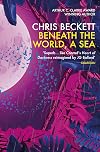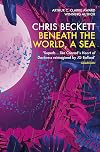
Beneath the World, a Sea
by Chris Beckett
On This Page
Description
'A disturbing descent into a surreal world, written with a deft hand.' Adrian Tchaikovsky, winner of the Arthur C. Clarke Award 2016 South America, 1990. Ben Ronson, a British police officer, arrives in a mysterious forest to investigate a spate of killings of Duendes. These silent, vaguely humanoid creatures - with long limbs and black button eyes - have a strange psychic effect on people, unleashing the subconscious and exposing their innermost thoughts and fears. Ben becomes fascinated by show more the Duendes, but the closer he gets, the more he begins to unravel, with terrifying results... Beneath the World, A Sea is a tour de force of modern fiction - a deeply searching and unsettling novel about the human subconscious, and all that lies beneath. 'Beckett is superb at undercutting reader assumptions with a casual line of dialogue or acute psychological observation: the book reads like Conrad's Heart of Darkness reimagined by JG Ballard.' Guardian show lessTags
Recommendations





























Member Reviews
Just as I feel I must buy a grocery item if I've touched it these days, I am also obligated to borrow any library book I touch. Given that library browsing slots give me 15 minutes to choose a stack of books, my novel-choosing heuristics are: semi-familiar author, appealing cover, and/or on the new acquisition shelf. 'Beneath the World, a Sea' met all three criteria. It was on the new book shelf, looked attractive, and I recognised Chris Beckett's name as I've read [b:America City|35711882|America City|Chris Beckett|https://i.gr-assets.com/images/S/compressed.photo.goodreads.com/books/1500566965l/35711882._SX50_.jpg|57211847], (which had interesting ideas but a rather flat narrative). My heuristics served me well, as I really loved show more 'Beneath the World, a Sea'. I can be stingy with five star ratings and struggle to articulate what exactly takes a novel from four to five stars from me. It tends to be some sort of emotional affinity, as I give plenty of excellent books four. In this case, the setting, themes, and narration were all exceedingly appealing. 'Beneath the World, a Sea' (which is also wonderfully titled) is set in a weird, isolated South American forest community. I adore spatially specific weirdness of this kind and was pleased to be reminded of [b:Annihilation|17934530|Annihilation (Southern Reach, #1)|Jeff VanderMeer|https://i.gr-assets.com/images/S/compressed.photo.goodreads.com/books/1403941587l/17934530._SX50_.jpg|24946895] and [b:Infinite Ground|30256420|Infinite Ground|Martin MacInnes|https://i.gr-assets.com/images/S/compressed.photo.goodreads.com/books/1463999496l/30256420._SX50_.jpg|50728268]. The latter is an especially apposite comparison, as 'Beneath the World, a Sea' also begins with a police investigation before developing in much more existential directions.
The protagonist, Ben Ronson, is a London police officer sent to the Submundo Delta to investigate the mass killing of native creatures called Duendes. To reach the Submundo, he and everyone else travelling there must spend several days in the Zona, a space of forgetting. Thus everyone arrives at the Submundo disorientated by a gap in their memory, to find the peculiar flora and fauna of the place have a powerful psychological effect. In the vicinity of Duendes, people become overwhelmed by all the thoughts that they would normally repress. The geographical isolation of the Submundo also creates a peculiar intimacy between its expat residents, which makes it easy to perceive the truths of others without enabling similarly acute self-perception. Beckett's writing manages the clever trick of being evocative without a great deal of description. The dialogue and streams of consciousness help to create a vivid and distinctive atmosphere throughout. I found the place beguiling and fascinating.
It was also very nice to read a book set in 1990. That's recent enough not to require much adjustment for historical events and attitudes, yet also a time before the internet and mobile phones made us perpetually accessible to each other. The Submundo is physically and thus informationally isolated from the rest of the world, although various characters discuss how this could be changed. One proposes to build a monorail, which would traverse the Zona and widen the life opportunities of the Mundinos. These are the descendents of South American people dumped in the Submundo by colonial intruders in the 1860s. They established themselves in villages around the delt, creating a religion unique to the place. One of the main characters is an anthropologist who studies their ways of life, which include killing Duendes. Via this anthropologist and others, the narrative considers colonialism and financial neo-colonialism in an interesting and subtle way.
Although there are several intriguing themes of this kind, the questions at the core of the book are more philosophical and concern the sense of self. I absolutely love it when what could have been a criminal investigation plot turns into something far weirder and more existential. This is quite often attempted, but can be difficult to pull off. Beckett subverted my expectations brilliantly and turned Ben Ronson the upright cop into a fascinating character, who is essentially investigating himself:
From the start, there are references to Ronson hiding and repressing things. When he finally reads the notebooks from his time in the Zona, they are electric: his other forgotten self taunts him with terrible deeds he may have committed. He is profoundly shocked and shaken by this, as well he might be. Although other characters have interestingly varied reactions to the Zona and Submundo, Ronson's is the most compelling. It makes you wonder: if you were going to a place you knew you'd retain no memories of, what would you do? To a very controlled person like Ronson (and me, incidentally), it could be an opportunity to take risks that you wouldn't normally entertain. The tension around whether Ronson acted on any of his darkest thoughts in the Zona is sustained brilliantly. Did he just experiment with being a freer person, one who admitted his bisexuality? Or did he commit violence, even murder? The narrative acknowledges that anyone who works for the police must have at least the potential for deadly violence. Alternatively, is he just mocking himself for being a coward out of self-hatred?
I very much enjoyed the ambiguity and piquancy of the ending: Ronson re-enters the Zona and relaxes back into some other self. His mission to investigate the Duende killings has faded into the background, indeed within the Submundo it is hard to see the killings as crimes at all. The Duendes are utterly inhuman and resemble small parts of a single huge organism. There is no indication that their numbers are diminishing and they make no efforts to avoid humans, in fact quite the opposite. The anthropologist and scientists cannot explain how the Submundo works or what the Duendes are. A businessman's efforts to fly into the Submundo, to invade it with the modern world, quite literally crash and burn. Thus the place remains satisfyingly mysterious to the end, as the narrative concerns its psychological impact upon visitors rather than the impact that visitors have upon it. The Submundo could be an analogy for various different things, yet I also appreciated it as a throwback to Victorian tales of strange undisturbed places that Western minds can't cope with. Beckett combines elements of those stories with sci-fi and contemporary psychological insight, to brilliant effect. show less
The protagonist, Ben Ronson, is a London police officer sent to the Submundo Delta to investigate the mass killing of native creatures called Duendes. To reach the Submundo, he and everyone else travelling there must spend several days in the Zona, a space of forgetting. Thus everyone arrives at the Submundo disorientated by a gap in their memory, to find the peculiar flora and fauna of the place have a powerful psychological effect. In the vicinity of Duendes, people become overwhelmed by all the thoughts that they would normally repress. The geographical isolation of the Submundo also creates a peculiar intimacy between its expat residents, which makes it easy to perceive the truths of others without enabling similarly acute self-perception. Beckett's writing manages the clever trick of being evocative without a great deal of description. The dialogue and streams of consciousness help to create a vivid and distinctive atmosphere throughout. I found the place beguiling and fascinating.
It was also very nice to read a book set in 1990. That's recent enough not to require much adjustment for historical events and attitudes, yet also a time before the internet and mobile phones made us perpetually accessible to each other. The Submundo is physically and thus informationally isolated from the rest of the world, although various characters discuss how this could be changed. One proposes to build a monorail, which would traverse the Zona and widen the life opportunities of the Mundinos. These are the descendents of South American people dumped in the Submundo by colonial intruders in the 1860s. They established themselves in villages around the delt, creating a religion unique to the place. One of the main characters is an anthropologist who studies their ways of life, which include killing Duendes. Via this anthropologist and others, the narrative considers colonialism and financial neo-colonialism in an interesting and subtle way.
Although there are several intriguing themes of this kind, the questions at the core of the book are more philosophical and concern the sense of self. I absolutely love it when what could have been a criminal investigation plot turns into something far weirder and more existential. This is quite often attempted, but can be difficult to pull off. Beckett subverted my expectations brilliantly and turned Ben Ronson the upright cop into a fascinating character, who is essentially investigating himself:
The forest had crept into him. Last night it had been hard to let it in, knowing that it was about to be taken from him, but somehow this morning it had crept back in. Being Ben Ronson didn't seem so important now, with these big spiral leaves hanging down all around him, those quivering white helices opening their crimson mouths... And what was Ben Ronson anyway? He imagined a kind of web which linked up objects out there in the world with memories and nodes of feeling in long branching chains. At any particular moment almost all of this web was in darkness, and if he had a self at all, it was a kind of spotlight that swept back and forth through these hundreds of millions of branching chains, searching for some kind of meaning, some kind of sense that he was connected to something he wanted.
I very much enjoyed the ambiguity and piquancy of the ending: Ronson re-enters the Zona and relaxes back into some other self. His mission to investigate the Duende killings has faded into the background, indeed within the Submundo it is hard to see the killings as crimes at all. The Duendes are utterly inhuman and resemble small parts of a single huge organism. There is no indication that their numbers are diminishing and they make no efforts to avoid humans, in fact quite the opposite. The anthropologist and scientists cannot explain how the Submundo works or what the Duendes are. A businessman's efforts to fly into the Submundo, to invade it with the modern world, quite literally crash and burn. Thus the place remains satisfyingly mysterious to the end, as the narrative concerns its psychological impact upon visitors rather than the impact that visitors have upon it.
I’ve known Chris for many years, and read and enjoyed his short fiction. I’ve also read several of his novels and, while I’ve appreciated the quality of their prose – which is definitely a cut above what is typical for science fiction – I’ll admit I found their conceits and plots felt a little second-hand. That’s sort of true here, and it gives the novel a slightly old-fashioned feel. But that actually works in its favour, given it’s set in a mysterious place the world has forgotten. Ben Ronson, a British policeman, is sent to the Submundo Delta in Brazil to prevent the locals from killing the indigenes, called duendes. The Submundo Delta is surrounded by the Zone, which, on exiting it, wipes all memories of what happens show more within it. Partly because of the Zone, the only way to travel to the Submundo Delta is by boat, and so visitors must spend a day in the Zone. The novel opens as Ronson leaves the Zone and enters the delta – and he has no idea what he did when the ship stopped, and is too scared to read the journal entries he made. That fear drives him as he tries to stop the duende killings by the locals and come with some way of preventing them from occurring. This is not helped by the fact the duendes trigger some sort of mental barrage of anxieties and phobias in humans when they are close. Everything in the delta is low tech, like the early decades of the twentieth century. It makes the strangeness of the world seems a little more, well, plausible. But not entirely. Beneath the World, a Sea reminded me chiefly of Paul Park’s Coelestis, a favourite sf novel, although since it’s not set on an alien world it doesn’t have sf’s scaffolding to support its world, and relies more on a Ballardian twisting of mundanity for its setting. The plot is almost incidental – Ronson investigates, Ronson falls prey to the place’s atmosphere, in an almost Graham Greene sort of narrative. Beckett’s novels have always been strong on character, and that’s equally true here – to such an extent, the focus on character actually results in the plot losing its way around midway through. It doesn’t seem to matter much, however, because Ronson’s failure was pretty much obvious from the start. The only duff note is what happens to him in the Zone on his departure from the Submundo Delta. It feels like a twist that needed more set-up and yet was an obvious conclusion from the first chapter. Despite all that, Beneath the World, a Sea is very strong on atmosphere, the prose is excellent, and I thought this one of the best books I’ve read so far this year. show less
The Submundo Delta is unlike anywhere else on Earth. The forest floor is made up of tree roots, tangled together over the sea to make up a landmass, the foliage is magenta and the creatures are unrecognisable. When English police-officer, Ben, arrives at the Delta to investigate the deaths of a group of local creatures only recently deemed persons, he discovers that the forest has strange and enticing power.
This book is written in a very interesting and unprecedented way. It is not story driven, which I believe puts a lot of people off, but which I actually found very interesting. It is a book of world building and concept building, which does not, in my opinion, need to rely on a strong storyline. Beckett introduces a variety of show more characters and with their backgrounds, shows the Delta through their eyes and explores their psychological journeys. The setting is, in a way, the whole story. The way that the Delta effects people differers, and each person's experience shows a different aspect of humanity, psychology, compassion, logic, etc.
I love the concept of the Zona, an area which you cannot remember once you have left. The time spent there is erased from your memory as soon as you leave it's boundaries, meaning that in the Zona people find themselves free to do whatever they wish, knowing that they will not have to live with any consequences, even so little as the memory of having done it. Ben is convinced of the idea that the Ben who was in the Zona is not the one who lives outside of it, and is terrorised by the idea of what he may have done when he knew he wouldn't remember.
This book made me think a lot about what it means to be human, whether or not we should let fears be part of our decision making, and whether we as humans really have a right to take what we want, accessing remote areas regardless of how it effects local communities and habitats.
The conceptual nature of this book was done very well, right up until the last 50 pages or so. At that point I felt that it began to unravel, and unfortunately it stopped working for me. I get that the forest was working it's magic on Ben, and so he is meant to be getting more theoretical and less literal, but by the end I just found his chapters to be unreadable messes, more abstract than interesting. I get what Beckett was going for, I really do, I just didn't enjoy his execution of it. There was one sequence for instance that gave me a flashback to the video game scene in the film of The Beach, which is not a compliment coming from me.
Overall, I loved the general setup of the book, and the characters were each fascinatingly flawed. The delta was beautifully crafted, and I enjoyed all of the amazing descriptions of the otherworldly foliage and fauna. It's exciting to imagine somewhere on Earth being so different and other. I would say around the middle of the book I would give it 3.75 stars, but by the end, 3 stars. show less
This book is written in a very interesting and unprecedented way. It is not story driven, which I believe puts a lot of people off, but which I actually found very interesting. It is a book of world building and concept building, which does not, in my opinion, need to rely on a strong storyline. Beckett introduces a variety of show more characters and with their backgrounds, shows the Delta through their eyes and explores their psychological journeys. The setting is, in a way, the whole story. The way that the Delta effects people differers, and each person's experience shows a different aspect of humanity, psychology, compassion, logic, etc.
I love the concept of the Zona, an area which you cannot remember once you have left. The time spent there is erased from your memory as soon as you leave it's boundaries, meaning that in the Zona people find themselves free to do whatever they wish, knowing that they will not have to live with any consequences, even so little as the memory of having done it. Ben is convinced of the idea that the Ben who was in the Zona is not the one who lives outside of it, and is terrorised by the idea of what he may have done when he knew he wouldn't remember.
This book made me think a lot about what it means to be human, whether or not we should let fears be part of our decision making, and whether we as humans really have a right to take what we want, accessing remote areas regardless of how it effects local communities and habitats.
The conceptual nature of this book was done very well, right up until the last 50 pages or so. At that point I felt that it began to unravel, and unfortunately it stopped working for me. I get that the forest was working it's magic on Ben, and so he is meant to be getting more theoretical and less literal, but by the end I just found his chapters to be unreadable messes, more abstract than interesting. I get what Beckett was going for, I really do, I just didn't enjoy his execution of it. There was one sequence for instance that gave me a flashback to the video game scene in the film of The Beach, which is not a compliment coming from me.
Overall, I loved the general setup of the book, and the characters were each fascinatingly flawed. The delta was beautifully crafted, and I enjoyed all of the amazing descriptions of the otherworldly foliage and fauna. It's exciting to imagine somewhere on Earth being so different and other. I would say around the middle of the book I would give it 3.75 stars, but by the end, 3 stars. show less
Wishlist | Blog | Facebook | Twitter | Instagram | Ko-fi
Beneath The World, A Sea by Chris Beckett is a book I won through ReadersFirst, published by Corvus. And to be honest, Beneath the World, A Sea wouldn’t have been my first choice, because I don’t often go outside my comfort zone. I am so glad I did though, because I really enjoyed this book a lot!
Synopsis:
Beneath The World, A Sea by Chris Beckett is a story told mainly by Ben, the policeman. The story is also told from other people’s points of view as well, all connecting to Ben in one way or the other.
A number of people go on a journey to Submundo Delta, all with different missions and plans in mind. During this trip, they have to go through a place called Nus, where no one show more can remember their duration of their stay there.
In Submundo Delta, the people that live there are called Mundinos. However, there are also creatures that live in the forest, called duendes. And the duendes want to get closer to the Mundinos, which results in them getting killed vigorously.
Ben is sent there to investigate why the local people are killing the duendes. During his investigation, he meets different people and gets a chance to have some weird encounters with the duendes themselves.
My Thoughts of Beneath the World, A Sea:
Beneath the World, A Sea is very philosophical and deep science fiction, and definitely not for everyone. It touches on many topics, but mostly the topic of self-discovery. Who are we? Who are we really? How do we get to be the person we actually are? Are we hiding any hidden intentions? Are we just performing a play and not letting people see behind the curtain? What if there is a place we can truly be ourselves? And we don’t remember it after? Would we be murderers, or samaritans?
This book will make you wonder, all while maintaining the story and introducing interesting characters. Ben is trying to discover who he really is, Hyacinth seems to somehow know everything he’s about to experience, Rico has a relationship with the duendes like no one else, Jael is extremely smart but chose to do something else with her life, Justine had her heart broken and never had the courage to leave… Beneath the World, A Sea is a unique experience with fantastical elements in it. It is also very well written, with intriguing plot twists and a very unexpected ending. I especially loved the intrigue that involved a certain diary. It kept me hooked until the very end.
Even though a very unique and niche book that won’t appeal to all, I warmly recommend it, as I think this is the perfect book to get you out of your comfort zone and take you on a unique adventure. show less
Beneath The World, A Sea by Chris Beckett is a book I won through ReadersFirst, published by Corvus. And to be honest, Beneath the World, A Sea wouldn’t have been my first choice, because I don’t often go outside my comfort zone. I am so glad I did though, because I really enjoyed this book a lot!
Synopsis:
Beneath The World, A Sea by Chris Beckett is a story told mainly by Ben, the policeman. The story is also told from other people’s points of view as well, all connecting to Ben in one way or the other.
A number of people go on a journey to Submundo Delta, all with different missions and plans in mind. During this trip, they have to go through a place called Nus, where no one show more can remember their duration of their stay there.
In Submundo Delta, the people that live there are called Mundinos. However, there are also creatures that live in the forest, called duendes. And the duendes want to get closer to the Mundinos, which results in them getting killed vigorously.
Ben is sent there to investigate why the local people are killing the duendes. During his investigation, he meets different people and gets a chance to have some weird encounters with the duendes themselves.
My Thoughts of Beneath the World, A Sea:
Beneath the World, A Sea is very philosophical and deep science fiction, and definitely not for everyone. It touches on many topics, but mostly the topic of self-discovery. Who are we? Who are we really? How do we get to be the person we actually are? Are we hiding any hidden intentions? Are we just performing a play and not letting people see behind the curtain? What if there is a place we can truly be ourselves? And we don’t remember it after? Would we be murderers, or samaritans?
This book will make you wonder, all while maintaining the story and introducing interesting characters. Ben is trying to discover who he really is, Hyacinth seems to somehow know everything he’s about to experience, Rico has a relationship with the duendes like no one else, Jael is extremely smart but chose to do something else with her life, Justine had her heart broken and never had the courage to leave… Beneath the World, A Sea is a unique experience with fantastical elements in it. It is also very well written, with intriguing plot twists and a very unexpected ending. I especially loved the intrigue that involved a certain diary. It kept me hooked until the very end.
Even though a very unique and niche book that won’t appeal to all, I warmly recommend it, as I think this is the perfect book to get you out of your comfort zone and take you on a unique adventure. show less
Some interesting ideas, especially the zone where,once you left, you couldn’t remember anything about it or what you did in it. Reasonable psychological exploration of the characters but not that much plot. September 2019
Ratings
Members
- Recently Added By
Lists

2020 Hugo Eligible Novels
71 works; 12 members
Author Information

54+ Works 2,055 Members
Chris Beckett is lecturer in Social Work at Anglia Polytechnic University, Cambridge
Classifications
Statistics
- Members
- 76
- Popularity
- 415,969
- Reviews
- 5
- Rating
- (3.68)
- Languages
- English
- Media
- Paper, Ebook
- ISBNs
- 3
- ASINs
- 2