On This Page
Description
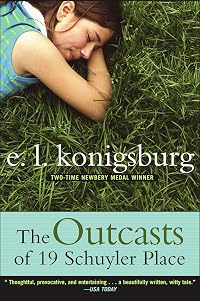
Upon leaving an oppressive summer camp, twelve-year-old Margaret Rose Kane spearheads a campaign to preserve three unique towers her grand uncles have been building in their back yard for over forty years.Tags
Recommendations























Member Recommendations
jbarry Smart and mature kids solve big problems.
Member Reviews
I adored this book. Even though it's really a middle grade read and told through the perspective of a twelve year old girl, I ate it up. While her parents are in Peru, Margaret Rose Kane finds herself stuck in a summer camp, hating everything. Determined to not be swayed the "Queen" camp director, Margaret decides not to do anything. Whenever she's asked to participate she replies, "I prefer not to." Fed up, the director calls her uncles who are temporary guardians for her while her parents are out of the country. The uncles whisk her out of camp and take her back to their whimsical house., complete with art towers, on 19 Schuyler Place, which is exactly where Margaret Rose Kane wanted to be in the first place. Things aren't all hunky show more dory though, Margaret finds out that the towers have been condemned and will be torn down in weeks. Armed with her incorrigible attitude, she determines that her summer project will be to save the,. Great fun and narrated beautifully by Molly Ringwald. show less
I Prefer Not To....
That's Margaret Rose Kane's response to every activity she's asked to participate in at the summer camp to which she's been exiled while her parents are in Peru. So Margaret Rose is delighted when her beloved uncles rescue her from Camp Talequa, with its uptight camp director and cruel cabinmates, and bring her to stay with them at their wonderful house at 19 Schuyler Place.
But Margaret Rose soon discovers that something is terribly wrong at 19 Schuyler Place. People in their newly gentrified neighborhood want to get rid of the three magnificent towers the uncles have spent forty-five years lovingly constructing of scrap metal and shards of glass and porcelain. Margaret Rose is outraged, and determined to strike a show more blow for art, for history, and for individuality...and no one is more surprised than Margaret Rose at the allies she finds for her mission. show less
That's Margaret Rose Kane's response to every activity she's asked to participate in at the summer camp to which she's been exiled while her parents are in Peru. So Margaret Rose is delighted when her beloved uncles rescue her from Camp Talequa, with its uptight camp director and cruel cabinmates, and bring her to stay with them at their wonderful house at 19 Schuyler Place.
But Margaret Rose soon discovers that something is terribly wrong at 19 Schuyler Place. People in their newly gentrified neighborhood want to get rid of the three magnificent towers the uncles have spent forty-five years lovingly constructing of scrap metal and shards of glass and porcelain. Margaret Rose is outraged, and determined to strike a show more blow for art, for history, and for individuality...and no one is more surprised than Margaret Rose at the allies she finds for her mission. show less
"I picked this up because I'd read several of Konigsburg's books when I was very young, and really liked them, esp. "Jennifer, Hecate, Macbeth, William McKinley, and Me, Elizabeth" and "From the Mixed-Up Files of Mrs. Basil E. Frankweiler."
What struck me though, is that although this book is marketed as a kids' book, probably because that's what the author is known for, it really isn't. Although the protagonist is 12, the story is told from the point of view of an adult looking back at being 12, not from the point of view of a 12-year-old, and I think that really shows in the themes of the book.
The protagonist, Margaret's parents is sent to summer camp while her parents are away on a trip. She was looking forward to it, but when she show more turns out to be the 'new girl' in a cabin of girls who already know each other, things don't start out that well and they rapidly get worse. Luckily, one of her two eccentric bachelor uncles shows up to face down the unsympathetic camp director and rescue her from the bullying. Margaret's delighted, because she really wanted to spend the summer with her uncles anyway, helping them work on the amazing sculpture towers in their back yard. Unfortunately, neighborhood gentrification has set in, and the towers are scheduled for demolition. The uncles think the situation is hopeless, but Margaret can't just let it happen...
This is not a perfect book. The summer camp segment at the beginning is kinda typical; and too long. And I felt that the 'redemption' of the bullying girls later in the book is too easy, and doesn't 'ring true.'
However, I read the whole thing in one sitting - I couldn't put it down. And it really stands out as a novel for the author's refusal to make things black & white, or to go with the easy 'happy ending.' People here are nuanced, with shaded layers of motivations; we feel that they are real people, even when we only glimpse them in passing. It deals deftly and accurately with picturing a young woman's first feelings of love, shows that one can and must do something about issues that one cares about - but also acknowledges the reality that even when you 'win,' not everything is likely to be perfect. show less
What struck me though, is that although this book is marketed as a kids' book, probably because that's what the author is known for, it really isn't. Although the protagonist is 12, the story is told from the point of view of an adult looking back at being 12, not from the point of view of a 12-year-old, and I think that really shows in the themes of the book.
The protagonist, Margaret's parents is sent to summer camp while her parents are away on a trip. She was looking forward to it, but when she show more turns out to be the 'new girl' in a cabin of girls who already know each other, things don't start out that well and they rapidly get worse. Luckily, one of her two eccentric bachelor uncles shows up to face down the unsympathetic camp director and rescue her from the bullying. Margaret's delighted, because she really wanted to spend the summer with her uncles anyway, helping them work on the amazing sculpture towers in their back yard. Unfortunately, neighborhood gentrification has set in, and the towers are scheduled for demolition. The uncles think the situation is hopeless, but Margaret can't just let it happen...
This is not a perfect book. The summer camp segment at the beginning is kinda typical; and too long. And I felt that the 'redemption' of the bullying girls later in the book is too easy, and doesn't 'ring true.'
However, I read the whole thing in one sitting - I couldn't put it down. And it really stands out as a novel for the author's refusal to make things black & white, or to go with the easy 'happy ending.' People here are nuanced, with shaded layers of motivations; we feel that they are real people, even when we only glimpse them in passing. It deals deftly and accurately with picturing a young woman's first feelings of love, shows that one can and must do something about issues that one cares about - but also acknowledges the reality that even when you 'win,' not everything is likely to be perfect. show less
After being rescued from a cruel summer camp, twelve-year-old Margaret Rose Kane settles in to spend the summer with her beloved great-uncles and the three amazing towers that occupy their suburban garden but soon learns that these towers are in danger of being demolished by the city because they threaten the “historical integrity” of the neighborhood. Through Konigsberg’s elegant descriptions and the cast of quirky, lovable adults who share their memories of these towers, readers too will grow to love the towers and cheer Margaret on in her mission to save them. Weaving flashbacks of Margaret’s camp ordeal with her struggle to save the towers, Konigsberg takes on some challenging topics – authoritarianism, civil disobedience, show more and the definition and importance of art and history – but mostly keeps these concepts grounded in the engrossing story. While some may find the ending hinges too heavily on the contributions of Margaret’s adult allies rather than on Margaret herself, the novel nevertheless delivers a story the celebrates the power of communal civil disobedience. Recommended for readers age ten to fourteen. show less
I found that this book started out really strong, and lost it a bit at the end. However, again, I'm out of the target audience, and I think a middle-school girl might feel differently about the ending than I do.
If you care, I'm about to spoil the ending here; be warned.
I thought the initial camp scenes were excellent. I bitterly hated the brats who tormented Margaret, I really did, and they all had faces drawn from my own elementary-school and junior high days. In the middle of the story, I pretty much forgot about them, and found myself (as a lifelong resident of a once-sleepy but still-small town) identifying heartily with the main character's frustration at uppity newcomers to her fictional hometown of Epiphany, New York, who want show more to raze her great-uncles' life work, an artistic trio of towers in their backyard, because of concerns about property values. So when the bratty camp girls came back into the story, I rubbed my hands a little, thinking that in some way or another they were about to Get Theirs. I wanted to see abject humiliation. I wanted to see, I dunno, maybe a little blood (me, bitter?). What I did not want was to see them become, essentially, heroes who help save the towers. No no no. Nooooo. This is not a terribly realistic reaction, because, well, isn't that what any mature, thinking, Christian person would love to see happen -- villains turning into "good guys"? And hey, real life villains, y'all have my permission to turn your lives around and save a local landmark near you, more power to you, really. It's not nearly so satisfying in fiction, though. show less
If you care, I'm about to spoil the ending here; be warned.
I thought the initial camp scenes were excellent. I bitterly hated the brats who tormented Margaret, I really did, and they all had faces drawn from my own elementary-school and junior high days. In the middle of the story, I pretty much forgot about them, and found myself (as a lifelong resident of a once-sleepy but still-small town) identifying heartily with the main character's frustration at uppity newcomers to her fictional hometown of Epiphany, New York, who want show more to raze her great-uncles' life work, an artistic trio of towers in their backyard, because of concerns about property values. So when the bratty camp girls came back into the story, I rubbed my hands a little, thinking that in some way or another they were about to Get Theirs. I wanted to see abject humiliation. I wanted to see, I dunno, maybe a little blood (me, bitter?). What I did not want was to see them become, essentially, heroes who help save the towers. No no no. Nooooo. This is not a terribly realistic reaction, because, well, isn't that what any mature, thinking, Christian person would love to see happen -- villains turning into "good guys"? And hey, real life villains, y'all have my permission to turn your lives around and save a local landmark near you, more power to you, really. It's not nearly so satisfying in fiction, though. show less
Grade 6-9-In Silent to the Bone (Atheneum, 2000), a grown-up Margaret Rose Kane helps her half brother, Connor, solve the mystery of why his best friend can't speak. Outcasts is her remembrance of her 12th summer. Pitched into camp by her parents while they travel in Peru, she is tormented by cliquish cabin mates and adopts a passive-aggressive stance that infuriates the overly rigid and money-grasping camp director. Rescued by her beloved elderly uncles and taken to their home, Margaret is appalled to discover that the city has ordered the soaring, artistic towers they have created in the backyard to be taken down because they don't adhere to the strictures of the now-historic district. Stung by the idea that real history and a work of show more art could be destroyed by profit-seeking interest groups manipulating governmental regulations, Margaret swings into action to fight an even larger tyranny than the one she had encountered at camp. Delicious irony permeates the story, with Margaret citing words from idealistic documents and then relating the reality. The plot is well paced and has excellent foreshadowing. Konigsburg's characters are particularly well motivated, from the camp director who gives herself airs to hide well-earned insecurities to her seemingly mentally challenged son who is actually an intellectual as well as an artist. Most wonderfully rendered through dialogue are the Hungarian-American Jewish uncles, crotchety with age, but full of love and life and a sure understanding of what it means to be an individual American. Funny and thought-provoking by turns, this is Konigsburg at her masterful best. show less
E.L. Konigsburg is the writer I want to be when I grow up. She paints her characters so beautifully, and so realistically. There is always a realisticcenter that the books center around, whether it's 3 towers built by Margaret Rose Kane's two uncles, an academic bowl (The View from Saturday), or my very favorite From the Mixed Up Files of Mrs Basil E Frankweiler, where two children run away, and end up living in a museum.
Like her other books, this one deals with a 12 year old beginning to understand her world, and come to terms with some of the things life brings, finding answers to questions etc. How this kid deals with arrogance and ignorance, both in the form of various adults (though she stumbles on some great ones, too, and with show more some adolescent bullies, was well handled. My big complaint? As a folk artist, I loved the idea of the towers Margaret Rose's uncles built but wish I could see them in reality, not just my mind's eye.
PS Noticed that Charleston SC, my hometown, is actually mentioned in the story! Twice! show less
Like her other books, this one deals with a 12 year old beginning to understand her world, and come to terms with some of the things life brings, finding answers to questions etc. How this kid deals with arrogance and ignorance, both in the form of various adults (though she stumbles on some great ones, too, and with show more some adolescent bullies, was well handled. My big complaint? As a folk artist, I loved the idea of the towers Margaret Rose's uncles built but wish I could see them in reality, not just my mind's eye.
PS Noticed that Charleston SC, my hometown, is actually mentioned in the story! Twice! show less
Members
- Recently Added By
Lists

Favorite Childhood Books
1,651 works; 519 members

Books About Girls
219 works; 17 members

Female Protagonist
1,056 works; 57 members

Allie's Favourite 150 Books
145 works; 3 members

Books You Bought in 2013
35 works; 3 members

Books Read in 2013
1,630 works; 51 members

Camps -- children's/young adult fiction
324 works; 9 members

GCS 6th grade summer reading list
171 works; 4 members

Newbery Adjacent
747 works; 3 members
Author Information

38+ Works 37,677 Members
Elaine Lobl Konigsburg, noted children's writer and illustrator, was born February 10, 1930 in New York City. She received a BS in chemistry from Carnegie Institute of Technology (now Carnegie-Mellon University) in 1952. She did graduate study at the University of Pittsburgh. Her best-known titles included A Proud Taste for Scarlet and Miniver, show more The Second Mrs. Giaconda, Father's Arcane Daughter, and Throwing Shadows. She won the Newbery Honor in 1968 for From the Mixed-Up Files of Mrs. Basil E. Frankweiler and the William Allen White Award in 1970. She won the Newbery Medal again in 1997 for The View from Saturday. From the Mixed-Up Files of Mrs. Basil E. Frankweiler was adapted into a motion picture starring Ingrid Bergman in 1973 and later released as The Hideaways in 1974. It became a television film starring Lauren Bacall in 1995. Jennifer, Hecate, Macbeth, William McKinley, and Me, Elizabeth was adapted for television as Jennifer and Me for NBC-TV in 1973. She died on April 19, 2013 from complications of a stroke that she had suffered a week prior at the age of 83. (Bowker Author Biography) show less
Awards and Honors
Awards
Distinctions
Series

Work Relationships
Is contained in
Has as a commentary on the text
Common Knowledge
- Canonical title
- The Outcasts of 19 Schuyler Place
- Original publication date
- 2004
- People/Characters
- Margaret Rose Kane; Jake Kaplan; Uncle Alex; Uncle Morris
- Dedication
- This book is for David and for Jean,
who cheered its conception but sadly left it an orphan
before birth. - First words
- Uncle Alex was sweating when he arrived at Camp Talequa.
- Quotations
- I prefer not to.
- Last words
- (Click to show. Warning: May contain spoilers.)Now.
- Original language
- English
Classifications
- Genres
- Fiction and Literature, Kids, Children's Books, Tween
- DDC/MDS
- 813.54 — Literature & rhetoric American literature in English American fiction in English 1900-1999 1945-1999
- LCC
- PZ7 .K8352 .O — Language and Literature Fiction and juvenile belles lettres Fiction and juvenile belles lettres Juvenile belles lettres
- BISAC
Statistics
- Members
- 1,496
- Popularity
- 15,567
- Reviews
- 35
- Rating
- (4.00)
- Languages
- Dutch, English, French, Italian
- Media
- Paper, Audiobook, Ebook
- ISBNs
- 19
- ASINs
- 13