On This Page
Description
Adam Dannoun's story is one of beginnings. Born in a war-torn Israel, Adam dreams of becoming a writer. He is just an infant when Jewish forces uproot and massacre thousands of Palestinians in the 1948 Nakba, including his own father. Adam's mother, crumbling with loss, takes her son to Haifa and remarries. Soon she feels stifled by her new husband. Adam flees this lifeless home and writes himself a second beginning. With nothing but his father's will and the image of his mother at the show more doorway, Adam is born again into the streets of Haifa. show lessTags
Recommendations















Member Reviews
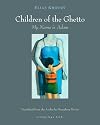
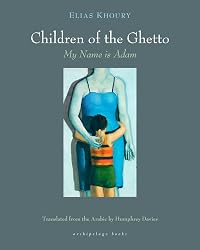
During the aftermath of the 1948 Arab-Israel War, the residents of the city of Lydda (now Lod) were forced to leave their homes. Later, those homes would house Jewish refugees, themselves displaced from their homes in Bulgaria. But a few Arabs, Muslim and Christian, stayed behind in Lydda and were gathered together into what the soldiers guarding them called a ghetto. Children of the Ghetto: My Name is Adam by Lebanese author Elias Khoury and translated by Humphrey Davies, tells the story of one boy, the first child born into this new version of Lydda.
The novel begins with a long introduction from a university professor in New York named Elias Khoury, who met Adam briefly and disliked him intensely, mostly because they shared a show more romantic interest in the same woman but also out of consternation. Adam Dannoun is the cook in a falafel restaurant, well-educated and well-spoken, but he speaks both Arabic and Hebrew like a native. When Adam dies, the woman brings a stack of notebooks to Elias. She had been instructed by Adam's will to destroy them, but finds herself unable to do so. Elias, upon reading the notebooks, initially wants to write a novel based on the contents, but decides instead to submit them as they are for publication.
What follows begins as what one might find in the private notebooks of a scholar, a series of abortive attempts at writing the story of a Yemeni poet during the time of the Caliphates, followed by a rambling entry about his life in general, but all of this is necessary to the meat of the novel, Khoury taking his time to set up ideas and the life of this first witness before leading into what life was like for the people who stayed behind in Lydda, after most of the people had fled.
This was a powerful and understated novel about a part of the world whose history I know too little about. Khoury's slow and meandering style was wonderful and I'll be reading more by this author. show less
The novel begins with a long introduction from a university professor in New York named Elias Khoury, who met Adam briefly and disliked him intensely, mostly because they shared a show more romantic interest in the same woman but also out of consternation. Adam Dannoun is the cook in a falafel restaurant, well-educated and well-spoken, but he speaks both Arabic and Hebrew like a native. When Adam dies, the woman brings a stack of notebooks to Elias. She had been instructed by Adam's will to destroy them, but finds herself unable to do so. Elias, upon reading the notebooks, initially wants to write a novel based on the contents, but decides instead to submit them as they are for publication.
What follows begins as what one might find in the private notebooks of a scholar, a series of abortive attempts at writing the story of a Yemeni poet during the time of the Caliphates, followed by a rambling entry about his life in general, but all of this is necessary to the meat of the novel, Khoury taking his time to set up ideas and the life of this first witness before leading into what life was like for the people who stayed behind in Lydda, after most of the people had fled.
This was a powerful and understated novel about a part of the world whose history I know too little about. Khoury's slow and meandering style was wonderful and I'll be reading more by this author. show less
Ratings
Members
- Recently Added By
Lists

Best of World Literature
435 works; 52 members

Middle East Fiction
179 works; 16 members

Middle Eastern Literature & Non-Fiction
99 works; 3 members
Author Information

18+ Works 1,273 Members
Some Editions
Awards and Honors
Awards
Series

Common Knowledge
- Canonical title
- Children of the Ghetto: My Name is Adam
- Original publication date
- 2012 (original Arabic) (original Arabic); 2019-05-21 (English: Davies) (English: Davies)
- Important places
- Lydda (Lod), Israel (Lod); New York, New York, USA; Palestine
- Important events
- 1948 Arab-Israel War
- Original language
- Arabic
Classifications
- Genres
- Fiction and Literature, General Fiction
- DDC/MDS
- 892.7 — Literature & rhetoric Literatures of other languages Afro-Asiatic literatures Arabic (Egypt, Lebanon, Palestine, Saudi Arabia, Sudan)
- LCC
- PJ7842 .H823 .A9413 — Language and Literature Oriental languages and literatures Oriental philology and literature Arabic Arabic literature Individual authors or works
- BISAC
Statistics
- Members
- 112
- Popularity
- 290,380
- Reviews
- 1
- Rating
- (4.00)
- Languages
- 5 — Arabic, English, French, Hebrew, Portuguese
- Media
- Paper, Ebook
- ISBNs
- 9
- ASINs
- 3