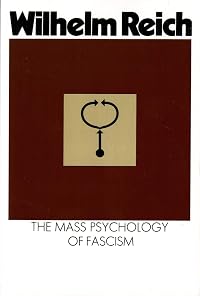
The Mass Psychology of Fascism
by Wilhelm Reich
On This Page
Description
Wilhelm Reich's classic study, written during the years of the German crisis, is a unique contribution to the understanding of one of the crucial phenomena of our times-fascism. Reich firmly repudiates the concept that fascism is the ideology or action of a single individual or nationality, or any ethnic or political group. He also denies a purely socio-economic explanation as advanced by Marxist ideologists. He understands fascism as the expression of the irrational character structure of show more the average human being whose primary, biological needs and impulses have been suppressed for thousands of years. The social function of this suppression and the crucial role played in it by the authoritarian family and the church are carefully analyzed. Reich shows how every form of organized mysticism, including fascism, relies on the unsatisfied orgastic longing of the masses. The importance of this work today cannot be underestimated. The human character structure that created organized fascist movements still exists, dominating our present social conflicts. If the chaotic agony of our times is ever to be eliminated, we must turn our attention to the character structure that creates it; we must understand the mass psychology of fascism. show lessTags
Recommendations







































Member Reviews
Un texto que va más allá de la explicación materialista plata de lo hegemónico y va a buscar la razón de por qué alemania votó a los nazis. Arranca con un aroma a "nosotros, lo victorianos". El planteo del libro es que la moral sexual reprimida de las clases populares (tanto campesinas como industriales, así como la pequeña burguesía) es lo que hizo que se identifiquen con las clases burguesas y derivasen en una solución fascista, hija sana de la socialdemocracia que no dio respuestas a sus necesidades. Interesante para pensar el momento actual, aunque no deja de ser un libro de 1933.
Wilhelm Reich wrote The Mass Psychology of Fascism in 1930-33 and revised and expanded it in 1942. He thus began it in an effort to explain the rise to power of the Nazis and other fascist parties of the interwar period, and developed it with a view to the likely demise of these particular governments and concern about what would succeed them. He also discussed the development of the Soviet system towards authoritarianism and away from its original socialist ideals. When I first read the book in the 1980s, it was fascinating as a piece of firsthand history, but my 2019 reread found me and contemporary society back in the position faced by Reich: the perplexing ascendancy of authoritarian governments throughout the "developed" show more world.
Reich is not a fan of "great man theories"--how could he be, when confronted with the "failed house painter" at the helm of Nazism? (How can we be, with our failed casino operator?) Nor does he attribute causal primacy to ideology or party programs; "National Socialism" was even more incoherent than the neoliberal capitalism of the Republican party. For Reich, the blame rests squarely with the mass population and their "character structure," formed and reproduced through conditioning in the patriarchal home, the superstitious church, and the exploitative workplace. Such people possess a pervasive fear of freedom which is channeled into authoritarian politics. All other things being equal, then, fascism could be expected to regrow after the defeat of the Axis powers:
"Viewed with respect to man's character, 'fascism' is the basic emotional attitude of the suppressed man of our authoritarian machine civilization and its mechanistic-mystical conception of life. It is the mechanistic-mystical character of modern man that produces fascist parties, and not vice versa." (xiii, ital. in original)
Reich has an idiosyncratic use of the word translated here as "mysticism." He seems to treat it as a synonym for metaphysical and superstitious thought, and rather than being a neighbor or subset of religion, it serves as a superset embracing various irrationalisms. At some points, though, he expressly defines it as sexual abstinence (140 e.g.). When using it in a more conventional sense, he scare-quotes the term:
"... religion's attitude toward sexuality underwent a change in patriarchal society. Originally, it was a religion of sexuality; later it became an anti-sexual religion. The 'mysticism' of the primitives who were members of a sexually affirmative society is partially direct orgastic experience and partially animistic interpretation of natural processes." (138)
"When sexual feelings and religious feelings became separated from one another, that which is sexual was forced to become the bad, the infernal, the diabolical." (148)
Reich's program for escaping the abiding hazard of totalitarianism is thus not focused on politics but pathology, what he calls the "emotional plague" of sexual self-revulsion that expresses itself in imperial projects of enslavement and war. In his own time, he endorsed and supported a campaign for "sex hygiene" that would affirm and protect the sexuality of children, believing that only a generation raised in this fashion could instigate the real social changes needed to transcend the cycle of internalized and projected hatreds. He found opposition to this effort in all established social factions, of course.
"'Away from the animal; away from sexuality!' are the guiding principles of the formation of all human ideology. This is the case whether it is the communist form of proletarian class honor, the Christian form of man's 'spiritual and ethical nature,' or the liberal form of 'higher human values.' All these ideas harp on the same monotonous tune: 'We are not animals; it was we who discovered the machine--not the animal! And we don't have genitals like the animals!'" (339) When Reich wrote that "Race ideology is the pure biopathic expression of the character structure of the orgastically impotent man" (xiv), he was discussing the racist social theories that "can have meaning only to a numbskull" (78). But the same ideological germ can be seen in mass monoculture farming, antibiotic abuse, and other blunders of our teetering civilization.
Reich's social ideal is one that he insists is already extant in the fabric of everyday life, even though in some respects it seems as utopian as the anticipated socialism of Fourier or communist future of Marx. What Reich calls "work democracy" is the "voluntary association and self-government" that he claims to have been prevalent "in pagan society" (238) and persistent in practical work at the scale of the individual shop. He refuses to reduce it to a political ideology or an economic theory, instead asserting that it is nothing other than the proper organic social expression of humanity through meaningful participation.
"More than anything else it is a matter of changing the nature of work so that it ceases to be an onerous duty and becomes a gratifying fulfillment of a need." (286, i.e. "Do what thou wilt shall be the whole of the Law.") show less
Reich is not a fan of "great man theories"--how could he be, when confronted with the "failed house painter" at the helm of Nazism? (How can we be, with our failed casino operator?) Nor does he attribute causal primacy to ideology or party programs; "National Socialism" was even more incoherent than the neoliberal capitalism of the Republican party. For Reich, the blame rests squarely with the mass population and their "character structure," formed and reproduced through conditioning in the patriarchal home, the superstitious church, and the exploitative workplace. Such people possess a pervasive fear of freedom which is channeled into authoritarian politics. All other things being equal, then, fascism could be expected to regrow after the defeat of the Axis powers:
"Viewed with respect to man's character, 'fascism' is the basic emotional attitude of the suppressed man of our authoritarian machine civilization and its mechanistic-mystical conception of life. It is the mechanistic-mystical character of modern man that produces fascist parties, and not vice versa." (xiii, ital. in original)
Reich has an idiosyncratic use of the word translated here as "mysticism." He seems to treat it as a synonym for metaphysical and superstitious thought, and rather than being a neighbor or subset of religion, it serves as a superset embracing various irrationalisms. At some points, though, he expressly defines it as sexual abstinence (140 e.g.). When using it in a more conventional sense, he scare-quotes the term:
"... religion's attitude toward sexuality underwent a change in patriarchal society. Originally, it was a religion of sexuality; later it became an anti-sexual religion. The 'mysticism' of the primitives who were members of a sexually affirmative society is partially direct orgastic experience and partially animistic interpretation of natural processes." (138)
"When sexual feelings and religious feelings became separated from one another, that which is sexual was forced to become the bad, the infernal, the diabolical." (148)
Reich's program for escaping the abiding hazard of totalitarianism is thus not focused on politics but pathology, what he calls the "emotional plague" of sexual self-revulsion that expresses itself in imperial projects of enslavement and war. In his own time, he endorsed and supported a campaign for "sex hygiene" that would affirm and protect the sexuality of children, believing that only a generation raised in this fashion could instigate the real social changes needed to transcend the cycle of internalized and projected hatreds. He found opposition to this effort in all established social factions, of course.
"'Away from the animal; away from sexuality!' are the guiding principles of the formation of all human ideology. This is the case whether it is the communist form of proletarian class honor, the Christian form of man's 'spiritual and ethical nature,' or the liberal form of 'higher human values.' All these ideas harp on the same monotonous tune: 'We are not animals; it was we who discovered the machine--not the animal! And we don't have genitals like the animals!'" (339) When Reich wrote that "Race ideology is the pure biopathic expression of the character structure of the orgastically impotent man" (xiv), he was discussing the racist social theories that "can have meaning only to a numbskull" (78). But the same ideological germ can be seen in mass monoculture farming, antibiotic abuse, and other blunders of our teetering civilization.
Reich's social ideal is one that he insists is already extant in the fabric of everyday life, even though in some respects it seems as utopian as the anticipated socialism of Fourier or communist future of Marx. What Reich calls "work democracy" is the "voluntary association and self-government" that he claims to have been prevalent "in pagan society" (238) and persistent in practical work at the scale of the individual shop. He refuses to reduce it to a political ideology or an economic theory, instead asserting that it is nothing other than the proper organic social expression of humanity through meaningful participation.
"More than anything else it is a matter of changing the nature of work so that it ceases to be an onerous duty and becomes a gratifying fulfillment of a need." (286, i.e. "Do what thou wilt shall be the whole of the Law.") show less
(This is an old review that I wrote in 2002 and thought that I had copied here, but hadn't. I haven't read Reich since then so I'm not sure what I would think now.)
As you may know, Reich was a student of Freud who's now known as a colorful crackpot (or, in California, a genius) who believed sexual life-energy could cure cancer, change the weather, etc. He was also a crusading anti-fascist and anti-Stalinist, and he thought dangerous politics were a side effect of unconscious contradictions in society; this book makes a pretty good case for that. But it's also disorganized, repetitive, and self-righteous, and in general it gives the impression of someone who found it very easy to convince himself he had "proved" things. I think this is show more partly due to the way he went back and revised the book in the '40s (I've never read the original edition) to get rid of some Communist bits and put in more orgone theory; this results in some strange choices such as always saying "sex-economic" when he means "revolutionary." And I'm not sure I trust his retrospective view of the progressive movement in Germany, when he claims that he managed to turn an audience of 1,000 lower-middle-class Christians away from the Church just by explaining that sexual taboos were reactionary. (Of course I may be biased because he believes that not only religion, but fairy tales and detective stories and really anything "irrational," are nothing but fascist bullshit getting in the way of "mental hygiene." For a guy who said he was all about release, he's got pretty strict ideas about where people should find comfort.)
The main theme of the book still seems true: when people grow up cramped and dishonest and afraid of pleasure, they're likely to support horrible leaders without understanding why.
Anyway, besides being an interesting and frustrating read, this was a particularly good used copy to have found, because it came with a whole lot of handwritten margin notes by a mysterious Irish woman who was apparently reading it in Seattle some time in the last 30 years. Besides trying to apply Reich to her surroundings and enthusiastically underlining about 50% of the book, she was also gathering thoughts for a study of an Irish revolutionary about whom she had mixed feelings. There are a lot of pages where this reader's notes are more interesting than Reich's writing, and certainly more practical. Among my favorites: "'Liberalism lays stress upon its ethics for the purpose of holding in suppression the "monster in man"': You can visibly see this in the deadness lack of spontaneity in certain political groups. The unattractiveness rigidity of facial expression." "'Hitler speaks of his mother with great sentimentality': As do most Irish men. But do they love the real person or the myth." "'Employees of aristocratic families ... often appear as caricatures of the people whom they serve': My aunt Louise." "There is no day more empty than the day following an election for the average vol[unteer] worker. What do you have???" "Sadism: 'She doesn't know where she stands w. me. That's the way it should be!'" "To say good-bye to mysticism. I am resistant. Who is it that said 'Walk softly. I have only my dreams?' Does it really do so much damage? ... Beauty of Irene's face at Mass. But it doesn't work for everyone. Didn't for my mom." "'We have to designate as non-work that activity that is detrimental to the life process': Would running a bar be non-work?" Thanks, whoever you are; I hope you figured out what you were trying to figure out. show less
As you may know, Reich was a student of Freud who's now known as a colorful crackpot (or, in California, a genius) who believed sexual life-energy could cure cancer, change the weather, etc. He was also a crusading anti-fascist and anti-Stalinist, and he thought dangerous politics were a side effect of unconscious contradictions in society; this book makes a pretty good case for that. But it's also disorganized, repetitive, and self-righteous, and in general it gives the impression of someone who found it very easy to convince himself he had "proved" things. I think this is show more partly due to the way he went back and revised the book in the '40s (I've never read the original edition) to get rid of some Communist bits and put in more orgone theory; this results in some strange choices such as always saying "sex-economic" when he means "revolutionary." And I'm not sure I trust his retrospective view of the progressive movement in Germany, when he claims that he managed to turn an audience of 1,000 lower-middle-class Christians away from the Church just by explaining that sexual taboos were reactionary. (Of course I may be biased because he believes that not only religion, but fairy tales and detective stories and really anything "irrational," are nothing but fascist bullshit getting in the way of "mental hygiene." For a guy who said he was all about release, he's got pretty strict ideas about where people should find comfort.)
The main theme of the book still seems true: when people grow up cramped and dishonest and afraid of pleasure, they're likely to support horrible leaders without understanding why.
Anyway, besides being an interesting and frustrating read, this was a particularly good used copy to have found, because it came with a whole lot of handwritten margin notes by a mysterious Irish woman who was apparently reading it in Seattle some time in the last 30 years. Besides trying to apply Reich to her surroundings and enthusiastically underlining about 50% of the book, she was also gathering thoughts for a study of an Irish revolutionary about whom she had mixed feelings. There are a lot of pages where this reader's notes are more interesting than Reich's writing, and certainly more practical. Among my favorites: "'Liberalism lays stress upon its ethics for the purpose of holding in suppression the "monster in man"': You can visibly see this in the deadness lack of spontaneity in certain political groups. The unattractiveness rigidity of facial expression." "'Hitler speaks of his mother with great sentimentality': As do most Irish men. But do they love the real person or the myth." "'Employees of aristocratic families ... often appear as caricatures of the people whom they serve': My aunt Louise." "There is no day more empty than the day following an election for the average vol[unteer] worker. What do you have???" "Sadism: 'She doesn't know where she stands w. me. That's the way it should be!'" "To say good-bye to mysticism. I am resistant. Who is it that said 'Walk softly. I have only my dreams?' Does it really do so much damage? ... Beauty of Irene's face at Mass. But it doesn't work for everyone. Didn't for my mom." "'We have to designate as non-work that activity that is detrimental to the life process': Would running a bar be non-work?" Thanks, whoever you are; I hope you figured out what you were trying to figure out. show less
I was drawn to read this book as one of my efforts to understand the MAGA movement. I feel the focus should be on the supporting GOP and its electorate, more so on Trump the individual, to understand and react. Reich analyzed and documented the rise of Hitler, the Nazi party, and it's voting supporters and emphasizes a similar point of view. From the section heading "FUHRER AND MASS STRUCTURE":
Because of length restrictions on this platform, my full review is on my blog. show less
If, at some future date, the history of social processes would allow the reactionary historian time to indulge in speculations on Germany’s past, he would be sure to perceive in Hitler’s success in the years between 1928 and 1933 the proof that a great man makes history only inasmuch as he inflames the masses with ‘his idea’. In fact,show more
National Socialist propaganda was built upon this ‘fuhrer ideology’. To the same limited extent to which the propagandists of National Socialism understood the mechanics of their success, they were able to comprehend the historical basis of the National Socialist movement. This is very well illustrated by an article published at that time entitled ‘Christianity and National Socialism’, written by the National Socialist Wilhelm Stapel. He stated: ‘For the very reason that National Socialism i s an elementary movement, it cannot be gotten at with “arguments”. Arguments would be effective only if the movement had gained its power by argumentation.’
In keeping with this peculiarity the rally speeches of the National Socialists were very conspicuous for their skillfulness in operating upon the emotions of the individuals in the masses and of avoiding relevant arguments as much as possible. In various passages in his book Mein Kampf Hitler stresses that true mass psychological tactics dispense with argumentation and keep the masses’ attention fixed on the ‘great final goal’ at all times.
Because of length restrictions on this platform, my full review is on my blog. show less
Besides political, economical and social difficulties for the rise of the Third Reich, the scientist holds the general sexual suppression in proletariat and middle class for a main reason of its triumph. A child who is educated to suppress natural sexuality, to be obedient and to fear authority, later on will be paralyzed in his rebellious forces. Cleverly instrumented by the Nazis, when they came to power. Reich’s book was banned. He fled abroad in the very last moment.
Classic account of the psycho-political underpinnings of fascism.
Quest'opera, scritta durante gli anni della crisi tedesca, 1930-33, ed in seguito bandita dai nazisti, è un contributo senza eguale alla comprensione di uno dei fenomeni cruciali dei nostri tempi, il fascismo.
Nov 10, 2014 (Edited)Italian
Members
- Recently Added By
Lists

Our Favorite Banned Books
138 works; 122 members
Author Information

88+ Works 3,704 Members
Some Editions
Series
Belongs to Publisher Series
Colección r (20)
Common Knowledge
- Canonical title*
- Psicologia di massa del fascismo : Come nasce e perchè si diffonde il misticismo organizzato
- Original title
- Die massenpsycologie des faschismus
- Original publication date
- 1933
- Important events
- Rise of fascism
- First words*
- Il movimento progressista tedesco prima di Hitler si ispirava alla teoria dello stato e della società di Karl Marx: quindi la comprensione del fascismo tedesco deve cominciare dalla comprensione del marxismo.
- Last words*
- (Click to show. Warning: May contain spoilers.)Naturalmente è impossibile predire quale avrà ancora la politica nell'estirpazione della peste psichica politica e quale parte vi avranno le funzioni consapevolmente organizzate dell'amore, del lavoro e del sapere.
- Original language*
- Tedesco
*Some information comes from Common Knowledge in other languages. Click "Edit" for more information.
Classifications
- Genres
- Sociology, Nonfiction, General Nonfiction, History, Philosophy, Politics and Government
- DDC/MDS
- 320.533019 — Society, government, & culture Political science Types of Government Political ideologies Radicalism, collectivism, fascism Fascism Standard subdivisions
- LCC
- JC481 .R39213 — Political Science Political theory Political theory. The state. Theories of the state Forms of the state
- BISAC
Statistics
- Members
- 783
- Popularity
- 35,621
- Reviews
- 8
- Rating
- (3.80)
- Languages
- 12 — Danish, Dutch, English, Finnish, French, German, Italian, Polish, Portuguese, Russian, Spanish, Turkish
- Media
- Paper, Ebook
- ISBNs
- 40
- ASINs
- 21