On This Page
Description
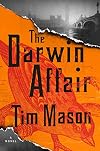
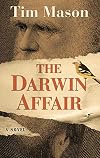
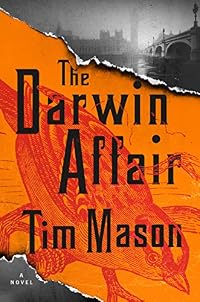
Fiction. Mystery. Historical Fiction. London, June 1860: When an assassination attempt is made on Queen Victoria, and a petty thief is gruesomely murdered moments later-and only a block away-Chief Detective Inspector Charles Field quickly surmises that these crimes are connected to an even more sinister plot. Was Victoria really the assassin's target? Are those closest to the Crown hiding something? And who is this shadowy figure witnesses describe as having lifeless, coal-black eyes? Soon, show more Field's investigation exposes a shocking conspiracy in which the publication of Charles Darwin's On the Origin of Species sets off a string of murders, arson, kidnapping, and the pursuit of a diabolical madman named the Chorister. As the investigation takes Field from the dangerous alleyways of London to the hallowed halls of Oxford, the list of possible conspirators grows as the body count escalates. And as he edges closer to the Chorister, he uncovers dark secrets that were meant to remain forever hidden. With ingenuity, intelligence, and wit, debut novelist Tim Mason has created a powerfully entertaining thriller. For fans of Caleb Carr and Carlos Ruiz Zafon, The Darwin Affair is a rousing tale that both Charles Dickens and Sir Arthur Conan Doyle would relish and envy. show lessTags
Recommendations





Member Reviews
The year 1859 witnesses an event that shakes England — and the Western world — to the core: the publication of Charles Darwin’s Origin of Species. Mason’s ingenious, exquisitely plotted, and atmospherically rich thriller supposes that the uproar over Darwin’s theory and an attempt to assassinate Queen Victoria has a nefarious connection.
Further, Mason takes Charles Field, a real-life historical figure, as the detective who uncovers the connection, what it means, and who’s behind it: men in high places. Naturally, practically no one believes Field’s conspiracy theory, though one person willing to entertain the notion — however fanciful — is Prince Albert, Victoria’s consort, and, by the by, a Darwin supporter.
Charles show more Field was Charles Dickens’s model for Mr. Bucket of the Detective, a character in Bleak House, among the first such fictional figures. It’s a brilliant conceit to build a novel around Field, but Mason goes one better.
Field hates his fame as Bucket’s alter ego, and the surest way to inflame this bad-tempered detective is to call him Bucket or taunt him by suggesting that his fictional shadow would have solved the case before now. The Darwin Affair therefore begins with both feet in the shifting sands of mythic allusion versus deadly reality, and whether a person is who he is or what others take him for. From there, things get even more complex.
Field’s nemesis styles himself the Chorister, and an evil piece of work he is. I usually avoid suspense narratives with sociopaths, because the story’s thoroughly gruesome, and I can’t stand it when an outwardly decent citizen is suddenly unmasked as a raving lunatic responsible for multiple murders. But here, you know the Chorister’s a bad one from the get-go, and the plot revolves around stopping him when so many people fail to realize the danger he poses, a classic device in thrillerdom.
Once again, however, Mason goes one better. The Chorister has handlers who think themselves righteous, which shows their utter hypocrisy; and they believe they can control him, about which they’re dreadfully wrong. Rest assured, plenty of tension results. In a final stroke, the psychological source of the Chorister’s bloodlust is revealed, and plausibly, which raises him yet another notch above a mere device.
I admire how Mason imbues his narrative with history as inhabited background. I don’t mean the presence of historical figures like the royals, Darwin, Dickens, Thomas Huxley, or Karl Marx, though Mason handles them all beautifully. (Field’s confrontation with Marx is a real hoot.) Rather, I mean going beyond the People magazine fascination with name recognition to grapple with the era’s ethics, passions, and preoccupations, and to render the everyday, even at the palace.
Albert’s perpetually cold because the queen hates central heating, and candles and oil lamps are the order of the day because she finds gaslight too modern. The author can’t resist a witticism, and I’m glad of that, because otherwise, we’d have done without this gem from Albert about his better half: “And, to be frank, Victoria would not approve of any assassination attempt in which she was not the target.”
Fittingly, Darwin’s theory takes center stage in this rendering of midcentury Victoriana. As everyone knows, the church objects, but the conflict feels broader than that. Evolution has subversive implications for the social hierarchy, which also seems obvious in retrospect, but has somehow faded from sight.
If we share a common ancestry, and random chance happeneth to us all, who’s to say that the peer deserves his peerage, and the laundress her bleached, burning fingers? That question will never go out of style.
Interestingly, Field himself reads The Origin of Species, a struggle because he hasn’t had much education, yet he derives a great deal from it.
Make no mistake, The Darwin Affair is a gory book. But it’s also a gripping thriller, so if you don’t mind the blood and mutilation, you’ll be well rewarded. show less
Further, Mason takes Charles Field, a real-life historical figure, as the detective who uncovers the connection, what it means, and who’s behind it: men in high places. Naturally, practically no one believes Field’s conspiracy theory, though one person willing to entertain the notion — however fanciful — is Prince Albert, Victoria’s consort, and, by the by, a Darwin supporter.
Charles show more Field was Charles Dickens’s model for Mr. Bucket of the Detective, a character in Bleak House, among the first such fictional figures. It’s a brilliant conceit to build a novel around Field, but Mason goes one better.
Field hates his fame as Bucket’s alter ego, and the surest way to inflame this bad-tempered detective is to call him Bucket or taunt him by suggesting that his fictional shadow would have solved the case before now. The Darwin Affair therefore begins with both feet in the shifting sands of mythic allusion versus deadly reality, and whether a person is who he is or what others take him for. From there, things get even more complex.
Field’s nemesis styles himself the Chorister, and an evil piece of work he is. I usually avoid suspense narratives with sociopaths, because the story’s thoroughly gruesome, and I can’t stand it when an outwardly decent citizen is suddenly unmasked as a raving lunatic responsible for multiple murders. But here, you know the Chorister’s a bad one from the get-go, and the plot revolves around stopping him when so many people fail to realize the danger he poses, a classic device in thrillerdom.
Once again, however, Mason goes one better. The Chorister has handlers who think themselves righteous, which shows their utter hypocrisy; and they believe they can control him, about which they’re dreadfully wrong. Rest assured, plenty of tension results. In a final stroke, the psychological source of the Chorister’s bloodlust is revealed, and plausibly, which raises him yet another notch above a mere device.
I admire how Mason imbues his narrative with history as inhabited background. I don’t mean the presence of historical figures like the royals, Darwin, Dickens, Thomas Huxley, or Karl Marx, though Mason handles them all beautifully. (Field’s confrontation with Marx is a real hoot.) Rather, I mean going beyond the People magazine fascination with name recognition to grapple with the era’s ethics, passions, and preoccupations, and to render the everyday, even at the palace.
Albert’s perpetually cold because the queen hates central heating, and candles and oil lamps are the order of the day because she finds gaslight too modern. The author can’t resist a witticism, and I’m glad of that, because otherwise, we’d have done without this gem from Albert about his better half: “And, to be frank, Victoria would not approve of any assassination attempt in which she was not the target.”
Fittingly, Darwin’s theory takes center stage in this rendering of midcentury Victoriana. As everyone knows, the church objects, but the conflict feels broader than that. Evolution has subversive implications for the social hierarchy, which also seems obvious in retrospect, but has somehow faded from sight.
If we share a common ancestry, and random chance happeneth to us all, who’s to say that the peer deserves his peerage, and the laundress her bleached, burning fingers? That question will never go out of style.
Interestingly, Field himself reads The Origin of Species, a struggle because he hasn’t had much education, yet he derives a great deal from it.
Make no mistake, The Darwin Affair is a gory book. But it’s also a gripping thriller, so if you don’t mind the blood and mutilation, you’ll be well rewarded. show less
Words cannot accurately describe how much fun I had reading this book. I can liken the experience to discovering a delightful British series on PBS and losing an entire weekend curled up on the couch. I wasn’t quite sure what to expect, but I was pleasantly surprised.
This book reads like a movie and I wasn’t at all shocked to find out that the author is a playwright. The moment you turn that first page you’re drawn in, and the frenetic energy just pushes you through until the very end. It contains all the elements of Victorian England, gloomy and gritty, cold and pungent, but brightened by rich characters and perpetual wit. Throughout the novel are little bites of historical Easter Eggs, from Typhoid Mary, royal family trivia, show more references to Charles Dickens, and so much more.
Each vivid scene of this of this classic British comedy was filled with action, suspense, hilarious physical slapstick, and just a touch of well-placed lewdness that more than once made me laugh out loud. This would make a perfect BBC series with Hugh Laurie, Martin Freeman, and Bill Nighy in starring roles.
I wish I could read this book for the first time all over again.
Thank you to NetGalley and Algonquin Publishing for a complementary copy of this book in exchange for an honest review. show less
This book reads like a movie and I wasn’t at all shocked to find out that the author is a playwright. The moment you turn that first page you’re drawn in, and the frenetic energy just pushes you through until the very end. It contains all the elements of Victorian England, gloomy and gritty, cold and pungent, but brightened by rich characters and perpetual wit. Throughout the novel are little bites of historical Easter Eggs, from Typhoid Mary, royal family trivia, show more references to Charles Dickens, and so much more.
Each vivid scene of this of this classic British comedy was filled with action, suspense, hilarious physical slapstick, and just a touch of well-placed lewdness that more than once made me laugh out loud. This would make a perfect BBC series with Hugh Laurie, Martin Freeman, and Bill Nighy in starring roles.
I wish I could read this book for the first time all over again.
Thank you to NetGalley and Algonquin Publishing for a complementary copy of this book in exchange for an honest review. show less
Victorian Escapism!
This is exactly what I wanted right now. Tim Mason does a brilliant job of weaving history and fiction in a lively tale that I couldn't set aside. Bravo! I'll stay tuned for the Nightingale story to come, (hopefully soon !)
This is exactly what I wanted right now. Tim Mason does a brilliant job of weaving history and fiction in a lively tale that I couldn't set aside. Bravo! I'll stay tuned for the Nightingale story to come, (hopefully soon !)
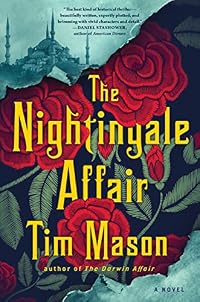
A few weeks ago, I read "The Nightingale Affair." Immediately before starting the novel, I discovered it was the 2nd book featuring Charles Field. However, I didn’t want to wait to read a mystery with Florence Nightingale, remembering her name as one of the first biographies I read in childhood. "The Darwin Affair" introduces Chief Detective Inspector Charles Field of the Metropolitan Police in Victorian England, and I was riveted.
June 1860, an assassination attempt is made on Queen Victoria’s life, and Field’s expertise recognizes a conspiracy in action, but police leadership is not in agreement. As Field’s investigation continues, he realizes his conspiracy theory is accurate but even more highly complicated. The attempt was show more on Prince Albert’s life for wanting to give the Queen’s honors to Charles Robert Darwin after the publication of "The Origin of Species," and police leadership is more emphatic that Field will desist.
To delight in learning the inspiration for the novel, don’t miss reading Mr. Bucket, an essay by the author at the end of the book. Questions for Discussion are also available.
I enjoyed "The Nightingale Affair" as a historical mystery, with the pace of "The Darwin Affair" as a suspenseful thriller. My fascination eith reading these well-written, ingenious novels is the stunning inclusion of many historical figures (e.g., Sir Richard Owens, Robert FitzRoy, Samuel Wilberforce, a boy named Button, Thomas Huxley, Martin Luther) and/or events of the period. To draw upon history, known and further researched, blending this level of creativity is extraordinary reading. The Afterword clarifies history with some facts following the novel’s period. I can only hope that Book 3 is in progress.
Thank you to Algonquin Books and Novel Suspects for the opportunity to read this novel. show less
June 1860, an assassination attempt is made on Queen Victoria’s life, and Field’s expertise recognizes a conspiracy in action, but police leadership is not in agreement. As Field’s investigation continues, he realizes his conspiracy theory is accurate but even more highly complicated. The attempt was show more on Prince Albert’s life for wanting to give the Queen’s honors to Charles Robert Darwin after the publication of "The Origin of Species," and police leadership is more emphatic that Field will desist.
To delight in learning the inspiration for the novel, don’t miss reading Mr. Bucket, an essay by the author at the end of the book. Questions for Discussion are also available.
I enjoyed "The Nightingale Affair" as a historical mystery, with the pace of "The Darwin Affair" as a suspenseful thriller. My fascination eith reading these well-written, ingenious novels is the stunning inclusion of many historical figures (e.g., Sir Richard Owens, Robert FitzRoy, Samuel Wilberforce, a boy named Button, Thomas Huxley, Martin Luther) and/or events of the period. To draw upon history, known and further researched, blending this level of creativity is extraordinary reading. The Afterword clarifies history with some facts following the novel’s period. I can only hope that Book 3 is in progress.
Thank you to Algonquin Books and Novel Suspects for the opportunity to read this novel. show less
(40) An impulse borrow from the library that actually was fairly entertaining. This is a mish-mash of historical fiction, detective fiction, mystery, with a Victorian twist. It is set circa 1860 England during the reign of Queen Victoria and Prince Albert and surrounds the controversy of Darwin's work which was published at this time. Most of the events/people are real though not the conspiracy to do in royalty (though in fact there were many assassination attempts throughout Victoria's life.) The detective in this case was Inspector Charlie Field, the real-life inspiration for Detective Bucket from Bleak House, and so the novel also is very purposefully Dickensian. Really the novel combines some of my favorite literary genres and show more historical times!
However, despite the subject matter, the villain Decimus Cobb and his entourage were just beyond the pale and made the book a bit ridiculous as opposed to horrific (?maybe purposefully by the author ??) Perhaps creating a cartoon villain to be sure any reader didn't actually begin to think this was based on actual events. . . I don't know, but this part of the book didn't work for me with the strange children and Tom Ginty's imprisonment and transformation. It was eye-rollingly bad. So for me the book was very uneven.
All in all, it was a lark and I am glad I read it. I am fascinated by Victorian times and the English monarchy through the ages (umm.. except for the modern day exploits) Very nice job of atmosphere and characterization (loved Det. Field!) and the Dickensian and Darwinian and Shakespearean references were a lot of fun. I would read this author again. Recommended for lovers of 'Mistress of the Art of Death,' series, Sharon Kaye Penman, Dickens (of course,) and other writers of historical mysteries like Iain Pears, Sarah Waters, Michael Cox (although their books are much better written.) show less
However, despite the subject matter, the villain Decimus Cobb and his entourage were just beyond the pale and made the book a bit ridiculous as opposed to horrific (?maybe purposefully by the author ??) Perhaps creating a cartoon villain to be sure any reader didn't actually begin to think this was based on actual events. . . I don't know, but this part of the book didn't work for me with the strange children and Tom Ginty's imprisonment and transformation. It was eye-rollingly bad. So for me the book was very uneven.
All in all, it was a lark and I am glad I read it. I am fascinated by Victorian times and the English monarchy through the ages (umm.. except for the modern day exploits) Very nice job of atmosphere and characterization (loved Det. Field!) and the Dickensian and Darwinian and Shakespearean references were a lot of fun. I would read this author again. Recommended for lovers of 'Mistress of the Art of Death,' series, Sharon Kaye Penman, Dickens (of course,) and other writers of historical mysteries like Iain Pears, Sarah Waters, Michael Cox (although their books are much better written.) show less
I tried this book on a whim since I usually enjoy historical mysteries. The book is set in England during the lifetime of Charles Darwin (June 1860). It begins just after Darwin released The Origin of the Species, and the book clearly describes the hubbub that arose in England after this book came out. It caused a huge rift between the Church and the State. In the book we meet Chief Detective Inspector Charles Field and his lovely, and intelligent wife, Jane. It opens with Field attending a royal cortege on the streets of London, when an assignation attempt was made on Queen Victoria. At the same time, and only a block away, a gruesomely murdered male is discovered. The main thing of note about the victim is that one of his ears has show more been neatly sliced off and is missing. These two events set off a string of brutal slayings and a series of death threats against the royal family. As Field continues to investigate, he uncovers a far-reaching plot of murder, assassination and kidnapping. Field determines fairly early into the book that this assassin is a very wicked villain indeed, and as the bodies pile up Field and his team realize that this conspiracy reaches far and wide, and they do not know who to trust. The plot continues on at a fairly quick pace, but I found that I was getting a little jaded from all the violence and the totally wicked people throughout. It ran on a bit too long for me and at the end, there was no clear resolution. I did listen to the book on audiobook and the narrator did a good job of reading the story. 2 1/2 stars, rounded up to 3 for me on this book. show less
A sterling read!
Startling Victorian thriller featuring Chief Inspector Detective Charles Field supposedly the model for Dicken's Inspector Bucket character. Much to Field's chagrin.
It's 1860. Queen Victoria and Prince Albert are in danger. Prince Albert is much struck by the theories of Charles Darwin. Shockwaves are felt in certain quarters.
A consortium of powerful people collude to bring Darwin's theory into disrepute. They let loose a man with a powerful motive to rid the world of Darwin's theories. Murder follows. Unfortunately this talented yet insane protagonist, the Chorister, cannot be controlled and slips the reigns of his handlers. Inspector Fields must dig deep to come anywhere near solving the issue, if he even does.
I really show more enjoyed the complexities involved.
An Algonquin Books ARC via NetGalley show less
Startling Victorian thriller featuring Chief Inspector Detective Charles Field supposedly the model for Dicken's Inspector Bucket character. Much to Field's chagrin.
It's 1860. Queen Victoria and Prince Albert are in danger. Prince Albert is much struck by the theories of Charles Darwin. Shockwaves are felt in certain quarters.
A consortium of powerful people collude to bring Darwin's theory into disrepute. They let loose a man with a powerful motive to rid the world of Darwin's theories. Murder follows. Unfortunately this talented yet insane protagonist, the Chorister, cannot be controlled and slips the reigns of his handlers. Inspector Fields must dig deep to come anywhere near solving the issue, if he even does.
I really show more enjoyed the complexities involved.
An Algonquin Books ARC via NetGalley show less
Members
- Recently Added By
Lists

Fiction: Crime, Detective, Mystery
350 works; 3 members
Author Information
2 Works 498 Members
Awards and Honors
Distinctions
Notable Lists
Series

Common Knowledge
- Canonical title
- The Darwin Affair
- Original publication date
- 2019
- People/Characters
- Charles Darwin [Charles Robert: 1809-1882]; Charles Field; Albert, Prince Consort; Queen Victoria; Samuel Wilberforce
- Dedication
- For Leo
- First words
- Her majesty disliked what she considered to be overheated homes.
- Last words
- (Click to show. Warning: May contain spoilers.)He was never admitted to society (he remained thoroughly unpresentable throughout his life), but Charles Dickens gave him immortality of a sort and put him (or a distant version of him) in a book.
Classifications
Statistics
- Members
- 406
- Popularity
- 75,885
- Reviews
- 23
- Rating
- (3.47)
- Languages
- English
- Media
- Paper, Audiobook, Ebook
- ISBNs
- 7
- ASINs
- 3