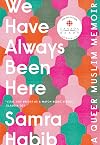
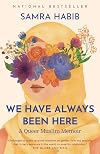
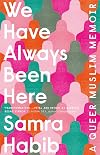
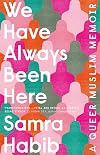
We Have Always Been Here: A Queer Muslim Memoir
by Samra Habib
On This Page
Description
CANADA READS 2020 WINNERNATIONAL BESTSELLER
2020 LAMBDA LITERARY AWARD WINNER
ONE OF BOOK RIOT'S 100 MOST INFLUENTIAL QUEER BOOKS OF ALL TIME
How do you find yourself when the world tells you that you don't exist?
Samra Habib has spent most of their life searching for the safety to be themself. As an Ahmadi Muslim growing up in Pakistan, they faced regular threats from Islamic extremists who believed the small, dynamic sect to be blasphemous. From their parents, they internalized the lesson show more that revealing their identity could put them in grave danger.
When their family came to Canada as refugees, Samra encountered a whole new host of challenges: bullies, racism, the threat of poverty, and an arranged marriage. Backed into a corner, their need for a safe space—in which to grow and nurture their creative, feminist spirit—became dire. The men in Samra's life wanted to police them, the women in their life had only shown them the example of pious obedience, and their body was a problem to be solved.
So begins an exploration of faith, art, love, and queer sexuality, a journey that takes them to the far reaches of the globe to uncover a truth that was within them all along. A triumphant memoir of forgiveness and family, both chosen and not, We Have Always Been Here is a rallying cry for anyone who has ever felt out of place and a testament to the power of fearlessly inhabiting one's truest self. show less
Tags
Recommendations






Member Reviews
One of those books that had been on my shelves for WAY too long before I finally read it, and then once I did I loved it so much I'm embarrassed by how long it took me to get around to it.
I really, REALLY loved this. as a queer Muslim memoir, yes, it contains the conflict and displacement and rejection that you would expect, but it is also SO FILLED with the euphoria of slowly finding/creating yourself, in a way that demonizes no one but fear.
An amazing book.
I really, REALLY loved this. as a queer Muslim memoir, yes, it contains the conflict and displacement and rejection that you would expect, but it is also SO FILLED with the euphoria of slowly finding/creating yourself, in a way that demonizes no one but fear.
An amazing book.
I'm glad I read this book because it showed me a side of Islam that I was not familiar with. The author is queer (to use her own term), yet attached to her faith, and she finds that she is not alone in being both Muslim and queer. We hear so much about the violent, fanatical sides of Islam that I was happy to learn about a positive aspect of many of that faith. I think this is an important book for both queer Muslims and the rest of us.
That said, I found the book a little dull. The author is a trained journalist and I think she has written about her life more as an observer than as the main character in her own story. I don't feel I know her even after learning about her struggles with faith and sexuality. It wasn't a bad book....just show more not nearly as interesting as I'd expected. show less
That said, I found the book a little dull. The author is a trained journalist and I think she has written about her life more as an observer than as the main character in her own story. I don't feel I know her even after learning about her struggles with faith and sexuality. It wasn't a bad book....just show more not nearly as interesting as I'd expected. show less
As a young girl in Pakistan, Samra Habib faced discrimination because her family belonged to the Ahmadi sect, which is deemed heretical by many other Muslims. When she was a teenager in Canada, Habib faced discrimination for being a refugee, a Muslim, and a South Asian woman. All of these experiences, together with an upbringing by deeply religious parents, meant that Habib internalised a lot of negative messages about gender, sexuality, and her body. Following a disastrous marriage at 16 to a first cousin, and a second failed marriage a few years later, Habib came to an understanding of herself as a queer feminist and over several years learned out to reconcile those aspects of her identity with her Muslim faith.
This is a very show more necessary memoir, conveying the kind of experiences which are rarely foregrounded in mainstream conversations. Yet there's something about Habib's style of writing which prevents We Have Always Been Here from having as much as impact as I think it could have. Perhaps a side-effect of her training as a journalist, Habib is slightly distant from her own story. We are told about, rather than shown, some major moments in her life; some of her family members and most of her romantic partners remain blurry figures on the periphery of the narrative. Fair enough. There is no requirement for a memoir writer to gut themselves on the page, let alone the people in their life. But I think the book could have been effective even within certain boundaries if Habib hadn't frequently deployed the glossy, homogenised jargon I think of TherapySpeak (you know, everyone's Living Their Truth in order to Be Their Authentic Self). show less
This is a very show more necessary memoir, conveying the kind of experiences which are rarely foregrounded in mainstream conversations. Yet there's something about Habib's style of writing which prevents We Have Always Been Here from having as much as impact as I think it could have. Perhaps a side-effect of her training as a journalist, Habib is slightly distant from her own story. We are told about, rather than shown, some major moments in her life; some of her family members and most of her romantic partners remain blurry figures on the periphery of the narrative. Fair enough. There is no requirement for a memoir writer to gut themselves on the page, let alone the people in their life. But I think the book could have been effective even within certain boundaries if Habib hadn't frequently deployed the glossy, homogenised jargon I think of TherapySpeak (you know, everyone's Living Their Truth in order to Be Their Authentic Self). show less
I decided to read/listen to this book when it was chosen as the winner of the 2020 Canada Reads competition. My pick of the books on the short list was Small Game Hunting at the Local Coward Gun Club is, I still think, better than this one but I did find this book very interesting.
Habib was raised in Lahore, Pakistan as part of the Ahmadi sect (which I had never heard of until this book). Members of this sect were quite often threatened and abused by Muslims of other sects. The situation became so dire that the family applied to enter Canada as refugees. Canada was relatively safe but Samra was often bullied at school. While she was still young she entered into an arranged marriage with a cousin who had come to Canada with Samra's show more family. She eventually told her family that she did not want to become a traditional Muslim wife and the marriage was dissolved, but Samra was treated as an outcast in her mosque. She moved in with a male friend from high school which was equally as shocking to her family. So Samra and the friend got married which made the situation marginally better. However, Samra was realizing that she was attracted to women and she started referring to herself as queer. She didn't come out to her parents for some time and when she did they didn't accept her sexuality immediately. Because of her love for them eventually they made amends. Samra also found a Muslim mosque that accepted queer folk as members which helped her. Samra also learned to accept herself as she worked on a photography project documenting other Queer Muslims. She said in an interview on CBC that writing this book was key to understanding herself better. Hopefully it will also be of benefit to other youth dealing with their sexuality. show less
Habib was raised in Lahore, Pakistan as part of the Ahmadi sect (which I had never heard of until this book). Members of this sect were quite often threatened and abused by Muslims of other sects. The situation became so dire that the family applied to enter Canada as refugees. Canada was relatively safe but Samra was often bullied at school. While she was still young she entered into an arranged marriage with a cousin who had come to Canada with Samra's show more family. She eventually told her family that she did not want to become a traditional Muslim wife and the marriage was dissolved, but Samra was treated as an outcast in her mosque. She moved in with a male friend from high school which was equally as shocking to her family. So Samra and the friend got married which made the situation marginally better. However, Samra was realizing that she was attracted to women and she started referring to herself as queer. She didn't come out to her parents for some time and when she did they didn't accept her sexuality immediately. Because of her love for them eventually they made amends. Samra also found a Muslim mosque that accepted queer folk as members which helped her. Samra also learned to accept herself as she worked on a photography project documenting other Queer Muslims. She said in an interview on CBC that writing this book was key to understanding herself better. Hopefully it will also be of benefit to other youth dealing with their sexuality. show less
Such a fascinating story. Samra tells of her young childhood in Pakistan, before her family emigrates to Canada to escape religious persecution. Her family belongs to a sect of Muslims out of favor in Pakistan.
Arriving in Canada, her family forces her into an arranged marriage at a very early age. She doesn't love her new husband, and in fact is so young that she continues to live at home until she's old enough to be a wife (Yikes!).
She manages to divorce this first husband. She attends college, meets and marries her second husband. While this marriage is her choice, she doesn't feel true to herself. As she begins to explore her true feelings and identity, she realizes she queer (her word) and attracted more to women. She finds the show more courage to leave husband two and live a more authentic life.
Over the course of her 20's she works hard to gain acceptance and embrace her full identity as gay AND Muslim AND brown AND immigrant.
She describes difficult times but the whole story is told with so much warmth and grace. There were a few parts that really stood out for me. When she discovered a mosque that would accept her as both gay and Muslim. And when she eventually reconciles with her parents. show less
Arriving in Canada, her family forces her into an arranged marriage at a very early age. She doesn't love her new husband, and in fact is so young that she continues to live at home until she's old enough to be a wife (Yikes!).
She manages to divorce this first husband. She attends college, meets and marries her second husband. While this marriage is her choice, she doesn't feel true to herself. As she begins to explore her true feelings and identity, she realizes she queer (her word) and attracted more to women. She finds the show more courage to leave husband two and live a more authentic life.
Over the course of her 20's she works hard to gain acceptance and embrace her full identity as gay AND Muslim AND brown AND immigrant.
She describes difficult times but the whole story is told with so much warmth and grace. There were a few parts that really stood out for me. When she discovered a mosque that would accept her as both gay and Muslim. And when she eventually reconciles with her parents. show less
3.5 stars
Samra Habib was still a girl when her entire family came to Canada from Pakistan. They were a part of a minority group of Muslims who were discriminated against in their own country. As she grew up, she knew she didn’t see things the same as her parents and she did not want to marry her cousin in the arranged marriage that had been planned. In fact, she wasn’t interested in men at all, and thought she may be asexual. As an adult, she came to realize that she was, in fact, queer. And she learned how to reconcile that with her Muslim faith.
This was good. It did move quickly and it felt like it skipped forward fast in some cases. It was interesting to read about, though. Have to admit (though that wasn’t the entire purpose show more of the book!), I found the first half more interesting - the parts that focused on her trying to fit in after she immigrated. show less
Samra Habib was still a girl when her entire family came to Canada from Pakistan. They were a part of a minority group of Muslims who were discriminated against in their own country. As she grew up, she knew she didn’t see things the same as her parents and she did not want to marry her cousin in the arranged marriage that had been planned. In fact, she wasn’t interested in men at all, and thought she may be asexual. As an adult, she came to realize that she was, in fact, queer. And she learned how to reconcile that with her Muslim faith.
This was good. It did move quickly and it felt like it skipped forward fast in some cases. It was interesting to read about, though. Have to admit (though that wasn’t the entire purpose show more of the book!), I found the first half more interesting - the parts that focused on her trying to fit in after she immigrated. show less
Why oh why do we always have to blame our mothers for everything?
I did learn quite a bit from Samra Habib's life story. She has become a strong woman in bad circumstances. There is much to admire in her advocacy of transgender, and queer muslims. She does a great job pointing out how every country has to work at accepting all of it's citizens.
The one thing that really bothered me though is lack of understanding she has given to her mother. A woman who has faced many difficulties in her own life. That was raised in a culture that had so many things to overcome as a female. That raised a child who became independent, thoughtful, and strong.
I did learn quite a bit from Samra Habib's life story. She has become a strong woman in bad circumstances. There is much to admire in her advocacy of transgender, and queer muslims. She does a great job pointing out how every country has to work at accepting all of it's citizens.
The one thing that really bothered me though is lack of understanding she has given to her mother. A woman who has faced many difficulties in her own life. That was raised in a culture that had so many things to overcome as a female. That raised a child who became independent, thoughtful, and strong.
Members
- Recently Added By
Lists

Sexuality & Gender
160 works; 3 members

Canada Reads Winners and Nominees
129 works; 9 members

Sapph-Lit
78 works; 4 members

The Best LGBTQ Nonfiction
159 works; 68 members
Author Information

1 Work 512 Members
Awards and Honors
Awards
Distinctions
Common Knowledge
- People/Characters
- Samra Habib
- Important places
- Pakistan
- Epigraph
- Even the most incorrigible maverick has to be born somewhere. He may leave the group that produced him -- he may be forced to -- but nothing will efface his origins, the marks of which he carries with him everywhere. -- Jame... (show all)s
Baldwin - Dedication
- To chosen families everywhere
- First words
- We both had shaved heads.
- Last words
- (Click to show. Warning: May contain spoilers.)You'll be okay. Know that. Love, Samra
- Blurbers
- Dey, Claudia; Mootoo, Shani; Giese, Rachel; Eltahawy, Mona; Fowles, Stacey May
Classifications
- Genres
- Sexuality and Gender Studies, LGBTQ+, Biography & Memoir, Nonfiction, Religion & Spirituality
- DDC/MDS
- 306.76 — Society, government, & culture Social sciences, sociology & anthropology Social Behavior - Dating, Marriage, Divorce Sexual relations Sexual orientation, transgender identity, intersexuality
- LCC
- HQ75.4 .H38 .H3 — Social sciences The family. Marriage, Women and Sexuality The Family. Marriage. Women Sexual life Homosexuality. Lesbianism
- BISAC
Statistics
- Members
- 512
- Popularity
- 58,631
- Reviews
- 17
- Rating
- (3.75)
- Languages
- English
- Media
- Paper, Audiobook, Ebook
- ISBNs
- 9
- ASINs
- 4