On This Page
Description
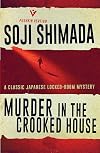
"The Crooked House sits on a snowbound cliff overlooking icy seas at the remote northern tip of Japan. A curious place for the millionaire Kozaburo Hamamoto to build a house, but even more curious is the house itself - a disorienting maze of sloping floors and strangely situated staircases, full of bloodcurdling masks and uncanny lifesize dolls. When a man is found dead in one of the mansion's rooms, murdered in seemingly impossible circumstances, the police are called. But they are unable show more to solve the puzzle, and powerless to protect the party of house guests as more bizarre deaths follow. Enter Kiyoshi Mitarai, the renowned sleuth, famous for unmasking the culprit behind the notorious Umezawa family massacre. Surely if anyone can crack these cryptic murders he will. But you have all the clues too - can you solve the mystery of the murders in The Crooked House first?"--Provided by publisher. show lessTags
Recommendations







Member Reviews
The Crooked House, built in the north of Hokkaido, Japan, by a wealthy magnate, certainly lives up to its name. The whole house slants, floors are on a slope, and tables and chairs have to be calibrated to accommodate the incline. The house also has a leaning tower at the same angle as the one in Pisa. The owner, Kazaburo Hamamoto, has invited a group of friends and colleagues to spend Christmas with him and his daughter, Eiko. On Christmas Day, a blizzard rages. By the end of the day, someone turns up dead. The next day, another. Both of these are under impossible circumstances, with locked doors and impenetrable rooms. The police are at a loss. Enter Kiyoshi Mitarai, a Great Detective in the classic tradition (the eccentric, gifted show more amateur).
This mystery is totally bananas, and I say this with affection. The book pays homage to the classics of the Anglo-American tradition of locked-room mysteries. An automaton may remind the reader of John Dickson Carr’s The Crooked Hinge. At one point the characters name-check Edgar Allan Poe and his Mystery of Marie Roget. The book even offers up a “challenge to the reader”, stating that all the clues are present and asking if the reader can solve the case. This reader did not; I don’t generally try to solve mysteries, and I alternate between being annoyed and impressed if I somehow do it without even trying.
I found the book went on a bit too long, especially because Mitarai didn’t show up until 2/3 of the way through. And the solution stretches the bounds of credulity and requires a great deal of disbelief to be suspended—for me, anyway. But if you do like the classical “puzzle-based” locked-room mysteries, this one might be worth trying. show less
This mystery is totally bananas, and I say this with affection. The book pays homage to the classics of the Anglo-American tradition of locked-room mysteries. An automaton may remind the reader of John Dickson Carr’s The Crooked Hinge. At one point the characters name-check Edgar Allan Poe and his Mystery of Marie Roget. The book even offers up a “challenge to the reader”, stating that all the clues are present and asking if the reader can solve the case. This reader did not; I don’t generally try to solve mysteries, and I alternate between being annoyed and impressed if I somehow do it without even trying.
I found the book went on a bit too long, especially because Mitarai didn’t show up until 2/3 of the way through. And the solution stretches the bounds of credulity and requires a great deal of disbelief to be suspended—for me, anyway. But if you do like the classical “puzzle-based” locked-room mysteries, this one might be worth trying. show less
I adored The Tokyo Zodiac Murders, a British Golden Age mystery transferred to Tokyo between the wars, a more grisly version of an Agatha Christie classic. Murder in the Crooked House follows suit, except that this sequel is set in modern-day Hokkaido, Japan; it also follows suit in recalling Agatha Christie, only this time, unfortunately, what comes to mind is her Taken at the Flood. That novel suffers because detective Hercule Poirot arrives too late. Murder in the Crooked House likewise suffers because the flamboyant sleuth Kiyoshi Mitarai doesn’t arrive until two-thirds of the way into the book. By that point, I was almost past caring. The only reason I was still reading was hoping that things would pick up when he arrived, and show more thinking that — surely — he’d be along soon! No such luck!
Business tycoon Kozaburo Hamamoto lives in a mansion that’s equal parts Tudor manor and Victorian Era folly; in a move out of an Agatha Christie or Ngaio Marsh novel, Hamamoto hosts a country house party for eight guests for a week. Readers won’t be surprised that someone ends up dead and that there are motives galore. In fairness, as always, author Sōji Shimada plays extremely fair, giving you every clue you need to beat fortune-teller and amateur sleuth Kiyoshi Mitarai to unraveling the crime. And in fairness, the novel really takes off once Kiyoshi appears. However, the motive is so far-fetched that it doesn’t raise the novel from two stars.
Only the two Kiyoshi Mitarai novels I’ve read have been translated into English. Shimada wrote 15 more novels, waiting to be translated. I’m not sure I’ll be waiting for them myself.
Merged review:
I adored The Tokyo Zodiac Murders, a British Golden Age mystery transferred to Tokyo between the wars, a more grisly version of an Agatha Christie classic. Murder in the Crooked House follows suit, except that this sequel is set in modern-day Hokkaido, Japan; it also follows suit in recalling Agatha Christie, only this time, unfortunately, what comes to mind is her Taken at the Flood. That novel suffers because detective Hercule Poirot arrives too late. Murder in the Crooked House likewise suffers because the flamboyant sleuth Kiyoshi Mitarai doesn’t arrive until two-thirds of the way into the book. By that point, I was almost past caring. The only reason I was still reading was hoping that things would pick up when he arrived, and thinking that — surely — he’d be along soon! No such luck!
Business tycoon Kozaburo Hamamoto lives in a mansion that’s equal parts Tudor manor and Victorian Era folly; in a move out of an Agatha Christie or Ngaio Marsh novel, Hamamoto hosts a country house party for eight guests for a week. Readers won’t be surprised that someone ends up dead and that there are motives galore. In fairness, as always, author Sōji Shimada plays extremely fair, giving you every clue you need to beat fortune-teller and amateur sleuth Kiyoshi Mitarai to unraveling the crime. And in fairness, the novel really takes off once Kiyoshi appears. However, the motive is so far-fetched that it doesn’t raise the novel from two stars.
Only the two Kiyoshi Mitarai novels I’ve read have been translated into English. Shimada wrote 15 more novels, waiting to be translated. I’m not sure I’ll be waiting for them myself. show less
Business tycoon Kozaburo Hamamoto lives in a mansion that’s equal parts Tudor manor and Victorian Era folly; in a move out of an Agatha Christie or Ngaio Marsh novel, Hamamoto hosts a country house party for eight guests for a week. Readers won’t be surprised that someone ends up dead and that there are motives galore. In fairness, as always, author Sōji Shimada plays extremely fair, giving you every clue you need to beat fortune-teller and amateur sleuth Kiyoshi Mitarai to unraveling the crime. And in fairness, the novel really takes off once Kiyoshi appears. However, the motive is so far-fetched that it doesn’t raise the novel from two stars.
Only the two Kiyoshi Mitarai novels I’ve read have been translated into English. Shimada wrote 15 more novels, waiting to be translated. I’m not sure I’ll be waiting for them myself.
Merged review:
I adored The Tokyo Zodiac Murders, a British Golden Age mystery transferred to Tokyo between the wars, a more grisly version of an Agatha Christie classic. Murder in the Crooked House follows suit, except that this sequel is set in modern-day Hokkaido, Japan; it also follows suit in recalling Agatha Christie, only this time, unfortunately, what comes to mind is her Taken at the Flood. That novel suffers because detective Hercule Poirot arrives too late. Murder in the Crooked House likewise suffers because the flamboyant sleuth Kiyoshi Mitarai doesn’t arrive until two-thirds of the way into the book. By that point, I was almost past caring. The only reason I was still reading was hoping that things would pick up when he arrived, and thinking that — surely — he’d be along soon! No such luck!
Business tycoon Kozaburo Hamamoto lives in a mansion that’s equal parts Tudor manor and Victorian Era folly; in a move out of an Agatha Christie or Ngaio Marsh novel, Hamamoto hosts a country house party for eight guests for a week. Readers won’t be surprised that someone ends up dead and that there are motives galore. In fairness, as always, author Sōji Shimada plays extremely fair, giving you every clue you need to beat fortune-teller and amateur sleuth Kiyoshi Mitarai to unraveling the crime. And in fairness, the novel really takes off once Kiyoshi appears. However, the motive is so far-fetched that it doesn’t raise the novel from two stars.
Only the two Kiyoshi Mitarai novels I’ve read have been translated into English. Shimada wrote 15 more novels, waiting to be translated. I’m not sure I’ll be waiting for them myself. show less
Let’s imagine we move to Japan and meet Sherlock Holmes. He has almond-shaped eyes and certainly doesn’t use the famous seven per cent solution, but he is just as whimsical and unconventional in his way of thinking. He also has a faithful companion. His name is Kiyoshi Mitarai and he is the protagonist of a substantial series of mystery novels written by Soji Shimada. This episode is structured in scenes and acts as if it were a play and is set in the eerie mansion in the far north of Japan that an eccentric billionaire – a collector of strange dolls, automatons and frightening Japanese masks – has built for himself as a retreat. Except that one of the people he has invited to spend the festive season with him is murdered in the show more most classic of locked-room crimes. The police are called in to investigate, but right under their noses a second murder takes place, even more impossible than the first. Theories abound, fuelled in part by the house’s unusual features. Unfortunately, the digital copy I have lacks the floor plans and sketches that would certainly help readers of the paperback edition, but I still managed to form a fairly clear picture to enable me to follow the various lines of reasoning. The fact is that, unable to get to the bottom of the problem, the police ask for help from Tokyo and finally, well over halfway through the novel, our hero appears, who, needless to say, launches into a series of bizarre speeches, managing to have everyone take him for a fool. Meanwhile, strange things continue to happen in the house, including a third murder, until the killer begins to fear for his own safety and makes a fatal mistake.
An entertaining and psychologically stimulating novel; I believe it can be considered a true classic of the genre. show less
An entertaining and psychologically stimulating novel; I believe it can be considered a true classic of the genre. show less
I just love this style of mystery, where the characters are pared down and the technical details of the case are the focus. A locked room mystery x3, and a quirky house to host it. I have to say the ending, though clever, leaves a lot of questions. Like if you were going to end up in prison for this murder any way, isn't there a more straight forward way to kill a guy? It just seemed like our suspect surrendered a bit too readily at the first hint of being found out. And wouldn't someone who hired a hitman, regardless of if that hitman accomplished his task, be charged with attempted murder or something?
That's really beside the point of the enjoyment of the puzzle this book presents though, so I will be reading more from this author.
That's really beside the point of the enjoyment of the puzzle this book presents though, so I will be reading more from this author.
‘That house of horrors that once had us in panic has now fallen into ruin; now home to nothing more than a few shed snakeskins and a whole lot of dust. Nobody visits, and nobody wants to live there.’
A classic of the Japanese locked-room mystery genre, the second in a series featuring astrologer/mystic Kiyoshi Mitarai (the first being ‘The Tokyo Zodiac Murders’). Written and set in the early 1980s, a group of people are invited to stay with the enigmatic businessman Kuzaburo Hamamoto over Christmas. The Ice Floe House – known as the Crooked House because of its unique design with sloping floors and mind-boggling angles – is the perfect setting for this ingenious puzzle, which delights in drawing attention to itself as a piece show more of genre writing. We open with a list of the Acts to come, and a Dramatis Personae – this could be a piece of theatre, and as such the characters are quite-two dimensional, even stereotypical. There are numerous references to Poe and other crime writers, to the play ‘Sleuth’, and we as readers are invited to take part in the game; indeed, just before the grand dénouement, we are directly addressed, told that all of the clues are there, and asked: ‘Can you solve this case?’
Fans of the genre will relish the classic elements of the novel: the bamboozled policemen, a cast of characters from across society whose secrets are slowly revealed, the eccentric Mitarai (a kind of Sherlock Holmes character brought in to solve the perplexing series of murders). It’s all beautifully done, with a slight overall tone of sadness and regret that just gives it a bit more depth. A definite recommended brain-challenging puzzle! show less
A classic of the Japanese locked-room mystery genre, the second in a series featuring astrologer/mystic Kiyoshi Mitarai (the first being ‘The Tokyo Zodiac Murders’). Written and set in the early 1980s, a group of people are invited to stay with the enigmatic businessman Kuzaburo Hamamoto over Christmas. The Ice Floe House – known as the Crooked House because of its unique design with sloping floors and mind-boggling angles – is the perfect setting for this ingenious puzzle, which delights in drawing attention to itself as a piece show more of genre writing. We open with a list of the Acts to come, and a Dramatis Personae – this could be a piece of theatre, and as such the characters are quite-two dimensional, even stereotypical. There are numerous references to Poe and other crime writers, to the play ‘Sleuth’, and we as readers are invited to take part in the game; indeed, just before the grand dénouement, we are directly addressed, told that all of the clues are there, and asked: ‘Can you solve this case?’
Fans of the genre will relish the classic elements of the novel: the bamboozled policemen, a cast of characters from across society whose secrets are slowly revealed, the eccentric Mitarai (a kind of Sherlock Holmes character brought in to solve the perplexing series of murders). It’s all beautifully done, with a slight overall tone of sadness and regret that just gives it a bit more depth. A definite recommended brain-challenging puzzle! show less
Kozaburo Hamamoto, a rich businessman, invites several guests to stay at the Ice Floe Mansion, his eccentric creation, during the Christmas of 1983. The mansion consists of a main building with a confusing layout and very slightly sloping floors, as well as a tower modeled after the Leaning Tower of Pisa. Kozaburo's room is at the very top of the tower, reachable by a drawbridge. A couple of his family members, his staff, and his guests are all in various rooms in the main house.
Things are a little awkward and tense right from the start. Eiko, Kozaburo's daughter, flubs a few of the introductions: she completely forgets Ueda, Mr. Kikuoka's chauffeur, and manages to embarrass both Kumi Aikura (Mr. Kikuoka's "secretary," who everyone show more knows is also his mistress) and Hatsue Kanai (the wife of Michio Kanai, an executive at Mr. Kikuoka's company). Among the guests are also two rivals for Eiko's hand in marriage, Shun Sasaki and Masaki Togai. After one of the guests is murdered in a locked room, the police begin investigating. As in The Tokyo Zodiac Murders, readers are invited to follow the clues, look at various crime scene and building illustrations, and potentially solve the mystery themselves.
This took me ages to read, because I kept flipping back to earlier parts of the book to reread them. There were so many strange little crime scene details and architectural oddities that I felt like I could somehow manage to solve the mystery if I just thought about it carefully enough. In some ways it seemed more solvable than The Tokyo Zodiac Murders. Even with hints from another reader, I couldn't quite get there, though, and now that I've read the end and know what really happened, I'm not sure I'd ever have figured it out. I spent too much time focusing on the wrong details. Also, as clever as the solution turned out to be, the way Shimada opted to muddy the water irked me.I didn't feel like it fit the character, and even the character couldn't really satisfactorily explain why they'd done that particular thing, since it was technically unnecessary.
Although I enjoyed getting to see Kiyoshi Mitarai again, when he finally appeared in the last third of the book, overall this is the kind of story you read more for the puzzle than for the characters. Even with all of the just-under-the-surface drama, most of the characters didn't make much of an impression on me, and for a while I kept having to flip back to the character list to remind myself who everyone was. Of the bunch, Eiko, Kumi, and Mr. Kikuoka probably stood out the most. The cops, meanwhile, completely blended together.
Shimada's Kiyoshi Mitarai books are like the literary equivalent of the puzzle games I like to play, right down to that moment of frustration when I give up and look at the solution, because clearly I'm not going to manage to figure it out on my own. I see on Wikipedia that there are many more books in this series that could potentially be translated into English one day. Even though I didn't quite enjoy Murder in the Crooked House as much as The Tokyo Zodiac Murders (the latter had a better overall atmosphere), I still very much hope that I eventually get the chance to read the next book in this series.
(Original review posted on A Library Girl's Familiar Diversions.) show less
Things are a little awkward and tense right from the start. Eiko, Kozaburo's daughter, flubs a few of the introductions: she completely forgets Ueda, Mr. Kikuoka's chauffeur, and manages to embarrass both Kumi Aikura (Mr. Kikuoka's "secretary," who everyone show more knows is also his mistress) and Hatsue Kanai (the wife of Michio Kanai, an executive at Mr. Kikuoka's company). Among the guests are also two rivals for Eiko's hand in marriage, Shun Sasaki and Masaki Togai. After one of the guests is murdered in a locked room, the police begin investigating. As in The Tokyo Zodiac Murders, readers are invited to follow the clues, look at various crime scene and building illustrations, and potentially solve the mystery themselves.
This took me ages to read, because I kept flipping back to earlier parts of the book to reread them. There were so many strange little crime scene details and architectural oddities that I felt like I could somehow manage to solve the mystery if I just thought about it carefully enough. In some ways it seemed more solvable than The Tokyo Zodiac Murders. Even with hints from another reader, I couldn't quite get there, though, and now that I've read the end and know what really happened, I'm not sure I'd ever have figured it out. I spent too much time focusing on the wrong details. Also, as clever as the solution turned out to be, the way Shimada opted to muddy the water irked me.
Although I enjoyed getting to see Kiyoshi Mitarai again, when he finally appeared in the last third of the book, overall this is the kind of story you read more for the puzzle than for the characters. Even with all of the just-under-the-surface drama, most of the characters didn't make much of an impression on me, and for a while I kept having to flip back to the character list to remind myself who everyone was. Of the bunch, Eiko, Kumi, and Mr. Kikuoka probably stood out the most. The cops, meanwhile, completely blended together.
Shimada's Kiyoshi Mitarai books are like the literary equivalent of the puzzle games I like to play, right down to that moment of frustration when I give up and look at the solution, because clearly I'm not going to manage to figure it out on my own. I see on Wikipedia that there are many more books in this series that could potentially be translated into English one day. Even though I didn't quite enjoy Murder in the Crooked House as much as The Tokyo Zodiac Murders (the latter had a better overall atmosphere), I still very much hope that I eventually get the chance to read the next book in this series.
(Original review posted on A Library Girl's Familiar Diversions.) show less
What I didn't know going into the book was that it is a bit of a satire of the locked room genre, rather than an ingenuous example of it. Without spoiling the mystery, it is unlikely that any sane human would guess it, whether or not (as the author insists) all the clues are available to them.
Members
- Recently Added By
Lists

#MysteryBingo2020Silver(Revised)
36 works; 1 member
#JustTheFacts2020Silver
48 works; 1 member
#MysteryBingo2020Silver(Original)
36 works; 1 member
Author Information

32+ Works 812 Members
Some Editions
Series

Belongs to Publisher Series
Pushkin Vertigo (24)
Common Knowledge
- Canonical title
- Murder in the Crooked House
- Original language
- Japanese
Classifications
- Genres
- Fiction and Literature, Mystery
- DDC/MDS
- 895.636 — Literature & rhetoric Literatures of other languages Literatures of East and Southeast Asia Japanese Japanese fiction 2000–
- LCC
- PL861 .H529 .N3613 — Language and Literature Languages and literatures of Eastern Asia, Africa, Oceania Languages of Eastern Asia, Africa, Oceania Japanese language and literature Japanese literature Individual authors and works
- BISAC
Statistics
- Members
- 221
- Popularity
- 147,661
- Reviews
- 11
- Rating
- (3.23)
- Languages
- English, Japanese
- Media
- Paper, Ebook
- ISBNs
- 5
- ASINs
- 2