On This Page
Description
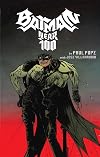
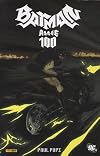
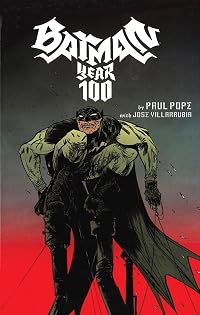
In 2039, a federal agent has been murdered, Gotham has been invaded by federal agents out for blood, and Detective Gordon of the GCPD, grandson of the former commissioner, finds himself hunting an urban legend--the Batman!Tags
Recommendations


Member Reviews
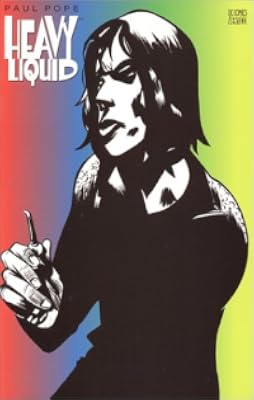
I enjoyed Paul Pope's grungy take on the Batman. It is set in a future American police state in Gotham City. The city sprawls forever like L.A. in Blade Runner, but is more run down and ramshackle. There's little sign of modern technology except for the flying surveillance craft and their searching infrared beams. Pope's thick, lurid style adds neon afterglow to a dark city. A lot of comics artists shy away from depictions of sounds these days, but Pope seems to revel in them, splatting and spurting sounds across his frames, even obscuring the contents -- and it works.
This Batman is a fugitive with Bruce Wayne's ingenuity, but little sign of his wealth. He is the last 'Double U' -- unclassified and undocumented. The corrupt and show more powerful Feds want to catch him when he witnesses a conspiratorial police crime. Batman has a team to help him: Robin, and a computer hacker called Tora, and her mother, a doctor who is also connected with Commissioner Gordon (grandson of the original). Gordon gets involved when the Feds demand all information his department have on the Batman.
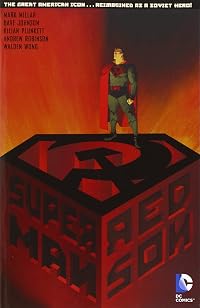
The story focuses on action and leaves out some background, for example what it's like living in this future state if you aren't a superhero? The biggest unexplained detail (and the biggest plot hole) is how exactly *has* the Batman survived all this time? Nevertheless, a highly enjoyable take on Batman, perhaps a little closer to V for Vendetta (or Superman Red Son) in that the enemy is a corrupt state (and possibly an international terrorist organisation) rather than a crazed supervillain. show less
This Batman is a fugitive with Bruce Wayne's ingenuity, but little sign of his wealth. He is the last 'Double U' -- unclassified and undocumented. The corrupt and show more powerful Feds want to catch him when he witnesses a conspiratorial police crime. Batman has a team to help him: Robin, and a computer hacker called Tora, and her mother, a doctor who is also connected with Commissioner Gordon (grandson of the original). Gordon gets involved when the Feds demand all information his department have on the Batman.
The story focuses on action and leaves out some background, for example what it's like living in this future state if you aren't a superhero? The biggest unexplained detail (and the biggest plot hole) is how exactly *has* the Batman survived all this time? Nevertheless, a highly enjoyable take on Batman, perhaps a little closer to V for Vendetta (or Superman Red Son) in that the enemy is a corrupt state (and possibly an international terrorist organisation) rather than a crazed supervillain. show less
Batman: Year 100 is one of the best Batman stories ever written alongside of Frank Miller and Scott Synder. Pope presents (like The Dark Knight Returns) a dark, dystopian take on the world of Batman and Gotham City. In Pope's reality, Gotham of 2039 is devoid of privacy - and is essentially a police state. Mixing crime noir with futuristic dystopian sci-fi, Batman Year 100 is essentially a play on Frank Miller's classic, Batman year one and is in many ways the spiritual sucessor to The Dark Knight Returns. The story centers on Detective James Gordon, grandson of the original Commissioner Gordon, who worked with Batman. He finds himself thrust between a Batman (who is he? Is he the same man?) falsely accused of murder, corrupt federal show more agents, and a plot by rogue agents of the government to create a weapon of unimaginable proportion after a federal agent is murdered and a contingent of Washington's top agents is hot on the suspect's trail. The Batman here is a forgotten icon from the past, who shouldn't exist at all. The mythic element of Batman remains. The art of Paul Pope is original and gritty and the storyline is very original. Highly recommended. This certainly deserves repeated readings. show less
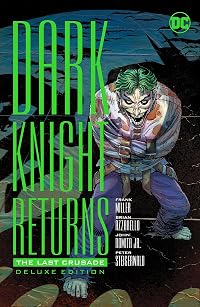
Paul Pope is one of the best comics creators at the moment, not only because he's a great visual artist and a sharp writer but also because he has a wild, unsummarizable theory about the way that comics work as an iconic language. His theory, wild though it may be, intersects nicely with the way that superheroes are currently being treated in our culture: less as characters (who would need to grow and change as their narrative unfolded) and more as unchanging archetypes, collections of iconified traits. Once a set of traits is indestructibly established (as with Batman) you can improvise off of it pretty freely, just like you'd do with a jazz standard. Pope understands all of this, and it's part of what makes his superhero riffs so show more great.
In this book, Pope plants Batman in the 2030s, which permits him to riff mightily, telling his tale with verve and style, but ultimately the stock elements of the State-controlled dystopian setting erode some of the freshness on display. It's still a blast to read, but ultimately it doesn't hit as hard as the best Batman stories out there, or as Pope's own unfinished masterpiece, THB. show less
In this book, Pope plants Batman in the 2030s, which permits him to riff mightily, telling his tale with verve and style, but ultimately the stock elements of the State-controlled dystopian setting erode some of the freshness on display. It's still a blast to read, but ultimately it doesn't hit as hard as the best Batman stories out there, or as Pope's own unfinished masterpiece, THB. show less
Oh snap! Mystery! Detective work! Imperfect protagonist. Batman as he was meant to be written. Batman as he was meant to be drawn. Goddamn! It is the future. The Batman is naught but legend and superstition. Yet it would seem 100 years later this phantom has resurfaced. An important document is in jeapordy of falling into the hands of a corrupt government. This new Batman takes it upon himself to assure this does not come to pass. Beaten to near death, with the assistance of his team of friends he does what is necessary to preserve justice and humanity.
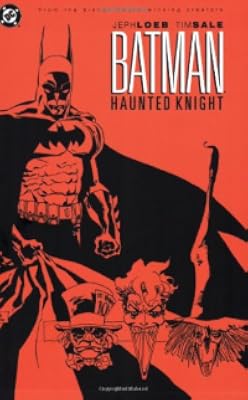
This was pretty good overall, but there are other Batman stories I have liked better, like the works by Loeb and Sale (some of which I have read and listed here). Having said that, this is an interesting look at the Batman. I did find a bit problematic that we never learn how exactly he is 100 years old, or if it is a different Batman. Once you leave that seemingly small detail out of the way, it is a pretty good story in a dystopian setting. In fact, I found that some of the gritty art and style reminded me of Orwell's 1984 setting where there is no privacy, and the government rules by fear. However, unlike Orwell, the Federal government here is constantly challenged by Batman, the one man they know nothing about.
The art is also show more interesting because Batman here does not wear the fancy suits you see in other comics or the movies. Initially, readers may wonder about that. However, the book includes a section where the author discusses the artistic process, including how he looked at Batman in more realistic terms: what kind of footwear he might wear and why; the kind of equipment in his belt, so on. Sure, there are some futuristic gadgets, but Pope put some thought rather than using the utility belt as a deus ex machina, which many other authors working with Batman often do. I personally found that interesting to read about, and it gave me a better appreciation of the art and Batman's look here.
As for the story, we are dealing with a government conspiracy, and in a world where there are telepaths working for the government, foiling that conspiracy may not be easy.
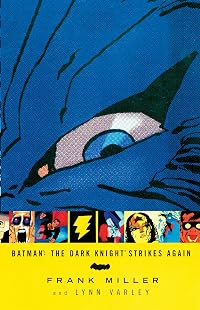
A note on reader appeal (mostly for me for reader's advisory): If you like Batman, this is a story to read. If you like dystopian literature, even if you are not a big Batman fan, I think you will appreciate this graphic novel as well. As a final note, there are some similarities with Frank Miller's work on Batman in terms of the gritty style, and I think if you have read Miller's work, you may like this one as well. show less
The art is also show more interesting because Batman here does not wear the fancy suits you see in other comics or the movies. Initially, readers may wonder about that. However, the book includes a section where the author discusses the artistic process, including how he looked at Batman in more realistic terms: what kind of footwear he might wear and why; the kind of equipment in his belt, so on. Sure, there are some futuristic gadgets, but Pope put some thought rather than using the utility belt as a deus ex machina, which many other authors working with Batman often do. I personally found that interesting to read about, and it gave me a better appreciation of the art and Batman's look here.
As for the story, we are dealing with a government conspiracy, and in a world where there are telepaths working for the government, foiling that conspiracy may not be easy.
A note on reader appeal (mostly for me for reader's advisory): If you like Batman, this is a story to read. If you like dystopian literature, even if you are not a big Batman fan, I think you will appreciate this graphic novel as well. As a final note, there are some similarities with Frank Miller's work on Batman in terms of the gritty style, and I think if you have read Miller's work, you may like this one as well. show less
Anonymity has been banned and the government controls straight lines! See this or or this for the explanation of that formula. Anyway, in a security-obsessed 2039, government thugs come to Gotham to lock down something, and the Batman is drawn in/shot/hunted/fighting against their conspiracy as the thugs use their authority (and telepathy!) to investigate the legend of the Batman of Gotham. His connection to Bruce Wayne/the original Batman is never explained; the libertarian-dystopian axis is strong in this one, and the end of the graphic novel includes a paean to Ludwig von Mises if you wondered why. Pope’s Batman is a big fan!
A gorgeous looking book (Paul Pope and colourist extraodinaire Jose Villarubia make a great art team), marred by Internet overhype. It's a fun, fast-paced story with lots of action and cool ideas, but the big mystery (who is Batman and how is he able to survive for 100 years?) is never truly resolved in a satisfying way. Don't let the overhype fool you, and you'll enjoy the book just fine.
Members
- Recently Added By
Author Information

88+ Works 2,943 Members
Awards and Honors
Awards
Series


Work Relationships
Common Knowledge
- Canonical title
- Batman: Year 100
- People/Characters
- Batman; Bruce Wayne/Batman
- Important places
- Gotham City, New Jersey, USA
Classifications
- Genre
- Graphic Novels & Comics
- DDC/MDS
- 741.5973 — Arts & recreation Drawing & decorative arts Drawing Comic books, graphic novels, fotonovelas, cartoons, caricatures, comic strips History, geographic treatment, biography North American United States (General)
- LCC
- PN6728 .B36 .P67 — Language and Literature Literature (General) Literature (General) Collections of general literature Comic books, strips, etc.
- BISAC
Statistics
- Members
- 398
- Popularity
- 78,276
- Reviews
- 15
- Rating
- (3.60)
- Languages
- English, French, Italian, Spanish
- Media
- Paper, Ebook
- ISBNs
- 12
- ASINs
- 2